
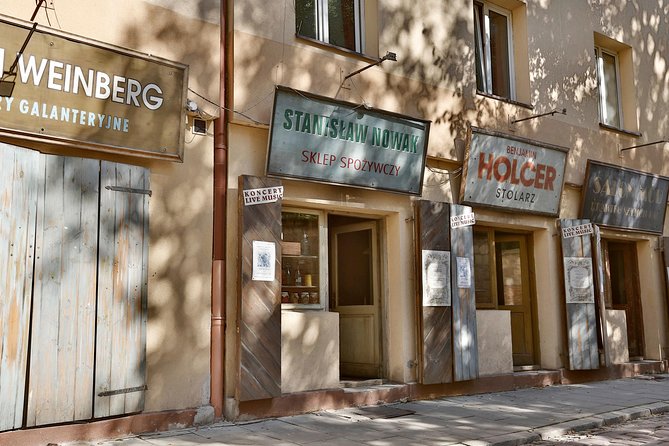
REVIEW · JEWISH QUARTER TOURS
Krakow Jewish Quarter Guided Walking Tour
History is written into every street here. This three-hour walk through Krakow’s former Jewish district, Kazimierz, connects medieval beginnings with Jewish life, wartime destruction, and the neighborhood’s uneasy modern rebirth. I especially like the focus on real places, including the Old Synagogue, Remuh Synagogue, Szeroka Street, and Oskar Schindler’s factory. I also like the small-group limit of 20 people, which gives you a fair chance to ask questions.
The main drawback is simple: you will walk a lot. One guide may spend considerable time explaining the early history before reaching Kazimierz, while another may move faster. Synagogue admission is not included, and you should bring about 15 PLN per person for the optional interior visit. Still, at $33.21, the tour offers solid value if you want context rather than a quick photo stop.
In This Review
- Key points before you book
- Why Kazimierz deserves a guided walk
- Starting near Krakow’s Main Market Square
- The Old Synagogue and the first layer of Jewish Krakow
- Kazimierz, from separate city to historic district
- Remuh Synagogue and the cemetery beside it
- Szeroka Street, once the Jewish town’s main square
- From Jewish life to the Holocaust and the ghetto
- Ending at Oskar Schindler’s Enamel Factory
- What the guides do best
- Cost, walking, and practical value
- Who should book this walk?
- Should you book the Krakow Jewish Quarter tour?
- FAQ
- How long does the Krakow Jewish Quarter Guided Walking Tour last?
- Where does the tour start?
- Where does the tour end?
- Is admission to the synagogues included?
- Is the tour offered in English?
- What is the cancellation policy?
Key points before you book
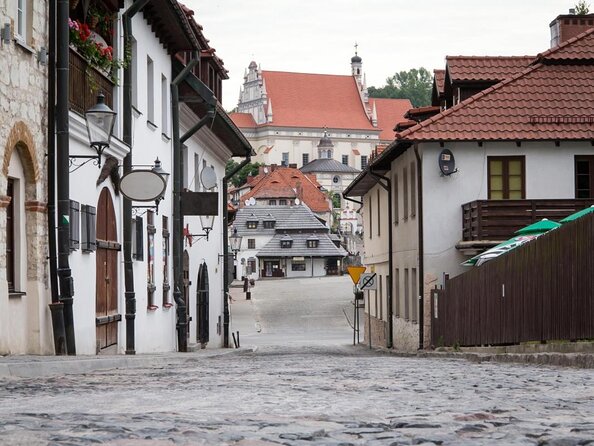
- Kazimierz began as a separate city in the 14th century, so this is not just a neighborhood tour. It explains how Krakow and its Jewish community developed side by side.
- The Old Synagogue is the oldest surviving synagogue in Krakow, and it gives you a useful starting point for understanding traditional Jewish architecture in Poland.
- Szeroka Street was once the main square of the Jewish town, with several synagogues gathered around it.
- The route links Jewish life before the Holocaust with wartime Krakow, including the former ghetto area, Schindler’s factory, and places associated with Schindler’s List.
- Guides are the chief strength of the experience. Names praised in the tour feedback include Joanna, Krzysztof, Magda, Andrzej, Rob, Gregory, and Margareth.
- The tour ends at Oskar Schindler’s Enamel Factory, Lipowa 4. Museum entry, food, and drinks are not included.
Why Kazimierz deserves a guided walk
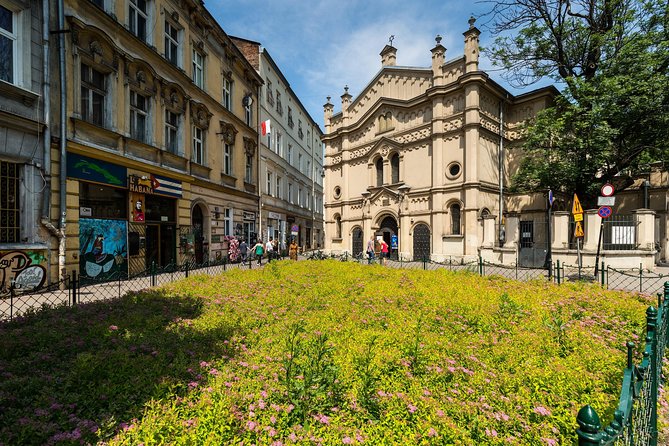
Kazimierz can look easy to explore on your own. The streets are close together, many sites are signposted, and Szeroka Street is only a short walk from other central Krakow sights. But the meaning of the area is not always visible from the pavement.
A guide can explain why Kazimierz was founded as a separate city in the 14th century and how Jewish residents became part of Krakow’s civic and cultural life. That background matters. Without it, the synagogues can seem like isolated historic buildings rather than parts of a once-thriving community.
The best guides also connect small details to larger events. A doorway, a cemetery wall, a monument, or the remains of the ghetto can become a way to understand how Jewish life changed over centuries. This is where the tour earns its price.
You should also know what kind of experience this is. It is not a light sightseeing stroll with a few historical comments. The subject includes the Holocaust, the Krakow ghetto, and the destruction of Jewish life. The tone can be emotional, especially when a guide brings family memories or personal ties to Krakow into the discussion.
At the same time, the tour does not focus only on wartime suffering. It covers the earlier period of Jewish settlement, religious life, architecture, and the relationship between Jewish and non-Jewish residents. That wider view is important. Jewish Krakow was not created in 1939, and it did not begin and end with the war.
More Walking Tours in Kraków
- Old Town Krakow & Wawel Castle Walking Tour
★ 5.0 · 1,508 reviews - Creepy Krakow: 2-Hour City Walking Tour
★ 4.7 · 1,131 reviews - Krakow: The Old Town Walking Tour
★ 4.8 · 794 reviews
Starting near Krakow’s Main Market Square
The meeting point is KrakowTIP Tourist Information Point at Grodzka 18, near the Main Market Square. The route also includes the central square as a brief part of the opening orientation, so you begin in the heart of Krakow before moving toward Kazimierz.
This arrangement is useful if you are new to the city. The guide can place the Jewish district within the wider story of Krakow rather than treating it as a separate excursion. You get a sense of how the old city relates to Kazimierz and later to the former ghetto area across the river.
The opening portion may feel slow if you came mainly to see the synagogues. One particularly critical account found that the group took a long time to reach Kazimierz because the guide stopped often for extended explanations. That is a fair warning. The quality of the information can be high, but the pace depends greatly on the guide.
If you prefer a brisk walk with short commentary, say so early. If you enjoy dates, buildings, biographies, and long answers to questions, you may be very happy with the pace.
The Old Synagogue and the first layer of Jewish Krakow
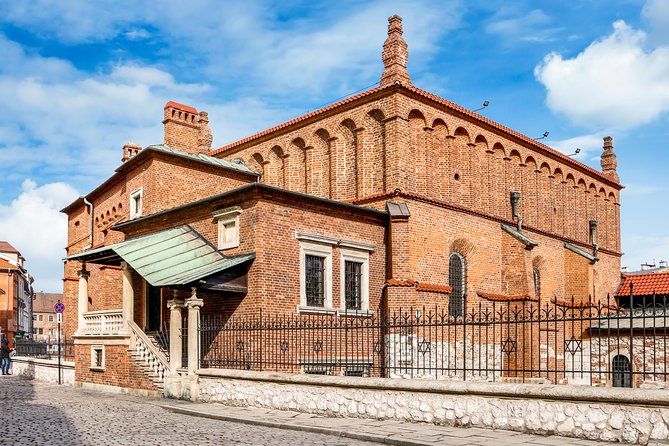
The Old Synagogue, or Stara Synagoga, is the first major historic stop. It is Krakow’s oldest surviving synagogue and one of the most important examples of traditional Jewish architecture in Poland.
The visit here is planned for about 10 minutes, and admission is not included. You may be able to enter by paying separately, with the commonly cited cost around 15 PLN per person. Carry Polish cash if you want to avoid missing the interior.
Even a short stop can be worthwhile because the building gives the rest of the walk a physical anchor. You are not just hearing about religious traditions or community life. You are looking at one of the places where that life was organized and practiced.
The limited scheduled time also means you should not expect a long museum visit here. If the interior is important to you, ask the guide how much time is available and whether the tour schedule allows you to look around properly.
Kazimierz, from separate city to historic district
The longest portion of the tour, about one hour and 55 minutes, is spent in Kazimierz. This is the heart of the experience.
The district was founded as a separate city in the 14th century. Over time, it became closely linked with Jewish settlement and culture. Your guide explains the area street by street, helping you see how synagogues, homes, squares, and public spaces fit together.
This is also where the guide’s style matters most. Several guides received praise for explaining Jewish life in Krakow through stories and biographies rather than dates alone. Andrzej, for example, was praised for bringing individual lives into the wider history. Joanna was singled out for making the area approachable on a first day in Krakow. Magda was praised for covering the main Jewish sites and the remains of the ghetto wall.
You may hear about the seven synagogues in the district, though the exact route and amount of time at each site can vary. Some buildings may be viewed from outside, while others may offer optional entry. The advertised plan specifically excludes admission fees, so budget separately for any interiors.
The long Kazimierz section is a strength if you want a serious introduction. It gives you time to ask questions and absorb the setting. It can also test your patience if you prefer a faster sightseeing rhythm. Wear comfortable shoes, since this is a walking tour with repeated stops rather than a simple point-to-point transfer.
More Jewish heritage tours in Krakow:
- Krakow: Schindler’s Factory & Ghetto Guided Tour
★ 4.7 · 1,694 reviews - Krakow: Jewish Quarter and Former Ghetto Tour
★ 4.9 · 1,441 reviews - Krakow: Bike Tour of Old Town, Jewish Quarter and the Ghetto
★ 4.9 · 1,155 reviews - Krakow: Kazimierz Jewish Quarter Walking Tour
★ 4.8 · 571 reviews
Remuh Synagogue and the cemetery beside it
Remuh Synagogue is another key stop, scheduled for about 10 minutes. Its admission is also not included.
The synagogue is closely associated with the Remuh Cemetery, an important burial ground in Krakow. This part of the walk helps explain how religious buildings and burial places worked together within the old Jewish town.
Because the scheduled stop is short, you should think of it as an introduction rather than a full museum visit. If your priority is detailed architecture or a quiet look inside, confirm the timing with your guide. The tour is designed to cover several sites, so it cannot give every building a long visit.
Still, the stop adds something the streets alone cannot provide. A cemetery makes the passage of generations visible. It shifts the focus from grand public history to families, memory, and the people who lived in this district.
Szeroka Street, once the Jewish town’s main square
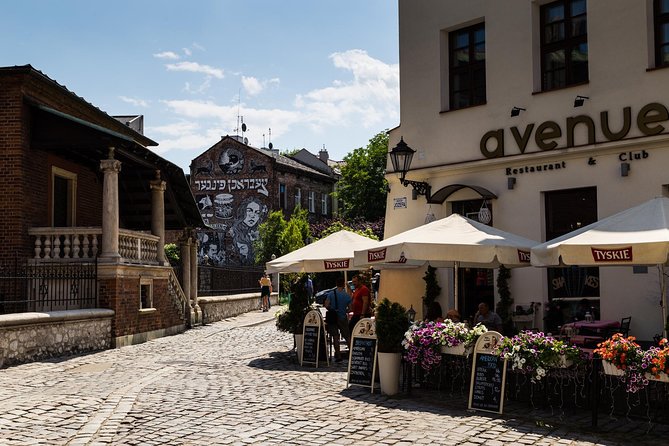
Szeroka Street is one of the most meaningful places on the route. Today it is a broad historic street lined with restaurants, buildings, and synagogues. In the past, it functioned as the main square of the Jewish town.
This is a good place to pause and imagine the area as a working community, not merely a preserved historic quarter. The synagogues around Szeroka Street show how concentrated religious and civic life once was.
The planned stop lasts about 25 minutes and costs nothing to visit. You will likely spend the time hearing how the buildings relate to one another and how the street changed over time.
Szeroka Street is also one of the better places to ask practical questions about present-day Kazimierz. A guide can help separate what is genuinely historic from what has been restored, repurposed, or presented for modern visitors. The neighborhood has restaurants and nightlife, but the tour keeps its attention on the people and events that shaped it.
From Jewish life to the Holocaust and the ghetto
The emotional weight of the walk increases as it moves toward the wartime sites. The route includes locations connected with the Krakow ghetto, including what remains of the ghetto wall, and continues toward Oskar Schindler’s factory.
The ghetto section is shorter than Kazimierz, according to one detailed account, but it was also described as the most affecting part of the tour. That makes sense. The physical remains are limited, yet a good guide can explain what happened in the surrounding streets and how forced confinement changed daily life.
This section requires attention and respect. It is not entertainment, and the film connection should not overshadow the real people involved. A strong guide uses Schindler’s List as a reference point, then moves beyond the movie to discuss Jewish victims, Polish residents, and the complicated choices made during the occupation.
One guide was praised for explaining that non-Jewish local residents also died during the Holocaust, including people connected with a nearby church. That wider view is valuable. It avoids reducing the period to a single hero or a single film plot.
If this is your first visit to Krakow, I recommend taking this tour before visiting the Schindler museum on your own. The walk can give you a framework for the museum, even if you have already seen the film or read about Schindler.
Ending at Oskar Schindler’s Enamel Factory
The tour ends at Oskar Schindler’s Enamel Factory at Lipowa 4. The factory is associated with Oskar Schindler and was used as one of the major historical references for Schindler’s List.
Do not assume that the tour includes a full museum visit. The factory is the endpoint, and admission is not listed among the included services. One account described stepping inside briefly even though the participants had already visited, but you should treat that as guide-dependent rather than guaranteed.
The ending is practical. You finish near one of Krakow’s most important wartime museums and can continue with your own visit if you have a separate ticket or plan to arrange entry. If you want to see the museum carefully, allow extra time beyond the three-hour walk.
The end point also makes the route feel purposeful. You begin near the Main Market Square, move through Kazimierz, cross into the wartime story, and finish at a place linked with rescue, industry, and memory.
What the guides do best
The strongest part of this tour is not the route map. It is the guide.
The guide team includes licensed local professionals, and the feedback shows a wide range of individual styles. Krzysztof was praised for making time for questions, especially when the group had only three people. Magda received high marks for covering the major synagogues and the remaining ghetto wall. Rob was praised for explaining both the medieval welcome given to Jewish residents and the experiences of local non-Jewish victims during the Holocaust.
Margareth was remembered for speaking with warmth and humanity during difficult material. Gregory was described as almost a walking history book, though one account wished he would slow his speech and pause more often for questions. That is useful advice: strong factual command does not always mean the ideal pace for every group.
The experience can even become nearly private if the booking is small. One pair found themselves as the only two participants and later booked the same guide for an Old Town walk. Group size is capped at 20, but actual attendance may be lower.
You cannot request a particular guide with certainty from the information provided, but names such as Joanna, Krzysztof, Magda, Andrzej, Rob, Gregory, and Margareth appear repeatedly in the tour feedback. The best match for you depends on whether you prefer a fast overview, a university-style lecture, or a more personal and emotional presentation.
Cost, walking, and practical value
At $33.21 per person, this is a reasonable price for about three hours with a licensed local guide. The value is strongest if you want explanation at every stop and plan to visit the district only once.
The price does not cover food, drinks, or synagogue admission. That is normal for a walking tour, but you should factor it into your budget. The optional synagogue entry is inexpensive, with 15 PLN per person cited by multiple participants.
The tour is offered in English and uses a mobile ticket. Confirmation arrives at booking. It operates near public transportation, and service animals are allowed. Most people can take part, but the walking distance and long periods on foot make comfortable footwear essential.
The maximum group size is 20. Smaller groups have a clear advantage because the subject invites questions, and several guides have been praised for answering them at length.
Free cancellation is available up to 24 hours before the start time for a full refund. If poor weather or an insufficient number of bookings forces cancellation, you are offered another date or a full refund. Since the experience depends on outdoor walking, check the forecast and dress sensibly.
Who should book this walk?
I would choose this tour if you want to understand Krakow rather than simply photograph it. It suits first-time visitors, readers of Polish or Jewish history, and anyone interested in the real places behind Schindler’s List.
It is also a good choice if you want a local guide who can answer detailed questions. The tour may suit you less if you dislike long explanations, need frequent sitting breaks, or want a purely architectural walk with little discussion of the Holocaust.
Families with older children may find the subject worthwhile, but adults should decide if the emotional material is appropriate. Anyone traveling with an elderly companion should consider the amount of walking carefully.
Should you book the Krakow Jewish Quarter tour?
Book it if you want context, stories, and a carefully explained route through Kazimierz and the wartime sites beyond it. The Old Synagogue, Remuh Synagogue, Szeroka Street, the ghetto remains, and Schindler’s factory make a strong three-hour sequence.
Go in expecting a serious history walk, not a quick highlights tour. Bring good shoes, about 15 PLN for optional synagogue admission, and patience for a guide who may stop often. If you value human stories and local perspective, the $33.21 cost is well spent.
FAQ
How long does the Krakow Jewish Quarter Guided Walking Tour last?
The tour lasts approximately three hours.
Where does the tour start?
The meeting point is KrakowTIP Tourist Information Point at Grodzka 18, 31-006 Kraków, Poland. The route also includes Krakow’s Main Market Square.
Where does the tour end?
The tour ends at Oskar Schindler’s Enamel Factory, Lipowa 4, 30-702 Kraków, Poland.
Is admission to the synagogues included?
No. Admission to the Old Synagogue and Remuh Synagogue is not included. The cost cited for synagogue entry is about 15 PLN per person.
Is the tour offered in English?
Yes. The experience is offered in English and includes a local licensed Krakow guide.
What is the cancellation policy?
You can cancel at least 24 hours before the start time for a full refund. Cancellations or changes made less than 24 hours before the experience are not accepted for a refund. If bad weather or an insufficient number of bookings cancels the tour, you are offered another date or a full refund.
Just added in Krakow
- Auschwitz-Birkenau – Skip the Line Tickets★ 3.5 · 29 reviews
- Auschwitz-Birkenau: Fast-Track Ticket & Guided Tour No Transfers★ 3.5 · 17 reviews
- Zakopane & Sleigh Ride with Bonfire – Group Tour from Kraków★ 5.0 · 2 reviews
- Sleigh Ride & Bonfire in Zakopane with Funicular – Private Trip★ 5.0 · 48 reviews
- Thermal Baths & Zakopane – Private Trip from Krakow★ 5.0 · 1 review
- Zakopane & Gubalowka Funicular – Private Winter Tour from Krakow★ 5.0 · 10 reviews
- Divine Mercy Sanctuary – Private Tour from Krakow★ 5.0 · 4 reviews
- stag dog chase Krakow prank★ 5.0 · 4 reviews