
REVIEW · JEWISH QUARTER TOURS
Krakow Jewish Quarter and Ghetto Tour by Electric Golf Cart
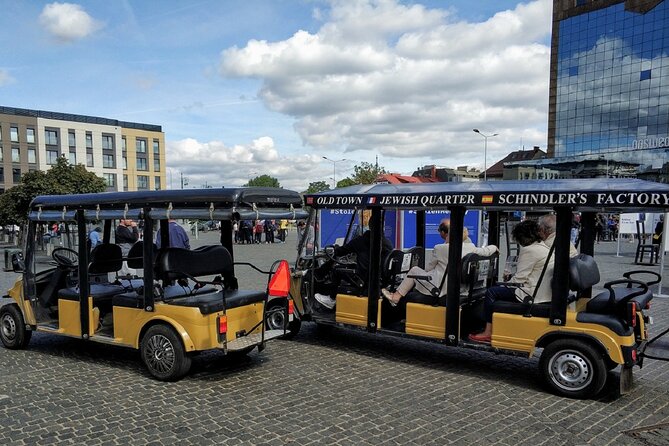
Krakow’s hardest stories are easier to grasp in context. This 90-minute electric golf cart tour links Kazimierz, the former Jewish quarter, with Podgórze and the wartime ghetto, giving you a quick look at more than 20 important sites without a long walk between them. I like the efficient route and the chance to hear historical details while someone else handles the driving. I also like that the tour combines a live English-speaking driver with an audio guide.
The main compromise is pace. You cover a lot in a short time, but you do not get a full museum visit or long, quiet stops at each monument. Some departures also spend more time inside Christian churches than Jewish buildings, which may disappoint you if your main interest is Jewish religious life.
In This Review
- Key points to know before booking
- Why an electric cart works well in Krakow
- Kazimierz: Krakow’s former Jewish city
- Szeroka Street and its four synagogues
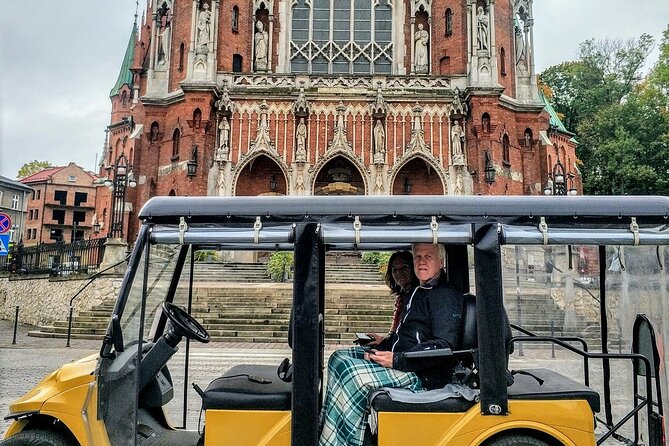
- Crossing into Podgórze and St Joseph’s Church
- The original ghetto wall
- Concord Square and the deportation point
- The pharmacy that offered help
- How the guides shape the experience
- What the $34.75 price gets you
- Meeting point, timing, and useful planning tips
- Who should book this Krakow cart tour?
- Should you book it?
- FAQ
- How long is the Krakow Jewish Quarter and Ghetto Tour?
- What language is the tour offered in?
- What transport is used during the tour?
- Which parts of Krakow does the tour visit?
- Does the tour visit Szeroka Street?
- Does the tour visit the former ghetto wall and Concord Square?
- Is hotel pickup included?
- What is the cancellation policy?
Key points to know before booking
- Kazimierz and Podgórze in one short ride: The route connects the old Jewish quarter with the former Krakow Ghetto, areas that are easy to visit separately on foot but more demanding to link in 90 minutes.
- Szeroka Street is the historical center: Four synagogues once stood along this street, an unusual concentration that explains its importance in Jewish Kazimierz.
- The ghetto section is the emotional core: You see part of the original ghetto wall, Concord Square, and the pharmacy that offered help during deportations.
- The cart saves energy: This is useful in hot weather, cold weather, rain, or when you simply want an overview before exploring on foot.
- Guides can make the difference: Guides named in the feedback include Matt, Natalie, Olivia, Martina, Phillips, Michael, and Natalia. Several were praised for clear explanations, warmth, and extra facts.
- It is an overview, not a deep museum tour: The audio guide adds context, but the short schedule limits time for interiors, photographs, and personal reflection.
Why an electric cart works well in Krakow
Kazimierz and Podgórze are not far apart on a map, but the route includes many stops and several separate historical themes. By cart, you can see the main streets, squares, churches, synagogues, ghetto remains, and memorial locations without spending the whole visit checking a map.
I especially like the cart for a first morning or afternoon in Krakow. It helps you understand the layout, then you can return to the places that caught your attention. One person described using the tour to find spots for later visits on foot, which is exactly the right way to treat this experience.
The ride also makes sense if you are tired, short on time, or visiting in difficult weather. A particularly useful detail is that one departure stayed comfortable during a cold winter day, while another was appreciated during hot weather. A rainstorm caused a poor experience for one family, largely because of confusion at the parking area and difficulty fitting a stroller into the full cart. If rain is forecast, allow extra time to find the correct vehicle and check the boarding arrangement.
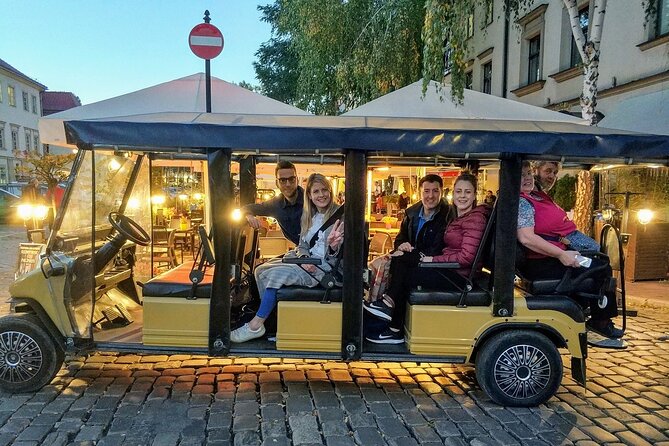
The cart is not a private vehicle. The maximum group size is 50 people, though the actual cart arrangement and seating can affect how personal the experience feels. Some passengers were placed in rear seats, including seats facing backward, and one person found the headset format less social than a loudspeaker. If sitting direction matters to you, ask about seating before departure, but do not assume a choice is guaranteed.
More Golf Cart Tours in Kraków
- Krakow: City Sightseeing Tour by Electric Golf Cart
★ 4.5 · 3,264 reviews - Krakow: City Sightseeing Tour Eco Electric Buggy Golf Cart
★ 4.7 · 3,143 reviews - Krakow: Extended City Sightseeing Tour – Eco Buggy Golf Cart
★ 4.7 · 794 reviews
Kazimierz: Krakow’s former Jewish city
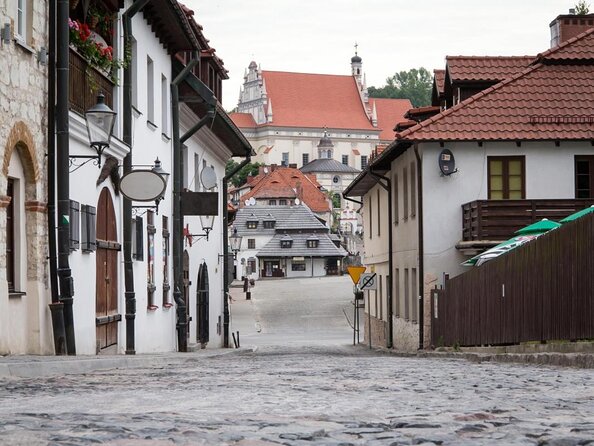
The tour begins with Kazimierz, the independent city south of Wawel that served as the center of Jewish life in Krakow for centuries. Today it is one of the city’s most visited districts, but its importance is not just architectural or fashionable. The streets and religious buildings mark a long period when Jewish residents built homes, businesses, schools, and places of worship here.
The cart gives you a broad view rather than a single building in isolation. You hear about past and present residents while moving through the district, which helps connect the surviving buildings with the life that once surrounded them.
The audio guide is useful here because it keeps the commentary moving even when the cart is passing through streets. The live driver can add comments, answer questions, and point out details that a recorded script might miss. The best departures seem to be those where the guide adds personal explanation instead of simply repeating the audio.
Szeroka Street and its four synagogues
Szeroka Street is the symbolic heart of Jewish Kazimierz. Four synagogues once stood here, an extraordinary concentration for one European street. Even if you know little about Krakow’s Jewish past, that single fact makes the street easier to read: this was not merely a residential lane, but a center of worship and community life.
The street is also linked with the Jewish Culture Festival, including its final concert. That contrast is important. Szeroka carries memories of loss, but it is not presented only as a frozen memorial. It remains part of Krakow’s cultural life.
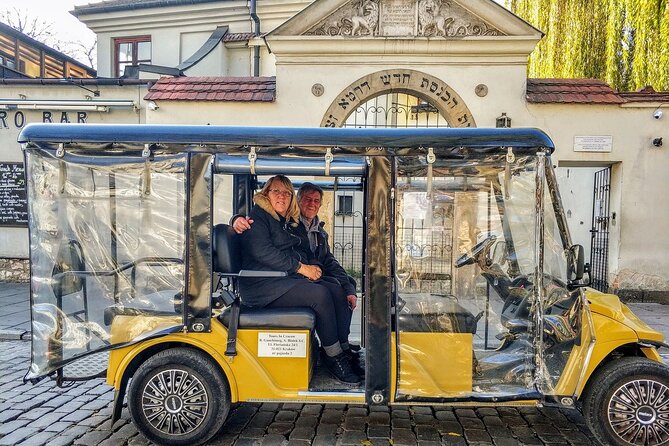
The tour includes a stop at one of Poland’s oldest surviving synagogues, preserved in unusually good condition. You may be able to see inside buildings during brief stops, but the schedule does not function like a full synagogue tour. One useful criticism is that some departures provide only a short look at Christian churches while offering little time inside Jewish structures. If Jewish religious architecture is your main reason for visiting Kazimierz, plan a separate walking visit or museum stop afterward.
Still, the cart tour gives you a solid first reading of the district. You see where the main buildings are, hear why Szeroka matters, and gain a sense of how close the religious and civic spaces were to one another.
Crossing into Podgórze and St Joseph’s Church
The route then moves toward Podgórze, a district that was once a separate town and became part of Krakow only in the 20th century. The parish church of St Joseph dominates Podgórze Market Square, making it one of the easiest landmarks to recognize from the cart.
This stop adds useful urban context. The story is not limited to Jewish Kazimierz. It also concerns the changing shape of Krakow, the relationship between neighboring districts, and the way ordinary streets became tied to wartime events.
The church itself is a major visual point, and some departures allow brief visits inside religious buildings. Several people appreciated being able to step off the cart for five or ten minutes to look around and take photographs. That flexibility improves the experience, though the timing can vary by guide and traffic conditions.
If you expect a detailed art or architecture tour of St Joseph’s, you may find the stop too short. Its value here is mainly as a landmark and as part of the route into Podgórze.
More Jewish heritage tours in Krakow:
- Krakow: Schindler’s Factory & Ghetto Guided Tour
★ 4.7 · 1,694 reviews - Krakow: Jewish Quarter and Former Ghetto Tour
★ 4.9 · 1,441 reviews - Krakow: Bike Tour of Old Town, Jewish Quarter and the Ghetto
★ 4.9 · 1,155 reviews - Krakow: Kazimierz Jewish Quarter Walking Tour
★ 4.8 · 571 reviews
The original ghetto wall
In 1941, the Nazis turned part of Podgórze into the Krakow Ghetto. The tour visits a small surviving section of the original wall, along with a plaque commemorating the fate of the people confined there.
This is one of the moments when the cart’s convenience gives way to a more serious purpose. The wall fragment is not large, and it does not try to recreate the ghetto. Its force comes from knowing that an ordinary piece of masonry marked a boundary imposed on human beings.
You should expect a brief stop rather than a long visit. The audio material and guide commentary provide the wider setting, while the physical remnant gives you something concrete to look at. Several people described the ghetto portion as emotional and particularly meaningful. That response is understandable: the location brings the history out of books and into the streets.
The tone matters here. The strongest guides, including Michael, Martina, Olivia, and others praised for their care, handled the subject with respect rather than rushing through it as just another attraction. Because this is difficult material, an attentive guide can shape the entire experience.
Concord Square and the deportation point
The former Plac Zgody, now often called Ghetto Heroes Square, was designated an Umschlagplatz during the Nazi occupation. Jews were forced to gather here before deportation. The square is one of the most painful locations on the route because it connects public space with the machinery of removal.
You will hear about what happened here while seeing the square in its present form. The setting is not presented as a theatrical reconstruction. That restraint is appropriate. The power comes from the gap between the square’s everyday appearance and the events tied to it.
This is another stop where the 90-minute schedule has both strength and weakness. The tour ensures you reach the site, which is valuable if you have limited time. But you may want more time to stand quietly, read, and take in the memorial details. If you know you will need that pause, return later on foot.
The pharmacy that offered help
One of the most affecting places is the former Polish pharmacy that operated inside the ghetto. During deportations, it offered shelter and functioned as a link between people inside and outside the ghetto. Messages and packages passed through it, and the pharmacy became a small place of assistance during a brutal period.
The stop gives the tour a human scale. The wall and square show the system imposed on the Jewish population. The pharmacy points to individual choices and acts of help within that system.
This location may be especially meaningful if you prefer personal stories to a list of dates. The guide and audio commentary explain why the pharmacy mattered, while the visit places it within the same streets as the ghetto wall and deportation square.
How the guides shape the experience
The tour includes an English-speaking driver, and guide quality is clearly central to its value. Matt was praised for being informative, while Natalie was described as pleasant, funny, welcoming, and well prepared. Olivia received strong praise for her energy and respectful presentation, and Martina was appreciated for adding building details and allowing time to step inside churches.
Phillips was also singled out for giving a well-organized tour, while Michael was praised during an emotional visit. Natalia was described as making useful additions to the audio guide. These comments point to an important practical truth: the structure is fixed, but the feel of the tour depends heavily on who is driving that day.
The audio guide gives the tour a reliable base. It also means you may be listening through a headset rather than hearing every detail from a shared speaker. That can make the ride less conversational, especially if you are with family or friends. On the other hand, headphones can make the commentary easier to hear in traffic.
What the $34.75 price gets you
At $34.75 per person, this is not the cheapest way to see Kazimierz. You can walk around the district without paying for transport, and a self-guided visit lets you spend as long as you like at each synagogue, square, or memorial.
The value comes from the route and the time saved. In about 90 minutes, you cover two districts and more than 20 cultural monuments, while receiving both recorded information and live commentary. If you are in Krakow for a short stay, that can be a fair trade.
I would call the price reasonable for an overview, especially if walking long distances is tiring or the weather is poor. I would not call it good value if you want extended interior visits or a slow, detailed look at Jewish buildings. The tour works best as a starting point, not as your only visit to the quarter.
The experience is generally booked about 17 days ahead, though one person managed to book the day before and another found it useful when only a few hours remained. That suggests some flexibility, but popular times may fill. Confirmation arrives when you book, and free cancellation is available up to 24 hours before the start time. Changes or cancellations inside that window are not refunded.
Meeting point, timing, and useful planning tips
The meeting point is at Mikołaja Zyblikiewicza 2, near public transportation. The tour ends at Mikołaja Kopernika 3, so you should not plan to return to the starting point automatically. Both locations are in central Krakow, but check the route before booking your next activity.
Hotel pickup and drop-off are not included. You need to reach the start point yourself, and it is wise to arrive early enough to locate the correct operator and cart. One bad-weather departure involved confusion among the golf cart operators, so do not assume that every cart waiting nearby is yours.
The tour is offered in English and includes a mobile ticket. Most people can participate, but the provided details do not promise a specific arrangement for wheelchairs, strollers, or other mobility needs. If you need extra space, contact the provider before paying.
Bring a phone for the mobile ticket, and consider carrying a small amount of water in hot weather. Since the stops are brief, comfortable clothing matters less than it would on a walking tour, but you should still be ready to step out at memorials and religious buildings.
Who should book this Krakow cart tour?
I would recommend it to you if you have only a day or two in Krakow, want a clear introduction to Kazimierz and Podgórze, or prefer not to walk between scattered sites. It also suits anyone who wants to save energy for museums, restaurants, or a later visit to Wawel.
It is a good choice for people who enjoy a guided overview and appreciate having the route organized. Families may find the cart easier than a long walk, though stroller space can be a concern when the vehicle is full. The covered ride can also help in heat or cold.
I would steer you toward a walking tour instead if you want to linger, ask many questions, enter several Jewish buildings, or follow your own interests. A cart cannot give every street and memorial the time it deserves.
Should you book it?
Book this tour if you want to cover Kazimierz and the former ghetto quickly, with an English-speaking guide and audio support. Its strongest features are the efficient route, the ghetto wall and Concord Square, the pharmacy story, and the chance to see more than 20 sites without exhausting yourself.
Skip it if you want a slow architectural study or substantial time inside synagogues. For most first-time visitors with limited time, I think the tour earns its place as a useful, respectful orientation. Use it to learn the geography and the major stories, then return on foot to the places that deserve more time.
FAQ
How long is the Krakow Jewish Quarter and Ghetto Tour?
The tour lasts approximately 1 hour and 30 minutes.
What language is the tour offered in?
The experience is offered in English and includes an English-speaking driver.
What transport is used during the tour?
You travel by electric golf cart. An audio guide is also included.
Which parts of Krakow does the tour visit?
The route covers Kazimierz, Krakow’s former Jewish quarter, and Podgórze, including sites connected with the former Krakow Ghetto.
Does the tour visit Szeroka Street?
Yes. Szeroka Street is included, along with its importance as the historic center of Jewish Kazimierz and its former concentration of four synagogues.
Does the tour visit the former ghetto wall and Concord Square?
Yes. The route includes a surviving fragment of the former ghetto wall and the former Plac Zgody, used as an Umschlagplatz during the Nazi occupation.
Is hotel pickup included?
No. You must make your own way to the meeting point at Mikołaja Zyblikiewicza 2. The tour ends at Mikołaja Kopernika 3.
What is the cancellation policy?
You can cancel for a full refund up to 24 hours before the experience begins. Cancellations or changes made less than 24 hours before the start are not refunded.
Just added in Krakow
- Auschwitz-Birkenau – Skip the Line Tickets★ 3.5 · 29 reviews
- Auschwitz-Birkenau: Fast-Track Ticket & Guided Tour No Transfers★ 3.5 · 17 reviews
- Zakopane & Sleigh Ride with Bonfire – Group Tour from Kraków★ 5.0 · 2 reviews
- Sleigh Ride & Bonfire in Zakopane with Funicular – Private Trip★ 5.0 · 48 reviews
- Thermal Baths & Zakopane – Private Trip from Krakow★ 5.0 · 1 review
- Zakopane & Gubalowka Funicular – Private Winter Tour from Krakow★ 5.0 · 10 reviews
- stag dog chase Krakow prank★ 5.0 · 4 reviews
- Divine Mercy Sanctuary – Private Tour from Krakow★ 5.0 · 4 reviews