
REVIEW · JEWISH QUARTER TOURS
Krakow: Jewish Quarter and Ghetto Sightseeing Golf Cart Tour
Krakow’s hardest stories need context. This 90-minute electric golf cart tour links Kazimierz, the historic Jewish Quarter, with Podgórze and the former wartime ghetto. I like the heated vehicle, especially in cool weather, and the route’s clear focus on Jewish life, wartime persecution, and the places that still mark both chapters of Krakow’s past.
I also like the practical design: you see a lot in a short time without walking the full distance between districts. The main drawback is that the tour keeps moving, so some stops receive only a short explanation. An English review also noted that the driver sometimes spoke over the audio, while the Spanish track lasted longer, so the listening experience may depend on the language you choose.
In This Review
- Key points at a glance
- Why the Kazimierz and ghetto route matters
- Starting at the Zabka meeting point
- Kazimierz: synagogues, streets, and everyday Jewish life
- The Christian side of Kazimierz
- Crossing the Vistula into Podgórze
- Ghetto wall fragment: a small piece with a heavy meaning
- Ghetto Heroes Square and the chair memorial
- Under the Eagle Pharmacy
- What the audio guide does well, and where it falls short
- Is $34 a fair price for 90 minutes?
- Who should book this golf cart tour?
- Practical tips before you go
- Should you book it?
- FAQ
- How long does the Krakow Jewish Quarter and Ghetto tour last?
- Where does the tour begin?
- Is the tour conducted in English?
- Which places does the tour visit?
- Are entrance tickets included?
- Is the golf cart wheelchair accessible?
Key points at a glance
- Two historic districts in 90 minutes: Travel through Kazimierz and Podgórze without spending the whole afternoon on foot.
- A heated electric golf cart: The covered vehicle gives you a comfortable ride in colder weather and avoids the strain of a long walk.
- Jewish Krakow in two chapters: Learn about centuries of Jewish life in Kazimierz, then confront the wartime story of the ghetto in Podgórze.
- Important memorial sites: See Ghetto Heroes Square, part of the ghetto wall, and Under the Eagle Pharmacy.
- Audio in many languages: Commentary is available in English, Polish, Hebrew, Spanish, French, German, Italian, and many other languages.
- A quick orientation tour: It suits you best if your time is short or you want an overview before visiting sites on foot.
Why the Kazimierz and ghetto route matters
Krakow’s Jewish story is not contained in one museum or one synagogue. It unfolds across two districts separated by the Vistula River, and this route helps you connect them.
Kazimierz was once a separate town. For centuries, it was a major center of Jewish culture and daily life. Its streets, synagogues, and old buildings point to a community that was not simply passing through Krakow, but helped shape the city.
Podgórze tells a different story. During World War II, it became the site of Krakow’s Jewish ghetto. The short crossing from Kazimierz to Podgórze is physically easy, but the historical shift is severe. You move from places linked with ordinary life, worship, trade, and neighborhood traditions to sites connected with forced removal and persecution.
I value tours that make that change clear. Without context, Kazimierz can look like a pleasant district of cafés and galleries, while Podgórze can seem like another attractive area beside the river. The audio commentary gives those streets a human and historical frame.
More Golf Cart Tours in Kraków
- Krakow: City Sightseeing Tour by Electric Golf Cart
★ 4.5 · 3,264 reviews - Krakow: City Sightseeing Tour Eco Electric Buggy Golf Cart
★ 4.7 · 3,143 reviews - Krakow: Extended City Sightseeing Tour – Eco Buggy Golf Cart
★ 4.7 · 794 reviews
Starting at the Zabka meeting point
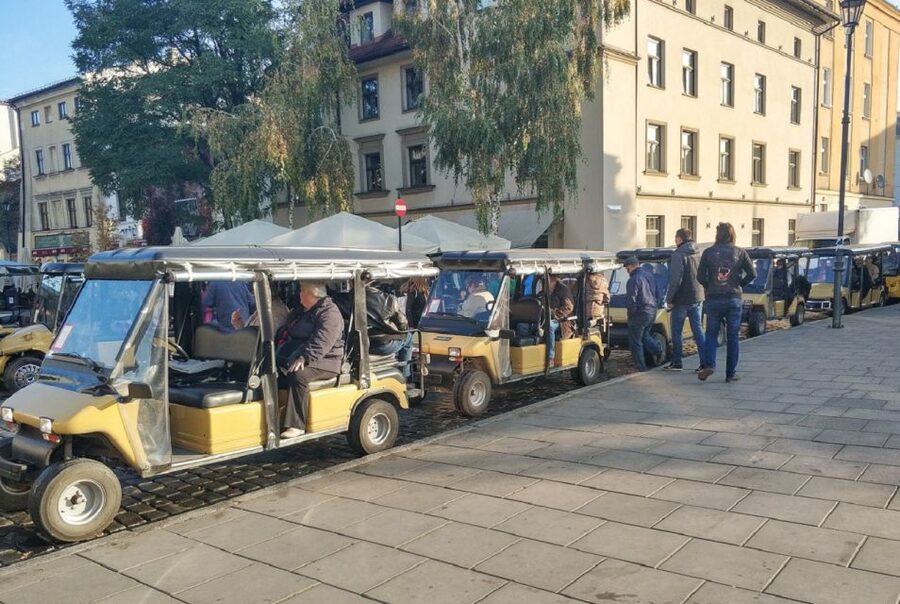
The meeting point is at the Kiss&Ride parking area in front of the Zabka store. Look for a golf cart marked excursions.city. This detail matters because the area may have several vehicles and busy streets, so you should arrive at least 10 minutes early.
The tour does not wait for late arrivals once the group has left. If you miss the departure, the ticket is non-refundable, so arriving early is not just a polite suggestion. It is the safest way to protect your booking.
You board a group golf cart equipped with heating and an audio guide. The ride is designed for sightseeing rather than private touring, and an English-speaking driver handles the vehicle. The driver may add information along the route, but this is not a private tour with a live historian.
Large bags and luggage are not allowed. Plan to carry only what you need for the 90-minute ride.
Kazimierz: synagogues, streets, and everyday Jewish life
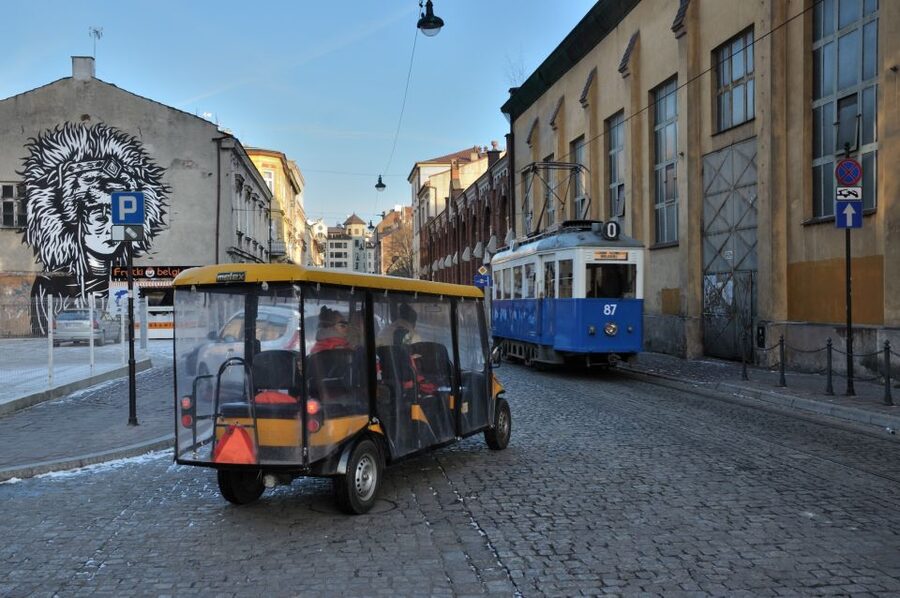
The first part of the route takes you through Kazimierz. This is the strongest section for understanding Jewish Krakow before World War II.
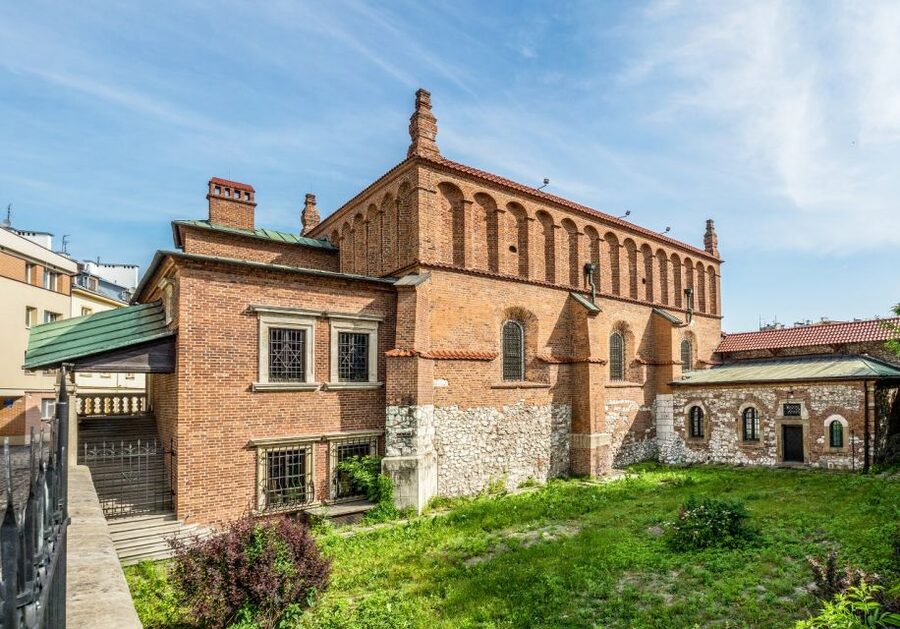
You pass historic synagogues and narrow streets that reflect the district’s long religious and social life. The tour does not include entrance tickets, so you should think of these sites as exterior landmarks during the ride. The audio commentary explains why they matter, while the cart lets you cover more ground than a short walk would allow.
That combination is useful if this is your first look at Kazimierz. You get an outline of the district, its buildings, and its place in Krakow’s history. Later, you can decide which synagogue, museum, or street deserves a longer visit.
The audio format also lets you look around while information plays in your selected language. Commentary is offered in a notably large range of languages, including Chinese, Croatian, Czech, Danish, Dutch, English, Finnish, French, German, Greek, Hebrew, Hungarian, Italian, Japanese, Korean, Lithuanian, Norwegian, Polish, Portuguese, Romanian, Russian, Slovak, Spanish, Swedish, Turkish, Ukrainian, and Serbian.
Still, audio tours require attention. You will hear the explanation through headphones or the vehicle’s audio system, but the cart keeps moving. If you want to study a synagogue facade or photograph a small street detail, you may have only a moment before the route continues.
One useful piece of feedback comes from the English-language experience: the driver was described as pleasant and informative, but the spoken commentary reportedly ran ahead of the audio in one language, while the Spanish track continued longer. That does not mean every departure has the same issue, but it is a fair reason to treat the audio as a guide rather than a perfectly timed museum narration.
The Christian side of Kazimierz
The route also passes through the Christian part of Kazimierz. This section helps show that the district’s identity was shaped by more than one community.
Today, this area is known for cafés, galleries, and a lively street scene. The tour uses those modern details alongside the older story of coexistence between Christian and Jewish residents. That contrast is worth noticing. Kazimierz is not only a place of memorials, and it is not only a nightlife district. Its streets carry several layers of Krakow’s past.
The cart is helpful here because you can see the transition between parts of the neighborhood without constantly checking a map. You are not simply being driven past pretty streets. You are being shown how the district’s religious and social divisions fit into the city’s wider story.
This is also where the tour’s limits become clear. A golf cart is excellent for an overview, but it cannot replace time on foot. You will not have long to pause at every facade, read every plaque, or enter a historic building. If you want a detailed study of Kazimierz, plan a separate walk after the ride.
More Jewish heritage tours in Krakow:
- Krakow: Schindler’s Factory & Ghetto Guided Tour
★ 4.7 · 1,694 reviews - Krakow: Jewish Quarter and Former Ghetto Tour
★ 4.9 · 1,441 reviews - Krakow: Bike Tour of Old Town, Jewish Quarter and the Ghetto
★ 4.9 · 1,155 reviews - Krakow: Kazimierz Jewish Quarter Walking Tour
★ 4.8 · 571 reviews
Crossing the Vistula into Podgórze
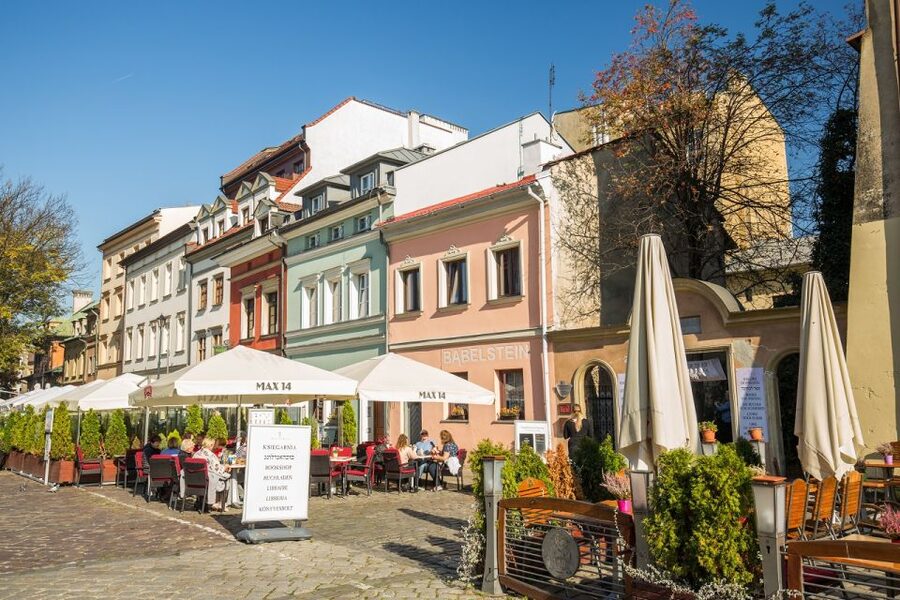
The journey continues across the Vistula River into Podgórze. This crossing creates a natural break between the two parts of the experience.
In Kazimierz, the focus is largely on the long history of Jewish life and the relationship between communities. In Podgórze, the focus turns to the German occupation and the former Jewish ghetto. The shift is not softened by the short travel time. That is part of the route’s value.
Podgórze was the area where Krakow’s Jewish population was confined during World War II. The tour takes you to several places connected with that period, allowing you to see the physical setting rather than learning about the ghetto only from a book or display.
Because the vehicle is electric, the ride is relatively quiet and suited to moving through urban streets. It is also described as eco-friendly, though the main practical benefit for you is simple: you can cover both districts without tiring yourself before the important sites in Podgórze.
Ghetto wall fragment: a small piece with a heavy meaning
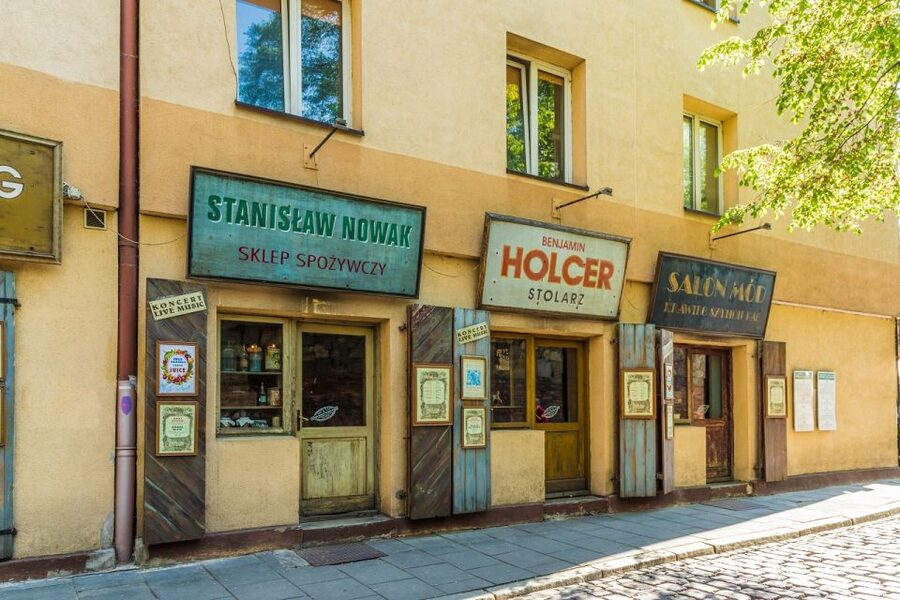
One of the route’s key sights is a remaining fragment of the ghetto wall. It is not a vast monument. Its power comes from its scale and location.
A surviving section of wall makes the forced separation of the ghetto easier to grasp. Historical facts can feel distant when they stay on a timeline. Seeing an actual fragment gives those facts a physical point in the city.
The tour does not promise a long stop or an extended walking visit. You may have limited time to look closely, take photographs, or absorb the explanation. That is the chief weakness of this portion for anyone who wants quiet reflection.
Even so, the wall fragment is an important reason to choose this route. It gives you something tangible to remember after the cart returns to the city center.
Ghetto Heroes Square and the chair memorial
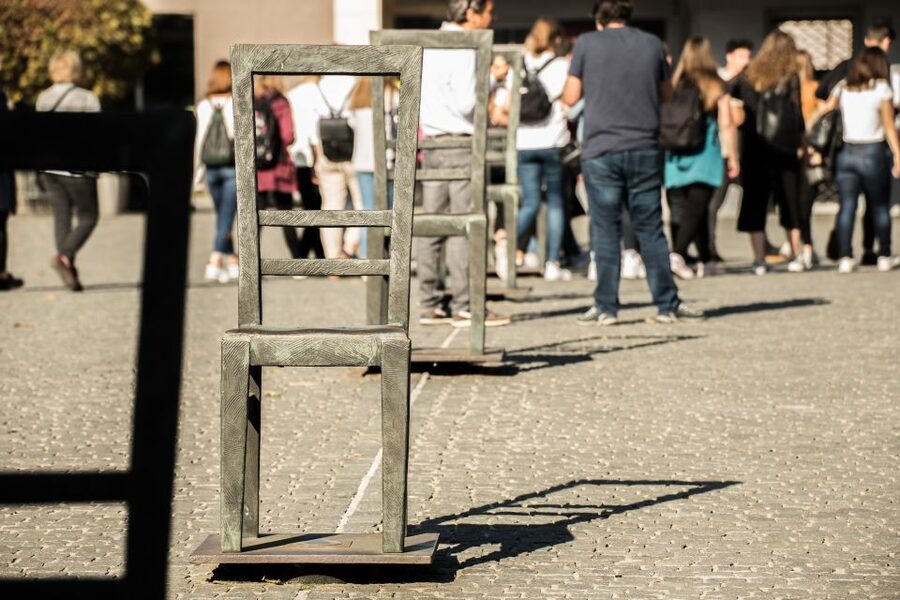
The tour also passes through Ghetto Heroes Square, known for its distinctive chair memorial. The chairs are an arresting sight because they suggest absence, removal, and the ordinary furniture left behind when people were forced from their homes.
The memorial is not presented as a decorative city feature. It points to the fate of the people who lived in the ghetto and were later deported or killed. The audio commentary helps explain why the square matters, while the unusual design gives you a visual detail that is hard to forget.
This is another place where timing affects the experience. A moving vehicle can show you the square and provide context, but it cannot give you the same quiet pause as standing there on foot. If the memorial becomes one of the moments you want to consider at greater length, return later for a walk.
Under the Eagle Pharmacy
Under the Eagle Pharmacy is another major wartime site on the route. The pharmacy was connected with the ghetto and is remembered as a place that provided help during the occupation.
Seeing it from the cart adds another layer to the story. The ghetto was not an abstract area on a map. It contained businesses, homes, places of work, and people trying to survive under brutal conditions. A pharmacy may sound like an ordinary stop, but that is exactly why it matters. Ordinary places can carry some of the clearest evidence of how persecution affected daily life.
Entrance tickets are not included, so this tour focuses on the outside view and audio explanation. If you want to see the interior or learn more through exhibits, you would need to arrange that separately.
What the audio guide does well, and where it falls short
The audio guide gives the tour structure. Without a live guide, the route depends on recorded commentary to explain the synagogues, streets, ghetto sites, and memorials.
The wide choice of languages is a real strength. You can select from 30 languages, including Hebrew and Polish as well as English, Spanish, French, German, Italian, and several less commonly supported languages. That makes the tour practical for mixed-language groups.
The driver can add information, and one highly rated experience specifically praised the driver’s pleasant manner and useful explanations. Nathalie was also singled out by name in a positive account, with the route described as interesting and helpful for seeing the districts quickly.
The limitation is timing. The cart continues along its route, and the driver’s comments may not match the audio perfectly. One account noted that the English audio finished sooner than the Spanish version and that extra spoken information sometimes came over the recording. If you prefer a quiet, carefully paced explanation, a live walking tour may suit you better.
Is $34 a fair price for 90 minutes?
At $34 per person, this is not the cheapest way to see Kazimierz. You can walk through both districts for free, at least in terms of transport, and then pay separately for museums or synagogue entry.
The price makes more sense if you value time and comfort. In 90 minutes, you cover Kazimierz, the Christian part of the district, the river crossing, and several Podgórze sites. You also avoid a long walk and have a heated seat in the cart.
It is particularly useful for a short Krakow visit, for anyone with limited walking stamina, or for a first afternoon when you want to understand the city’s layout. The wheelchair-accessible vehicle also makes the route available to more people, though you should still confirm your exact arrangements when booking.
The value is weaker if you want to enter buildings, stop for long periods, or ask detailed questions at every site. The tour includes the ride, audio guide, and English-speaking driver, but not entrance tickets, food, drinks, or hotel pickup and drop-off.
Who should book this golf cart tour?
I would recommend it to you if you want a clear first overview of Jewish Krakow and have only a short amount of time. It is also a good choice if cold weather, mobility concerns, or the distance between Kazimierz and Podgórze makes a full walking route less appealing.
Families and mixed-age groups may appreciate the covered vehicle and fixed 90-minute schedule. You can see important places without committing to several hours on foot.
I would be more cautious if your main goal is detailed historical discussion. The audio guide gives useful background, but the tour moves quickly and does not include site entry. For a more personal conversation and longer pauses, choose a live walking tour instead, then use this cart route only if comfort and coverage matter most.
Practical tips before you go
Arrive 10 minutes early at the Kiss&Ride area in front of the Zabka store. Look for the cart labeled excursions.city, and do not bring luggage or a large bag.
Choose your audio language before departure and pay attention to the opening instructions. Since the vehicle keeps moving, keep your camera ready but do not expect time for extensive photography at every location.
I would also plan the tour early in your Krakow stay if possible. It can help you understand where Kazimierz and Podgórze sit in relation to one another, then you can return on foot to the places that deserve more time.
Cancellation is free up to 24 hours before departure, and you can reserve now while paying later. That is useful when your Krakow schedule is still changing.
Should you book it?
Book this tour if you want to connect Kazimierz’s Jewish life with Podgórze’s ghetto history in one comfortable, compact route. The 4.8 rating from 14 reviews reflects strong satisfaction, especially with the pleasant drivers, useful explanations, and efficient route.
Skip it if you want a slow, intimate walking experience with interior visits and long conversations. For everyone else, $34 is a reasonable price for a heated ride across two historic districts, especially when your time in Krakow is limited.
FAQ
How long does the Krakow Jewish Quarter and Ghetto tour last?
The tour lasts 90 minutes and returns to the original meeting point.
Where does the tour begin?
It begins at the Kiss&Ride parking area in front of the Zabka store. Look for a golf cart labeled excursions.city.
Is the tour conducted in English?
An English-speaking driver is included, and the audio guide is available in English along with many other languages.
Which places does the tour visit?
The route includes Kazimierz, the Christian part of Kazimierz, Podgórze, a fragment of the former ghetto wall, Ghetto Heroes Square, and Under the Eagle Pharmacy.
Are entrance tickets included?
No. Entrance tickets, food, drinks, and hotel pickup and drop-off are not included.
Is the golf cart wheelchair accessible?
Yes, the activity is listed as wheelchair accessible. Large bags and luggage are not allowed.
Just added in Krakow
- Auschwitz-Birkenau – Skip the Line Tickets★ 3.5 · 29 reviews
- Auschwitz-Birkenau: Fast-Track Ticket & Guided Tour No Transfers★ 3.5 · 17 reviews
- Zakopane & Sleigh Ride with Bonfire – Group Tour from Kraków★ 5.0 · 2 reviews
- Sleigh Ride & Bonfire in Zakopane with Funicular – Private Trip★ 5.0 · 48 reviews
- Thermal Baths & Zakopane – Private Trip from Krakow★ 5.0 · 1 review
- Zakopane & Gubalowka Funicular – Private Winter Tour from Krakow★ 5.0 · 10 reviews
- Divine Mercy Sanctuary – Private Tour from Krakow★ 5.0 · 4 reviews
- stag dog chase Krakow prank★ 5.0 · 4 reviews