
REVIEW · JEWISH QUARTER TOURS
Krakow: Jewish Ghetto Walking Tour
History is still written on these streets. This one-hour walk through Krakow’s former Jewish ghetto connects the remaining wall, Ghetto Heroes Square, and Under the Eagle pharmacy in a compact, serious introduction to World War II. I like the route because it uses real places rather than a museum-only presentation, and I like the short format, which fits neatly into a busy Krakow day.
The main consideration is the pace. At just one hour, you receive an overview rather than a complete study of Krakow’s Jewish past or the Nazi occupation. The subject is also painful, so this is best approached as a quiet historical visit, not a casual sightseeing stroll.
In This Review
- Key points to know before you go
- Why this short walk matters in Krakow
- Meeting at Schindler Factory Museum
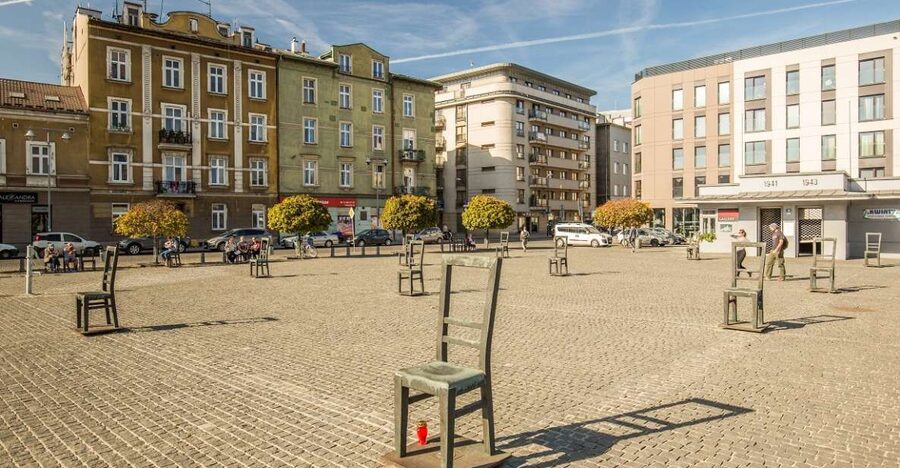
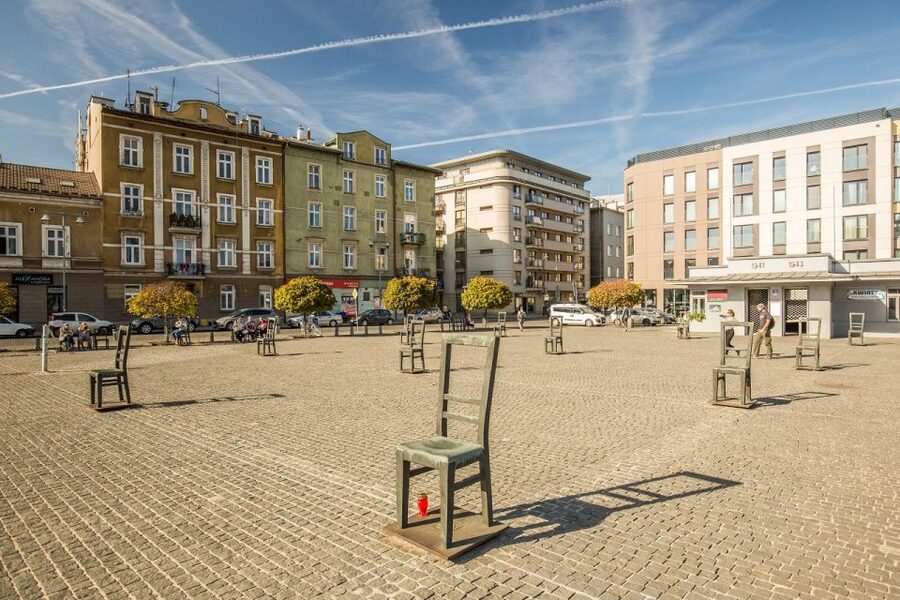
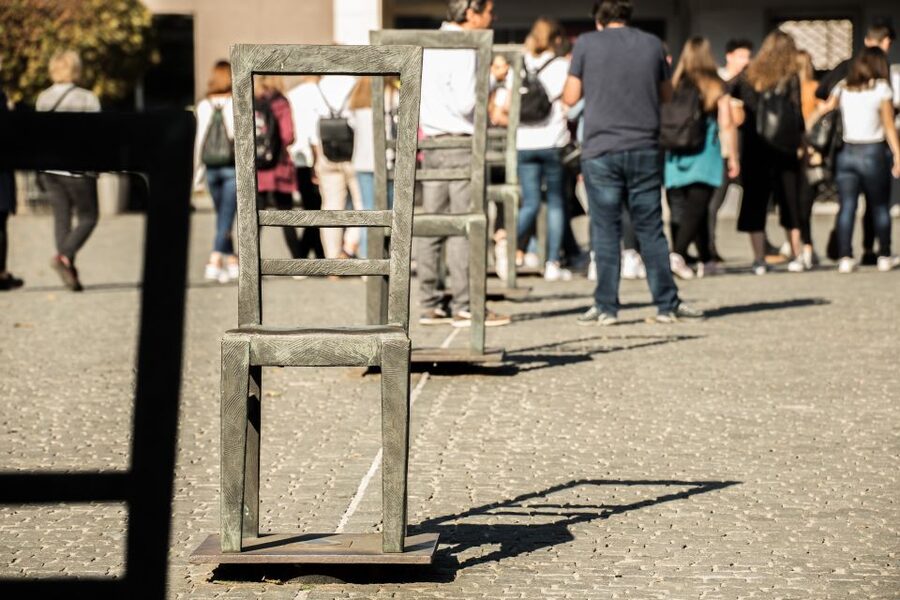
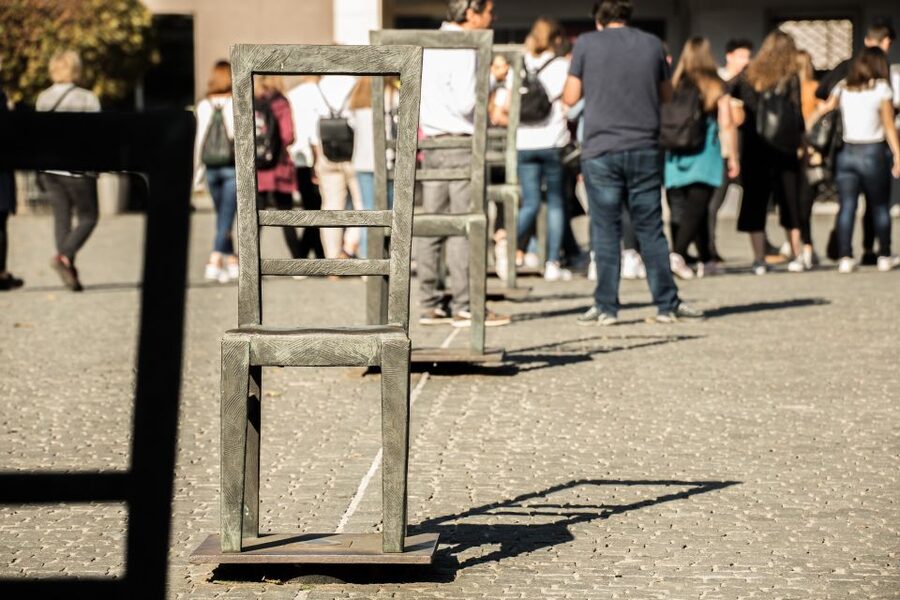
- Ghetto Heroes Square and the meaning of the chairs
- The remaining wall fragment
- The buildings where displaced Jews lived
- Under the Eagle pharmacy
- What the $15 price gets you
- Who will get the most from this tour
- Practical advice for making the hour count
- Is the Krakow Jewish Ghetto Walking Tour worth booking?
- FAQ
- How long does the Krakow Jewish Ghetto Walking Tour last?
- How much does the tour cost?
- Where does the tour meet?
- How do I find the guide?
- What languages are available?
- Is a professional guide included?
- Are food and drinks included?
- Can I cancel for a full refund?
- Can I reserve the tour and pay later?
Key points to know before you go
- The route begins near Schindler Factory Museum: Look for a guide holding an excursions.city sign at the museum entrance.
- Ghetto Heroes Square is the emotional center: This is where Jewish residents were identified and sent to concentration camps.
- A surviving piece of the wall remains: The fragment is now a memorial and a place of pilgrimage for Jewish people visiting Krakow.
- The walk enters the former ghetto district: You pass buildings where thousands of displaced Jews lived in cramped conditions.
- Under the Eagle pharmacy is the final stop: This famous site links the street walk with the wartime story of aid and survival.
- The tour costs $15 per person: For a live, multilingual historical introduction, that is a modest price, especially if you want context before visiting nearby museums.
Why this short walk matters in Krakow
Krakow’s wartime story can feel scattered if you explore it without a plan. The Jewish Ghetto Walking Tour gives you a clear thread through the Poguzhe district, the area identified with the former Jewish ghetto.
The walk is not simply about old buildings. It is about how ordinary urban spaces were turned into places of control, separation, and forced movement. Streets and squares that now appear quiet were once part of a system that displaced Krakow’s Jewish population and sent people toward concentration camps.
That contrast is one reason I find this kind of tour valuable. You are not looking at history from a distance. You are standing in the places where decisions were imposed on real people.
The guide’s job is especially important here. A wall fragment or a square can look like a small piece of the past if you do not know what happened there. With explanation, each stop becomes part of a larger account of war, displacement, and memory.
The tour is described as offering a good overview of the period, and that is the right way to view it. You will not cover every chapter of Krakow’s Jewish history in an hour. You will get a focused introduction that can help you understand what you see in the district and decide what you want to explore next.
More Walking Tours in Kraków
- Old Town Krakow & Wawel Castle Walking Tour
★ 5.0 · 1,508 reviews - Creepy Krakow: 2-Hour City Walking Tour
★ 4.7 · 1,131 reviews - Krakow: The Old Town Walking Tour
★ 4.8 · 794 reviews
Meeting at Schindler Factory Museum
The meeting point is at the entrance to the Schindler Factory Museum. You should look for a guide carrying an excursions.city sign.
This is a practical starting point because the museum is closely linked to Krakow’s World War II story. Even if you are not visiting the museum on the same day, beginning there places the walk within the right historical setting.
Allow enough time to find the entrance and identify the guide. The supplied information does not give a precise meeting time beyond the selected starting slot, and the tour lasts only one hour, so arriving late could mean missing part of the explanation.
The guide may lead the tour in English, Spanish, French, Italian, or German. That range is useful for mixed-language groups and gives you a better chance of hearing the history in a language you follow comfortably.
Ghetto Heroes Square and the meaning of the chairs
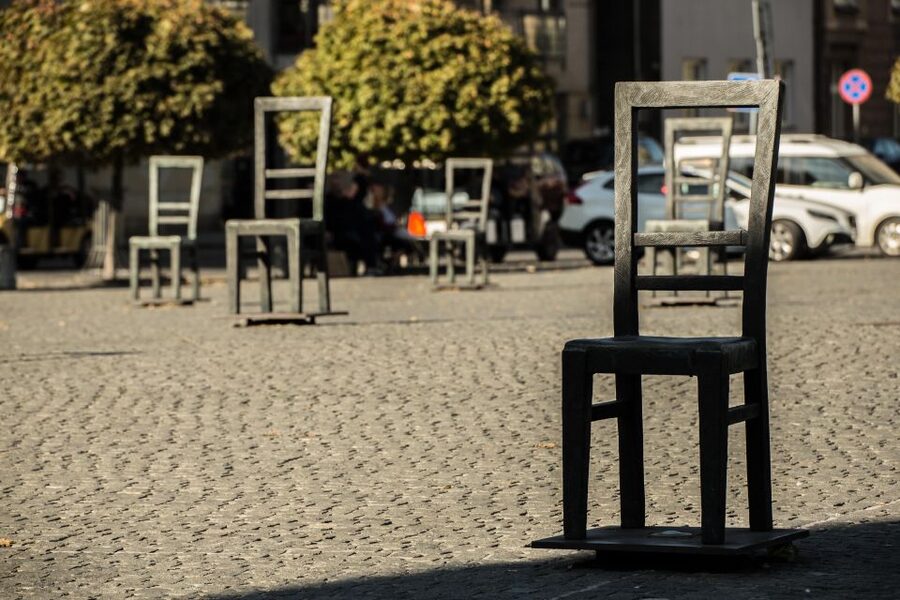
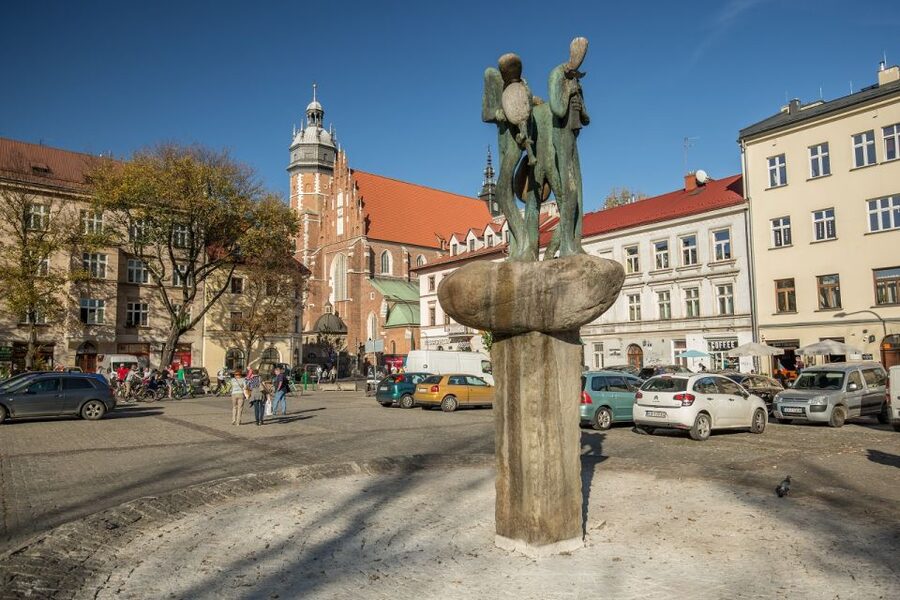
The route continues to Plac Bohaterów Getta, known in English as Ghetto Heroes Square. This is one of the most important stops because it was the place where Jewish inhabitants of Krakow were identified and sent toward concentration camps.
The square is not presented as a simple public space. Its importance comes from the human actions forced into it: identification, gathering, removal, and separation. A guide can help you connect the physical setting with those events instead of treating the square as just another point on a city walk.
You should expect the tone here to become more reflective. The purpose is not to entertain you with colorful anecdotes. It is to help you understand how persecution became part of daily life and how a public square could be used in the machinery of deportation.
This is also where the tour’s short length can be both useful and limiting. You receive the key context quickly, but there may not be time for a long discussion or every detail you might want. If you already know a great deal about Krakow during the war, you may find the stop introductory.
For first-time visitors, though, the square gives the walk a strong center. It makes clear that the tour is about people and memory, not only architecture.
The remaining wall fragment
One of the most distinctive parts of the route is a fragment of the original wall that surrounded the Jewish ghetto. The remaining section now serves as a memorial and a place of pilgrimage for Jewish people visiting Krakow from abroad.
I value this stop because it makes the boundaries of the ghetto physical. It is easier to understand the idea of confinement when you can see part of the structure that marked it.
The wall fragment is not a complete historic site with a long visitor program. Its power comes from its small scale and what it represents. You may find the setting quiet and simple, but that simplicity suits the purpose. There is no need for elaborate presentation when the surviving material itself carries such weight.
The guide can also explain why this piece has become a place of remembrance. That context matters. Without it, you might pass the fragment quickly and miss its importance.
Do not expect a large monument or a full museum here. Think of it as a physical reminder built into the route. The stop works best if you pause, listen, and give the location a little time.
More Jewish heritage tours in Krakow:
- Krakow: Schindler’s Factory & Ghetto Guided Tour
★ 4.7 · 1,694 reviews - Krakow: Jewish Quarter and Former Ghetto Tour
★ 4.9 · 1,441 reviews - Krakow: Bike Tour of Old Town, Jewish Quarter and the Ghetto
★ 4.9 · 1,155 reviews - Krakow: Kazimierz Jewish Quarter Walking Tour
★ 4.8 · 571 reviews
The buildings where displaced Jews lived
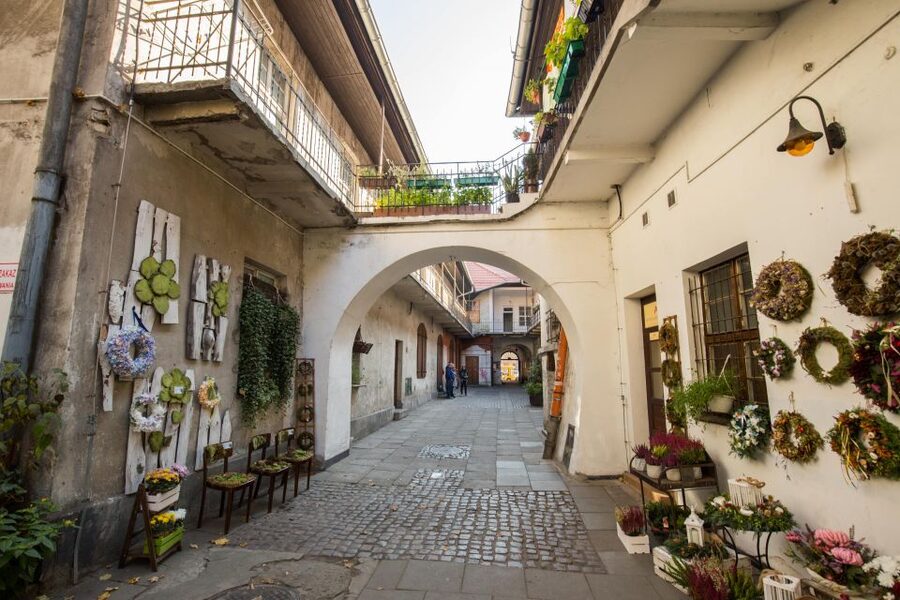
The walk also passes buildings where thousands of displaced Jews lived in cramped conditions. This part of the route shifts your attention from official sites and memorials to the ordinary structures used as forced housing.
That change is important. Concentration camps and deportations are major subjects, but crowded living conditions show how persecution operated before people were sent away. The buildings help you picture the loss of privacy, space, and normal daily life.
You will not be entering these residences as part of the advertised route. Instead, you see them from the street while the guide explains their wartime role. That means the value depends heavily on the commentary. The buildings may not look dramatic, and without context they could be mistaken for regular urban homes.
This is one reason I recommend taking notes or listening closely. Names, dates, and details can pass quickly during a one-hour walk. The route is compact, but the subject is not.
The cramped conditions also give the tour a grounded quality. You are reminded that the ghetto was not just a political idea or an area marked on a map. It was a place where people were compelled to live under harsh conditions.
Under the Eagle pharmacy
The final stop is the famous Under the Eagle pharmacy. Its place at the end of the walk gives the tour a natural finish, moving from the ghetto boundary and public square to a site connected with daily life inside the district.
The pharmacy is one of the best-known locations associated with the former ghetto. Its importance comes from the role a working business could play during a period of persecution. A stop here gives the guide a chance to add personal and social detail to the broader account of deportation and confinement.
Because it is the final stop, you can use it to gather the main ideas from the walk. The wall showed the physical boundary. The square showed the process of identification and removal. The residential buildings showed the conditions imposed on displaced people. The pharmacy brings the story back to a specific place and a more intimate scale.
The supplied details identify the pharmacy as a stop, but they do not promise a separate museum admission or an extended interior visit. Plan on learning about it as part of the walking route rather than assuming you will receive a full museum tour.
If you want to spend more time at the pharmacy or see related exhibits, check what is open separately on the day you visit. The walking tour itself is designed to provide an overview, not a long indoor visit.
What the $15 price gets you
At $15 per person, this is priced as an accessible introduction rather than a large guided program. The fee includes a professional guide, and the value comes from having the route explained in real time.
I think the price works particularly well if you are new to Krakow’s wartime history. A guide helps you understand why these particular streets, buildings, and memorials matter. You also avoid spending your first visit trying to piece together the district’s story from scattered signs.
The price does not include food or drink, though that is not a major issue for a one-hour walk. You can easily eat before or after, but the tour itself does not build in a refreshment break.
The main limit is not the cost. It is the amount of time. For $15, you receive a focused overview, but not a full-day historical program. If you want extended museum time, detailed Jewish history across all of Krakow, or a longer discussion of the occupation, you will need to add other visits.
The tour also offers reserve-now and pay-later booking, which can help if your Krakow schedule is still changing. You can cancel up to 24 hours in advance for a full refund, according to the stated terms.
Who will get the most from this tour
I would suggest this walk to you if:
- You want a short introduction to Krakow’s World War II history.
- You prefer seeing historic places in context instead of reading about them alone.
- You are already planning time near Schindler Factory Museum.
- You want a live guide in English, German, Spanish, French, or Italian.
- You have only an hour available for this part of Krakow.
- You want a serious, respectful activity rather than a broad city sightseeing tour.
Families with older children may also find the format manageable, though the subject matter is difficult. The walk deals with displacement, concentration camps, cramped housing, and the destruction caused by war. You should judge in advance whether the material is suitable for the people in your group.
I would be less likely to recommend it as your only Jewish history experience in Krakow. The route gives you a useful foundation, but one hour cannot explain every part of Krakow’s Jewish community, the occupation, or the postwar memory of these places.
Practical advice for making the hour count
Arrive at the Schindler Factory Museum entrance early enough to find the guide with the excursions.city sign. Since the route is short, every minute matters.
Wear comfortable shoes. The experience is a walking tour through an urban district, and the information is delivered while moving between sites. The tour details do not promise seating or a long indoor portion, so dress and prepare for an ordinary city walk.
Try to keep your schedule open for a few minutes after the stated hour. The tour itself lasts one hour, but you may want time to process the final stop or continue exploring nearby on your own.
I also recommend visiting Schindler Factory Museum separately if it is part of your plan. The walking tour begins at its entrance, but the supplied details do not include museum admission. Do not assume the walk includes access to the museum.
Choose your language carefully when booking. English, Spanish, French, Italian, and German are offered, and the quality of a history tour depends greatly on how easily you can follow the explanation.
Finally, keep your expectations in the right place. This is not a cheerful sightseeing loop with a few wartime facts added for variety. It is a memorial walk through places connected to persecution and forced displacement. A respectful attitude will make the experience more meaningful.
Is the Krakow Jewish Ghetto Walking Tour worth booking?
I would book this tour if you want a low-cost, one-hour introduction to the former Jewish ghetto and prefer a guide to connect the locations for you. The surviving wall, Ghetto Heroes Square, the residential buildings, and Under the Eagle pharmacy form a clear route with real historical weight.
I would not book it as a complete study of Krakow’s Jewish past. For that, you need more time and additional sites. But as a compact first step, the tour offers good value, several significant locations, and a sober reminder of what happened in this district.
The available German-language assessment describes the tour as very good, interesting, and helpful for gaining an overview of the period. That is a fair description of what this experience is built to do: give you a clear starting point, then leave you better prepared to explore further.
FAQ
How long does the Krakow Jewish Ghetto Walking Tour last?
The tour lasts one hour.
How much does the tour cost?
The listed price is $15 per person.
Where does the tour meet?
The meeting point is at the entrance to the Schindler Factory Museum.
How do I find the guide?
Look for a guide holding an excursions.city sign at the museum entrance.
What languages are available?
The live guide may conduct the tour in English, Spanish, French, Italian, or German.
Is a professional guide included?
Yes. A professional guide is included.
Are food and drinks included?
No. Food and drink are not included.
Can I cancel for a full refund?
Yes. You can cancel up to 24 hours in advance for a full refund.
Can I reserve the tour and pay later?
Yes. The reserve-now and pay-later option lets you book without paying immediately.
Just added in Krakow
- Auschwitz-Birkenau – Skip the Line Tickets★ 3.5 · 29 reviews
- Auschwitz-Birkenau: Fast-Track Ticket & Guided Tour No Transfers★ 3.5 · 17 reviews
- Zakopane & Sleigh Ride with Bonfire – Group Tour from Kraków★ 5.0 · 2 reviews
- Sleigh Ride & Bonfire in Zakopane with Funicular – Private Trip★ 5.0 · 48 reviews
- Thermal Baths & Zakopane – Private Trip from Krakow★ 5.0 · 1 review
- Zakopane & Gubalowka Funicular – Private Winter Tour from Krakow★ 5.0 · 10 reviews
- Divine Mercy Sanctuary – Private Tour from Krakow★ 5.0 · 4 reviews
- stag dog chase Krakow prank★ 5.0 · 4 reviews