
REVIEW · JEWISH QUARTER TOURS
Krakow: Jewish Ghetto Guided Walking Tour
History feels different on foot. This one-hour walk through Kraków’s former Jewish Ghetto connects ordinary streets with the people who lived, suffered, resisted, and tried to survive there. I like the small price of $15 and the way the route uses real places, including the Ghetto Wall remnants and Ghetto Heroes Square. I also like that guides such as Elena and Renata have been praised for clear, patient explanations.
The main drawback is the short running time. One hour gives you a focused introduction, not a full study of Podgórze or every wartime site. You will also need to pay separately if you want to enter any attraction, and the tour continues in bad weather, so shoes and a weatherproof layer matter.
In This Review
- Key points to know before you book
- Starting at Schindler’s Factory in Podgórze
- Seeing the former Ghetto Wall
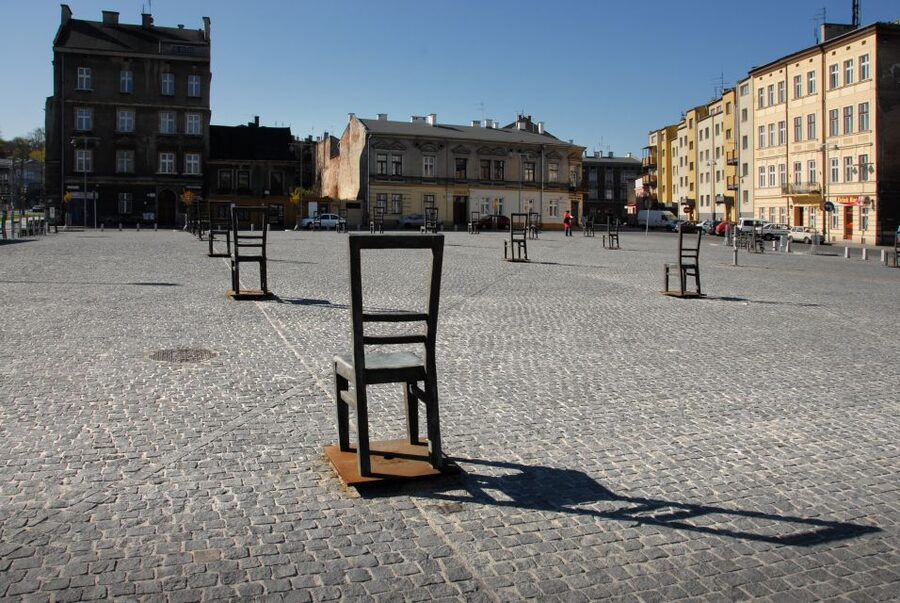
- Ghetto Heroes Square and the empty chairs
- The Under the Eagle Pharmacy and moral choices
- Preserved streets, buildings, and ordinary life
- What the guide adds to the hour
- Is $15 good value for one hour?
- Weather, shoes, and the walking pace
- Who should choose this Kraków walk?
- How to make the most of the experience
- Should you book the Jewish Ghetto Guided Walking Tour?
- FAQ
- Where does the tour meet?
- How long does the walking tour last?
- How much does the tour cost?
- Which places are included on the route?
- Is admission to the attractions included?
- Which languages are available?
- How early should I arrive?
- Does the tour operate in bad weather?
- Can I cancel for a full refund?
Key points to know before you book
- The Ghetto Wall remnants make history physical: You can see surviving sections of the boundary that confined Kraków’s Jewish population.
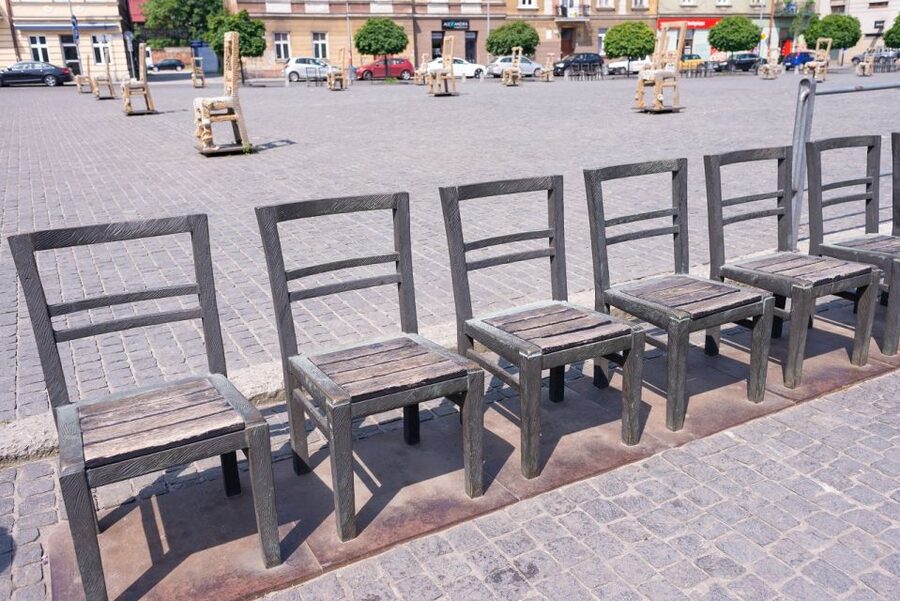
- Ghetto Heroes Square is the emotional center: Empty metal chairs mark the square where deportations took place and represent lives lost.
- The Under the Eagle Pharmacy links courage with daily survival: Your guide explains how Tadeusz Pankiewicz and his staff helped people inside the ghetto.
- The route begins at Schindler’s Factory: You get useful wartime context before walking through Podgórze.
- The tour is short and affordable: At $15, it works well as a first look, though you may want more time afterward.
- Five languages are offered: You can book with a live guide in English, German, Italian, French, or Spanish.
Starting at Schindler’s Factory in Podgórze
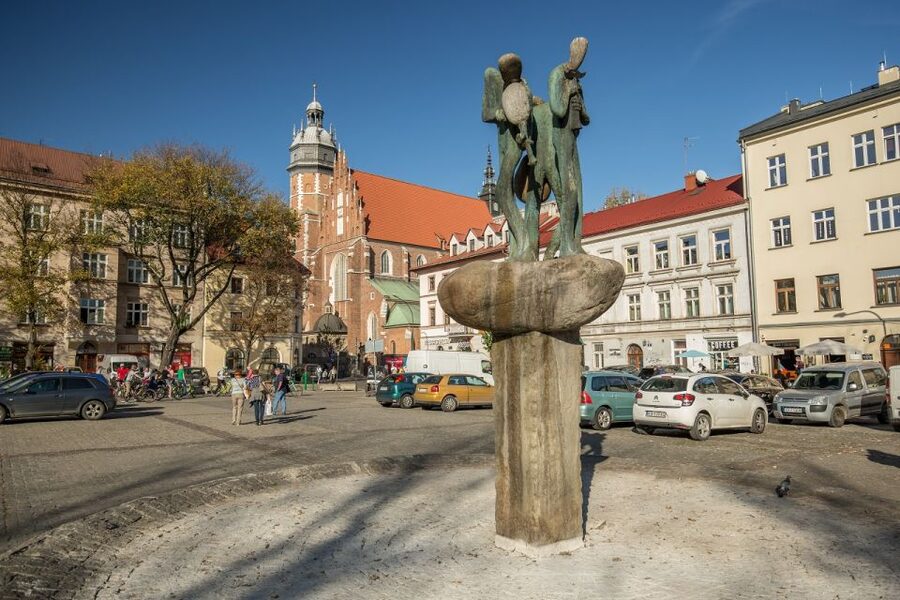
The meeting point is in front of the main entrance to the Schindler’s Factory Museum, on the right-hand side. Look for the guide holding an excursions.city sign, and arrive at least 10 minutes early. Once the group leaves, late arrivals cannot join and the ticket cannot be refunded.
The starting point is useful even if you are not entering the museum. Schindler’s Factory places you in the part of Kraków where industry, forced labor, occupation, and Jewish life became tightly connected during World War II. Your guide begins by explaining how the district changed under Nazi rule.
That opening matters. Without it, Podgórze can look like another Kraków neighborhood, with regular streets and buildings doing little to reveal what happened there. The guide gives those familiar-looking places a clear historical frame, so you can understand why the route moves from a factory area toward the former ghetto boundary.
Because the activity lasts only an hour, the introduction needs to stay focused. That is a benefit if you want a compact history lesson before another Kraków activity. If you prefer long explanations and extended museum visits, the pace may feel brisk.
More Walking Tours in Kraków
- Old Town Krakow & Wawel Castle Walking Tour
★ 5.0 · 1,508 reviews - Creepy Krakow: 2-Hour City Walking Tour
★ 4.7 · 1,131 reviews - Krakow: The Old Town Walking Tour
★ 4.8 · 794 reviews
Seeing the former Ghetto Wall
The surviving sections of the former Ghetto Wall are among the most useful stops on the walk. A museum display can explain confinement, but a remaining piece of wall lets you see the physical idea behind it: a barrier placed through an inhabited city to control and isolate people.
Your guide explains how the wall separated the Jewish population from the rest of Kraków. The value is not simply architectural. The fragments help you picture how daily errands, family life, work, and movement were shaped by a forced boundary.
This is also where the walking format earns its price. You are not only hearing dates and names. You are moving through the same district and seeing how the former ghetto related to the surrounding streets. The tour brings attention to places you could easily pass without recognizing their importance.
Do not expect a large preserved section or a dramatic monument. The remains are fragments, and that is part of their power. The stop requires your guide’s explanation to make its meaning clear. On your own, you might see old masonry and keep walking.
Ghetto Heroes Square and the empty chairs
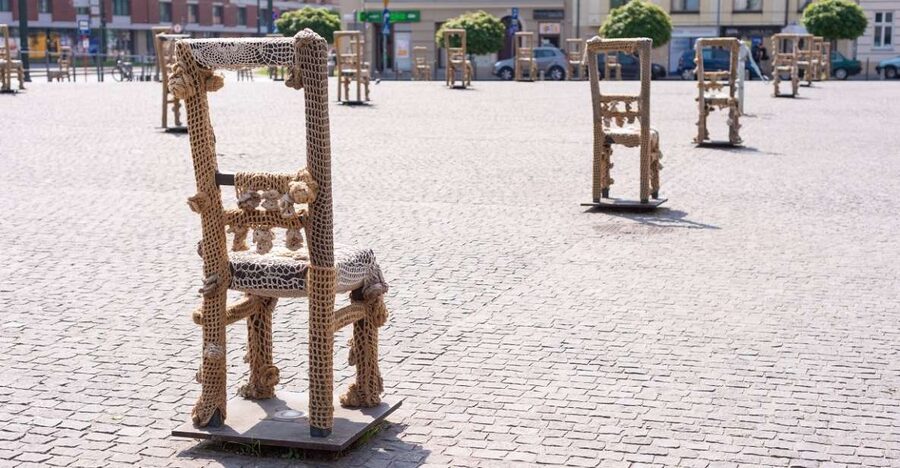
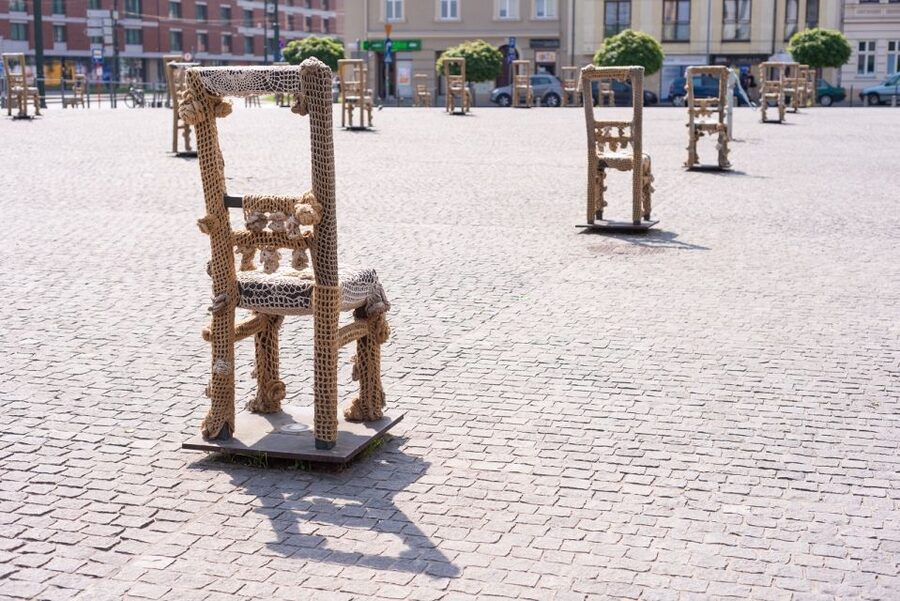
The route continues to Ghetto Heroes Square, once a central point in the Kraków Ghetto and a place connected with deportations. Today, the square is marked by rows of empty metal chairs.
The memorial is simple and hard to misunderstand. The chairs represent the people who were forced from their homes, deported, and lost during the Nazi occupation. Their emptiness also suggests the belongings and household lives left behind when families were removed.
I like this stop because it gives the tour a quiet visual focus. The memorial does not need a long list of facts to make its point, but the guide’s narration helps you understand why this particular square matters. You learn to see it not just as an open public space, but as a former center of fear, waiting, removal, and loss.
The square may be the most memorable part of the hour, but it can also be emotionally difficult. This is not a light sightseeing walk. You should allow yourself time to listen and reflect rather than treating the memorial as a quick photo stop.
The Under the Eagle Pharmacy and moral choices
Across the square is the historic Under the Eagle Pharmacy. The tour focuses on Tadeusz Pankiewicz and his staff, who provided important help to people living in the ghetto.
The pharmacy gives the story a human scale. Instead of hearing only about institutions and military events, you hear about a workplace where people made choices under dangerous conditions. Your guide explains the aid offered there and brings forward questions of courage, compassion, and moral responsibility.
This stop also helps explain how survival depended on more than major political decisions. In a ghetto, practical help, access to supplies, information, and trusted people could matter greatly. The pharmacy becomes a way to discuss the daily risks faced by those trapped inside, as well as the risks taken by people who chose to help.
Entrance fees to attractions are not included, so do not assume that the walking tour includes entry to the pharmacy or another museum. The supplied details describe a guided walk through the former ghetto, with the pharmacy presented as part of the route and explanation. If you want indoor exhibits, check the entry arrangements separately before booking.
More Jewish heritage tours in Krakow:
- Krakow: Schindler’s Factory & Ghetto Guided Tour
★ 4.7 · 1,694 reviews - Krakow: Jewish Quarter and Former Ghetto Tour
★ 4.9 · 1,441 reviews - Krakow: Bike Tour of Old Town, Jewish Quarter and the Ghetto
★ 4.9 · 1,155 reviews - Krakow: Kazimierz Jewish Quarter Walking Tour
★ 4.8 · 571 reviews
Preserved streets, buildings, and ordinary life
Between the main stops, the guide leads you through wartime streets and buildings in Podgórze. These sections may seem less dramatic than a memorial, but they are essential to the tour’s purpose.
The walk asks you to consider how ordinary places became scenes of fear and survival. A street is not only a route from one monument to the next. It can show how close homes, workplaces, public spaces, and forced boundaries once were.
I find this approach more useful than a tour that rushes between famous names. You gain a sense of how occupation affected everyday life, not only the final events of deportation. The guide’s job is to connect what you see with the people who had to live within those limits.
The information provided does not give a full list of every building or street on the route, so you should not book expecting a fixed catalogue of addresses. The exact emphasis may depend on the guide and the group. What remains consistent is the focus on authentic places and lived experience.
What the guide adds to the hour
A licensed guide is included, and the experience is offered in English, German, Italian, French, and Spanish. That is important here because the value comes from explanation, not from simply following a marked route.
A good guide needs to keep the facts clear without turning the hour into a lecture. Elena has been praised for being friendly and helping people understand what the ghetto really was, while Renata has been noted for clear explanations and a helpful manner. Another guide received praise for speaking at a pace that was easy to follow and for answering questions.
Those details point to the most important quality for this tour: clarity. The subject is serious and full of names, places, and painful events. A guide who explains at a manageable speed can make the history easier to absorb.
You should still keep your questions focused. With only 60 minutes, there is limited time for long discussions. Ask about the stops you are seeing, the ghetto’s daily life, the wall, the square, or the pharmacy, and you are more likely to get useful answers within the schedule.
Is $15 good value for one hour?
At $15 per person, this is an inexpensive way to put Kraków’s wartime history into place. The cost is especially reasonable if you want a guided introduction before deciding which museums or memorial sites deserve more of your time.
The value comes from the route and the guide rather than from included admissions. You are paying for a live explanation at several authentic locations, not for entry to the Schindler’s Factory Museum or other attractions. That distinction keeps the price low, but it also means you may spend more later if you want to go inside museums.
One hour is enough for a concentrated overview. It can fit neatly into a day of sightseeing, particularly if you are already visiting the Schindler’s Factory area. You can use it to get your bearings, understand the main sites, and then return to one location with more time.
It is not enough for a detailed study of Kraków under Nazi occupation. If you want extensive museum time, many personal stories, or a slower walk with long pauses, you may find the tour too brief. Think of it as a strong starting point rather than the final word on the subject.
Weather, shoes, and the walking pace
The tour runs in all weather conditions. Kraków’s weather can change the feel of an outdoor history walk, especially when you are listening carefully and stopping in open public spaces.
Check the forecast before you leave. Wear suitable shoes, since the activity takes place on foot, and bring clothing that matches the conditions. A wet or cold day will not cancel the experience, so practical preparation makes a real difference.
The short duration helps here. You are not outside for half a day, but you still need to be comfortable for the full hour. Arriving early also gives you time to find the Schindler’s Factory entrance without rushing.
No group-size details are provided, so I would not assume a private tour or a very small group. The guide will be leading a scheduled walking group, and the ability to hear clearly may affect how much you enjoy the narration.
Who should choose this Kraków walk?
I would recommend it if you want a clear first introduction to the former Jewish Ghetto and prefer learning in the places where events occurred. It suits people who value context, memorials, and human stories more than a long list of sightseeing stops.
It is also a good fit if you have only a short time in Kraków. The meeting point near Schindler’s Factory makes the route easy to connect with a museum visit or other plans in Podgórze, though any museum entry must be arranged separately.
Families with older children may find the visual stops easier to understand than a long indoor talk, but the subject is serious. Parents should decide if the material is suitable for their children. The tour is also useful for solo visitors who want a guide’s explanation rather than walking through the district alone.
You may want a different experience if you are looking for entertainment, extensive architecture, or a relaxed stroll. The focus is wartime history, forced confinement, deportation, resistance, and survival. That requires attention and respect.
How to make the most of the experience
Read a little about Schindler’s Factory and the Kraków Ghetto before arriving, even if only to learn the basic setting. You will follow the guide more easily and have a better sense of how the stops connect.
Arrive 10 minutes early and look for the excursions.city sign at the right-hand side of the museum entrance. Keep your phone away during the most sensitive parts of the tour, unless you are taking a respectful photo of a public memorial.
Listen for the link between large events and ordinary life. The wall explains confinement, the square recalls deportation, and the pharmacy shows practical help and personal courage. Taken together, the stops explain more than any one site could do alone.
If the guide leaves you wanting more, use the hour as a map for a later visit. You may choose to return to the Schindler’s Factory Museum or check whether the Under the Eagle Pharmacy has an interior visit available. The walking tour itself does not include attraction admission.
Should you book the Jewish Ghetto Guided Walking Tour?
Book it if you want an affordable, focused, one-hour introduction to Podgórze’s wartime history, especially if you learn best from a guide who can explain what you are seeing. The remaining wall, empty chairs in Ghetto Heroes Square, and the story of Under the Eagle Pharmacy give the route real weight.
Skip it if you need a long, detailed historical program or want every stop to include indoor entry. For most visitors who want context before exploring Kraków on their own, $15 is a fair price for a serious and well-focused walk. Just arrive early, dress for the weather, and give the subject the attention it deserves.
FAQ
Where does the tour meet?
Meet in front of the main entrance to the Schindler’s Factory Museum, on the right-hand side. Your guide will hold an excursions.city sign.
How long does the walking tour last?
The tour lasts one hour.
How much does the tour cost?
The listed price is $15 per person.
Which places are included on the route?
The route includes the area around Schindler’s Factory, remnants of the former Ghetto Wall, Ghetto Heroes Square, the memorial of empty metal chairs, preserved wartime streets and buildings, and the historic Under the Eagle Pharmacy.
Is admission to the attractions included?
No. Entrance fees to attractions are not included in the activity.
Which languages are available?
A live guide is available in English, German, Italian, French, and Spanish.
How early should I arrive?
You should arrive 10 minutes before the tour starts. Latecomers cannot join once the group has departed, and their tickets cannot be refunded.
Does the tour operate in bad weather?
Yes. The tour takes place as planned in all weather conditions, so you should check the forecast and wear suitable clothing and footwear.
Can I cancel for a full refund?
Yes. You can cancel up to 24 hours in advance for a full refund. You can also reserve now and pay later.
Just added in Krakow
- Auschwitz-Birkenau – Skip the Line Tickets★ 3.5 · 29 reviews
- Auschwitz-Birkenau: Fast-Track Ticket & Guided Tour No Transfers★ 3.5 · 17 reviews
- Zakopane & Sleigh Ride with Bonfire – Group Tour from Kraków★ 5.0 · 2 reviews
- Sleigh Ride & Bonfire in Zakopane with Funicular – Private Trip★ 5.0 · 48 reviews
- Thermal Baths & Zakopane – Private Trip from Krakow★ 5.0 · 1 review
- Zakopane & Gubalowka Funicular – Private Winter Tour from Krakow★ 5.0 · 10 reviews
- Divine Mercy Sanctuary – Private Tour from Krakow★ 5.0 · 4 reviews
- stag dog chase Krakow prank★ 5.0 · 4 reviews