
REVIEW · JEWISH QUARTER TOURS
Krakow: Jewish Ghetto Guided Tour
History is written into Krakow’s streets. This one-hour walking tour traces the former Jewish Ghetto through three important sites, linking physical remains with the human stories of wartime Krakow. I like that a guide handles the route, and I like that walking takes you to places a vehicle cannot reach.
The price is $15.60 per person, a fair deal for a focused introduction to Podgórze and its World War II history. The main limitation is the short duration: this is a sharp overview, not a full museum visit or a complete study of Krakow under Nazi occupation.
In This Review
- Key points to know before booking
- What this Krakow Ghetto walk actually covers
- Starting at Lipowa 4 in Krakow
- The surviving Ghetto Wall fragment
- Ghetto Heroes Square and the chair memorial
- Under the Eagle Pharmacy and its human story
- How the guides shape the experience
- Pace, walking conditions, and group size
- Price, timing, and overall value
- Who should book this Krakow experience?
- Should you book the Krakow Ghetto Guided Tour?
- FAQ
- How long does the Krakow Jewish Ghetto Guided Tour last?
- What language is the tour offered in?
- Where does the tour begin?
- Where does the tour end?
- What locations are included in the walking route?
- Is admission to the Under the Eagle Pharmacy included?
- How many people can join the tour?
- What happens if I arrive late?
- Can I cancel for a full refund?
Key points to know before booking
- The tour begins at Lipowa 4: Arrive 10 minutes early, since late arrivals cannot join once the group has left.
- The Ghetto Wall fragment is the emotional anchor: You see one of the few surviving physical traces of the former boundary.
- Heroes Square gives the tour its clearest symbol: Empty chairs represent the people taken from the ghetto.
- The Under the Eagle Pharmacy stop is outside the ticket price: The guided visit ends at the museum entrance, so plan separately if you want to go inside.
- Groups can reach 20 people: Smaller groups are possible, and one booking had only eight participants.
- It runs in rain or shine: Wear comfortable shoes and bring clothing suited to the forecast.
What this Krakow Ghetto walk actually covers
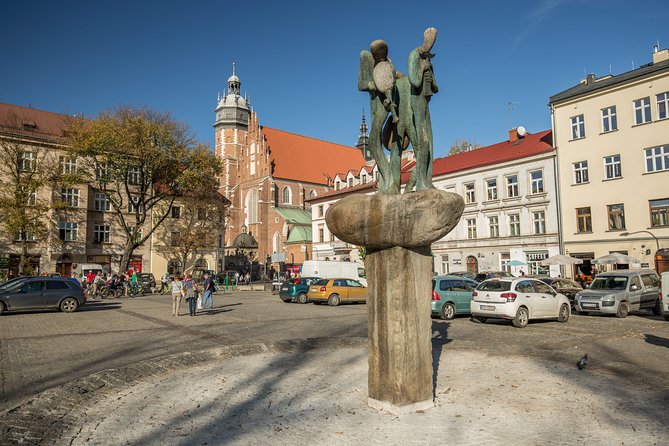
This is a compact walking tour through Podgórze, the district where the Krakow Ghetto was created during World War II. The route does not attempt to show every location connected with the ghetto. Instead, it links three places that help you understand confinement, deportation, and acts of courage.
The tour lasts about one hour. That makes it easy to fit around other Krakow plans, including a visit to Schindler’s Factory or the museums around Lipowa Street. It also means the guide must keep the pace moving. You receive a concentrated history lesson rather than a slow, extended exploration.
I see that as both a strength and a limit. If you want a clear introduction before visiting Auschwitz or another World War II site, this walk gives you useful context without taking half a day. If you want long personal stories, extensive discussion, or time inside each location, you may find the schedule too tight.
The walk is offered in English, and group tours operate in one language only. The maximum group size is 20, though the actual group may be much smaller. One booking had eight people, and another was nearly a private experience with four family members. That smaller format can make it easier to ask questions and hear the guide clearly.
More Jewish heritage tours in Krakow:
- Krakow: Schindler’s Factory & Ghetto Guided Tour
★ 4.7 · 1,694 reviews - Krakow: Jewish Quarter and Former Ghetto Tour
★ 4.9 · 1,441 reviews - Krakow: Bike Tour of Old Town, Jewish Quarter and the Ghetto
★ 4.9 · 1,155 reviews
Starting at Lipowa 4 in Krakow
The meeting point is Lipowa 4, Kraków, and the tour ends at the Under the Eagle Pharmacy at Plac Bohaterów Getta 18. You should arrive at least 10 minutes before departure. The timing rule is strict: once the group leaves, latecomers cannot join and the ticket is not refunded.
That matters in this part of Krakow, where you may be coming from another museum, tram stop, or nearby attraction. Give yourself a little extra time rather than trying to arrive at the last minute. The tour is near public transportation, but no pickup service is listed, so you need to make your own way to the start.
The location is practical if you are already visiting the area around Lipowa Street. It also works well as a companion to Schindler’s Factory, though you should allow enough time between activities. One group had a slightly late start while waiting for people who had also visited Schindler’s Factory. If you have a tight schedule, that is worth keeping in mind.
The guide welcomes the group and sets the tone for a serious subject. Several guides have been praised for a calm, clear manner, including Olga, Anna, Phil, and Phillip. The strongest descriptions focus on guides who explain difficult material with care, answer questions, and keep the walk moving at a comfortable pace.
The surviving Ghetto Wall fragment
The first stop takes about 20 minutes and focuses on a fragment of the former Ghetto Wall. This is the kind of place that can be easy to miss without guidance. The remains are not a vast monument or a grand museum display. Their power comes from their scale and purpose: this was a physical barrier used to confine people.
A guide adds the missing context. You learn why the wall mattered, how it separated residents from the rest of Krakow, and how the ghetto functioned during the war. The structure gives the history a physical point of reference, especially if you have only encountered the subject through books, films, or museum exhibits.
I like this stop because it prevents the tour from becoming a general lecture. You are looking at something that survived while most of the original ghetto has changed. The guide helps you understand that modern streets and buildings do not erase what happened here.
You should also adjust your expectations. The present-day district does not look exactly as it did during the war. One guide made that point clearly, and it is important. You are not entering a preserved historical set. You are walking through a living part of Krakow where only selected traces remain.
That contrast can feel unsettling, but it is also part of the lesson. The tour asks you to connect the remaining wall fragment with a city that has changed. Without a guide, you might see an old piece of masonry and move on. With explanation, it becomes evidence of a system that shaped thousands of lives.
Ghetto Heroes Square and the chair memorial
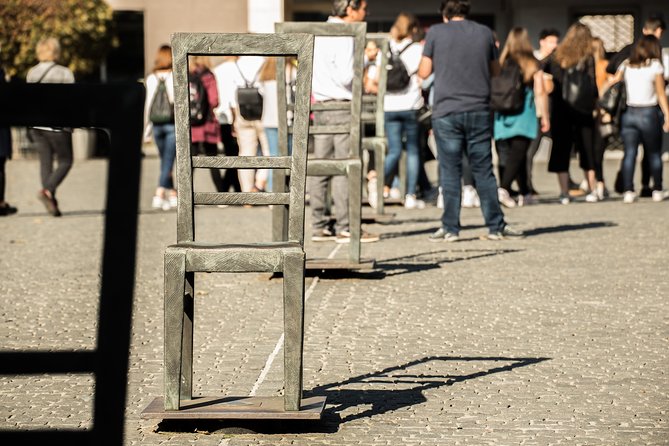
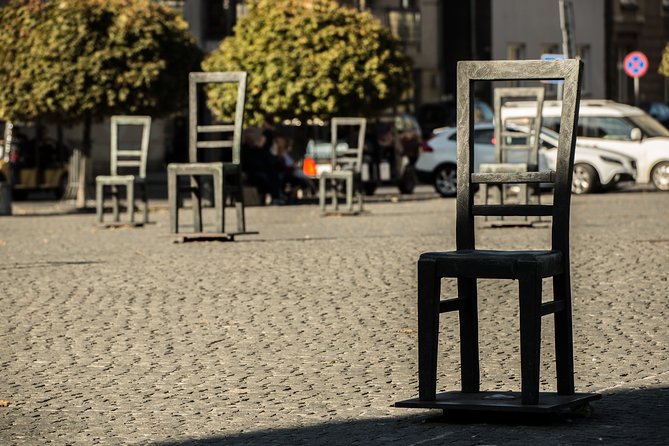
The second stop is Ghetto Heroes Square, also known as Plac Bohaterów Getta. The walk spends roughly 20 minutes here, and this is likely the most visually striking part of the route.
The square was the center of the ghetto and the place where deportations to extermination camps took place. Today, rows of empty chairs form a memorial across the square. Each chair represents a life lost, creating a simple image that is easy to understand but difficult to forget.
The memorial works because it does not overwhelm you with decoration. Empty chairs suggest absence, waiting, removal, and loss. Your guide explains the square’s role and helps connect the memorial to the wider history of the ghetto.
This is also where a guide’s delivery matters most. The best experience here is not about hearing a long list of dates. It is about understanding what the square meant to the people forced through it. Guides such as Olga, Anna, Phil, and Phillip have been praised for presenting the material in a calm and sensitive way.
You will have time to look around, but do not expect a long period for quiet reflection if the group is on schedule. The stop is part of a one-hour tour, so the guide needs to keep the route moving. If you want more time with the memorial, you can return later on your own.
The square also makes a useful bridge between the wall and the pharmacy. At the wall, you see confinement. At the square, you confront deportation and loss. The final stop then shifts attention toward resistance and aid.
A few more in Krakow
- From Krakow: Auschwitz-Birkenau Guided Tour & Hotel Pickup
★ 4.5 · 33,358 reviews - From Krakow: Auschwitz-Birkenau Guided Tour & Hotel Pickup
★ 4.5 · 29,340 reviews - Krakow: Auschwitz Guided Tour with Optional Hotel Pickup
★ 4.5 · 15,280 reviews - Krakow–Zakopane: Cable Car, Chocholow Baths, Cheese & Vodka
★ 5.0 · 10,720 reviews
Under the Eagle Pharmacy and its human story
The final 20-minute stop is the Under the Eagle Pharmacy, located across from the square. The pharmacy is linked with Tadeusz Pankiewicz, who operated there during the ghetto period, and with the staff who helped residents by providing medicine and preserving a measure of hope.
The guide explains why the pharmacy mattered. It was not simply a shop on the edge of the square. Its work offered practical assistance in a place where ordinary life had been violently restricted.
The guided tour ends at Apteka pod Orłem, but admission to the museum is not included. That is an important point when you plan your day. You can take the walking tour for the exterior and historical explanation, then decide if you want to buy a separate museum ticket and continue inside.
I appreciate this arrangement for budget reasons. At $15.60, the tour remains inexpensive, and you are not paying for a museum admission you may already have arranged separately. On the other hand, if you expect an included indoor visit, you could be disappointed. Check your plans before booking and allow extra time if you want to see the museum.
The pharmacy gives the route a more personal ending. The wall and square show the machinery of persecution. This stop brings the focus back to individual choices and the people who tried to help under terrible conditions.
How the guides shape the experience
The guide is the heart of this tour. The route itself is short and easy to follow, but the meaning of each place depends on the explanation you receive.
The strongest guiding qualities here are clear speech, a steady pace, and sensitivity. Olga has been praised for her enthusiasm and passion. Anna has been described as calm, approachable, and clear when sharing detailed information. Phil and Phillip have also been praised for presenting the history in a well-organized way.
You may also receive visual help along the route. One guide brought printed images to show how the area looked in the past. That can be especially useful because the modern district looks very different from the wartime ghetto. Old photographs help you picture what is no longer visible.
A local guide can also answer the small questions that a self-guided walk may leave unresolved. You can ask how a particular place relates to the ghetto, why the wall fragment survived, or what the memorial represents. The exact depth of conversation will depend on the group and the guide, but the format allows questions.
The tour is not designed as a dramatic performance. The most effective guides use a restrained tone and let the facts carry the weight. That suits the subject. You want someone who can explain painful history without turning it into entertainment.
Pace, walking conditions, and group size
This is a one-hour walking activity, so it is not physically demanding for most people who can participate in a standard walking tour. You move between outdoor locations, with time at each stop rather than a long continuous walk.
Comfortable shoes are a smart choice. One booking specifically advised wearing comfortable footwear, and the tour operates in all weather. Rain will not automatically cancel the walk, so check the forecast and bring suitable clothing.
The weather affects more than comfort. The wall, square, and route are outdoor locations, and rain or cold can make it harder to listen or pause. A coat, waterproof layer, and shoes with good grip can make the hour much easier.
The maximum group size is 20. That is a reasonable limit for a walking tour, though a group of 20 may feel less personal than a group of four or eight. Smaller groups have occurred, but you should not book on the assumption that the tour will be private.
The walking format is a real advantage. A car cannot pull up directly for every meaningful viewpoint, and the short distances between stops are part of understanding the district. You see the area at street level and move through it in the same general setting where these events unfolded.
Price, timing, and overall value
At $15.60 per person, this is a modestly priced way to add historical context to your Krakow visit. You are paying for about an hour of guided explanation, route planning, and access to places that are easy to overlook without local direction.
The value is strongest if you have limited time or have not researched Podgórze in advance. The guide saves you hours of preparation and gives you a logical sequence: the wall, the square, then the pharmacy.
The price is less compelling if you already know the area well or plan to spend several hours at the pharmacy museum and other nearby sites with your own research. In that case, the walk may repeat material you have already covered.
The tour is often booked about 18 days in advance. That suggests you should not leave it until the final morning of your trip, especially if you need a particular date or English-language departure. Free cancellation is available up to 24 hours before the start time, with a full refund. Cancellations or changes made less than 24 hours before the start are not refunded.
Who should book this Krakow experience?
I would recommend it to you if you want a short, guided introduction to the Krakow Ghetto and prefer real locations to a lecture in a room. It suits first-time visitors, people interested in World War II history, and anyone planning to visit Auschwitz or other sites connected with the period.
It is also useful if you want to see the Ghetto Wall fragment but are not confident finding it alone. The route takes you to the principal locations without asking you to spend hours working out the geography.
Families and mixed-age groups may appreciate the one-hour format, though the subject is serious and may not suit young children. The calm presentation reported from several guides makes the tour easier to follow, but the content remains difficult.
You may want a different option if you need a long museum visit, extensive time for photography, or a full-day history program. The tour gives you an introduction and a strong framework. It does not cover every wartime site in Krakow.
Should you book the Krakow Ghetto Guided Tour?
Book it if you want a focused, affordable history walk with a guide who can connect three important places. The Ghetto Wall fragment, the empty chairs of Heroes Square, and the Under the Eagle Pharmacy create a clear progression from confinement to deportation to aid.
Skip it if you want only indoor attractions or if you already have a detailed plan for exploring Podgórze. For most visitors, though, the $15.60 price and one-hour schedule make this an easy addition to a Krakow itinerary.
Arrive early, wear comfortable shoes, prepare for the weather, and remember that the pharmacy museum admission is separate. With those details sorted, you get a respectful and useful introduction to one of Krakow’s most important historical districts.
FAQ
How long does the Krakow Jewish Ghetto Guided Tour last?
The tour lasts approximately one hour.
What language is the tour offered in?
The tour is offered in English. Group tours operate in only one language, so select English when booking.
Where does the tour begin?
The meeting point is Lipowa 4, 32-051 Kraków, Poland.
Where does the tour end?
The tour ends at Apteka pod Orłem, Plac Bohaterów Getta 18, 33-332 Kraków, Poland.
What locations are included in the walking route?
The route includes a fragment of the Ghetto Wall, Ghetto Heroes Square, and the Under the Eagle Pharmacy.
Is admission to the Under the Eagle Pharmacy included?
No. Admission to the Under the Eagle Pharmacy Museum is not included in the tour price.
How many people can join the tour?
The tour has a maximum capacity of 20 people.
What happens if I arrive late?
You should arrive 10 minutes before departure. Once the group has left, latecomers cannot join and their tickets cannot be refunded.
Can I cancel for a full refund?
Yes. You can cancel at least 24 hours before the experience begins for a full refund. Cancellations or changes made less than 24 hours before the start time are not accepted for a refund.
Just added in Krakow
- Auschwitz-Birkenau – Skip the Line Tickets★ 3.5 · 29 reviews
- Auschwitz-Birkenau: Fast-Track Ticket & Guided Tour No Transfers★ 3.5 · 17 reviews
- Zakopane & Sleigh Ride with Bonfire – Group Tour from Kraków★ 5.0 · 2 reviews
- Sleigh Ride & Bonfire in Zakopane with Funicular – Private Trip★ 5.0 · 48 reviews
- Thermal Baths & Zakopane – Private Trip from Krakow★ 5.0 · 1 review
- Zakopane & Gubalowka Funicular – Private Winter Tour from Krakow★ 5.0 · 10 reviews
- Divine Mercy Sanctuary – Private Tour from Krakow★ 5.0 · 4 reviews
- stag dog chase Krakow prank★ 5.0 · 4 reviews