
REVIEW · CYCLING TOURS
Krakow: Hidden Bike Tour
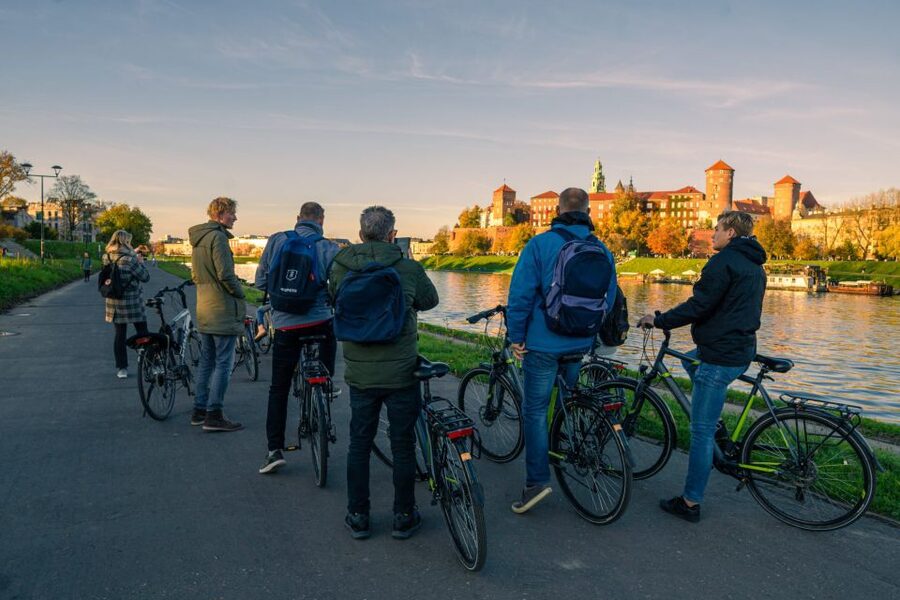
History is easier to grasp from a bicycle. Krakow’s Hidden Bike Tour takes you away from the usual Old Town circuit and into the city’s less-visited places, with World War II and postwar Poland at the center of the story. You ride at a relaxed pace with a local guide, stopping for explanations rather than racing from one sight to the next.
I especially like the focus on Polish heroes and victims, since it gives the tour more heart than a simple list of wartime dates. I also like that it reaches Podgórze, Schindler’s Factory, a Jewish cemetery, and the former Jewish ghetto, while avoiding overlap with a standard tour of Stare Miasto and Kazimierz. The main drawback is physical: you must walk up a hill to reach one of Krakow’s finest viewpoints, and the tour is not suitable for people with mobility impairments.
The guide language is Dutch, with English or German listed as available depending on your preference. Bryan, also written as Brian in the tour information, receives repeated praise for taking his time, giving full explanations, and bringing real feeling to the subject. At $41 per person for three hours, this is not the cheapest way to see Krakow, but it offers a focused history lesson, a quality bicycle, and access to places you might not find easily on your own.
In This Review
- Key points at a glance
- Why this three-hour ride takes a different route
- Beginning outside the usual Krakow center
- A park filled with Polish heroes
- The hill and Krakow’s best viewpoint
- Entering Podgórze and the former Jewish ghetto
- Schindler’s Factory without repeating the usual city ride
- What the guide adds to the experience
- Bicycle quality, pace, and practical comfort
- Is $41 a fair price?
- Who should book this bike tour?
- Final verdict: book it for the stories
- FAQ
- How long is the Hidden Krakow Bike Tour?
- What historical subjects does the tour cover?
- Which parts of Krakow does the tour visit?
- Is a bicycle included in the price?
- Is a helmet provided?
- Is the tour suitable for people with mobility impairments?
Key points at a glance
- World War II from a Polish point of view: The tour explains how the war shaped Polish identity, not just what happened at famous Krakow sites.
- A slow, relaxed bicycle ride: Quality bicycles and an unhurried pace make this more about listening and seeing than exercise.
- Podgórze is a major part of the route: Expect a Jewish cemetery, Schindler’s Factory, and the former Jewish ghetto.
- A hill leads to a city viewpoint: You will walk this section, so comfortable shoes matter.
- A good companion to Auschwitz: The tour adds local Krakow and Polish context without repeating the Auschwitz visit.
- A different route from the standard city tour: It avoids the main Old Town and Kazimierz highlights covered by the provider’s other bicycle tour.
Why this three-hour ride takes a different route
Krakow is easy to visit in layers. One day can take you through the medieval center and Kazimierz. Another can be devoted to Auschwitz. This bike tour fills the space between those two experiences by showing how World War II affected Krakow itself and how Poland carried those memories into the years after the war.
That distinction matters. A tour built around the Market Square, Wawel Castle, and the old Jewish quarter would give you the city’s familiar face. This one is meant to show places that sit outside the main sightseeing flow. You are not simply checking off famous buildings. You are following stories about people, decisions, loss, resistance, and survival.
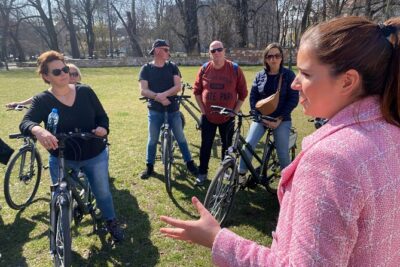
The subject is serious, but the ride is described as relaxed and slow paced. That is a useful balance. You can pay attention to the guide instead of worrying about keeping up with a fast cycling group. The bicycles are included, and helmets are available if requested. Ponchos are also supplied if needed, though food, drinks, and an e-bike cost extra or are not included.
The tour lasts three hours, long enough to cover several districts without turning into an all-day commitment. For a city break, that makes it easy to place in an afternoon, though you should check the available starting times before booking.
More Bike Tours in Kraków
- Complete Cracow Bike Tour (small group of maximum 15 people!)
★ 5.0 · 1,322 reviews - Krakow: Bike Tour of Old Town, Jewish Quarter and the Ghetto
★ 4.9 · 1,155 reviews - Highlights of Krakow Bike Tour – Small group
★ 5.0 · 662 reviews
Beginning outside the usual Krakow center
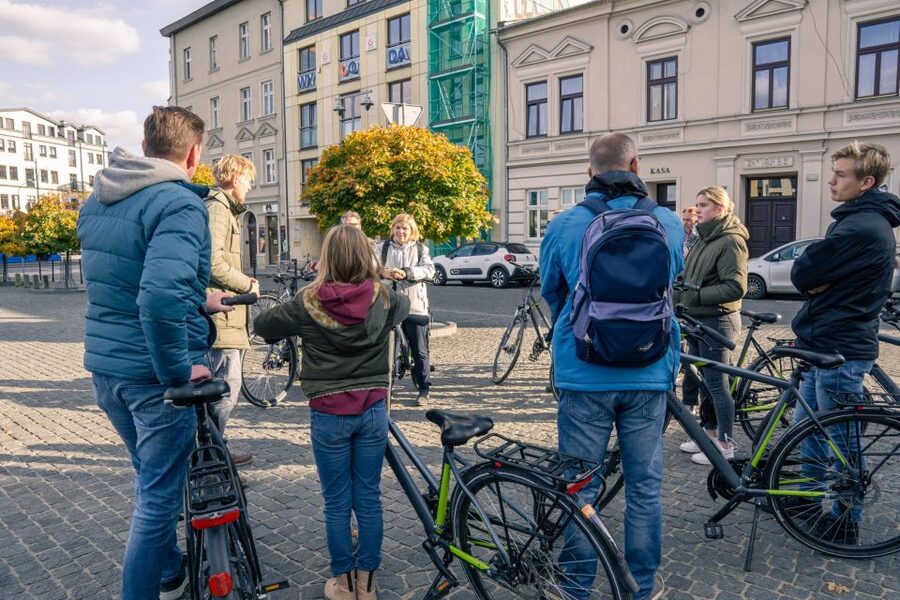
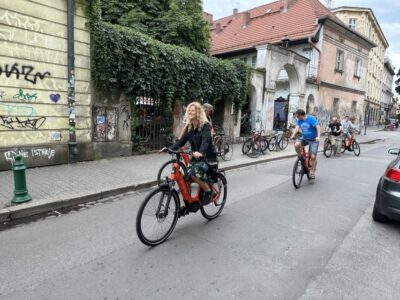
The appeal starts with the route itself. The tour tells its main stories outside the city center, where the setting gives the history room to breathe. You will see a side of Krakow that many first-time visitors miss because they spend most of their time around Stare Miasto.
I like this approach because the city’s past is not confined to museums. Streets, parks, cemeteries, monuments, and former industrial sites all help explain what happened here. A bicycle also makes the movement between these places feel natural. You cover more ground than on foot, but you still have time to stop and listen.
The guide’s role is especially important on a tour like this. Without explanation, a statue or cemetery can remain just another stop. With context, it can become part of a larger story about Polish courage, occupation, suffering, and the difficult period that followed the war.
Bryan is praised for allowing plenty of time at different stops and for explaining the history in detail. That suggests this is not a tour for someone who wants a quick photo at each location. You should expect a guide-led afternoon with real pauses for discussion.
A park filled with Polish heroes
One of the more unusual sections takes place in one of Krakow’s most beautiful parks. The park contains statues of Polish heroes, and the guide uses them to explain stories from World War II that may be unfamiliar to many visitors from the Netherlands and other countries.
This is where the tour reaches beyond the usual Krakow narrative. You learn about Polish figures who made an impact during some of the country’s darkest years. The stories include courage and sacrifice, but also a sense of national pride and grief. The aim is not to present Poland as a background to events in other countries. It shows Poland as a country with its own people, choices, and contributions.
The connection with the liberation of the Netherlands and Italy is a particularly useful detail for Dutch speakers. Many visitors know the broad outline of the war, yet may not know how strongly Polish forces and Polish individuals contributed to liberation efforts outside Poland. A guide who can explain those links in Dutch gives the material a personal connection.
The park also offers a change of pace. After riding through streets, you have space to stop among monuments and listen. If you prefer tours that connect places to people, this may be one of the strongest parts of the afternoon.
The hill and Krakow’s best viewpoint
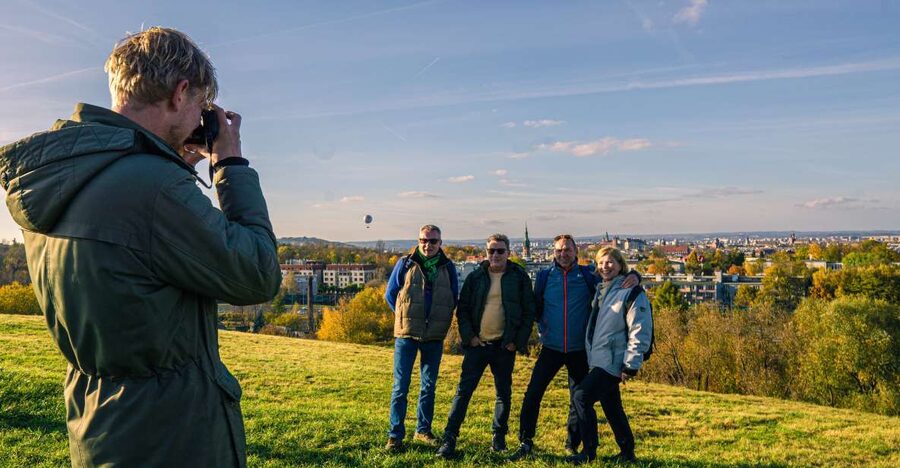
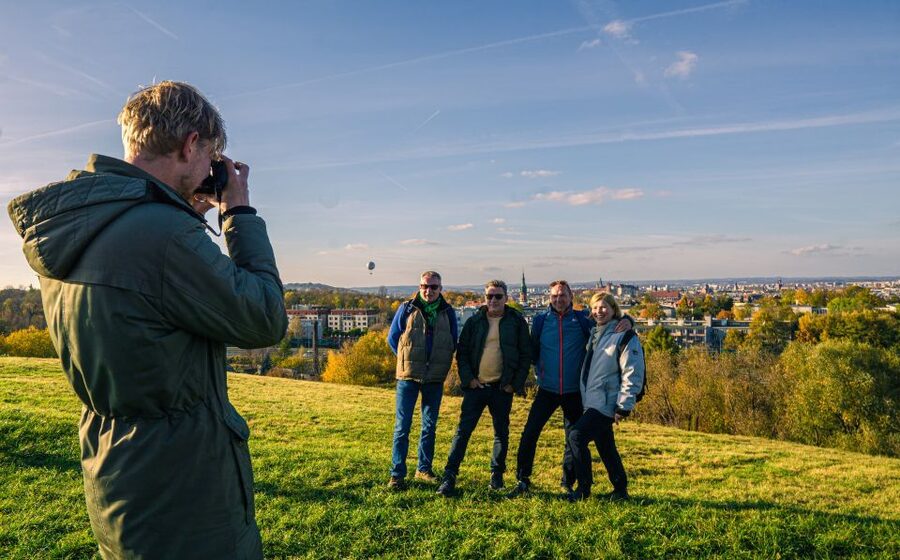
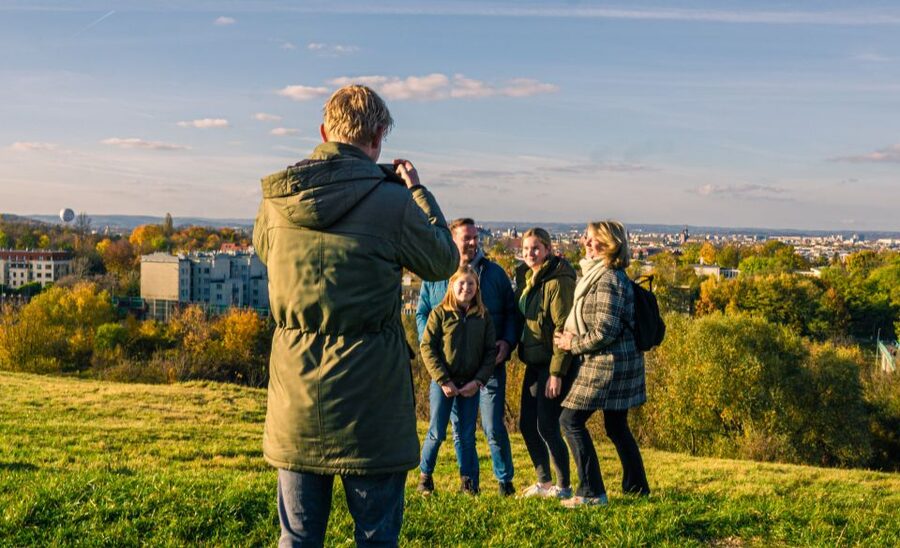
The tour includes a hill that you climb on foot to reach a beautiful view over the city. This is clearly worth noting before you book. The bicycle does not remove every physical challenge, and the walking section may be uncomfortable for anyone with limited mobility.
For most visitors who can manage the climb, the viewpoint adds a useful pause. You can look at Krakow as a whole rather than seeing the city one street at a time. The view also helps make sense of the route, especially after riding beyond the central sightseeing area.
Wear shoes that are comfortable for walking, not just cycling. Since the tour lasts three hours and includes several stops, practical clothing will serve you better than anything designed only for photographs. Weather can change, and a poncho is available if required.
The route is not presented as a demanding cycling workout. The stated pace is relaxed, but the hill and the total duration still mean you should be comfortable sitting on a bicycle for several hours.
Something quite different:
- From Krakow: Auschwitz-Birkenau Guided Tour & Hotel Pickup
★ 4.5 · 33,358 reviews - From Krakow: Auschwitz-Birkenau Guided Tour & Hotel Pickup
★ 4.5 · 29,340 reviews - Krakow: Auschwitz Guided Tour with Optional Hotel Pickup
★ 4.5 · 15,280 reviews - Krakow–Zakopane: Cable Car, Chocholow Baths, Cheese & Vodka
★ 5.0 · 10,720 reviews
Entering Podgórze and the former Jewish ghetto
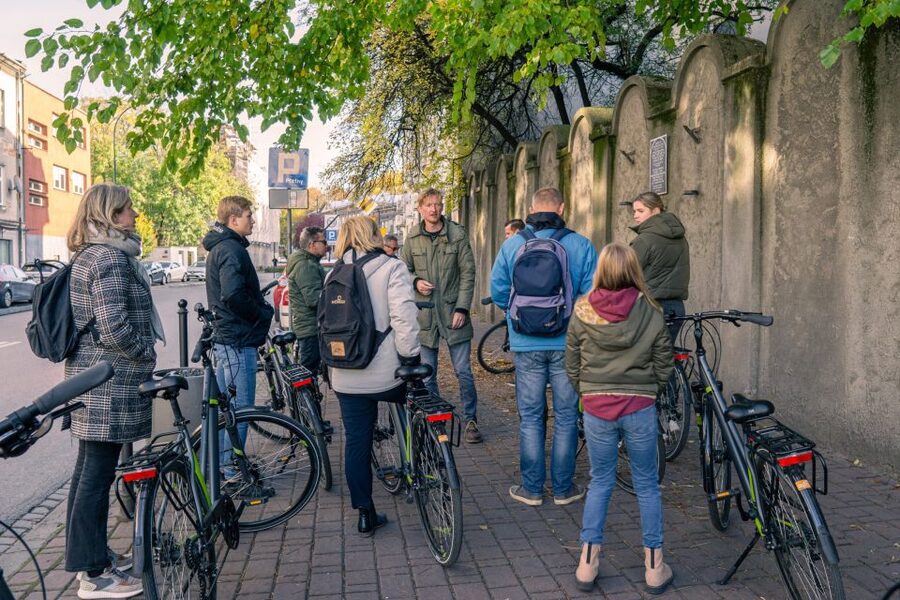
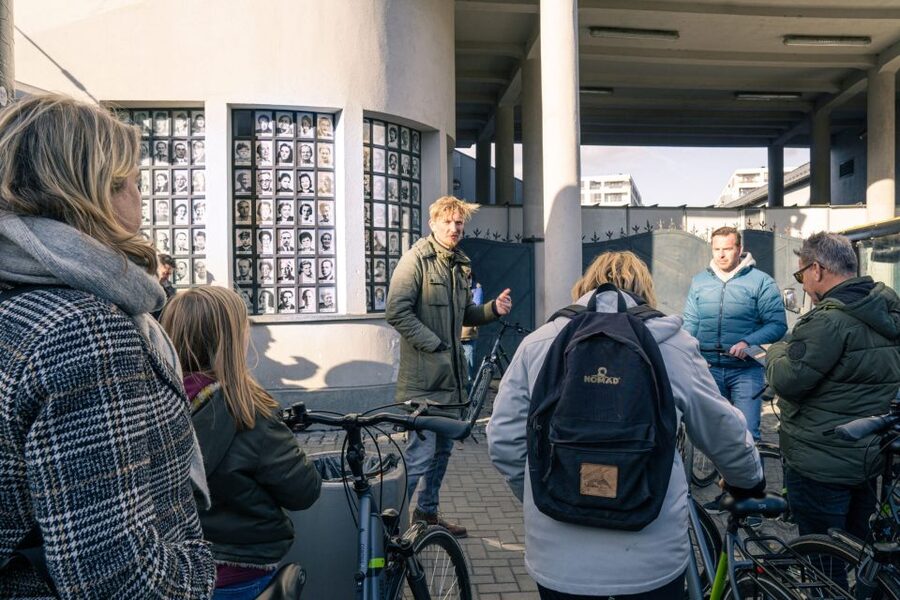
Podgórze is the historical heart of the tour. The district is tied to the former Jewish ghetto, and the guide uses this area to explain what happened to Krakow’s Jewish population during World War II.
You will also visit a Jewish cemetery. This stop brings a quieter and more personal mood to the afternoon. Cemeteries can be difficult places to understand without context, especially when names, dates, and memorials connect to events that affected an entire community. The guide’s explanations are central here, helping you see the cemetery as part of Krakow’s living memory rather than simply a historic location.
The former ghetto provides another layer. Instead of treating the war as something distant, the tour places it in the streets and districts of the city. You begin to understand how confinement and persecution altered everyday life. The value is not only in seeing a location, but in hearing how it fits into the wider history of Poland.
This section may be emotionally heavy. The tour includes stories of victims as well as heroes, and the descriptions emphasize sorrow, hope, and pride. If you want a light sightseeing ride with only cheerful stops, choose a different outing. If you want a more honest account of Krakow during the war, this is the part that gives the tour its purpose.
Schindler’s Factory without repeating the usual city ride
Schindler’s Factory is included in the Podgórze portion. The site is strongly associated with the wartime history of Krakow and with Oskar Schindler, whose actions became widely known through film and later public discussion.
The bike tour does not turn into the provider’s standard Krakow highlights tour. That other route covers the Old Town and Kazimierz, while this one concentrates on World War II and the years after it. If you have already seen the Market Square, Wawel area, and Kazimierz, this ride gives you a different afternoon rather than repeating familiar stops.
It is important to keep your expectations clear. The information provided describes a visit to Schindler’s Factory as part of the cycling route, but it does not promise an extended museum visit or admission to interior exhibitions. Think of it as a historical stop on a wider ride, not necessarily a replacement for a separate museum visit.
That can be an advantage if your schedule is tight. You get the location, the surrounding district, and the guide’s explanation in one outing. If you want a long museum experience, check the exact tour arrangements before booking.
What the guide adds to the experience
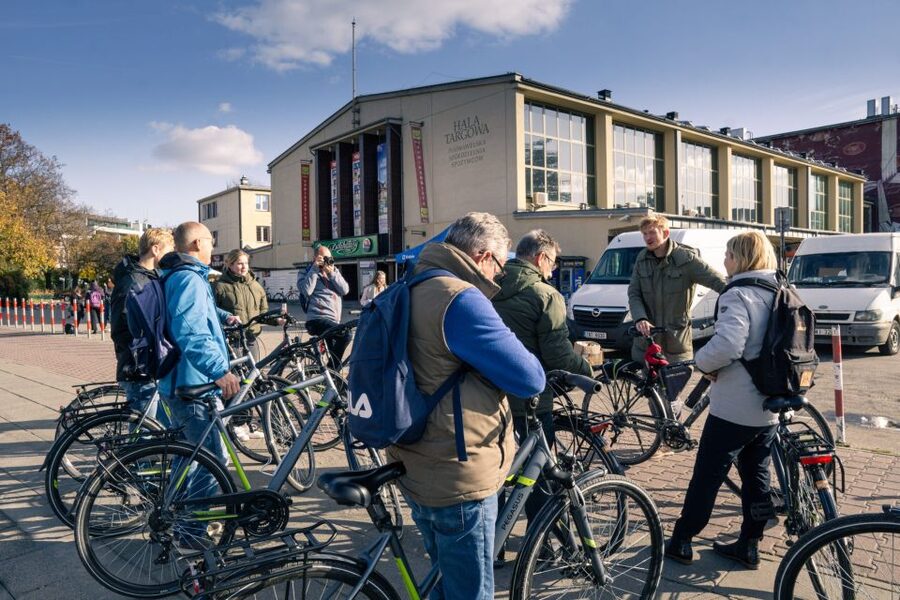
The strongest praise centers on the guide. The comments describe an enthusiastic and passionate guide who explains Krakow, Poland, and World War II with care. Bryan is specifically praised for taking his time at the different stops and even allowing time for a break.
That matters because the subject is too broad for a few quick facts. You need someone who can explain why an event mattered, how it affected Polish people, and how the memory of the war continued afterward. The tour aims to connect those pieces rather than present isolated stories.
The fact that the guide is Dutch may also shape the tone. The tour is designed with Dutch visitors in mind, including references to Poland’s role in the liberation of the Netherlands and Italy. English and German are also listed as possible languages depending on preference, but the activity information specifically identifies Dutch as the live guide language. Confirm your desired language when reserving.
A good history guide should know when to speak and when to let a place speak for itself. The available feedback points to generous explanations rather than a rushed script. That is a strong reason to choose this ride over an impersonal audio route.
Bicycle quality, pace, and practical comfort
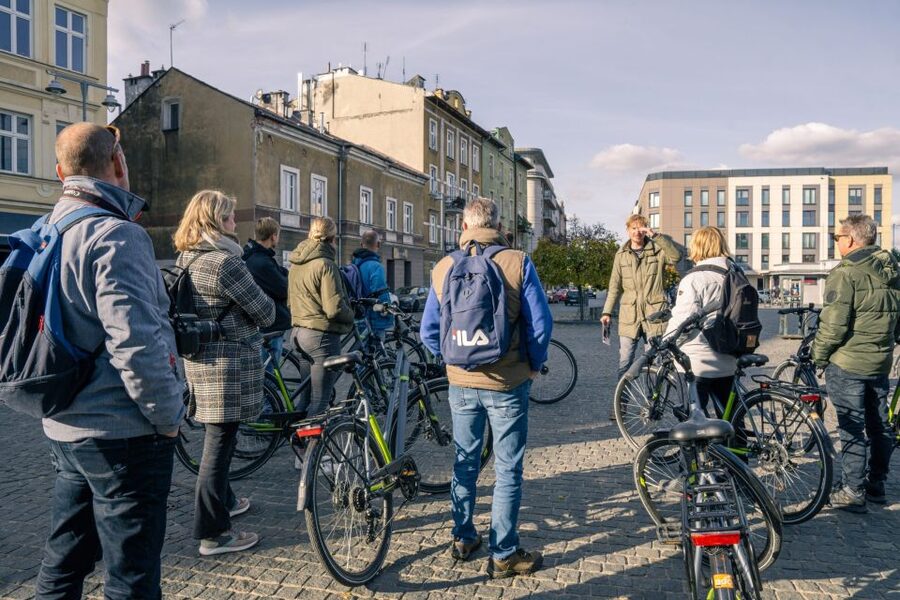
The tour includes a quality bicycle, and the bicycles receive direct praise. That is more important than it sounds. An uncomfortable bike can sour even an excellent route, especially during a three-hour outing.
The pace is described as slow and relaxed. You should still be ready to cycle through Krakow’s streets, but this is not marketed as a test of speed or stamina. The format suits you if you like moving between districts while keeping the focus on conversation and scenery.
A helmet is available if requested. I would ask for one when booking or at the start if you prefer to ride with one. A poncho is available if the weather turns wet, which gives the outing some flexibility, but you should still dress for the forecast.
There is no e-bike included. That is the clearest practical limitation for anyone who prefers electric assistance. The walking hill also means an e-bike would not remove every challenge. People with mobility impairments should not book this activity, according to the stated conditions.
Food and drinks are not included. Bring what you need for the three-hour period, particularly if you prefer not to wait until after the tour for a snack or drink.
Is $41 a fair price?
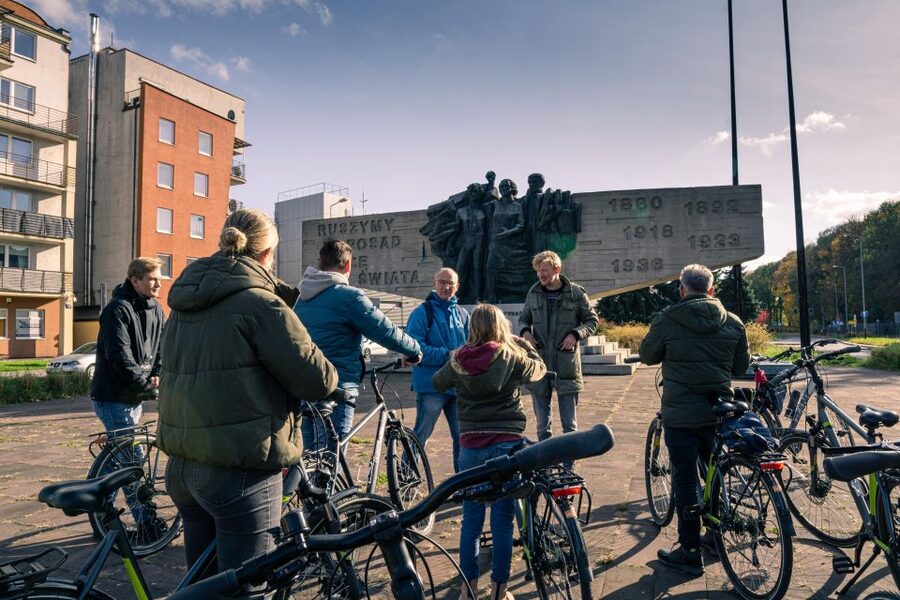
At $41 per person, the tour offers more than bicycle rental. You are paying for a three-hour route, a bicycle, a guide, historical interpretation, and access to several districts and sites that require more effort to connect independently.
The value is strongest if you want a clear theme. A casual bike rental would cost less, but it would not give you the stories about Polish heroes, the former ghetto, the Jewish cemetery, or the relationship between Polish wartime history and liberation in Western Europe.
It is also good value as a companion to Auschwitz. Auschwitz is essential for understanding the scale and machinery of Nazi persecution, while this tour focuses on Krakow, local places, Polish responses, and what happened afterward. The two experiences serve different purposes.
The price is less attractive if you are mainly interested in the Old Town, Kazimierz, and classic postcard views. This tour deliberately avoids those standard highlights, so book it for the subject and route, not because you want the city’s most famous sights.
Free cancellation up to 24 hours before the start and the option to reserve now and pay later make the booking less rigid. Those policies are helpful when weather or sightseeing plans are still shifting.
Who should book this bike tour?
I would recommend it to you if you have already planned the main Krakow sights and want a stronger sense of the city’s modern history. It suits visitors who enjoy serious stories, local context, and a guide who takes time to explain rather than rush.
It is particularly useful for Dutch-speaking visitors, since the tour is led in Dutch and connects Polish history with the Netherlands. English and German may be available, but confirm that before booking.
You should also consider it if Auschwitz is part of your trip. This ride does not replace Auschwitz, and it does not repeat it. Instead, it gives you a closer look at Krakow and the people who lived through the war here.
You might skip it if you want a short, carefree ride with little commentary. The subject is emotional, the hill requires walking, and the route is not designed for people with mobility impairments. It is also not the right choice if your main goal is to see every famous Old Town landmark.
Final verdict: book it for the stories
Book the Hidden Krakow Bike Tour if you want to understand the city beyond its medieval center. The combination of a relaxed ride, quality bicycles, Podgórze, the former Jewish ghetto, a Jewish cemetery, Schindler’s Factory, and the park of Polish heroes gives the afternoon a clear purpose.
The guide is the deciding factor, and Bryan’s patient, enthusiastic style appears well suited to this material. The climb, lack of an included e-bike, and serious subject deserve consideration, but they do not weaken the tour for the right audience.
At $41, I see this as a worthwhile history-focused outing, especially after Auschwitz or after you have covered Krakow’s standard sights. Choose it for the places you would probably miss, and for the stories that give those places meaning.
FAQ
How long is the Hidden Krakow Bike Tour?
The tour lasts three hours.
What historical subjects does the tour cover?
World War II is the main theme, along with Poland’s postwar experience, Polish heroes, victims, and the way the war shaped Polish society.
Which parts of Krakow does the tour visit?
The route includes areas outside the city center, a park with statues of Polish heroes, the Podgórze district, a Jewish cemetery, Schindler’s Factory, and the former Jewish ghetto.
Is a bicycle included in the price?
Yes. A quality bicycle is included. An e-bike is not included.
Is a helmet provided?
A helmet is available if requested. A poncho is also available if needed.
Is the tour suitable for people with mobility impairments?
No. The tour includes walking up a hill to reach a viewpoint, and it is listed as unsuitable for people with mobility impairments.
Just added in Krakow
- Auschwitz-Birkenau – Skip the Line Tickets★ 3.5 · 29 reviews
- Auschwitz-Birkenau: Fast-Track Ticket & Guided Tour No Transfers★ 3.5 · 17 reviews
- Zakopane & Sleigh Ride with Bonfire – Group Tour from Kraków★ 5.0 · 2 reviews
- Thermal Baths & Zakopane – Private Trip from Krakow★ 5.0 · 1 review
- Zakopane & Gubalowka Funicular – Private Winter Tour from Krakow★ 5.0 · 10 reviews
- Sleigh Ride & Bonfire in Zakopane with Funicular – Private Trip★ 5.0 · 48 reviews
- Divine Mercy Sanctuary – Private Tour from Krakow★ 5.0 · 4 reviews
- stag dog chase Krakow prank★ 5.0 · 4 reviews
Cycling Tours, compared.
Complete Cracow Bike Tour (small group of maximum 15 people!)
Read our review →
Half-Day Warsaw City Sightseeing Bike Tour for Small Group
Read our review →
Browse the lists this tour appears in