
REVIEW · JEWISH QUARTER TOURS
Kazimierz District, the Wawel Hill and Cracow Old Town
Krakow tells its story on foot. This four-hour private walking tour links Kazimierz, Wawel Hill, and the Old Town in one well-planned route. I especially like the mix of Jewish heritage and royal Krakow, plus the supplied whisper system, which helps you hear the guide clearly without stopping the whole group.
I also like the tour’s human touch. Guide Marta has been praised for her warmth, clear explanations, and careful pacing. The main drawback is that several important interiors, including Remuh Synagogue, Wawel Cathedral, and St. Mary’s Basilica, require extra admission, so the $65 price is not the full cost if you want to enter them all.
In This Review
- Key points to know before you book
- Why this four-hour route works
- Kazimierz and the old Jewish quarter
- Remuh Synagogue and its old cemetery
- Wawel Hill and the Renaissance castle courtyard
- Wawel Cathedral and Poland’s royal past
- Kanonicza Street and the Franciscan Basilica
- Collegium Novum and the Jagiellonian University
- Krakow’s Main Square and Cloth Hall
- St. Mary’s Basilica and the hourly trumpet call
- Floriańska Street and the Barbican finish
- What the $65 price really covers
- Who should book this Krakow walk?
- Should you book it?
- FAQ
- Where does the tour start?
- What time does the tour begin?
- How long does the tour last?
- Where does the tour finish?
- Is this a private tour?
- Are admission tickets included?
- Is transportation provided?
- Can I cancel for a full refund?
Key points to know before you book
- Three major Krakow districts in four hours: Kazimierz, Wawel Hill, and the medieval Old Town are joined in one continuous walk.
- A private experience for your own group: You are not placed with strangers, and group discounts are available.
- Kazimierz provides the emotional center: Szeroka Street, old synagogues, the cemetery, Nowy Square, and a Schindler’s List filming location give this part real depth.
- The best historic interiors cost extra: Admission is not included at Remuh Synagogue, Wawel Cathedral, or St. Mary’s Basilica.
- The route finishes near the Barbican: Starting at Szeroka Street at 9:30 a.m., you finish by Krakow’s old defensive walls.
- Plan for a serious walking morning: The tour is not recommended for people with impaired mobility, and private transport is not included.
Why this four-hour route works
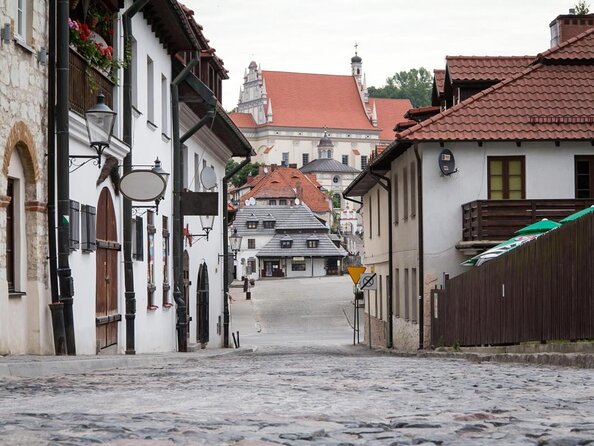
Krakow can feel like a stack of separate attractions. Kazimierz lies south of the Old Town, Wawel rises between them, and the Main Square sits farther north. This tour makes a sensible thread through those places instead of asking you to arrange several short visits on your own.
You begin at Szeroka 40 in Kazimierz at 9:30 a.m. From there, the route moves through the former Jewish district, climbs toward Wawel Hill, then continues along Kanonicza and Grodzka streets into the university quarter and Main Square. It ends at the Krakow Barbican, close to Saint Florian’s Gate.
The timing is brisk but not frantic. Some stops last only 10 or 15 minutes, while the main historical areas receive 30 to 45 minutes. You should expect a guided overview rather than long, independent visits inside every building.
The private format matters here. Your group alone takes part, so the guide can explain details at a pace that suits you. It also means you should ask questions as you go. The whisper system is useful in busy streets and courtyards, where a normal speaking voice can easily get lost.
More Old Town walks in Krakow:
- Old Town Krakow & Wawel Castle Walking Tour
★ 5.0 · 1,508 reviews - Krakow: Bike Tour of Old Town, Jewish Quarter and the Ghetto
★ 4.9 · 1,155 reviews - Krakow: The Old Town Walking Tour
★ 4.8 · 794 reviews
Kazimierz and the old Jewish quarter
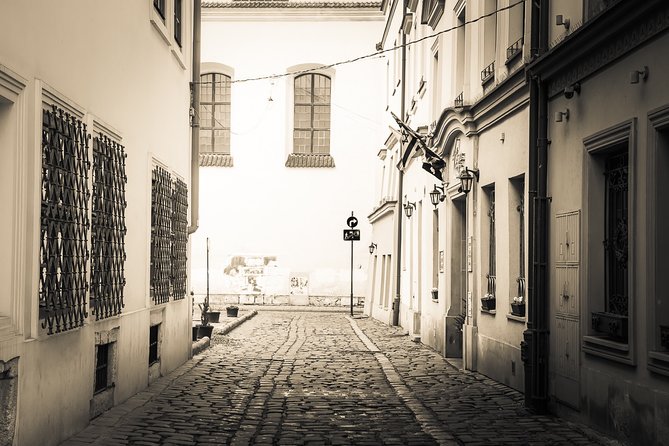
Kazimierz is the strongest opening section because it gives you more than attractive streets and old buildings. Since 1800, it has been part of Krakow, but for centuries it was a separate town and a major center of Jewish religious, cultural, and political life.
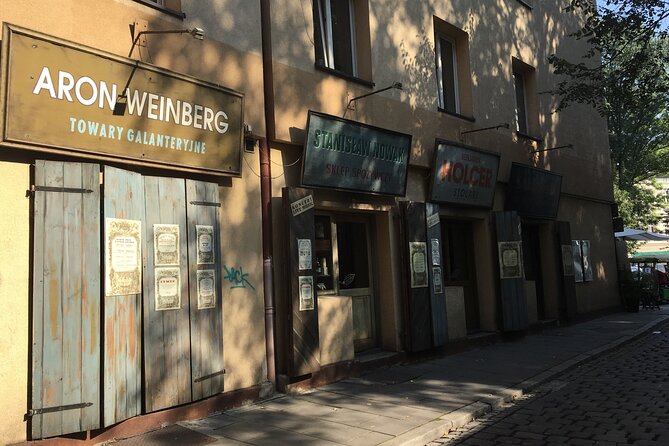
The walk begins around Szeroka Street, where that past is easiest to picture. You pass close to Isaac’s Synagogue and continue toward Nowy Square. The route also reaches a well-known courtyard between Józefa and Meiselsa streets, recognized from Steven Spielberg’s Schindler’s List.
The filming connection is interesting, but it should not take over the visit. The greater value is seeing how ordinary streets, courtyards, synagogues, and public squares fit together. Your guide can connect the physical setting to the district’s Jewish identity and its later changes.
This part receives about 45 minutes, not counting the optional synagogue visit. That gives you enough time to get a feel for Kazimierz, though not enough for a slow museum-style exploration. If this district matters most to you, consider asking your guide to spend more of the available time here.
Remuh Synagogue and its old cemetery
Remuh Synagogue is an optional visit, and admission is not included. The building dates from the 16th century, as does the adjacent Jewish cemetery, described as one of the oldest Jewish cemeteries in Europe.
The cemetery is especially important because it contains the graves of Jewish sages, including Rabbi Moses and Natan Spira. That makes this more than a quick architectural stop. It is a place of remembrance, and you should plan to behave quietly and respectfully.
The stated visit lasts about 20 minutes. That is enough for a focused introduction, but not a long examination of every grave or inscription. If you want to enter, bring money for the separate ticket and allow for the fact that opening access is not included in the tour price.
This optional choice is one of the tour’s practical strengths. You can keep the morning focused on the city streets if you have already visited a synagogue, or add a meaningful interior if this is your first time in Kazimierz.
Wawel Hill and the Renaissance castle courtyard
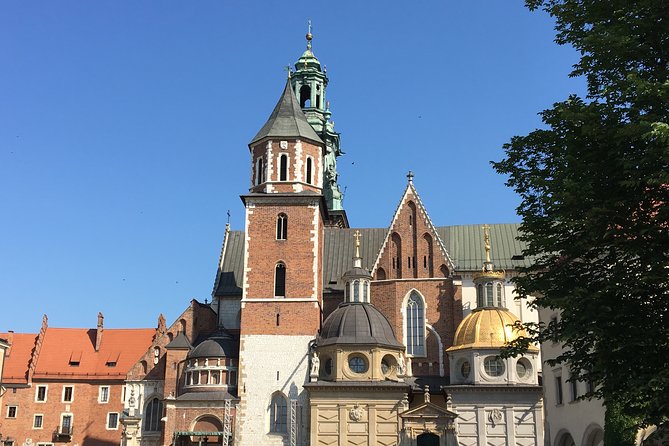
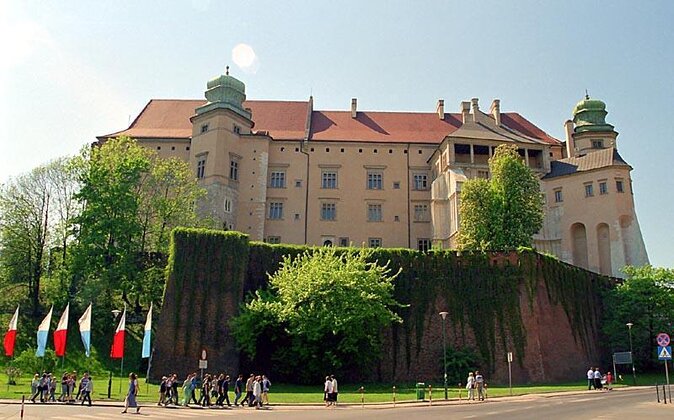
From Kazimierz, the route heads toward Wawel Hill. Here you admire the courtyard of Wawel Royal Castle, a 16th-century Renaissance work associated with Francesco Fiorentino and Bartolomeo Berrecci.
The castle courtyard is a fine place to pause because it shows how Krakow’s royal power was expressed through design. The tour focuses on the exterior courtyard, and admission is free for this portion. You are not promised entry into the castle rooms or collections, so set your expectations accordingly.
Only about 15 minutes are assigned to the castle courtyard. That is enough for a quick explanation and photographs, but not a full castle visit. Wawel offers far more than this tour can cover, so you may want to return later if royal apartments, art collections, or longer interior visits are high on your list.
More Jewish heritage tours in Krakow:
- Krakow: Schindler’s Factory & Ghetto Guided Tour
★ 4.7 · 1,694 reviews - Krakow: Jewish Quarter and Former Ghetto Tour
★ 4.9 · 1,441 reviews - Krakow: Kazimierz Jewish Quarter Walking Tour
★ 4.8 · 571 reviews - Krakow: Kazimierz, Schindler’s Factory & Ghetto Guided Tour
★ 4.8 · 460 reviews
Wawel Cathedral and Poland’s royal past
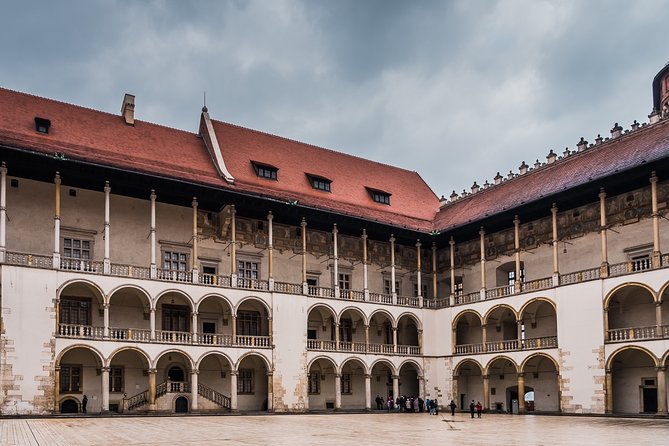
Wawel Cathedral is another optional stop with a separate admission fee. The cathedral is dedicated to Saint Stanislas and Saint Venceslas and has more than a thousand years of history.
Its importance is national as well as religious. Polish kings were crowned here, and many were buried here. A visit helps explain why Wawel Hill is not simply a scenic castle site. It is tied to Poland’s monarchy, faith, and public memory.
The planned cathedral visit lasts about 40 minutes, which is generous compared with several other stops. If you choose to enter, this is one of the places where the additional ticket can make the tour feel more complete.
Still, you should check the admission cost when booking because it is not built into the $65 fee. The same applies to Remuh Synagogue and St. Mary’s Basilica. The tour price covers the guiding and route, not every interior.
Kanonicza Street and the Franciscan Basilica
After Wawel, you walk down Kanonicza and Grodzka, two of Krakow’s oldest streets. This is a pleasant transition from royal Krakow to the city center, and it keeps the tour on foot instead of breaking the story with a vehicle transfer.
The next major stop is the Gothic Basilica of the Franciscan Friars. Inside, the focus is on the polychromy and the modernist stained-glass windows designed by Stanislas Wyspiański.
That pairing is worth noticing. You get Gothic architecture, but also a later artistic response that is more modern in mood and color. The visit is scheduled for about 15 minutes and admission is free.
This is a short stop, so you will not have much time for quiet reflection or detailed viewing. Your guide’s explanations are important here. The whisper system should help you hear the context while standing inside a large church.
Collegium Novum and the Jagiellonian University
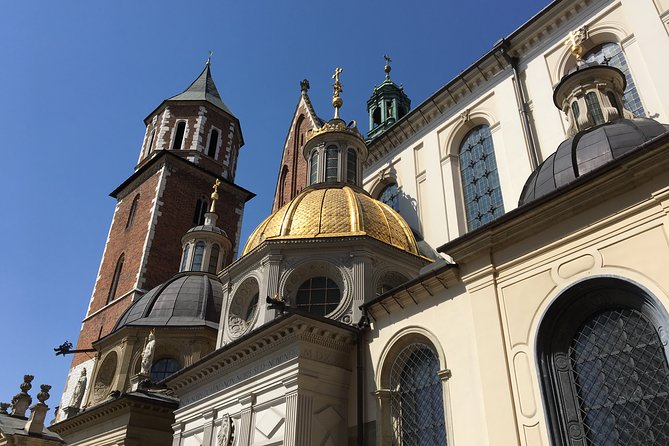
The route then enters Krakow’s university quarter. Collegium Novum is a striking 19th-century building and the seat of the rector of Jagiellonian University. The stop lasts about 10 minutes and does not include an admission charge.
You continue to medieval buildings linked to the former Krakow Academy, founded in 1364 by King Casimir the Great. Today, the institution is known as Jagiellonian University, one of the city’s defining academic landmarks.
Collegium Maius is the oldest university building, dating from the 15th century. Nicolaus Copernicus studied here, giving the stop a clear connection to European science and education.
The university section lasts around 15 minutes after Collegium Novum. It works best as part of the wider route. If you want a full look at Collegium Maius or its interior collections, this short stop will not replace a separate visit.
Krakow’s Main Square and Cloth Hall
The walk continues to Rynek, Krakow’s Main Market Square. Dating to 1257, it is described as the largest medieval square in Europe. Its present layout was traced after a Mongolian invasion devastated Krakow in 1241, a reminder that the city’s order was rebuilt after disaster.
The scale of the square is easier to appreciate when you walk into it from the narrower streets. You can take in the open space, the surrounding facades, and the central Cloth Hall, an old textile market that dates to the 13th century.
The Cloth Hall was remodeled in the 16th century by Santi Gucci, a Florentine artist. The tour takes you inside, and admission is free. Expect a 30-minute visit to the square and hall, enough for the main story and photographs.
This is one of the busiest sections of the route in practical terms, so stay close enough to hear the guide. The whisper system is particularly helpful here. You get a strong sense of Krakow’s public center, but you do not get time to browse every stall at leisure.
St. Mary’s Basilica and the hourly trumpet call
St. Mary’s Basilica is an optional interior visit with a separate admission fee. It was the most important church of Krakow’s bourgeoisie, and its main artistic treasure is the 15th-century wooden high altar carved from linden wood by the German artist Veit Stoss.
The altar shows scenes from the lives of the Virgin Mary and Jesus Christ. It is a major Gothic work, and the 20-minute visit can be worthwhile if you want to see Krakow’s art as well as its streets and monuments.
Next to the basilica, the route pauses at plac Mariacki 5 for the famous Hejnał. The melody is played every hour, four times, from the church’s highest tower.
The timing of this moment matters. The start is at 9:30 a.m., and the tour lasts about four hours, so the hourly performance should fall during the walk. Exact timing can vary with the pace of the group, so do not treat it as a guaranteed scheduled performance at a particular minute. Your guide will handle the practical timing.
Floriańska Street and the Barbican finish
The final stretch follows Floriańska Street toward Krakow’s old defensive line. You finish near Saint Florian’s Gate and the Krakow Barbican, with the end point listed at Basztowa, close to the Barbican.
The city walls date to the 14th century, and the gate and Barbican make a fitting end to a tour that has covered faith, royal power, education, trade, and defense. It also gives you a useful location for continuing your own exploration after the tour.
Finishing at the Barbican rather than returning to Kazimierz is worth noting. You need to plan your next move from the Old Town side of the city. No private transport is included, but the tour is near public transportation.
What the $65 price really covers
At $65, the value depends on how much structure and explanation you want. You are paying for roughly four hours of private guiding, a carefully connected route, and the chance to cover three major parts of Krakow without arranging separate visits.
The admission costs are the catch. Remuh Synagogue, Wawel Cathedral, and St. Mary’s Basilica are optional and not included. If you enter all three, your final spending will be higher than the headline price.
For a group, the calculation may look better because group discounts are available and only your own party participates. For one person or a very small party, the private format may feel expensive compared with a large group walk, but you gain more control over questions and pace.
The whisper system adds practical value rather than spectacle. It is designed to keep the guide audible during the visit, especially in open squares, church interiors, and crowded streets.
Who should book this Krakow walk?
I would choose this tour if you have one morning in Krakow and want a strong first orientation. It suits people who prefer a guide to connect places rather than simply point them out, and it works well for groups who value privacy.
It is also a good match if you want both Kazimierz and the Old Town in one outing. The route gives Kazimierz more time than the castle courtyard or university buildings, so it has a useful balance between major landmarks and local historical context.
You should think twice if you have impaired mobility. The route is a substantial city walk, and the experience is not recommended for people with mobility limitations. You may also want a different plan if you prefer long, unhurried museum visits, since most stops are brief and several interiors are optional.
Guide Marta deserves special mention. Her feedback highlights a friendly manner, helpful attitude, clear explanations, and a talent for giving the right amount of detail without losing the pace. The tour has a 5.0 rating from 48 reviews, with 100 percent recommendation, so the strongest praise centers on the guiding rather than on flashy extras.
Booking includes free cancellation up to 24 hours before the 9:30 a.m. start for a full refund. Changes or cancellations inside that 24-hour window are not accepted for a refund, and confirmation is sent within 48 hours, subject to availability.
Should you book it?
Book this walk if you want one private morning that connects Krakow’s essential historic areas. The route is broad, the guide support is strong, and the whisper system should make the explanations easier to follow.
Before paying, decide which optional interiors matter most to you and budget for their tickets. I would prioritize Wawel Cathedral or Remuh Synagogue for historical depth, and St. Mary’s Basilica if Gothic art is your main interest.
If you want a first look at Krakow with a personal guide, this is a sound choice. If you want slow church visits, castle rooms, or extensive time in Kazimierz, use this as an orientation and return to your favorite areas afterward.
FAQ
Where does the tour start?
The tour starts at Szeroka 40, 31-053 Kraków, Poland, in the Kazimierz district.
What time does the tour begin?
The stated start time is 9:30 a.m.
How long does the tour last?
The tour lasts approximately four hours.
Where does the tour finish?
It finishes near the Krakow Barbican at Basztowa, close to the Barbican and Saint Florian’s Gate.
Is this a private tour?
Yes. Only your group participates in the activity.
Are admission tickets included?
Admission is not included for Remuh Synagogue, Wawel Cathedral, or St. Mary’s Basilica. The listed outdoor and free-access stops do not require an included admission ticket.
Is transportation provided?
No. Private transportation is not included. The route is a walking tour and is near public transportation.
Can I cancel for a full refund?
Yes, if you cancel at least 24 hours before the experience start time. Cancellations or changes made less than 24 hours before the start are not refunded.
More Wawel Castle Tours
- Krakow: Wawel Castle & Cathedral Guided Tour
★ 4.7 · 2,111 reviews - Krakow: Wawel Royal Hill with Optional Castle and Cathedral
★ 4.2 · 1,220 reviews - Krakow: Wawel Castle and Cathedral Guided Tour
★ 4.6 · 595 reviews - Kraków: Old Town & Wawel Castle Walking Tour in English
★ 4.8 · 532 reviews
Just added in Krakow
- Auschwitz-Birkenau – Skip the Line Tickets★ 3.5 · 29 reviews
- Auschwitz-Birkenau: Fast-Track Ticket & Guided Tour No Transfers★ 3.5 · 17 reviews
- Zakopane & Sleigh Ride with Bonfire – Group Tour from Kraków★ 5.0 · 2 reviews
- Thermal Baths & Zakopane – Private Trip from Krakow★ 5.0 · 1 review
- Zakopane & Gubalowka Funicular – Private Winter Tour from Krakow★ 5.0 · 10 reviews
- Sleigh Ride & Bonfire in Zakopane with Funicular – Private Trip★ 5.0 · 48 reviews
- Divine Mercy Sanctuary – Private Tour from Krakow★ 5.0 · 4 reviews
- stag dog chase Krakow prank★ 5.0 · 4 reviews