
REVIEW · JEWISH QUARTER TOURS
Jewish Quarter Kazimierz Guided Walking Tour in Krakow
Krakow’s past is written in its streets. This 90-minute walk through Kazimierz connects synagogues, churches, squares, cemeteries, and wartime memorials in one compact route. I like the way it brings Jewish and Christian landmarks into the same story, and I especially like the finish at Ghetto Heroes Square, where the empty chair monument gives the tour a solemn final note. The main consideration is time: with eight stops, each receives only about ten minutes, so you will get a guided overview rather than long visits inside every site.
The tour costs $23.27 per person, which is fair if you want a clear introduction to Kazimierz without arranging several admissions or researching the district on your own. The small maximum group of 25 people should keep the walk manageable, though the experience may feel more like an outdoor history lesson than a museum visit. One published review describes a tour with only two participants and praises the guide highly, but group size can vary.
In This Review
- Key points to know before you book
- Why Kazimierz works best with a guide
- Szeroka Street, the former heart of Jewish Kazimierz
- The Old Synagogue and Poland’s Jewish religious architecture
- Remuh Synagogue and its adjacent cemetery
- Kupa Synagogue and the needs of the poor
- Nowy Square and the Okrąglak market hall
- Tempel Synagogue and Jewish cultural life today
- Corpus Christi Church brings another tradition into view
- Father Bernatek Footbridge and the route toward Podgórze
- Ghetto Heroes Square and the empty chair monument
- What the $23.27 price really buys you
- Timing, meeting point, and practical planning
- Who will appreciate this Kazimierz walk
- Should you book the Kazimierz tour?
- FAQ
- How long is the Jewish Quarter Kazimierz tour?
- Where does the tour begin?
- Where does the tour end?
- What is included in the tour?
- Are admission tickets included?
- Is food or drink included?
- What is the cancellation policy?
Key points to know before you book
- Szeroka Street begins the story: This former center of Jewish life is lined with old synagogues, palaces, and houses dating from the 16th through 18th centuries.
- Five synagogues or Jewish sites shape the route: You see the Old Synagogue, Remuh Synagogue, Kupa Synagogue, and Tempel Synagogue, with the Remuh cemetery adding an important sacred setting.
- Christian Krakow is part of the story too: Corpus Christi Church shows how closely Jewish and Christian communities existed within the same district.
- Nowy Square adds everyday character: The Okrąglak market hall and surrounding buildings reveal how Kazimierz changed in the 19th and 20th centuries.
- The finish is emotionally powerful: Ghetto Heroes Square and its empty chair monument recall the wartime destruction of Krakow’s Jewish community.
- The route ends across the river: The Father Bernatek Footbridge links Kazimierz with Podgórze, giving the walk a useful geographic finish.
Why Kazimierz works best with a guide
Kazimierz is easy to walk through, but it is not always easy to read. A doorway may belong to a former prayer house, a square may have changed purpose several times, and a church may sit only a short distance from a synagogue. Without context, you can admire the architecture and miss the human story.
That is where this tour earns its fee. A professional guide explains how Jewish life developed in Krakow across the centuries, then places the buildings into that timeline. You are not simply moving from one photo stop to the next. You are learning how the district functioned as a Jewish town, how it changed in the 19th century, and how World War II altered it forever.
I also like the route’s balance. It does not treat Kazimierz as only a Holocaust memorial district. You see religious buildings, homes, a market square, a footbridge, and a church. That broader approach helps you understand the community that existed before the war, not only the tragedy that followed.
The 90-minute length suits a first look. You can fit it into a morning or afternoon, then return later to the synagogue or museum that caught your attention. If you want extended interior visits, quiet time in cemeteries, or a detailed account of wartime Krakow, you will need more time beyond the tour.
More Walking Tours in Kraków
- Old Town Krakow & Wawel Castle Walking Tour
★ 5.0 · 1,508 reviews - Creepy Krakow: 2-Hour City Walking Tour
★ 4.7 · 1,131 reviews - Krakow: The Old Town Walking Tour
★ 4.8 · 794 reviews
Szeroka Street, the former heart of Jewish Kazimierz
The walk begins at Szeroka 24, on Szeroka Street. This is a strong starting point because the street gathers many of the district’s key themes in one place. Old synagogues, grand houses, and former palaces reflect the importance of the area from the 16th to the 18th centuries.
Your guide uses the buildings to explain the old Jewish town, rather than treating each façade as an isolated monument. Look closely at the scale of the houses and the way religious buildings sit among them. The setting helps you picture a community with its own institutions, places of worship, and daily routines.
You spend about ten minutes here, and admission is not included. That timing is enough for orientation and exterior details, but not for a slow architectural study. If Szeroka Street interests you, note the buildings you want to revisit after the walk.
The Old Synagogue and Poland’s Jewish religious architecture
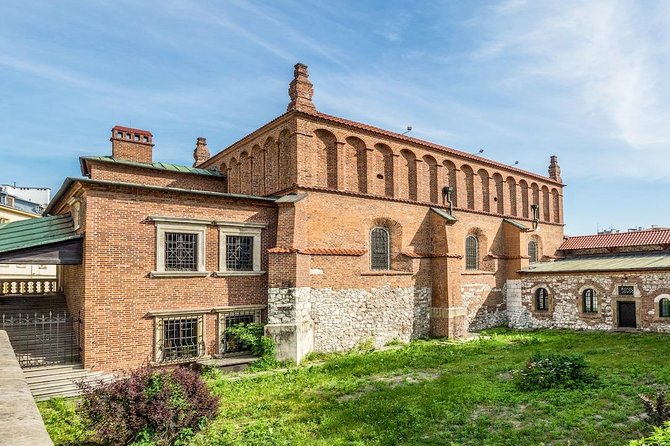
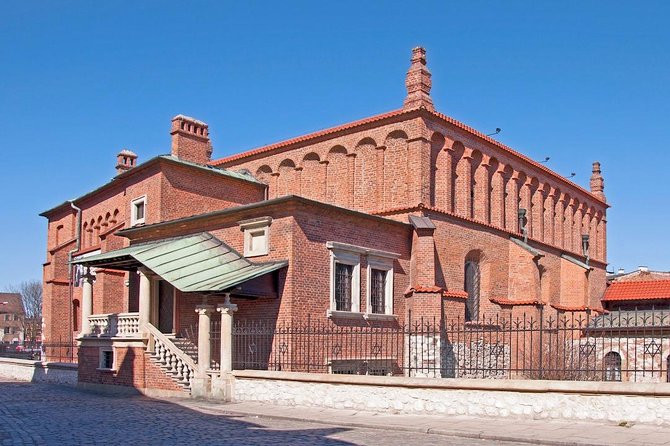
The next stop is the Old Synagogue, now part of Muzeum Krakowa. It is described as the oldest preserved synagogue in Poland and one of Europe’s most important Jewish religious monuments. Even with a short stop, this is a major point on the route.
The value here comes from the building’s age and role. It helps explain that Kazimierz was not a temporary Jewish settlement or a decorative quarter added for modern tourism. It was a long-established center of religious and community life.
Admission is not included, so the tour focuses on the outside unless you choose to visit separately. I consider that a sensible arrangement for a short walking tour, since entering every site would make the route much longer and more expensive. Still, check your expectations. If you want to see the museum displays and interior details, plan a return visit rather than assuming your tour ticket covers entry.
Remuh Synagogue and its adjacent cemetery
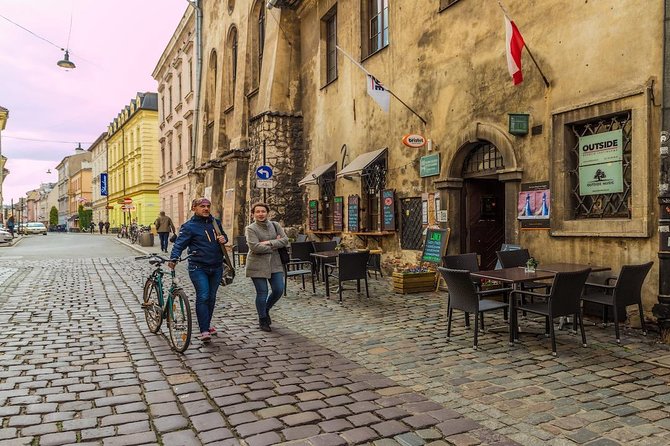
Remuh Synagogue is the second-oldest Jewish prayer house in Krakow. The synagogue and cemetery together form one of the district’s most important Jewish architectural and sacred complexes.
This stop adds something the grand façades cannot: a direct sense of religious continuity and remembrance. The cemetery is not just another landmark. Its presence beside the synagogue shows how worship and burial were connected within the old community.
The tour allows about ten minutes here, with admission not included. That is enough for your guide to explain why the site matters, but it is not a long cemetery visit. Please treat the setting with care. This is a place of worship and remembrance, not simply a background for photographs.
For many people, Remuh will be one of the most meaningful stops. The Old Synagogue gives you institutional history. Remuh adds a quieter, more personal dimension.
More Jewish heritage tours in Krakow:
- Krakow: Schindler’s Factory & Ghetto Guided Tour
★ 4.7 · 1,694 reviews - Krakow: Jewish Quarter and Former Ghetto Tour
★ 4.9 · 1,441 reviews - Krakow: Bike Tour of Old Town, Jewish Quarter and the Ghetto
★ 4.9 · 1,155 reviews - Krakow: Kazimierz Jewish Quarter Walking Tour
★ 4.8 · 571 reviews
Kupa Synagogue and the needs of the poor
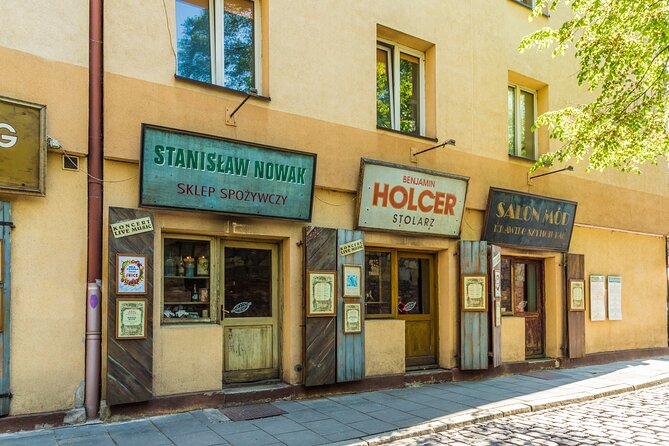
Kupa Synagogue was the last synagogue built during the existence of the Jewish town. It was also known as Szpitalna because it stood near the former Jewish hospital, and as the Poor because the poorest members of the community prayed there.
That detail gives this stop unusual value. It shifts the story away from famous buildings and prominent families. You get a glimpse of the community’s social structure and the way religious life served people with different levels of wealth.
Again, the visit is brief and admission is not included. The guide’s explanation matters more than a long look at the exterior. If you are interested in social history, listen closely here. The name of the synagogue tells you as much about local life as its architecture does.
Nowy Square and the Okrąglak market hall
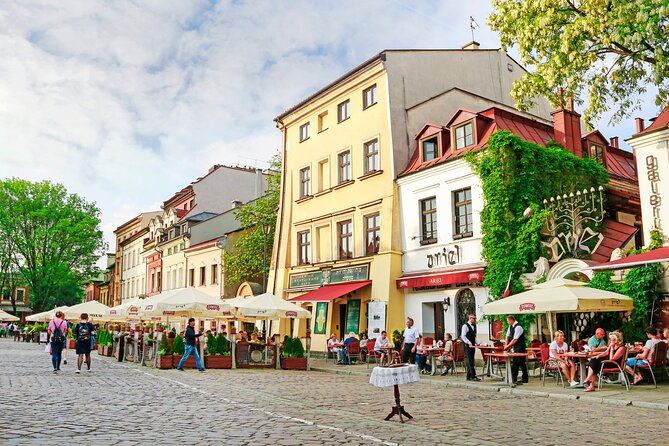
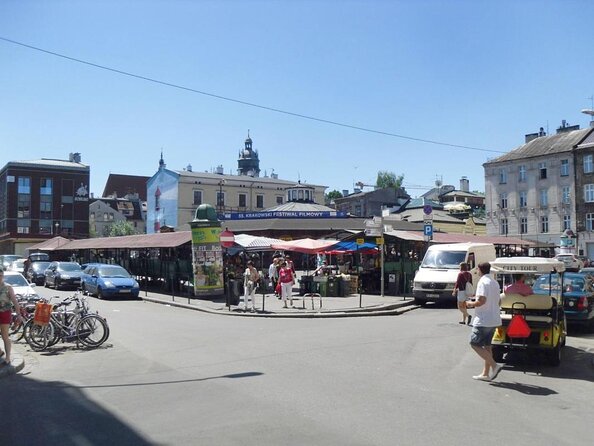
The route then moves to Market Square, referring to today’s Nowy Square, commonly called the Jewish Square. Until the middle of the 19th century, this area formed part of the Jewish town. Later, the streets were reorganized and the square was laid out as Nowy, meaning New.
The buildings around the square mostly took their current form around the turn of the 19th and 20th centuries. The most recognizable feature is the Okrąglak, a covered market hall built in the square.
This is a useful pause because it shows Kazimierz as a living urban district, not just a collection of religious monuments. You can compare the older Jewish town with the later city planning that reshaped it. The square also gives the group a more open place to gather, which may make the guide’s explanation easier to follow.
The stop lasts about ten minutes. Food and drinks are not included, so do not book this tour expecting a tasting or market meal. You can arrange refreshments separately, but keep the walk’s schedule in mind.
Tempel Synagogue and Jewish cultural life today
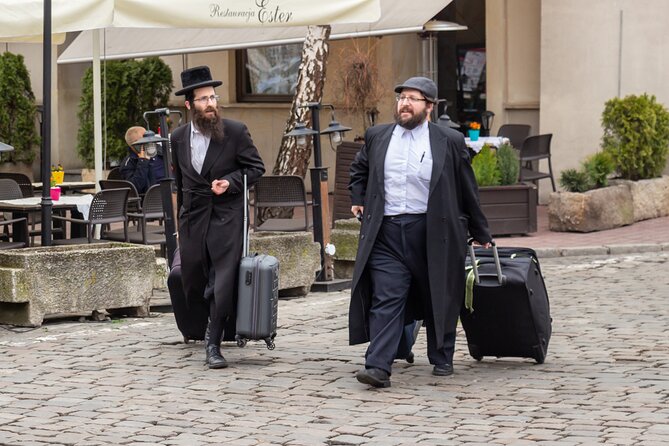
Tempel Synagogue is one of four active synagogues in Krakow, although services are held only sporadically. It also functions as a center for Jewish culture, with concerts and meetings, especially during the Jewish Culture Festival.
This stop connects the past with the present. The earlier synagogues help you understand the old community. Tempel shows that Jewish cultural life in Krakow continues, even after the enormous losses of World War II.
The word active needs a little context here. You should not assume a daily worship schedule or a guaranteed service during your visit. Instead, think of Tempel as both a synagogue and a cultural venue. Its concerts and meetings make it an important place in present-day Kazimierz.
The tour gives you around ten minutes, and admission is not included. If the synagogue is open and you want to go inside, confirm the entry arrangements separately. Otherwise, the guide’s historical and cultural explanation still makes the stop worthwhile.
Corpus Christi Church brings another tradition into view
Corpus Christi Church, or Kosciol Bozego Ciala, is one of the route’s most striking contrasts. It is known for its size, importance, and architecture, and the tour highlights its beautiful interior.
This visit matters because Kazimierz was not shaped by one tradition alone. Jewish and Christian institutions occupied the same broad district, and seeing both helps you understand the area’s religious setting more fully. The church also gives the walk a change of pace after several Jewish landmarks.
I like this part of the route because it prevents the experience from becoming too narrowly defined. You are encouraged to look at the district as a historic town with overlapping communities and buildings, not as a single-theme attraction.
The stop lasts about ten minutes. That should give you a useful look inside, though not a long period for quiet observation. Church access can depend on services or local conditions, so it is wise to treat the interior visit as a planned highlight rather than a guarantee of unlimited time.
Father Bernatek Footbridge and the route toward Podgórze
The final listed stop is the Father Bernatek Footbridge, built in 2010 on the site of the former Podgórze bridge. It links Kazimierz with Podgórze across the river.
This is a practical ending point as well as a symbolic one. The bridge shows how the two districts connect and points you toward the next part of Krakow’s wartime story. If you plan to continue exploring Podgórze, you finish in a useful location rather than returning to the starting point.
The footbridge also gives the tour a clear sense of movement. You have crossed from the old Jewish town through religious and civic sites toward the district connected with Ghetto Heroes Square. It feels less like a loop and more like a short historical journey.
The route ends at Plac Bohaterów Getta, or Ghetto Heroes Square. Keep that in mind when planning your day. You will not finish back on Szeroka Street.
Ghetto Heroes Square and the empty chair monument
Although the itinerary lists the footbridge before the ending point, Ghetto Heroes Square provides the emotional finish. The square’s empty chair monument is dedicated to the victims of the Krakow ghetto.
The chairs are simple, spare, and difficult to ignore. They suggest absence without relying on a long explanation. After hearing about Jewish community life in Kazimierz, you reach a place that recalls what was taken away during the war.
I find this ending especially effective because it gives the earlier stops greater weight. Szeroka Street, the synagogues, the cemetery, and Tempel Synagogue are not merely old buildings. They belonged to a community whose life was shattered. The monument asks you to hold both facts in mind: Jewish life flourished here, and it suffered catastrophic destruction.
Ten minutes is a short time for such a serious site. You may want to remain after the official walk ends. Since the tour finishes here, you can do that without holding up the group.
What the $23.27 price really buys you
At $23.27 per person, the main purchase is interpretation. The public streets and many exterior views are free, but the meaning behind them is not always obvious. A guide gives you a route, a timeline, and links between places that you might otherwise see as separate.
The price is strongest for first-time visitors who want a structured introduction. You get eight stops in roughly 90 minutes, a professional guide, and a route that covers Jewish, Christian, civic, and wartime landmarks. The price is less compelling if you already know Kazimierz well or prefer to explore at your own pace.
No food or drinks are included. Admission tickets are also not included at the listed stops, so budget for any interiors or museums you decide to enter separately. That approach keeps the base price modest, but you should read the experience as a guided street tour, not an all-inclusive attraction ticket.
The group maximum is 25 people. That is not a private tour, but it is limited enough to be workable. One published five-star review describes a particularly personal experience with just two people and praises the guide as amazing. You might get that kind of attention, but you should not count on such a small group every time.
Timing, meeting point, and practical planning
The meeting point is Szeroka 24 in Krakow. The tour ends at Plac Bohaterów Getta, so allow time to reach your next activity from there. The route is near public transportation, which makes it practical to connect with other parts of the city.
Most people book about 14 days ahead. That pattern suggests you should reserve before your trip if your schedule is fixed, especially if you want a particular date. Confirmation is provided at booking, and the ticket is mobile, so you can keep the booking on your phone.
Children must be accompanied by an adult. Service animals are allowed, and most people can participate. The provided information does not give a precise walking distance or describe the surface at every stop, so if you have mobility concerns, contact the provider before booking rather than guessing.
You can cancel for a full refund up to 24 hours before the start time. Changes or cancellations made less than 24 hours before the start are not accepted for a refund. The cut-off uses Krakow local time.
Who will appreciate this Kazimierz walk
I would recommend this tour to you if you want a quick, organized introduction to one of Krakow’s most important districts. It works particularly well for first-time visitors, history-minded travelers, and anyone who prefers hearing the story of a place before exploring alone.
It also suits people with limited time. Ninety minutes gives you a useful framework without taking over your day. Afterward, you can decide if you want to return to the Old Synagogue, Remuh Synagogue, Tempel Synagogue, or another site for a longer visit.
Families may appreciate the clear route, but children must remain with an adult, and the subject matter becomes serious at the wartime memorials. The tour is not designed as a food walk or a nightlife experience. You will not receive food or drinks, and the emphasis is firmly on history, architecture, religion, and remembrance.
You may want a different experience if you prefer long museum visits, a private guide, or a slow photography walk. Ten minutes per stop moves the group along. The benefit is breadth. The tradeoff is limited time at each place.
Should you book the Kazimierz tour?
Book it if you want the district explained rather than simply photographed. The route covers Szeroka Street, four important synagogue sites, Nowy Square, Corpus Christi Church, the Father Bernatek Footbridge, and Ghetto Heroes Square in a short period. That is a lot of ground for $23.27.
My main advice is to use it as an introduction. Listen for the places you want to revisit, then return on your own for longer visits where admission is available. The strongest praise centers on the guide’s ability to make the experience feel personal, with one especially small group receiving very warm praise.
Skip it if you already have a detailed plan for Kazimierz and want to set your own pace. For most first-time visitors, though, the combination of Jewish heritage, Christian architecture, urban change, and wartime remembrance makes this a sensible and fairly priced first step.
FAQ
How long is the Jewish Quarter Kazimierz tour?
The tour lasts approximately 1 hour and 30 minutes.
Where does the tour begin?
It begins at Szeroka 24, 31-053 Kraków, Poland.
Where does the tour end?
The tour ends at Plac Bohaterów Getta, also known as Ghetto Heroes Square, in Krakow.
What is included in the tour?
A professional guide is included. The ticket is mobile.
Are admission tickets included?
No. Admission tickets at the listed stops are not included.
Is food or drink included?
No. Food and drinks are not included.
What is the cancellation policy?
You can cancel up to 24 hours before the experience starts for a full refund. Cancellations or changes made less than 24 hours before the start time are not accepted for a refund.
Just added in Krakow
- Auschwitz-Birkenau – Skip the Line Tickets★ 3.5 · 29 reviews
- Auschwitz-Birkenau: Fast-Track Ticket & Guided Tour No Transfers★ 3.5 · 17 reviews
- Zakopane & Sleigh Ride with Bonfire – Group Tour from Kraków★ 5.0 · 2 reviews
- Sleigh Ride & Bonfire in Zakopane with Funicular – Private Trip★ 5.0 · 48 reviews
- Thermal Baths & Zakopane – Private Trip from Krakow★ 5.0 · 1 review
- Zakopane & Gubalowka Funicular – Private Winter Tour from Krakow★ 5.0 · 10 reviews
- Divine Mercy Sanctuary – Private Tour from Krakow★ 5.0 · 4 reviews
- stag dog chase Krakow prank★ 5.0 · 4 reviews