
REVIEW · WALKING TOURS
Jewish Krakow Walking Tour in English
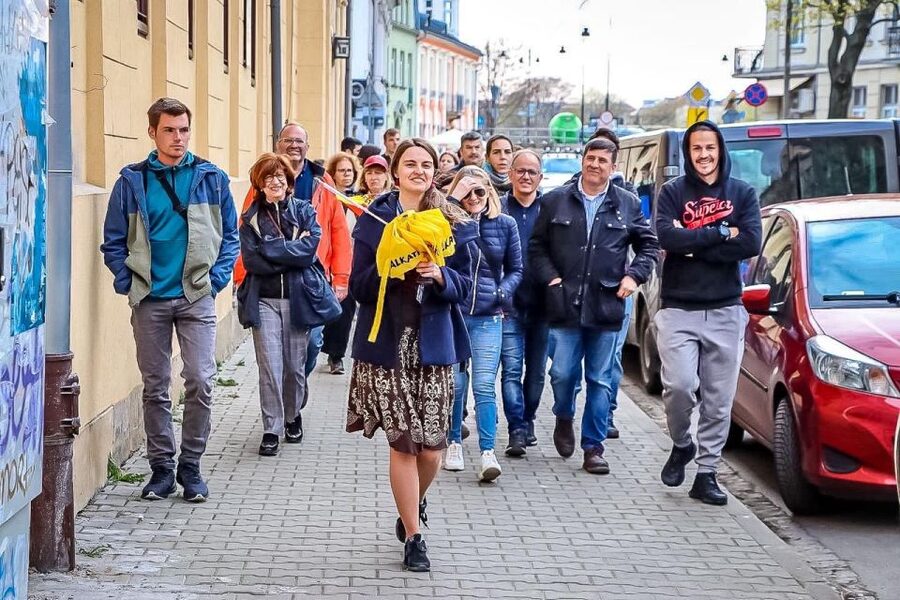
Krakow’s Jewish story demands time. This 150-minute walk connects Kazimierz’s surviving synagogues and Jewish landmarks with Podgórze, the district where the wartime ghetto operated. I like the way it explains Jewish life before World War II, the destruction that followed, and the community’s careful return in modern Krakow. I also like the guides’ strong storytelling, with Max, Maciek, Pawel, Lucy, and others earning praise for making a serious subject clear without turning the walk into a lecture.
The main drawback is practical: this is a fairly long walk over cobblestones, and it finishes across the river rather than back at the Old Synagogue. One person also wished the route had included a surviving section of the ghetto wall, while another hoped to enter a working synagogue. Those are fair expectations to clarify before booking.
In This Review
- Key points at a glance
- Why Krakow’s Jewish quarter deserves a dedicated walk
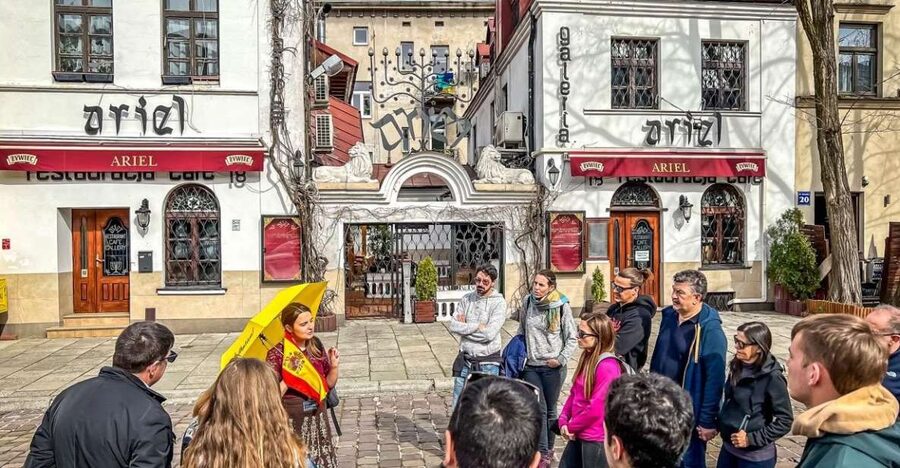
- Meeting at the Old Synagogue
- Kazimierz: synagogues, streets, and Jewish life before 1939
- The short break and the value of a slower pace
- Crossing to Podgórze and the former Jewish ghetto
- What the guide adds that a self-guided walk cannot
- Is $26 a fair price?
- Who should book this walking tour?
- Final verdict: book it if you want context, not just monuments
- FAQ
- How long is the Jewish Krakow Walking Tour?
- What language is the tour offered in?
- Where does the tour meet?
- How early should I arrive?
- Does the tour include hotel pickup and drop-off?
- Are snacks included?
- Is the tour wheelchair accessible?
- Does the tour visit Kazimierz and Podgórze?
- Does the tour include entry to a working synagogue?
- Can I cancel the booking?
- Can I reserve now and pay later?
- What does the $26 price cover?
Key points at a glance
- Two historic districts in 150 minutes: You begin in Kazimierz and continue to Podgórze, linking Jewish life before the war with the history of the Krakow ghetto.
- Seven surviving synagogues in context: The tour explains why Kazimierz’s old synagogues matter, though it is primarily a walking and storytelling experience rather than a synagogue-entry tour.
- A serious look at Holocaust sites: You visit places connected with the ghetto and wartime persecution, with attention to the buildings and streets that survived.
- Guides make the difference: Max, Maciek, Mateusz, Pawel, Damian, and others have been praised for clear explanations, humor used carefully, and strong command of the subject.
- A pause can help: The route may include a short break for coffee or a drink, useful if you are walking with children or need a moment after the heavier material.
- Good value at $26: The price covers the reservation and guide payment, with no hotel transfer or snacks included.
Why Krakow’s Jewish quarter deserves a dedicated walk
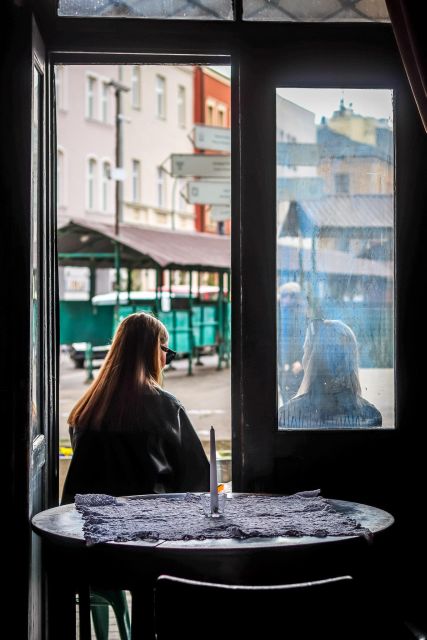
Kazimierz is easy to visit on your own. You can stroll along its main streets, admire old buildings, and stop at cafés. What is harder to do alone is understand how the district functioned as a Jewish community before the war, how its religious and civic life fit together, and how much vanished between 1939 and 1945.
That is where this tour earns its place. The guide supplies the connections that a map cannot. A synagogue is not just an attractive old building. A narrow street is not simply a photogenic corner. Each site is tied to worship, education, family life, trade, persecution, or the postwar attempt to remember what was lost.
Poland once had one of the world’s largest Jewish populations, and Krakow was an important center of that life. Kazimierz preserves seven ancient synagogues that survived the destruction of World War II and the Holocaust. Seeing them together gives you a sense of the district’s former scale, even though the present-day community is much smaller.
The tour also makes room for the present. Kazimierz is now a cultural heart of Krakow, with Jewish institutions and a small Jewish community active in the city today. That balance matters. The district is not presented only as a memorial to absence. You also hear about Jewish culture continuing and returning in modern Krakow.
More Walking Tours in Kraków
- Old Town Krakow & Wawel Castle Walking Tour
★ 5.0 · 1,508 reviews - Creepy Krakow: 2-Hour City Walking Tour
★ 4.7 · 1,131 reviews - Krakow: The Old Town Walking Tour
★ 4.8 · 794 reviews
Meeting at the Old Synagogue
The meeting point is on the stairs in front of the Old Synagogue, on the main street in Kazimierz. Arrive at least 10 minutes early. The location is central to the subject of the tour, but it can be slightly difficult to spot in poor weather or among a busy street scene.
One person had trouble finding the group during rain but was redirected quickly. I would save the meeting-point details on your phone and allow extra time if the weather is bad. Look for the guide near the synagogue steps rather than assuming the group will be inside the building.
The Old Synagogue is a fitting start. It places you immediately in the historic Jewish quarter, where the tour can begin with community life rather than jumping straight to wartime tragedy. That order is important. You first learn what existed, then what was destroyed.
The activity is offered in English with a live guide. It is wheelchair accessible, though the long route and cobblestones still make personal comfort worth considering. The tour does not provide hotel pickup or drop-off, so you need to reach Kazimierz on your own.
Kazimierz: synagogues, streets, and Jewish life before 1939
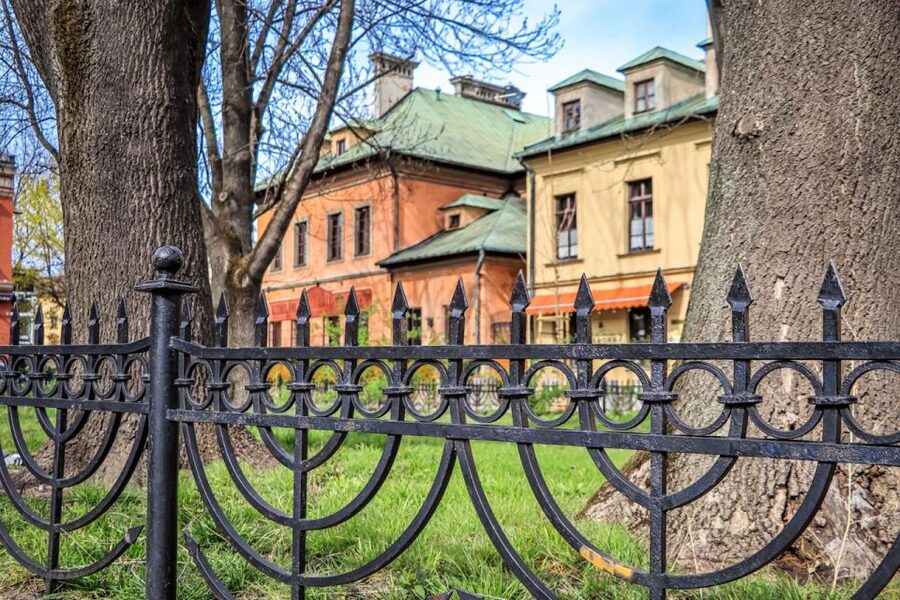
The first part of the walk focuses on Kazimierz, the old Jewish district. The seven surviving synagogues are among its most important physical reminders. Even if you do not enter each one, the buildings help you picture a district shaped by prayer, religious study, family networks, and local institutions.
Expect the guide to explain the historical context of the local Jewish community rather than simply point out façades. This is the part that many people find most useful before visiting Auschwitz or other Holocaust memorial sites. You get a clearer idea of the lives and traditions that were targeted, rather than meeting the Holocaust only through statistics and destruction.
The district’s architecture carries several layers of time. Jewish religious buildings survived the war, but their survival does not mean the community around them remained intact. The tour helps separate those two facts. A building can endure while the people, customs, and daily rhythms connected to it are nearly wiped away.
This portion is also where guide quality matters most. Maciek was praised for passionate storytelling and for making the subject engaging. Pawel was singled out for his command of the whole area and for clearly caring about what he was explaining. Other guides, including Lucy, Michael, Tom, Victoria, Krzysztof, and Mateusz, were praised for clear and friendly presentations.
The humor is generally used to keep the group attentive, not to soften or trivialize the subject. That distinction matters. A two-and-a-half-hour history walk can become tiring if every minute is delivered in the same solemn tone. The strongest guides vary their pace and voice while keeping the subject respectful.
The short break and the value of a slower pace
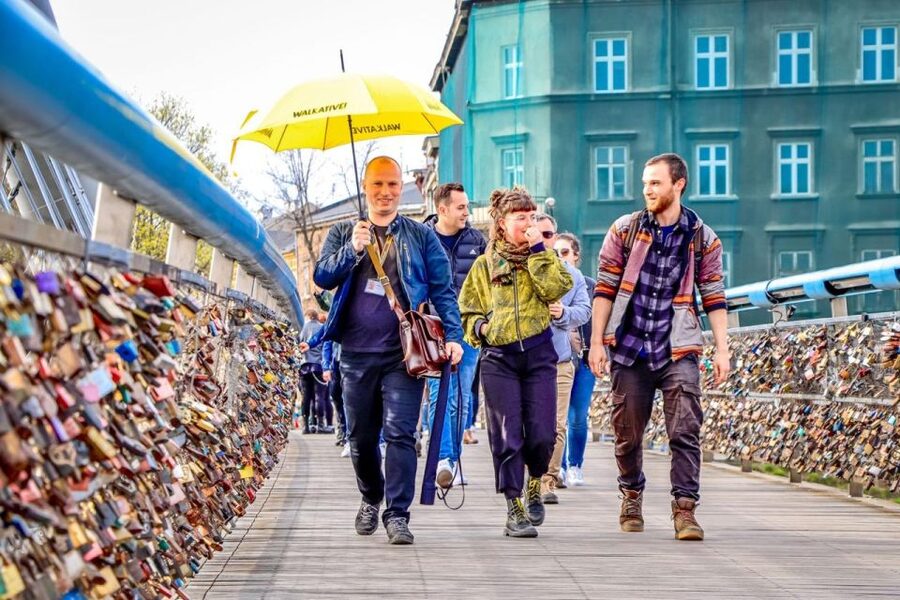
A break may be included partway through the route, with time for coffee or another drink. One group stopped at a pleasant bar for mulled wine on a gray afternoon, while another family used the pause to rest with a four-year-old before deciding not to continue.
Do not treat the break as guaranteed entertainment or a food stop. Snacks are not included, and the activity is fundamentally a walking tour. Still, the pause is useful because the material becomes emotionally heavy as the route moves toward the ghetto and Holocaust sites.
The pacing has received strong praise. Several people found the walk informative without being too strenuous, while one person felt the full route was a little long. Both reactions make sense. Two and a half hours is manageable for most people who are comfortable walking, but it is not a quick orientation stroll.
Wear comfortable shoes. Much of the route is on cobblestones, which can slow you down and make the distance feel longer than it looks on a map. In wet weather, the Old Synagogue meeting point may also be harder to find, so arrive early and dress for conditions.
Something quite different:
- From Krakow: Auschwitz-Birkenau Guided Tour & Hotel Pickup
★ 4.5 · 33,358 reviews - From Krakow: Auschwitz-Birkenau Guided Tour & Hotel Pickup
★ 4.5 · 29,340 reviews - Krakow: Auschwitz Guided Tour with Optional Hotel Pickup
★ 4.5 · 15,280 reviews - Krakow–Zakopane: Cable Car, Chocholow Baths, Cheese & Vodka
★ 5.0 · 10,720 reviews
Crossing to Podgórze and the former Jewish ghetto
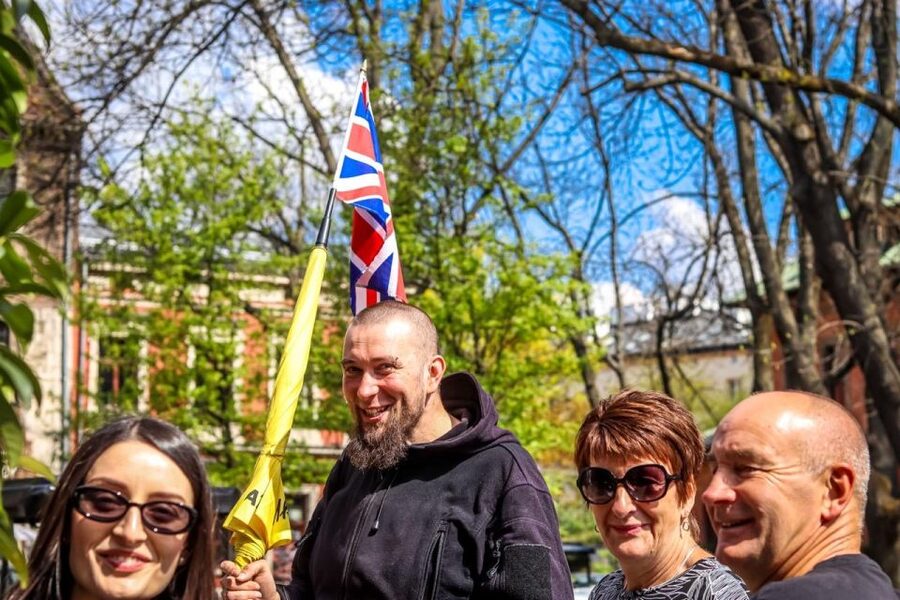
The tour then moves toward Podgórze, the area of Krakow’s former World War II Jewish ghetto. This change of district gives the walk a clear historical turn. Kazimierz introduces Jewish life and culture. Podgórze shows how the Nazi occupation reshaped that life through forced relocation, confinement, and destruction.
The value of seeing the former ghetto area on foot is that you encounter the places as part of the city, not as isolated museum displays. Original buildings and surviving fragments can be difficult to interpret without guidance. The tour explains what happened in these streets during the years from 1941 to 1943 and points out details you could easily miss alone.
The subject is tragic, and this is not a light sightseeing stop. You should expect discussion of death, deportation, and the Holocaust. Still, the walk is described as fascinating as well as moving because the guide connects individual places to the wider story of Krakow’s Jewish population.
One route limitation deserves attention. A person who took the tour wished it had continued about 200 meters farther to a remaining section of the ghetto wall. That fragment made the boundaries of the ghetto feel especially real. Since the exact route may vary, I would not book this walk assuming every known ghetto remnant is included.
The tour also ends away from the starting point, over the river. One person found that inconvenient because the group was not returned to the Old Synagogue and directions back were unclear. Plan for a one-way walk and keep your bearings after the farewell. The finish is not necessarily a problem, but it is something you should know before starting.
What the guide adds that a self-guided walk cannot
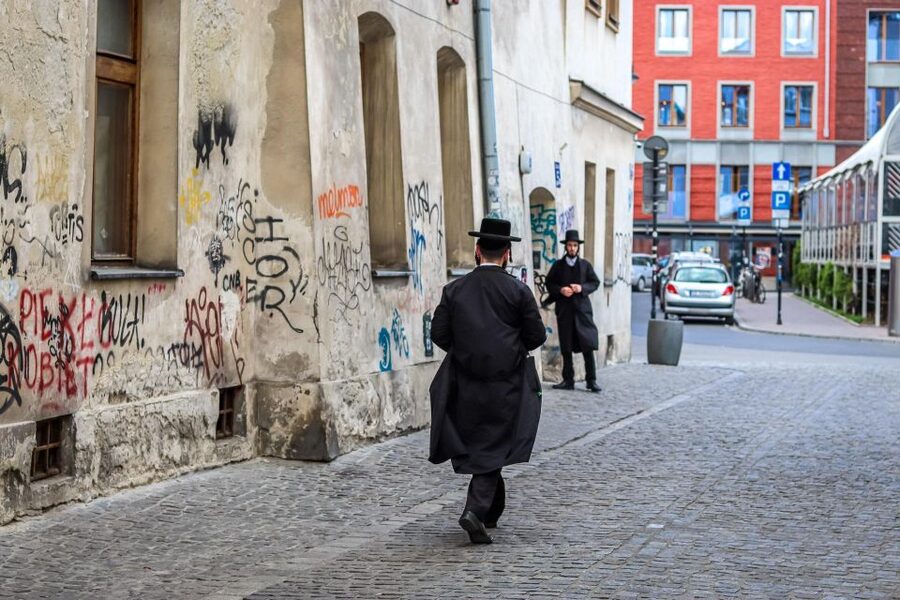
You can see Kazimierz’s synagogues and former ghetto sites without paying for a guide. The harder task is arranging the history in the right order and knowing which small details deserve your attention.
A good guide can explain how prewar Jewish life, Nazi persecution, postwar silence, and the modern revival fit together. That structure is the main product here. The included material is described as a carefully constructed narrative, and the strongest feedback focuses on that storytelling rather than on a single landmark.
The guides also answer questions in real time. Amanda found Lucy able to handle questions clearly. Chiara described Krzysztof as friendly and easy to follow, while Mark appreciated Matthew’s mix of information, politeness, and humor. Damian was praised for working well with a university student group, and Natalia was remembered for warmth and a few well-timed jokes.
Names may change depending on the departure, but the pattern is useful: this tour works best when you value interpretation over ticking off sights. You are paying for local explanation, not transportation or a meal.
Is $26 a fair price?
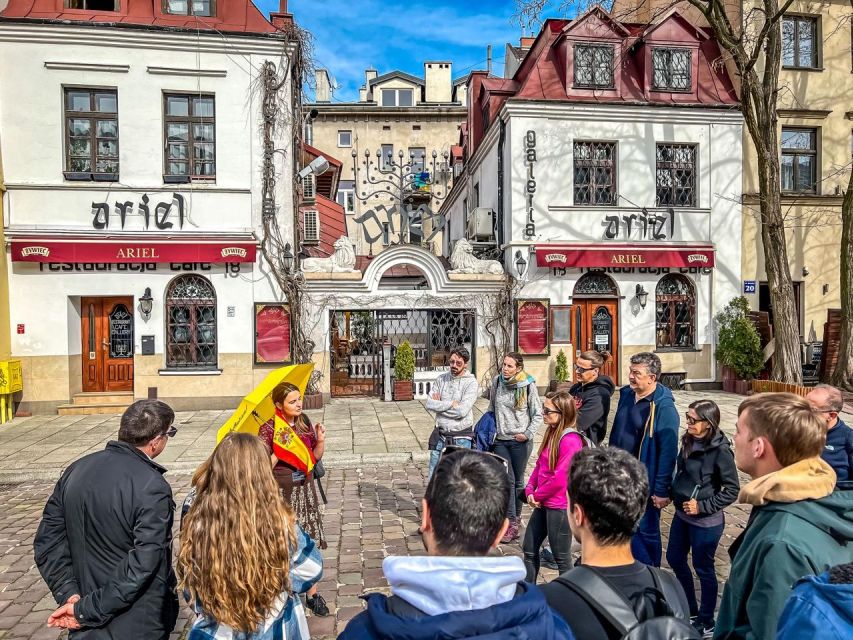
At $26 per person, the tour offers good value if you want a serious introduction to Jewish Krakow and the former ghetto in one outing. A 150-minute guided walk covers two districts and a subject that is difficult to handle well without context.
The price structure needs a little attention. The activity uses a pay-as-you-wish format, but the stated amount covers the reservation fee and the guide’s payment. In other words, you should not assume that the $26 is merely a small booking charge followed by a required tip. One person was confused about paying the guide after already paying through the booking platform, so read the payment wording carefully when reserving.
There are no snacks, hotel transfers, or drop-offs included. That keeps the focus on the walk and helps explain why the price is lower than a private tour. If you want a private pace, extensive interior visits, or door-to-door transport, this is not that kind of experience.
Free cancellation is available up to 24 hours before the start, and you can reserve now and pay later. Those terms make it easier to fit the tour around changing Krakow plans, especially if you are also arranging a visit to Auschwitz.
Who should book this walking tour?
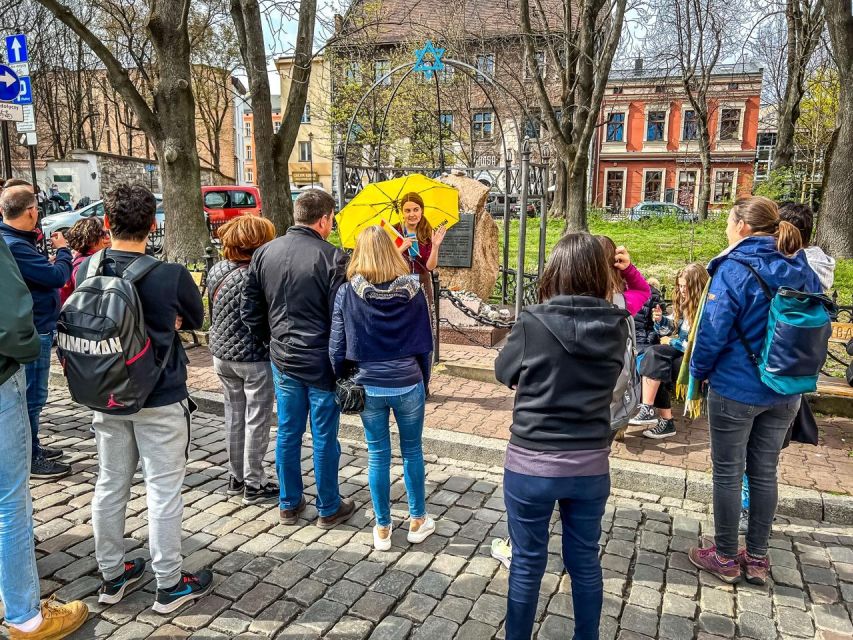
I would recommend it to first-time visitors who want a meaningful introduction before visiting Auschwitz. One person specifically found the tour helpful preparation for an Auschwitz visit the next day, because it explained Jewish life in Krakow before confronting the camp’s history.
It also suits students, history-minded adults, and anyone who prefers a guide with a clear narrative. The route has been praised by university students and by people who wanted something more substantial than a vehicle-based city tour.
Families can join, but consider the age and stamina of your children. A break may help, yet one family with a four-year-old chose to stop halfway. The subject matter may also be difficult for young children, even if the guide keeps the group engaged.
I would be more cautious if you have limited mobility, dislike cobblestones, or want to return to the starting point. The tour is listed as wheelchair accessible, but accessibility does not remove the practical challenge of a long route over old streets.
Final verdict: book it if you want context, not just monuments
Book this tour if you want to understand Krakow’s Jewish quarter as a lived community, then follow its story into the former ghetto. The best reason to go is the guide: people such as Max, Maciek, Pawel, and Mateusz have made the walk memorable through clear, warm, and serious storytelling.
Skip it if you want synagogue interiors, a short route, or a precise tour of every remaining ghetto fragment. You should also plan your route home from Podgórze and wear proper shoes.
For $26 and 150 minutes, this is a strong choice for putting Krakow’s Jewish heritage and Holocaust history into human scale. It will not answer every question or include every site, but it gives you the framework to look at the city with far greater care.
FAQ
How long is the Jewish Krakow Walking Tour?
The tour lasts 150 minutes, or two and a half hours.
What language is the tour offered in?
The live tour guide conducts the tour in English.
Where does the tour meet?
The group meets on the stairs in front of the Old Synagogue on the main street in Krakow’s Jewish Quarter.
How early should I arrive?
You should arrive at the meeting point 10 minutes before the activity begins.
Does the tour include hotel pickup and drop-off?
No. Hotel pickup and drop-off are not included.
Are snacks included?
No. Snacks are not included in the activity price.
Is the tour wheelchair accessible?
Yes. The activity is listed as wheelchair accessible.
Does the tour visit Kazimierz and Podgórze?
Yes. The route explores Kazimierz, the historic Jewish district, and Podgórze, the area of the former World War II Jewish ghetto.
Does the tour include entry to a working synagogue?
The provided tour details do not include entry to a practicing synagogue. It is primarily a guided walking experience focused on Jewish heritage, history, and Holocaust sites.
Can I cancel the booking?
Yes. You can cancel up to 24 hours in advance for a full refund.
Can I reserve now and pay later?
Yes. The tour allows you to reserve your place and pay later.
What does the $26 price cover?
The stated amount covers the reservation fee and the guide’s payment within the pay-as-you-wish tour arrangement.
Just added in Krakow
- Auschwitz-Birkenau – Skip the Line Tickets★ 3.5 · 29 reviews
- Auschwitz-Birkenau: Fast-Track Ticket & Guided Tour No Transfers★ 3.5 · 17 reviews
- Zakopane & Sleigh Ride with Bonfire – Group Tour from Kraków★ 5.0 · 2 reviews
- Sleigh Ride & Bonfire in Zakopane with Funicular – Private Trip★ 5.0 · 48 reviews
- Thermal Baths & Zakopane – Private Trip from Krakow★ 5.0 · 1 review
- Zakopane & Gubalowka Funicular – Private Winter Tour from Krakow★ 5.0 · 10 reviews
- Divine Mercy Sanctuary – Private Tour from Krakow★ 5.0 · 4 reviews
- stag dog chase Krakow prank★ 5.0 · 4 reviews
Walking Tours, compared.
Gdańsk City Sights & History Guided Walking Tour in English
Read our review →
Old Town & Wawel Castle Walking Tour in English
Read our review →Browse the lists this tour appears in