
REVIEW · AUSCHWITZ-BIRKENAU MEMORIAL TOURS
Gdansk: Stutthof Concentration Camp Regular Tour
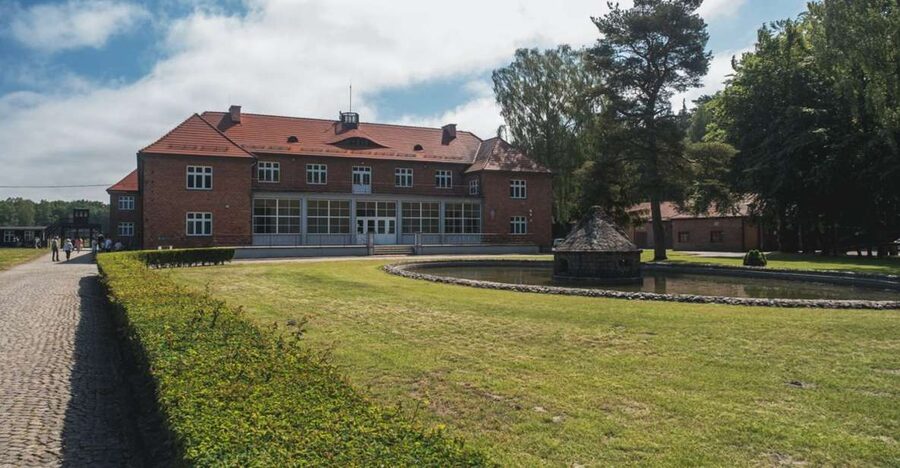
History here is impossible to keep at arm’s length. This five-hour trip from Gdansk takes you to Stutthof Museum, where the gas chambers, crematorium, barracks, and memorial grounds make the camp’s story painfully real. I like the reliable hotel pickup and the calm, informative van ride, and I especially value the English-speaking guide who explains what you are seeing instead of leaving you to piece it together alone. The main drawback is pace: two to two-and-a-half hours inside the museum can feel rushed.
The journey is also useful preparation. Drivers such as Simon, Christopher, and Krzysztof have helped visitors understand the surrounding Pomerania region before reaching the camp, while guides including Michael, Thomas, and Tomasz have been praised for clear explanations and respectful delivery. This is not a light sightseeing outing, and it is not recommended for children under 13, but it is a serious and meaningful historical visit.
In This Review
- Key points to know before you go
- Why Stutthof matters in Pomerania
- The hotel pickup and one-hour ride from Gdansk
- Entering the Stutthof Museum grounds
- The Memorial Museum and the camp story
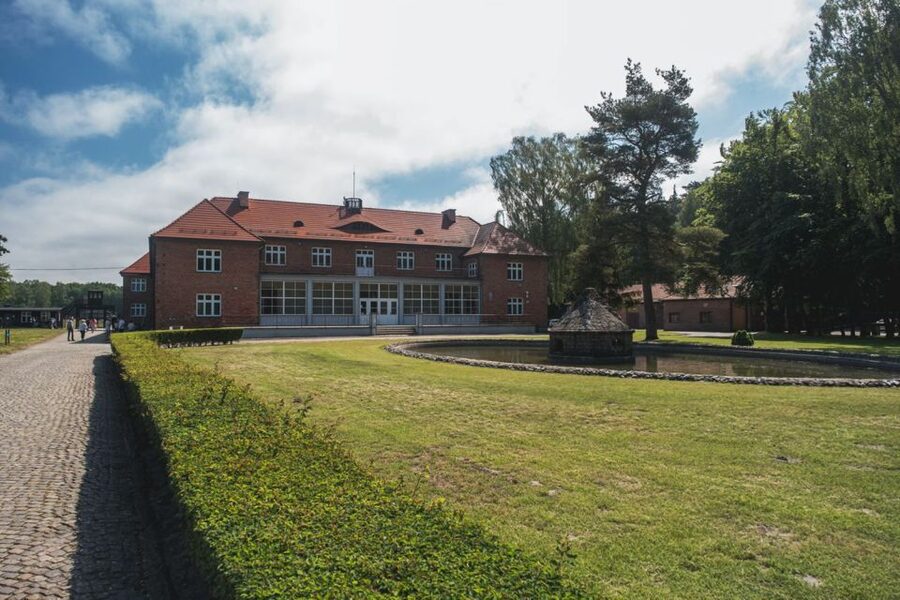
- The commander’s villa and the camp’s machinery
- The victims’ monument and the final outdoor stops
- How the pace affects the experience
- Is $128 good value?
- Who should take this tour?
- Practical advice for a respectful visit
- Should you book the Stutthof tour from Gdansk?
- FAQ
- How long does the Stutthof tour from Gdansk last?
- Where does pickup take place?
- Is transportation included?
- Is the museum tour in English?
- What parts of Stutthof will I see?
- Is the tour suitable for children?
- What should I wear?
- Can I bring a backpack?
- Is the tour wheelchair accessible?
- Are food and drinks included?
Key points to know before you go
- Stutthof was the first Nazi concentration camp outside German territory, and it operated for the longest period among camps in occupied Poland.
- The one-hour minibus journey each way takes the strain out of reaching Sztutowo and includes an English-speaking driver.
- The guided museum visit lasts around two to two-and-a-half hours, covering the Memorial Museum, commander’s villa, gas chambers, crematorium, and victims’ monument.
- The subject matter is harrowing, so give yourself quiet time after the visit rather than planning a busy activity immediately afterward.
- The small-bag rule is strict: bags and backpacks carried onto the museum grounds may not exceed 30 x 20 x 10 centimeters.
- The $128 price includes transport, guiding, entrance, parking, and insurance, which makes the tour convenient but not the cheapest way to visit.
Why Stutthof matters in Pomerania
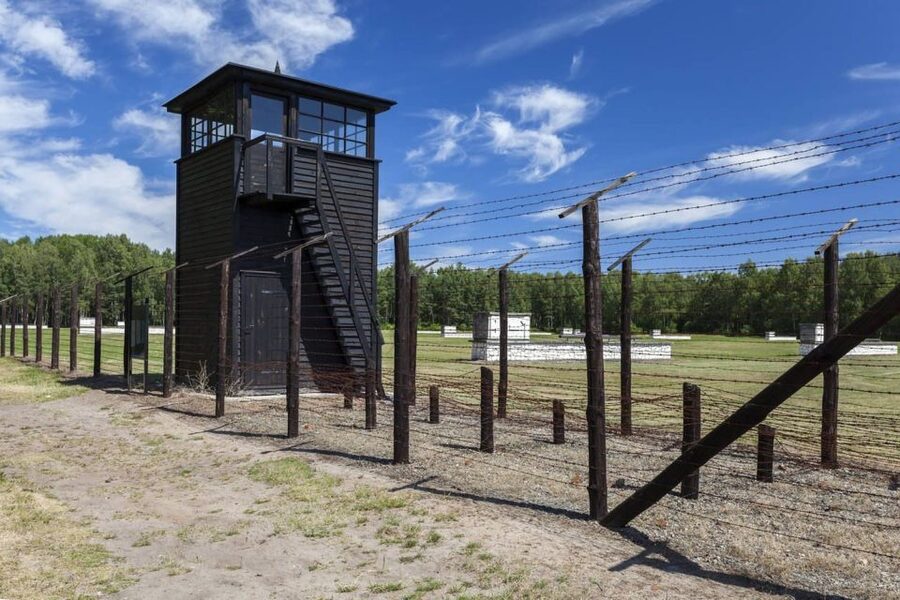
Stutthof was established by Nazi Germany in 1939, shortly after the occupation of Poland. It was the first concentration camp created outside German territory and became the longest-operating camp in occupied Poland.
That fact gives the visit a wider meaning. You are not only looking at one isolated site. You are learning how Nazi persecution took hold in Pomerania, how occupation affected the region, and how the camp developed over time.
The museum preserves the grounds as a place of remembrance. You will walk through areas connected to imprisonment, forced labor, starvation, disease, torture, and mass murder. The setting is quiet, but the quiet does not make the visit easier. It gives the details room to sink in.
I recommend reading a little about Stutthof before you leave Gdansk, but do not feel you need to arrive as a specialist. The guide’s job is to provide the structure, dates, and human stories that turn the buildings into a coherent account.
More Auschwitz-Birkenau memorial tours:
- Stutthof Concentration Camp English Tour with Gdansk Hotel pickup
★ 4.5 · 73 reviews - Stutthof Concentration Camp:Guided Tour with Transportation
★ 4.7 · 57 reviews - Stutthof Concentration Camp tour including transfer from Gdansk
★ 5.0 · 34 reviews
The hotel pickup and one-hour ride from Gdansk
Pickup is available from hotels in Gdansk, with Sopot also listed as a pickup and drop-off option. The minibus is air-conditioned, and the transfer takes about one hour each way.
This simple arrangement is one of the tour’s strongest features. Stutthof is outside Gdansk, and organizing a separate journey can add time and uncertainty to an already demanding day. Here, you can wait at your accommodation, meet the driver, and let someone else handle the route and parking.
The drivers have received especially warm praise for punctuality, friendliness, and local information. Simon has been singled out for explaining Gdansk, the nearby towns, and the history of the area. Christopher and Krzysztof have also been praised for good communication and helpful commentary on the drive.
Do not expect a full sightseeing tour of Pomerania. The driver’s information is an added benefit, not the main attraction. Still, it helps you understand the region before arriving at Stutthof, and the return journey gives you some space to process what you have seen.
The van ride can also be a useful practical buffer. You are not dropped straight from the museum into the middle of Gdansk with no transition. You have an hour to sit quietly, talk with your companion, or ask the driver about the area.
Entering the Stutthof Museum grounds
At the museum, the driver introduces you to the English-speaking guide. From there, the visit becomes a walking tour through the former camp complex.
Wear shoes you can comfortably walk in. The grounds require movement between buildings, and the tour is not a quick indoor museum stop. A cloudy or chilly day can make the visit feel colder, so bring an extra jacket or jumper.
The museum is wheelchair accessible, but the tour still involves outdoor walking and several parts of a large site. If mobility is a concern, it is sensible to raise this when booking or before departure so the day can be managed comfortably.
You may bring an umbrella, an extra layer, or a small backpack, but the maximum bag size on the museum grounds is 30 x 20 x 10 centimeters. Large luggage is not allowed, and smoking is prohibited. Sleeveless shirts are also not permitted, so dress with the museum’s rules in mind.
These restrictions are easy to overlook. Pack light, and keep your essentials in a compact bag. You do not want to begin a solemn visit by discovering that your luggage cannot enter.
The Memorial Museum and the camp story

The Memorial Museum provides the historical framework for the rest of the tour. It commemorates the people imprisoned and killed at Stutthof and helps explain the system behind the buildings you will see.
A good guide makes a real difference here. Michael, Thomas, Michael G, and Tomasz have been praised for clear English, careful explanations, and the ability to answer questions. Thomas has also been described as particularly good at sharing personal stories, which can make the history feel less distant without turning the visit into a performance.
The best guiding on a site like this is measured. The subject does not need dramatic treatment. Visitors have repeatedly valued guides who speak plainly, explain the facts, and show respect for the victims.
You will hear about persecution, occupation, camp administration, and the conditions imposed on prisoners. You will also learn how the camp functioned within the wider Nazi system. The tour’s strength is its connection between individual stories and the machinery of oppression.
English quality can vary slightly depending on the guide assigned that day. Most feedback has been strongly positive, but one visitor found the guide’s English less polished than the driver’s. If you do not understand a point, ask for clarification. The guides are there to answer questions, and the subject deserves clear communication.
More Stutthof memorial tours:
- Stutthof Concentration Camp Half-Day Private Tour
★ 4.8 · 29 reviews - Private transportation to the Stutthof Concentration Camp 4h
★ 4.7 · 28 reviews - Stutthof Concentration Camp: Private Guided Tour with Transport
★ 4.5 · 26 reviews - Stutthof Concentration Camp Regular Tour from Gdansk
★ 5.0 · 23 reviews
The commander’s villa and the camp’s machinery
The tour continues to the commander’s villa, a building that helps show the contrast between the people who ran the camp and those forced to live under brutal conditions.
That contrast is difficult to absorb. A villa sounds ordinary in isolation, but on these grounds its presence takes on a disturbing meaning. The building is part of the camp’s administrative world, while nearby rooms and structures were used in the persecution and murder of prisoners.
Your guide connects the villa with the camp’s operation rather than treating it as a separate architectural stop. That context matters. Without it, you might simply walk through another building. With it, the villa becomes evidence of how organized and deliberate the system was.
The tour then reaches the gas chambers and crematorium. These are among the most difficult parts of the visit. You will hear about the mass murder carried out there and enter spaces where people were stripped of their dignity and lives.
I would not describe these rooms as attractions. They are places of remembrance, and the right response is quiet attention. Some people find the physical spaces overwhelming. Others find that standing there helps them grasp the scale and reality of crimes that can otherwise remain abstract.
The victims’ monument and the final outdoor stops
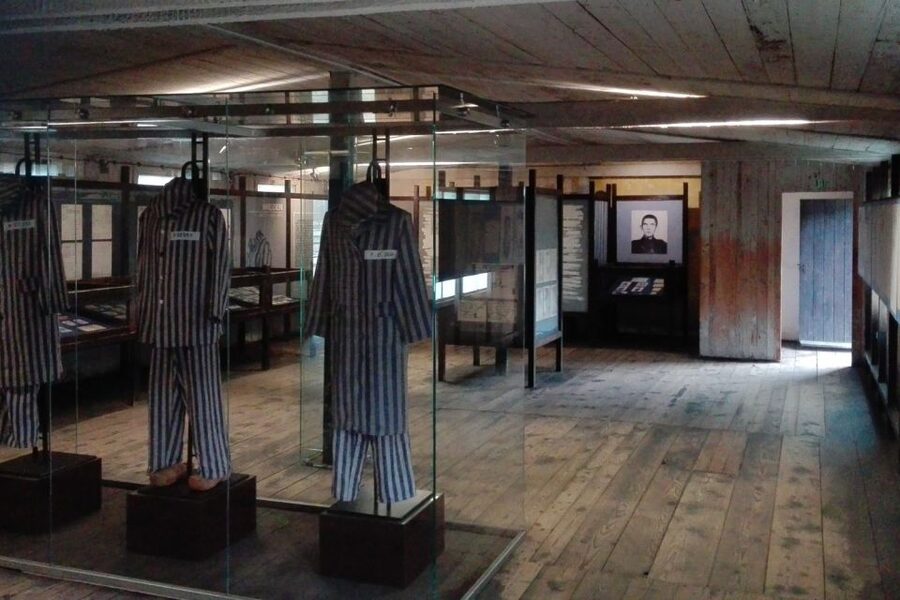
The victims’ monument gives the visit a place to pause. You will have the chance to pay your respects and reflect on the people whose lives were destroyed at Stutthof.
This stop can feel important because the earlier sections are full of information and movement. The monument gathers the emotional weight of the tour into one place. You may want to remain quiet for a while, even if the group is ready to move on.
The guide also discusses the persecution and occupation of Pomerania. That regional context keeps Stutthof from becoming a disconnected chapter of wartime history. You learn how events at the camp related to the occupation around it.
The tour is described as an extended version, with the museum portion taking up to 2.5 hours. Another timing outline gives about 2.25 hours for the guided visit. In practical terms, plan on roughly two to two-and-a-half hours at the site, plus the two one-hour transfers.
How the pace affects the experience
The five-hour total is efficient, but it leaves limited room for lingering. One visitor felt that an additional hour would have made the museum visit more comfortable.
I understand that concern. Stutthof is not a place you should rush through, yet the tour has to fit transport, opening times, guiding, and return to Gdansk into one morning or afternoon. You will see the main areas, but you may not have much freedom to stand in every room as long as you wish.
This tour is best for you if you want a structured introduction and a guide who explains the site in sequence. It is less suitable if you prefer to wander alone, read every display at your own speed, or spend a long day at the museum.
One visitor noted that the guided format made the experience better than exploring alone. Another specifically pointed out that the group was guided through the key sections, so anyone wanting complete independence may find the format restrictive.
A private or self-guided visit might allow more time, but the information provided here does not establish its cost or transport arrangements. At $128 per person, you are paying for convenience and interpretation, not simply entry.
Is $128 good value?
The price includes hotel pickup and drop-off, an English-speaking driver, an English-speaking museum guide, entrance fees, parking, and insurance.
That bundle makes the price reasonable for anyone who values ease. The long drive is already handled, parking is included, and you do not need to find a guide at the entrance or work out how to connect the museum visit with public transport.
The value is strongest for first-time visitors to Gdansk who want to visit Stutthof without spending a full day arranging details. It also suits visitors who want historical context during the journey and a guide at the museum.
The price is harder to justify if you are traveling on a tight budget, already have transport, or prefer to read the museum material independently. Food and drinks are not included, so eat before departure or carry something suitable for the journey. Do not count on bringing a large bag onto the museum grounds.
The reserve-now, pay-later option can help if your schedule is still changing, and cancellation is free up to 24 hours before departure. Those terms add flexibility, but the real value is the organized door-to-door service.
Who should take this tour?
I would recommend it to adults, older teenagers, students of 20th-century history, and anyone who believes difficult places deserve careful attention.
The minimum recommended age is 13. A 14-year-old visitor and parent found the experience meaningful, but age alone is not the whole question. You should consider how the young person handles graphic historical subjects, memorial sites, and discussions of mass murder.
This tour also works well for people with limited time in Gdansk. Five hours is a manageable half-day commitment, and the included transport keeps the schedule simple.
It is not a good choice for a carefree family outing or for anyone seeking entertainment. The camp can leave you sad, angry, and unsettled. That is not a flaw in the experience, but you should plan your day with care.
Give yourself a quiet evening or a gentle activity afterward. The return to Gdansk may offer time to talk through what you have seen, but the emotional effect can continue after you leave.
Practical advice for a respectful visit
Keep your clothing modest and comfortable. Sleeveless shirts are not allowed, comfortable shoes are required, and an extra jacket is useful when the weather is cloudy or chilly.
Bring only what you need. The small-bag limit is 30 x 20 x 10 centimeters, and large bags or luggage cannot be taken onto the museum grounds. An umbrella is allowed, as is an extra jumper, provided your overall belongings remain within the rules.
Ask questions. Guides such as Michael, Thomas, Tomasz, and Michael G have been praised for answering questions clearly, and asking for clarification is worthwhile if a historical point is difficult to follow.
Listen to the driver, too. The journey commentary about Gdansk and Pomerania is not a replacement for the museum tour, but it adds useful regional context. Drivers have also helped with timing, directions, and clear pickup communication.
Finally, remember that photographs and sightseeing habits may feel out of place here. Follow the museum’s instructions and treat the grounds as a memorial, not a normal tourist stop.
Should you book the Stutthof tour from Gdansk?
Book this tour if you want a guided, organized, and emotionally serious visit without arranging transport yourself. The reliable pickup, comfortable minibus, strong English-language guiding, and included admission make the $128 cost easier to defend.
I would hesitate only if you need a slow, self-guided museum visit or if the subject matter is not right for your group. The schedule can feel tight, and the experience is genuinely harrowing.
For most adults with a half-day available in Gdansk, I think the tour offers a respectful way to visit Stutthof. You will not leave entertained, but you should leave better informed, more aware of Pomerania’s wartime story, and less able to treat history as something safely distant.
FAQ
How long does the Stutthof tour from Gdansk last?
The full experience lasts approximately five hours, including about one hour of travel each way and a guided museum visit lasting around two to two-and-a-half hours.
Where does pickup take place?
Pickup is available from hotels in Gdansk. Sopot is also listed as a pickup and drop-off location.
Is transportation included?
Yes. The tour includes hotel pickup and drop-off in an air-conditioned minibus, along with an English-speaking driver.
Is the museum tour in English?
Yes. The activity includes an English-speaking guide at the Stutthof Museum.
What parts of Stutthof will I see?
The visit includes the Memorial Museum, the commander’s villa, the gas chambers, the crematorium, the victims’ monument, and areas connected with persecution and occupation in Pomerania.
Is the tour suitable for children?
The tour is not recommended for children under 13. The subject concerns Nazi persecution, imprisonment, and mass murder, so you should consider the maturity of younger visitors.
What should I wear?
Wear comfortable shoes because the visit is a walking tour. If the weather is cloudy or chilly, bring an extra jacket or jumper. Sleeveless shirts are not allowed.
Can I bring a backpack?
You can bring a small backpack, umbrella, or extra jumper, but bags and backpacks carried onto the museum grounds may not exceed 30 x 20 x 10 centimeters. Large luggage is not allowed.
Is the tour wheelchair accessible?
Yes, the activity is listed as wheelchair accessible. It still includes walking around the former camp grounds, so raise any specific mobility needs before the tour.
Are food and drinks included?
No. Food and drinks are not included in the $128 price.
Just added in Gdansk
- Wolf’s Lair private tour from Gdansk★ 5.0 · 1 review
- Whisky Tasting in Gdańsk★ 5.0 · 3 reviews
- Transfer from Gdańsk or Airport Gdańsk (GDN) to Kościerzyna★ 5.0 · 1 review
- Westerplatte – 2h private trip by luxury car|★ 5.0 · 4 reviews
- Westerplatte private tour led by Expert-Guide (door to door)★ 5.0 · 5 reviews
- Gdansk EVERYDAY Vodka Tasting Tour★ 5.0 · 6 reviews
- Undercover City Games: Gdynia★ 5.0 · 34 reviews
- VIP transfer from airport Gdansk (GDN) to Hotel in Gdansk / Sopot★ 5.0 · 2 reviews