
REVIEW · NOWA HUTA TOURS
From Krakow: Nowa Huta Premium Tour
Socialist Krakow still has secrets. This five-hour trip takes you into Nowa Huta, a district built in the 1950s as an ideal Communist city, then shows how that planned world looks today. I like the unusual focus on daily life, housing, and political history, rather than another tour of Krakow’s medieval center. I also like the chance to see a real underground tunnel and Soviet IS-2 tanks.
The main consideration is physical effort. The tour includes walking, underground spaces, and time on foot around Nowa Huta, so it is not suitable for wheelchair users or people with mobility, back, heart, or pregnancy-related concerns. The tour is in English, too, despite one booking where French had been requested.
In This Review
- Key points at a glance
- Why Nowa Huta changes your view of Krakow
- Pickup from Pawia 3 and the ride east
- Central Square and the socialist city plan
- Walking Aleja Roz and reading the architecture
- Tadeusz Sendzimir Steelworks and the working city
- The secret underground tunnel
- Lord’s Ark Church and an important contrast
- Soviet IS-2 tanks outside the Museum of the Armed Act
- What the guide adds
- Is $111 a fair price?
- Who should book this Nowa Huta tour?
- Should you book it?
- FAQ
- How long does the Nowa Huta tour last?
- Where does pickup take place?
- Is the tour conducted in English?
- What is included in the price?
- Is food included?
- What should I bring?
- Can I bring luggage or a large bag?
- Is the tour suitable for wheelchair users?
- Can I cancel the booking?
Key points at a glance
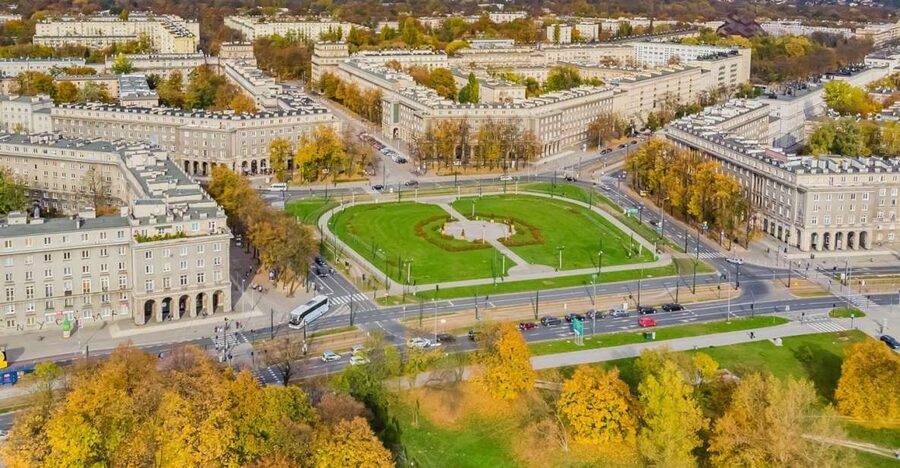
- Central Square reveals the city’s original plan: Nowa Huta was designed between 1949 and 1989 as a model socialist district.
- The underground tunnel adds real atmosphere: You leave the streets to explore one of the district’s Cold War-era secrets.
- The steelworks explain why Nowa Huta exists: Tadeusz Sendzimir Steelworks shaped the area’s work, housing, and politics.
- Lord’s Ark Church tells a different story: This early church became an important sign of religious resistance in a Communist city.
- Soviet IS-2 tanks provide a striking final stop: They sit outside the Museum of the Armed Act as one of Nowa Huta’s most recognizable sights.
- The $111 price buys a private-feeling, practical outing: Hotel pickup, transport, an English-speaking guide, tickets, and insurance are included.
Why Nowa Huta changes your view of Krakow
Most first visits to Krakow center on the Old Town, Wawel Castle, and Kazimierz. Nowa Huta gives you a very different city story. It was not a medieval settlement that grew over centuries. It was planned and built after the Second World War as a socialist utopian city beside a huge steelworks.
That idea shaped everything. Housing, broad avenues, public squares, workplaces, and civic buildings were tied to the Communist state. The tour helps you read the district as a political project, not simply as a collection of apartment blocks.
I find that useful because Communist-era Poland can seem abstract when explained only through dates and political terms. Here, the history is attached to streets, offices, churches, tanks, and shelters. You can see how a government tried to organize urban life and how residents later pushed back against parts of that plan.
The experience also gives you a more complete sense of Krakow. Nowa Huta is the city’s biggest district, but it is often left off short city itineraries. You will not get the postcard Krakow of the Main Market Square. You will get a working district with a strong identity and a past that still shapes how people understand it.
More Nowa Huta tours:
- Krakow: Nowa Huta Guided Tour in Vintage Car
★ 4.9 · 277 reviews - Legendary Private Nowa Huta Communism Tour with Crazy Guides
★ 5.0 · 262 reviews - Nowa Huta: Steelworks Administration Buildings/Shelters Tour
★ 4.9 · 160 reviews
Pickup from Pawia 3 and the ride east
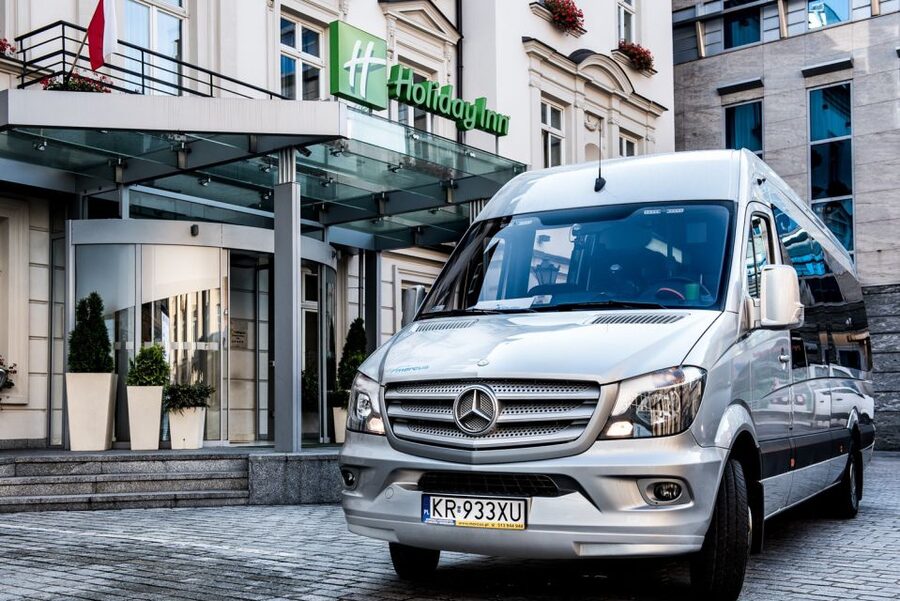
The listed pickup point is Pawia 3, with pickup also provided outside your hotel or accommodation at the time shown on your final confirmation. You travel in a comfortable car or van with the guide arrangements handled for you, which is useful because Nowa Huta is away from Krakow’s main sightseeing core.
The planned transport includes roughly 30 minutes to Central Square, about 15 minutes between parts of the visit, and around 30 minutes back. That means the five-hour booking is not five hours of continuous guided walking. The visit itself is around three hours, with the rest taken up by driving.
That arrangement works well if you want an easy half-day outing without figuring out public transport or finding each stop yourself. It also gives you a break between walking sections. On the other hand, anyone expecting a full five hours of sightseeing should set expectations correctly.
Central Square and the socialist city plan
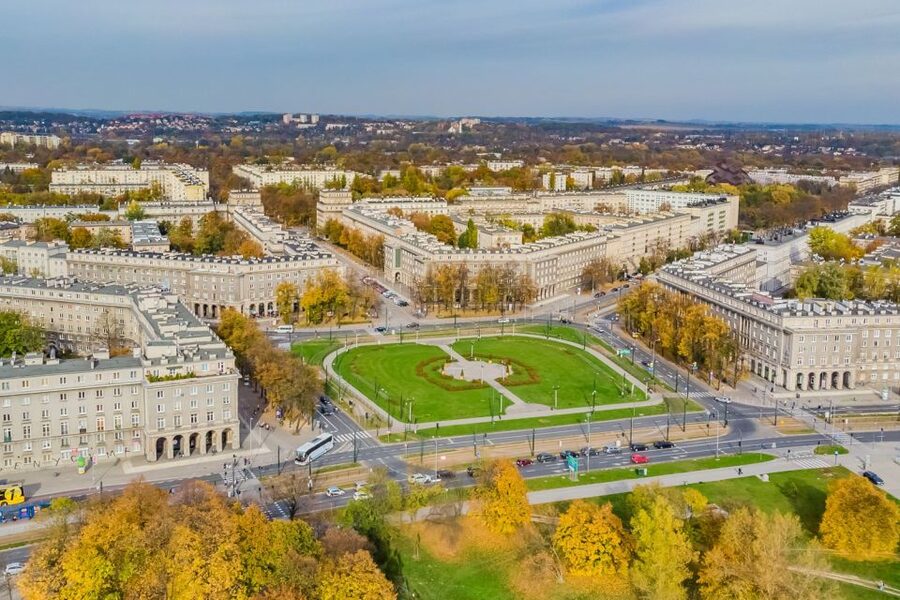
The tour begins at Plac Centralny, or Central Square, the modern center of Nowa Huta. This is where your guide introduces the district’s development from 1949 through 1989 and explains the thinking behind its design.
The square is important because it lets you see the scale of the original plan. Nowa Huta was intended to be an ideal socialist city, with a strong sense of order and collective purpose. Your guide uses the setting to explain how the district was developed and how its buildings served the wider Communist project.
A visit here is less about one famous monument and more about learning how to look. Pay attention to the broad public spaces, the planned arrangement, and the relationship between housing and civic areas. The guide’s explanation gives meaning to features you might otherwise dismiss as ordinary postwar urban design.
This is also a good first stop for orientation. You learn the basic story before moving into the smaller streets and individual buildings. If you have little background on Poland after 1945, listen closely here. The rest of the tour makes more sense once you understand why the district was built in the first place.
Walking Aleja Roz and reading the architecture
From Central Square, the tour continues along Aleja Roz, or Avenue of Roses. This is one of the best places to focus on architecture and the way Nowa Huta was meant to present itself.
The name sounds gentle, but the avenue forms part of a city built around ideology, industry, and state planning. Your guide explains the district’s architectural choices and points out how the streets and buildings fit the larger design.
I like this part because it keeps the tour grounded in ordinary urban details. You are not simply being shown a single building and handed a date. You are walking through a place where people lived, worked, traveled, and negotiated daily life under the Communist system.
The first booking experience described a visit that used photographs along with site visits. That approach is especially useful in Nowa Huta, where the present-day streets do not always show how much the district has changed. Old images can help you compare the original vision with the area you see now.
Wear comfortable shoes. You will be outside and on foot for much of the guided portion, and the tour is not recommended for anyone with limited mobility.
A few more in Krakow
- From Krakow: Auschwitz-Birkenau Guided Tour & Hotel Pickup
★ 4.5 · 33,358 reviews - From Krakow: Auschwitz-Birkenau Guided Tour & Hotel Pickup
★ 4.5 · 29,340 reviews - Krakow: Auschwitz Guided Tour with Optional Hotel Pickup
★ 4.5 · 15,280 reviews - Krakow–Zakopane: Cable Car, Chocholow Baths, Cheese & Vodka
★ 5.0 · 10,720 reviews
Tadeusz Sendzimir Steelworks and the working city
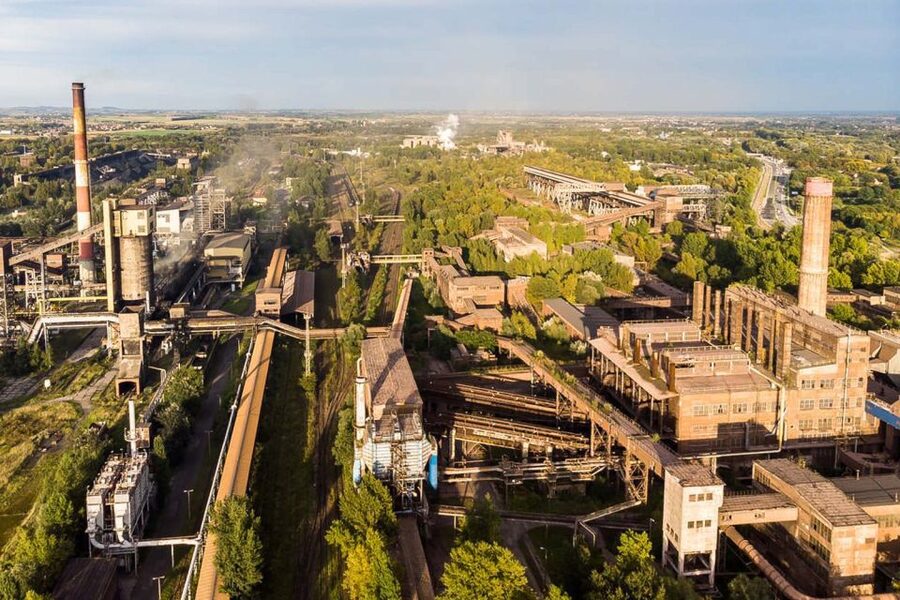
The steelworks are central to understanding Nowa Huta. Tadeusz Sendzimir Steelworks was not a side attraction added to the tour. It was one of the main reasons this entire district was created.
You visit the administration offices and spend time wandering through them with your guide. That offers a closer look at the system behind the factories and housing. The steelworks represented industrial power, employment, and the promise of a modern socialist future.
The visit is valuable because it connects the city plan to real work. Housing and public spaces were not built in isolation. They supported a major industrial center and the thousands of people connected to it. Once you see the offices and hear the explanation, Nowa Huta feels less like a planned experiment and more like a complete social and economic system.
This part may appeal most to anyone interested in industrial history, urban planning, or the Communist period. If your ideal tour focuses only on beautiful interiors and famous art, the offices may feel plain. Their importance comes from the story they tell, not from decoration.
The secret underground tunnel
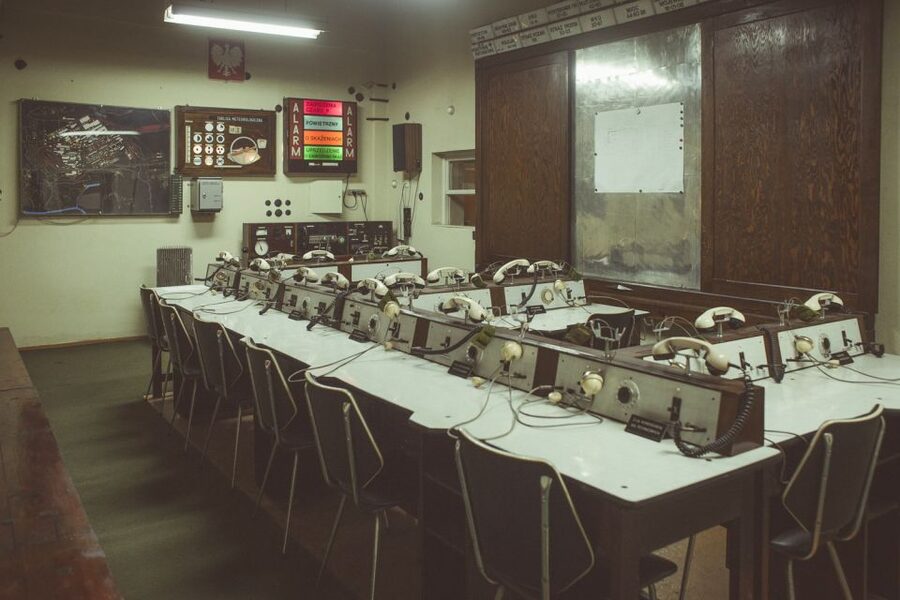
The underground tunnel is the tour’s most atmospheric stop. After time above ground at the steelworks, you go below street level to explore one of Nowa Huta’s hidden spaces.
The exact tunnel details are not specified, so you should not expect a museum-style display with a long list of exhibits. Instead, the value lies in entering a real underground setting tied to the district’s Cold War past and the need for shelter.
One previous visitor described the bunker visit as feeling like a time machine, and that reaction makes sense. Underground spaces make history feel immediate. You are no longer looking at a photograph or listening to a timeline. You are standing inside a structure that reflects the fears and preparations of the period.
Your guide’s enthusiasm matters here. One account praised the guide’s passion during the bunker visit, saying it made the experience far more enjoyable. Ask questions as you go, especially if you want to understand how the tunnel fit into Nowa Huta’s wider defensive planning.
This is also where practical limits matter most. The tour is specifically unsuitable for people with mobility impairments and is not recommended for people with back or heart problems. Large bags and luggage are not allowed, and comfortable shoes are essential.
Lord’s Ark Church and an important contrast
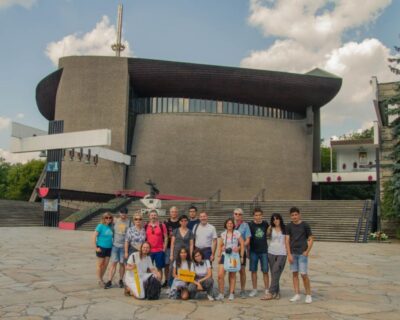
Back above ground, you visit Arka Pana, or Lord’s Ark Church. It was the first church built in Nowa Huta, and its presence carries special weight in a district designed under an officially atheist Communist system.
The church provides a sharp contrast with the steelworks and planned public spaces. The city was meant to express socialist ideals, yet residents still wanted a place for religious life. The building therefore helps explain the tension between state planning and personal belief.
This stop keeps the tour from becoming a simple story of factories and shelters. It shows how people used the city in ways that did not always match the intentions of the authorities who designed it.
You should expect the guide to provide the historical setting rather than treat the church as an isolated religious attraction. That makes it useful even if you are more interested in modern Polish history than church architecture.
Soviet IS-2 tanks outside the Museum of the Armed Act
The final sight is a pair of real Soviet IS-2 tanks in front of the Museum of the Armed Act. They are among Nowa Huta’s most recognizable landmarks and give the tour a clear visual finish.
The tanks are not subtle. After the quiet underground tunnel and the religious symbolism of Lord’s Ark, these large military machines bring the political and military side of the period into full view. They are also an easy way to remember the district’s connection to Soviet power and the postwar order.
This stop is brief but effective. You get a strong photo opportunity and another concrete object around which the guide can explain the era. The museum itself is presented as the setting for the tanks, but the supplied details do not promise a full interior museum visit. Think of this as an exterior landmark stop unless your guide says otherwise.
What the guide adds
The English-speaking guide is the key to the whole experience. Without explanation, Central Square, the offices, church, and tanks could seem disconnected. With a good guide, they form one story about industrial ambition, government control, religious resistance, and the passage from the late 1940s to the end of Communist rule in 1989.
The strongest praise connected to this experience focuses on the guide’s ability to bring history to life, especially in the bunker. That is exactly where guiding matters most. A tunnel on its own is just a dark space. A guide can explain why it exists and what it reveals about the people who lived through the period.
The tour is advertised in English. One booking involved a request for a French guide that could not be met, although the English guide tried to help. If you need another language, confirm it before booking rather than assuming it will be available.
Is $111 a fair price?
At $111 per person, this is not the cheapest way to spend a half-day in Krakow. The value depends on how much you want a guided, organized visit rather than a quick look at Nowa Huta on your own.
The price includes hotel pickup, transport, an English-speaking guide, admission fees, tickets, and insurance. It also saves you the planning time involved in reaching a distant district and connecting several sites. For a visitor with limited time, that convenience has real value.
The strongest reason to pay the price is access to a connected story. You are not merely transported to Central Square for a photograph. You move from the city plan to the avenue, steelworks, tunnel, church, and tanks, with the historical links explained along the way.
There is no food included, so plan to eat before or after the tour. Since the outing lasts five hours including driving, you may want a meal around it, though no food stop is promised.
Who should book this Nowa Huta tour?
I would recommend it to you if you enjoy modern history, Communist-era Europe, industrial sites, urban planning, or places that show how ordinary life was shaped by politics. It is also a strong choice if you have already seen Krakow’s central sights and want a different side of the city.
You will get the most from it if you enjoy listening to a guide and asking questions. The experience is built around interpretation. The buildings and objects matter, but the explanations are what connect them.
I would not choose it for a relaxed sightseeing day with very little walking. It is also a poor fit if you want a food-focused tour, since food is not included, or if you need step-free access and an easy route. Pregnant people, wheelchair users, and those with mobility, back, or heart problems should choose another activity.
Free cancellation up to 24 hours ahead and the option to reserve now and pay later make the booking less rigid. Still, the more important decision is whether Nowa Huta’s subject appeals to you. This is a history tour with unusual places, not a conventional Krakow highlights trip.
Should you book it?
Book this tour if you want to understand how Krakow changed after the war and you are curious about the physical remains of Poland’s Communist period. The underground tunnel, steelworks offices, first church, and Soviet tanks give the subject variety, while the guide ties it together.
Skip it if your time in Krakow is very short and you have not yet seen the central historic sights, or if walking and underground access will be difficult. For the right audience, $111 is a reasonable price for transport, entry fees, and a guided look at one of Krakow’s least conventional districts.
FAQ
How long does the Nowa Huta tour last?
The full activity lasts five hours, including transport from Krakow and the return journey. The guided visit in Nowa Huta is around three hours.
Where does pickup take place?
The listed pickup location is Pawia 3. Pickup outside your hotel or accommodation is also included at the time shown on your final confirmation.
Is the tour conducted in English?
Yes. The live guide language is English.
What is included in the price?
Hotel pickup, an English-speaking guide, all admission fees and tickets, transport, and insurance are included.
Is food included?
No. Food is not included in the tour.
What should I bring?
Bring comfortable shoes because the experience includes walking and an underground visit.
Can I bring luggage or a large bag?
No. Luggage and large bags are not allowed on the tour.
Is the tour suitable for wheelchair users?
No. The tour is not suitable for wheelchair users and is not recommended for people with limited mobility.
Can I cancel the booking?
Yes. You can cancel up to 24 hours in advance for a full refund. You can also reserve now and pay later.
Just added in Krakow
- Auschwitz-Birkenau – Skip the Line Tickets★ 3.5 · 29 reviews
- Auschwitz-Birkenau: Fast-Track Ticket & Guided Tour No Transfers★ 3.5 · 17 reviews
- Zakopane & Sleigh Ride with Bonfire – Group Tour from Kraków★ 5.0 · 2 reviews
- Sleigh Ride & Bonfire in Zakopane with Funicular – Private Trip★ 5.0 · 48 reviews
- Thermal Baths & Zakopane – Private Trip from Krakow★ 5.0 · 1 review
- Zakopane & Gubalowka Funicular – Private Winter Tour from Krakow★ 5.0 · 10 reviews
- stag dog chase Krakow prank★ 5.0 · 4 reviews
- Divine Mercy Sanctuary – Private Tour from Krakow★ 5.0 · 4 reviews
Nowa Huta Tours, compared.

Legendary Private Nowa Huta Communism Tour with Crazy Guides
Read our review →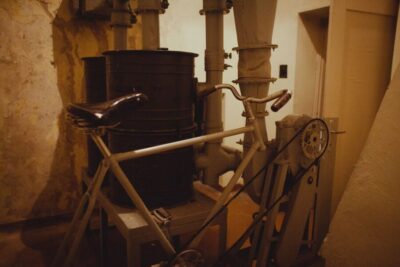
Nowa Huta: Steelworks Administration Buildings/Shelters Tour
Read our review →
Private Nowa Huta Adventure Tour in Communist Cars
Read our review →
Communist Krakow – Nowa Huta Walking Tour in English
Read our review →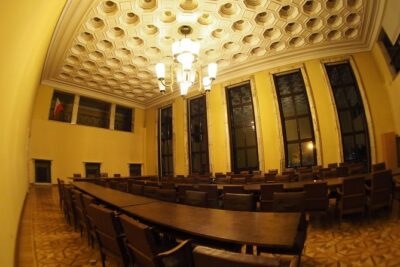
Nowa Huta Steel Mill Administration Buildings and Shelters with local NGO
Read our review →
1.5h Crazy Guides’ Communism Tour of Nowa Huta in Classic Car
Read our review →Browse the lists this tour appears in