
REVIEW · JEWISH QUARTER TOURS
Cracow: Kazimierz Jewish Quarter Walking Tour
Kazimierz tells Krakow’s story in layers. This 90-minute to two-hour walk brings you from Szeroka Street to synagogues, former Jewish homes, ritual baths, and streets where old customs meet modern cafes. I especially like the focus on Jewish daily life and the way the guide points out small symbols in the buildings. I also like that you can learn a great deal without paying museum admission.
The main consideration is that this is an outdoor group walk, not a museum tour. You will not enter museums, and the route may be difficult if you have limited mobility. Bring comfortable shoes, and if you visit in late autumn or winter, dress warmly. Lauren from the United Kingdom praised guide Fil’s interesting and well-informed commentary, while also giving that useful cold-weather warning.
In This Review
- Key points to know before you book
- Why Kazimierz deserves a separate walk
- Starting on Szeroka Street beside the Old Synagogue
- Synagogues, symbols, and the shape of Jewish life
- The link between Judaism and Christianity
- World War II and the break in Kazimierz’s story
- Old homes, modern cafes, and a changing district
- What the timing and group format mean
- Is $27 a fair price?
- Language choices and the guide experience
- Practical advice for a comfortable visit
- Who will enjoy this Kazimierz walk?
- Should you book the Kazimierz tour?
- FAQ
- Where does the Kazimierz walking tour meet?
- How long does the tour last?
- How much does the tour cost?
- Which languages are available?
- Are museum entrance tickets included?
- Does the tour enter the synagogues?
- What places are included in the walk?
- What should I bring?
- Is the tour suitable for people with mobility impairments?
- Can I cancel the booking?
Key points to know before you book
- Start at Szeroka Street: Meet on the steps of the Old Synagogue and look for a guide holding an excursions.city sign.
- See Kazimierz through its Jewish heritage: The route covers synagogues, the Remuh cemetery, ritual baths, former family homes, customs, food, trade, and religious life.
- Expect an exterior-focused tour: Entrance tickets are not needed because the walk does not include museum visits.
- Allow up to two hours: The advertised duration is 90 minutes to two hours, with start times depending on availability.
- Choose from five languages: Tours are offered in English, Italian, French, Spanish, and German.
- Pay $27 for context and orientation: The price is reasonable if you want a clear introduction to Kazimierz before exploring more on your own.
Why Kazimierz deserves a separate walk
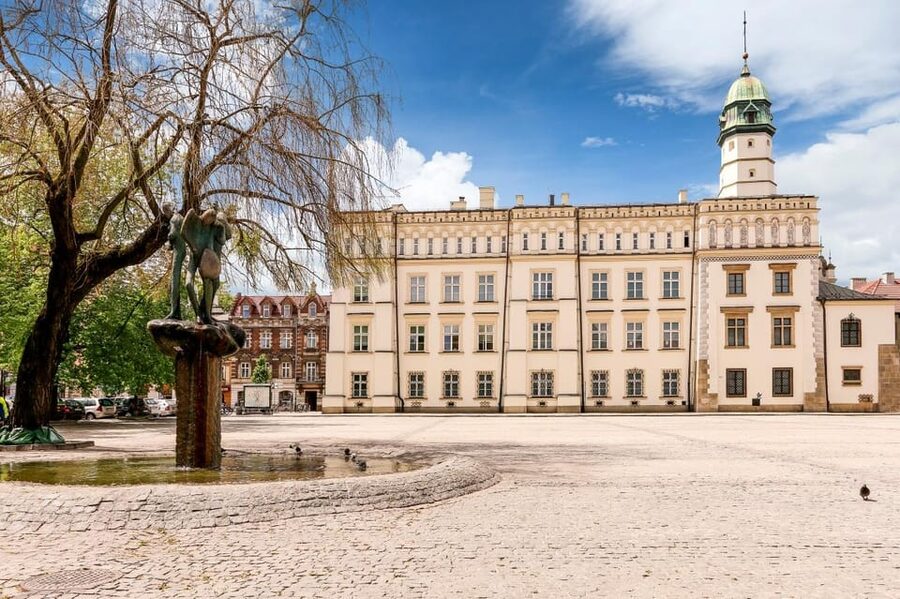
Krakow’s Kazimierz is not simply a pretty old quarter with cafes. It was shaped for centuries by Jewish settlers and by the relationship between Jewish and Polish communities. The district’s streets, religious buildings, homes, customs, and later wartime history all form part of the story.
That makes a guided walk useful. On your own, you might notice a synagogue facade or a cemetery wall but miss the meaning behind its symbols. A good guide helps connect those details to ordinary life: where people worshipped, traded, cooked, lived, marked important events, and buried their dead.
This tour also gives you a look at Kazimierz as it is now. Retro-style restaurants and cafes occupy buildings tied to older families and traditions. That mix can feel surprising, even a little uneasy at times. The present-day district is lively, but the walk keeps your attention on what came before.
I appreciate that the route does not treat the quarter as a decorative backdrop. It presents Kazimierz as a place shaped by people, belief, family, work, and loss.
More Walking Tours in Kraków
- Old Town Krakow & Wawel Castle Walking Tour
★ 5.0 · 1,508 reviews - Creepy Krakow: 2-Hour City Walking Tour
★ 4.7 · 1,131 reviews - Krakow: The Old Town Walking Tour
★ 4.8 · 794 reviews
Starting on Szeroka Street beside the Old Synagogue
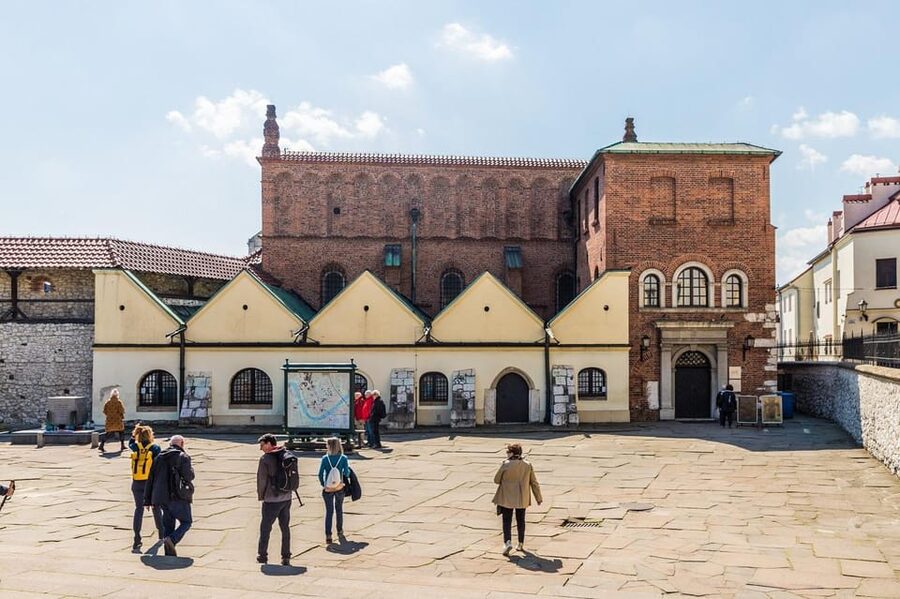
Your meeting point is practical and easy to identify: the steps of the Old Synagogue on Szeroka Street. Look for the guide with an excursions.city sign. This is the heart of the district, so beginning here gives the tour a strong sense of place right away.
The Old Synagogue provides the first major view of Kazimierz’s Jewish past. From here, the guide explains who founded the district and when it began attracting a large number of Jewish settlers. The supplied details do not provide the specific founder or date, so you should expect to hear those facts from the guide rather than rely on a fixed written script.
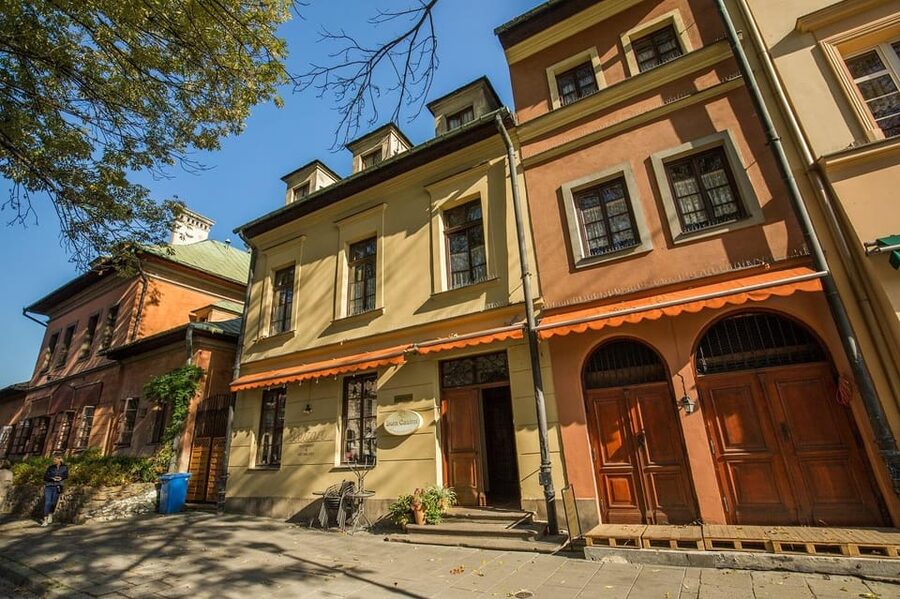
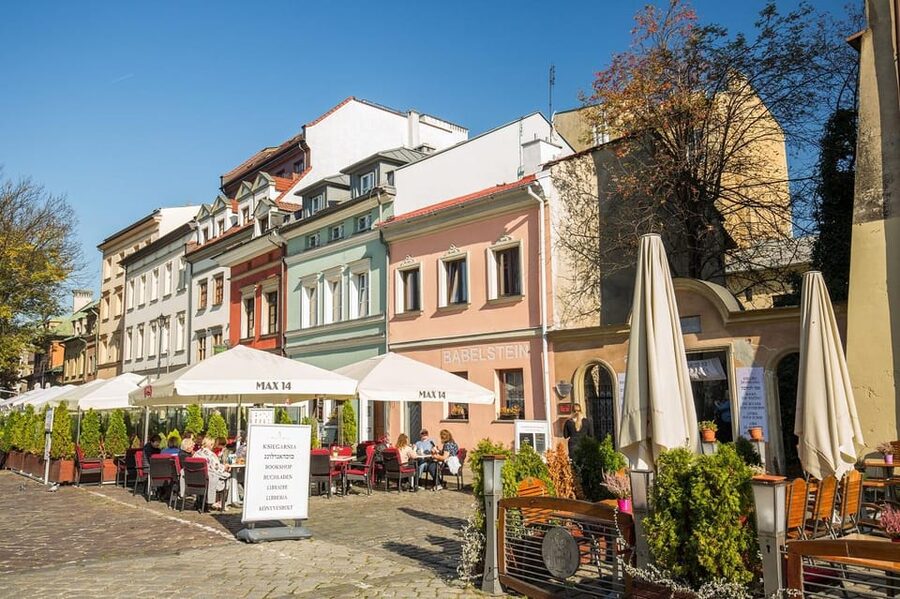
Szeroka Street is also a good place to notice the contrast that defines the walk. Religious buildings and historic homes sit near restaurants and cafes designed in a retro style. You are not being taken away from modern Krakow. Instead, you are learning how the present occupies a district formed by an older community.
Because this is the meeting point, arrive with enough time to find the group. The guide is identified by a sign, which helps in a busy public square.
Synagogues, symbols, and the shape of Jewish life
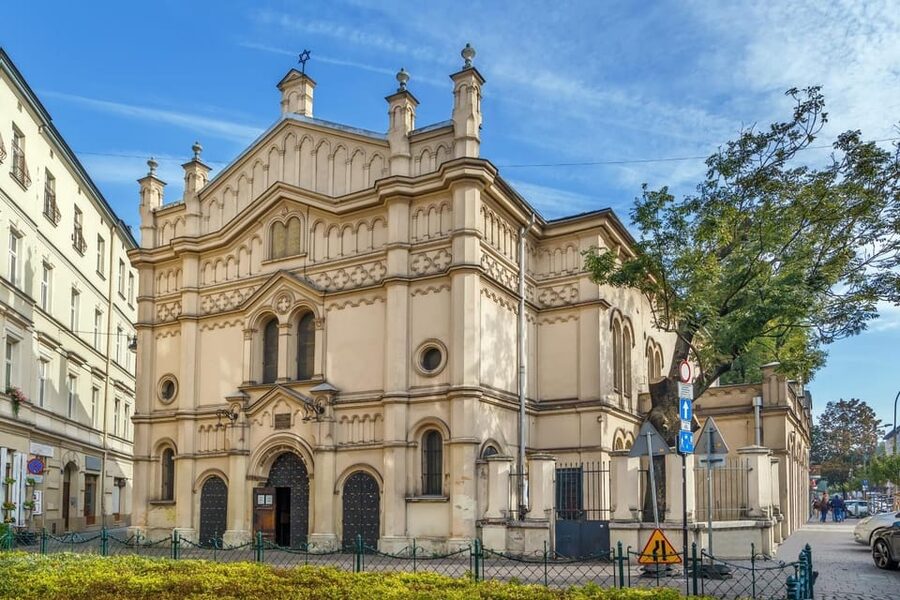
The tour continues through streets connected to Jewish worship and family life. You will pass the active Remuh Synagogue and its cemetery, as well as the Old Synagogue and former homes linked to Jewish families.
The buildings are important, but the details around them matter just as much. Your guide is meant to help you spot signs and symbols hidden in the architecture. These small features can make the neighborhood easier to read. Instead of seeing only old walls, you begin to notice clues about the people who lived, worked, prayed, and traded here.
The walk also explains Jewish rituals and customs in everyday life. That includes subjects such as trade and cuisine, which helps keep the tour grounded in ordinary experience. You are not hearing only about institutions or famous names. You are being shown how religious and cultural practice shaped daily routines.
The Remuh cemetery adds another layer. The tour discusses customs connected with death as well as those connected with living. That contrast can make this part of the walk more serious than the cafe-lined streets nearby, so give yourself time to listen rather than treating it as a quick photo stop.
Since entrance tickets are not required, you should not expect a full interior visit to the synagogues or museum collections. The value here comes from the outdoor explanation and from seeing the buildings in their setting.
The link between Judaism and Christianity
One of the more useful themes is the relationship between Judaism and Christianity in the district. The tour explains why the two traditions were so closely intertwined in Kazimierz and how Jewish and Polish neighbors related to one another.
This is an important distinction. A short sightseeing walk can easily reduce the area to a list of buildings. Here, the focus is also on contact between communities, shared urban space, and the ways religious traditions existed side by side.
The information provided does not give a full account of those relationships, so the exact detail depends on the guide and the pace of the group. Still, it is a valuable subject to include because it helps you understand Kazimierz as a lived neighborhood rather than a sealed historical exhibit.
I would pay close attention during this section if you want more than architectural sightseeing. It can help explain why certain customs, buildings, and street patterns matter to the district’s identity.
More Jewish heritage tours in Krakow:
- Krakow: Schindler’s Factory & Ghetto Guided Tour
★ 4.7 · 1,694 reviews - Krakow: Jewish Quarter and Former Ghetto Tour
★ 4.9 · 1,441 reviews - Krakow: Bike Tour of Old Town, Jewish Quarter and the Ghetto
★ 4.9 · 1,155 reviews - Krakow: Kazimierz Jewish Quarter Walking Tour
★ 4.8 · 571 reviews
World War II and the break in Kazimierz’s story
World War II changed the fate of Krakow and Kazimierz in particular. The walk places the district’s earlier centuries of Jewish life beside the destruction and disruption caused by the war.
This part of the route is likely to carry the greatest emotional weight. The tour is not only about what remains. It also addresses the break in the community’s story and the way the district was affected.
The supplied information does not specify every wartime stop or give detailed dates, so you should not expect a fixed list of memorials from the description alone. What you can expect is a historical explanation that connects the prewar Jewish quarter to the modern district you see today.
For me, this context is one of the strongest reasons to choose a guided walk. Without it, the restored buildings, cafes, and religious sites can feel disconnected. The guide helps place them within the larger history of the city.
Old homes, modern cafes, and a changing district
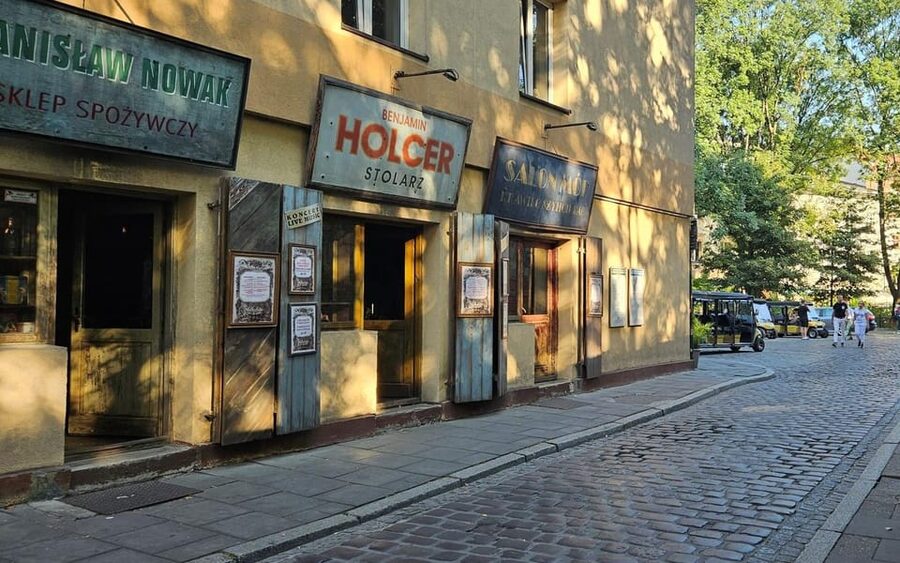
Kazimierz now has restaurants and cafes in buildings associated with former Jewish families. That contrast is one of the most visible parts of the walk.
You may find the combination appealing, especially if you like neighborhoods where history remains part of everyday streets rather than being confined to one museum. At the same time, the modern atmosphere can make the past feel less obvious. The guide’s job is to point out what the new businesses cannot explain by themselves.
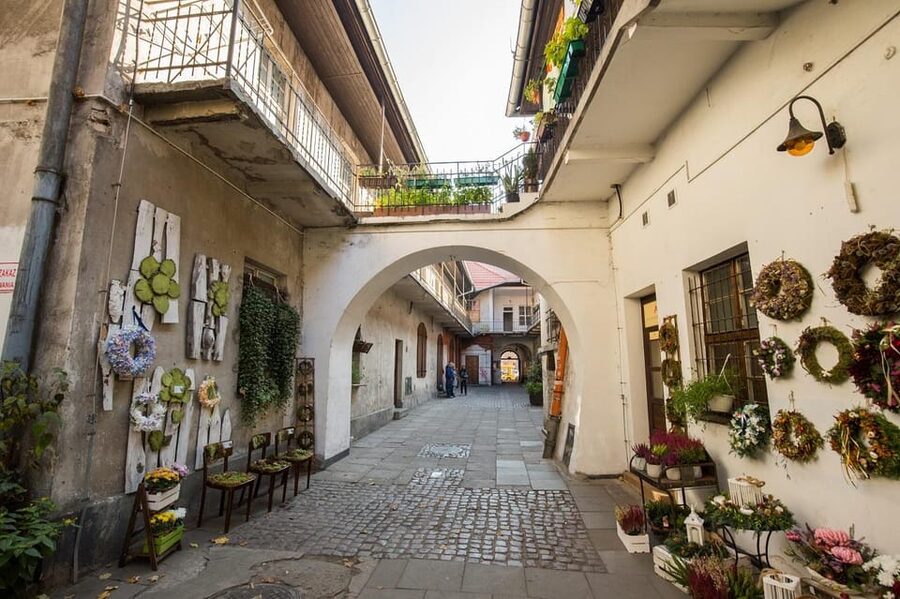
This is where the tour’s architectural clues become especially useful. A doorway, sign, building detail, or street arrangement may carry meaning that you would otherwise miss. The walk encourages you to look closely instead of rushing from one famous site to the next.
The result is a more grounded introduction to Kazimierz. You see a district that is still used, not a preserved stage set. That can be one of its strengths, though anyone seeking a quiet or entirely solemn historical visit may find the modern restaurant scene distracting.
What the timing and group format mean
The stated duration is 90 minutes to two hours. That is long enough to cover the central sights and themes without taking up an entire day. It also fits neatly into a Krakow itinerary that includes other attractions.
The exact length may depend on the group, the guide, and the amount of discussion at each stop. I would keep part of the surrounding day flexible rather than booking another activity immediately afterward.
This is a group walking tour with a live guide. A group format usually means you gain structure and commentary at a lower cost than a private visit, but you have less control over the pace. If you prefer stopping for long photographs or reading every inscription, the route may feel brisk.
The tour is not suitable for people with mobility impairments, according to the activity information. You will be on foot through historic streets, and comfortable shoes are essential for everyone.
Is $27 a fair price?
At $27 per person, I see this as a fair introduction to Kazimierz, especially if you are visiting the district for the first time. You are paying for a professional guide, a planned route, and explanation that links several different subjects: religion, architecture, customs, community relations, wartime change, and modern Krakow.
The value is strongest if you would otherwise walk past the synagogues and cemetery without knowing what to look for. The guide turns a casual stroll into a structured lesson in the district’s identity.
The price is less attractive if you want museum interiors or a long, highly specialized historical lecture. Those are not part of this walk, and entrance tickets are not included because they are not required. This is an outdoor orientation tour, not a full museum program.
I would use it early in a Krakow visit. Afterward, you can return to the places that caught your attention or decide which museums and religious sites deserve more time.
Language choices and the guide experience
Live guiding is available in English, Italian, French, Spanish, and German. Choose the language in which you can follow historical explanation most easily, since the value depends heavily on the guide’s storytelling and your ability to catch small details.
Guide Fil received especially strong praise for making the walk interesting and for knowing the subject well. That matters here because Kazimierz has many layers, and a flat list of dates would not do the district justice.
The guide also helps with trivia and lesser-known facts about the quarter and its inhabitants. These details can give the tour a more personal feel, especially when connected to the buildings around you.
No individual guide can guarantee the same pace or style every time, so I would think of Fil’s praised performance as an encouraging sign rather than a promise that he will lead every departure. Still, the format gives you a live opportunity to ask questions and clarify points as you go.
Practical advice for a comfortable visit
Wear comfortable shoes. This is the one item specifically recommended, and it is the right advice for any historic-quarter walk.
Bring warm layers for late autumn and winter. A November visit prompted a clear warning to wrap up, and the tour takes place outdoors. Cold weather can make a thoughtful historical walk feel much longer than it is.
Arrive at the Old Synagogue steps and look for the excursions.city sign. You do not need to buy entrance tickets for the walk.
The tour offers free cancellation up to 24 hours before the start time, and you can reserve now while paying later. Those terms are useful if your Krakow schedule is still shifting, but the more important planning point is simple: check the available start times before building the rest of your day around it.
Who will enjoy this Kazimierz walk?
I would recommend it to first-time visitors who want a clear introduction to Kazimierz without spending half a day inside museums. It suits people interested in religious history, architecture, local customs, and the way a neighborhood changes over time.
It is also a good choice if you prefer learning through streets and buildings rather than through display cases. The route gives you a framework for later exploring the district on your own.
You should think twice if you have limited mobility, dislike walking tours, or want extensive interior access. The tour does not visit museums, and the outdoor route may not provide the depth of a specialist study visit.
Should you book the Kazimierz tour?
Book it if you want a well-organized introduction to Jewish Kazimierz and value context more than admission to interiors. The $27 price is sensible for a guided walk covering synagogues, a cemetery, ritual practice, community relations, wartime change, and the district’s modern life.
I would especially choose it near the beginning of a Krakow stay. Wear proper shoes, dress warmly in colder months, and meet at the Old Synagogue with enough time to find the guide. If those conditions suit you, this walk can help you see Kazimierz with sharper eyes and a better grasp of what its streets represent.
FAQ
Where does the Kazimierz walking tour meet?
It meets on the steps of the Old Synagogue on Szeroka Street. Look for a guide holding an excursions.city sign.
How long does the tour last?
The tour lasts between 90 minutes and two hours. Available starting times vary, so check the schedule when booking.
How much does the tour cost?
The listed price is $27 per person.
Which languages are available?
The live tour guide can lead the walk in Italian, English, French, Spanish, or German.
Are museum entrance tickets included?
The walk does not visit museums, and entrance tickets are not required.
Does the tour enter the synagogues?
The activity information describes an outdoor walking tour and does not promise synagogue interiors. You should expect to see the buildings from the route rather than receive a museum-style interior visit.
What places are included in the walk?
The route begins on Szeroka Street and includes views of the Old Synagogue, the active Remuh Synagogue, its cemetery, ritual baths, and former Jewish family homes.
What should I bring?
Bring comfortable shoes. Warm clothing is also important in late autumn and winter because the tour takes place outdoors.
Is the tour suitable for people with mobility impairments?
The tour is not suitable for people with mobility impairments.
Can I cancel the booking?
You can cancel up to 24 hours in advance for a full refund. The reserve now and pay later option also allows you to keep your plans flexible.
Just added in Krakow
- Auschwitz-Birkenau – Skip the Line Tickets★ 3.5 · 29 reviews
- Auschwitz-Birkenau: Fast-Track Ticket & Guided Tour No Transfers★ 3.5 · 17 reviews
- Zakopane & Sleigh Ride with Bonfire – Group Tour from Kraków★ 5.0 · 2 reviews
- Sleigh Ride & Bonfire in Zakopane with Funicular – Private Trip★ 5.0 · 48 reviews
- Thermal Baths & Zakopane – Private Trip from Krakow★ 5.0 · 1 review
- Zakopane & Gubalowka Funicular – Private Winter Tour from Krakow★ 5.0 · 10 reviews
- Divine Mercy Sanctuary – Private Tour from Krakow★ 5.0 · 4 reviews
- stag dog chase Krakow prank★ 5.0 · 4 reviews