
REVIEW · JEWISH QUARTER TOURS
Cracow – Guided Tour of the Jewish Ghetto
The past is written into Podgórze’s streets. This one-hour walking tour explores Krakow’s former Jewish Ghetto, linking wartime buildings, Ghetto Heroes’ Square, part of the original wall, and the famous Under the Eagle pharmacy. I especially like the focused route through Podgórze and the chance to see physical places tied to the wartime story, rather than only hearing a general account in a museum. The modest $15 price also makes this an easy addition to a Krakow itinerary.
I also like that the tour ends at Under the Eagle pharmacy, a place closely connected with survival during the Nazi occupation. The main consideration is time: one hour is short for such a serious and layered subject. A strong guide can make that hour meaningful, but one Italian-language review reported receiving very little explanation, so the quality of the live guide matters.
In This Review
- Key points to know before booking
- Why Podgórze makes this tour different
- Meeting at the Schindler Factory Museum
- Ghetto Heroes’ Square and the deportations
- The surviving wall of the Jewish Ghetto
- Buildings where thousands were forced to live
- Finishing at Under the Eagle pharmacy
- How good is the one-hour format?
- Guide quality and language choices
- Is $15 a fair price?
- Who should book this Krakow ghetto walk?
- Practical details before you go
- Should you book the Jewish Ghetto tour?
- FAQ
- Where does the tour meet?
- How long does the guided tour last?
- What places are included on the route?
- Is admission to the Schindler Factory Museum included?
- Is entry to Under the Eagle pharmacy included?
- What languages are available?
- Does the price include food or drinks?
- How much does the tour cost?
- Can I cancel the booking?
Key points to know before booking
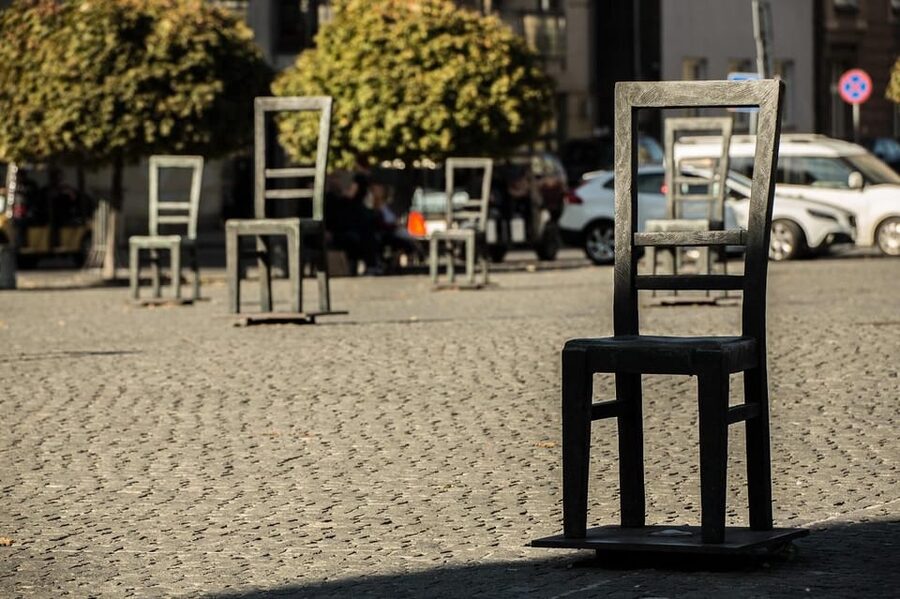
- Plac Bohaterów Getta is the emotional center of the walk, where Krakow’s Jewish residents were identified and deported to concentration camps.
- A surviving section of the ghetto wall provides a direct link to the boundaries that confined thousands of people.
- Under the Eagle pharmacy gives the tour a human focus, showing how one place became associated with help and survival.
- The walk lasts one hour, so expect a compact introduction rather than a complete study of Krakow’s Jewish past.
- Guiding is offered in five languages: English, German, French, Spanish, and Italian.
- The meeting point is easy to identify: look for the guide with an excursions.city sign at the entrance to the Schindler Factory Museum.
Why Podgórze makes this tour different
Krakow’s former Jewish Ghetto was located in Podgórze, across the Vistula River from the older Jewish district of Kazimierz. This matters because the walk takes you away from the familiar tourist center and into a neighborhood where wartime events are tied to ordinary streets and buildings.
During World War II, Jewish residents of Krakow were forced into this area. Thousands lived in cramped conditions before deportations sent many to concentration camps. The tour uses the district itself as the main teaching tool, allowing you to connect the broad story of Nazi persecution with the specific places where people were confined, identified, and removed.
I find this kind of route more useful than a talk made up only of dates and names. A building, wall, or square can make the subject more immediate. At the same time, you should approach the walk with care. This is not a light sightseeing stop. It deals with forced displacement, deportation, and mass murder, and the mood is appropriately solemn.
More Jewish heritage tours in Krakow:
- Krakow: Schindler’s Factory & Ghetto Guided Tour
★ 4.7 · 1,694 reviews - Krakow: Jewish Quarter and Former Ghetto Tour
★ 4.9 · 1,441 reviews - Krakow: Bike Tour of Old Town, Jewish Quarter and the Ghetto
★ 4.9 · 1,155 reviews
Meeting at the Schindler Factory Museum
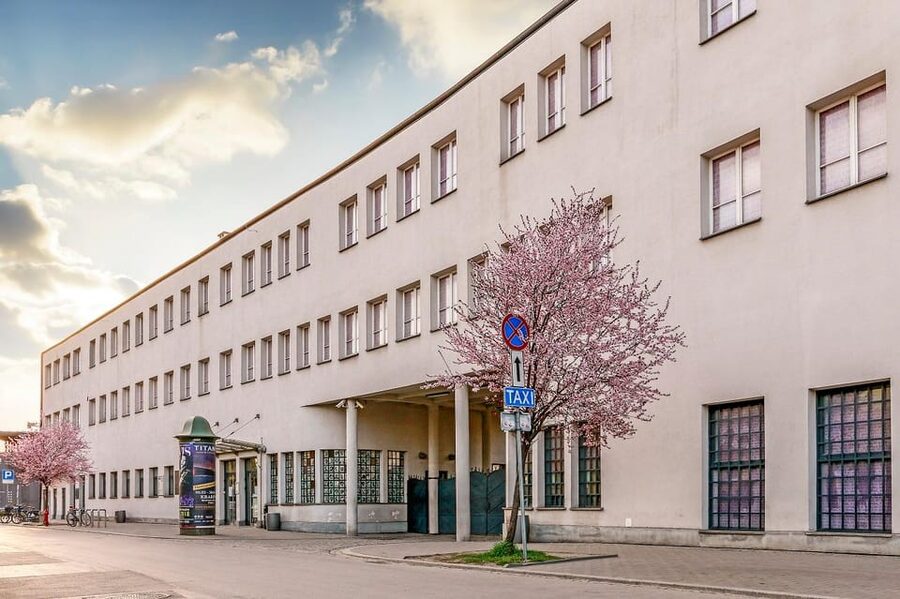
The tour begins at the entrance to the Schindler Factory Museum. You are not told to enter the museum as part of this one-hour walk, so keep the meeting arrangement clear: look for a guide holding an excursions.city sign.
This starting point is practical because the museum is one of Krakow’s main World War II sites. You can pair the walking tour with a museum visit before or after, but the two experiences should not be treated as the same thing. The walking tour focuses on the former ghetto in Podgórze and its surviving places. The museum offers a separate indoor experience.
Because the activity is short, arrive ready to begin walking. The supplied information does not specify the group size, walking distance, or indoor access arrangements, so you should not expect a detailed accessibility profile from the booking information. Comfortable shoes are sensible for any city walk, though the route itself is described as a guided exploration of the district rather than a demanding hike.
Ghetto Heroes’ Square and the deportations
One of the most important stops is Plac Bohaterów Getta, also called Ghetto Heroes’ Square. This is where Jewish residents of Krakow were identified and deported to concentration camps.
The square gives the tour its strongest public setting. Instead of discussing deportation as an abstract process, your guide can place it in a real civic space where people were gathered and sorted. That physical setting helps explain the power of the site and why it remains an important place of remembrance.
You should expect this stop to be emotionally heavy. The value comes from listening carefully and giving the place your attention, not from rushing through it for photographs. The one-hour format means the guide has limited time to explain the square, its role, and the wider wartime story, so a clear and engaged presentation is especially important.
The tour’s strongest feedback has praised guides who explain the subject with compassion and extensive knowledge. One English-language assessment specifically highlighted the guide’s informative and considerate approach. That is exactly what you want here: facts delivered clearly, without turning suffering into spectacle.
The surviving wall of the Jewish Ghetto
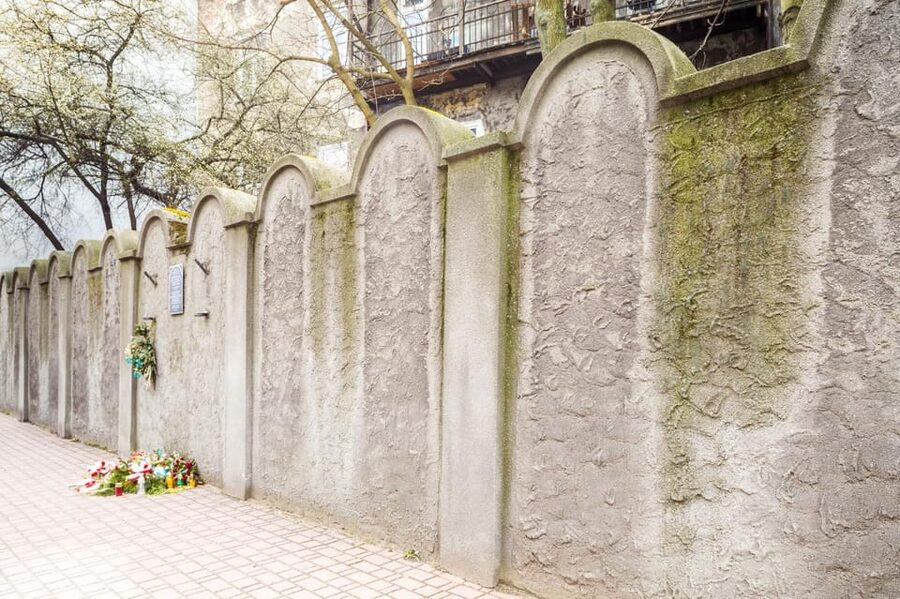
The tour also takes you to a remaining piece of the original ghetto wall. This fragment marks the boundary that separated Jewish residents from the rest of Krakow during the occupation.
A wall fragment can look modest beside grand museums and churches, but its importance is not about size. It helps you understand that the ghetto was a controlled, enclosed area, not simply a neighborhood where people happened to live. The surviving section has become a memorial and a pilgrimage site for many Jewish visitors from around the world.
I appreciate this stop because it gives the route a clear physical marker. The square shows what happened to people inside the ghetto. The wall shows how the system of confinement was built into the city. Together, the two places make the story easier to follow.
Do not expect a long stop with an elaborate exhibition. The supplied details identify the wall fragment as a monument and pilgrimage site, but they do not promise extensive displays or a separate presentation area. The guide’s explanation will carry much of the meaning.
A few more in Krakow
- From Krakow: Auschwitz-Birkenau Guided Tour & Hotel Pickup
★ 4.5 · 33,358 reviews - From Krakow: Auschwitz-Birkenau Guided Tour & Hotel Pickup
★ 4.5 · 29,340 reviews - Krakow: Auschwitz Guided Tour with Optional Hotel Pickup
★ 4.5 · 15,280 reviews - Krakow–Zakopane: Cable Car, Chocholow Baths, Cheese & Vodka
★ 5.0 · 10,720 reviews
Buildings where thousands were forced to live
The walk passes buildings where thousands of displaced Jews endured cramped living conditions. These are not presented as polished museum interiors. Their importance comes from what happened there and from the contrast between normal-looking city buildings and the suffering forced into them.
This part of the route can be easy to underestimate. A street lined with residential buildings may not look dramatic, yet it helps you picture the daily pressure of ghetto life. Families were displaced, space was limited, and ordinary routines were controlled by a brutal system.
Your guide’s role is vital here. A good explanation can connect the buildings to the people who lived inside them and clarify how the ghetto functioned. A weak explanation may leave you simply looking at façades. One Italian-language assessment described a tour with very little spoken information, which points to the main risk of this experience. Since the walk is only an hour, every stop needs useful context.
This is also why I would not book the tour expecting a complete account of Jewish Krakow. It offers a direct introduction to the Podgórze ghetto. It does not replace a longer museum visit, a broader Jewish heritage walk, or serious reading before your trip.
Finishing at Under the Eagle pharmacy
The final stop is the historic Under the Eagle pharmacy. It is one of the tour’s most distinctive features and a strong reason to choose this route over a simple walk around the square and wall.
The pharmacy became a symbol of resilience and survival during the war. Ending here gives the tour a human focus after the larger subjects of deportation, confinement, and persecution. The name is also closely connected with the Krakow ghetto story, making it a natural final point.
The information provided does not say that admission inside the pharmacy is included. You should therefore treat it as the tour’s concluding site, not assume that the $15 price covers a separate museum ticket. That distinction matters if you want to plan a longer visit around the pharmacy.
As an ending, it works well because it adds a story of help and endurance to a route that otherwise centers on imprisonment and deportation. It does not make the subject less painful, but it gives the walk a more personal final note.
How good is the one-hour format?
The one-hour length is both the tour’s strength and its limit. At $15 per person, it is affordable and easy to fit into a busy Krakow schedule. You can use it as a first orientation to Podgórze, then decide if you want to spend more time at the Schindler Factory Museum or other nearby sites.
The short format also keeps the experience focused. You are not committing half a day to a specialist walk, and the route covers the key points listed for the activity: the former ghetto buildings, the wall, Ghetto Heroes’ Square, and Under the Eagle pharmacy.
But the subject needs time. One five-star assessment praised the guide while noting that an hour felt far too short to follow such an important story through the streets. I agree with that warning. The tour can introduce the area, but it cannot explain every stage of the ghetto’s creation, daily life, deportations, and aftermath in detail.
Think of this as a compact orientation walk. It is most useful if you want a structured first look and a guide to point out why the places matter. If you want long discussions at every stop, this format may feel rushed.
Guide quality and language choices
Live guiding is available in English, German, French, Spanish, and Italian. That gives you a fair chance of hearing the tour in a language you understand comfortably, which is important for a subject that depends on careful explanation.
The best feedback focuses on two qualities: strong knowledge and compassion. One English-language booking praised the guide for being hugely informative and sensitive. A French-language assessment also gave the experience top marks but said the route needed more than one hour to do justice to the subject. An Italian-language assessment praised the guide’s Italian and described the experience as excellent.
There is also a clear warning in the feedback. One Italian-language booking rated the tour very poorly because the guide reportedly said only a few words at each stop. That complaint is especially relevant here because a short walking tour has little room for a thin presentation.
I would book this experience for its route and subject, but I would keep expectations realistic. Guide performance can shape the entire hour. The provider is MyRide, and the guide will be identified at the meeting point by the excursions.city sign, but an individual guide’s name is not provided in the available information.
Is $15 a fair price?
At $15, this is a good-value introduction to the Jewish Ghetto area. The price includes a professional live guide and access to a carefully chosen set of significant outdoor locations. You are paying for interpretation and structure, not for food, drinks, transportation, or a guaranteed museum admission.
That distinction makes the value fairly easy to judge. If you arrive in Podgórze with no background and want someone to connect the wall, square, buildings, and pharmacy, the fee is reasonable. If you already know the area well and prefer reading plaques or exploring alone, the added value will be lower.
The tour also benefits from flexible booking terms. You can cancel up to 24 hours in advance for a full refund, and you can reserve now and pay later. Those policies help if your Krakow schedule is still changing, though they do not alter the short duration or the limits of the route.
Who should book this Krakow ghetto walk?
I would recommend it to you if you want a short, serious introduction to Podgórze and prefer historical context from a live guide. It suits first-time visitors who plan to visit the Schindler Factory Museum, people with only a small amount of time, and anyone who wants to see the surviving wall and Ghetto Heroes’ Square in one organized route.
It is also a good choice if you value a modest price and multilingual guiding. The English, German, French, Spanish, and Italian options make it easier to follow a difficult subject without relying only on written signs.
I would be more cautious if you want an in-depth study of Krakow’s Jewish past. The route is compact, and the quality of the spoken explanation is important. If your main goal is extended discussion, look for a longer tour or combine this walk with a museum visit and additional time in Podgórze.
Practical details before you go
The meeting point is at the entrance to the Schindler Factory Museum. Look for the guide holding an excursions.city sign. The activity lasts one hour, and available starting times depend on the date you select.
Food and drinks are not included. The tour is guided on foot, so plan for outdoor conditions and wear shoes suitable for city streets. The available details do not state the group size, exact walking distance, or accessibility arrangements, so contact the provider if any of those points affect your plans.
Book at least a little time around the tour if you can. The route may finish at Under the Eagle pharmacy, but the information does not confirm that entry is included. You may want to arrange a separate museum visit rather than trying to squeeze everything into the guided hour.
Should you book the Jewish Ghetto tour?
Book it if you want an affordable, focused walk through the most important surviving sites of Krakow’s former Jewish Ghetto. The wall, Ghetto Heroes’ Square, the residential buildings, and Under the Eagle pharmacy give you a strong starting point, and the best guides add the care and context this subject demands.
Do not book it expecting a complete history lesson in sixty minutes. The route is short, and one poor guiding experience could leave the story feeling thin. For $15, I see it as a worthwhile introduction, especially when paired with the Schindler Factory Museum, but not as your only source for understanding Jewish Krakow during World War II.
FAQ
Where does the tour meet?
The meeting point is at the entrance to the Schindler Factory Museum. Look for a guide holding an excursions.city sign.
How long does the guided tour last?
The tour lasts one hour.
What places are included on the route?
The route includes the former Jewish Ghetto area in Podgórze, Ghetto Heroes’ Square, a remaining section of the original ghetto wall, buildings where displaced Jews lived, and Under the Eagle pharmacy.
Is admission to the Schindler Factory Museum included?
The provided tour information includes a professional guide but does not list admission to the Schindler Factory Museum. The meeting point is at the museum entrance.
Is entry to Under the Eagle pharmacy included?
The information identifies Under the Eagle pharmacy as the final stop but does not state that separate admission is included.
What languages are available?
Live guiding is available in English, German, French, Spanish, and Italian.
Does the price include food or drinks?
No. Food and drinks are not included.
How much does the tour cost?
The listed price is $15 per person.
Can I cancel the booking?
Yes. You can cancel up to 24 hours in advance for a full refund. You can also reserve now and pay later.
Just added in Krakow
- Auschwitz-Birkenau – Skip the Line Tickets★ 3.5 · 29 reviews
- Auschwitz-Birkenau: Fast-Track Ticket & Guided Tour No Transfers★ 3.5 · 17 reviews
- Zakopane & Sleigh Ride with Bonfire – Group Tour from Kraków★ 5.0 · 2 reviews
- Sleigh Ride & Bonfire in Zakopane with Funicular – Private Trip★ 5.0 · 48 reviews
- Thermal Baths & Zakopane – Private Trip from Krakow★ 5.0 · 1 review
- Zakopane & Gubalowka Funicular – Private Winter Tour from Krakow★ 5.0 · 10 reviews
- Divine Mercy Sanctuary – Private Tour from Krakow★ 5.0 · 4 reviews
- stag dog chase Krakow prank★ 5.0 · 4 reviews