
REVIEW · POZNAń TOURS
Architectural Poznan: Private Tour with a Local Expert
Buildings tell Poznan’s story. This two-hour private walk links medieval churches, Renaissance houses, royal power, imperial architecture, and bold new design in one compact route. I like the private format, which lets you set the pace and ask about the styles that catch your eye. I also like the focus on Bałtyk, Poznan’s striking modern office building and a clear sign of the city’s changing skyline. The main drawback is the price: at $637.24 for up to two people, this is a costly short tour, especially since entry tickets and transport are extra.
The route begins at Poznań Cathedral on Ostrów Tumski and ends near Roosevelta 22. You get a Local Expert, an itinerary adapted to your interests, and suggestions for further exploring the city. A guide named Kasia received special praise for showing how varied and distinctive Poznan’s architecture can be, so it may be worth asking if she is available when you book.
In This Review
- Key points at a glance
- Why this two-hour route works
- Starting at Poznań Cathedral on Ostrów Tumski
- Reading Poznan in the Old Market Square
- The Royal Castle and its changing silhouette
- A Neo-Romanesque castle with a cultural role
- Fontanna Wolności and Plac Wolności
- Bałtyk and Poznan’s modern direction
- What the private guide adds
- Price, duration, and overall value
- Who should book this architecture walk
- Should you book Architectural Poznan?
- FAQ
- Where does the tour begin?
- Where does the tour end?
- How long does the experience last?
- How many people can join the private tour?
- Is the itinerary fixed?
- Are transportation tickets included?
- Are personal expenses included?
- Is the tour suitable for guests with impaired mobility?
- Is the tour close to public transportation?
- Can I cancel for a full refund?
Key points at a glance
- Poznań Cathedral begins the architectural story: You start at one of Poland’s oldest religious sites, with layers reaching back to the 10th century.
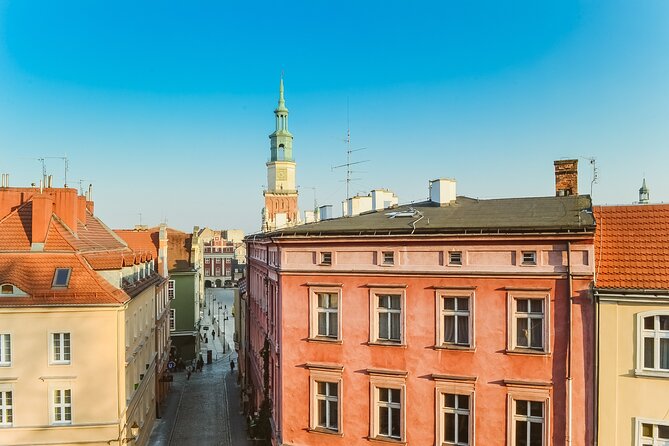
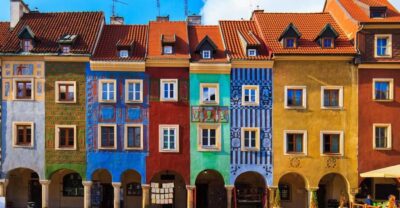
- The Old Market Square supplies the postcard views: Colorful merchant houses, cafés, and the Renaissance town hall make this the most immediately appealing part of the walk.
- Bałtyk gives the tour a modern edge: The building helps explain how contemporary design has changed Poznan’s skyline.
- The private setup keeps the walk flexible: Your guide can adjust the route to your interests and walking pace.
- The Royal Castle connects several eras: Its long development and tower offer a useful contrast with Poznan’s newer buildings.
- The price favors a special-occasion booking: Two people can share the cost, but the short duration and excluded admissions deserve careful thought.
Why this two-hour route works
Poznan is a good city for an architecture walk because its buildings do not belong to just one period. A single outing can move from early Christian Poland to Renaissance town planning, royal ambition, Neo-Romanesque design, and present-day commercial architecture.
You are not simply walking from one sight to the next. The value comes from having someone explain how the pieces relate. A Local Expert can point out changes in materials, proportions, purpose, and style that are easy to miss when you explore alone.
The tour is private, so only your group participates. That matters here. You can ask why a building looks the way it does, linger at a detail, or move on when your interest shifts. The guide can also shape the walk around your pace, within the two-hour limit.
The timing is both useful and restrictive. Two hours is enough for a strong introduction to Poznan’s built environment, but not enough for long interior visits at every stop. Think of this as a guided orientation with architectural depth, not a full museum tour.
A few more in Poznan
- Poznań Experience 2-Hours Guided Walking Tour
★ 5.0 · 155 reviews - Undercover City Games: Poznan
★ 5.0 · 88 reviews - Old Town Poznan: Guided Walking Tour in English
★ 4.6 · 78 reviews
Starting at Poznań Cathedral on Ostrów Tumski
The walk begins at Poznań Cathedral, located at Ostrów Tumski 17. This island district is tied to the earliest chapter of Poznan’s Christian and political story, and the cathedral gives the tour a serious opening.
The building is described as an example of architectural evolution from the 10th century. That phrase matters because you should not expect one perfectly uniform style. The cathedral embodies layers of change, reflecting the way major religious buildings are rebuilt, revised, and adapted across time.
Inside, you can expect the focus to be on the cathedral’s architecture and religious importance. It is a useful first stop because it gives the rest of the walk a historical starting point. Later buildings will make more sense once you have seen this early expression of Polish religious heritage.
The cathedral is also the point where practical planning matters most. The walk is not recommended for people with impaired mobility, and the route may involve uneven or tiring sections. If you have concerns, ask about the exact path before booking.
Reading Poznan in the Old Market Square
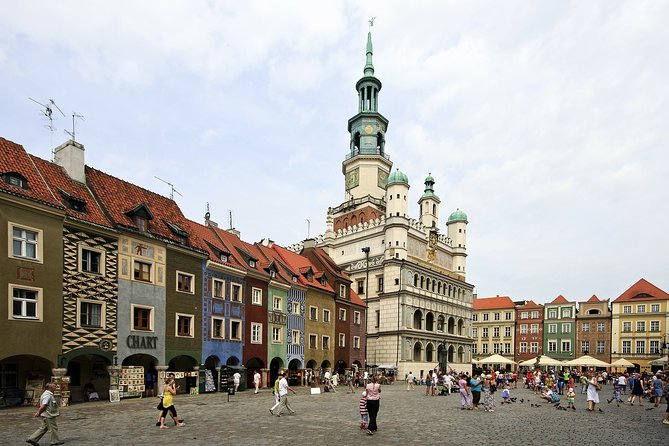
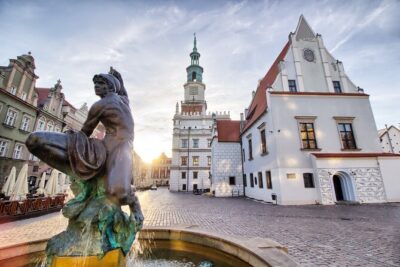
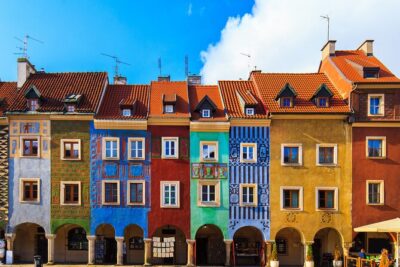
The next major setting is the heart of Poznan, where colorful merchant houses frame cafés and the Renaissance town hall commands attention. This is likely to be the most visually rewarding section if you enjoy lively public spaces and classic city façades.
The merchant houses show how commerce shaped the square. Their narrow fronts and strong colors give the area a distinct character, while the cafés make it easy to connect the buildings with everyday city life. Your guide can help separate the decorative surface from the practical role these houses once served.
The Renaissance town hall is the square’s architectural anchor. Its presence reflects a period when civic government and trade gave the city confidence and public form. You will get more from the building if you look beyond its appearance and consider why a town would invest so heavily in its central hall.
This stop also offers a good chance to test the private-tour format. If you want to focus on façades, urban planning, or the town hall’s design, you can steer the discussion. If you prefer a quicker look and more time for modern buildings, the guide can adjust the emphasis.
The square can also be the busiest part of the route. That may add energy, but it can make close conversation harder at certain moments. A private guide is helpful here because you can pause in a suitable spot rather than follow a fixed group.
The Royal Castle and its changing silhouette
The Royal Castle brings another layer to the walk. Its origins reach back to the 13th century, and its tower provides panoramic views over the city. The building’s appeal lies in the way different historical periods meet within one complex.
You can expect the guide to explain how the castle changed from its early foundations into a royal site. That long development makes it a useful counterpoint to the cathedral. Both buildings carry centuries of change, but the castle speaks more directly to political authority and royal power.
The tower is an important feature. A view from above can help you understand Poznan as a collection of districts, landmarks, and newer additions rather than a row of isolated monuments. It also gives the tour a welcome change from looking upward at façades.
There is one practical catch. Entry tickets for monuments are not included, so you should not assume that the tower or any paid interior access is part of the price. Ask in advance what can be entered during your scheduled walk and what would require an extra ticket.
Something quite different:
- Poznań: Private or Public Highlights Tour with a local guide
★ 5.0 · 66 reviews - Poznan Private City Walking Tour from Cathedral Island
★ 4.5 · 24 reviews - Poznan Old Town and Top Attractions Private Walking Tour
★ 4.8 · 24 reviews - From Golden Age to Fall and Rebirth of Poland
★ 5.0 · 17 reviews
A Neo-Romanesque castle with a cultural role
Another stop is a Neo-Romanesque castle that now serves as a cultural hub, with galleries and theaters inside its historically charged walls. The contrast here is especially useful: a building can suggest power and authority through its form, yet function in a very different way today.
Neo-Romanesque architecture often relies on sturdy shapes, rounded arches, and a fortress-like impression. Even without a long interior visit, the exterior can show how architects used historical styles to communicate strength and importance.
The current cultural use adds a second question for your guide to address. How does a building built for one purpose find a new life? Galleries and theaters bring public activity into a structure that once represented a different kind of institution.
This stop should appeal to you if you like architecture that has been reused rather than preserved as a frozen monument. It also breaks up the earlier focus on medieval and Renaissance sites by introducing a later historical period and a new cultural role.
As with the other monuments, included admissions are not specified. The tour price covers the Local Expert and private format, not transportation, museums, or monument tickets.
Fontanna Wolności and Plac Wolności
The walk includes Fontanna Wolności, or Freedom Fountain, on Plac Wolności. It is described as a symbol of freedom and a popular meeting point, adding a more open, civic setting to the route.
A fountain can seem like a small stop beside a cathedral, castle, or town hall. In practice, public art helps explain how a city uses its open spaces today. This is not only a tour of old façades. It also considers how Poznan marks shared values and creates places for people to gather.
Plac Wolności gives you a chance to look at the relationship between architecture and public life. The square’s value is not limited to one monument. It is the space around the fountain, the surrounding buildings, and the way people use the area together.
If your interests lean toward contemporary public art, ask your guide to spend a little more time here. If you prefer historic buildings, this may be a shorter stop in favor of another architectural detail.
Bałtyk and Poznan’s modern direction
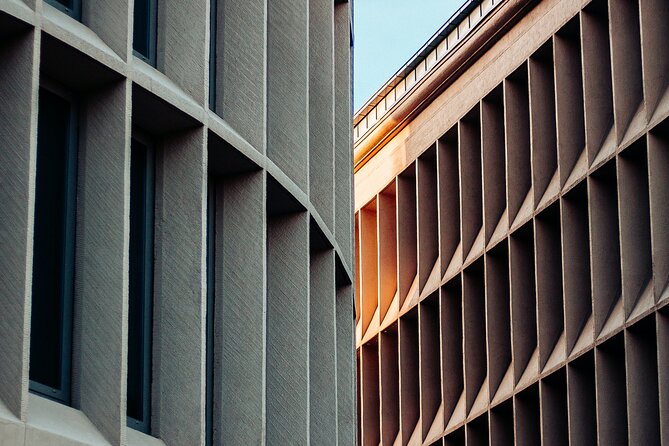
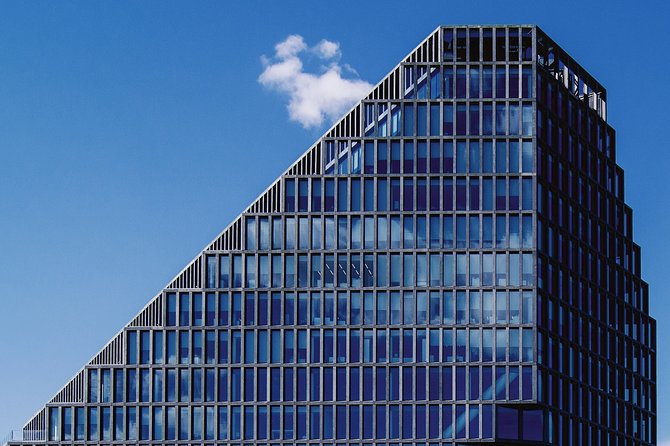
Bałtyk is one of the tour’s most useful modern references. The experience specifically highlights how it has shaped Poznan’s skyline, so you should expect the guide to use it as a way to discuss the city’s recent growth and changing visual identity.
The building gives the route a clear before-and-after structure. You begin with a cathedral rooted in the 10th century and move through civic, royal, and Neo-Romanesque architecture before considering a contemporary building. That sequence helps you see Poznan as an active city, not simply a historic backdrop.
Bałtyk is also a good reason to choose this experience over a standard old-town walk. Many city tours concentrate on monuments that are already familiar from photographs. Here, modern design has a named role in the story, and you can ask how a newer building fits beside older parts of Poznan.
The supplied details do not promise entry into Bałtyk or a special interior visit. Treat it as an architectural viewpoint and discussion point unless your guide confirms otherwise. The end point is Roosevelta 22, near this modern part of the city, and the route closes with the idea that more of Poznan remains to explore.
What the private guide adds
The guide is the main reason to consider this experience. Without that personal explanation, you could visit these places independently and still see attractive buildings. With a guide, you can connect the styles and ask questions in real time.
The itinerary is tailored to your interests. That does not mean every possible building will fit into two hours. It means the guide can decide what deserves more attention for your group. You might ask for more religious architecture, more modern design, or a closer look at civic buildings.
The walking pace is also adapted to you. This is useful if you want time for photographs or prefer not to rush between stops. It is less useful if you are hoping to cover a large part of the city in a short time, since the route remains a walking experience rather than a fast sightseeing circuit.
One published comment gives Kasia particular credit for revealing Poznan’s artistic architecture and its variety. If she is your assigned guide, that is a helpful name to know. If not, the private structure still gives you a better chance of getting a personal conversation than a large scheduled group would.
Price, duration, and overall value
The price is $637.24 per group of up to two people. Split between two, that works out to $318.62 per person. For a two-hour walk, that is a premium price.
The cost may make sense if you value privacy, personal attention, and a route shaped around your interests. It can also work for a couple marking a special trip, or for someone who wants an architectural introduction without joining a larger group.
The value is harder to defend if you mainly want a basic orientation to Poznan. You will see important places, but the tour is short, and personal expenses plus entry tickets are not included. You should compare the price with your own priorities before booking.
The private nature does provide a practical advantage. You do not pay for a large group, but the minimum cost for one or two people remains high. A solo visitor pays the full group price, which makes the experience much less economical.
Weather can also change the stops. The route may vary depending on conditions, so you should be ready for the exact order or emphasis to shift. Confirmation arrives at booking, and free cancellation is available if you cancel at least 24 hours before the local start time. Changes or cancellations inside that window are not accepted for a refund.
Who should book this architecture walk
I would recommend it most strongly to you if architecture is a main reason for visiting Poznan. The route covers enough periods and building types to create a clear visual story, and the guide can adjust the discussion to your interests.
It also suits a couple or a small private party that dislikes fixed group schedules. The ability to set the walking pace and ask direct questions is worth more when you want a conversation rather than a scripted list of facts.
You may want to skip it if you have only a modest sightseeing budget, need a fully accessible route, or expect long interior visits. The tour is not recommended for guests with impaired mobility, and no transport is included.
The route also suits a first visit because it connects the cathedral, central square, castles, fountain, and modern skyline. Afterward, the guide offers suggestions for further city discovery, which can help you decide where to spend the rest of your stay.
Should you book Architectural Poznan?
Book this if you want a private, architecture-led introduction and are comfortable paying a premium for two hours. The strongest features are the varied route, the modern Bałtyk focus, and the ability to adjust the pace and emphasis.
Think twice if the price is your main concern. You can see the principal outdoor areas independently, while this experience earns its cost through interpretation and personal attention rather than included admissions.
For two people with a serious interest in design, history, and city planning, it can be a rewarding way to organize Poznan quickly. For everyone else, compare the high group price with the short duration before making the call.
FAQ
Where does the tour begin?
The tour begins at Poznań Cathedral, Ostrów Tumski 17, 61-001 Poznań, Poland.
Where does the tour end?
The tour ends at Roosevelta 22, 60-829 Poznań, Poland.
How long does the experience last?
The tour lasts approximately two hours.
How many people can join the private tour?
The price covers a private group of up to two people. Only your group participates.
Is the itinerary fixed?
No. The itinerary adapts to your interests and walking pace. Stops may also vary because of weather conditions.
Are transportation tickets included?
No. Entry tickets for transportation, museums, and monuments are not included.
Are personal expenses included?
No. Personal expenses are not included in the tour price.
Is the tour suitable for guests with impaired mobility?
The experience is not recommended for guests with impaired mobility. Most other travelers can participate, and service animals are allowed.
Is the tour close to public transportation?
Yes. The experience is near public transportation.
Can I cancel for a full refund?
Yes, if you cancel at least 24 hours before the experience start time. Cancellations or changes made less than 24 hours before the start are not accepted for a refund.
Just added in Poznan
- Explore the Instaworthy Spots of Poznan with a Local★ 5.0 · 1 review
- The Birthplace of Poland: A Self-Guided Audio Tour of Poznań★ 4.5 · 13 reviews
- The Best of Poznan 4 Hour Guided Private Walking Tour★ 5.0 · 7 reviews
- Private walking city tour in Poznan★ 4.0 · 9 reviews
- Private 3-hour Poznan Old Town Tour★ 5.0 · 5 reviews
- Poznan private tailor made tour with a local guide-driver★ 5.0 · 6 reviews
- Historic Poznan: Exclusive Private Tour with a Local Expert★ 5.0 · 1 review
- Palace, Castle and Ancient Oaks – Rogalin and Kórnik guided tour from Poznan★ 5.0 · 4 reviews
Poznań Tours, compared.

Private or Public Highlights Tour with a local guide
Read our review →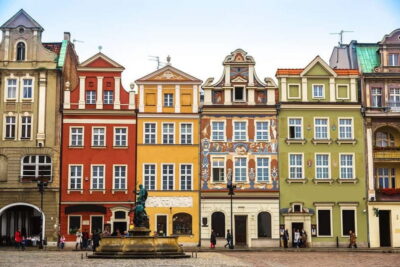
Poznan Old Town and Top Attractions Private Walking Tour
Read our review →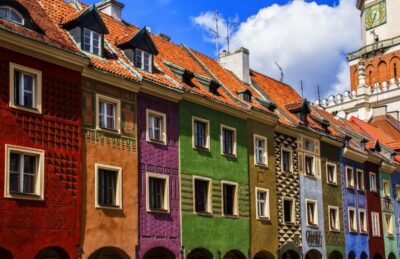
Poznan Private City Walking Tour from Cathedral Island
Read our review →
Browse the lists this tour appears in