
REVIEW · CYCLING TOURS
3-Hour Guided Bike Tour Highlighting Krakow
Krakow reveals itself quickly on two wheels. I like the gentle cycling pace and the way this small-group tour links the Old Town, Wawel, Kazimierz, and wartime sites in one outing. You also get a useful first look at neighborhoods that would take much longer to cover on foot.
The main consideration is that this is primarily an outdoor sightseeing tour, not a series of museum visits. The price is $46.44 per person, and the three hours offer good value if you want local commentary and broad city coverage, but less so if you prefer long stops inside attractions.
In This Review
- Key points to know before booking
- Why a bike is a smart way to meet Krakow
- Starting at the Barbican and St. Florian’s Gate
- Reading the Main Square through its landmarks
- Collegium Maius and Krakow’s academic past
- Meeting the Wawel Dragon
- A brief film stop at Mrs. Dresner’s courtyard
- Szeroka Street and the Jewish district
- Plac Bohaterow Getta and the years 1939 to 1945
- Oskar Schindler’s factory and the human story
- What the three-hour format really gives you
- Price, pace, and group size
- Who should book this Krakow bike tour
- Should you book it?
- FAQ
- How long does the Krakow bike tour last?
- Where does the tour start and finish?
- What is included in the price?
- What locations does the route visit?
- How large is the tour group?
- Can I cancel for a refund?
Key points to know before booking
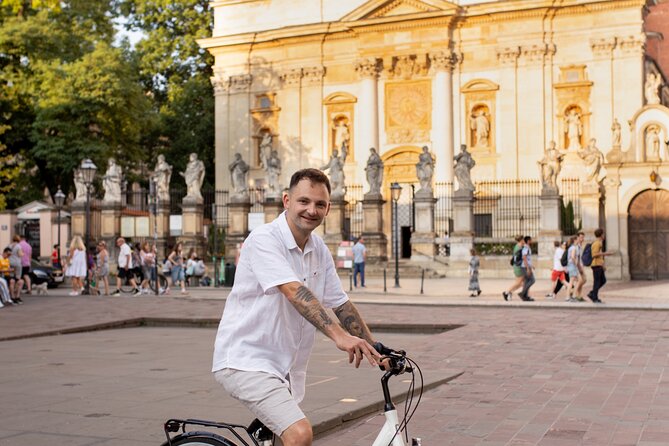
- A gentle three-hour route: The pace leaves room for stops, questions, and live narration rather than turning the ride into a workout.
- Small group, maximum nine people: This should make it easier to hear the guide and ask about Krakow’s past.
- Old Town and Kazimierz in one ride: You cover medieval Krakow, the Jewish district, wartime history, and Schindler-related locations.
- A stop at Plac Bohaterow Getta: This is one of the tour’s most serious and moving sections, with attention to Krakow between 1939 and 1945.
- No major admission fees included or needed: The listed stops are viewed from public spaces, while the bicycle and licensed English-speaking guide are included.
- Good for first-time visitors: The route gives you a working map of central Krakow before you explore on your own.
Why a bike is a smart way to meet Krakow
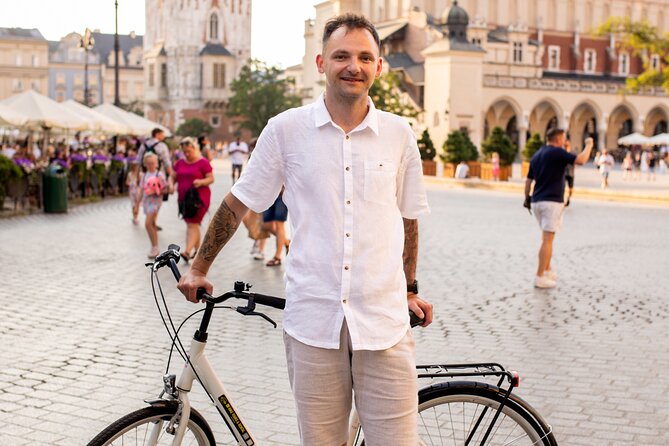
Krakow’s central sights are close enough to connect by bicycle, yet spread across several districts. A walking tour can cover the Main Square and nearby lanes well, but reaching Kazimierz, the ghetto memorial area, and Oskar Schindler’s former factory takes more time on foot.
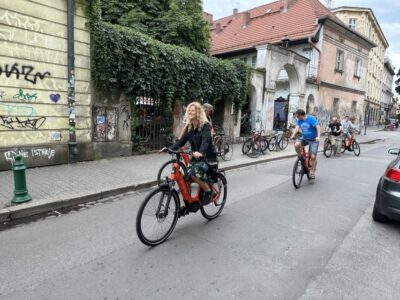
This tour uses the bicycle as a practical link between those areas. You are not simply riding past the city. The guide stops for short explanations, so you can place each neighborhood into Krakow’s larger story.
The pace matters. One rider described the three hours as passing quickly and praised the relaxed cycling and time for questions. That makes this a better fit for people who want to look around rather than race from one sight to the next.
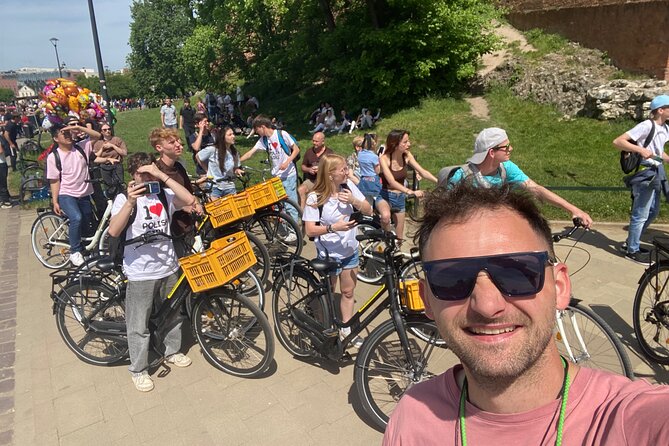
The group size is capped at nine. That is small enough for a more personal outing, especially when the guide is explaining a complicated subject such as the wartime fate of Krakow’s Jewish community. It also means the experience may feel less anonymous than a large city tour.
The tour begins and ends at ZeeTour, Rynek Główny 7. Since it returns to the same place, you can plan the rest of your day from the Main Square without arranging a separate ride back.
More Bike Tours in Kraków
- Complete Cracow Bike Tour (small group of maximum 15 people!)
★ 5.0 · 1,322 reviews - Krakow: Bike Tour of Old Town, Jewish Quarter and the Ghetto
★ 4.9 · 1,155 reviews - Highlights of Krakow Bike Tour – Small group
★ 5.0 · 662 reviews
Starting at the Barbican and St. Florian’s Gate
The first stop introduces Krakow’s medieval defenses. You see the Barbican, St. Florian’s Gate, and the Grunwald Monument, with about 20 minutes for the guide to explain how the old capital protected its northern entrance.
The Barbican is especially useful as a starting point because it gives you a physical sense of the city’s former walls and entry points. Rather than treating Krakow as a collection of pretty facades, the guide can show you how the medieval city was organized and defended.
St. Florian’s Gate connects that defensive story with the route into the Old Town. The Grunwald Monument adds a later layer of Polish national memory. You get several reference points before the tour moves into the heart of the city.
No admission ticket is listed for this stop. You should expect to see the sights from public areas, with the guide’s explanation doing most of the work.
Reading the Main Square through its landmarks
Rynek Glowny, Krakow’s Central Square, receives about 20 minutes. This is the visual center of the tour, with St. Mary’s Basilica and the Cloth Hall forming the key sights.
The guide uses the square to explain Krakow’s early development and medieval importance. That context is useful because the square can otherwise feel like a grand open space filled with cafes, horse carriages, and striking architecture. Here, you get a clearer idea of why it became the city’s main stage.
St. Mary’s Basilica gives the square its strongest vertical marker, while the Cloth Hall anchors its commercial past. You will not be given a long indoor visit at either sight, so plan a separate return if you want extended time inside.
I like this early stop because it helps you get your bearings fast. After the ride, you will know where the city’s central sights sit in relation to one another, which makes later wandering easier.
Collegium Maius and Krakow’s academic past
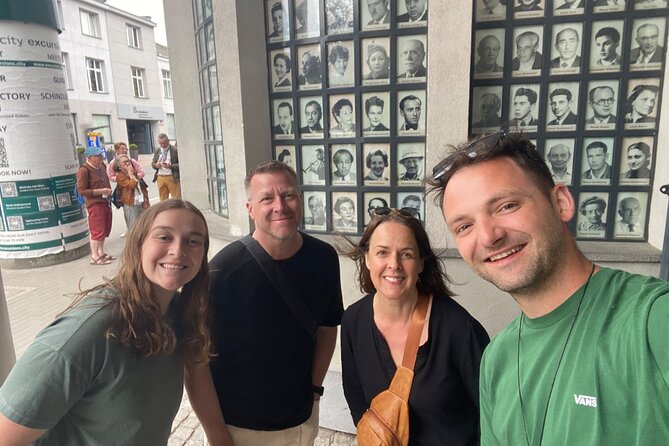
The tour then pauses for about 10 minutes at Collegium Maius, the oldest campus of Jagiellonian University. The guide discusses the university’s origins and its long academic tradition, including some of its famous graduates.
This is a short stop, so you should think of it as an introduction rather than a full college visit. The courtyard and historic setting provide a change of mood after the grand scale of the Main Square.
The stop also reminds you that Krakow was not only a royal and religious center. It was an important place for learning, and Jagiellonian University remains one of the city’s defining institutions.
If you enjoy architecture and academic history, you may want to return later for a longer visit. The bike tour gives you the setting and the basic story, then moves on before the pace slows too much.
Something quite different:
- From Krakow: Auschwitz-Birkenau Guided Tour & Hotel Pickup
★ 4.5 · 33,358 reviews - From Krakow: Auschwitz-Birkenau Guided Tour & Hotel Pickup
★ 4.5 · 29,340 reviews - Krakow: Auschwitz Guided Tour with Optional Hotel Pickup
★ 4.5 · 15,280 reviews - Krakow–Zakopane: Cable Car, Chocholow Baths, Cheese & Vodka
★ 5.0 · 10,720 reviews
Meeting the Wawel Dragon
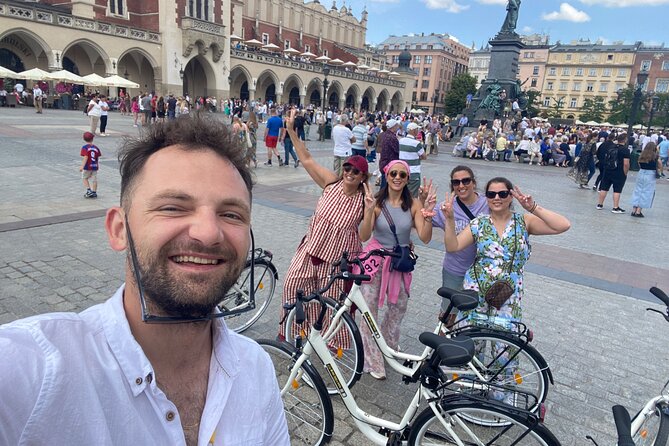
At the Monument of the Wawel Dragon, the guide tells Poland’s oldest legend and introduces Krakow’s famous mythical beast. The stop lasts about 10 minutes.
This is the tour’s lightest story, and it gives the historical material some breathing room. The dragon is tied to Wawel, the royal heart of Krakow, so the stop also points you toward the city’s legends and royal identity.
You should not expect a full tour of Wawel Castle as part of this experience. The itinerary includes the dragon monument, not admission to the castle complex. If Wawel is a main reason for your visit, reserve separate time for it.
Still, the dragon makes a good quick stop. It is memorable, easy to understand, and a welcome change before the tour turns toward film locations and the painful story of wartime Krakow.
A brief film stop at Mrs. Dresner’s courtyard
The ride continues to Mrs. Dresner’s courtyard and stairs, identified as a filming location from Schindler’s List. The stop lasts only about five minutes.
This is a small but distinctive detail. Film locations can help you connect familiar images with the actual streets of Krakow, especially if you know the movie well.
The short timing tells you what to expect. You will receive an explanation and see the location, but this is not a full film-history tour. The value comes from placing the scene in the real city and then continuing into Kazimierz and the wartime sites that give the subject greater weight.
Szeroka Street and the Jewish district
Szeroka Street is one of the most important stops, with about 25 minutes devoted to the Jewish community of Krakow. The guide explains the area’s role as the heart of the Jewish city and discusses the life and traditions of Krakow’s Jews.
This section gives the tour emotional and cultural depth. Kazimierz is not simply a picturesque district with restaurants and old buildings. Its streets carry the memory of a community that shaped Krakow for centuries and suffered a tragic fate during World War II.
The longer stop is welcome. You need time to look around and absorb what the guide is saying, particularly because the subject reaches beyond individual buildings. The tour connects the district’s earlier life with the destruction and displacement of its population.
I would pay close attention here and save questions for the guide. One of the strongest features of the outing is the chance to ask questions during the relaxed ride and at stops. A good question can turn a short explanation into a much clearer picture of the people who lived in this part of Krakow.
Plac Bohaterow Getta and the years 1939 to 1945
The tour then reaches Plac Bohaterow Getta, where about 15 minutes are devoted to Krakow during World War II. The guide discusses events from 1939 through 1945 and stops near the famous Eagle Pharmacy.
This is the most serious part of the route. The square is tied to the wartime Jewish ghetto, so the subject is not abstract. The guide’s role here is important: you need clear historical context to understand what happened in the square and why the nearby pharmacy matters.
The tour does not list an interior visit to the pharmacy. You should expect an outdoor explanation and a nearby view rather than a museum admission.
The stop also prepares you for the final Schindler connection. Instead of presenting Oskar Schindler as an isolated movie figure, the route places his actions within Krakow’s wider wartime story.
Oskar Schindler’s factory and the human story
The final stop focuses on Oskar Schindler and the place where he saved more than 1,000 lives during World War II. The factory is seen from outside as part of the route.
This is a meaningful finish because it brings together the preceding stops. You have seen the old Jewish district, considered the destruction of the ghetto, and then reached a site connected with people who were protected from that fate.
The tour does not include entry to the factory museum. If you want to go inside, plan that separately and allow extra time beyond the three-hour ride.
Even from outside, the stop has value when the guide explains Schindler’s role in context. The film location, Szeroka Street, Plac Bohaterow Getta, and the factory form a connected story, not a random set of sights.
What the three-hour format really gives you
Three hours is long enough to cover a lot of ground, but not long enough for extended visits at every location. The listed stop times add up to roughly 105 minutes, leaving the rest for cycling between districts and live narration.
That balance is sensible. You get movement, commentary, and repeated chances to stop without spending the whole outing parked beside one building.
The route includes medieval Krakow, university history, local legend, Jewish heritage, World War II, film history, and Schindler. That range is the main reason to book it early in your visit. You come away with a broad outline of the city and can then choose which places deserve a longer return visit.
A previous rider also found that the ride reached more neighborhoods than a walking tour would have covered. That is the practical advantage here. You see the relationship between the Old Town and Kazimierz instead of experiencing them as separate day plans.
The tradeoff is depth. If you want long, detailed discussions at each sight, three hours will feel brisk. If you want a clear introduction with enough detail to guide later sightseeing, the format works well.
Price, pace, and group size
At $46.44 per person, the tour sits in a reasonable range for a three-hour guided city activity, especially since bicycle use and a licensed English-speaking guide are included. You are paying for the route design, local interpretation, and the ability to cover several districts without arranging transport.
The value is strongest for a first visit. You see major landmarks, get basic city orientation, and hear stories that are harder to pick up from a casual walk.
The price is less compelling if you already know Krakow well or mainly want independent cycling. There are no listed attraction admissions, and the tour does not promise extended indoor visits.
The maximum group size of nine is another point in its favor. A small group can make stops easier and gives you a better chance to hear the guide. The guide named in the feedback was Zee, who was praised for a relaxed manner and strong command of the sites. He also made time for questions, which is exactly what you want on a history-heavy route.
Who should book this Krakow bike tour
I would choose this tour if you are visiting Krakow for the first time and want a quick but thoughtful orientation. It suits you especially well if you prefer moving through a city rather than spending three hours inside one attraction.
It is also a good choice if you want to combine the Old Town and Kazimierz in one morning or afternoon. The route gives you enough background to return later with a sharper sense of place.
You should have a moderate level of physical fitness. The ride is described as gentle, but you still need to cycle for about three hours and manage the stops between locations.
The outing is conducted in English. Service animals are allowed, and the meeting point is near public transportation. The tour requires good weather, so poor conditions can lead to a new date or a full refund.
I would be more cautious about booking it for someone who dislikes bicycles, needs extensive indoor seating, or wants a detailed museum tour. The experience is built around outdoor movement and short site visits.
You can cancel for a full refund up to 24 hours before the start time. Cancellations or changes within 24 hours are not refunded or accepted, and the provider may also cancel if the minimum group size is not reached.
Should you book it?
Book this tour if you want to cover Krakow’s main central districts efficiently while still hearing the stories behind them. The gentle pace, small group, and time for questions give it a more personal feel than a large bus outing.
I especially recommend it near the beginning of your stay. Use it to map out the Old Town and Kazimierz, then return to Wawel, the Jewish district, or Schindler’s factory for longer visits.
Skip it if you want admission to the museums and historic interiors themselves. For most first-time visitors who value orientation, context, and easy cycling, the $46.44 price is fair for three useful hours.
FAQ
How long does the Krakow bike tour last?
The tour lasts approximately three hours, including cycling between locations and live narration from the guide.
Where does the tour start and finish?
It starts at ZeeTour, Rynek Główny 7, 31-042 Kraków, Poland, and ends back at the same meeting point.
What is included in the price?
The price includes use of a bicycle, a licensed guide, and an English-language tour lasting around three hours.
What locations does the route visit?
The route includes the Barbican, St. Florian’s Gate, the Grunwald Monument, Krakow’s Main Square, Collegium Maius, the Wawel Dragon Monument, a Schindler’s List filming location, Szeroka Street, Plac Bohaterow Getta, and Oskar Schindler’s factory area.
How large is the tour group?
The tour has a maximum of nine people.
Can I cancel for a refund?
Yes. You can cancel at least 24 hours before the start time for a full refund. Cancellations or changes made less than 24 hours before the start time are not refunded or accepted. If poor weather or an insufficient number of participants cancels the tour, you are offered another date or a full refund.
Just added in Krakow
- Auschwitz-Birkenau – Skip the Line Tickets★ 3.5 · 29 reviews
- Auschwitz-Birkenau: Fast-Track Ticket & Guided Tour No Transfers★ 3.5 · 17 reviews
- Zakopane & Sleigh Ride with Bonfire – Group Tour from Kraków★ 5.0 · 2 reviews
- Sleigh Ride & Bonfire in Zakopane with Funicular – Private Trip★ 5.0 · 48 reviews
- Thermal Baths & Zakopane – Private Trip from Krakow★ 5.0 · 1 review
- Zakopane & Gubalowka Funicular – Private Winter Tour from Krakow★ 5.0 · 10 reviews
- stag dog chase Krakow prank★ 5.0 · 4 reviews
- Divine Mercy Sanctuary – Private Tour from Krakow★ 5.0 · 4 reviews
Cycling Tours, compared.
Complete Cracow Bike Tour (small group of maximum 15 people!)
Read our review →
Half-Day Warsaw City Sightseeing Bike Tour for Small Group
Read our review →
Browse the lists this tour appears in