
REVIEW · WROCłAW TOURS
Wroclaw To Stalag Luft Tour – The Great Escape Tour
History feels different in the forest. This private day trip from Wroclaw to Stalag Luft III takes you to the museum, reconstructed camp features, and the marked route of Tunnel Harry, the escape route made famous by The Great Escape. I like the door-to-door transport and the freedom to explore the museum at your own pace. I also like the local commentary provided by several of the drivers, who have added stories about Wroclaw, Sagan, and Poland along the way.
The main drawback is the drive. The museum is about two hours from Wroclaw, so much of this six-to-seven-hour outing is spent in the car. The site itself is moving and worthwhile, but the original camp has largely disappeared, and the visit does not include a formal guiding service.
In This Review
- Key points to know before you book
- Why Stalag Luft III is worth the long drive
- The drive from Wroclaw to Sagan
- Inside the Stalag Luft III and Stalag VIIIC museum
- Following Tunnel Harry through the forest
- What the private vehicle adds
- The role of the driver
- Timing, opening hours, and practical planning
- Who will get the most from this tour
- Should you book the Great Escape Tour?
- FAQ
- How long does the tour from Wroclaw to Stalag Luft III take?
- What is included in the tour price?
- Is lunch included?
- Is this a private tour?
- Is a guide included?
- When is the museum open?
- Can I cancel for a full refund?
Key points to know before you book
- The road trip takes about two hours each way, with comfortable private transport and a comfort stop reported on both legs by one group.
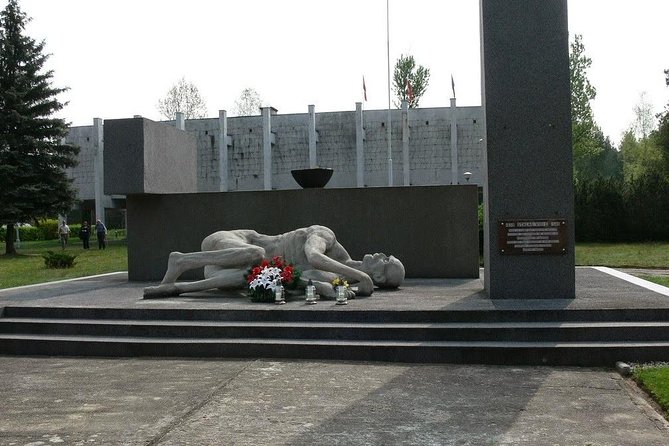
- You visit the Stalag Luft III and Stalag VIIIC POW Camps Museum, including its exhibition, a short film, original artifacts, a reconstructed hut, and a replica tunnel.
- Tunnel Harry is marked across the forest floor, giving you a clear sense of its direction and the scale of the escape attempt.
- Your group has a private air-conditioned vehicle, useful for families, couples, and small groups who do not want a shared coach.
- The price is about $154.57 per person, including transport, admissions, bottled water, and taxes, but not lunch or a dedicated guide.
- The strongest part of the experience is the driver service, with praise for punctual pickups, smooth driving, friendly conversation, and local knowledge.
Why Stalag Luft III is worth the long drive
Stalag Luft III is not a quick attraction near central Wroclaw. It is a destination for people who are willing to spend most of a day following one story to its actual setting.
The camp is tied to the famous 1944 escape attempt by Allied airmen. At the museum, you can see objects and displays connected with the prisoners, the camp, and the escape. In the forest, you can follow the route associated with Tunnel Harry and picture how far the tunnel had to run before reaching open ground.
I find that combination more useful than a museum visit alone. Exhibits give you names, dates, objects, and explanations. The outdoor site gives the story physical scale. You begin to understand the distance from the huts to the tunnel exit, the surrounding trees, and the danger faced by the men once they reached the surface.
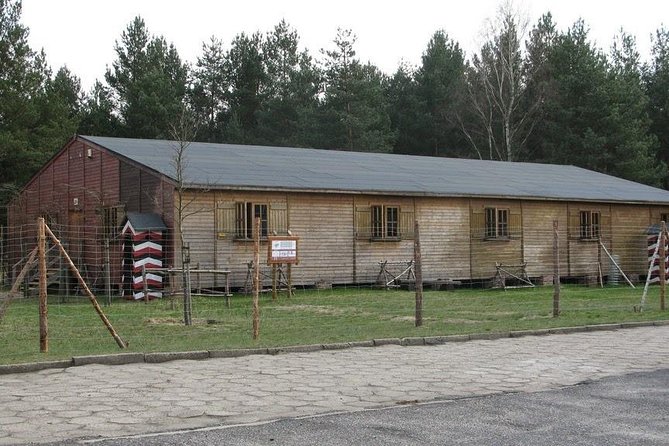
The setting is also a reminder that this is not a polished theme park. Much of the original camp is gone. You may see ruins, foundations, and traces rather than complete barracks or a large preserved compound. One reconstructed hut and a replica tunnel help, but you should arrive expecting an archaeological and memorial site, not a fully intact prison camp.
That limitation matters. If you need a guide to explain every detail, the absence of included guiding service may frustrate you. If you enjoy taking your time with displays and then forming your own picture of the site, the visit has more appeal.
A few more in Wroclaw
- Wroclaw: E-Car Tour and Audio Guide
★ 4.6 · 1,738 reviews - Wroclaw: 2-Hour Private Guided Tour by Electric Car
★ 4.8 · 805 reviews - Wrocław: Old Town and Ostrów Tumski Walking Tour in English
★ 4.8 · 311 reviews
The drive from Wroclaw to Sagan
The tour begins with pickup at your Wroclaw accommodation or another agreed meeting point. The private vehicle is air-conditioned, and the service is designed to take your group directly to the museum rather than place you on a large shared bus.
The journey takes roughly two hours in each direction. That makes the vehicle a major part of the experience, not just a way to reach the entrance. Several drivers have been praised for arriving on time, driving smoothly, and speaking excellent English. Drivers named in past accounts include Michal, Marcin, Michael, Gregory, Marc, Damian, Mikhail F., and Madji, though you should not assume a particular person will operate your trip.
The best driver experiences add context on the road. Damian provided background about Wroclaw, while Michal discussed Wroclaw and Polish history. Gregory pointed out landmarks and became pleasant company during the long ride. One driver also recommended a restaurant in Wroclaw that became a highlight of the group’s meals.
This is a useful feature, but keep expectations clear. The tour includes no dedicated guiding service. Your driver may offer local information and answer questions, but the amount of commentary can vary. If the escape story matters greatly to you, watch The Great Escape before leaving and read a little about Stalag Luft III in advance.
The drive also gives you time to adjust to the tone of the day. This is not a rapid succession of attractions. It is a focused outing with a long approach, a museum visit, time outdoors, and a return journey. Bottled water is listed as included, although one group was not offered any, so bringing your own bottle is still sensible.
Inside the Stalag Luft III and Stalag VIIIC museum
The museum is the first major stop and includes admission for about two hours. You can view the exhibition, watch a short film, and move through the displays without being tied to a group lecture.
The collection includes original artifacts, which give the visit much of its emotional force. Everyday objects connected with imprisonment and escape can say more than a large modern display. The material is not simply about military operations. It points toward the practical problems faced by prisoners: planning, concealment, tools, communication, and the sheer effort needed to prepare an escape.
A reconstructed hut, identified in the past as Hut 104, helps you understand the living conditions and the physical setting. The replica tunnel is another useful feature. It cannot reproduce the full danger or strain of the original work, but it gives you a bodily sense of the cramped route and the ingenuity behind the plan.
A short film adds another layer for visitors who want a basic introduction before walking around. You still have free time, which I see as a real benefit. Some people will want to read every panel. Others will prefer to focus on the artifacts, reconstruction, and film before moving outside.
The museum also places Sagan in a wider wartime setting. You may learn about the area’s role in German military training and about other prisoner-of-war camps. That wider view keeps the visit from becoming only a film-location pilgrimage. The famous escape is the hook, but the museum points to the larger system in which the camp operated.
One point to watch is the level of interpretation. The exhibition provides a lot of information, but not everyone will find answers to every question. A volunteer guide may be available at the museum, and arranging one in advance could make the visit stronger, especially if you have a family connection to a prisoner or a serious interest in military history. That service is not part of the private tour itself, so you should check availability before counting on it.
Following Tunnel Harry through the forest
The outdoor part is where the visit becomes especially vivid. A short drive from the museum takes you toward the original camp area, where only ruins and foundations remain.
The route of Tunnel Harry is marked in concrete across the surface. That simple marker may be the most powerful feature of the entire day. Instead of hearing only that the tunnel was long and difficult, you can follow its direction through the trees and understand how far the escape route extended.
The location of the tunnel exit helps you picture the final stage of the plan. The forest, the open ground, and the position of the old camp make the story easier to grasp. One account also describes seeing the location of the tunnel and a watchtower, details that help explain the risks after the prisoners emerged.
You will not find a complete set of original huts waiting in the woods. Foundations and scattered remains provide clues, but preservation is limited. Some visitors may wish the area had been presented more fully as a war memorial. That is a fair criticism, especially for anyone expecting a large, carefully reconstructed historic compound.
I would treat the outdoor visit as a place for quiet attention rather than a conventional sightseeing stop. Take time to look at the distance, the trees, and the route under your feet. The story becomes less abstract when you can stand near the place where the escapees would have tried to move away from the camp.
A stop in Sagan itself may also be possible depending on the day’s arrangements. One group visited the train station, where some escapees boarded trains after leaving the immediate area. The station was described as looking little changed from contemporary photographs. This stop is not clearly guaranteed, so ask your driver at the start of the day if it can be included.
Something quite different:
- Wroclaw: Private Old Town Guided Walking Tour (2 hours)
★ 4.8 · 275 reviews - Old Town Wrocław Walking Tour
★ 5.0 · 249 reviews - Wroclaw: City Tour Sightseeing By Golf Cart Shared Or Privat
★ 4.8 · 189 reviews - Auschwitz-Birkenau Tour from Wrocław
★ 5.0 · 129 reviews
What the private vehicle adds
At $154.57 per person, this is not the cheapest way to see a museum. The value comes from the combination of transport, admission, privacy, and time saved arranging the trip yourself.
A private vehicle means your group does not have to coordinate separate trains, buses, taxis, and rural connections. Pickup is offered, the car is air-conditioned, and the vehicle is reserved for your party. For two people, the per-person price may feel high. For a family or small group that can share the booking, it becomes easier to justify.
The private format also gives you room to ask for a comfort stop. One account describes a break in both directions, which is useful on a day with four hours of driving. You are not locked into the pace of a large coach, though the total schedule still depends on the museum opening hours and the agreed pickup time.
Lunch is not included. Plan to eat before departure, carry a snack, or ask about food options during the drive. Do not expect a full meal to appear in the price.
Taxes, museum fees, transportation, and bottled water are included. Group discounts are offered, so larger parties should check the final rate rather than assume the listed per-person amount is fixed.
The role of the driver
The driver can make or break a rural history outing. Here, the service receives especially strong praise for punctuality, communication, English ability, friendly manners, and careful driving.
Mikhail F. was described as arriving on time in a lovely car and driving with care. Marc was praised for service, driving, and historical insight. Marcin was valued for taking the group to key locations and answering questions. Madji was remembered as patient, unobtrusive, and informative.
Those descriptions point to the right expectation: you are buying a well-run private transfer with useful human contact, not a full lecture from a specialist historian. Some drivers provide extensive background about Wroclaw and Poland. Others may focus more on the road and practical arrangements.
I like that balance for independent visitors. You have someone to help with timing, directions, and local questions, while the museum time remains your own. If you want every artifact explained, arrange a volunteer guide at the museum if possible.
Timing, opening hours, and practical planning
The museum is listed as open Tuesday through Sunday, from 8:00 a.m. to 4:00 p.m. It is closed on Mondays according to the stated schedule. Since the drive from Wroclaw takes about two hours, an early start makes sense and leaves more room for the museum and outdoor remains.
The full experience lasts about six to seven hours. That estimate includes the long return journey, so you should not expect a full day of sightseeing around Sagan unless extra stops are arranged.
Wear comfortable shoes suitable for walking around uneven ground and forest paths. The supplied information does not specify the exact surface or distance, so practical footwear is safer than city shoes. Bring water even though bottled water is included, especially because one group found it was not proactively offered.
The experience is private, and only your own group participates. Most people can take part, and service animals are allowed. Confirmation is provided at booking. Free cancellation is available up to 24 hours before the start time, but changes or cancellations inside that window are not accepted for a refund.
The tour is offered in English. That makes it a practical choice for English-speaking visitors staying in Wroclaw who want a direct, low-stress route to the camp.
Who will get the most from this tour
I would recommend this outing first to people with a strong interest in World War II, prisoner-of-war history, aviation history, or The Great Escape. It is also meaningful for anyone researching a family connection to a prisoner held at the camp.
Families can benefit from the private format because the driver can keep the day at a manageable pace. A group of friends can also split the vehicle cost and enjoy a more relaxed journey than a shared excursion.
The trip is less suitable if you want a quick attraction close to Wroclaw, a fully guided museum tour, or a preserved camp with many original buildings. The long drive and sparse remains require patience.
Watching The Great Escape before you go is a smart preparation step. The film gives you the basic plot, while the museum and forest let you examine the real setting with more care. Just remember that the historical site may be quieter and less visually complete than the movie suggests.
Should you book the Great Escape Tour?
Book it if you want a private, practical way to reach Stalag Luft III and you are comfortable spending several hours in the car. The best parts are the marked Tunnel Harry route, original museum artifacts, reconstructed hut and tunnel, and the chance to have a driver such as Michal, Gregory, Marc, or Marcin add local context along the way.
The price makes the most sense for a small group that values door-to-door service. Solo visitors and couples should compare it with other transport options, but the convenience may still be worth paying for.
I would not book it expecting a fully guided memorial tour. I would book it as a well-organized private visit to an important but partly vanished site, then arrange a museum volunteer guide if you want more explanation. With that expectation, the 4.8 rating from 16 reviews and 100 percent recommendation make sense: the day is praised most for dependable drivers, personal service, and the powerful moment of following Tunnel Harry through the forest.
FAQ
How long does the tour from Wroclaw to Stalag Luft III take?
The experience lasts approximately six to seven hours. The museum is about two hours from Wroclaw by car, so the journey takes up a large part of the day.
What is included in the tour price?
The price includes bottled water, an air-conditioned vehicle, private transportation, museum admission, and all fees and taxes.
Is lunch included?
No. Lunch is not included in the tour price.
Is this a private tour?
Yes. Only your own group participates, and private transportation is provided for your party.
Is a guide included?
No dedicated guiding service is included. Drivers may provide local history and answer questions, but the amount of commentary can vary.
When is the museum open?
The stated opening hours are Tuesday through Sunday, from 8:00 a.m. to 4:00 p.m. The schedule lists the museum as closed on Mondays.
Can I cancel for a full refund?
Yes, if you cancel at least 24 hours before the experience begins. Cancellations or changes made less than 24 hours before the start time are not accepted for a refund.
Just added in Wroclaw
- Wroclaw: WW2 Tour to Project Riese & Gross-Rosen Museum★ 4.8 · 26 reviews
- Wrocław: World War II and the non-existent city of Breslau★ 3.6 · 3 reviews
- Wroclaw : Walking Custom Tour with a Local Guide★ 4.8 · 3 reviews
- Wroclaw: University Baroque Tour★ 5.0 · 19 reviews
- Wrocław: Tour of the Old Town in an Imperial E-car★ 4.3 · 13 reviews
- Wrocław: Venice of the North! Monuments on the Odra River 2h★ 5.0 · 2 reviews
- Wroclaw: 3-Hour Bike Tour in English or Polish★ 4.8 · 66 reviews
- Wroclaw to Rock City in Adrspach and Ksiaz Castle day trip★ 4.9 · 16 reviews
Wrocław Tours, compared.
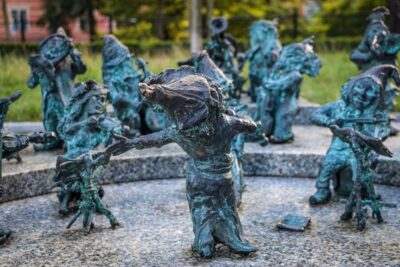
Old Town and Ostrów Tumski Walking Tour in English
Read our review →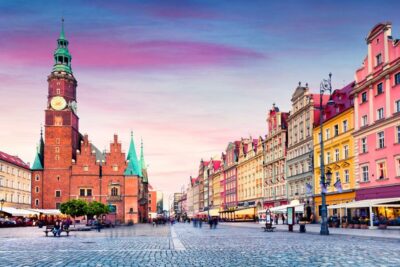
Private Old Town Guided Walking Tour (2 hours)
Read our review →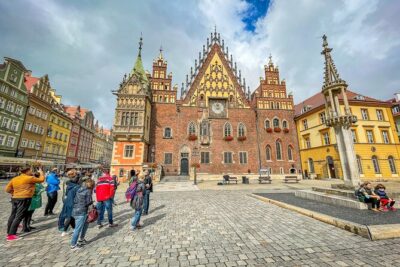
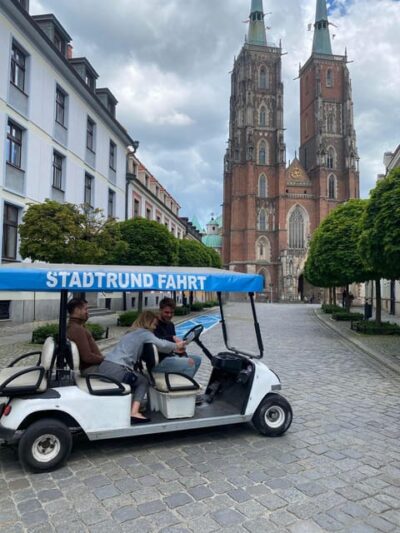
City Tour Sightseeing By Golf Cart Shared Or Privat
Read our review →
Adršpach: The Chronicles of Narnia Tour with Guide
Read our review →Browse the lists this tour appears in