
REVIEW · COMMUNISM TOURS
Tour of Communist Prague and Nuclear Bunker
The bunker door opens onto another Prague. This Spanish-language walking tour links Wenceslas Square, socialist-era buildings, political headquarters, and an underground Cold War museum. I like the clear two-part design: first, you walk through the city where Communist life played out, then you visit a nuclear bunker beneath the Jalta Hotel.
I also like the focus on ordinary life, not just dates and leaders. You hear how state companies worked and how local people viewed their daily routines. The main consideration is the timing information: the activity is listed as lasting 60 hours, while the guided visit itself is described as 2.5 hours. Confirm the exact start and end time before booking.
In This Review
- Key points to know before you go
- Wenceslas Square and the opening view of Communist Prague
- Socialist buildings that explain everyday life
- Political headquarters and the machinery of the state
- The Velvet Revolution and Prague after the changes
- Entering the nuclear bunker beneath the Jalta Hotel
- How the 2.5-hour route works
- Is $40 a fair price?
- Who will get the most from this experience?
- Practical details before booking
- Should you book the Communist Prague and Nuclear Bunker tour?
- FAQ
- Where does the tour begin?
- Where does the tour end?
- How do I identify the guide?
- What language is the tour offered in?
- How long does the guided tour last?
- Why does the activity information say 60 hours?
- What is included in the price?
- Where is the nuclear bunker?
- What does the Cold War Museum cover?
- How much does the tour cost?
Key points to know before you go
- Start at the National Museum: The route begins by the main entrance, with Wenceslas Square as your first major setting.
- See socialist Prague in context: The walk covers typical Czech socialist architecture, former state-company headquarters, and political locations.
- Finish underground: Entry to the nuclear bunker beneath the Jalta Hotel is included.
- Learn about Cold War defense: The museum covers the Warsaw Pact, defense systems, missile range, uniforms, and weapons.
- Spanish-speaking guide: The tour is led in Spanish, and Andrés received especially warm praise for his care and attention.
- Budget about $40: That price includes the guided tour and bunker admission, making the experience most useful for history-minded visitors.
Wenceslas Square and the opening view of Communist Prague
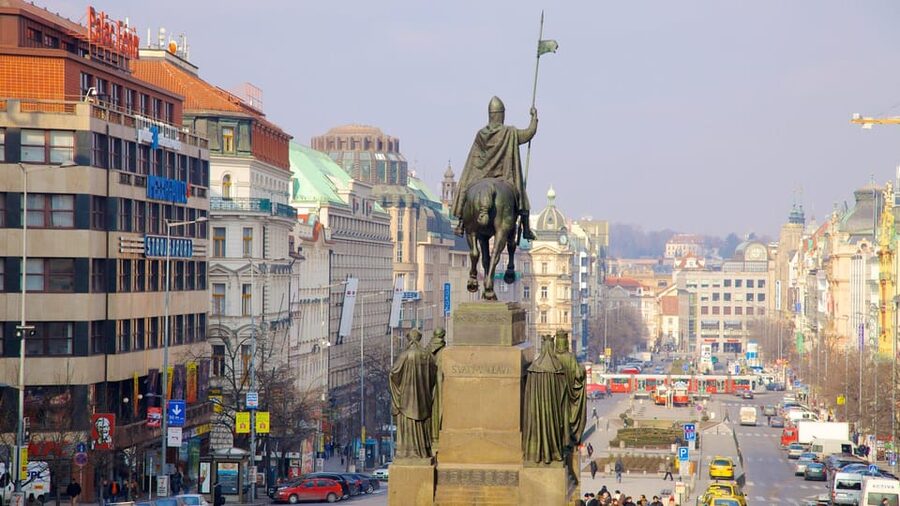
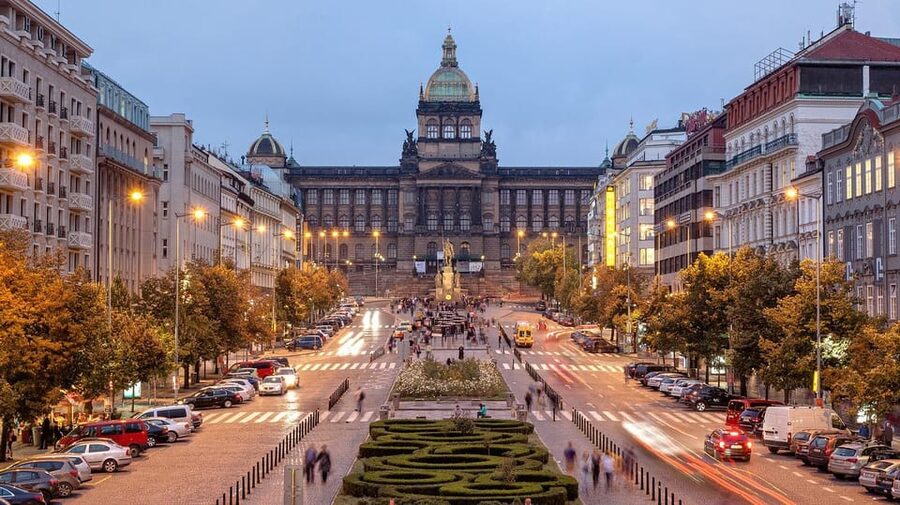
The tour begins at Národní Muzeum, the National Museum. Look for the guide with a gray umbrella. From here, Wenceslas Square gives you an immediate sense of Prague’s political and commercial importance during the Communist period.
You will see the old parliament site and former important stores. These places help set up the main theme of the walk: Communist Prague was not an abstract political system sitting somewhere far away. It shaped shopping, work, public space, political speech, and the way people moved through the city.
I like beginning here because the square connects several periods at once. You are not only looking at older Prague architecture. You are also standing in a place tied to modern political change, including the Velvet Revolution and the first years after the Communist system shifted.
The square is an active central area, so the tour begins in a place that is easy to locate. That is helpful if you are visiting Prague for the first time. The meeting point is simple, but the gray umbrella matters, especially if several groups gather near the museum entrance.
More Communism Tours in Poland:
- Legendary Private Nowa Huta Communism Tour with Crazy Guides
★ 5.0 · 262 reviews - Private Tour: Warsaw’s Communist History by Retro Fiat
★ 5.0 · 115 reviews - Krakow: Private Nowa Huta Adventure Tour in Communist Cars
★ 4.9 · 114 reviews
Socialist buildings that explain everyday life
After the opening section, the guide takes you along streets lined with typical Czech socialist architecture. The value here is less about finding one famous monument and more about learning how a period expressed itself through ordinary buildings.
The tour places architecture beside social history. You hear about state companies that once had major headquarters in the city. You also learn how those companies operated and how local people viewed their daily routines. That practical angle makes the walk more useful than a route that only names buildings and political figures.
I appreciate this part because it can change the way you look at Prague. A plain office block may seem unremarkable until you learn what happened inside it, who controlled it, and how its employees fit into the state system. You get a better sense of how work and public life were organized.
The information provided does not identify every building in advance. That means you should expect the guide to provide much of the meaning as you walk. If you prefer a tour built around a long list of famous landmarks, this may feel less satisfying. If you want context for places that are easy to pass without noticing, it should be a better match.
Political headquarters and the machinery of the state
The route continues along a street where the current CCP political group headquarters is located. It also includes former headquarters of emblematic state companies from the period.
These stops add a political layer to the architecture. You are not simply hearing that a building belonged to a company or office. You hear how the institution functioned and how its role was understood by the public. That helps explain the difference between official ideals and everyday experience.
The tour appears to keep its focus on Prague itself rather than treating the city as a backdrop for a general lecture about the Cold War. I like that approach. The subjects stay tied to streets, buildings, and places you can actually see.
A Spanish-speaking guide is important here. Political history includes plenty of terms and ideas that can become confusing when translated quickly. The available information identifies the guide as Spanish-speaking throughout the visit, so Spanish-speaking visitors can ask questions and follow the explanations without relying on a phone or printed text.
One verified booking from Spain gave Andrés especially strong praise, noting that he was very good and took a great deal of interest in the experience. Since there is only one published rating, I would treat that as a positive sign about Andrés rather than proof of a broad performance record. Still, the comment matches what matters most on a history walk: attention, effort, and a guide who takes the subject seriously.
The Velvet Revolution and Prague after the changes
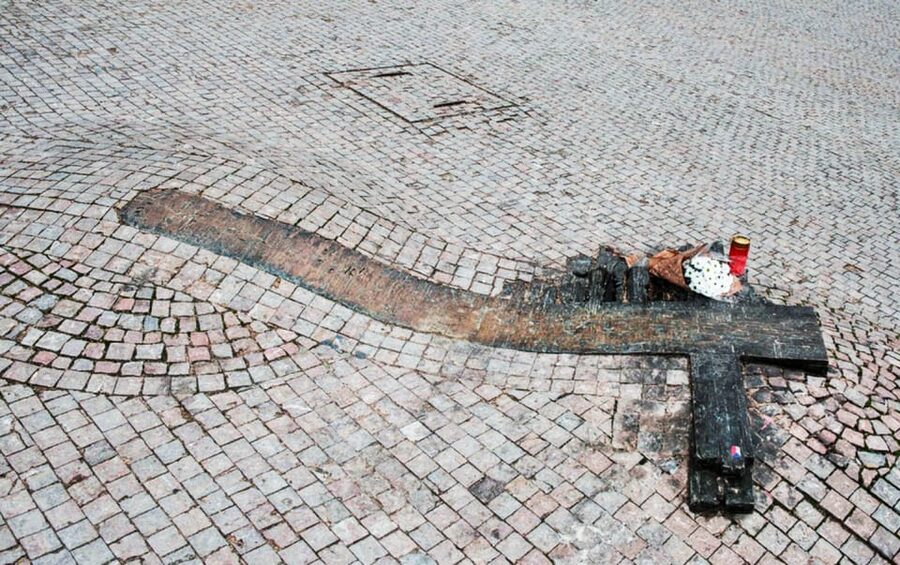
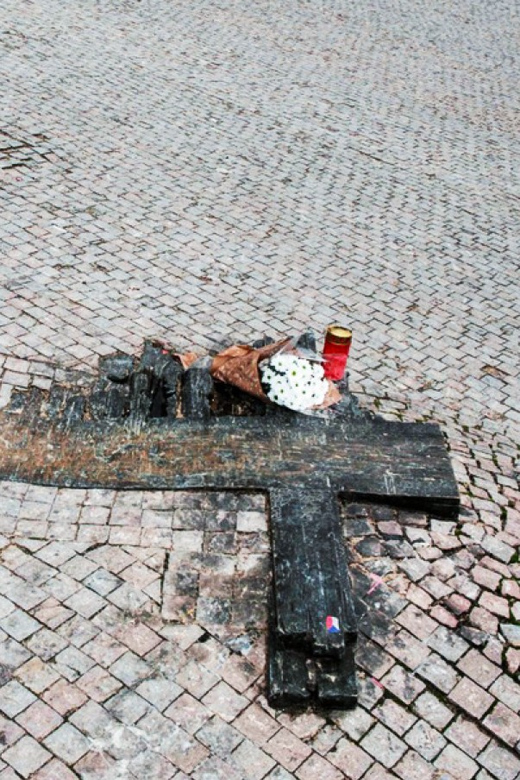
The later part of the city walk turns toward places connected with the Velvet Revolution and the first years after the political changes. This is an important bridge in the route.
Without it, a Communist Prague tour could leave you with a frozen picture of the past. The final city stops show that the story continued after the system changed. You can connect the older state institutions and public routines with the political transition that followed.
The supplied details do not name each Velvet Revolution site, so I would not book this expecting a precise catalog of monuments. Instead, think of this section as a guided explanation of change in place. The guide helps connect the city you see now with the structures and habits that came before.
I like the route’s order. You begin with public space and commerce, move through architecture and state companies, then reach political change. That progression gives the tour a clear shape before you go underground.
Something quite different:
- From Krakow: Auschwitz-Birkenau Guided Tour & Hotel Pickup
★ 4.5 · 33,358 reviews - From Krakow: Auschwitz-Birkenau Guided Tour & Hotel Pickup
★ 4.5 · 29,340 reviews - Krakow: Auschwitz Guided Tour with Optional Hotel Pickup
★ 4.5 · 15,280 reviews - Krakow–Zakopane: Cable Car, Chocholow Baths, Cheese & Vodka
★ 5.0 · 10,720 reviews
Entering the nuclear bunker beneath the Jalta Hotel
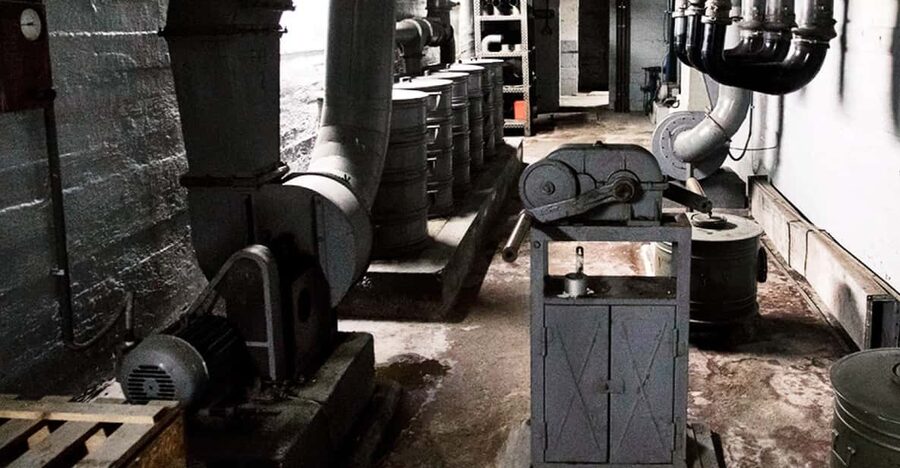
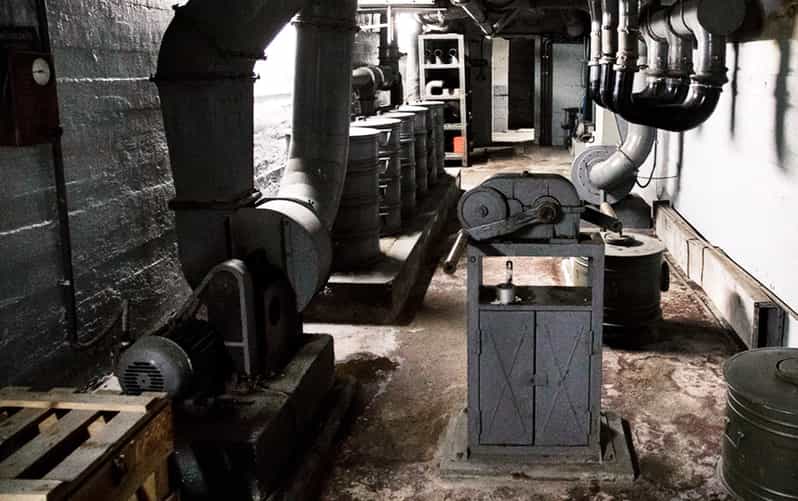
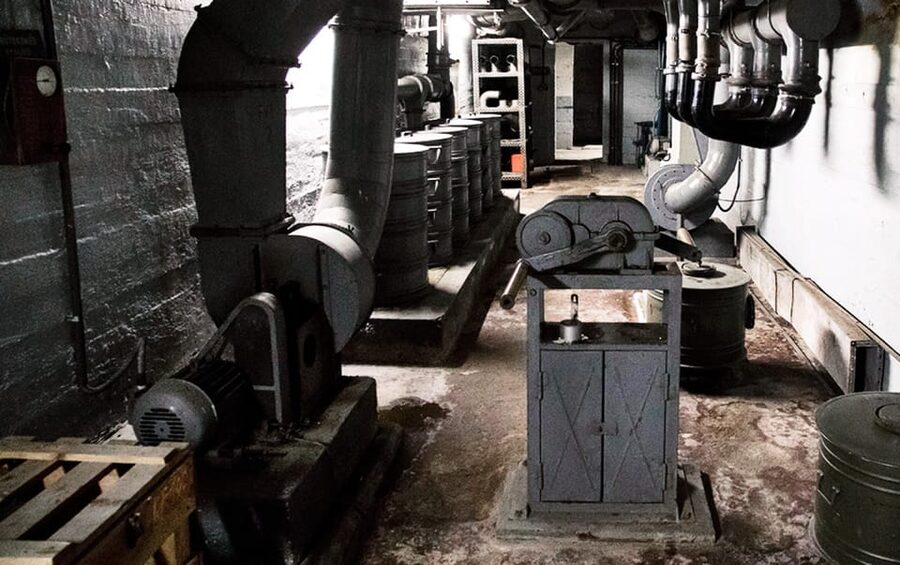
The final stop is the tour’s most unusual feature: a nuclear bunker under the Jalta Hotel on Wenceslas Square. The bunker was built as a defensive structure, and the rooms with their thick walls are now arranged as a Cold War Museum.
Entry is included in the tour price. That matters because the bunker gives the walking route a physical finish. Instead of ending with a final explanation outdoors, you move into an actual underground defensive space connected with the period you have been discussing.
You will hear about the Warsaw Pact, defense systems, and missile range. The museum also presents uniforms and weapons used at the time. These objects give the political story a more concrete edge. You can consider not only which governments belonged to which alliances, but also how military systems, equipment, and fear shaped the era.
I find the bunker especially useful for visitors who want more than architecture. The city walk explains how Communist rule appeared in public life. The museum then shows the military tension behind that system. Those two parts belong together.
The details do not say how many rooms you enter, how narrow the passages are, or how much time is spent inside the museum. You should therefore avoid assuming that this is a long bunker expedition. It is a visit to a Cold War Museum located in the underground bunker, included as the final point of a 2.5-hour guided experience.
How the 2.5-hour route works
The stated itinerary begins and ends at Národní Muzeum, with Prague listed as the place visited. The guided portion is described as lasting 2.5 hours. That makes this a compact city experience rather than a full-day history program.
A route of this length should fit well into a Prague schedule. You can place it alongside other city sightseeing without giving up an entire day. At the same time, the subject is broad: Communist architecture, state companies, political offices, the Velvet Revolution, and a bunker museum all appear in one visit.
That creates a likely tradeoff. You get a useful overview, but some locations may receive only a short explanation. If one building or political event interests you greatly, you may want to ask the guide for more detail during the walk.
There is a clear inconsistency in the published timing. The activity information says 60 hours, while the itinerary says 2.5 hours and describes a return to the starting point. A 60-hour tour would not fit the rest of the description, so I would use the 2.5-hour figure as the practical guide, then confirm the schedule when checking availability.
Is $40 a fair price?
At $40 per person, the price includes the Spanish-speaking guide and entry into the nuclear bunker. I consider that reasonable for a focused historical walk with a paid museum visit at the end.
The value depends on what you want from Prague. If your main goal is to see the city’s best-known medieval sights, this tour will take time away from those priorities. If you already plan to visit the Old Town and Prague Castle, this provides a different side of the city, one tied to the 20th century and local political memory.
The bunker admission helps the price make sense. You are paying for more than a walk past exterior buildings. The guide provides the story, and the final stop gives you access to a specialized Cold War setting with information about alliances, missiles, defense, uniforms, and weapons.
The price is less compelling if you do not speak Spanish, since the tour is offered in Spanish. It is also less suitable if you want a broad sightseeing tour with many famous attractions. The route is specific, and its value comes from the subject.
Who will get the most from this experience?
I would choose this tour if you are interested in the Cold War, Communist governments, military history, political change, or the way ideology shaped ordinary city life. It should also suit Spanish-speaking visitors who want a guided explanation rather than a self-guided museum visit.
It is a good choice for a repeat visitor to Prague. You may already have seen the major historic center, and this route gives you a different way to read the city. The tour also works for first-time visitors who want modern political history alongside the usual architecture.
I would think twice if you dislike walking tours, have no interest in 20th-century history, or want a tour built around famous visual sights. The available information does not provide a group size, exact walking distance, or accessibility details, so ask the provider if any of those points matter to you.
The Spanish guide is the key factor. Andrés was praised for being attentive and deeply interested in the tour, but only one verified rating is available. I would book with positive expectations, while remembering that the guide assigned on your date could be different.
Practical details before booking
The meeting point is the main entrance of Národní Muzeum. Look for a gray umbrella, and allow enough time to find the guide in this central area.
The tour includes a live guide in Spanish throughout the visit. The bunker entrance is also included, so you do not need to arrange a separate admission for that final stop.
The provider is Los Torres s.r.o. The listed price is $40 per person. You can cancel up to 24 hours before the experience for a full refund, and the booking option allows you to reserve now and pay later.
Most important, check the starting time and stated duration. The activity information lists 60 hours, while the detailed route says 2.5 hours. That mismatch should be cleared up before you commit the time to your Prague plans.
Should you book the Communist Prague and Nuclear Bunker tour?
Book it if you want modern Prague explained through real streets, institutions, and a Cold War bunker. The combination is the main strength. You begin with public life around Wenceslas Square, continue through socialist architecture and state-company offices, then finish with military history underground.
At $40, the experience offers fair value for Spanish-speaking visitors who care about the subject and want a guide to connect the pieces. I would not choose it as a general introduction to Prague, and I would confirm the unusual duration listing before paying.
For the right audience, this is a practical way to see a Prague that many sightseeing routes leave out.
FAQ
Where does the tour begin?
The tour begins at Národní Muzeum, at the main entrance of the National Museum.
Where does the tour end?
The itinerary returns to Národní Muzeum.
How do I identify the guide?
Look for the guide carrying a gray umbrella.
What language is the tour offered in?
The tour is conducted in Spanish by a live Spanish-speaking guide.
How long does the guided tour last?
The detailed itinerary describes the guided Prague visit as lasting 2.5 hours.
Why does the activity information say 60 hours?
The activity information lists a duration of 60 hours, which conflicts with the 2.5-hour itinerary. Check the available start times and confirm the duration before booking.
What is included in the price?
The price includes the Spanish-speaking guide throughout the visit and entry into the antinuclear bunker.
Where is the nuclear bunker?
The bunker is located underground beneath the Jalta Hotel in Wenceslas Square.
What does the Cold War Museum cover?
It covers the Warsaw Pact, defense systems, missile range, and uniforms and weapons used during the period.
How much does the tour cost?
The listed price is $40 per person.
Just added in Poland
- Historical Walking Tour of Jewish Warsaw★ 5.0 · 68 reviews
- Deluxe Polish Food Tour Experience in Warsaw★ 5.0 · 19 reviews
- CO2-Offset Arrival Transfer from Warsaw Airport to Warsaw City★ 5.0 · 1 review
- Amazing photo walk through the Old town of Warsaw★ 5.0 · 32 reviews
- 8-day tour around Poland by private car★ 5.0 · 2 reviews
- 2 Hour Super Segway City Tour of Warsaw★ 5.0 · 5 reviews
- Electric Scooter Tour: Full Tour – 3-Hours of Magic!★ 5.0 · 3 reviews
- 2h Rental of Motorboat for 10 in Warsaw no License Needed★ 5.0 · 1 review
Communism Tours, compared.
Legendary Private Nowa Huta Communism Tour with Crazy Guides
Read our review →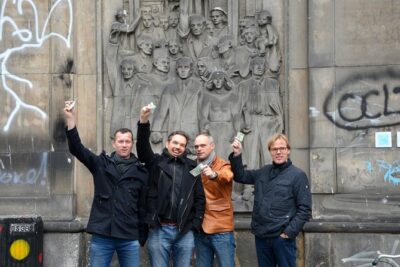
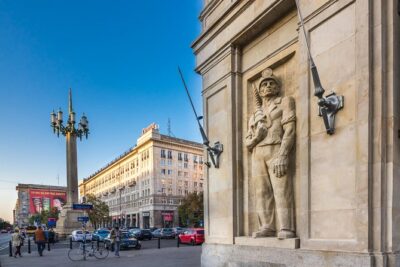
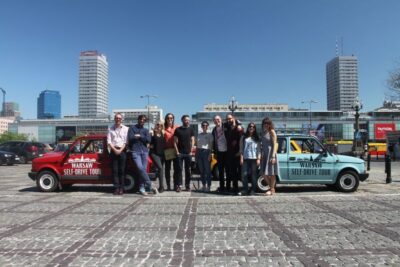
Private Tour: Warsaw’s Communist History by Retro Fiat
Read our review →
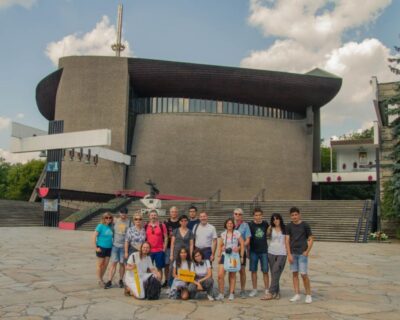
Private Nowa Huta Adventure Tour in Communist Cars
Read our review →
Communist Krakow – Nowa Huta Walking Tour in English
Read our review →Browse the lists this tour appears in