
REVIEW · WROCłAW TOURS
The Pearl of the European Baroque – former Cistercian Abbey in Krzeszow Tour
Baroque splendor waits beyond Wroclaw. This 8-hour outing combines Bolkow Castle with the remarkable Krzeszow Abbey, then adds a short stop in Chelmsko Slaskie to show how the Cistercians shaped both art and local industry. I like the well-planned three-stop route and the small maximum group of eight, which should make the long day more personal. I also like that entrance tickets to both the castle and abbey are included.
The main drawback is the amount of driving. Bolkow is about an hour from Wroclaw, and Krzeszow lies farther south, so this is best for you if you want a full day beyond the city rather than a relaxed morning nearby. Lunch is not included, and the tour material gives no firm restaurant or menu details, so plan to pay separately.
In This Review
- The day at a glance
- Why this tour is worth considering from Wroclaw
- Bolkow Castle brings the Middle Ages to life
- Krzeszow Abbey, the heart of the outing
- St. Joseph’s Church and the Silesian Sistine Chapel
- The Basilica of the Assumption of the Holy Virgin
- What the Cistercians contributed to Lower Silesia
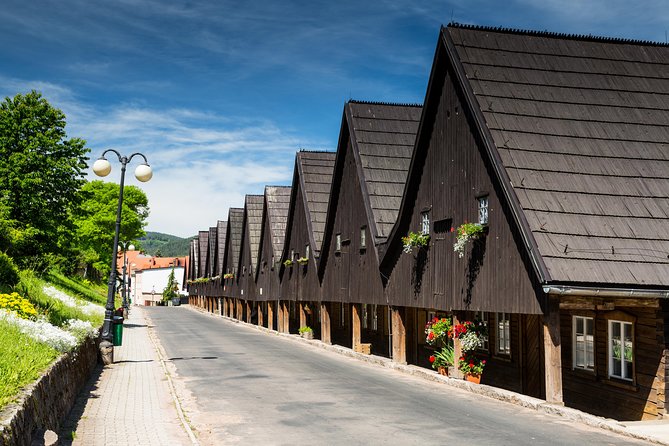
- Chelmsko Slaskie and the twelve wooden houses
- Group size, guide, and the road between stops
- Is $151.23 a fair price?
- What the available feedback can and cannot tell you
- Who should book this day trip?
- Practical details before you book
- Should you book the Krzeszow Abbey tour?
- FAQ
- Where does the tour start?
- What time does the tour begin?
- How long does the experience last?
- Where does the tour end?
- Is lunch included?
- Which admissions are included?
- What languages are offered?
- How many people can join the tour?
- Are service animals allowed?
- Can I cancel for a full refund?
- Is the tour suitable for most people?
The day at a glance
- A medieval start at Bolkow Castle: Spend about an hour among Piast-era walls, a fortified tower, and broad views over the surrounding countryside.
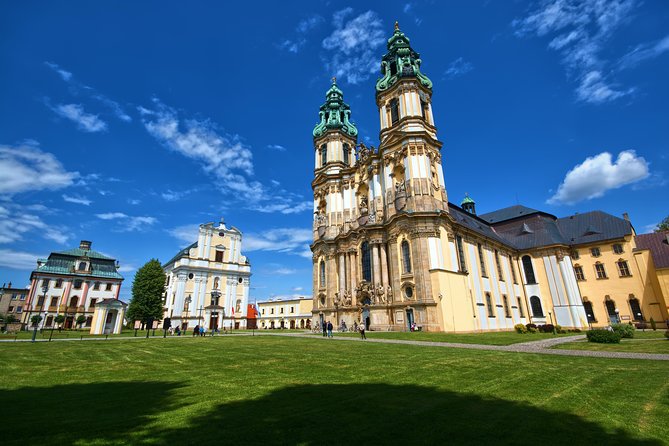
- Two churches at Krzeszow Abbey: See St. Joseph’s church and the Basilica of the Assumption, both included in the admission price.
- Michael Willmann’s frescoes: St. Joseph’s is known as the Silesian Sistine Chapel because of the work of this important Silesian painter.
- Twelve wooden weavers’ houses: Chelmsko Slaskie preserves original 18th-century homes linked to flax production.
- A small English-speaking group: The maximum group size is eight, with an English, German, or Spanish-speaking guide-driver.
- A full-value day trip: At $151.23 per person, the price covers transport, guiding, and two major admission tickets, but not lunch.
Why this tour is worth considering from Wroclaw
Wroclaw has enough churches, squares, and riverside walks to fill several days. Still, Lower Silesia rewards anyone willing to leave the city. The countryside holds castles, monastic complexes, old craft towns, and layers of Polish, Silesian, and Cistercian history that you will not see on a standard city break.
This tour gives you three very different sights in one day. Bolkow provides a rugged medieval opening. Krzeszow shifts the mood to polished Baroque art and religious architecture. Chelmsko Slaskie brings the story back to ordinary work, wooden homes, looms, and flax.
I like that balance. You are not spending eight hours looking at churches alone, and you are not rushing through a string of unrelated photo stops. The route shows how power, faith, art, trade, and village life connected in this part of Poland.
The tour begins at 8:30 am at Kazimierza Wielkiego 19 in Wroclaw and returns to the same meeting point. Since the outing lasts about eight hours, you should expect most of the day to be committed. That is a fair trade if you have already seen the main sights in Wroclaw and want a broader view of Lower Silesia.
A few more in Wroclaw
- Wroclaw: E-Car Tour and Audio Guide
★ 4.6 · 1,738 reviews - Wroclaw: 2-Hour Private Guided Tour by Electric Car
★ 4.8 · 805 reviews - Wrocław: Old Town and Ostrów Tumski Walking Tour in English
★ 4.8 · 311 reviews
Bolkow Castle brings the Middle Ages to life
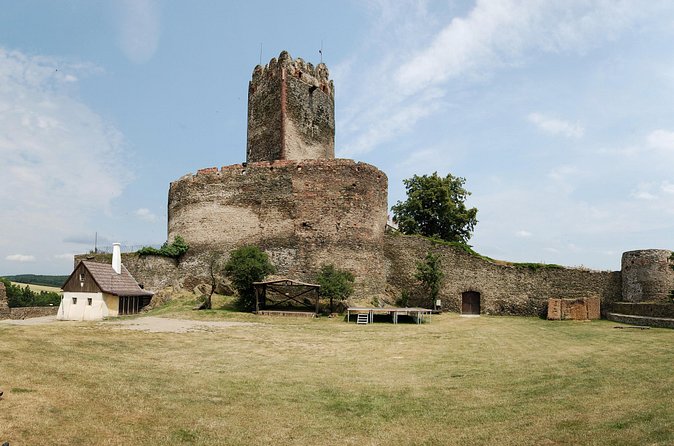
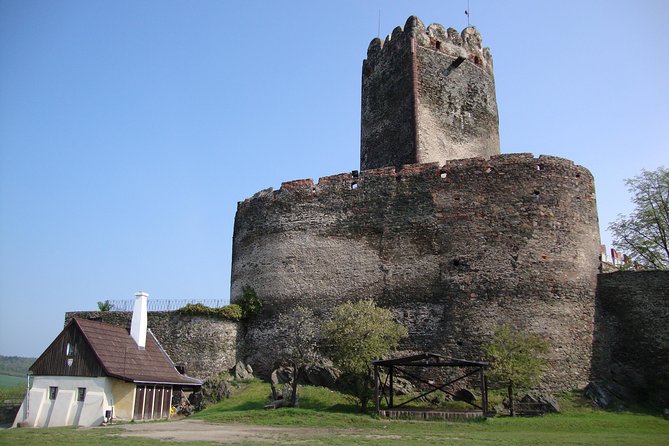
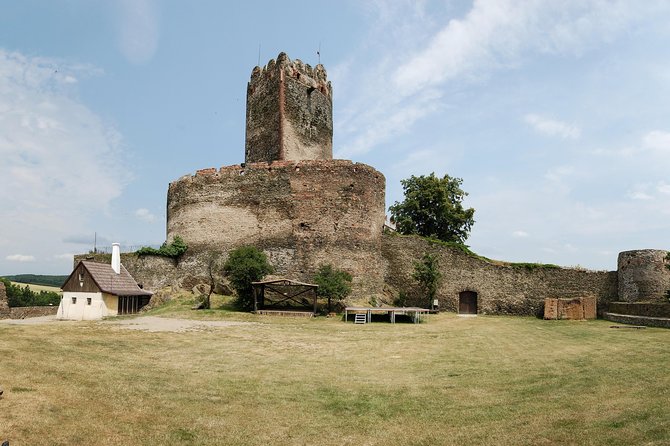
After roughly an hour on the road, the first stop is Bolkow Castle. The stronghold dates from the 13th century and is connected with the Piast dynasty, the first ruling house of Poland.
The castle’s appeal is easy to understand. Massive defensive walls and a fortified tower create the kind of setting where the medieval past feels close at hand. The tour allows about one hour here, with admission included, so you should have time to take in the main structure and hear stories tied to the castle.
I would treat this as a concentrated visit rather than a long archaeological tour. One hour is enough to appreciate the stonework, climb or view the defensive areas available during the visit, and enjoy the high views. It is not enough for a slow examination of every corner, especially if you like reading every display.
The guide-driver adds value at this stop. Castle ruins can be hard to understand when you see only walls and a tower. Legends and local stories help explain why the site mattered, while the view gives you a clearer sense of its defensive position.
This is also a good place to start the day. The castle offers a physical contrast to the ornate churches later on. You begin with hard stone and military purpose, then move toward frescoes, sculpture, and elaborate religious design.
Krzeszow Abbey, the heart of the outing
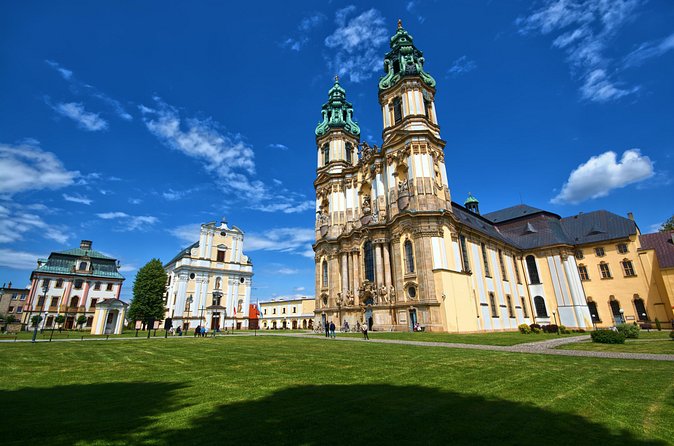
The main event is Krzeszow Abbey, often called the Silesian Pearl of Baroque. You have about 90 minutes at the complex, with admission included.
That time is short for a large religious site, but the itinerary focuses on two churches. This keeps the visit practical and prevents the abbey from becoming an exhausting architectural marathon.
St. Joseph’s Church and the Silesian Sistine Chapel
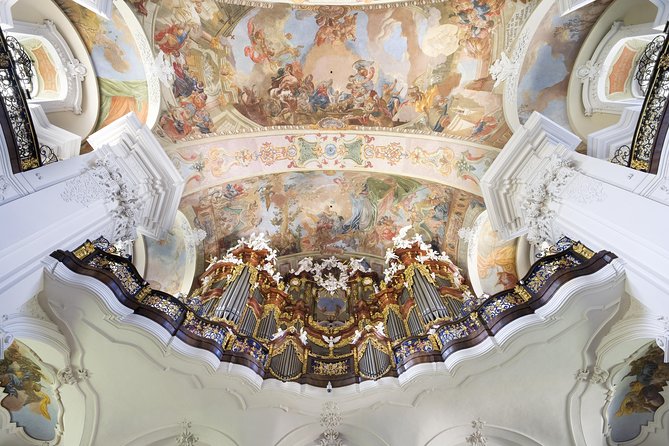
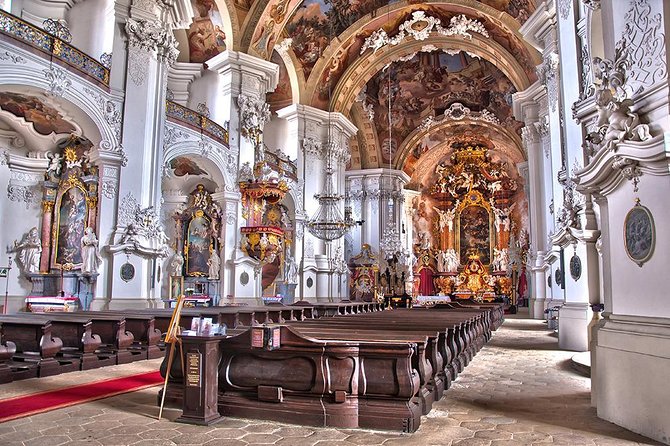
St. Joseph’s church is the artistic highlight for many visitors. Its frescoes were created by Michael Willmann, a major Silesian painter, and the church has earned the nickname Silesian Sistine Chapel.
The comparison is useful as a quick guide, but you should not expect a copy of the Vatican. The point is the scale and visual force of the painted decoration. Look up as you move through the church. The frescoes are meant to be read as a complete religious story, not just admired as isolated pictures.
I especially like that the tour identifies the artist by name. Without that context, a decorated church can blur into the next one. Knowing that the paintings belong to Willmann’s work gives you a better reason to pause and compare the scenes, figures, and use of space.
If Baroque art interests you, this stop alone may justify the trip from Wroclaw. If ornate interiors are not your main interest, the guide’s explanation of the Cistercian legacy should help give the building a wider meaning.
Something quite different:
- Wroclaw: Private Old Town Guided Walking Tour (2 hours)
★ 4.8 · 275 reviews - Old Town Wrocław Walking Tour
★ 5.0 · 249 reviews - Wroclaw: City Tour Sightseeing By Golf Cart Shared Or Privat
★ 4.8 · 189 reviews - Auschwitz-Birkenau Tour from Wrocław
★ 5.0 · 129 reviews
The Basilica of the Assumption of the Holy Virgin
The second church is the Basilica of the Assumption of the Holy Virgin. Its interior is described as highly ornate, with the lavish decoration associated with the Baroque period.
Here, I would pay attention to the overall effect rather than trying to record every detail. Baroque churches are designed to surround you with movement, color, sculpture, and religious imagery. The experience is theatrical, but it also reflects the wealth and influence of the Cistercian order in Lower Silesia.
The abbey is valuable because it shows that the Cistercians were not simply isolated monks in plain buildings. They supported ambitious art, managed productive estates, and helped shape local religious and economic life. The contrast between spiritual purpose and worldly resources is part of what makes Krzeszow interesting.
You should have some free time after the church visit for lunch. Food is not included, so bring money for the meal. Since no specific dishes or restaurant are promised, I would ask the guide early in the day what the available lunch plan will be and how much time you have.
What the Cistercians contributed to Lower Silesia
The tour’s strongest subject is the Cistercian legacy. At Krzeszow, you see their religious influence through monumental churches and commissioned art. At Chelmsko Slaskie, you see another side of their work: economic planning and local industry.
That connection matters. It is easy to look at an ornate abbey and think only about decoration. The final stop helps explain how an institution with artistic ambition also contributed to economic growth.
The Cistercians were successful landowners and organizers. In this region, their influence reached beyond worship into farming, trade, and textile work. The tour presents that story through actual buildings and workshops rather than only through a lecture.
The result is a better understanding of why Krzeszow became so important. The abbey was not an isolated monument. It belonged to a wider network of communities and productive activity.
Chelmsko Slaskie and the twelve wooden houses
On the return journey, the group stops in Chelmsko Slaskie for about 30 minutes. The town preserves twelve original wooden houses built for flax weavers.
This is a small stop, but it adds a human scale to the day. At Bolkow, you see military power. At Krzeszow, you see religious and artistic power. In Chelmsko, you see homes and workshops connected with everyday labor.
The houses retain original work areas with handheld tools and wooden looms. That detail makes the stop more than a quick look at old façades. You can connect the buildings with the people who worked there and with the textile economy encouraged by the Cistercians.
Thirty minutes will pass quickly. You will not have time for a long museum visit or an extended walk through town. Still, the compact stop works well after the abbey. It breaks up the return drive and gives you a final example of how the order’s influence reached ordinary households.
If you prefer grand architecture, Chelmsko may feel less dramatic than the abbey. I would see it as a useful finishing note rather than the main attraction.
Group size, guide, and the road between stops
The tour has a maximum of eight participants. That is a strong point for a day with several stops. A small group can usually move faster, make short visits less awkward, and allow more direct questions for the guide-driver.
The guide-driver may speak English, German, or Spanish. English is offered for this departure, but the information provided does not name the individual guide. You should not book expecting a particular person.
Transport is built into the experience, and the meeting point is central enough to be near public transportation. You do not need to arrange separate transfers to Bolkow, Krzeszow, or Chelmsko. The downside is that this is a road-based day, with about an hour of driving before the first stop and additional travel between the sites.
Most people can participate, and service animals are allowed. The information does not specify the amount of walking, stair access, or surface conditions at the castle, so anyone with mobility concerns should ask before booking.
Is $151.23 a fair price?
The listed price is $151.23 per person. That is not a cheap day trip, but the value depends on what you would otherwise need to arrange.
The fee includes a guide-driver and admission to Bolkow Castle and Krzeszow Abbey. It also gives you transport from Wroclaw and back, which is important because these three stops are spread across Lower Silesia. Renting a car, paying for fuel, handling directions, and buying the same admissions separately could reduce the price difference, but it would also place all the driving and planning on you.
The small group helps justify the cost. A maximum of eight people is more appealing than a large coach when the day includes a castle, two churches, and a historic village. You are paying for access and convenience, not just a seat in a vehicle.
Lunch is extra, so add that to your budget. Group discounts may be available, which could improve the value for families or friends booking together. The activity is often booked around 19 days ahead, so I would not leave it until the last morning if your Wroclaw schedule is fixed.
What the available feedback can and cannot tell you
The experience currently carries a top rating based on only two ratings. That is too small a sample for me to treat as firm proof of consistent quality.
More importantly, the written comments supplied with the experience appear to concern a clean house in Mesagne, a welcoming host named Gianluca, and a pleasant city weekend with churches and pizza. Those details do not match a Lower Silesian castle and abbey day trip. I would not use them to judge the vehicle, guide, lunch arrangements, or sightseeing pace here.
The useful conclusion is simple: the rating is encouraging, but the written material provides no reliable evidence about this specific outing. Base your decision on the clear points that are available: the small group, included admissions, full-day schedule, and three distinct stops.
Who should book this day trip?
I would choose this tour if you have at least two or three days in Wroclaw and want to see more of southwestern Poland. It suits you especially well if you enjoy church interiors, medieval ruins, regional history, and small historic settlements.
It is also a good fit if you do not want to drive. The route would be difficult to reproduce comfortably without a car, and the guide-driver adds useful context at places that may have limited English explanation on site.
Art lovers should give the tour serious thought because of Michael Willmann’s frescoes and the Baroque interiors at Krzeszow. Families and small groups may also appreciate the eight-person limit and possible group discounts.
I would hesitate if your Wroclaw visit is short, you dislike long road days, or you want a slow lunch and plenty of free time. The schedule is full, and the 30-minute village stop is designed as an introduction, not a long exploration.
Practical details before you book
The tour starts at 8:30 am from Kazimierza Wielkiego 19, 50-043 Wroclaw, and ends back at that meeting point. Confirmation is sent within 48 hours, subject to availability.
Free cancellation is available up to 24 hours before the local start time. Changes or cancellations inside that 24-hour window are not accepted for a refund. The tour also requires a minimum number of participants, so if that minimum is not reached, you should be offered another date or experience, or a full refund.
Should you book the Krzeszow Abbey tour?
Book it if you want a structured, art-focused day beyond Wroclaw and value included transport, admissions, and a small group. The best parts are the contrast between Bolkow’s medieval defenses, Krzeszow’s grand churches, and Chelmsko’s humble wooden workshops.
Skip it if you want a flexible day or if the $151.23 price feels high before adding lunch. The feedback available is too limited and appears partly unrelated, so the strongest reasons to book are the route itself, the included tickets, and the chance to see Krzeszow without arranging a complicated independent trip.
FAQ
Where does the tour start?
It starts at Kazimierza Wielkiego 19, 50-043 Wroclaw, Poland.
What time does the tour begin?
The scheduled start time is 8:30 am.
How long does the experience last?
The tour lasts approximately eight hours.
Where does the tour end?
It ends back at the original meeting point in Wroclaw.
Is lunch included?
No. Lunch is not included, but free time and a lunch break are provided during the Krzeszow Abbey visit.
Which admissions are included?
Admission to Bolkow Castle and Krzeszow Abbey is included in the price.
What languages are offered?
The guide-driver can speak English, German, or Spanish. The experience is offered in English.
How many people can join the tour?
The maximum group size is eight participants.
Are service animals allowed?
Yes. Service animals are allowed.
Can I cancel for a full refund?
Yes, if you cancel at least 24 hours before the experience begins. Cancellations made less than 24 hours before the start time are not refunded.
Is the tour suitable for most people?
Most people can participate. The available information does not give detailed guidance about stairs, walking distances, or surface conditions at each stop, so you should ask ahead if you have specific mobility needs.
Just added in Wroclaw
- Wroclaw: WW2 Tour to Project Riese & Gross-Rosen Museum★ 4.8 · 26 reviews
- Wrocław: World War II and the non-existent city of Breslau★ 3.6 · 3 reviews
- Wroclaw : Walking Custom Tour with a Local Guide★ 4.8 · 3 reviews
- Wroclaw: University Baroque Tour★ 5.0 · 19 reviews
- Wroclaw: 3-Hour Bike Tour in English or Polish★ 4.8 · 66 reviews
- Wrocław: Tour of the Old Town in an Imperial E-car★ 4.3 · 13 reviews
- Wrocław: Venice of the North! Monuments on the Odra River 2h★ 5.0 · 2 reviews
- Wroclaw to Rock City in Adrspach and Ksiaz Castle day trip★ 4.9 · 16 reviews
Wrocław Tours, compared.
Old Town and Ostrów Tumski Walking Tour in English
Read our review →
Private Old Town Guided Walking Tour (2 hours)
Read our review →
City Tour Sightseeing By Golf Cart Shared Or Privat
Read our review →
Adršpach: The Chronicles of Narnia Tour with Guide
Read our review →Browse the lists this tour appears in