
REVIEW · GDAńSK TOURS
Solidarity Tour
The shipyard changed Poland forever. This three-hour private tour connects Gdansk’s Solidarity movement to real places, beginning at the European Solidarity Center and continuing through the former shipyard, old warehouses, and Lenin Gates. I like the strong museum visit and the chance to see parts of Gdansk that a standard Old Town walk skips. I also like that guides such as Bozena and Sebastian bring warmth, detail, and room for questions.
The main consideration is the price: $114.45 per person is a serious spend for three hours, especially if you are traveling alone. Still, the private format, museum admission, beverages, and local guide make more sense for couples, families, or small groups who want this important chapter explained clearly rather than pieced together on their own.
In This Review
- Key points about Gdansk’s Solidarity Tour
- Why Solidarity matters in Gdansk
- Starting at the European Solidarity Center
- Sala BHP and the Gdansk Agreement
- Walking through the former Gdansk Shipyard
- What the private format changes
- Is $114.45 per person a fair price?
- The guide makes the difference
- Weather, walking, and timing
- Who should book this experience?
- Should you book Gdansk’s Solidarity Tour?
- FAQ
- How long does the Solidarity Tour last?
- Where does the tour start and finish?
- Is admission to the European Solidarity Center included?
- Is the tour private?
- Is the tour offered in English?
- What happens if the weather is poor?
Key points about Gdansk’s Solidarity Tour
- Two hours inside the European Solidarity Center gives you the clearest introduction to the movement and life under communism.
- Sala BHP marks the place where Lech Wałęsa signed the Gdansk Agreement with the authorities of the People’s Republic of Poland.
- A walk through the former Gdansk Shipyard shows how an industrial site is changing into a district of clubs, galleries, and entertainment spaces.
- Lenin Gates and old warehouse areas bring the story out of the museum and onto the streets where it happened.
- A private English-language format lets you ask questions and keeps the pace focused on your group.
- Bozena and Sebastian receive especially warm praise for their energy, personal approach, and ability to explain a complicated period in plain language.
Why Solidarity matters in Gdansk
Gdansk is lovely in the usual postcard ways, with its rebuilt streets, riverside views, and grand historic buildings. But the city’s modern story is just as important. At the shipyard, a labor movement grew into a national force that challenged communist rule and helped change the political direction of Poland and other countries in Europe.
That is why this experience adds something a sightseeing walk cannot. You are not simply looking at old gates or entering another museum. You are following a chain of events through the places connected to them.
The subject can be complicated. It involves workers, the government, the Catholic Church, Lech Wałęsa, strikes, negotiations, and the daily pressures of life under communism. A good guide helps you understand how these pieces fit together without turning the outing into a dry lecture.
The strongest part of this experience is its balance. You get a large museum visit, but you also leave the building and walk through the working and changing shipyard area. That combination gives you facts first, then a sense of place.
A few more in Gdansk
- Gdansk: City Cruise on Historical Polish Boat
★ 4.8 · 2,913 reviews - Gdańsk: Sunset Cruise on a Historic Polish Boat
★ 4.9 · 977 reviews - Gdańsk City Sights & History Guided Walking Tour in English
★ 4.8 · 876 reviews
Starting at the European Solidarity Center
The tour begins at Europejskie Centrum Solidarności, or the European Solidarity Center, at Plac Solidarności 1. You spend about two hours here, and admission is included in the price.
That length matters. This is not a quick stop where you glance at a few displays and hurry onward. The center provides the main framework for understanding the struggle for a free Poland and the difficult years of communism. You can expect the guide to explain the movement, the people involved, and the effect it had on Gdansk and the country.
I like that the museum receives the largest share of the time. A shorter museum visit followed by a long walk might look more active on paper, but it would leave you with less context. Here, the tour gives you time to absorb the story before taking you to the locations tied to it.
The center is also useful if you arrive in Gdansk knowing only the broadest outline of Solidarity. You do not need a background in Polish politics to follow the visit. The guide’s role is important because the subject includes events and figures that can be hard to place in order.
Bozena has been praised for an energetic and engaging approach, while Sebastian is noted for giving a large amount of information and answering questions along the way. Those comments point to an important benefit of a private tour: if a date, name, or political detail is unclear, you can stop and ask instead of simply moving with a large group.
Plan on standing and walking during the museum visit. The tour requires a moderate level of physical fitness, and it operates in all weather, so sensible shoes and weather-ready clothing are wise.
Sala BHP and the Gdansk Agreement
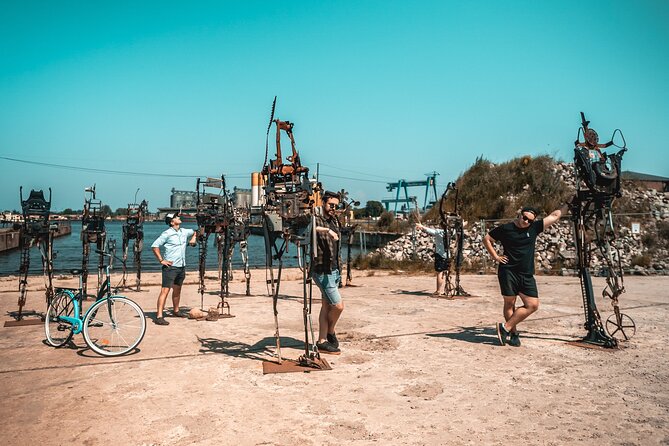
The next stop is Sala BHP, with about 20 minutes set aside and no separate admission charge. This is a small stop in time but a major one in meaning.
Here, Lech Wałęsa, the leader of Solidarity, signed the Gdansk Agreement with representatives of the contemporary authorities of the People’s Republic of Poland. The agreement is one of the key moments in the movement’s story, and standing in the place connected with it helps turn an abstract political event into something concrete.
I appreciate the way this stop follows the museum. After two hours of background, you can see one of the places where negotiations reached a decisive point. It gives the tour a useful rhythm: learn the story, then visit a location directly tied to it.
The 20-minute visit is brief, so do not expect a long independent exploration. The value comes from the guide’s explanation and the setting itself. If you enjoy asking questions, this is another point where the private format works well.
Walking through the former Gdansk Shipyard
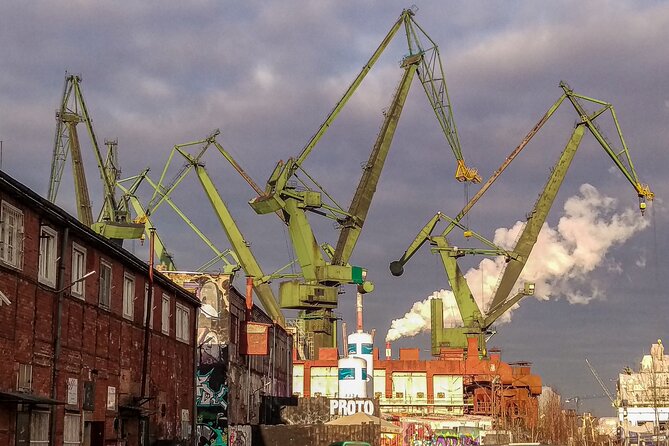
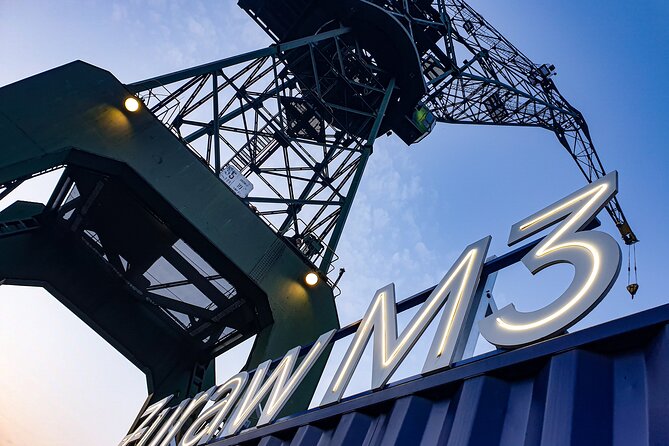
The tour then spends about 40 minutes in the Gdansk Shipyard area. The shipyard is still functioning, but it is also changing. New clubs, galleries, and entertainment centers are appearing among former industrial spaces and old warehouses.
This is where the experience becomes less like a museum tour and more like a walk through a city in transition. You get to see the physical setting connected to the movement, while also observing what is happening to the area today.
The visit to the shipyard is especially useful because it avoids confining the story to polished exhibition halls. The docks, gates, and warehouses give the subject a rougher, more industrial setting. The surroundings help explain why the shipyard was such a powerful place for workers and public action.
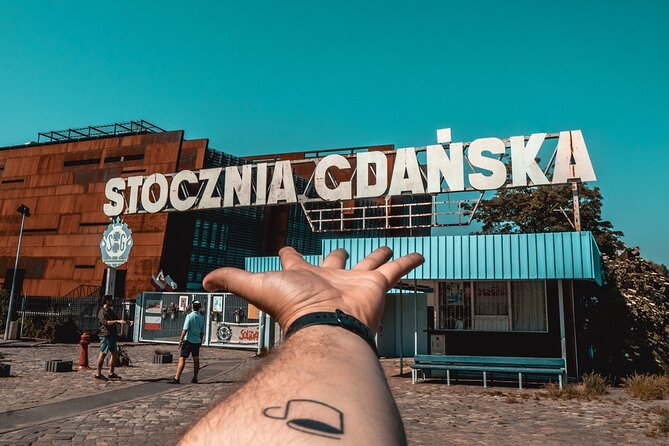
Lenin Gates are among the key landmarks included during the route. They connect directly to the shipyard’s past and give you a recognizable point from which to think about the events described in the museum.
The modern changes are part of the appeal, but they may also create a small tension. You are seeing a working area and a district being redeveloped, not a preserved historical stage. Some parts may feel less tidy or visually unified than Gdansk’s Old Town. I see that as part of the point, but anyone expecting a carefully restored historic quarter should adjust expectations.
Wear shoes suitable for a moderate amount of walking. The tour finishes back at the starting point, so you do not need to arrange transport from a different neighborhood.
Something quite different:
- Gdansk: Firearm Shooting Experience with Instructor
★ 4.8 · 866 reviews - Gdansk: Guided Round-Trip Cruise to Westerplatte
★ 4.3 · 865 reviews - Gdańsk: Sightseeing EcoCruise around the Old Town of Gdansk
★ 4.6 · 719 reviews - Main Town Gdańsk Walking Tour
★ 5.0 · 644 reviews
What the private format changes
This is a private activity, meaning only your group participates. That is a major advantage if you want to discuss the subject rather than simply listen.
The Solidarity story raises natural questions. You may want to ask how the movement developed, how ordinary people experienced communism, or why events in Poland mattered beyond Gdansk. In a private setting, the guide can spend more time on the parts that interest you and adjust the pace when a point needs more explanation.
The format also suits different ages and backgrounds. A group with one person who already knows Polish history and another who does not can ask for both the broad outline and the finer details. Families or friends can also pause for photographs and conversation without worrying about slowing a large party.
The tour is offered in English. Guides named in the feedback include Bozena and Sebastian. Bozena is described as energetic, polite, personal, and enthusiastic. Sebastian receives praise for his information, flexibility, and ability to make the experience feel tailored to the group.
There is one practical tradeoff. Private tours usually cost more per person than a large shared outing, and this experience is no exception. The value depends heavily on how much you want conversation and individual attention.
Is $114.45 per person a fair price?
At $114.45 per person, this is not a budget sightseeing stop. The price includes the local guide, beverages, and admission to the European Solidarity Center. Alcoholic drinks are not included, though they can be purchased separately.
To judge the cost fairly, look at what you are buying. You receive about three hours of guided time, two hours in the main museum, a visit to Sala BHP, and a walk through the shipyard area. You also receive a private guide rather than a fixed presentation aimed at a large group.
For a couple or small group with a strong interest in twentieth-century European history, the price can be reasonable. You are paying for interpretation, not just entry tickets. The guide links the museum exhibits, agreement hall, shipyard, and gates into one story.
For a solo visitor, the calculation is harder. The same per-person price applies, so there is no group to share the cost. If your main goal is a quick look at the shipyard, you may find the tour too expensive. If you want a clear explanation and the chance to ask questions, the private arrangement offers something a self-guided visit does not.
Group discounts are available, which may improve the value for families or larger parties. Since the tour is often booked well ahead, with an average booking time of about 79 days, it is sensible to plan early if you have fixed dates in Gdansk.
The guide makes the difference
This experience depends more on the guide than on any single sightseeing stop. The museum provides the material, but the guide decides how clearly the story comes together.
The strongest comments point to three qualities. First, the guides explain a difficult subject in a way that is easy to follow. Second, they bring a personal and friendly manner to the walk. Third, they provide more than the minimum route when circumstances require a change.
Bozena receives particular praise for an engrossing account of the movement, its leading figures, and its effect on people in Gdansk and Poland. One tour had to change its plan because of a booking error, but the added stops still helped create a broader view of the shipyard and the city. That suggests useful flexibility, although you should remember that changes can occur.
Sebastian is praised for his detailed explanations and for making questions welcome. A private tour with him was described as worth the money because it covered the subject thoroughly and allowed discussion along the way.
No guide can remove every challenge from the subject. The history is political and emotional, and three hours cannot cover every event or viewpoint. But a strong guide can give you the structure you need, then point you toward the details worth exploring later.
Weather, walking, and timing
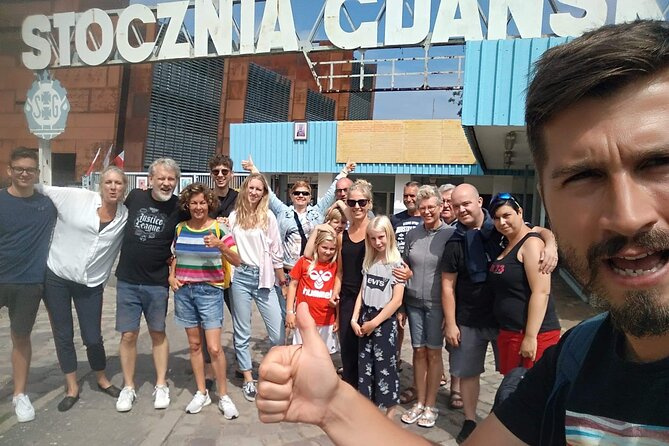
The experience runs in all weather. That matters because the final portion takes you through the shipyard area rather than keeping you indoors. Bring a coat, rain protection, or sun protection as the forecast requires.
The meeting point and ending point are the same: the European Solidarity Center at Plac Solidarności 1. That makes the tour easy to fit into a day of sightseeing because you do not need to work out a return route from the shipyard.
The official duration is approximately three hours. Allow enough time before the start to find the center and arrive ready to begin. Since the first portion lasts two hours, followed by a 20-minute visit and a 40-minute walk, the schedule is fairly full.
A moderate level of physical fitness is recommended. The tour includes museum time and outdoor walking, but no special sporting ability is suggested. Comfortable shoes are the practical choice.
Who should book this experience?
I would recommend this tour most strongly to you if:
- You want to understand Solidarity rather than only photograph the shipyard.
- You prefer a private guide and the freedom to ask questions.
- You have limited time in Gdansk but want several related sites in one outing.
- You are interested in Poland’s role in ending communist rule in Europe.
- You are visiting with family or friends and can make use of the private format or group discount.
- You value personal explanation more than finding the lowest possible price.
I would think twice if your interest in modern Polish history is slight, or if your schedule allows only a short and inexpensive sightseeing stop. Two hours in the museum is a substantial commitment, and the subject receives serious treatment.
Should you book Gdansk’s Solidarity Tour?
Book it if you want the story behind Gdansk’s shipyard, not just a look at its gates. The European Solidarity Center gives you the foundation, Sala BHP adds a key historical place, and the shipyard walk shows how the area is changing today.
The price is high for three hours, but the private format and guide-led explanation help justify it. I would especially consider it for a small group, a first visit to Gdansk, or anyone who wants a thoughtful introduction to Solidarity without sorting through the subject alone.
If you do book, dress for the weather, wear comfortable shoes, and come ready to ask questions. Bozena and Sebastian have received the strongest praise, and the personal style of the guide may be the factor that turns a good museum visit into a memorable part of your time in Gdansk.
FAQ
How long does the Solidarity Tour last?
The tour lasts approximately three hours. About two hours are spent at the European Solidarity Center, followed by 20 minutes at Sala BHP and 40 minutes in the Gdansk Shipyard area.
Where does the tour start and finish?
It starts at the European Solidarity Center, Plac Solidarności 1, 80-863 Gdansk, Poland. The tour ends back at the same meeting point.
Is admission to the European Solidarity Center included?
Yes. Admission to the European Solidarity Center is included in the tour price.
Is the tour private?
Yes. Only your group participates in this private activity.
Is the tour offered in English?
Yes. The experience is offered in English.
What happens if the weather is poor?
The tour operates in all weather conditions. You should dress appropriately for outdoor walking in the shipyard area.
Just added in Gdansk
- Wolf’s Lair private tour from Gdansk★ 5.0 · 1 review
- Whisky Tasting in Gdańsk★ 5.0 · 3 reviews
- Transfer from Gdańsk or Airport Gdańsk (GDN) to Kościerzyna★ 5.0 · 1 review
- Westerplatte – 2h private trip by luxury car|★ 5.0 · 4 reviews
- Westerplatte private tour led by Expert-Guide (door to door)★ 5.0 · 5 reviews
- Gdansk EVERYDAY Vodka Tasting Tour★ 5.0 · 6 reviews
- Undercover City Games: Gdynia★ 5.0 · 34 reviews
- VIP transfer from airport Gdansk (GDN) to Hotel in Gdansk / Sopot★ 5.0 · 2 reviews
Gdańsk Tours, compared.

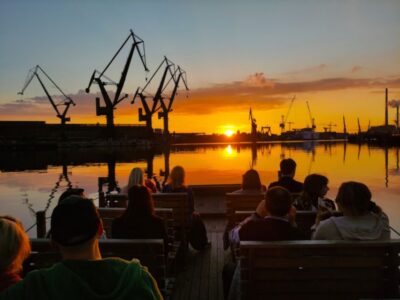
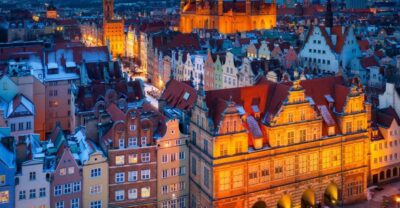
Gdańsk City Sights & History Guided Walking Tour in English
Read our review →
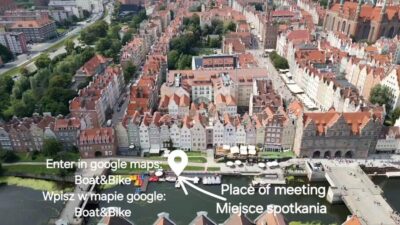
Sightseeing EcoCruise around the Old Town of Gdansk
Read our review →

City Sightseeing Tour by Golf Cart/Buggy Guided Tour
Read our review →Browse the lists this tour appears in