REVIEW · PRIVATE
Nikiszowiec Industrial District Private Tour
Nikiszowiec tells Silesia’s story in red brick. This private walking tour brings you through Katowice’s famous former mining district, linking its housing quarters, mine works, wartime past, Silesian art, and everyday life. I like the way it treats Nikiszowiec as a living neighborhood, not just a pretty collection of old buildings. I also like the private format, which lets your group move at its own pace and ask questions freely.
The tour’s strongest point is its clear historical storytelling, especially around the Silesian Uprisings, the World Wars, and the region’s short-lived autonomy. The second is its mix of architecture, art, and social history, from workers’ flats to murals and the Janów Group. The main drawback is practical: the tour is listed as being in Krakow, but it begins and ends in Katowice, so you must plan the journey to the correct city.
In This Review
- Key details that make Nikiszowiec worth your time
- Start at St. Anne’s Church in Katowice
- The Zillmanns explain Nikiszowiec’s unusual design
- Liberation Square reveals the neighborhood’s social plan
- Brick quarters and interior gardens show daily life
- The Silesian Embassy adds politics and memory
- The Pułaski Shaft connects homes to the coal mine
- Silesian art gives the district another voice
- The old school and Janów artists’ murals
- The museum opens a typical Nikiszowiec flat
- Why the private format matters
- Is $93.45 per person fair value?
- Who should book this walk?
- Should you book the Nikiszowiec tour?
- FAQ
- Where does the Nikiszowiec Industrial District Private Tour begin?
- Where does the tour end?
- How long does the tour last?
- Is the tour private?
- What language is the tour offered in?
- Is admission included?
- Can I cancel for a full refund?
Key details that make Nikiszowiec worth your time
- A private 2-hour-45-minute walk through one of Silesia’s best-known historic mining districts.
- The Zillmann architects’ plan explains why Nikiszowiec feels orderly, enclosed, and distinct from an ordinary suburb.
- Mining, war, and politics meet here, with stops covering coal workers, World War I, World War II, the Silesian Uprisings, and communism.
- Silesian identity appears through art, including murals, watercolors, legends, and works by the Janów Group.
- The Museum of Katowice History provides an indoor look at a typical Nikiszowiec flat and local domestic life.
- Guide Malwina receives especially warm praise for her cheerful presentation and strong command of the region’s story.
Start at St. Anne’s Church in Katowice
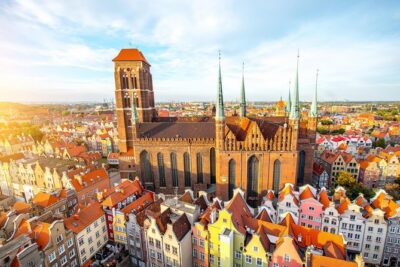
Your meeting point is Kościół pw. św. Anny w Katowicach, at plac Wyzwolenia 21 in Katowice. The walk begins beside the church, with the neighborhood’s religious and local identity providing a fitting introduction to Nikiszowiec.
The first stop is brief, only about three minutes, so do not expect a long church visit or an interior tour. The value here is the setting and the guide’s opening explanation of Nikiszowiec as a place tied to local ethnicity, memory, and tribute. You begin with the human story before moving into architecture and industry.
A practical warning matters here: the tour information identifies Krakow as the location, but the meeting point, route, and end point are in Katowice. Check your transport plans carefully. Katowice is not a neighborhood of Krakow, and arriving in the wrong city would be a costly mistake.
A few more in Krakow
- From Krakow: Auschwitz-Birkenau Guided Tour & Hotel Pickup
★ 4.5 · 33,358 reviews - From Krakow: Auschwitz-Birkenau Guided Tour & Hotel Pickup
★ 4.5 · 29,340 reviews - Krakow: Auschwitz Guided Tour with Optional Hotel Pickup
★ 4.5 · 15,280 reviews
The Zillmanns explain Nikiszowiec’s unusual design
At the skwer Emila i Georga Zillmannów, you meet the names behind the district’s plan. Emil and Georg Zillmann designed Nikiszowiec, and this ten-minute stop gives you the basic idea behind the neighborhood and its relationship to nearby areas.
This is where the district begins to make sense. Instead of seeing a series of attractive brick blocks, you learn to read the plan: quarters, shared spaces, building groups, and the purpose of different parts of the settlement. That context pays off during the rest of the walk.
I find this kind of explanation especially useful because Nikiszowiec can look repetitive at first. Once you understand the plan, you notice the structure. The district was not thrown together around a mine. It was laid out as a planned industrial community, with homes and shared spaces arranged for the daily needs of its residents.
Liberation Square reveals the neighborhood’s social plan
The next section passes through common portals around Liberation Square. The fifteen-minute stop introduces the division of Nikiszowiec into quarters, the role of each quarter, and the structure of the buildings.
The word common matters. This was not simply a collection of private houses. The arrangement of entrances, courtyards, and shared areas tells you how residents encountered one another and how ordinary tasks shaped the neighborhood.
The guide also explains daily routines. That detail keeps the history from becoming a list of dates. You begin to picture how people used the buildings, moved through the district, and depended on the nearby mine for work. The tour is strongest when it connects the grand story of Silesia to the small habits of residents.
Brick quarters and interior gardens show daily life
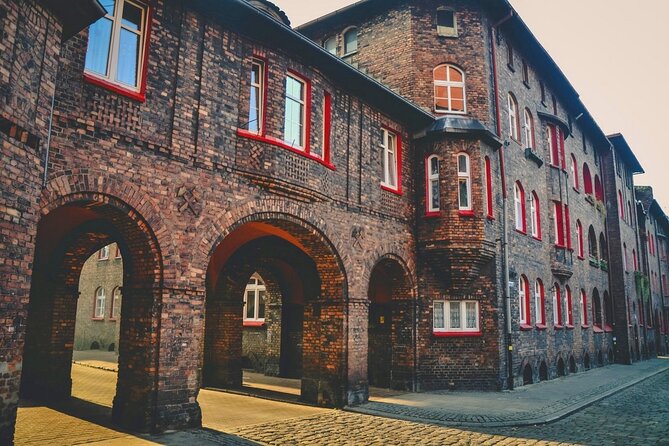
The main residential section lasts around 30 minutes. You pass through several quarters and see their interior gardens while the guide compares life in Nikiszowiec in the past with life there today.
This is likely the most atmospheric portion of the walk. The brick architecture gives the district its familiar look, but the interior spaces explain how it functioned. You are not only looking at façades. You are seeing how blocks were arranged around shared areas and how a mining community organized its home life.
The historical discussion expands here to World War I and the Silesian Uprisings. Silesia’s political identity is not always covered well on a general Poland tour, so this part adds real value. You hear how the district fit into the region’s changing political and social conditions rather than treating it as an isolated architectural attraction.
The guide also addresses the present-day district. That balance is important. Nikiszowiec is not presented as a frozen museum quarter. People still live here, and the tour helps you consider the difference between the district’s original purpose and its role today.
Something quite different:
- Krakow–Zakopane: Cable Car, Chocholow Baths, Cheese & Vodka
★ 5.0 · 10,720 reviews - Krakow: Auschwitz-Birkenau Guided Tour with Pickup & Lunch
★ 4.5 · 9,800 reviews - From Krakow: Wieliczka Salt Mine Tour
★ 4.6 · 9,393 reviews - Krakow: Auschwitz-Birkenau Guided Tour Pickup/Lunch Options
★ 4.5 · 9,057 reviews
The Silesian Embassy adds politics and memory
The stop at Łukasz Kohut’s Ślōnsko Ambasada, or Silesian Embassy, takes about 15 minutes. Here, the guide explains the interwar period and the importance of the Autonomous Region of Silesia.
This is one of the tour’s best opportunities to understand why Silesia feels different from other parts of Poland. One earlier participant specifically valued the contrast with Warsaw, Krakow, and Poznan. That difference is not just visual. It comes through in local identity, regional politics, industrial life, and the survival of Silesian traditions.
The story then moves into World War II and the changes brought by communism. You get a compact political timeline, but the setting keeps it connected to Nikiszowiec itself. The point is not to cover every event in Polish history. It is to show how large political shifts changed a working district and its people.
The Pułaski Shaft connects homes to the coal mine
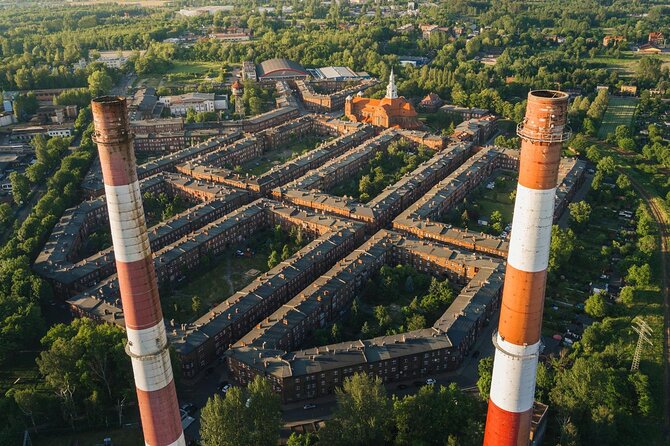
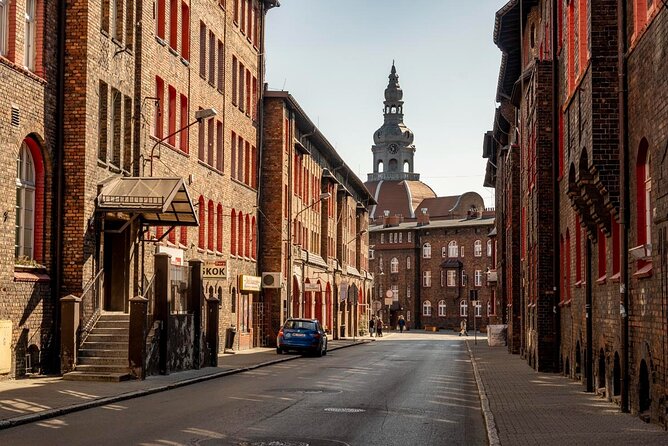
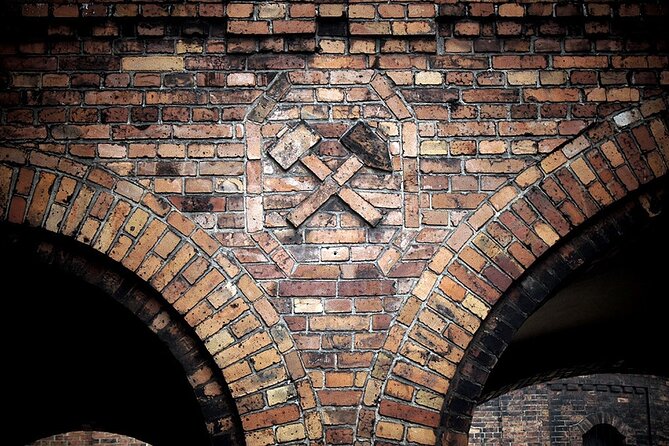
At the Pułaski Shaft Complex, you reach the former coal mine where many Nikiszowiec residents worked. This stop lasts about 20 minutes and gives the district its economic backbone.
Without the mine, the housing quarters can look like an architectural project. With the mine in view, their purpose becomes plain. Nikiszowiec was built around industrial work, and the walk makes the connection between home, employment, transport, and community life.
You also see a historic railway once used to carry industrial materials and people between Silesian industrial estates. That small detail helps you picture a wider network beyond the district’s walls. Coal mining shaped not only local jobs but also movement across the region.
Admission is included at the listed stops, though the information specifically identifies an admission ticket only for the Museum of Katowice History. At the shaft complex, the emphasis appears to be on seeing the site and hearing its story rather than on a separate museum visit.
Silesian art gives the district another voice
The tour then turns to contemporary art at Grzegorz Chudy’s Atelier z akwarelami. This ten-minute stop presents paintings of Nikiszowiec, Katowice, and the Silesian region.
The subject is not art for art’s sake. The paintings show how local people picture their own surroundings. You also learn about Silesian legends and mythical creatures and see how those stories appear in artwork.
This is a welcome change of pace after the industrial and political sections. It also helps explain why Nikiszowiec is more than a former mining settlement. Its visual identity has been carried forward by artists who use the district, its people, and its legends as subjects.
If you prefer tours focused only on architecture, this art stop may feel less essential. I think it earns its place because it adds local feeling to a route that could otherwise become heavily factual.
The old school and Janów artists’ murals
A quick two-minute passage takes you by the historic Nikiszowiec school, Szkoła Podstawowa im. S. Żeromskiego 53. There is no long visit listed here, but the school is a useful reminder that the district was designed as a complete community.
Children needed education close to home, just as workers needed housing near the mine. Even a short stop can reinforce the planning idea introduced earlier by the Zillmanns.
The following 15-minute visit to Skwer Artystów Grupy Janowskiej brings more color. You see murals reproducing works by leading artists from Nikiszowiec and the Janów District.
The murals make the local art story visible in public space. Instead of keeping regional culture inside galleries, the district places it on its walls and squares. This is a good spot for photographs, but the guide’s explanation matters more than the pictures alone. You learn who the Janów artists were and how their work reflected ordinary and festive life in the community.
The museum opens a typical Nikiszowiec flat
The final stop is the Museum of Katowice History, City Ethnology Department. It lasts about 30 minutes and is the only stop specifically marked with an included admission ticket.
This visit brings you indoors to see the rooms of a typical Nikiszowiec flat. After walking through quarters and discussing routines, you can connect those ideas with an actual domestic setting. The museum gives shape to subjects that are easy to keep abstract, such as family life, household customs, and the contrast between working days and celebrations.
You also see original works by Janów Group artists depicting everyday and festive life in Nikiszowiec. The collection includes surrealistic works by artists sometimes described as the Silesian Salvador Dali. That combination gives the final stop a broad range, from domestic scenes to imaginative local art.
Ending indoors is sensible, especially in changeable weather. Still, remember that the tour requires good weather overall and may be rescheduled or refunded if poor conditions force cancellation. The route is mainly outdoors, so comfortable shoes and weather-appropriate clothing are practical choices.
Why the private format matters
This is a private activity, so only your group takes part. That makes a difference in a district where the best questions may be specific: Why are the quarters arranged this way? How did residents use the gardens? What changed under communism? How did the Silesian Uprisings affect this place?
You can ask those questions without holding up a large group. The private format is also helpful for families. One family praised the tour as a good way to spend Easter, noting that Nikiszowiec was beautiful and the history kept everyone interested.
The guide’s style seems to be a major part of the appeal. Malwina is described as cheerful, informative, and skilled at presenting difficult subjects in an engaging way. Her approach appears to combine formal history with stories, artworks, and local details. That mix is useful because a mining district can otherwise feel dry after the first few buildings.
The tour is offered in English. Most people can participate, and service animals are allowed. It is near public transportation, but the supplied details do not specify the exact bus, tram, or train connections, so you should check your route to plac Wyzwolenia 21 before setting out.
Is $93.45 per person fair value?
At $93.45 per person, this is not a cheap casual walk. The price makes more sense if you value a private guide, a focused historical route, English-language explanations, and the chance to ask questions throughout nearly three hours.
You are paying for interpretation, not just access. The district itself is largely explored from public spaces, with admission free at most listed stops. The included museum visit adds an indoor collection, but the main value comes from the guide’s ability to connect the buildings, mine, political history, local art, and daily routines.
Group discounts may improve the price for larger parties. For two people, the cost is a more serious decision. For a family or small group that would otherwise book several separate activities, the private arrangement may feel more reasonable.
I would not choose this tour if you only want quick photographs of old brick buildings. You can see the visual appeal more quickly. I would consider it good value if you want to understand why Nikiszowiec was built, how mining shaped it, and why Silesian identity remains such an important part of the place.
Who should book this walk?
You should consider it if you enjoy industrial heritage, architecture, regional politics, or local art. It also suits anyone who has already seen Poland’s major royal and historic centers and wants a different side of the country.
Families may find the private format particularly useful. The route changes subject several times, from buildings to mine works to murals and museum interiors, which helps hold attention. Art lovers will appreciate the atelier, Janów Group works, and Silesian legends.
The tour may be less suitable if you have limited time in Katowice and cannot spare nearly three hours. It is also a poor fit if you expect a Krakow departure. The start and finish are in Katowice, and the walking route is centered on Nikiszowiec.
You should also keep the weather policy in mind. Since the activity requires good weather, leave some flexibility in your schedule if possible. Free cancellation is available up to 24 hours before the start time, but cancellations or changes made later are not refunded or accepted under the stated policy.
Should you book the Nikiszowiec tour?
Book it if you want the story behind the streets, not just the streets themselves. The strongest parts are the explanation of the Zillmann plan, the connection between housing and coal mining, the account of Silesian political history, and the local art that gives Nikiszowiec its character.
The tour earns its price through its private setting and guide-led interpretation. Malwina’s cheerful, informative style is a clear advantage, and the route has enough variety to work well for families and culturally curious visitors.
Skip it if your schedule cannot accommodate Katowice, if you want a short photo stop, or if you are unwilling to plan around possible bad weather. For anyone ready to spend a thoughtful afternoon with Silesian history, art, and working-class life, this is one of the better ways to meet Nikiszowiec.
FAQ
Where does the Nikiszowiec Industrial District Private Tour begin?
It begins at Kościół pw. św. Anny w Katowicach, plac Wyzwolenia 21, 40-423 Katowice, Poland.
Where does the tour end?
The activity ends back at the meeting point at St. Anne’s Church in Katowice.
How long does the tour last?
The tour lasts approximately 2 hours and 45 minutes.
Is the tour private?
Yes. Only your group participates in the private activity.
What language is the tour offered in?
The tour is offered in English.
Is admission included?
Admission is listed as free at most stops. Admission to the Museum of Katowice History, City Ethnology Department, is included.
Can I cancel for a full refund?
Yes. You can cancel at least 24 hours before the experience start time for a full refund. Later cancellations and changes are not accepted or refunded.
Just added in Krakow
- Auschwitz-Birkenau – Skip the Line Tickets★ 3.5 · 29 reviews
- Auschwitz-Birkenau: Fast-Track Ticket & Guided Tour No Transfers★ 3.5 · 17 reviews
- Zakopane & Sleigh Ride with Bonfire – Group Tour from Kraków★ 5.0 · 2 reviews
- Sleigh Ride & Bonfire in Zakopane with Funicular – Private Trip★ 5.0 · 48 reviews
- Thermal Baths & Zakopane – Private Trip from Krakow★ 5.0 · 1 review
- Zakopane & Gubalowka Funicular – Private Winter Tour from Krakow★ 5.0 · 10 reviews
- Divine Mercy Sanctuary – Private Tour from Krakow★ 5.0 · 4 reviews
- stag dog chase Krakow prank★ 5.0 · 4 reviews
Private, compared.

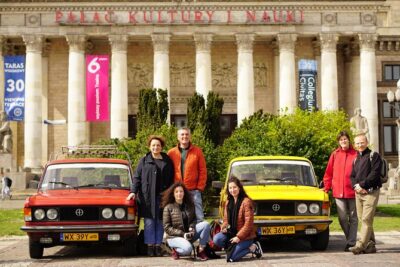
Private Tour: Warsaw City Sightseeing by Retro Fiat
Read our review →
Private Departure Transfer: Krakow City To Krakow Airport Balice
Read our review →
Private Old Town Guided Walking Tour (2 hours)
Read our review →
Legendary Private Nowa Huta Communism Tour with Crazy Guides
Read our review →
Skip-the-Line Wawel Castle Chambers Private Tour
Read our review →