
REVIEW · CITY TOURS
Krakow: A Magical Walking Tour of the Old City – 120 min
Krakow reveals itself one legend at a time. This two-hour walk links the city’s grand square, royal route, churches, university quarter, medieval defenses, and Wawel Castle area in a compact introduction to central Krakow. I like the strong mix of famous sights and local stories, especially the tales of St. Mary’s Basilica and the Wawel Dragon. I also like that the route uses streets and public spaces rather than simply pointing out landmarks from a bus.
The main consideration is pace. The tour covers 13 stops in about 120 minutes, and the listed stop times add up to roughly 125 minutes before walking between them. A group of up to 50 people may also feel large, especially at busy points around the Main Square. One isolated report describes an unpleasant exchange with a guide at the meeting point, so clear communication at the start matters.
In This Review
- Key points to know before booking
- Starting near Wiślna Street and Krakow’s Main Square
- Following the Royal Way toward Wawel
- Churches, kings, and the Wawel Dragon
- Papal memories and the Franciscan quarter
- Along Planty Park to Poland’s oldest university
- Medieval defenses at the Barbican and St. Florian’s Gate
- Returning to St. Mary’s Basilica and the central square
- What the two-hour format really gives you
- Is $36.09 a fair price?
- Who should book this Krakow walk?
- Should you book it?
- FAQ
- Where does the walking tour begin?
- Where does the tour end?
- How long does the experience last?
- Is the tour offered in English?
- How much does the tour cost?
- What sights are included?
- How many people can join the tour?
- Can I cancel for a full refund?
Key points to know before booking
- Thirteen central Krakow sights in two hours: The route takes in the Main Square, Royal Way, Kanonicza Street, Wawel, Planty Park, the Barbican, St. Florian’s Gate, and several churches.
- Stories are the main attraction: Local legends about St. Mary’s Basilica, the Wawel Dragon, the Franciscan Basilica, and the Pope’s Window give the walk a human touch.
- A useful first-day orientation: The tour connects many places you may want to revisit on your own, making it a practical way to get your bearings.
- Exterior sightseeing with free admission listed: No entrance fees are included in the stated stop information, so treat this as a city walk rather than a museum or interior church tour.
- English-language format: The tour is offered in English, with one past participant also praising a French-speaking guide.
- Flexible cancellation, weather permitting: You can cancel up to 24 hours before the start for a full refund, but poor weather or low enrollment can affect the departure.
Starting near Wiślna Street and Krakow’s Main Square
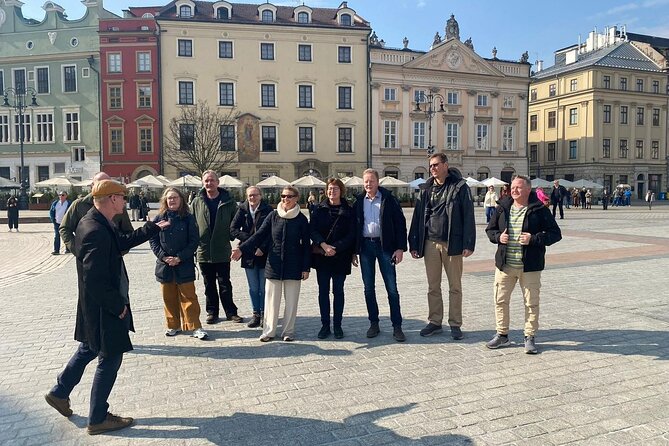
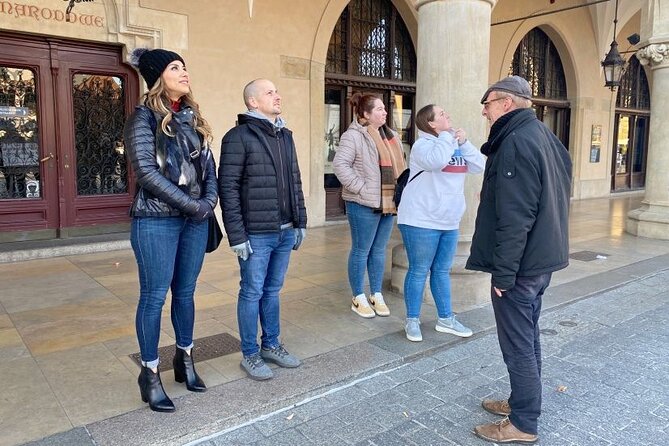
The walk begins at Wiślna 4, close to Krakow’s historic center. That is a sensible starting point because you are immediately near Rynek Główny, the enormous Main Square that forms the heart of the Old Town.
The first stop focuses on the square and its surrounding sights. You should expect an introductory explanation of the square, St. Mary’s Basilica, the Cloth Hall, and the stories tied to them. Ten minutes is enough for orientation, but not for a detailed study of every building. If you want interior time at St. Mary’s or a proper visit to the Cloth Hall, plan to return later.
This opening is one of the strongest parts of the walk. Krakow’s center can feel like a collection of handsome façades until someone explains how the buildings relate to the city’s religious, commercial, and royal life. The local legends also help you remember what you are seeing instead of treating the square as a backdrop for photographs.
More Walking Tours in Kraków
- Old Town Krakow & Wawel Castle Walking Tour
★ 5.0 · 1,508 reviews - Creepy Krakow: 2-Hour City Walking Tour
★ 4.7 · 1,131 reviews - Krakow: The Old Town Walking Tour
★ 4.8 · 794 reviews
Following the Royal Way toward Wawel
From the Main Square, the route follows the Royal Way, or Droga Królewska. The name refers to the historic route used by Polish kings as they moved through Krakow toward Wawel Castle.
The ten-minute stop is brief, but the road gives the tour a clear structure. You are not wandering randomly from one attraction to another. You are following the route that connects the political center of the old city with the royal residence.
Next comes Kanonicza Street, described as Krakow’s oldest street. Its character differs from the broad Main Square. The street is narrower and more intimate, with historic buildings that make the age of the city easier to picture. Ten minutes here should give you the basic story and a chance to notice the architecture.
I particularly like this change of scale. The Main Square is grand and open, while Kanonicza feels more personal. The short walk between them shows how Krakow shifts from civic theater to old residential and religious quarters within a few minutes.
Churches, kings, and the Wawel Dragon
The Church of St. Peter and St. Paul receives a five-minute explanation. That is enough for a quick look at its importance and appearance, but it signals that this tour favors breadth over detailed church art. If you care about interiors, paintings, sculpture, or worship schedules, you will need extra time outside the tour.
The route then reaches Wawel Royal Castle, another five-minute stop. The guide’s focus is expected to be the Polish kings and queens connected with the castle. This is a valuable introduction, especially if you plan to visit the castle museums later, but the short timing means you should not expect a full castle visit.
No admission is listed for any of these stops. That makes the price easier to understand: you are paying for the guide’s route and explanations, not bundled entry into Wawel Castle or other paid attractions. The castle area deserves more time than this walk can provide, so I would treat the stop as an orientation and return for a separate visit if royal apartments, exhibitions, or cathedral details matter to you.
The Wawel Dragon follows, with ten minutes devoted to the famous Krakow legend. This is a lighter moment after the kings and churches, and it gives children a story they can carry through the rest of the walk. The dragon is also a good example of what this experience does best: it connects a place to a tale rather than offering only dates and names.
Papal memories and the Franciscan quarter
The route continues to Okno Papieskie, or the Pope’s Window. You will learn why the site carries that name and hear related stories. The stop adds a more recent layer to the old city, connecting Krakow’s streets with the memory of Pope John Paul II.
At Plac Franciszkański, the guide continues with facts and local legends. The nearby Franciscan Basilica receives another ten-minute explanation. Together, these stops create a religious section of the tour, but the focus appears to be storytelling and context rather than a long indoor visit.
This part may suit you especially well if you want to understand Krakow through both Catholic tradition and local memory. It is also where the walk can feel less like a checklist of monuments. The Pope’s Window and Franciscan area are meaningful because people attach stories to them, and those stories explain why certain corners matter to residents.
The short timings remain important. Ten minutes can introduce a site, but it cannot cover every artistic or historical detail. If the Franciscan Basilica is high on your list, mark it for a later, slower visit.
Something quite different:
- From Krakow: Auschwitz-Birkenau Guided Tour & Hotel Pickup
★ 4.5 · 33,358 reviews - From Krakow: Auschwitz-Birkenau Guided Tour & Hotel Pickup
★ 4.5 · 29,340 reviews - Krakow: Auschwitz Guided Tour with Optional Hotel Pickup
★ 4.5 · 15,280 reviews - Krakow–Zakopane: Cable Car, Chocholow Baths, Cheese & Vodka
★ 5.0 · 10,720 reviews
Along Planty Park to Poland’s oldest university
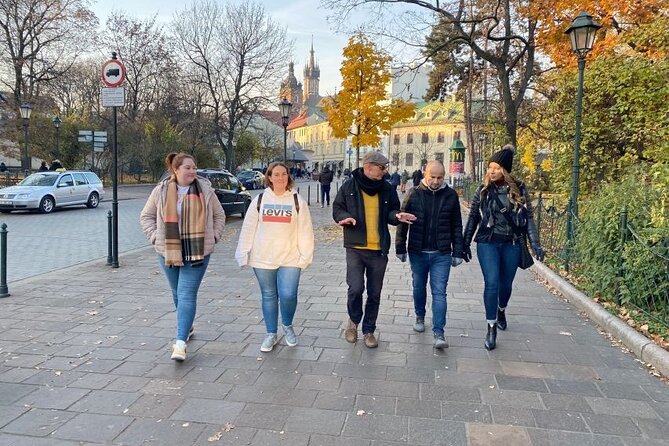
The walk then follows Planty Park, the green belt that surrounds Krakow’s Old Town, on the way to the Jagiellonian University and Collegium Medicum. The university is Poland’s oldest, giving the route another side of Krakow beyond royal power and religious landmarks.
Planty Park is useful here because it helps you understand the shape of the historic center. The park follows the former line of the city’s fortifications, creating a ring around the Old Town. The tour description highlights it as a beloved park for people from Krakow, so this is a chance to see the city as a lived-in place, not only as a historic display.
The university stop lasts ten minutes. The walk may be especially useful for first-time visitors who want to return later to explore more of the university quarter. As with Wawel, the tour provides context rather than an extended academic or architectural visit.
Medieval defenses at the Barbican and St. Florian’s Gate
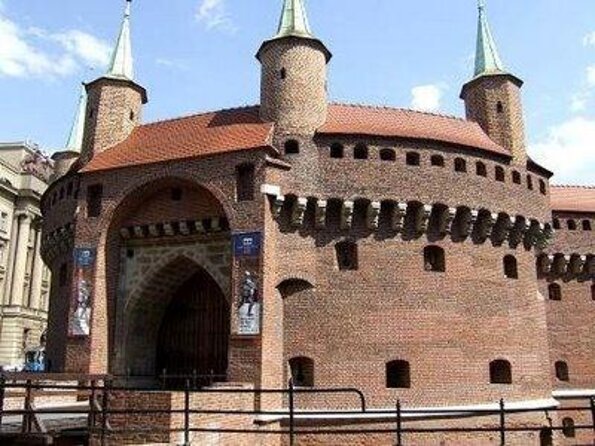
The Barbican, now associated with the Museum of Krakow, is the route’s main defensive landmark. You will hear how Krakow was protected and how the city changed during and after the partitions of Poland.
That subject adds needed political context. The tour is not limited to pleasant streets and legends. It also points toward the difficult periods that reshaped Poland and Krakow. Ten minutes is enough to understand why the Barbican matters, though not enough for a museum visit.
St. Florian’s Gate comes later in the route. It is described as the last remaining fragment of Krakow’s wall, and the guide explains what happened to the rest of the fortifications and what you can see on the inner side of the walls.
These final medieval sights help complete the picture begun at Planty Park. You see how the old city was enclosed, defended, and later altered as Krakow expanded. For me, this is one of the route’s most useful connections: the park, Barbican, and gate make more sense when explained together.
Returning to St. Mary’s Basilica and the central square
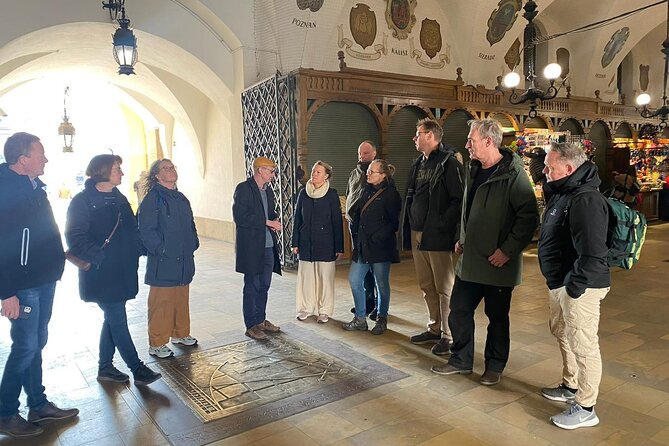
The final listed stop is St. Mary’s Basilica, with ten minutes devoted to its unusual towers and associated legends. The different tower heights are one of the most recognizable details in Krakow, and the guide’s explanation gives you a reason to look closely rather than simply photograph the façade.
The tour ends at Sienna 2a, near the Adam Mickiewicz Monument in the central square. The meeting and ending points are both central, which makes the walk easy to fit around other Old Town plans. The endpoint also places you close to the square’s restaurants, cafés, and further sightseeing.
There is a small practical oddity in the published sequence: St. Florian’s Gate appears before St. Mary’s Basilica, yet the tour ends back at the Main Square. That is not necessarily a problem, but you should expect a route that loops through central Krakow rather than a straight line.
What the two-hour format really gives you
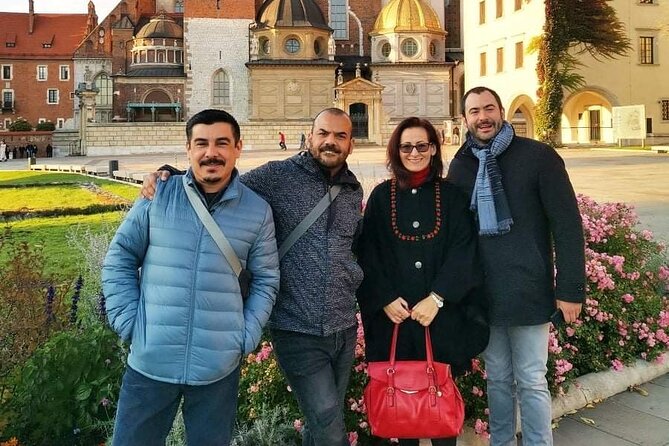
The tour is best understood as a guided orientation, not a series of deep visits. You will hear short explanations at 13 stops, walk between them, and get a connected picture of Krakow’s royal, religious, academic, and defensive past.
The advertised duration is approximately two hours. The listed stop times total about 125 minutes, before allowing for movement, questions, and crowd management. That suggests the guide will need to keep the group moving. You should wear comfortable shoes and avoid planning a tight appointment immediately afterward.
A group can include as many as 50 people. That maximum is not the same as the usual group size, but it is worth considering. A large group may make it harder to hear in the Main Square or near busy streets. It may also limit personal questions. On the positive side, a larger departure can still work well when the guide uses clear meeting points and keeps explanations focused.
The experience is offered in English. One highly positive account praised Vlad for his strong command of Polish and Krakow history, while another praised a guide who spoke very good French. The supplied tour information confirms English, so French should not be assumed for every departure.
Is $36.09 a fair price?
At $36.09 per person, this is not a bargain-priced free walk, but it can be fair value if you want a paid, structured introduction with a fixed route. You are covering a lot of ground, hearing local legends, and getting explanations at major Krakow landmarks without paying separate admission at the listed stops.
The value drops if you already know the Old Town well or prefer to spend 20 to 30 minutes inside each church and museum. The tour cannot provide that depth in two hours. In that case, self-guided visits may give you more control.
I see the price as reasonable for a first day in Krakow, especially if you use the walk to choose where to return. The most useful benefit is not merely seeing the Main Square or Wawel from the outside. It is learning how the Royal Way, Planty Park, fortifications, university quarter, and churches fit together.
The tour is recommended by 92 percent of participants and holds a 4.5 rating from 13 reviews. Most of the available praise centers on the guide’s ability to explain Polish and Krakow history in an enjoyable way. One participant said Vlad made the two hours both educational and very enjoyable, and another found the guide so engaging that a full day of listening would have been welcome.
There is also one serious negative account. A participant described a rude exchange over finding the meeting point and said the guide refused to take the group. That appears to be an isolated complaint among the supplied feedback, but it is still useful. Check the meeting address before setting out, arrive prepared, and ask for help calmly if the group is difficult to locate. A good start matters on a walking tour.
Who should book this Krakow walk?
I would recommend it to first-time visitors who want a fast, story-led introduction to Krakow’s Old Town. It suits people who enjoy history in manageable portions, families who like legends such as the Wawel Dragon, and anyone who wants help deciding which sights deserve a longer return visit.
It is also a good choice if you want to see the city on foot instead of using a vehicle. The route links major landmarks with older streets and Planty Park, giving you a feel for the city’s layout.
I would be more cautious if you need an accessible pace, dislike groups, or want detailed interior visits. The supplied information says most people can participate and that public transportation is nearby, but it does not provide more specific accessibility details. The 50-person maximum and tight schedule are worth weighing before booking.
Free cancellation up to 24 hours before the start gives you useful flexibility. The walk requires good weather, and a departure can also be changed or canceled if the minimum number is not reached. In either case, you are offered another date or experience, or a full refund.
Should you book it?
Book this tour if you want a lively first look at Krakow, with royal roads, church legends, the Wawel Dragon, medieval defenses, and the Main Square tied into one route. The strongest reason to go is the guide-led storytelling, particularly if you are lucky enough to have someone with the energy and historical command praised in the feedback about Vlad.
Skip it if you want long museum visits, quiet private guiding, or a slow architectural study. For most first-time visitors, the price buys a useful framework for Krakow, but plan to return to Wawel, St. Mary’s Basilica, the Franciscan Basilica, or the Barbican when you have more time.
FAQ
Where does the walking tour begin?
The tour begins at Wiślna 4, 33-332 Kraków, Poland.
Where does the tour end?
It ends at Sienna 2a, near the Adam Mickiewicz Monument in Krakow’s central square.
How long does the experience last?
The tour lasts approximately two hours, or 120 minutes.
Is the tour offered in English?
Yes. The experience is offered in English.
How much does the tour cost?
The stated price is $36.09 per person.
What sights are included?
The route includes the Main Square, Royal Way, Kanonicza Street, Church of St. Peter and St. Paul, Wawel Royal Castle, the Wawel Dragon Monument, Okno Papieskie, Plac Franciszkański, the Franciscan Basilica, Jagiellonian University and Collegium Medicum, the Barbican, St. Mary’s Basilica, and St. Florian’s Gate.
How many people can join the tour?
The activity can have a maximum of 50 participants.
Can I cancel for a full refund?
Yes. You can cancel at least 24 hours before the experience starts for a full refund. Cancellations or changes made less than 24 hours before the start are not refunded, and poor weather or low enrollment can also affect the departure.
Just added in Krakow
- Auschwitz-Birkenau – Skip the Line Tickets★ 3.5 · 29 reviews
- Auschwitz-Birkenau: Fast-Track Ticket & Guided Tour No Transfers★ 3.5 · 17 reviews
- Zakopane & Sleigh Ride with Bonfire – Group Tour from Kraków★ 5.0 · 2 reviews
- Sleigh Ride & Bonfire in Zakopane with Funicular – Private Trip★ 5.0 · 48 reviews
- Thermal Baths & Zakopane – Private Trip from Krakow★ 5.0 · 1 review
- Zakopane & Gubalowka Funicular – Private Winter Tour from Krakow★ 5.0 · 10 reviews
- Divine Mercy Sanctuary – Private Tour from Krakow★ 5.0 · 4 reviews
- stag dog chase Krakow prank★ 5.0 · 4 reviews
City Tours, compared.
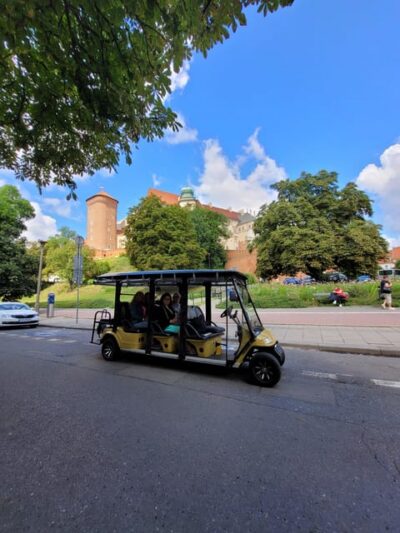

City Sightseeing Tour Eco Electric Buggy Golf Cart
Read our review →
Gdańsk City Sights & History Guided Walking Tour in English
Read our review →
Extended City Sightseeing Tour – Eco Buggy Golf Cart
Read our review →
Browse the lists this tour appears in