
REVIEW · WROCłAW TOURS
III Reich & WW2 in Wroclaw. Monday, Wendsday, Friday regular tour
History hides in plain sight here. This walking tour connects Wrocław’s Jewish heritage, Nazi-era politics, wartime destruction, and the desperate siege of Festung Breslau in a compact route through the city center. At about two to two and a half hours, it gives you a clear introduction to a difficult period without taking over your whole day.
I especially like the way the tour links ordinary city streets with major historical events, and I like the small-group limit of 20 people. Guide Michael, also referred to as Michal, is praised for his clear explanations and willingness to answer questions. The main drawback is pace: you walk roughly 1.7 miles and stop often, so the experience can feel brisk, especially in cold or wet weather.
The tour costs $32.20 per person and runs on Mondays, Wednesdays, and Fridays in English. It begins at Hotel Monopol and finishes on Cathedral Island, making it easy to continue sightseeing afterward. Most stops are viewed from outside, and admission fees are not included where indoor access may be possible.
In This Review
- Key points to know before booking
- Why Wrocław’s wartime story needs a walking tour
- Starting at Hotel Monopol and entering the Nazi era
- Wolności Square and the beginnings of Nazi rule
- White Stork Synagogue and Wrocław’s Jewish heritage
- Rynek, daily life, and the destruction of Breslau
- The Dietrich Bonhoeffer Memorial and German opposition
- Wrocław University and education under the Third Reich
- The Church of the Most Holy Name of Jesus
- Ossolineum and the politics of education
- Market Hall, a short break, and the siege
- Sand Island and the story of Edith Stein
- Ending on Cathedral Island
- Pace, group size, and practical comfort
- Is $32.20 a fair price?
- Who will enjoy this Wrocław history walk?
- Should you book the III Reich and World War II tour?
- FAQ
- Where does the tour start?
- Where does the tour finish?
- How long does the experience last?
- What days is the tour offered?
- What language is the tour offered in?
- How much does the tour cost?
- How many people can join the tour?
- Are admission tickets included?
- Can I cancel the booking?
Key points to know before booking
- The route covers about 1.7 miles: Expect a steady city walk, with short talks at each stop rather than long visits inside museums or churches.
- Jewish history is central: The former New Synagogue, White Stork Synagogue, Edith Stein, and the Holocaust all form part of the story.
- Festung Breslau gets proper attention: You hear about the 1945 siege, daily life under fire, and the destruction of much of the city.
- The tour ends at Cathedral Island: This is useful if you plan to continue toward Wrocław Cathedral and the riverside.
- Small groups help the discussion: The maximum is 20 people, and Michael is praised for answering questions.
- Weather matters: The experience requires good weather, so bring warm clothing in winter and check the forecast before setting out.
Why Wrocław’s wartime story needs a walking tour
Wrocław can look thoroughly Polish today, yet much of its World War II story is tied to its earlier identity as Breslau, a major German city before 1945. The tour helps you follow that change step by step, from the rise of Nazism to the final siege and the first months after the war.
You are not simply shown monuments with dates attached. The route uses buildings, squares, synagogues, university grounds, and river islands to explain how politics changed daily life. That local focus is the strongest reason to choose this experience.
The tour also widens the usual picture of Polish resistance and wartime suffering. Warsaw often dominates discussions of Poland during the Nazi period, but Wrocław had its own story of opposition, persecution, destruction, and postwar upheaval. The stop at the Dietrich Bonhoeffer Memorial gives the German opposition a place in the conversation too.
This is not a museum visit with extensive displays. It is an outdoor history lesson. That makes it easy to fit into a short stay, but you should choose comfortable shoes and be ready to listen while standing outside.
A few more in Wroclaw
- Wroclaw: E-Car Tour and Audio Guide
★ 4.6 · 1,738 reviews - Wroclaw: 2-Hour Private Guided Tour by Electric Car
★ 4.8 · 805 reviews - Wrocław: Old Town and Ostrów Tumski Walking Tour in English
★ 4.8 · 311 reviews
Starting at Hotel Monopol and entering the Nazi era
The meeting point is Hotel Monopol on Ulica Heleny Modrzejewskiej. From there, the group walks into the city center and begins with the destruction of the New Synagogue in 1938.
That opening is effective because it places antisemitism and Nazi violence at the start of the story. The former synagogue site is not just an abstract reference to a lost building. It introduces the destruction of Jewish life in Wrocław before the war itself began.
You also see the former Gestapo building nearby. The stop lasts around five minutes and is free, but the short timing does not mean the subject is minor. It establishes the machinery of persecution that shaped the rest of the tour.
For you, the value here is visual context. You are standing among present-day streets while learning how the same part of the city was used during the Nazi period. The guide’s job is to help you notice what is no longer there, which is often harder than looking at a surviving monument.
Wolności Square and the beginnings of Nazi rule
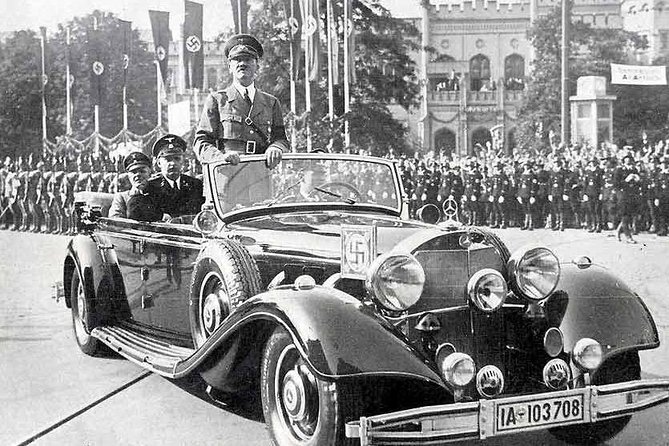
At Wolności Square, the tour turns from local buildings to the political beginnings of the Nazi era in Germany. This gives you a short grounding in how Adolf Hitler and the Nazi movement came to power before the discussion returns to Wrocław.
The stop lasts about five minutes, so do not expect a full political history of the Third Reich. Instead, it provides the framework needed to understand later topics such as the Gestapo, antisemitic policies, education, and life under a dictatorship.
I find this kind of early explanation useful on a walking tour. Without it, the later stops could become a string of grim facts. With it, you get a basic sense of how national politics affected a city far from Berlin.
White Stork Synagogue and Wrocław’s Jewish heritage
The White Stork Synagogue is one of the most important stops because it survived the war and sits in the heart of the former Jewish district. Here, the focus shifts from buildings that disappeared to a place that remains.
The talk covers local Jewish heritage and the Holocaust. You should expect about ten minutes at the synagogue, with the building serving as a physical anchor for a much larger story. The stop is free from the tour’s point of view, though the supplied details do not promise an interior visit.
This is one of the places where the route feels particularly personal. A synagogue is not only a religious building. It points to families, schools, businesses, traditions, and a whole community that Nazi persecution sought to erase.
If Jewish history is your main interest, pay close attention here and ask questions. The tour gives you an introduction, not an exhaustive study, but the setting makes the subject easier to understand than a general overview delivered on a random street corner.
Something quite different:
- Wroclaw: Private Old Town Guided Walking Tour (2 hours)
★ 4.8 · 275 reviews - Old Town Wrocław Walking Tour
★ 5.0 · 249 reviews - Wroclaw: City Tour Sightseeing By Golf Cart Shared Or Privat
★ 4.8 · 189 reviews - Auschwitz-Birkenau Tour from Wrocław
★ 5.0 · 129 reviews
Rynek, daily life, and the destruction of Breslau
On the main market square, known as Rynek, the tour examines everyday life under the Nazi regime. The discussion then moves toward Festung Breslau and the destruction of the city.
This pairing is one of the tour’s best features. Rynek is a major public space, so it helps you imagine how political power and ordinary routines could exist side by side. The guide discusses what life was like under the regime before turning to the final battles that damaged Wrocław so severely.
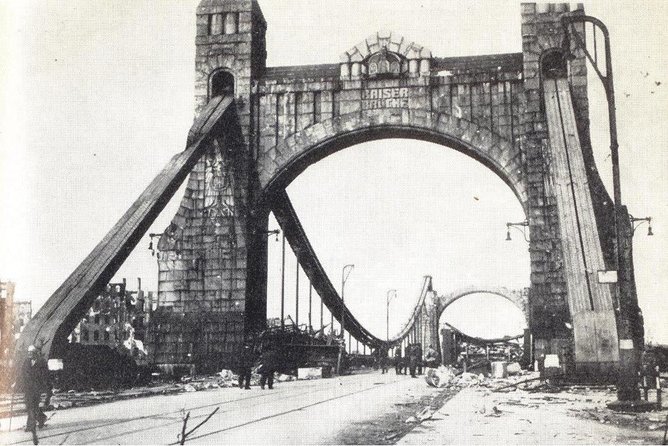
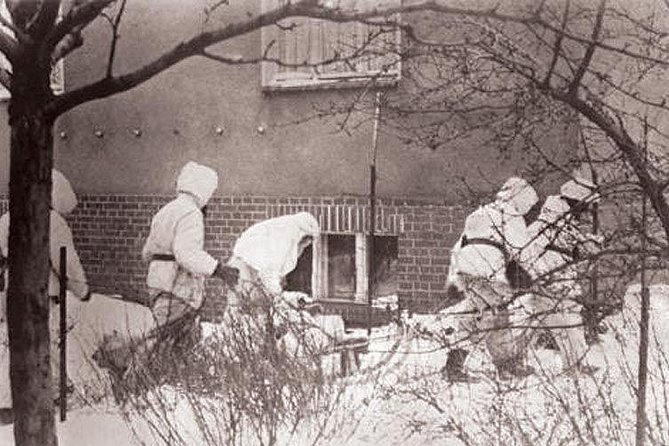
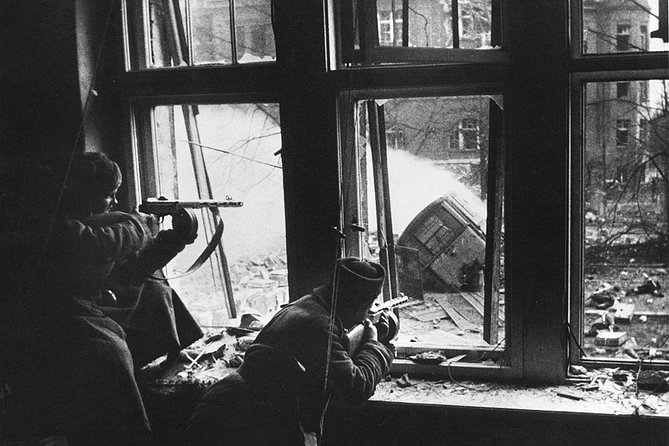
The story of Festung Breslau is especially important. In the last phase of the war, the city was declared a fortress and held out as Soviet forces advanced. The result was catastrophic destruction, and the tour explains some of what the siege meant for people living in the city.
The stop lasts about ten minutes. That is enough for a focused explanation, but not enough for every military detail. If you already know a great deal about the Eastern Front, you may want a more specialized battlefield or museum experience as a follow-up.
The Dietrich Bonhoeffer Memorial and German opposition
The Dietrich Bonhoeffer Memorial adds welcome balance to a tour centered on Nazi power. Bonhoeffer was a German theologian and an important figure in opposition to Hitler. At this stop, you hear a few words about German resistance to the regime.
The talk is brief, around five minutes, but its position on the route matters. It reminds you that the period cannot be reduced to a simple division between one nation and another. Opposition existed inside Germany, even though it was dangerous and often crushed.
This is a good example of how the tour uses small memorials to widen the story. You may pass the site quickly on your own, but with a guide you get a reason to stop and think about it.
Wrocław University and education under the Third Reich
Wrocław University provides one of the tour’s more unusual subjects: education under the Third Reich, along with stories about Jewish scientists.
The stop lasts about ten minutes. It shows how universities and schools can be shaped by government ideology. Education was not separate from politics under the Nazi regime. Academic life, research, and the treatment of Jewish scholars were all affected.
This part should appeal to you if you enjoy social and intellectual history more than military dates. It also gives the tour variety. After synagogues, police buildings, and wartime destruction, the university reveals another way a dictatorship changes a city.
Admission is not included at Wrocław University. The supplied tour details do not state that you enter the building, so treat this as an outdoor stop unless the guide says otherwise. That distinction matters if you are expecting a formal university visit.
The Church of the Most Holy Name of Jesus
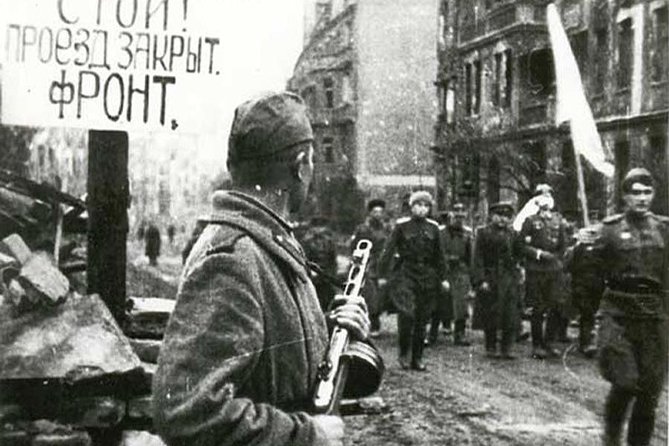
At the Parish of the Most Holy Name of Jesus, the subject shifts to everyday life during the siege and the first months after the war. This is a valuable change of scale.
Military history often focuses on commanders, fronts, and casualty figures. Here, the emphasis is on how residents experienced the final days of the city and the uncertain period that followed. The stop lasts about ten minutes and gives the human side of the siege more room.
The church is also part of the route’s transition toward the river and Cathedral Island. You continue moving through central Wrocław while the story moves from Nazi rule to collapse, occupation, and postwar change.
Admission is not included. Again, the details do not guarantee an interior visit, so you should not book this tour mainly for church architecture. Its purpose is historical explanation.
Ossolineum and the politics of education
The Ossolineum stop returns to education during the Third Reich. This may sound similar to the university discussion, but the setting lets the guide develop the subject from another angle.
The institution is connected to scholarship, books, and learning, all areas that become political under an authoritarian government. The stop lasts around ten minutes and helps show that Nazi control reached beyond soldiers and police. It also affected institutions that shaped what people could study, read, and teach.
For me, this is a useful part of the route because it breaks up the usual war-tour pattern. You are not only hearing about battles. You are learning how a government tried to control public life and ideas.
Admission is not included. The supplied details do not specify an indoor visit, so plan on hearing the story from the route rather than assuming access to the collections.
Market Hall, a short break, and the siege
The Market Hall, or Hala Targowa, is where the group hears more about the siege and takes a short break. The stop is scheduled for about ten minutes.
A break is welcome on a walking tour, especially in winter. One review described completing the route in frigid weather, while another mentioned a snowy afternoon. That tells you something practical: the tour can run in difficult conditions, but your comfort will depend heavily on proper clothing.
The Market Hall stop also keeps the story tied to ordinary city life. Markets are places where people buy food and meet neighbors, which makes it a fitting location for discussing what happened when supplies, movement, and safety became serious problems during the siege.
The stop is free. Use the pause to warm up, check your route, and prepare for the final stretch toward the islands.
Sand Island and the story of Edith Stein
On Sand Island, the guide discusses Edith Stein and returns to the siege. Edith Stein, also known as Saint Teresa Benedicta of the Cross, was a Jewish-born philosopher and Catholic nun who was killed at Auschwitz.
The stop is short, about five minutes, but Stein’s life connects several themes in the tour: Jewish identity, religious conversion, Nazi persecution, and the wider Holocaust. Her story adds a personal figure to the more general discussion of communities and institutions.
The island setting also changes the feel of the walk. By now, you are leaving the denser central streets and moving toward Wrocław’s waterways and historic religious quarter. The tour remains focused on the war, but the surroundings become calmer.
Do not expect a long biography of Stein. The guide gives a concise account as part of the wider route. If her life interests you, note her name and use the tour as a starting point for further reading.
Ending on Cathedral Island
The tour finishes on Ostrow Tumski, or Cathedral Island, with a few extra stories. This is a practical and attractive ending point because you can continue exploring the cathedral area after the guide leaves.
The final stop lasts about ten minutes. It gives the tour a natural endpoint rather than returning you to the original hotel. You should plan your day around that one-way route. If you have a reservation or another activity near Hotel Monopol afterward, leave extra time for your return.
Cathedral Island also gives the experience a sense of historical movement. You begin near the former Gestapo building and a destroyed synagogue, then cross through squares, academic institutions, market streets, and river islands before ending among some of Wrocław’s best-known religious landmarks.
Pace, group size, and practical comfort
The advertised duration is two to two and a half hours. The scheduled talks add up to roughly 80 minutes, with the rest used for walking, transitions, and the short break. That sounds about right for a route of roughly 1.7 miles.
The maximum group size is 20. That is small enough to make questions possible, though the experience will still feel like a group tour rather than a private walk. Several comments praise Michael for making the discussion personal and responding to questions.
The pace may not suit everyone. You move from stop to stop, and many talks last only five or ten minutes. If you like a slow photographic walk or need frequent sitting breaks, this may feel rushed. If you want a focused introduction with plenty of ground covered, the pace works in its favor.
Wear comfortable shoes. In cold weather, add gloves, a hat, and warm layers. This is an outdoor tour, and the experience requires good weather. Service animals are allowed, public transportation is nearby, and the activity is described as suitable for most people.
Is $32.20 a fair price?
At $32.20 per person, the tour is reasonably priced for an English-language walk lasting up to two and a half hours, particularly if Michael is leading it. You are paying for a local guide who connects scattered sites into one story, not for entry to a major museum or a long indoor program.
The value is strongest if you are new to Wrocław or have already seen the main sights and want historical context. The route reaches places you might otherwise pass without understanding, including the former New Synagogue site, the Gestapo building, the Bonhoeffer Memorial, and the wartime locations near the river.
The value is less clear if you want extensive access inside buildings. Several stops list admission as not included, and the scheduled talks are short. In that case, consider the tour a city orientation and history walk, then plan separate visits to sites that interest you most.
Group discounts are available. Confirmation is provided at booking, and free cancellation is allowed up to 24 hours before the start time. If poor weather cancels the tour, you are offered another date or a full refund. The same applies if the minimum number of participants is not reached.
Who will enjoy this Wrocław history walk?
You are a good match for this tour if you:
- Have a strong interest in World War II or the Third Reich
- Want local Wrocław history rather than only famous Polish wartime stories
- Care about Jewish heritage and Holocaust history
- Enjoy learning about daily life, education, and political opposition
- Prefer a small-group walk to a large coach excursion
- Want an English-language introduction lasting about two hours
You may want something else if you prefer a museum-based experience, a slow architectural walk, or a highly detailed military tour. The route is informative and broad, but it cannot explore every subject in depth within its limited time.
One review described the tour as surface-level and unexciting. That is a fair warning. The quality of the experience depends on your expectations and, to some extent, on the guide leading your departure. Most of the available feedback praises Michael’s detail, energy, and openness to questions, but the tour format itself remains compact.
Should you book the III Reich and World War II tour?
I would book it if you want a practical introduction to Wrocław’s wartime past and can manage a brisk outdoor walk. The best parts are the connections between vanished Jewish sites, surviving landmarks, the Nazi education system, German opposition, and the siege of Festung Breslau.
Book it early if your schedule is fixed, since it runs only on Mondays, Wednesdays, and Fridays and is often reserved about 20 days ahead. Choose warm clothing in winter, allow for the one-way finish at Cathedral Island, and do not expect extensive interior visits.
For $32.20, this is a solid choice for history-minded visitors who want to see the city through a darker, less familiar lens. It works best as a focused introduction, followed by your own museum visits or further exploration of the places that leave the strongest impression.
FAQ
Where does the tour start?
The tour starts at Hotel Monopol, Ulica Heleny Modrzejewskiej 2, 50-071 Wrocław, Poland.
Where does the tour finish?
The tour finishes on Cathedral Island, also called Ostrow Tumski, in Wrocław.
How long does the experience last?
The tour lasts approximately two to two and a half hours.
What days is the tour offered?
The regular English-language tour runs on Mondays, Wednesdays, and Fridays.
What language is the tour offered in?
The experience is offered in English.
How much does the tour cost?
The listed price is $32.20 per person. Group discounts are available.
How many people can join the tour?
The group has a maximum of 20 participants.
Are admission tickets included?
Most stops are free to view as part of the walking route. Admission is listed as not included at Wrocław University, the Parish of the Most Holy Name of Jesus, and Ossolineum.
Can I cancel the booking?
You can cancel up to 24 hours before the start time for a full refund. Changes or cancellations made less than 24 hours before the start time are not accepted for a refund.
Just added in Wroclaw
- Wroclaw: WW2 Tour to Project Riese & Gross-Rosen Museum★ 4.8 · 26 reviews
- Wrocław: World War II and the non-existent city of Breslau★ 3.6 · 3 reviews
- Wroclaw : Walking Custom Tour with a Local Guide★ 4.8 · 3 reviews
- Wroclaw: University Baroque Tour★ 5.0 · 19 reviews
- Wroclaw: 3-Hour Bike Tour in English or Polish★ 4.8 · 66 reviews
- Wrocław: Tour of the Old Town in an Imperial E-car★ 4.3 · 13 reviews
- Wrocław: Venice of the North! Monuments on the Odra River 2h★ 5.0 · 2 reviews
- Wroclaw to Rock City in Adrspach and Ksiaz Castle day trip★ 4.9 · 16 reviews
Wrocław Tours, compared.
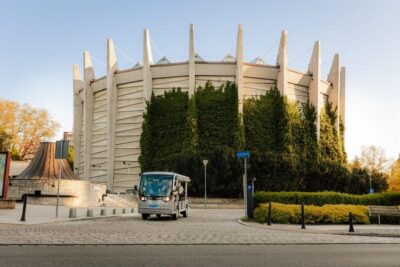
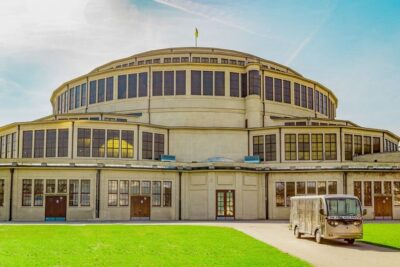
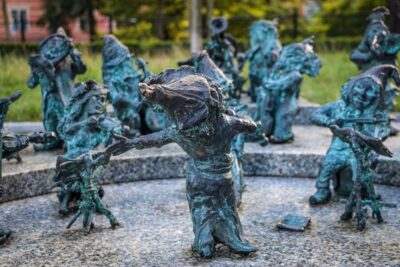
Old Town and Ostrów Tumski Walking Tour in English
Read our review →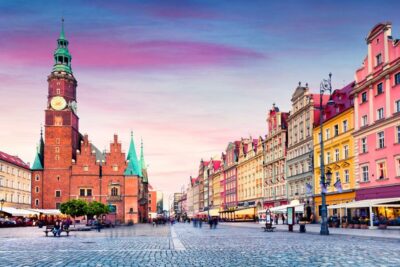
Private Old Town Guided Walking Tour (2 hours)
Read our review →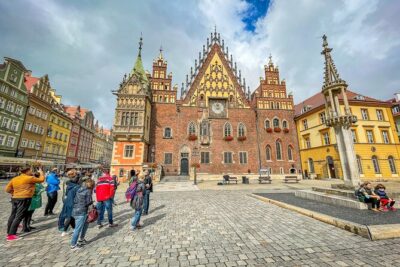
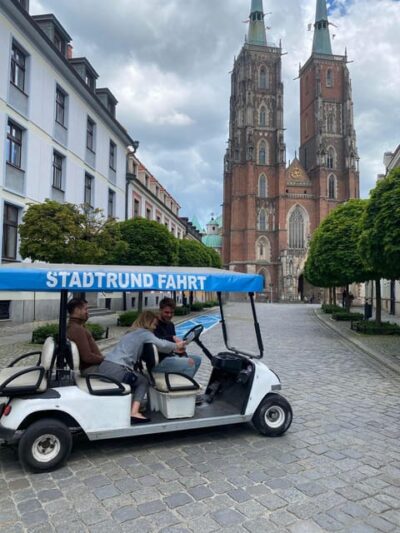
City Tour Sightseeing By Golf Cart Shared Or Privat
Read our review →
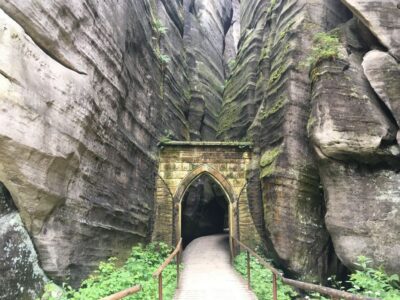
Adršpach: The Chronicles of Narnia Tour with Guide
Read our review →Browse the lists this tour appears in