
REVIEW · AUSCHWITZ-BIRKENAU MEMORIAL TOURS
From Wroclaw: Guided Tour to Auschwitz-Birkenau and Krakow
This is Poland’s longest, most serious day trip. I like the direct train start from Wroclaw Główny, which avoids hotel pickups, and I like the well-organized Auschwitz visit, with transport, museum entry, and an English-speaking guide arranged together. The tradeoff is clear: this is a very long day, often beginning around 5 a.m. and ending close to 11 p.m.
I also appreciate the chance to see Krakow in the same outing, even if your two hours there only allow a quick look at the Old Market and nearby streets. Train delays are possible, as one departure experienced a 45-minute delay, so you should book this for a day when you can handle a little uncertainty.
In This Review
- Key points to know before booking
- Leaving Wroclaw from Główny Station
- The short Krakow connection
- Entering Auschwitz I and understanding the site
- Walking through Auschwitz II-Birkenau
- Returning to Krakow for only two hours
- The long train ride back to Wroclaw
- What the $190 price really covers
- Who will get the most from this experience?
- Small details that make the day easier
- Should you book this tour?
- FAQ
- Where does the tour begin?
- How long is the full experience?
- How long is the train ride from Wroclaw to Krakow?
- How do I find the Auschwitz meeting point in Krakow?
- How much time is spent at Auschwitz-Birkenau?
- Is the Auschwitz entrance included?
- Is food included?
- What should I bring to the museum?
- Is the tour suitable for people with mobility impairments?
Key points to know before booking
- A 3.5-hour train ride each way makes this practical from Wroclaw, but tiring.
- About 3.5 hours at Auschwitz-Birkenau gives you time at both Auschwitz I and Auschwitz II-Birkenau.
- A guide makes the memorial easier to understand, with the tour led in English and guides such as Jacob praised for clear explanations.
- Two hours in Krakow is a preview, not a full city visit, but it is enough for a walk, dinner, and the medieval market square.
- Large bags cannot enter the museum, so keep your luggage small and leave larger items on the bus.
- The $190 price includes the major transport and entry costs, making it convenient, though the value depends on how much you want to see Krakow that day.
Leaving Wroclaw from Główny Station
Your day begins at Wrocław Główny, the city’s main railway station. This is a sensible meeting point. You do not lose time waiting for a van to collect people from hotels all over Wroclaw, and you can go straight to your assigned train carriage.
At least three days before departure, you receive the train ticket by email. It includes the departure time, carriage number, and seat numbers. Read this email carefully. Your ticket is the key to a smooth start, since the tour does not begin with a staff member gathering everyone in a hotel lobby.
The train ride to Krakow takes about 3 hours and 20 minutes. That is a large chunk of the day, but it also gives you a chance to rest before the museum visit. Bring food and water, since meals are not included. You should also keep your ID documents with you, as every participant is required to bring them.
The schedule can be affected by rail delays. A 45-minute delay occurred on one departure, and a delay matters on a tightly timed day like this. I would avoid arranging an important evening commitment in Wroclaw. The advertised length is 16 hours, but the real return time can shift.
More Auschwitz-Birkenau memorial tours:
- Auschwitz-Birkenau Tour from Wrocław
★ 5.0 · 129 reviews - From Wrocław: Full-Day Auschwitz-Birkenau Guided Tour
★ 4.8 · 117 reviews - Auschwitz-Birkenau Tour from Wroclaw
★ 4.8 · 31 reviews
The short Krakow connection
When you arrive in Krakow, you have a 20-minute break before joining the Auschwitz transport. The meeting point is about a seven-minute walk from the station, and you receive a map and clear directions.
That short walk is useful, but do not treat the break as a relaxed Krakow visit. You need to find the meeting point, use the facilities if needed, and be ready for the next part of the journey. A few spare minutes are far more useful here than wandering off to find a café.
From Krakow, the drive to the museum takes about 1.5 hours by car, minivan, or bus. This road portion adds to the length of the day, but it connects the city visit with the main purpose of the outing without requiring you to arrange a separate Auschwitz transfer.
The transport format can vary, so you should expect a shared vehicle rather than a private car. The exact schedule can also change because the museum assigns guided tour times according to availability.
Entering Auschwitz I and understanding the site
The guided visit lasts about 3.5 hours in total. Around two hours are spent at Auschwitz I, the older section of the camp, followed by about one hour at Auschwitz II-Birkenau.
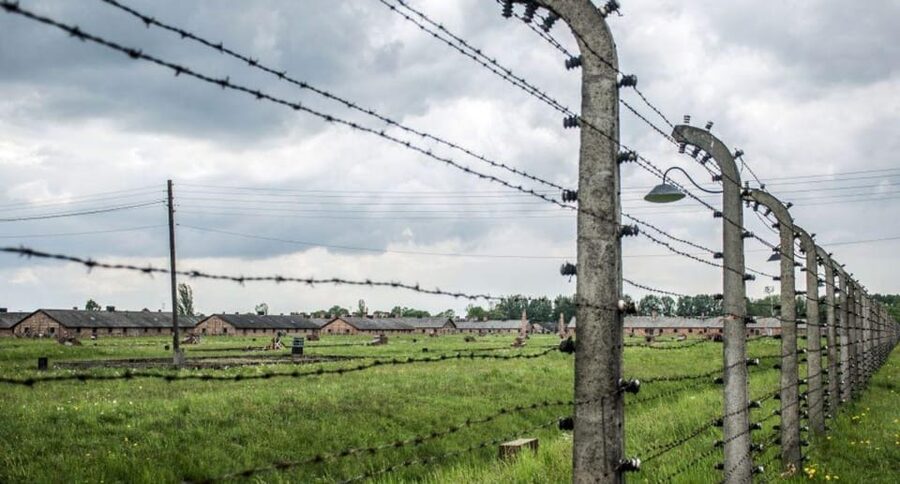
Auschwitz I was designed mainly for political prisoners. You walk among the former barracks, guard towers, and other preserved parts of the camp. The setting can feel orderly at first, but that order is part of what makes the place so difficult. The buildings and paths are not simply old structures. They are the remains of a system built for imprisonment, abuse, and murder.
An English-speaking guide provides the historical framework, which is important here. Without context, you might see barracks and fences but miss how the camp operated and how different prisoner groups were treated. The tour explains the role of Auschwitz in the history of the Holocaust and World War II.
Guide Jacob received particular praise for helping visitors understand the museum. That detail matters because this is not a site where a quick walk and a few photographs tell you enough. Clear explanation helps you connect the buildings to the people and events they represent.
The subject matter is distressing. You should expect a serious, emotionally demanding visit rather than a standard sightseeing stop. The museum presents the horrors of the former German concentration and extermination camp directly, and the experience may change how you think about familiar accounts of World War II.
Walking through Auschwitz II-Birkenau
The second section, Auschwitz II-Birkenau, is larger and more closely linked with the planned extermination of Jews and Roma. You have about an hour here, enough to see key parts of the site with the guide.
The scale is important. Auschwitz I can feel like a contained museum complex, while Birkenau gives you a stronger sense of distance and size. Guard towers, barracks, and the remains of cremation sites help show how the camp was organized.
Your time at Birkenau is shorter than at Auschwitz I, but that does not make it less important. The two areas explain different parts of the camp system, and visiting both gives you a fuller understanding than seeing only one site.
Wear practical clothing and shoes. The tour involves walking through a historic memorial site, and this is not suited to anyone who cannot manage extended movement. The experience is specifically listed as unsuitable for people with mobility impairments.
Large bags are not allowed inside the museum. You can leave them on the bus, but I would bring only what you need for the day. A small bag, ID, water, and any essential items are the sensible approach.
A few more in Wroclaw
- Wroclaw: E-Car Tour and Audio Guide
★ 4.6 · 1,738 reviews - Wroclaw: 2-Hour Private Guided Tour by Electric Car
★ 4.8 · 805 reviews - Wrocław: Old Town and Ostrów Tumski Walking Tour in English
★ 4.8 · 311 reviews - Wroclaw: Private Old Town Guided Walking Tour (2 hours)
★ 4.8 · 275 reviews
Returning to Krakow for only two hours
After the museum visit, you take the 1.5-hour ride back to Krakow. You then have about two hours for free time, dinner, sightseeing, and a walk before the train to Wroclaw.
This is the part of the day where expectations matter most. You will not see all of Krakow in two hours. You can, however, get a useful first taste of the city, especially if you stay near the central area.
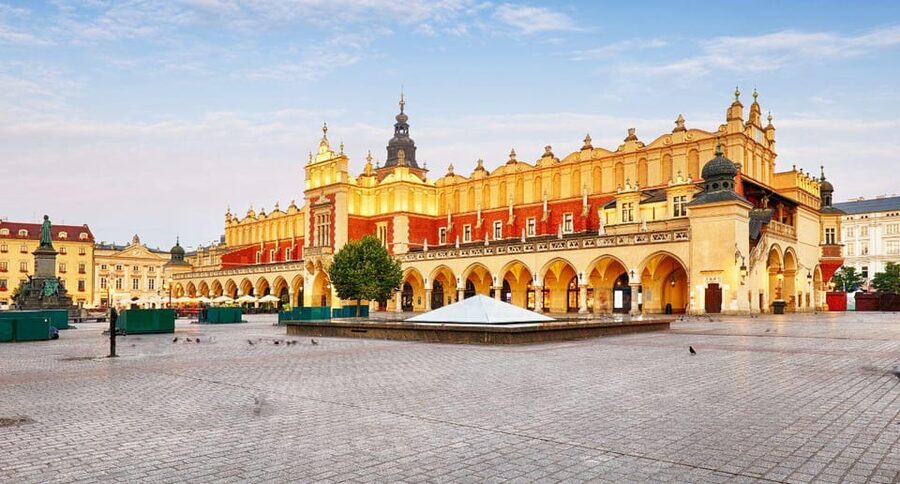
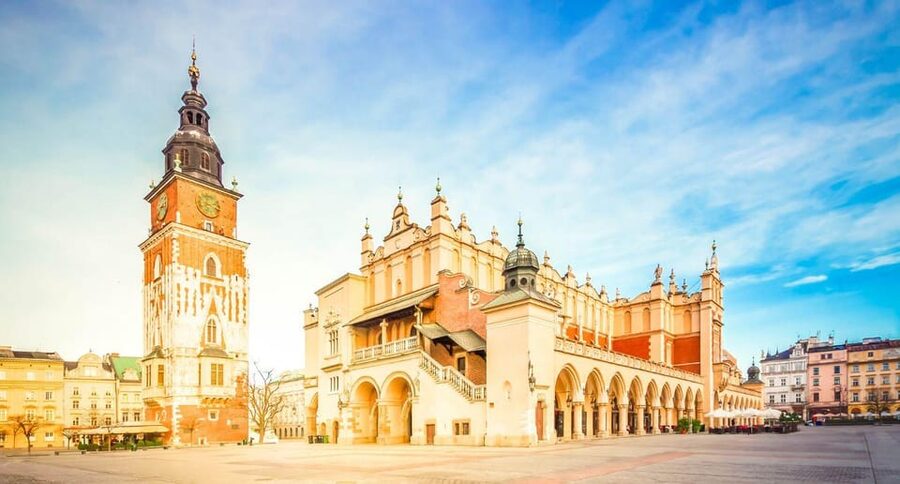
The Old Market is the obvious target. It is described as the largest medieval market square in Europe and is part of Krakow’s UNESCO World Heritage listing. The square gives you a compact introduction to the city’s historic center, with room for a walk and a meal.
I would plan this time before you arrive. Decide if you care more about seeing the square, eating dinner, or simply sitting down after the museum. Trying to cover too much can turn the break into another race against the clock.
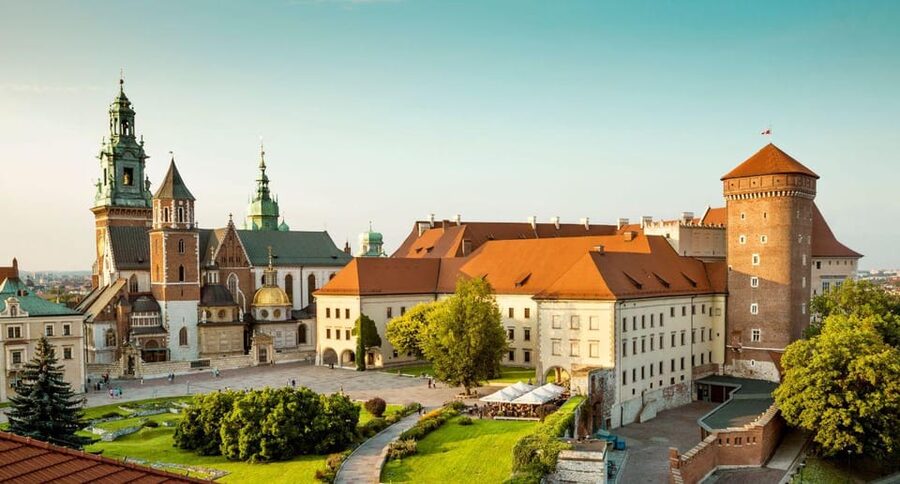
Krakow is a major cultural and historical stop in Poland, so the free time is valuable even though it is brief. You get a sense of the city’s beauty and importance, but you should think of this as an introduction. If Krakow is a main reason for your trip, book a separate stay there instead of relying on this outing.
The long train ride back to Wroclaw
The return train takes about 3 hours and 20 minutes. By this point, you will have spent hours on trains and roads, walked through a demanding memorial, and used your short Krakow stop for sightseeing.
That final train is useful recovery time, but it also explains why the tour is not for everyone. The day may begin around 5 a.m. and finish close to 11 p.m. The schedule is efficient, not gentle.
I would book this trip when you have no plans the following morning. You may be able to rest on the train, but you should not assume you will return refreshed. The strength of this arrangement is that it lets you visit two important places from Wroclaw in one day. Its weakness is that it leaves little room for delay or fatigue.
What the $190 price really covers
The cost is $190 per person. That includes the round-trip train tickets between Wroclaw and Krakow, transport between Krakow and Auschwitz, museum entry, the guided Auschwitz and Birkenau tour, and free time in Krakow.
Food and drinks are not included. You should budget for your own meals and carry water or snacks for the long transport portions.
I see the price mainly as a convenience charge. You are not piecing together separate train tickets, a Krakow to Auschwitz transfer, museum admission, and a guided visit on your own. The skip-the-line entrance also reduces the risk of wasting time at the museum, which matters on a day with such a tight schedule.
The value is strongest if you want Auschwitz as your priority and prefer a guided plan from Wroclaw. It is weaker if you dislike long day trips or want several hours in Krakow. Independent planning might give you more control, but it also requires managing the train connections, local transport, museum availability, and timing yourself.
Because the exact museum schedule depends on available guided tour times, you should accept that the order and timing may change. The essential stops remain the same, but the free time in Krakow could feel shorter or move around the day.
Who will get the most from this experience?
I would recommend this tour to you if you have limited time in Poland, are staying in Wroclaw, and want a structured visit to Auschwitz-Birkenau without spending the night in Krakow. The included transport removes much of the planning burden.
It also suits you if the historical purpose is more important than comfort. The museum visit is serious, guided, and long enough to cover both major sections. The experience is educational, but it is also emotionally heavy.
You may want a different plan if you have mobility limitations, need a slower pace, or want to explore Krakow properly. The day involves train travel, a long road transfer, and several hours on foot.
I would also think twice if you are uncomfortable with fixed schedules. You have a short connection in Krakow, a set museum visit, and a scheduled train home. There is little spare time if you stop for a long meal or get delayed.
Small details that make the day easier
- Keep your booking email available, since it contains your train carriage and seat information.
- Bring your ID documents. The museum requires full names and contact details as part of the booking.
- Pack light because large bags cannot enter Auschwitz-Birkenau.
- Carry food and drinks because they are not included.
- Plan to start very early and return late.
- Treat the Krakow stop as a short orientation, not a full city tour.
- Expect the tour to take place in English if your selected language is unavailable.
- Leave open space in your schedule in case the railway service runs late.
The most praised parts of the experience are its clear organization, the ease of getting from Wroclaw to Krakow, and the quality of the museum guiding. Jacob, in particular, was singled out for making the history easier to understand, while another review simply praised the guide for being informative.
Should you book this tour?
Book it if you want Auschwitz-Birkenau to be the main purpose of the day and you value having the trains, transfers, tickets, and guide arranged in one package. The Krakow stop adds a welcome glimpse of the city, and the direct start at Wrocław Główny keeps the morning simpler.
Skip it if you need a relaxed schedule, a full Krakow visit, or a tour suitable for limited mobility. At $190, the value comes from convenience and access, not from comfort or generous free time.
For the right person, this is a powerful and practical way to visit Auschwitz from Wroclaw. Just book it with clear expectations: it is a long day, the subject is painful, and Krakow is only a brief taste. The organization makes the difficult logistics manageable, while the guided visit gives the memorial the care and context it deserves.
FAQ
Where does the tour begin?
The tour begins at Wrocław Główny Railway Station, where you board the train to Krakow.
How long is the full experience?
The advertised duration is 16 hours. The schedule includes train travel, road transfers, the museum visit, free time in Krakow, and the return journey to Wroclaw.
How long is the train ride from Wroclaw to Krakow?
The train ride takes about 3.33 hours each way, or roughly 3 hours and 20 minutes.
How do I find the Auschwitz meeting point in Krakow?
The meeting point is about a seven-minute walk from Krakow train station. You receive a map and clear instructions before the connection.
How much time is spent at Auschwitz-Birkenau?
The guided museum visit lasts about 3.5 hours. Around two hours are spent at Auschwitz I and about one hour at Auschwitz II-Birkenau.
Is the Auschwitz entrance included?
Yes. Skip-the-line entrance tickets to Auschwitz and Birkenau are included, along with the guided tour.
Is food included?
No. Food and drinks are not included, so you need to arrange your own meals and refreshments.
What should I bring to the museum?
Bring your ID documents and avoid large bags. Large bags are not allowed inside the museum and can be left on the bus.
Is the tour suitable for people with mobility impairments?
No. The experience is listed as unsuitable for people with mobility impairments.
Just added in Wroclaw
- From Wrocław: Świdnica Church of Peace Private Tour★ 4.7 · 3 reviews
- Segway Tour Wroclaw: Full Tour (Old Town + Ostrów Tumski)★ 4.8 · 15 reviews
- From Wroclaw: Polish Pottery and Jawor Church of Peace Tour★ 4.4 · 4 reviews
- Cathedral & Old Town★ 5.0 · 9 reviews
- Oder river cruise and walking tour of Wroclaw★ 4.8 · 5 reviews
- Night tour through Wroclaw★ 4.9 · 38 reviews
- Wrocław: Polish Craft Beer Walking Tour with Tastings★ 4.1 · 3 reviews
- Legends of Old Town 1 Hour Walking Tour in Wroclaw (English)★ 4.9 · 20 reviews