
REVIEW · WROCłAW TOURS
Famous Islands of Wroclaw – Cathedral Island and Sand Island Private Tour
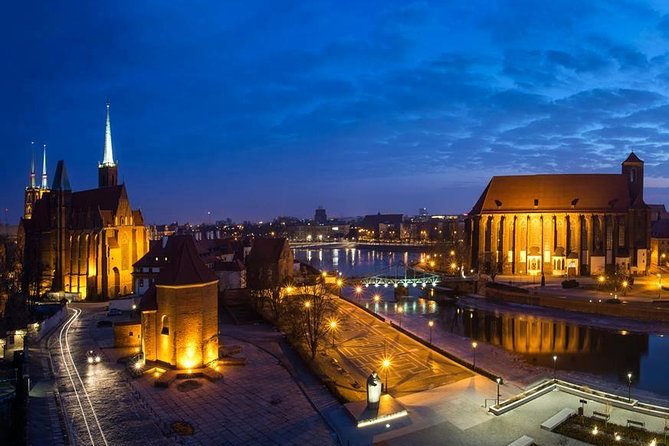
Churches, bridges, and a few excellent secrets. This private walking tour brings you through Wroclaw’s Cathedral Island and Sand Island, two of the city’s most atmospheric areas, with a guide explaining the people, buildings, and strange turns of the past. I like the small private format, which lets you ask questions instead of keeping pace with a large crowd. I also like the easy start outside Wroclaw Cathedral and the finish at Sand Bridge.
The main consideration is the price: at $75 per person, this is not a casual budget walk, especially for one hour 40 minutes to two hours. You are paying for personal guiding and focused sightseeing, not transport or entry to a long list of interiors. The walking itself is described as easy, but the tour does require good weather.
In This Review
- Key points at a glance
- Why Wroclaw’s islands make a strong walking route
- Starting outside Wroclaw Cathedral
- Cathedral Island’s oldest church and its odd landmarks
- The Archbishop’s Palace and the 80 million zloty story
- The two-tier Church of the Holy Cross and Bartholomew
- Crossing Tumski Bridge toward Sand Island
- Our Lady on the Sand and the final church stop
- Is $75 per person good value?
- Who should book this private walk?
- Should you book the Cathedral and Sand Island tour?
- FAQ
- Where does the tour start?
- Where does the tour finish?
- How long does the tour last?
- Is this a private tour?
- What language is the tour offered in?
- Is the walking tour suitable for most people?
- What happens if bad weather cancels the tour?
Key points at a glance
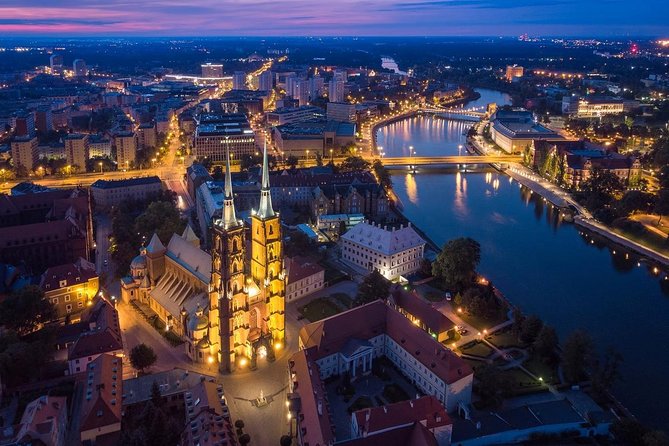
- Start at Wroclaw Cathedral: Meet outside the main entrance at Plac Katedralny 18, giving you an immediate look at one of the city’s most important religious districts.
- Hear the story of a vanished island: Your guide explains why Cathedral Island is no longer fully surrounded by water and why dukes and clergy once chose to live there.
- See several Gothic landmarks close together: The route includes St. Giles, the Church of the Holy Cross and Bartholomew, and the Church of Our Lady on the Sand.
- Look for unusual details: The Leaning Tower of Wroclaw, Dumpling Gate, a copy of the Turin shroud, and a secret wartime-era money story give the walk more character than a standard church circuit.
- Finish on Sand Island: The route crosses Tumski Bridge and ends at Sand Bridge, near the former Augustinian monastery and old tenement houses.
- Private means your pace matters: Only your group takes part, making it easier to stop for questions or spend a little longer at a favorite building.
Why Wroclaw’s islands make a strong walking route
Wroclaw’s oldest religious quarter is compact, but it is not short on stories. Cathedral Island and Sand Island sit close together, so you can cover major landmarks without spending much of the tour searching for them across the city.
I like this route because the buildings do not arrive as disconnected photo stops. The guide links them to the people who lived here, the authority once held by the church, and the way the islands changed over time. You get architecture, local politics, religion, and a few memorable oddities in one walk.
The tour lasts roughly 100 to 120 minutes. That is enough time for a useful introduction to the area without turning into an all-day march. You should still wear comfortable shoes. The tour is described as an easy walking experience, but the route is taken on foot from the cathedral area to Sand Bridge.
The private setup changes the feel of the outing. In a large group, you often hear a short speech, take a picture, and move on. Here, you can ask why a building matters, request more detail about a story, or slow down when the architecture catches your eye. The value depends on how much you enjoy guided context. If you prefer to wander alone with a map, $75 per person may feel high.
A few more in Wroclaw
- Wroclaw: E-Car Tour and Audio Guide
★ 4.6 · 1,738 reviews - Wroclaw: 2-Hour Private Guided Tour by Electric Car
★ 4.8 · 805 reviews - Wrocław: Old Town and Ostrów Tumski Walking Tour in English
★ 4.8 · 311 reviews
Starting outside Wroclaw Cathedral
The tour begins outside the main entrance of Wroclaw Cathedral at Plac Katedralny 18. This is a practical meeting point because you do not need to hunt for a small office or locate a distant pickup vehicle. You begin in the middle of the district you came to see.
From here, the guide introduces Cathedral Island and explains an intriguing basic fact: it is not an island anymore. That question gives the opening of the walk a clear purpose. Instead of simply admiring the buildings, you start by considering how water, authority, and settlement shaped the area.
The guide also explains why dukes and clergy chose to live here centuries ago. That context helps you read the surroundings. The district was not just a collection of churches. It was a place where religious and political power gathered, and where the island’s position offered practical advantages.
One of the more unusual stories concerns wrongdoers who could escape justice by reaching the island. I enjoy details like this because they turn an impressive but quiet church district into a place with tension and human drama.
Cathedral Island’s oldest church and its odd landmarks
The first section takes you around the picturesque Cathedral Island. One important stop is the Church of St. Giles, described as the oldest existing church in Wroclaw. Even if you are not an architecture specialist, that label gives the building weight. You are not just looking at an old church facade, but at one of the city’s surviving links to its earliest religious past.
The route also brings you to the Leaning Tower of Wroclaw. Its name alone promises a pause for photographs, but the larger value comes from hearing how it fits into the neighborhood. The tour does not treat every stop as a grand monument. Smaller and stranger details help balance the major churches.
Dumpling Gate adds another bit of local character. It is the sort of stop that makes a walking tour feel tied to Wroclaw rather than interchangeable with any European church district. Your guide includes it alongside the major sights, giving you a mix of architecture, stories, and visual details.
Near this part of the route is an entrance to the 19th century Botanical Gardens. The tour does not say that garden admission is included, so think of it as an optional nearby idea for later rather than a promised part of the walk. If you enjoy parks and plants, you may want to return after the tour and explore it separately.
The Archbishop’s Palace and the 80 million zloty story
The stop at the Archbishop’s Palace shifts the focus from old masonry to modern Polish history. Here, the guide tells the story of a brave cardinal who hid 80 million zloty for the Solidarity movement in 1980, followed by what happened to the money.
This is one of the tour’s strongest details because it connects the religious quarter to a period of major political change. You are not only hearing about medieval dukes and clergy. You also get a story about courage, trust, and the role of church figures during a difficult chapter in Poland.
The information supplied for this tour does not identify the cardinal by name, so you should not expect the written description alone to provide that detail. Ask your guide if you want to place the story more precisely in the history of Wroclaw and Poland.
I find this kind of stop especially useful for anyone who wants more than pretty church photographs. The buildings give you the setting, but the money story gives the neighborhood a living connection to the recent past.
Something quite different:
- Wroclaw: Private Old Town Guided Walking Tour (2 hours)
★ 4.8 · 275 reviews - Old Town Wrocław Walking Tour
★ 5.0 · 249 reviews - Wroclaw: City Tour Sightseeing By Golf Cart Shared Or Privat
★ 4.8 · 189 reviews - Auschwitz-Birkenau Tour from Wrocław
★ 5.0 · 129 reviews
The two-tier Church of the Holy Cross and Bartholomew
Across from the Archbishop’s Palace, you will see a distinctive two-tier building: the Church of the Holy Cross and Bartholomew. It is described as one of the most beautiful Gothic churches in Silesia, and its unusual stacked arrangement makes it a memorable sight even from outside.
The church also contains a copy of the Turin shroud. That detail adds a layer of mystery and religious interest, though the tour description does not promise a special viewing or confirm access to every interior. Your guide can explain the significance and point out what you can see during the visit.
This is a good example of why the private format can be useful. A building with two churches arranged one above the other invites questions. You can ask how the structure works, who used it, and why it became such an important part of the district.
The route also includes stories about other major buildings nearby, including Orphanotropheum, a former orphanage. These extra references help you understand that the quarter was once a working community with institutions for worship, education, charity, and residence.
Crossing Tumski Bridge toward Sand Island
You finish the Cathedral Island portion by crossing Tumski Bridge. The bridge represents the former border of the church’s jurisdiction and leads you toward Sand Island.
That change of direction gives the tour a natural shape. You begin at the cathedral, move through the religious center, then cross a historic boundary into another island district. It is a simple walk, but the guide’s explanation gives the bridge a role in the story rather than leaving it as a mere connection between two points.
The ending is also practical. You do not have to retrace your steps to the cathedral. The route continues to Sand Island and finishes at Sand Bridge, also called Most Piaskowy. If you are planning the rest of your day around central Wroclaw, a point-to-point walk can save time.
Because the tour is dependent on weather, bring suitable clothing and check the forecast. If poor weather forces cancellation, you are offered another date or a full refund. For a walking tour built around bridges, open streets, and exterior views, that policy makes sense.
Our Lady on the Sand and the final church stop
On Sand Island, the main sight is the Church of Our Lady on the Sand. It is described as the largest Gothic church in Wroclaw, so this is not a minor final stop. The church gives the last part of the tour a strong architectural finish.
You will also see the former Augustinian monastery and charming tenement houses. These are important because they show the residential side of Sand Island. The tenements are described as the only remains of the old residential buildings on the island, making them especially valuable for anyone interested in how the district once looked beyond its churches.
The tour does not promise extended interior visits, and the duration is fairly short. If you want to study every facade, sit quietly inside a church, or photograph each detail in changing light, you may need to return on your own. The guided walk is best understood as a focused orientation with stories, not a full architectural research visit.
The final stop at Sand Bridge provides a clear endpoint. You finish with the island district behind you and can continue exploring from there. The end point is especially convenient if you want to keep walking through central Wroclaw rather than returning to the starting cathedral.
Is $75 per person good value?
The price is $75 per person, with group discounts available. For a private tour lasting about one hour 40 minutes to two hours, the cost will feel reasonable only if personal attention matters to you.
You are paying for a guide-led experience for your own group, not a general city tour with dozens of people. That can be worthwhile for couples, families, or small groups who want to ask questions and move at a comfortable pace. It also removes the pressure of keeping up with strangers.
On the other hand, the tour covers a compact area and does not list transportation or extensive admission inclusions. If you mainly want a route map and a quick look at the churches, you could explore the islands independently for less money.
The published score is 4.9 from 13 ratings, with 100 percent recommending the experience. One especially positive assessment praised the four beautiful old churches, the amount of historical explanation, and the easy walking pace. That matches the tour’s clearest strength: it offers a lot of architectural interest without demanding a hard physical effort.
Who should book this private walk?
I would choose this tour if you are visiting Wroclaw for the first time and want a clear introduction to Cathedral Island and Sand Island. It suits you particularly well if church architecture, local stories, and Polish history are high on your list.
It is also a good fit for:
- Couples who want a private and unhurried walk
- Families who benefit from a guide answering questions as they arise
- Small groups who can use the group discount
- Visitors who prefer English-language guiding
- Anyone who wants a short activity that leaves most of the day free
You may want to skip it if you dislike guided walks, have already studied the islands closely, or want a tour built around long interior visits. The route is easy, but it is still a walking tour and requires good weather.
Confirmation arrives at booking. Service animals are allowed, public transportation is nearby, and most people can take part. The tour is offered in English and only your group participates.
Should you book the Cathedral and Sand Island tour?
Book it if you want the churches to make sense, not just appear as attractive old buildings. The best parts are the private format, the compact route, and the mix of major Gothic sights with unusual stories such as the island’s old jurisdiction, the Leaning Tower, Dumpling Gate, and the 80 million zloty linked to the Solidarity movement.
At $75 per person, it is a premium short walk. I would find the price easiest to justify for a small group that values a personal guide. If you are traveling alone on a tight budget, explore the area independently and spend the money elsewhere.
For a first visit, though, this is a useful way to get your bearings fast. You start at Wroclaw Cathedral, finish at Sand Bridge, and leave with a clearer sense of how religion, power, politics, and daily life shaped these remarkable islands.
FAQ
Where does the tour start?
The tour starts outside the main entrance of Wroclaw Cathedral at Plac Katedralny 18, 50-329 Wroclaw, Poland.
Where does the tour finish?
The tour finishes at Sand Bridge, also called Most Piaskowy, in Wroclaw.
How long does the tour last?
The tour lasts approximately one hour 40 minutes to two hours.
Is this a private tour?
Yes. Only your group participates in the activity.
What language is the tour offered in?
The tour is offered in English.
Is the walking tour suitable for most people?
Most people can participate, and the walk is described as easy. Service animals are allowed, and the route is near public transportation.
What happens if bad weather cancels the tour?
If the experience is canceled because of poor weather, you will be offered a different date or a full refund. You can also cancel for a full refund if you do so at least 24 hours before the start time.
Just added in Wroclaw
- Wroclaw: WW2 Tour to Project Riese & Gross-Rosen Museum★ 4.8 · 26 reviews
- Wrocław: World War II and the non-existent city of Breslau★ 3.6 · 3 reviews
- Wroclaw : Walking Custom Tour with a Local Guide★ 4.8 · 3 reviews
- Wroclaw: University Baroque Tour★ 5.0 · 19 reviews
- Wroclaw: 3-Hour Bike Tour in English or Polish★ 4.8 · 66 reviews
- Wrocław: Tour of the Old Town in an Imperial E-car★ 4.3 · 13 reviews
- Wrocław: Venice of the North! Monuments on the Odra River 2h★ 5.0 · 2 reviews
- Wroclaw to Rock City in Adrspach and Ksiaz Castle day trip★ 4.9 · 16 reviews
Wrocław Tours, compared.


Old Town and Ostrów Tumski Walking Tour in English
Read our review →
Private Old Town Guided Walking Tour (2 hours)
Read our review →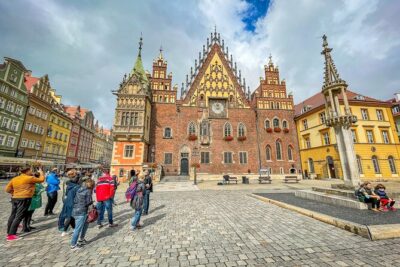
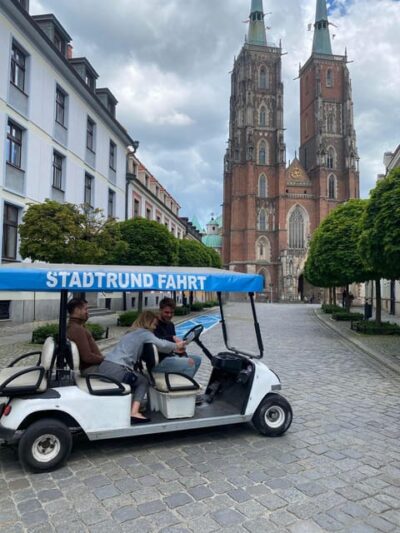
City Tour Sightseeing By Golf Cart Shared Or Privat
Read our review →
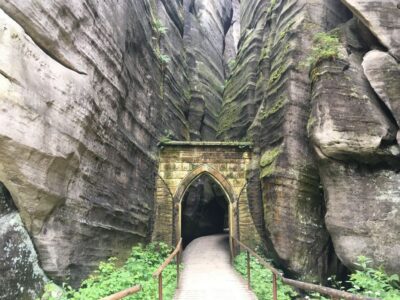
Adršpach: The Chronicles of Narnia Tour with Guide
Read our review →Browse the lists this tour appears in