
REVIEW · AUSCHWITZ-BIRKENAU MEMORIAL TOURS
Auschwitz-Birkenau Tour with Transfer
Some journeys deserve careful planning. This Auschwitz-Birkenau tour from Krakow combines transport, museum admission, and an English-speaking guide at the camps, making a difficult day easier to arrange. I like the clear two-camp itinerary, and I like that you can choose a guided or non-guided option.
The main drawback is the unstable schedule. A pickup advertised for late morning can become a 3:00 or 4:00 AM departure, and long waits before entry have left some people standing in cold or wet weather. You need to treat the chosen time as a preference, not a promise.
In This Review
- Key points to know before booking
- What this Krakow to Auschwitz trip really offers
- Pickup across Krakow and the long morning transfer
- Entering Auschwitz I and seeing the original camp
- The transfer to Birkenau and the scale of the second camp
- Waiting, queues, and the part no timetable can solve
- Food, bags, and what you should carry
- Guided or non-guided: which option suits you?
- The ride back to Krakow and the final drop-off
- Who should book this Auschwitz transfer?
- Should you book this tour?
- FAQ
- How long does the Auschwitz-Birkenau tour from Krakow take?
- Does the price include admission to Auschwitz I and Birkenau?
- Is transport from Krakow included?
- When will I receive my exact pickup time?
- Can I choose my preferred departure time?
- Is an English-speaking guide included?
- Are headsets provided at Auschwitz?
- Can I bring a large backpack?
- Is lunch included?
Key points to know before booking
- A full-day commitment: Plan on 8 to 9 hours, with about 65 kilometers between Krakow and the museum area.
- Both camps are included: You visit Auschwitz I and Auschwitz II Birkenau, which gives you a fuller understanding of the site.
- Museum-led touring: The official guide normally leads groups of up to 30 people, with headsets provided.
- Pickup is flexible but not fixed: There are several Krakow meeting points, yet the exact departure time may arrive only after 5:00 PM the day before.
- Bring food and warm clothing: Lunch is not included, breaks can be short, and waiting outside may happen.
- Read the fine print carefully: Last-minute schedule changes and cancellations are the main weaknesses of this experience.
What this Krakow to Auschwitz trip really offers
At $132.75 per person, this is not the cheapest way to reach Auschwitz-Birkenau. You are paying for round-trip transport, entry to both sections of the museum, an English-speaking tour leader, the official museum visit, and help with the complicated timing.
That package can be useful in Krakow, where finding the right transport and securing museum entry takes effort. The site is 65 kilometers from the city, and access is controlled by timed admission. If you want someone else to coordinate the vehicle, tickets, meeting points, and transfer between Auschwitz I and Birkenau, the price can make sense.
The value drops if the operator changes your pickup time or leaves you waiting for hours. Several bookings originally made for morning or afternoon departures were moved to very early starts. Some people were also affected by cancellations close to the visit date, when alternative tickets were hard to find.
I would book this only after deciding that convenience is worth paying for, and only if you have enough flexibility in your Krakow schedule.
More Private Transfers in Kraków
- Krakow to Auschwitz Birkenau Guided Tour with Transfer and Ticket
★ 5.0 · 8,197 reviews - From Krakow: Auschwitz Birkenau Tour with Transfer
★ 4.0 · 6,134 reviews - Krakow: Auschwitz-Birkenau Guided Tour with Ticket and Transfer
★ 4.5 · 3,784 reviews
Pickup across Krakow and the long morning transfer
Pickup begins in the southern part of Krakow, including the Podgórze district, then continues through several meeting points. The final listed point is Hotel Maltański at Straszewskiego 14. Depending on where you join, the vehicle may spend around 40 minutes collecting the group.
That system gives you several ways to reach the departure, but it also makes the start less tidy than a single central meeting point. You must check your pickup details carefully and wait for the exact time, which is sent after 5:00 PM the evening before.
The advertised departure window can be as early as 3:00 to 4:00 AM. This is driven by the museum’s ticket and guide availability, not simply by the company’s preferred timetable. Even if you choose a later time while booking, the final slot is not guaranteed, and a change within 24 hours may not qualify for a refund.
The vehicle is air-conditioned, and the drivers are licensed for passenger transport under European Union rules. The tour leader travels with the group and can help with basic questions during the journey. Some tours use a minibus, and one complaint described the vehicle as cramped, so do not assume a roomy coach.
The drive from the first pickup area to Auschwitz takes about 1 hour and 15 minutes. Add the city collection time, traffic, and possible waiting before admission, and the whole day can become tiring before the museum visit even begins.
Entering Auschwitz I and seeing the original camp
After arrival, you usually get a short break for coffee or the bathroom. This is useful, since the visit itself includes a great deal of walking and the breaks between sections are not long.
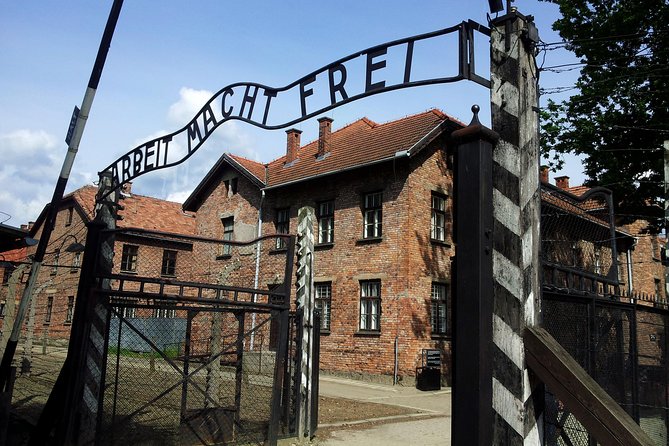
Entry begins with airport-style security and metal detectors. You then pass through an underground tunnel toward the original Auschwitz entrance, marked by the well-known Arbeit Macht Frei sign. From there, the official museum guide leads the group through the grounds and exhibitions.
The Auschwitz I section uses original buildings and displays to show the camp system in concrete, unsettling detail. You can expect to enter former prisoner blocks and see photographs, prisoners’ pottery, and other preserved objects. One of the most difficult exhibits concerns the human hair taken from victims.
The guide also takes you to Block 11, associated with imprisonment and punishment, then past the Death Wall and the gallows connected with Rudolf Höss. The tour continues to the gas chamber and crematorium at Auschwitz I. These are not quick photo stops. The setting asks for quiet attention and respectful behavior.
The official museum guide is one of the strongest parts of the day. The guides are trained to explain the site and answer questions, and headsets help you hear in a group of as many as 30 people. Several people found the guiding clear, precise, and informative.
There is a trade-off. A guided group moves at the museum’s pace, not yours. If you pause to read every panel or need extra time in a particular room, you may have to catch up. One group that expected a self-guided visit was placed into a guided tour instead, which caused real frustration.
Check exactly which option you are buying. A non-guided choice may offer more freedom, but it does not necessarily mean you can wander without transport or scheduling limits.
The transfer to Birkenau and the scale of the second camp
After Auschwitz I, there is a short break before the vehicle takes you roughly 3 kilometers to Auschwitz II Birkenau. This second site covers about 171 hectares, making it far larger and more open than Auschwitz I.
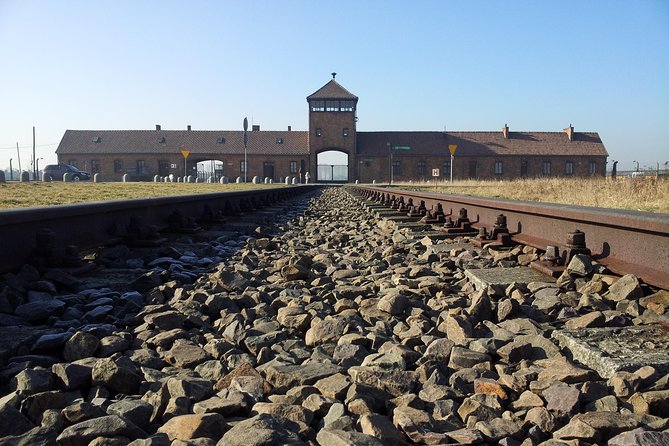
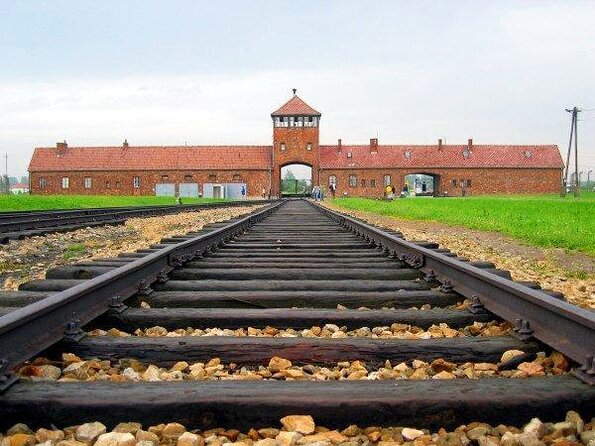
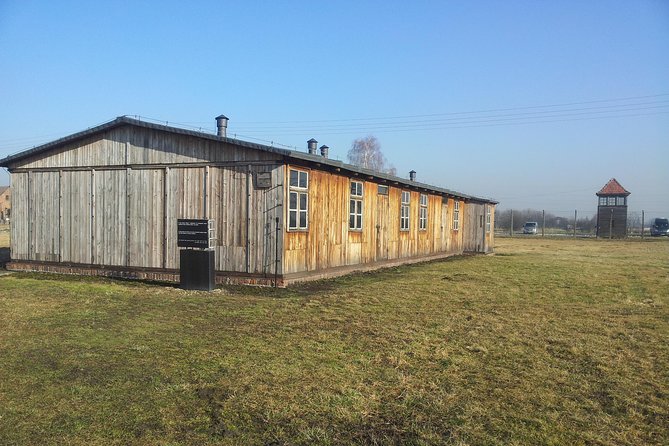
Birkenau gives you a different sense of scale. You can see the railway approach and the original freight wagon used to transport prisoners. The site includes wooden barracks, many originally designed as horse stables, as well as the ruins of four gas chambers and crematoria.
The open grounds can be stark and exposed. There is little protection from rain or sun, and the amount of walking can be substantial. Comfortable footwear is essential, while warm layers and waterproof clothing matter in colder months.
Timing is especially important here. Several people found the Birkenau visit rushed after delays at the first camp or on the road. One visit allowed only about 35 minutes in the final section. Another group spent roughly an hour there but arrived as daylight was fading, making parts of the site hard to see.
If you visit in autumn or winter, an early tour may give you better daylight at Birkenau. That advice needs to be balanced against the risk of a very early pickup and a long wait before entry. Ask yourself which inconvenience you can handle more easily.
A transport problem can also affect the visit. When a vehicle needs to move part of the group between sections, you might wait outside in rain while the transfer is completed. The site’s size makes this more than a minor delay.
More Auschwitz-Birkenau memorial tours:
- From Krakow: Auschwitz-Birkenau Guided Tour & Hotel Pickup
★ 4.5 · 33,358 reviews - From Krakow: Auschwitz-Birkenau Guided Tour & Hotel Pickup
★ 4.5 · 29,340 reviews - Krakow: Auschwitz Guided Tour with Optional Hotel Pickup
★ 4.5 · 15,280 reviews - Krakow: Auschwitz-Birkenau Guided Tour with Pickup & Lunch
★ 4.5 · 9,800 reviews
Waiting, queues, and the part no timetable can solve
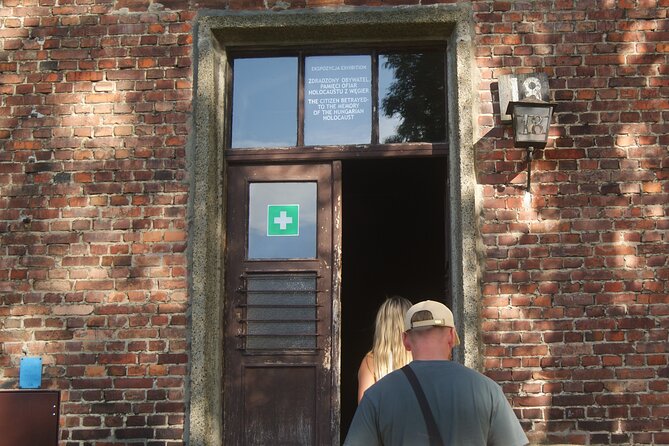
The biggest practical risk is not the drive. It is the uncertainty before entry.
Auschwitz-Birkenau receives thousands of people each day. Timed admission, security, ticket checks, and guide availability can create a queue before your visit begins. Some people have entered with little or no wait, while others have waited for an hour or much longer.
One particularly poor experience involved a five-hour wait outside in freezing conditions after a 3:00 AM pickup. The description of the wait as a chance to relax was not matched by that experience. Other people left the queue because they could not remain in the cold.
That is not a small detail. You need to carry weather protection even if Krakow looks pleasant when you leave. Take a warm layer, rain gear, water, and something to eat. The museum controls access and the pace, so the company cannot promise a smooth minute-by-minute schedule.
The operator says staff remain available during delays, but the level of support appears to vary. Some people praised tour leaders such as Renata, Jacob, Phillip, and Daniel for keeping the group informed and helping with the day. Others described rude communication or difficulty finding assistance.
I would arrive mentally prepared for waiting, rather than treating it as an unlikely exception.
Food, bags, and what you should carry
Lunch and drinks are not included. There is a restaurant and bookstore near the parking area, but the break may not be long enough for a proper meal, especially when queues are busy.
A lunchbox can be ordered separately for 30 złoty, with the order placed by email no later than 7:00 PM the day before. Still, be cautious with third-party payment links or WhatsApp messages. A food order connected with one visit never arrived, and the person who paid had trouble getting a response.
The safer plan is to bring your own snacks and water. Keep them discreet and eat only where permitted. Food, smoking, and loud behavior are forbidden at the museum sights.
Bag rules are strict. Backpacks and bags must be no larger than 30 by 20 by 10 centimeters, about 12 by 8 by 4 inches. You can leave larger belongings in the vehicle or use the luggage store at Auschwitz, but carrying a small bag from the start is simpler.
You also need the full names of everyone in your booking. Bring photo identification, since it may be checked at the entrance. Students seeking a youth fare must carry a valid student card on the day.
Guided or non-guided: which option suits you?
The guided option is best if you want the camp’s major buildings and exhibits explained in an orderly way. The official guide supplies context that is difficult to gain by walking around alone, and headsets make it easier to follow in a group.
The non-guided option may suit you if you need a slower pace or want more time with the displays. But it does not remove the fixed transport, entry, security, or museum opening constraints. One group that selected a non-guided tour was unexpectedly put into a guided visit, so confirm the arrangement before departure.
This is not an easy outing for young children. It is not recommended for children under 13, and younger children may visit without a headset and receiver. Children aged 3 to 11 receive admission without the standard audio equipment unless you book youth tickets.
Mobility also deserves serious thought. The grounds are large, the walking can be tiring, and there may be few places to sit or find shade. The guided pace can be hard to maintain, while waiting outdoors adds another challenge.
The ride back to Krakow and the final drop-off
After Birkenau, you return to the parking area for a short break. There are benches, a bookstore, and a restaurant, though you should not count on a long meal stop.
The return vehicle may drop you at one of two central meeting points rather than the exact place where you began. This is meant to avoid Krakow’s one-way streets, traffic, and vehicle-restricted zones. The tour leader may change the drop-off based on conditions that day.
That can be efficient, but it may leave you with a walk. One person reported being dropped about 24 minutes from the original pickup point. Ask the leader where the vehicle will stop and plan your onward route before the return journey.
The total duration is listed as approximately 8 to 9 hours. In practice, traffic, queues, early pickup changes, and the pace at both sites can stretch or compress the day. Do not schedule a flight, important dinner, or another timed attraction too closely afterward.
Who should book this Auschwitz transfer?
I think this works best for you if:
- You want transport and museum entry arranged together.
- You prefer an official guide to explain the site.
- You have a full day available and can accept an early start.
- You are comfortable walking outdoors in changing weather.
- You want to see both Auschwitz I and Birkenau.
- You do not want to work out the Krakow to museum transport yourself.
I would be cautious if your schedule depends on a specific departure time, if you have an afternoon flight, or if an early morning start is impossible. I would also think twice if anyone in your group has limited mobility or needs frequent rest stops.
The strong parts are real: the official guiding, the two-camp visit, the included transport, and the helpful tour leaders reported on well-run days. The weak parts are just as important: schedule changes, long queues, occasional cramped vehicles, rushed Birkenau visits, and uneven communication.
Should you book this tour?
Book it if you value convenience and can keep your day open from early morning until evening. The guided visit gives you much more context than arriving alone and guessing your way through the site, while the transfer removes a major transport chore.
Do not book it on a tight itinerary or assume the time you select will be honored. Contact support before paying if your departure must be at a particular hour, and keep all pickup messages and booking details.
At $132.75, the tour is fair value when the vehicle is on time, the museum entry is smooth, and the guide keeps the day moving with care. It is poor value when a last-minute change, cancellation, or long outdoor wait takes over the experience. Treat flexibility as part of the price.
FAQ
How long does the Auschwitz-Birkenau tour from Krakow take?
The tour lasts approximately 8 to 9 hours, including pickup, the journey from Krakow, visits to both camps, breaks, and the return transfer.
Does the price include admission to Auschwitz I and Birkenau?
Yes. Entry fees to Auschwitz I and Auschwitz II Birkenau are included.
Is transport from Krakow included?
Yes. Round-trip transport in an air-conditioned vehicle is included. Pickup is available from several Krakow meeting points, and accommodation pickup may be arranged at the nearest possible point.
When will I receive my exact pickup time?
The exact pickup time is sent after 5:00 PM on the day before the tour. It may be as early as 3:00 or 4:00 AM and depends on museum scheduling.
Can I choose my preferred departure time?
You may select a preferred time during booking, but it is not guaranteed. Entry depends on available tickets and museum guide schedules, and time changes made within 24 hours are not accepted.
Is an English-speaking guide included?
An English-speaking tour leader assists during the journey. A certified English-speaking museum guide is included if you select the guided option.
Are headsets provided at Auschwitz?
Yes. Visitors on the guided tour receive headsets so they can hear the museum guide. Children aged 3 to 11 receive admission without receivers and headphones unless youth tickets are booked.
Can I bring a large backpack?
No. Bags and backpacks must be no larger than 30 by 20 by 10 centimeters. Larger belongings can be left in the vehicle or placed in the luggage store at Auschwitz.
Is lunch included?
No. Food and drinks are not included. You can bring snacks or request a lunchbox for 30 złoty by contacting the operator by 7:00 PM the evening before.
Just added in Krakow
- Auschwitz-Birkenau – Skip the Line Tickets★ 3.5 · 29 reviews
- Auschwitz-Birkenau: Fast-Track Ticket & Guided Tour No Transfers★ 3.5 · 17 reviews
- Zakopane & Sleigh Ride with Bonfire – Group Tour from Kraków★ 5.0 · 2 reviews
- Sleigh Ride & Bonfire in Zakopane with Funicular – Private Trip★ 5.0 · 48 reviews
- Thermal Baths & Zakopane – Private Trip from Krakow★ 5.0 · 1 review
- Zakopane & Gubalowka Funicular – Private Winter Tour from Krakow★ 5.0 · 10 reviews
- stag dog chase Krakow prank★ 5.0 · 4 reviews
- Divine Mercy Sanctuary – Private Tour from Krakow★ 5.0 · 4 reviews