
REVIEW · AUSCHWITZ-BIRKENAU MEMORIAL TOURS
Auschwitz Birkenau Tour from Krakow: Private Transfer + Ticket
Some places demand your full attention. This Auschwitz Birkenau tour combines private hotel transfers with a guided visit to both camp sites, making a difficult day much simpler from Krakow. I especially like the door-to-door transport and the fact that admission to the Auschwitz-Birkenau Memorial and Museum is included.
I also value the professional museum guide, who explains the site with care rather than rushing through its painful history. The main drawback is that your private service applies to the car, not the museum tour. At Auschwitz, you join a larger group, and some visitors find the pace too quick to read every plaque or enter every exhibition.
In This Review
- Key Points to Know Before Booking
- Why This Auschwitz Visit Matters
- The 90-Minute Ride From Krakow
- Auschwitz I: Barracks, Exhibits, and the Arbeit Macht Frei Gate
- The Transfer to Birkenau
- What the Private Service Really Includes
- Is $214.32 Per Person Good Value?
- Practical Tips for a More Meaningful Day
- Who Should Book This Auschwitz Tour?
- Final Verdict: Convenient, Serious, and Not Fully Private
- FAQ
- How long does the Auschwitz Birkenau tour from Krakow take?
- Is hotel pickup included?
- Is the tour itself private?
- Is admission to Auschwitz-Birkenau included?
- What size bag can I bring?
- Is the tour offered in English?
- Can I cancel or change the booking?
Key Points to Know Before Booking
- Private ride from Krakow: Travel directly from your hotel to Oświęcim without collecting other passengers.
- Two separate camp sites: The visit includes Auschwitz I and Birkenau, about three kilometers apart.
- Museum guide, shared group: You receive a guided tour in your chosen language, but the walking portion is not private.
- About 7 to 8 hours overall: The road journey takes roughly 90 minutes each way, with around two and a half to three hours at the camps.
- Small bags only: Backpacks and handbags must not exceed 30 by 20 by 10 centimeters.
- A serious, physical visit: Expect uneven ground, stairs, long walks, and emotionally difficult subject matter.
Why This Auschwitz Visit Matters
Auschwitz is not a sightseeing stop in the usual sense. It is a place of murder, suffering, and remembrance. The former Nazi camp complex was established in 1940, first for Polish political prisoners, and later expanded to include Birkenau, also known as Auschwitz II.
By the end of the Second World War, an estimated 1.1 million people had been murdered there, most of them European Jews. Polish, Italian, French, and other prisoners were also sent to the camp system. The figures are enormous, but the site makes the crime painfully physical: barracks, fences, railway tracks, watchtowers, documents, and personal belongings remain in place.
I recommend visiting with a guide if this is your first time. The buildings alone cannot explain how the camp operated or how prisoners were processed. A good guide connects the places you see with the people who were imprisoned and killed there, while keeping the tone respectful.
Several people who had an excellent guide described the tour as informative, careful, and emotionally powerful. One guide was praised for explaining the site thoroughly without overwhelming the group. That balance matters here. You need clear facts, but you also need time to absorb what you are seeing.
More Private Transfers in Kraków
- Krakow to Auschwitz Birkenau Guided Tour with Transfer and Ticket
★ 5.0 · 8,197 reviews - From Krakow: Auschwitz Birkenau Tour with Transfer
★ 4.0 · 6,134 reviews - Krakow: Auschwitz-Birkenau Guided Tour with Ticket and Transfer
★ 4.5 · 3,784 reviews
The 90-Minute Ride From Krakow
Your day begins with pickup at your Krakow hotel at an agreed departure time. The car travels directly to the museum near Oświęcim, around 90 minutes away, without stopping for other passengers.
This is the strongest practical reason to choose this package. A private car avoids the work of finding a bus, dealing with a large coach, or arranging separate transport between the two camp sites. After the museum visit, the driver takes you back to the same starting area in Krakow.
The quality of the ride can vary. Several drivers were praised for being prompt, courteous, safe, and helpful. Drivers named Michael, Dominic, Conrad, Pieter, and Przemek received especially warm comments for their professionalism and conversation. One driver played a documentary about the camps during the journey, which helped prepare the passengers for the visit.
That is a useful touch, but it is not something you should assume is guaranteed. Some drivers offered information about Poland and the camps, while others spoke little or no English. The included driver is there to provide transport, not to replace the museum guide.
A few people also reported uncomfortable driving, including hard braking or speeding. That appears to be an exception, but it is worth knowing before you book a private transfer at this price. The journey is long enough that a calm, safe driver makes a real difference.
If your hotel is on a street closed to vehicles, you may need to walk to the nearest practical pickup point. Contact the provider the day before to confirm the exact departure time and meeting place. Do not rely on an earlier general pickup estimate.
Auschwitz I: Barracks, Exhibits, and the Arbeit Macht Frei Gate
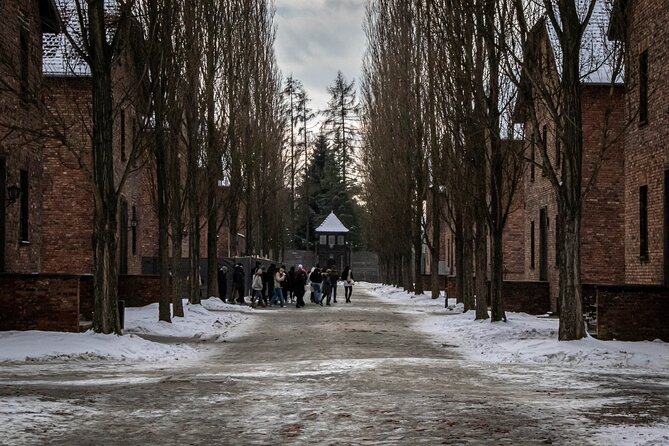
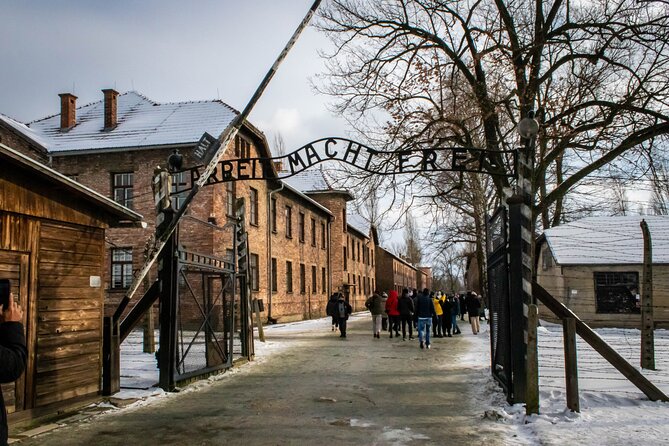
The guided museum visit begins at Auschwitz I, the original camp. You enter through the familiar gate marked Arbeit macht frei, then walk among the brick barracks, fences, roads, and watchtowers.
The setting is orderly and deceptively quiet. That contrast can be unsettling. The buildings look solid and controlled, while the exhibits reveal a system built around imprisonment, forced labor, starvation, disease, selection, and mass murder.
Several barracks now contain museum displays with documents and objects taken from prisoners when they arrived. These exhibits help you understand the scale of the crime without reducing it to numbers. The displays preserve evidence of individual lives and the machinery used to strip people of their names, possessions, and dignity.
The usual guided route lasts about 1 hour and 45 minutes, though the actual time inside Auschwitz I may be closer to 90 minutes depending on the day, entry schedule, and group movement. You may see only a selection of the blocks rather than every exhibition.
This is the main limitation of the standard guided visit. The guide keeps the group moving, and you might not have time to read every information panel. Some people found that frustrating, especially after expecting a longer, more open-ended museum visit.
Headsets are generally provided for the guided walk. In a medium-sized group, you should be able to hear clearly, but larger groups and narrow corridors can make it harder. Stay close to the guide and keep track of the group at turns. One person became separated and had difficulty finding the group again.
The visit includes the gas chamber and crematorium area. This section is handled in a restrained way, but it remains extremely upsetting. Plan your emotional energy carefully. Auschwitz is not a place to rush through simply to complete a checklist.
The Transfer to Birkenau
After Auschwitz I, you travel a short distance to Birkenau, located near the village of Brzezinka. The private driver normally handles this transfer, so you do not need to walk between the two sites.
There may be a short break between the visits. Reports vary from 10 to 20 minutes, and the timing can feel tight. Food and drinks are available at restaurants near both Auschwitz I and Birkenau, but queues may form. If you need something quickly, bringing a small permitted item can help, though the museum’s strict bag-size rule applies.
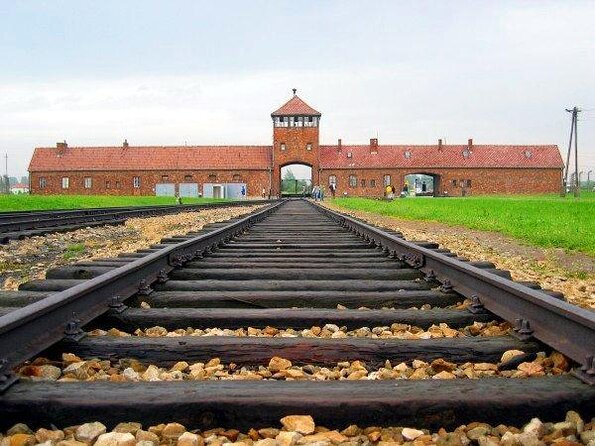
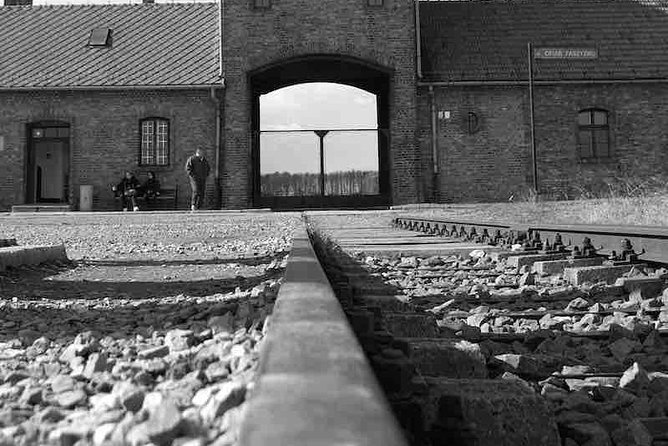
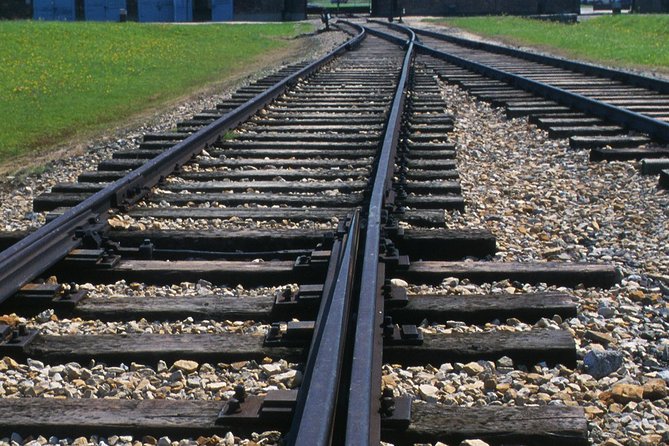
Birkenau is much larger and more open than Auschwitz I. Its scale is one of the first things you notice. The railway ramp, watchtowers, fences, ruined gas chambers, and rows of barracks show how the camp was designed to receive and process huge numbers of people.
Construction began in 1941, using forced labor. The camp was planned to hold around 125,000 prisoners at one time, and conditions were designed to destroy people through cold, hunger, disease, exhaustion, and abuse.
The railway ramp is particularly important. New arrivals were brought in by train and subjected to a selection process. A split-second decision determined who would be sent to forced labor and who would be murdered in the gas chambers nearby.
The walk at Birkenau is longer and more exposed. You will cross uneven ground and enter preserved barracks where prisoners were packed into harsh living conditions. The second visit usually takes about 1 hour and 30 minutes, although the guided portion may be closer to an hour.
This is where good shoes matter most. The tour includes substantial walking, some stairs, and rough surfaces. One person described the day as a lot of walking over uneven terrain, which is an accurate warning. Comfortable footwear is not optional.
The ruined gas chambers and crematoria are near the ramp. Their damaged state does not make them less powerful. The remains show the scale of the Nazi attempt to destroy evidence, while the memorial area gives you a place to pause and remember the victims.
More Auschwitz-Birkenau memorial tours:
- From Krakow: Auschwitz-Birkenau Guided Tour & Hotel Pickup
★ 4.5 · 33,358 reviews - From Krakow: Auschwitz-Birkenau Guided Tour & Hotel Pickup
★ 4.5 · 29,340 reviews - Krakow: Auschwitz Guided Tour with Optional Hotel Pickup
★ 4.5 · 15,280 reviews - Krakow: Auschwitz-Birkenau Guided Tour with Pickup & Lunch
★ 4.5 · 9,800 reviews
What the Private Service Really Includes
The wording can create confusion, so I want to be clear: this is a private transfer plus a shared guided tour.
Your car is private to your booking party. You do not share the ride from Krakow with other groups, and the driver waits while you visit the museum. At the camps, however, you join a group with a museum guide and other participants.
That arrangement works well if you want convenient transport but do not need a personal guide. It is less suitable if you expect a private expert to walk only your party through every block and display.
The group size can affect the experience. Some people had a medium-sized group, clear audio, and a well-paced guide. Others found the group too large, with people being moved through corridors quickly. The tour covers the key areas, but it is not an exhaustive visit to every building.
You can also encounter communication problems. One account describes a guide entering the second site before the private-transfer passengers had joined the group, leaving them without the planned guided portion of Birkenau. That kind of handoff is unusual but important. Confirm with the driver exactly where and when you should meet the guide at each site.
Is $214.32 Per Person Good Value?
At $214.32 per person, this is not the cheapest way to reach Auschwitz. You are paying for convenience, reserved museum admission, private round-trip transport, and a guided visit in your selected language.
For two people, a private car can feel like a worthwhile extra, especially if you value hotel pickup and do not want to manage public transport. It also saves you from walking between Auschwitz I and Birkenau, which is useful for older visitors or anyone who wants to conserve energy for the museum.
The value is weaker if your main goal is a slow, detailed examination of every exhibition. The shared tour follows a set route and time limit. Some people felt they saw only a small portion of Auschwitz I and Birkenau, with little time to read additional plaques.
A cheaper arrangement may suit you if you are comfortable making your own way to the museum and arranging a self-guided visit. This package makes more sense for you if time, comfort, and straightforward planning matter more than complete freedom inside the site.
The tour is booked, on average, about 53 days ahead. That suggests you should not leave this visit until the final days of a Krakow stay, especially during busy periods.
Practical Tips for a More Meaningful Day
Wear sturdy, comfortable shoes. You will walk across uneven surfaces, climb stairs, and spend much of the visit outdoors, especially at Birkenau.
Bring only a small bag. The maximum permitted size is 30 by 20 by 10 centimeters. A large daypack may not be allowed into the museum, so pack lightly from the start.
Keep your schedule open after returning to Krakow. The tour lasts around 7 to 8 hours, but the emotional impact can last much longer. I would not plan a demanding evening activity immediately afterward.
Ask the driver to confirm the meeting point at Birkenau before leaving Auschwitz I. This is a simple step, but it can prevent confusion when several groups and vehicles are moving between the sites.
Expect the vehicle to be a taxi or private car rather than a full sightseeing coach. That is usually an advantage for door-to-door service, but it may differ from what you picture when you read private transportation.
If you have a young child with you, know that the standard route may be manageable physically, but the subject matter is very serious. One family found the shorter format workable with a three-year-old, while also noting that a self-guided visit would allow more control over the pace.
The experience is offered in English, with a guided tour in the language selected at booking. Most people can participate, but the walking and stairs may be demanding for anyone with limited mobility.
The booking is non-refundable and cannot be changed for any reason. Confirm your date, pickup details, and party size before paying.
Who Should Book This Auschwitz Tour?
I would choose this tour if you are staying in Krakow, want the simplest transport arrangement, and prefer a guide to explain the site’s purpose and history. It is also a good fit for families or small groups who value riding together in a private car.
It suits first-time visitors particularly well. The site is large, emotionally difficult, and not easy to understand from signs alone. A guide gives structure to the day and helps you recognize why Auschwitz I and Birkenau are different parts of the same camp system.
I would hesitate if you want a private museum guide, a very small group, or several hours to inspect every block. In that case, check carefully for a longer visit or a fully private guided option.
Final Verdict: Convenient, Serious, and Not Fully Private
This is a strong practical choice for visiting Auschwitz from Krakow. The private transport removes much of the day’s stress, and the museum guide is often the best part of the experience. The visit itself is haunting, educational, and difficult in exactly the way a memorial site should be.
The key point is to book it for what it is: private transport with a shared guided museum tour. If that matches your expectations, the included transfer and admission offer solid value. If you want an unhurried, highly personal visit, choose a tour with a clearly stated private guide and longer independent time.
FAQ
How long does the Auschwitz Birkenau tour from Krakow take?
The full experience lasts approximately 7 to 8 hours. The drive from Krakow to the museum takes about 1 hour and 30 minutes each way, with visits to Auschwitz I and Birkenau in between.
Is hotel pickup included?
Yes. Hotel pickup and drop-off are included. If your hotel is in an area with restricted vehicle access, you may need to walk to the closest available pickup point.
Is the tour itself private?
No. The transportation is private to your group, but you join a group tour with a museum guide at Auschwitz-Birkenau.
Is admission to Auschwitz-Birkenau included?
Yes. Admission to the Auschwitz-Birkenau Memorial and Museum is included in the booking.
What size bag can I bring?
Backpacks and handbags brought into the museum cannot exceed 30 by 20 by 10 centimeters.
Is the tour offered in English?
Yes. The experience is offered in English, and the guided tour is available in the language selected at booking.
Can I cancel or change the booking?
No. The experience is non-refundable and cannot be changed for any reason.
Just added in Krakow
- Auschwitz-Birkenau – Skip the Line Tickets★ 3.5 · 29 reviews
- Auschwitz-Birkenau: Fast-Track Ticket & Guided Tour No Transfers★ 3.5 · 17 reviews
- Zakopane & Sleigh Ride with Bonfire – Group Tour from Kraków★ 5.0 · 2 reviews
- Sleigh Ride & Bonfire in Zakopane with Funicular – Private Trip★ 5.0 · 48 reviews
- Thermal Baths & Zakopane – Private Trip from Krakow★ 5.0 · 1 review
- Zakopane & Gubalowka Funicular – Private Winter Tour from Krakow★ 5.0 · 10 reviews
- Divine Mercy Sanctuary – Private Tour from Krakow★ 5.0 · 4 reviews
- stag dog chase Krakow prank★ 5.0 · 4 reviews