
REVIEW · AUSCHWITZ-BIRKENAU MEMORIAL TOURS
1 Day Trip Auschwitz Birkenau and Salt Mines with Hotel Transfer
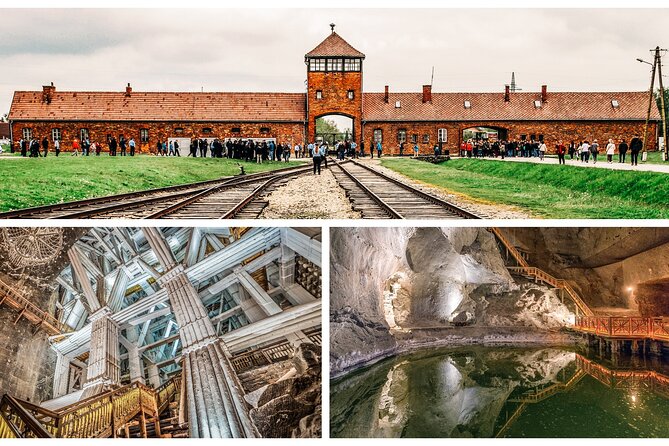
Two powerful places, one very long day. This Krakow excursion pairs the solemn Auschwitz-Birkenau Memorial with the remarkable Wieliczka Salt Mine, giving you two very different views of Polish history in about 10 and a half hours. I especially like the included museum guides and entrance fees, which remove much of the planning burden, and the comfortable, air-conditioned transfer from Krakow.
I also like the contrast between the two visits. Auschwitz-Birkenau is quiet, painful, and deeply serious. Wieliczka is strange, beautiful, and unexpectedly uplifting, with salt-carved chapels and statues far underground. The main drawback is the schedule: you may walk for miles, climb hundreds of steps, and spend 12 hours on the road if traffic or museum timings cause delays.
In This Review
- Key Points Before You Book
- What You Are Really Buying for $117.30
- The Early Krakow Pickup and Ride to Oswiecim
- Auschwitz I: Two Hours Behind the Barbed Wire
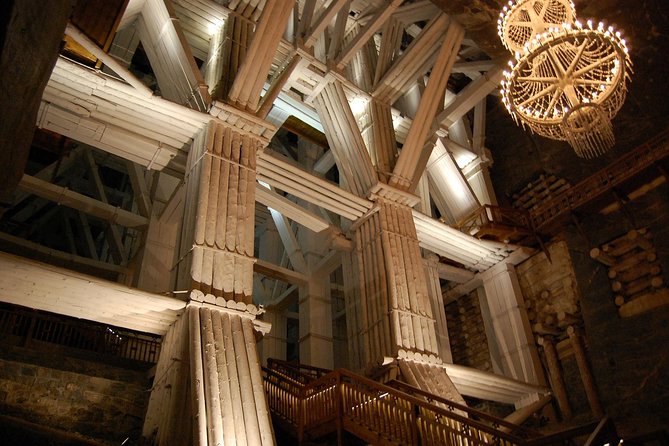
- Birkenau: Scale, Silence, and the Railway Tracks
- The Midday Transfer and Lunch Break at Wieliczka
- Wieliczka Salt Mine: 140 Meters Below Ground
- Guides, Headsets, and the Human Side of the Day
- The Biggest Risk: Confusing Tour Options
- Who Should Book This Full-Day Combination?
- Should You Book It?
- FAQ
- How long does the combined tour take?
- Does the tour include both Auschwitz-Birkenau and Wieliczka Salt Mine?
- Where does the tour start and finish?
- Is hotel pickup included?
- Do I need a passport or identity card?
- How much walking is involved?
- What should I wear at the salt mine?
- Is food included?
- Can I take photographs?
Key Points Before You Book
- Read the exact booking option: Some versions include both Auschwitz-Birkenau and Wieliczka, while the Salt Mine Only option includes just Wieliczka.
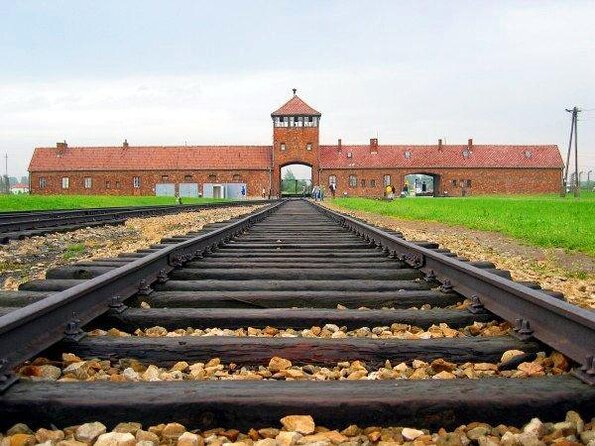
- Expect a full physical day: Auschwitz involves long walks outdoors, while Wieliczka includes more than 800 stairs and 400 steps at the entrance.
- The Auschwitz visit is split between two sites: You tour Auschwitz I first, then Birkenau, about three minutes away by vehicle.
- The salt mine reaches 140 meters underground: The English guided route lasts about two and a half hours and covers more than 2.5 kilometers.
- Bring your passport or identity card: Auschwitz requires personal details to be checked at entry.
- Pack lightly and dress for two climates: Auschwitz can be bitterly cold and windy, while Wieliczka stays around 15 C underground.
What You Are Really Buying for $117.30
At about $117.30 per person, this is not the cheapest way to see either attraction. You are paying for transport from Krakow, prearranged admission, licensed guides, headsets, insurance, and the convenience of fitting both major sights into one day.
That can be good value if your Krakow visit is short. Auschwitz is about 65 kilometers from the city, and Wieliczka lies in the opposite direction. Organizing both independently means arranging separate transport, securing timed admission, and working around two different guided-tour systems. This excursion handles those moving parts for you.
The price becomes poor value if you accidentally select the wrong version. The main title refers to Auschwitz-Birkenau and the salt mines, but the booking page can contain several options, including a lower-priced Salt Mine Only choice. Several unhappy customers expected both attractions but had purchased only Wieliczka.
Check the exact option name on your final confirmation, not just the headline or photographs. The combined version should state that Auschwitz-Birkenau admission is included. If the confirmation says Salt Mine Only, Auschwitz is not part of your day, even if Auschwitz images appear on the sales page.
The overall rating is 4.5 from 652 ratings, and the strongest praise focuses on organization, friendly drivers, clear audio equipment, and excellent local guides. At the same time, complaints about confusing product choices and long delays are serious enough to deserve attention before you pay.
More Private Transfers in Kraków
- Krakow to Auschwitz Birkenau Guided Tour with Transfer and Ticket
★ 5.0 · 8,197 reviews - From Krakow: Auschwitz Birkenau Tour with Transfer
★ 4.0 · 6,134 reviews - Krakow: Auschwitz-Birkenau Guided Tour with Ticket and Transfer
★ 4.5 · 3,784 reviews
The Early Krakow Pickup and Ride to Oswiecim
Pickup is offered from selected Krakow hotels or from a central meeting point at Floriana Straszewskiego 17. The booking time is tentative because Auschwitz assigns strict entry slots and city traffic can change the plan. Your exact pickup time is confirmed the day before departure.
You may ride in a Mercedes-Benz minivan or minibus. The vehicles are air-conditioned, and the company says its drivers hold the required European Union passenger-transport certifications. The group size can reach 35 people, although the Auschwitz museum limits the guided portion to 30.
That difference matters. The vehicle may feel like a small group, but the museum tour follows its own group rules. You receive a headset so you can hear the licensed guide without crowding around the guide at every stop.
The drive to Oswiecim takes about one hour and 15 minutes. A short film called The Liberation of Auschwitz may be shown during the journey, using footage recorded by Soviet soldiers who entered the camp in January 1945. It gives you historical context before you arrive, though this is still a serious subject and not light entertainment for the road.
You may have a short pause for coffee or a look at outdoor displays before meeting the official Auschwitz-Birkenau guide. Pickup times can be very early, and one reported departure moved from 6:15 to 5:45. If you dislike early mornings, ask yourself if combining both sights is worth the strain.
Auschwitz I: Two Hours Behind the Barbed Wire
The first camp is Auschwitz I, originally established after Germany annexed Poland in 1939. You enter beneath the infamous Arbeit Macht Frei sign, then follow the guide through the original camp buildings.
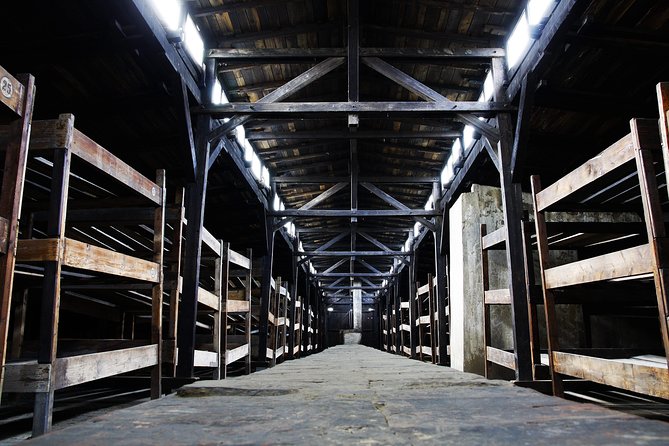
The visit usually lasts about two hours. You see brick and wooden barracks, defensive walls, barbed wire, gas chambers, crematoria, and other preserved structures. Exhibits and buildings make the scale of the Nazi prison and extermination system easier to grasp than a book or film can.
The experience is not designed for casual sightseeing. You will walk at the pace of the guided group, listen through your headset, and move through places connected with immense suffering and death. Some parts are emotionally difficult, so plan your attention accordingly. This is not a stop where you simply collect photographs and move on.
The museum expects respectful behavior. Photography is generally allowed, but some areas have clearly marked restrictions. Your passport or national identity card is required because the museum checks personal details at entry. Forgetting it could mean being refused admission.
A short break of up to 15 minutes follows the Auschwitz I visit. That is enough for a quick pause, but not much time to reset emotionally before the second camp.
Birkenau: Scale, Silence, and the Railway Tracks
A short transfer of about three minutes takes you to Birkenau, also called Auschwitz II. This was the larger camp, built in 1941 under orders from SS commander Heinrich Himmler. It could hold roughly 90,000 prisoners and was built chiefly for mass extermination.
Here, the physical scale is harder to ignore. You see long railway tracks, barracks, fences, and rows of gas chamber chimneys stretching across the open grounds. The wide, exposed site can feel especially harsh in cold or windy weather.
The Birkenau portion lasts around 90 minutes. The guide explains the forced arrivals, selections, living conditions, medical experiments, and the role of Nazi doctors including Josef Mengele. The tour also covers liberation on January 27, 1945, when soldiers of the 60th Army of the First Ukrainian Front opened the camp.
This part can feel brisk. You have a great deal to absorb, and the timetable must keep a group together before the transfer to Wieliczka. One useful mindset is to accept that you will not take in every detail. Listen carefully, pause when you can, and do not expect a private, reflective visit.
Cold-weather clothing matters here. One account describes temperatures near minus 10 C with wind chill, along with uneven ground and substantial walking. Wear sturdy shoes with good grip, and bring layers, gloves, and a hat in winter.
More Auschwitz-Birkenau memorial tours:
- From Krakow: Auschwitz-Birkenau Guided Tour & Hotel Pickup
★ 4.5 · 33,358 reviews - From Krakow: Auschwitz-Birkenau Guided Tour & Hotel Pickup
★ 4.5 · 29,340 reviews - Krakow: Auschwitz Guided Tour with Optional Hotel Pickup
★ 4.5 · 15,280 reviews - Krakow: Auschwitz-Birkenau Guided Tour with Pickup & Lunch
★ 4.5 · 9,800 reviews
The Midday Transfer and Lunch Break at Wieliczka
After Auschwitz-Birkenau, the minibus continues to Wieliczka. The precise timing depends on traffic and the salt mine’s available tour slot. The English tour may begin at 4 or 5 pm.
You receive roughly an hour for coffee, groceries, lunch, or a rest before entering the mine. This is a useful pause, but it may not feel leisurely after the morning. Some people have found the lunch break too short and had to eat quickly.
Plan food before you arrive. Meals and drinks are not included, and this is not the place to count on a long restaurant stop. A packed snack or something easy to eat can make the second half of the day more comfortable.
This pause also helps you switch gears. Auschwitz demands quiet attention. Wieliczka is still historically important, but its underground chambers are filled with craft, engineering, religion, and centuries of salt production. The change in mood is one reason the combination works better than two similar museums in one day.
Wieliczka Salt Mine: 140 Meters Below Ground

Wieliczka has produced salt for more than 700 years and is one of the world’s oldest working salt mines. The guided route takes you down to about 140 meters below the surface and lasts around two and a half hours.
You move through more than 2.5 kilometers of underground passages and chambers. Salt has been shaped into pillars, vaulted ceilings, sculptures, and religious scenes. The material glistens in the light, and the mine feels far removed from the city above.
The salt carvings are the visual highlight. Statues and decorative rooms show what miners created in a workplace that was also a center of devotion and community. Several people rate this as the most enjoyable part of the day, partly because it provides an uplifting change after Auschwitz.
The physical demands are real. You descend 400 steps at the entrance, and the full tourist route includes more than 800 stairs. The mine temperature is about 15 C, or 59 F, so a light jacket is sensible even in summer.
Narrow passages may feel claustrophobic. Once you are underground, you cannot shorten the route and simply return to the surface. Baby pushchairs are not allowed below ground, although children may attend if they can walk without assistance or are carried in a sling or carrier.
The final lift is described as small and intimate, but the ride is brief. If tight spaces bother you, this is worth knowing before you commit. The salt mine is impressive, but it is not a low-effort attraction.
Guides, Headsets, and the Human Side of the Day
The quality of the guides makes a major difference here. The Auschwitz guide is licensed by the museum, and you also receive an official English guided visit at Wieliczka. Names vary by departure, but particularly praised guides include Mihael, Peter, Pioter, Gregory, and Thomas in driver or guide roles.
The headset system is a real advantage at Auschwitz. You can hear the explanation while standing at the back of a group or looking at an exhibit rather than pressing close to the guide. One person even noted that the audio made it possible to step aside briefly without losing the main narration.
Drivers also shape the experience. Pioter and Peter received praise for communication and organization, while Thomas and Gregory were singled out for friendly service. Still, service is not perfectly consistent. A few reports describe weak communication, unclear meeting instructions, or a driver who was difficult to reach during delays.
Keep your driver’s meeting instructions in writing. Pay attention to the exact return point and time at both attractions. The vehicle cannot wait indefinitely because museum entry times and later transfers are fixed.
The Biggest Risk: Confusing Tour Options
The most important warning is not about the camps, the mine, or the walking. It is the product selection.
The experience provider offers both a combined Auschwitz-Birkenau and Wieliczka tour and a Wieliczka Salt Mine Only option. They may appear under the same broad product family, with similar photographs and related wording. The Salt Mine Only version includes transport to Wieliczka, mine admission, a licensed mine guide, headsets, and skip-the-line access to the mine. It does not include Auschwitz.
This confusion appears repeatedly in the complaints. People arrived expecting Auschwitz, then discovered that their voucher covered only the salt mine. The provider’s response has been that the selected option and confirmation clearly identified Salt Mine Only, while customers felt the main title and images were misleading.
You can avoid most of this problem by checking three things before payment:
- The selected product option says combined tour, not Salt Mine Only.
- The inclusions specifically list Auschwitz-Birkenau State Museum admission.
- The price matches a two-attraction tour, rather than the lower price for Wieliczka alone.
Save the confirmation on your phone and check it again the day before departure. If Auschwitz is your main reason for booking, do not rely on a general tour title.
Who Should Book This Full-Day Combination?
I recommend this for you if you have only a few days in Krakow and want both major attractions handled in one booking. It suits people who value prearranged transport, fixed museum tickets, English guides, and a simple return to central Krakow.
It also suits visitors who appreciate a strong contrast in one day. Auschwitz is a place for remembrance and difficult learning. Wieliczka offers art, underground architecture, and a more surprising sense of wonder.
I would hesitate if you prefer slow visits. Auschwitz-Birkenau deserves time and emotional space, while Wieliczka requires steady walking and stair climbing. The combined day can run beyond the advertised 10 hours and 30 minutes when traffic, early pickup changes, or scheduling problems occur.
Families should think about stamina rather than age alone. There is no stated age restriction at either site, but children need to walk unassisted or be carried. The Auschwitz visit may also be emotionally unsuitable for some children, even though admission is permitted.
Should You Book It?
Book the combined option if your priority is convenience and you want Auschwitz-Birkenau and Wieliczka in a single, tightly planned day. The guides, headsets, included admissions, and door-to-door transport offer solid value when your Krakow schedule is short.
Do not book until you confirm the exact product option. If the voucher says Salt Mine Only, you are paying for Wieliczka alone and should not expect Auschwitz. You can cancel for a full refund up to 24 hours before the start time, but changes or cancellations inside that window are not accepted.
For the best chance of a smooth day, bring identification, wear serious walking shoes, pack warm layers, carry only a small bag, and keep lunch simple. If you can accept the long hours and brisk pace, this is an efficient and memorable way to see two of the Krakow area’s most important sites.
FAQ
How long does the combined tour take?
The stated duration is approximately 10 hours and 30 minutes. Traffic, museum schedules, and changes to pickup times can make the day longer.
Does the tour include both Auschwitz-Birkenau and Wieliczka Salt Mine?
The combined booking option includes both attractions. The separate Salt Mine Only option includes Wieliczka but not Auschwitz-Birkenau, so check the exact option on your confirmation.
Where does the tour start and finish?
The listed meeting point is Floriana Straszewskiego 17 in Krakow. The activity ends back at the meeting point, while selected hotel-transfer options may offer pickup and drop-off at central Krakow locations.
Is hotel pickup included?
Pickup is offered, but the price and arrangements depend on the option you select. The exact pickup time is confirmed the day before departure.
Do I need a passport or identity card?
Yes. Auschwitz-Birkenau requires personal details to be confirmed, so bring your passport or identity card for museum entry.
How much walking is involved?
Auschwitz-Birkenau involves extensive walking over some uneven outdoor surfaces. Wieliczka includes 400 steps down at the entrance and more than 800 stairs across the tourist route.
What should I wear at the salt mine?
The mine stays around 15 C, or 59 F, so bring a light jacket or warm layer. Comfortable shoes are important because the route is more than 2.5 kilometers long.
Is food included?
No. Food and drinks are not included. You have about an hour for lunch, coffee, groceries, or a rest before the salt mine visit.
Can I take photographs?
Photography is generally allowed at both sites, but some areas have clearly marked restrictions. At Auschwitz-Birkenau, visitors are expected to behave respectfully.
Just added in Krakow
- Auschwitz-Birkenau – Skip the Line Tickets★ 3.5 · 29 reviews
- Auschwitz-Birkenau: Fast-Track Ticket & Guided Tour No Transfers★ 3.5 · 17 reviews
- Zakopane & Sleigh Ride with Bonfire – Group Tour from Kraków★ 5.0 · 2 reviews
- Sleigh Ride & Bonfire in Zakopane with Funicular – Private Trip★ 5.0 · 48 reviews
- Thermal Baths & Zakopane – Private Trip from Krakow★ 5.0 · 1 review
- Zakopane & Gubalowka Funicular – Private Winter Tour from Krakow★ 5.0 · 10 reviews
- Divine Mercy Sanctuary – Private Tour from Krakow★ 5.0 · 4 reviews
- stag dog chase Krakow prank★ 5.0 · 4 reviews