REVIEW · KRAKóW TOURS
WOMAI Cracow – Into the darkness experience
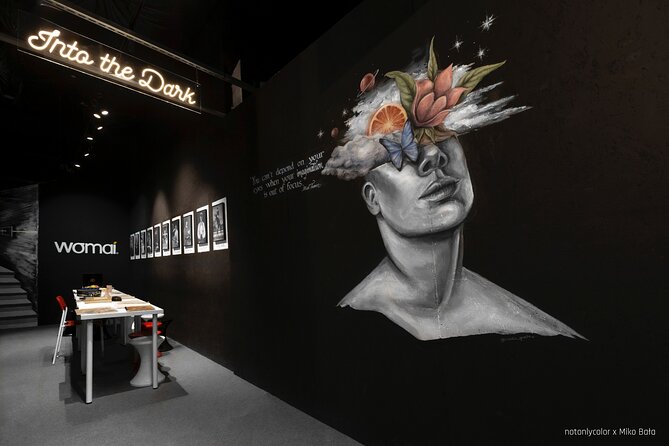
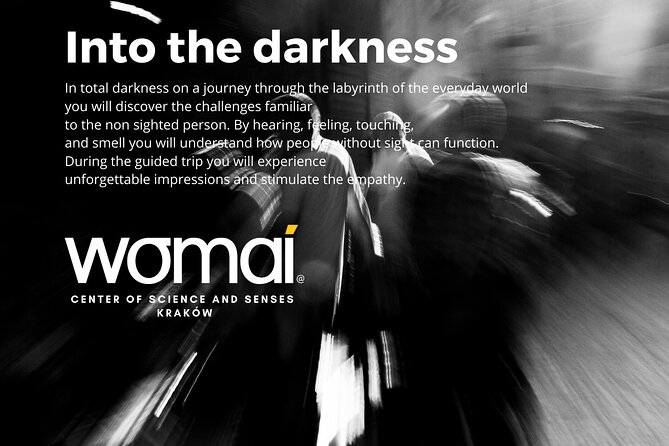
Turn off sight, and the city changes. WOMAI Krakow’s Into the Darkness experience places you in total darkness for about an hour, where a blind guide leads you through ordinary tasks using touch, hearing, smell, and memory. I like the unusual subject and the chance to learn directly from a blind guide. I also like that the session ends with questions and an introduction to Braille.
The main drawback is that complete darkness is not comfortable for everyone. Severe claustrophobia is a reason to skip it, and the experience is not recommended for people with hearing problems or significant mobility disabilities. You need a moderate level of physical fitness, too.
In This Review
- Key points to know before you book
- What Into the Darkness is really asking you to do
- Entering a world with no visual clues
- Everyday tasks become the main event
- Learning from the blind guide
- Braille gives the hour a useful ending
- Is $17.33 good value in Krakow?
- Who will get the most from this experience?
- How to plan the timing
- The practical limits are worth taking seriously
- Cancellation and booking flexibility
- Should you book WOMAI Into the Darkness?
- FAQ
- Where is the Into the Darkness experience located?
- How long does the experience last?
- What language is offered?
- How much does it cost?
- What happens during the experience?
- Can I ask questions during the visit?
- Is Braille included?
- Is the venue near public transportation?
- Who should avoid this experience?
- Can I cancel for a refund?
Key points to know before you book
- Total darkness changes simple tasks: Everyday activities become unfamiliar when you cannot see the person or object in front of you.
- A blind guide leads the session: You gain practical insight from someone who understands life without sight firsthand.
- The experience lasts about one hour: It fits neatly into a Krakow sightseeing day or a spare hour before a transfer.
- Braille is part of the learning: Time is set aside at the end for questions and a basic look at how Braille works.
- The price is modest: At $17.33 per person, this is a reasonably priced experience with a clear educational purpose.
- Plan around the restrictions: It is not recommended for severe claustrophobia, hearing problems, or significant mobility disabilities.
What Into the Darkness is really asking you to do
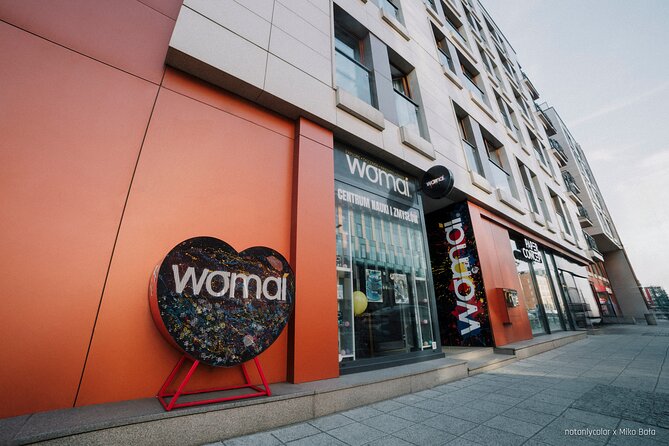
Most Krakow sightseeing depends on your eyes. You look at the Market Square, scan church interiors, read museum labels, and follow street signs. WOMAI asks you to remove the sense you normally trust most, then work out how to function without it.
That simple idea gives the experience its force. You are not just hearing a talk about blindness. You are placed in a situation where sight no longer helps, and basic actions require fresh attention. The supplied description refers to everyday tasks in complete darkness, so you should expect a practical session rather than a conventional museum visit.
The point is not to pretend that one hour can reproduce the daily life of a blind or partially sighted person. It cannot. Still, it can show you how quickly confidence changes when you lose visual information. You may find yourself listening harder, reaching carefully, and relying on memory in ways you usually ignore.
I value that the session is led by a blind guide. This gives the experience a human center and creates room for questions about daily life, navigation, and the methods people use to manage familiar tasks. The guide is not simply operating an attraction. The guide is helping you understand a different way of moving through the world.
A few more in Krakow
- From Krakow: Auschwitz-Birkenau Guided Tour & Hotel Pickup
★ 4.5 · 33,358 reviews - From Krakow: Auschwitz-Birkenau Guided Tour & Hotel Pickup
★ 4.5 · 29,340 reviews - Krakow: Auschwitz Guided Tour with Optional Hotel Pickup
★ 4.5 · 15,280 reviews
Entering a world with no visual clues
The defining feature is total darkness. This is not a dim room or a theatrical light show. Once the light is gone, you cannot casually check where you are, who is nearby, or what sits in front of your hand.
That loss of quick visual confirmation can feel surprisingly intense. One review describes moments of feeling completely alone when the person or object ahead could not be felt. That detail is useful because it explains the experience better than a list of features can. Darkness is not only about seeing less. It removes the small reassurances you use every few seconds without thinking.
Your other senses then become more important. You listen for movement, use your hands with care, and pay attention to the position of your body. The session is designed to show how those senses can become sharper when sight is unavailable.
You should not expect a frightening attraction built around jump scares. The focus is on perception, problem-solving, and understanding. Still, the lack of control can feel unsettling, especially at first. If you dislike enclosed or unfamiliar spaces, consider the claustrophobia warning seriously.
Everyday tasks become the main event
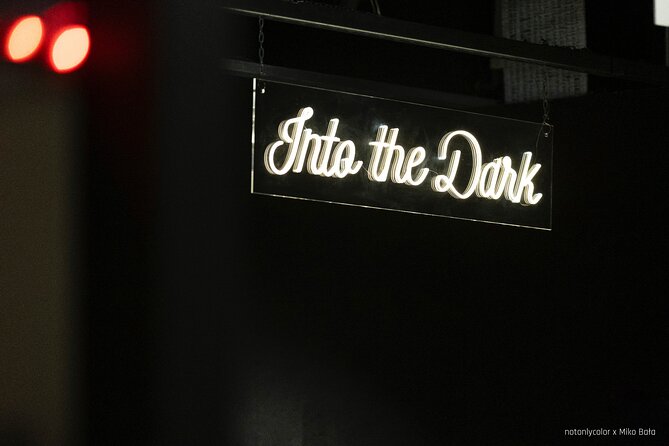
The strongest part of the experience is its ordinary subject matter. Rather than relying only on abstract discussion, the session has you navigate familiar tasks in complete darkness. Activities that normally take seconds may require concentration and teamwork.
This is where the value lies. A person with sight can often move through daily routines without thinking about orientation, texture, sound, or object placement. In the dark, those details move to the front of your mind. You get a short, carefully guided lesson in how much visual information you normally take for granted.
The experience may also reveal how isolated you can feel when you cannot locate someone nearby. One account describes moments when a person or object could not be felt, creating a sense of being alone. That is an important emotional detail, and it helps explain why the session can stay with you after you leave.
I would approach this part with patience rather than trying to finish each task quickly. The purpose is not to prove that you can cope perfectly. It is to notice the effort involved and understand why familiar environments may demand extra planning for someone who cannot see.
Learning from the blind guide
The guide is central to the quality of the visit. Your guide leads you through the dark and helps you understand what is happening without taking away the challenge. The session also gives you a chance to ask plenty of questions, which turns a sensory exercise into a personal exchange.
The available information does not provide the guides’ names, so I cannot give you a name to request. What it does make clear is that the guides are friendly, committed, and able to explain both the activity and the wider subject. One account praised the guides from both the darkness and light experiences for being friendly and well prepared.
That personal contact is more useful than a standard audio explanation. You can ask about the parts of the session that confuse you, and you can raise questions that come from your own reaction. The guide’s role also keeps the experience respectful. You are learning from a person, not treating blindness as a puzzle or a stunt.
I appreciate the chance to ask questions at the end. Many sensory attractions finish as soon as the lights return. WOMAI gives you a moment to think about what happened and connect it with real life.
Something quite different:
- Krakow–Zakopane: Cable Car, Chocholow Baths, Cheese & Vodka
★ 5.0 · 10,720 reviews - Krakow: Auschwitz-Birkenau Guided Tour with Pickup & Lunch
★ 4.5 · 9,800 reviews - From Krakow: Wieliczka Salt Mine Tour
★ 4.6 · 9,393 reviews - Krakow: Auschwitz-Birkenau Guided Tour Pickup/Lunch Options
★ 4.5 · 9,057 reviews
Braille gives the hour a useful ending
The Braille section adds a concrete skill to the experience. After spending time without sight, you can learn how Braille works and ask questions about reading through touch.
This is a small part of the overall visit, but it helps anchor the lesson. You leave with something specific to remember rather than only a general feeling about darkness. The contrast is useful: first you depend on touch and sound to handle tasks, then you learn about a writing system designed for touch.
Do not book this expecting a full Braille course. The information describes an opportunity to learn how Braille works, not an extended workshop. Think of it as a short educational finish that rounds out the main activity.
Is $17.33 good value in Krakow?
At $17.33 per person, I consider this a fair price for an hour-long experience, especially if you want something beyond Krakow’s usual churches, castles, and food stops. You are paying for a guided activity with a clear purpose, not simply entry to a room.
The value depends on what you want from an outing. If you prefer dramatic views, historical objects, or a long guided walk, this will not replace those experiences. If you want a thoughtful activity that changes how you notice ordinary life, the price is modest.
The one-hour length works in its favor. You can fit WOMAI into a day of sightseeing without giving up half a day. It could also fill an awkward gap in your schedule. One person found it while waiting for airport transfers and considered it a rewarding way to use that time.
The experience is offered in English, which makes it practical for English-speaking visitors. A mobile ticket is available, and the venue is near public transportation. Those details reduce the effort involved in fitting it into your Krakow plans.
Who will get the most from this experience?
I would recommend Into the Darkness to adults, older children if accepted under the venue’s rules, students, families, and anyone curious about how perception shapes daily life. It suits people who enjoy unusual museums and hands-on learning more than passive sightseeing.
It is also a good choice if you have already seen Krakow’s main sights and want a change of pace. After several hours of looking at buildings and displays, using no sight at all creates a sharp contrast.
The experience may be especially useful for people interested in accessibility, design, education, or the senses. It can prompt questions about how public spaces work and how much information buildings normally provide through signs, lighting, and visual layout.
I would be more cautious if you have severe claustrophobia. Total darkness can make an enclosed setting feel more restrictive, even when the activity itself is calm. The official guidance also says it is not recommended for people with hearing problems or significant mobility disabilities. Since the session depends on hearing and movement, those warnings matter.
A moderate physical fitness level is required. The information does not describe strenuous exercise, but you should be comfortable taking part in a guided activity that involves moving through an unfamiliar setting.
How to plan the timing
The experience takes approximately one hour, though I would avoid scheduling a tight connection immediately afterward. Confirmation is normally provided when you book, but bookings made within three hours of the start time are confirmed as soon as possible and depend on availability.
The activity is booked, on average, 18 days ahead. That figure is a useful planning signal, especially if your Krakow dates are fixed. You do not need to reserve months ahead based on the information provided, but leaving it until the last minute could make your preferred time harder to secure.
Because the venue is near public transportation, you can reach it without building your whole day around a long transfer. I would still allow a little extra time to find the entrance and arrive settled. Entering darkness is more enjoyable when you are not rushing in from the street.
The mobile ticket is convenient for a city break. Keep the booking accessible on your phone, and remember that the local time controls the cancellation deadline.
The practical limits are worth taking seriously
The experience earns strong approval because it is unusual, personal, and well focused. Every available rating is positive, with 100 percent recommending it and a score of 5 from 363 reviews. That is a strong sign that the concept works for people who are comfortable with the conditions.
Still, popularity does not erase the limits. This is not a good fit for everyone. You need to hear the guide, move with reasonable ease, and tolerate a period of total darkness. If any of those points concern you, choose a different Krakow activity.
It is also important to keep your expectations fair. One hour in darkness gives you a brief change in perspective. It does not reproduce the full experience of being blind or partially sighted, and it should not be treated as a simulation that tells you everything about that life. Its value comes from prompting attention and respect, not from offering a perfect substitute.
I like the fact that questions and Braille follow the dark session. That structure gives you time to move from surprise to understanding. The experience is at its best when you treat it as a chance to listen and learn, not as a test you need to conquer.
Cancellation and booking flexibility
You can cancel for a full refund up to 24 hours before the experience begins. Cancellations made less than 24 hours before the start time are not refunded, and changes within that period are not accepted.
The activity requires a minimum number of people. If WOMAI cancels because that minimum is not reached, you will be offered another date or experience, or you can receive a full refund.
That policy is fairly clear, but do not leave changes until the final day. Book with your Krakow schedule in mind, especially if your plans depend on transport or an airport transfer.
Should you book WOMAI Into the Darkness?
I would book it if you want a short, affordable, thoughtful experience that asks you to pay attention in a new way. The blind guide, everyday tasks, open question time, and Braille lesson give the hour more substance than a simple sensory attraction.
I would skip it if total darkness causes serious anxiety, or if hearing and mobility limitations would make participation difficult. For everyone else, $17.33 is a reasonable price for an experience that can change how you notice the simplest parts of a day.
It will not replace Krakow’s major sights, but it can add something those sights cannot: an hour spent understanding the world without looking at it.
FAQ
Where is the Into the Darkness experience located?
It takes place at WOMAI in Krakow, Poland.
How long does the experience last?
The experience lasts approximately one hour.
What language is offered?
The experience is offered in English.
How much does it cost?
The listed price is $17.33 per person.
What happens during the experience?
You enter total darkness and take part in everyday tasks while relying on senses other than sight. A blind guide leads the session.
Can I ask questions during the visit?
Yes. You have an opportunity to ask questions, including at the end of the experience.
Is Braille included?
Yes. The end of the session includes an introduction to how Braille works.
Is the venue near public transportation?
Yes. WOMAI is near public transportation.
Who should avoid this experience?
It is not recommended for people with hearing problems, significant mobility disabilities, or severe claustrophobia. A moderate physical fitness level is recommended.
Can I cancel for a refund?
Yes. You can receive a full refund if you cancel at least 24 hours before the experience start time. Cancellations within 24 hours are not refunded.
Just added in Krakow
- Auschwitz-Birkenau – Skip the Line Tickets★ 3.5 · 29 reviews
- Auschwitz-Birkenau: Fast-Track Ticket & Guided Tour No Transfers★ 3.5 · 17 reviews
- Zakopane & Sleigh Ride with Bonfire – Group Tour from Kraków★ 5.0 · 2 reviews
- Sleigh Ride & Bonfire in Zakopane with Funicular – Private Trip★ 5.0 · 48 reviews
- Thermal Baths & Zakopane – Private Trip from Krakow★ 5.0 · 1 review
- Zakopane & Gubalowka Funicular – Private Winter Tour from Krakow★ 5.0 · 10 reviews
- stag dog chase Krakow prank★ 5.0 · 4 reviews
- Divine Mercy Sanctuary – Private Tour from Krakow★ 5.0 · 4 reviews
Kraków Tours, compared.

Zakopane: Cable Car, Chocholow Baths, Cheese & Vodka
Read our review →
Wieliczka Salt Mine Guided Tour with Transport
Read our review →

Zakopane Tour with Chocholow Hot Baths and Cable Car
Read our review →
Wieliczka Salt Mine Fast-Track Ticket & Guided Tour
Read our review →
Zakopane, Thermal Springs, Cable Car, Local Tasting
Read our review →