REVIEW · TOURS
TOUR AL CAMPO DE CONCENTRACIÓN DE PLASZOW. El campo de la Lista de Schindlert.
The ground remembers everything. Just 3 kilometers from Krakow’s center, this four-hour visit to Plaszow offers a serious look at one of the Second World War’s most grim camps, known worldwide through Steven Spielberg’s Schindler’s List. I like the Spanish-speaking guide and the way the tour covers both the camp remains and the film locations. I also like the small-group limit of 20 people, which should make it easier to ask questions and keep the visit focused.
The main drawback is that Plaszow is an open-air site, not a traditional museum. You will spend several hours outside, and the tour may be canceled in poor weather. The ground is mostly easy to walk, but the experience is not suitable for wheelchair users and is not recommended for pregnant women.
In This Review
- Key points to know before visiting Plaszow
- Why Plaszow feels different from a museum visit
- Starting at Sienna 2a and reaching the camp
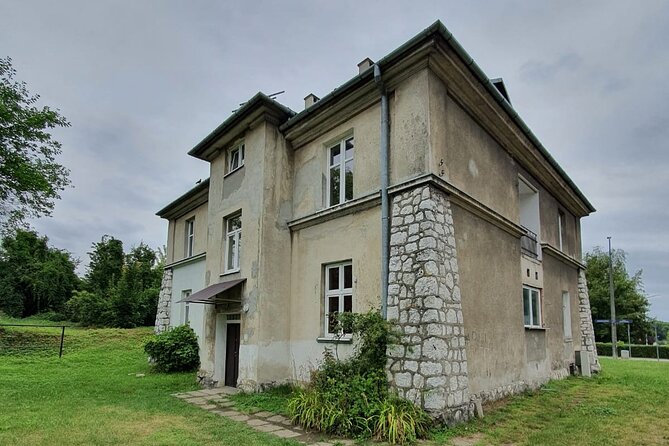
- The Grey House and Amon Göth’s former office
- SS barracks, service buildings, and the former camp layout
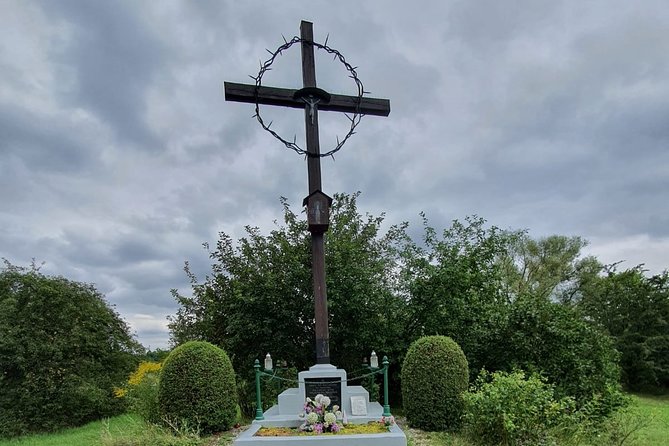
- Cemetery ruins and memorials to the victims
- Execution sites at Hujowa Gorka and beyond
- The quarry and forced labor
- Amon Göth’s residence and the film connection
- What makes the guide important
- Is $40.49 a fair price?
- Who should book this four-hour visit?
- Booking, cancellation, and practical details
- Should you book the Plaszow tour?
- FAQ
- Where does the Plaszow tour start?
- What time does the tour begin?
- How long does the tour last?
- Where does the tour end?
- Is public transportation included?
- Is admission to Plaszow included?
- Is the tour conducted in Spanish?
- Is the tour suitable for wheelchair users?
- What happens if bad weather cancels the tour?
Key points to know before visiting Plaszow
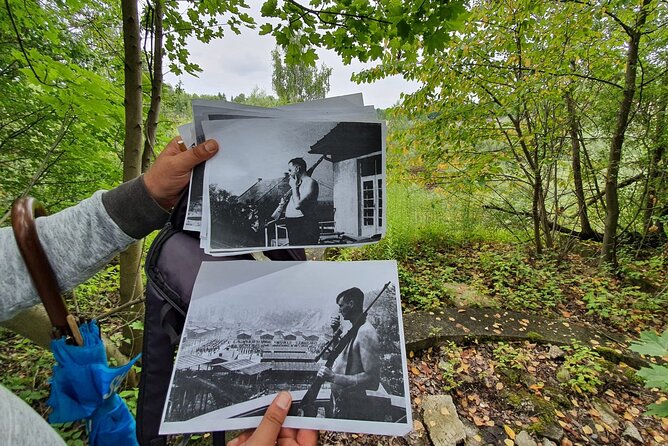
- David is the guide most praised for this experience: His Spanish explanations, personal attention, and use of old photographs help turn a quiet field into a place you can understand.
- The tour covers the full former camp area: You visit the Grey House, SS buildings, prisoner barracks, execution sites, the quarry, cemetery ruins, and Amon Göth’s residence.
- The film connection is part of the route: You see the location used for Plaszow in Schindler’s List, along with the real places that inspired the story.
- It starts at 10:30 a.m. from Sienna 2a: Public transport is not included and costs about 2 euros.
- Four hours gives the site proper attention: This is not a quick photo stop. It is a long, reflective walk with time for explanation.
- The price is $40.49 per person: Since admission to the site itself is free, you are paying mainly for the guide, interpretation, and organization.
Why Plaszow feels different from a museum visit
Plaszow does not give you a neat sequence of galleries, display cases, and numbered rooms. The former camp is spread across open ground, with ruins, memorials, paths, and places that are easy to miss if you walk alone.
That is why a guide matters here. Without context, the Grey House may look like an old building, the quarry like a scar in the ground, and the cemetery ruins like fragments with no clear story. With careful explanation, each place gains meaning.
I like this type of visit for people who want to understand what happened on the actual site, not only read about it in a city museum. You are asked to look closely and listen. The setting is quiet, which can make the subject feel even heavier.
The tour is connected to Schindler’s List, but it is not simply a film-location walk. The movie provides a familiar entry point, while the route keeps returning to the real people, prisoners, victims, and structures connected with Plaszow.
A few more in Krakow
- From Krakow: Auschwitz-Birkenau Guided Tour & Hotel Pickup
★ 4.5 · 33,358 reviews - From Krakow: Auschwitz-Birkenau Guided Tour & Hotel Pickup
★ 4.5 · 29,340 reviews - Krakow: Auschwitz Guided Tour with Optional Hotel Pickup
★ 4.5 · 15,280 reviews
Starting at Sienna 2a and reaching the camp
The meeting point is Sienna 2a, 31-041 Krakow, with a 10:30 a.m. start. The tour returns to this meeting point at the end, so you do not need to arrange a separate pickup after the visit.
The former camp lies about 3 kilometers from central Krakow. Public transport is not included, and the estimated cost is about 2 euros. Plan a little extra time to reach the meeting point, especially if you are unfamiliar with Krakow’s streets or public transport system.
A mobile ticket is provided, which keeps the booking process simple. Confirmation is sent when you book, and you should keep the confirmation email available on your phone.
The group can include up to 20 people. That is not a private tour, but it is still a manageable size for an outdoor site. The strongest feedback about the experience centers on David, the Spanish-speaking guide. In one particularly personal arrangement, he contacted a participant and suggested a meeting point closer to that person’s hostel. That kind of flexibility may not be guaranteed, but it gives you a useful reason to contact the provider if reaching Sienna 2a is difficult.
The Grey House and Amon Göth’s former office
One of the early points on the route is the Grey House, identified as the office of Amon Göth. You also see the former telephone exchange and the SS headquarters.
These places help you understand that Plaszow was not only a collection of prisoner barracks. It had an administrative structure, communication systems, offices, and quarters for those who ran the camp.
The Grey House is especially important because it connects the physical site with the figure of Göth, who is central to the story told in Schindler’s List. Seeing the location in person gives the film’s scenes a more direct setting, while the guide can place the building within the wider operation of the camp.
I would not expect a polished presentation at each stop. The value comes from the explanation and from seeing how the buildings relate to one another. This is one reason a four-hour visit makes sense. You have time to pause instead of rushing from one point to the next.
SS barracks, service buildings, and the former camp layout
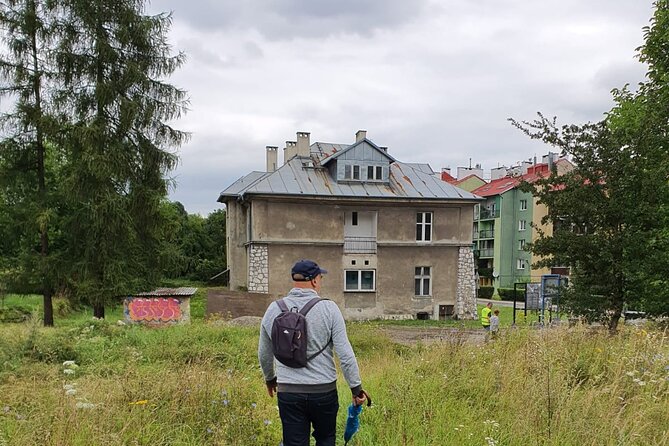
The route continues through the SS barracks and other functional camp buildings. You also visit the central square, the Jewish prisoner barracks, and the area identified as the former concentration camp.
The central square is useful for understanding scale and organization. A site like this can feel scattered when seen in small pieces. Moving through the main areas helps you picture how the camp was arranged and how different sections served different purposes.
The functional buildings may be less visually dramatic than the ruins, but I would not skip them. They show how a camp operates through ordinary systems: offices, barracks, communications, work areas, and control points. The subject is difficult, yet these practical details are part of understanding the place.
The Jewish prisoner barracks and the camp memorial bring the focus back to the people imprisoned there. This is not a light or casual excursion. The suggested minimum age is 14, and that recommendation feels sensible given the subject matter and the long, serious nature of the tour.
Something quite different:
- Krakow–Zakopane: Cable Car, Chocholow Baths, Cheese & Vodka
★ 5.0 · 10,720 reviews - Krakow: Auschwitz-Birkenau Guided Tour with Pickup & Lunch
★ 4.5 · 9,800 reviews - From Krakow: Wieliczka Salt Mine Tour
★ 4.6 · 9,393 reviews - Krakow: Auschwitz-Birkenau Guided Tour Pickup/Lunch Options
★ 4.5 · 9,057 reviews
Cemetery ruins and memorials to the victims
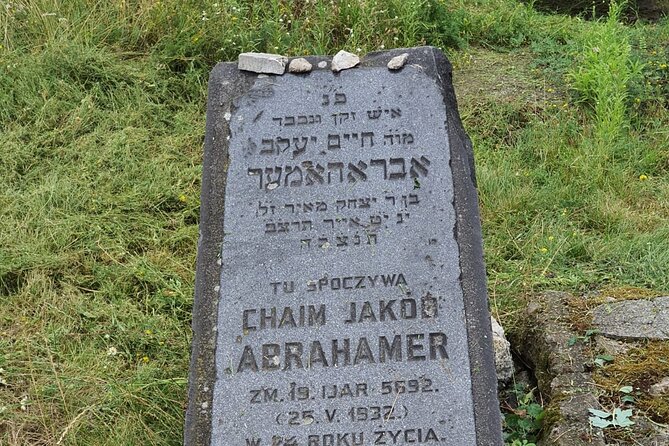
Plaszow includes the ruins of a Jewish funeral home and the remains of the Jewish cemetery. You also visit the monument to the victims of September 10, 1939, and the memorial to victims of the camp.
These locations are important because they show how the site affected an existing Jewish community and how places connected with burial and remembrance were treated during the war. Ruins do not explain themselves, so the guide’s role is particularly valuable here.
The memorial stops also change the pace of the walk. Instead of focusing only on buildings and camp administration, the route gives space to remember the people who suffered and died.
I recommend allowing yourself some quiet time at these points. You do not need to photograph everything. The most useful habit is to listen, look around, and let the site remain more than a backdrop for the film.
Execution sites at Hujowa Gorka and beyond
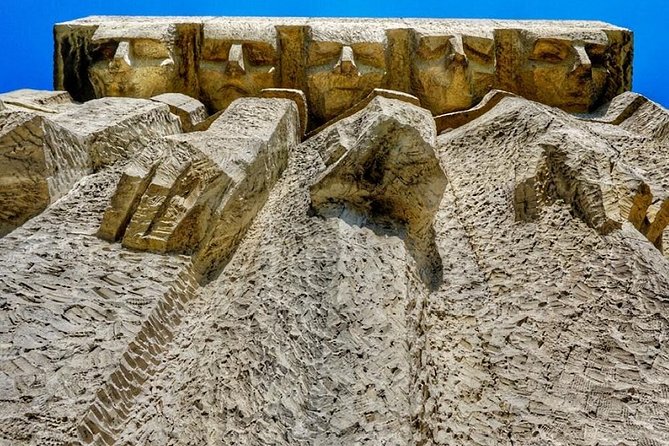
The tour includes several places connected with mass executions, including the main execution area and Hujowa Gorka, described as a second mass-execution site.
These are among the most difficult stops. The locations may not look dramatic, and that is precisely the problem. You can walk through an ordinary-looking outdoor area without realizing what took place there unless someone explains it.
The route also includes the monument for the September 10, 1939 victims. Together, these memorial points make clear that Plaszow must be approached as a place of mourning and remembrance, not only as a movie setting.
A guide can also help you understand the difference between what remains physically visible and what is known through historical records. Much of the camp no longer appears in its original form. The absence of buildings is part of what you encounter.
The quarry and forced labor
The quarry is another major stop. It is connected with forced labor and gives the tour a physical sense of the work imposed on prisoners.
This part of the visit is valuable because it moves beyond administration and imprisonment. You see a work site tied to the daily demands placed on people held in the camp. The quarry also adds variety to the route, although the subject matter remains grim.
The ground is described as easy to walk for the most part. Still, you should wear comfortable shoes. This is a four-hour outdoor tour, and even a simple route can become tiring if your footwear is poor or the weather turns cold, wet, or hot.
Bring clothing suitable for the forecast. The operator may cancel in adverse weather, in which case you are offered another date or a full refund. That policy is practical, but it means you should keep some flexibility in your Krakow plans.
Amon Göth’s residence and the film connection
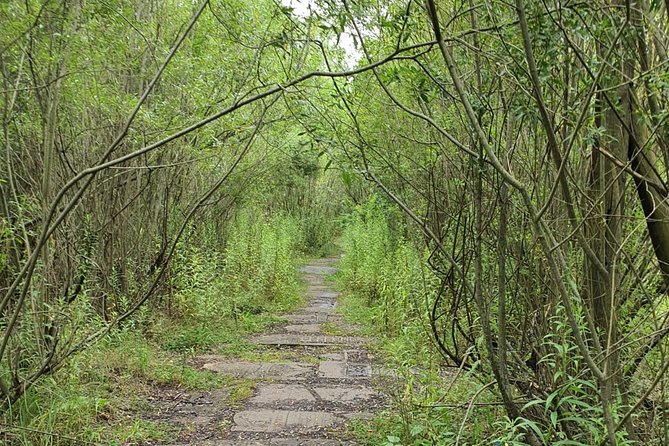
The tour ends its major points with Amon Göth’s residence and the location used as the Plaszow camp in Schindler’s List. These stops will be especially meaningful if you know the film.
Still, I would treat the movie connection as a starting point, not the main reason to come. Films compress events and create a clear visual story. The real site is less tidy. Buildings are gone, spaces have changed, and the quiet setting does not always match what you remember from the screen.
That contrast is useful. You can recognize places from the film while also learning where the movie simplifies or recreates the camp. The supplied tour information identifies a specific filming location, so you get both the real camp area and the place used to represent it on screen.
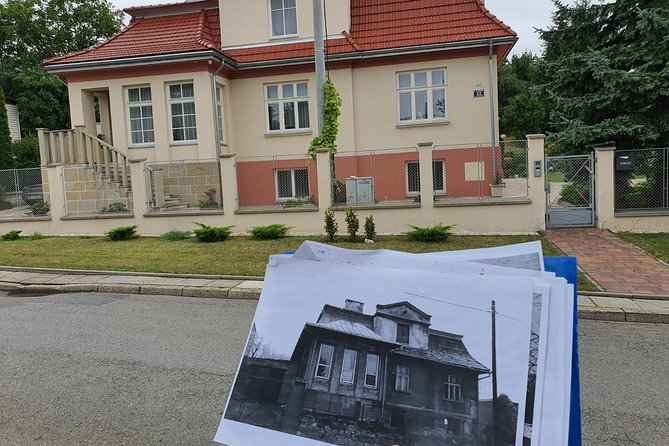
David’s use of old photographs is one of the most praised features of the experience. Images from the past can help you compare what you see now with how the site looked during the camp’s operation. I would value that greatly here, since the remaining physical evidence can otherwise be hard to interpret.
What makes the guide important
Plaszow is a place where guiding can make the difference between a meaningful visit and a walk through an open park. The positive feedback about David is unusually consistent: he is described as passionate, attentive, and willing to spend extra time explaining the site.
One couple had the tour with David alone, and he extended the visit without rushing. That level of attention cannot be promised for every departure, especially when the group reaches its maximum of 20 people, but it shows the kind of guiding style associated with this experience.
Another participant described David as making a major effort to help them understand the camp. That matters because the site includes many separate points: offices, ruins, memorials, barracks, execution locations, and the quarry. A good guide joins those pieces into a clear route.
You should also feel free to ask questions. The group size is small enough that you are not lost in a giant crowd, and the tour is conducted in Spanish. If you prefer a solemn visit with direct explanation rather than a hurried sightseeing stop, this is the right format.
Is $40.49 a fair price?
The advertised price is $40.49 per person, and admission to the site is free. At first, that may seem high for an outdoor area with no separate entry ticket.
But you are paying for four hours of Spanish-language guiding, route planning, historical interpretation, and the chance to understand a site that is difficult to read on your own. The guide is the central product here, not the admission ticket.
I see the price as fair if you want serious context and do not speak Polish or English comfortably enough to follow another tour. It is less attractive if you only want to see the Schindler’s List filming location, take a few photographs, and leave quickly.
The extra public transport cost is modest at about 2 euros, but it is not included. Add that to the tour price when planning your budget.
Who should book this four-hour visit?
I would recommend Plaszow to adults and older teenagers who want a focused visit to a difficult historical site. The suggested minimum age is 14, and I would take that seriously.
It also suits anyone who has seen Schindler’s List and wants to understand the real places behind the story. The film connection may help you recognize locations, while the guide’s photographs and explanations add much-needed context.
This tour may not suit you if you prefer indoor museums, short walks, or flexible independent exploration. The schedule lasts about four hours, and the subject remains serious throughout.
It is also a poor match for anyone who cannot walk the site comfortably. The ground is mostly easy, but the activity is not wheelchair accessible, and pregnancy is listed as a reason not to take part. Wear comfortable shoes and dress for changing weather.
Booking, cancellation, and practical details
You can cancel for a full refund up to 24 hours before the 10:30 a.m. start time. Cancellations made less than 24 hours in advance are not refunded, and changes inside that period are not accepted.
The activity depends on good weather. If poor conditions cause cancellation, you are offered another date or a full refund. Since the walk takes place outside, check the forecast before booking and avoid packing this tour too tightly against another outdoor activity.
Most people can participate, but the operator specifically notes the accessibility limits and the recommended minimum age. Confirmation arrives at booking, and the activity uses a mobile ticket.
Should you book the Plaszow tour?
Book it if you want to understand Plaszow rather than simply recognize a film location. The four-hour length, Spanish guide, old photographs, and broad route make this a strong choice for a serious visit, especially if David leads your group.
Skip it if you want a quick sightseeing stop or an indoor museum experience. Plaszow asks for time, suitable clothing, and emotional attention. At $40.49 plus about 2 euros for transport, the value depends almost entirely on how much you want guided context.
For me, the strongest reason to choose it is simple: Plaszow is easy to misunderstand alone. A careful guide can help you see the offices, barracks, quarry, memorials, ruins, and execution sites as parts of one terrible story, not as disconnected points on a map.
FAQ
Where does the Plaszow tour start?
The tour starts at Sienna 2a, 31-041 Krakow, Poland.
What time does the tour begin?
The start time is 10:30 a.m.
How long does the tour last?
The visit lasts approximately four hours.
Where does the tour end?
The activity ends back at the meeting point.
Is public transportation included?
No. Public transportation is not included. The estimated cost is about 2 euros.
Is admission to Plaszow included?
The site visit has no separate admission charge. The tour price covers the experience and the Spanish-speaking guide.
Is the tour conducted in Spanish?
Yes. A native Spanish-speaking guide is included.
Is the tour suitable for wheelchair users?
No. The activity is not accessible for people who use wheelchairs.
What happens if bad weather cancels the tour?
You will be offered an alternative date or a full refund if the tour is canceled because of poor weather.
Just added in Krakow
- Auschwitz-Birkenau – Skip the Line Tickets★ 3.5 · 29 reviews
- Auschwitz-Birkenau: Fast-Track Ticket & Guided Tour No Transfers★ 3.5 · 17 reviews
- Zakopane & Sleigh Ride with Bonfire – Group Tour from Kraków★ 5.0 · 2 reviews
- Sleigh Ride & Bonfire in Zakopane with Funicular – Private Trip★ 5.0 · 48 reviews
- Thermal Baths & Zakopane – Private Trip from Krakow★ 5.0 · 1 review
- Zakopane & Gubalowka Funicular – Private Winter Tour from Krakow★ 5.0 · 10 reviews
- Divine Mercy Sanctuary – Private Tour from Krakow★ 5.0 · 4 reviews
- stag dog chase Krakow prank★ 5.0 · 4 reviews
Tours, compared.
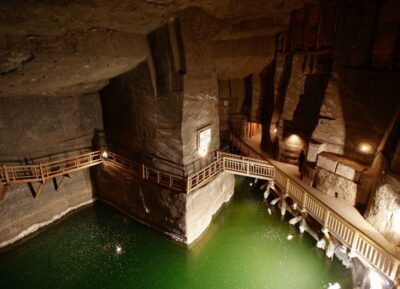
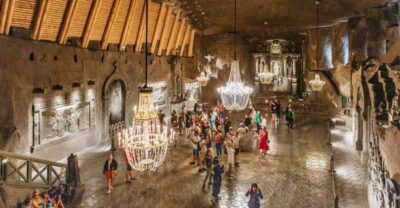
Wieliczka Salt Mine Guided Tour with Transport
Read our review →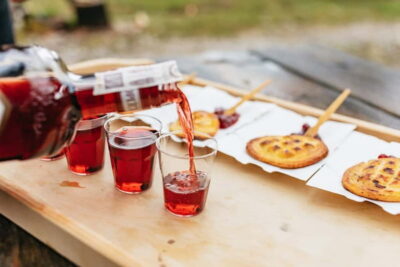
Zakopane Tour with Chocholow Hot Baths and Cable Car
Read our review →
Wieliczka Salt Mine Fast-Track Ticket & Guided Tour
Read our review →
Wieliczka Salt Mine Tour & Skip the Line Ticket
Read our review →
Krakow to Wieliczka: Salt Mine Guided Tour with Ticket & Transfer
Read our review →