
REVIEW · AUSCHWITZ-BIRKENAU MEMORIAL TOURS
Oswiecim: Auschwitz-Birkenau Skip-the-Line Entry Tickets
This is a place that demands your full attention. I like the way this guided visit covers both Auschwitz I and Birkenau, and I value the licensed guide, headsets, and booked entry because they help you focus on the memorial rather than ticket queues. The main drawback is that the meeting point can be hard to spot, and the museum may change your start time.
The $81 price is reasonable if you want structure, clear explanations, and admission arranged in advance. Still, this is not a casual half-day outing. You should bring identification, allow a full day in your plans, and prepare for airport-style security, a serious subject, and a schedule controlled by the museum.
In This Review
- Key points to know before booking
- Why Auschwitz I is the right place to begin
- The barracks and evidence inside Auschwitz I
- Continuing to Auschwitz II Birkenau
- The $81 price and what you receive
- The meeting point requires a careful plan
- Timing is the biggest practical risk
- What to bring, and what to leave behind
- How the guide changes the experience
- Who should book this experience?
- Cancellation and booking flexibility
- FAQ
- How long does the Auschwitz-Birkenau visit last?
- Does the ticket include transportation?
- What identification do I need?
- Is the ticket skip-the-line?
- What language is the guided tour?
- Can I cancel for a full refund?
- Should you book the Auschwitz-Birkenau ticket?
Key points to know before booking
- Both former camps are included: You visit Auschwitz I for about two hours, then continue to Auschwitz II Birkenau for about one hour.
- The guide leads the full memorial visit: A licensed English-speaking guide explains the buildings, photographs, prisoner artefacts, gas chambers, crematoria, and camp conditions.
- Booked entry saves queue time: Your ticket includes access to both memorial sites, but you still must pass security and arrive at the exact meeting point.
- The schedule is not fully fixed: The museum can change the assigned hour, and the pace and length are set by its visitor service.
- The meeting point needs care: Find the area near the luggage storage beside the main entrance museum building, and allow extra time in the crowded car park area.
- Pack very lightly: Large bags, oversize luggage, sharp objects, pets, alcohol, and drugs are not allowed. Bring your passport or identity card.
Why Auschwitz I is the right place to begin
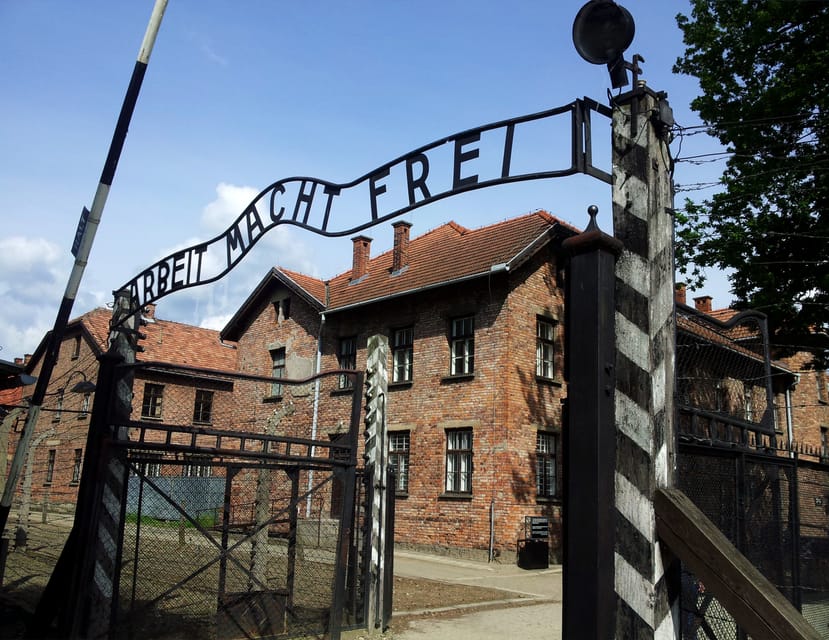
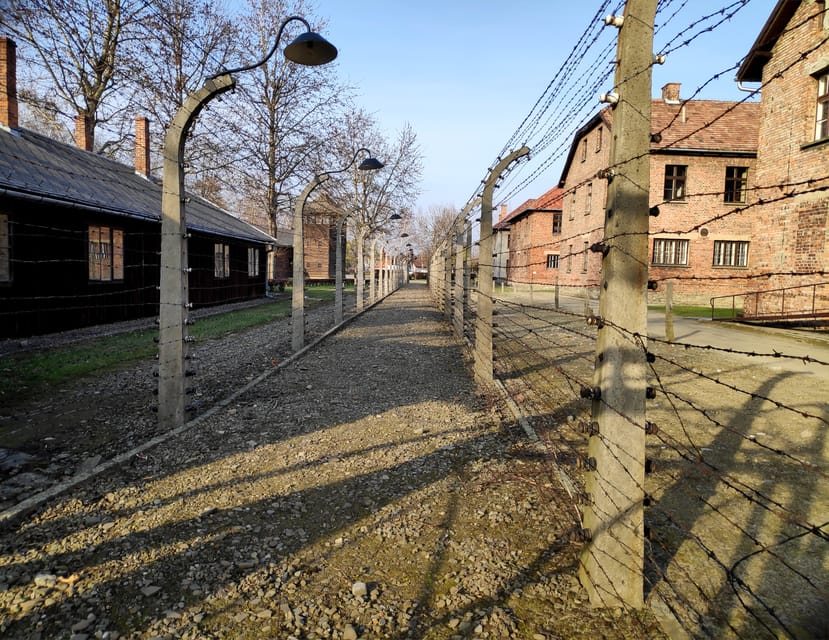
Auschwitz I is the more compact and built-up part of the memorial. You enter through the main gate marked Arbeit Macht Frei, then walk among brick barracks and other preserved buildings with the guide.
The first camp can feel more direct and concentrated because the route moves through enclosed rooms and reconstructed spaces. You are not simply looking at empty buildings. You see photographs of prisoners, personal and institutional artefacts, and displays that show how the camp operated.
The guide’s role matters here. A visit without context can leave you with fragments: barracks, fences, photographs, and ruins. A licensed guide connects those pieces and explains what you are seeing without leaving you to guess at the meaning.
You should expect a solemn tone. This is not a site for loud conversation, rushed photographs, or casual sightseeing. The best approach is to listen closely, move at the group’s pace, and give yourself time afterward to process what you have seen.
The visit to Auschwitz I lasts about two hours. That is long enough to cover important sections, but not long enough to inspect every display at your own speed. If you prefer to read every panel, you may feel hurried. The tradeoff is that the guide gives you a clear route and keeps the visit moving.
More Auschwitz-Birkenau memorial tours:
- From Krakow: Auschwitz-Birkenau Guided Tour & Hotel Pickup
★ 4.5 · 33,358 reviews - From Krakow: Auschwitz-Birkenau Guided Tour & Hotel Pickup
★ 4.5 · 29,340 reviews - Krakow: Auschwitz Guided Tour with Optional Hotel Pickup
★ 4.5 · 15,280 reviews
The barracks and evidence inside Auschwitz I
The brick blocks at Auschwitz I help show the scale and organization of the camp. Their regular layout can seem almost orderly from outside, which makes the material inside even harder to absorb.
You may see prisoner photographs, documents, objects, and reconstructions of parts of the complex. These details give the site a human focus. Instead of treating the camp as a distant historical setting, you are confronted with evidence of individual lives and the machinery built around them.
The tour also includes the only remaining gas chambers and crematoria at the memorial sites, according to the activity description. This portion is especially serious. Your guide can provide necessary context, but no explanation makes the place easy to visit.
Headsets are included, and that is a useful feature. Groups can spread out slightly inside the buildings, and you do not need to stand shoulder to shoulder with the guide to hear. The equipment also helps when several groups are moving through the same area.
One guide identified in the feedback was Suzanna, whose serious and informed presentation was praised. The name was not completely certain in the comment, so you should not book this expecting a particular guide. The important point is that the quality of the experience depends heavily on the individual guide assigned that day.
Continuing to Auschwitz II Birkenau
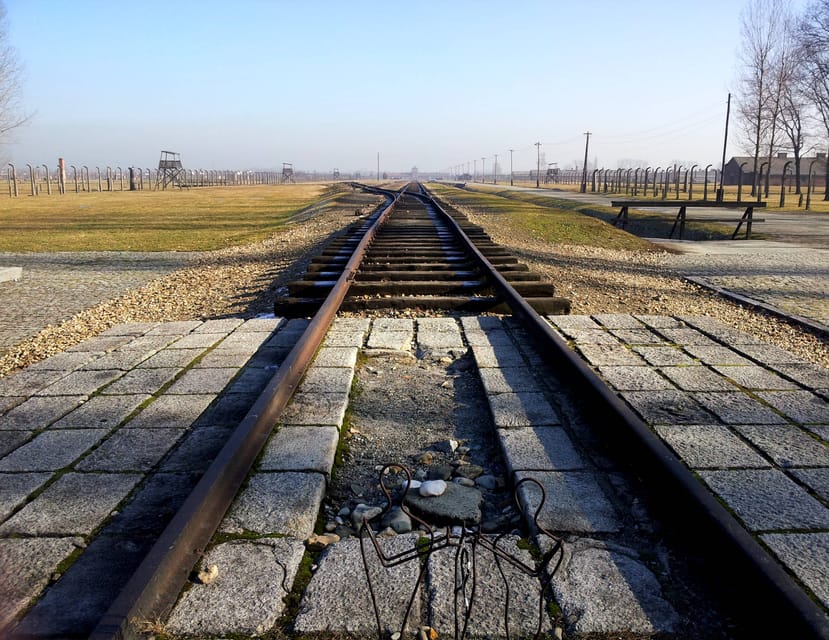
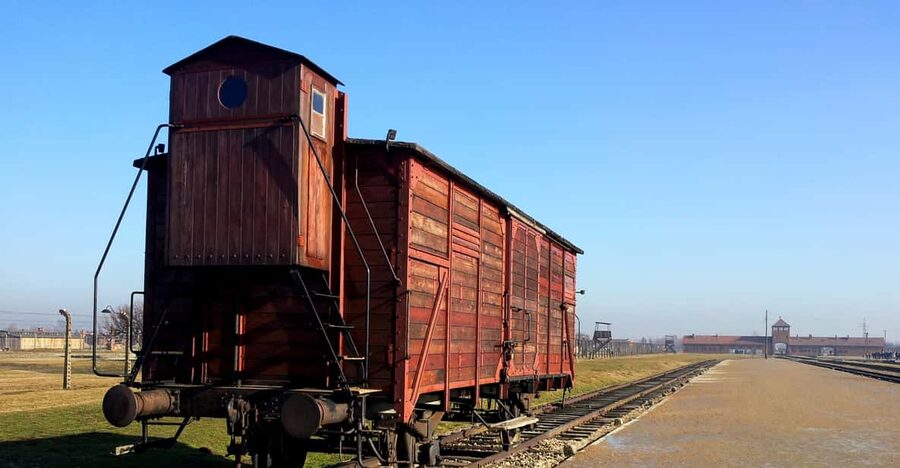
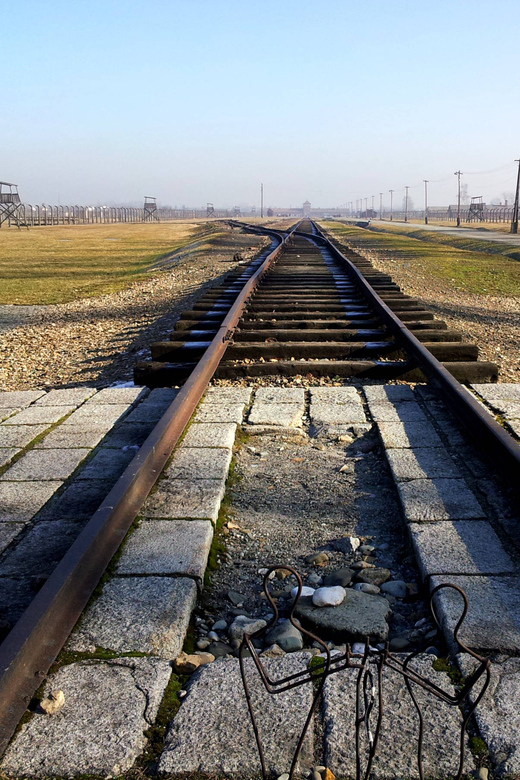
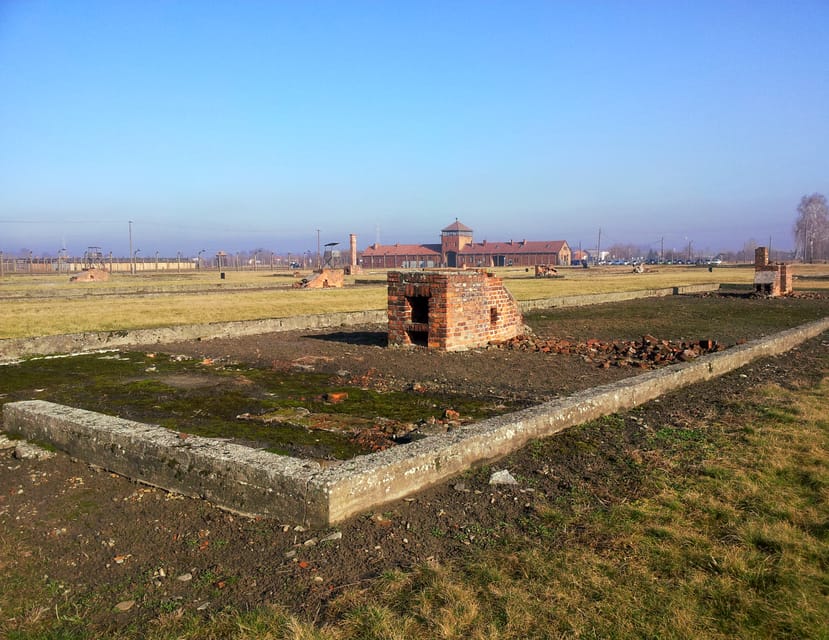
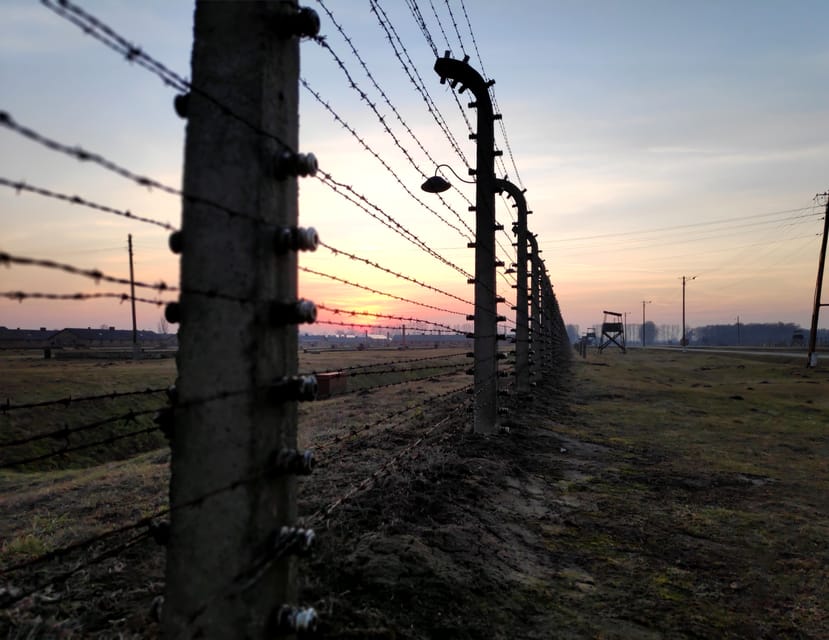
The second part takes you to Auschwitz II Birkenau, where the setting changes sharply. Instead of the tighter brick complex at Auschwitz I, you encounter a huge open area with wooden blocks, railway infrastructure, ruins, and long distances between key points.
The guided portion lasts about one hour. You enter wooden barracks where almost 1,000 people were held in inhumane conditions, then see the ruins of gas chambers and crematoria connected with the Nazi German extermination program.
Birkenau needs more time than the formal tour can provide. One hour gives you a guided introduction, but it cannot show every section of such a large site. I would treat the guided route as the essential framework, not the complete visit.
If you have your own transport, one useful tip is to plan additional time at Birkenau rather than leaving immediately after the guide finishes. A comment from Jurgen in Belgium specifically recommended using personal transport between the two sites and remaining at Birkenau afterward, since the area is large and there is more to see along the paths and information displays.
Be careful with this advice. Transportation is not included in the $81 activity, and the supplied details do not promise a private vehicle transfer between Auschwitz I and Birkenau. If you are not driving, confirm exactly how you will move between the two sites before booking. Do not assume that a return ride is part of this ticket.
The $81 price and what you receive
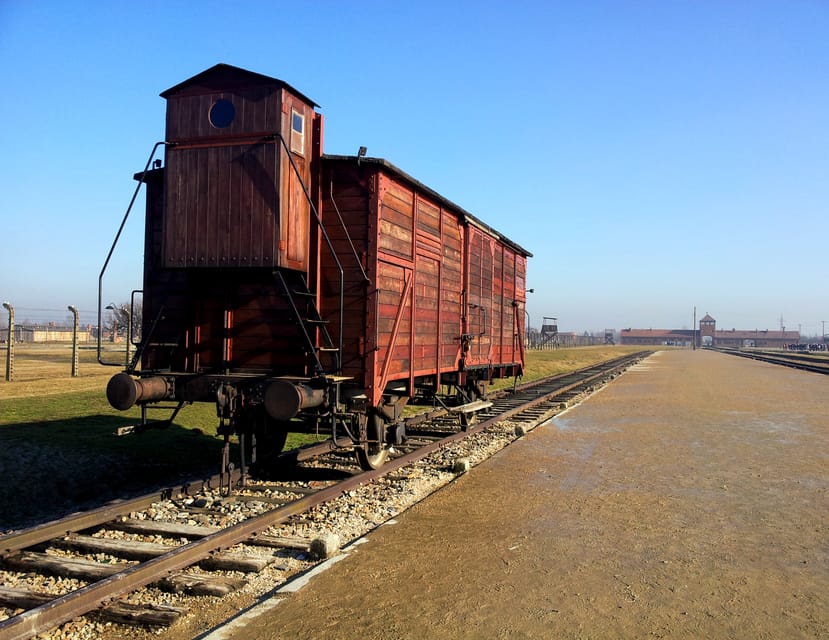
At $81 per person, this is not the cheapest way to enter Auschwitz-Birkenau. The value comes from reducing several points of uncertainty at a difficult site.
Your price includes:
- Entrance tickets to the Auschwitz-Birkenau Memorial Sites
- A licensed guide in the selected language
- Headsets for hearing the guide
- An English-speaking tour leader
- An English e-book for each participant
You are paying for more than the physical ticket. You are also paying for an arranged route and interpretation at a place where the details matter. The guide can explain the role of each building, identify what has been preserved or reconstructed, and give the visit a clear sequence.
The skip-the-line feature is useful, but keep its limits in mind. You still need to arrive at the museum, find the meeting point, show matching identification, and pass airport-style security. Skip-the-line access does not mean you can walk straight through every control.
I would consider the price good value for a first visit, especially if you want an English-speaking guide and do not want to manage museum admission on your own. It is less attractive if you already have a confirmed museum booking, prefer to read independently, or want to spend many extra hours at Birkenau.
The English e-book is a modest but useful extra. It gives you material to read before or after the visit, though the supplied information does not describe its length or exact contents. Think of it as supporting material, not a replacement for the guide.
A few more in Kraków
- Krakow–Zakopane: Cable Car, Chocholow Baths, Cheese & Vodka
★ 5.0 · 10,720 reviews - Krakow: Auschwitz-Birkenau Guided Tour with Pickup & Lunch
★ 4.5 · 9,800 reviews - From Krakow: Wieliczka Salt Mine Tour
★ 4.6 · 9,393 reviews - Krakow: Auschwitz-Birkenau Guided Tour Pickup/Lunch Options
★ 4.5 · 9,057 reviews
The meeting point requires a careful plan
The official meeting point is near the luggage storage area on the side of the main entrance museum building. That description is precise enough once you are there, but the wider area can be confusing.
Mark, from the United Kingdom, found the car park crowded and worried about locating the group. He was eventually found by Daniel, but the meeting depended more on luck than on a clear visual marker. That is a useful warning for you: do not arrive at the last minute and expect to spot a tiny guide in a sea of groups.
I would arrive early, save the provider’s contact details, and check the exact meeting instructions before leaving your hotel. Look for a guide holding a visible sign or ask staff near the entrance where luggage storage is located. A photograph of the meeting area would make this easier, but one is not provided in the information supplied here.
The experience provider is AT Cracow. The tour language listed is English, and the live guide is also English-speaking. If everyone in your party needs to follow a spoken tour, make sure the selected booking language matches your needs.
Timing is the biggest practical risk
The advertised duration is 210 minutes, or three and a half hours. The stated plan is roughly two hours at Auschwitz I and one hour at Birkenau, with the remaining time used for movement and organization.
Do not build a tight evening reservation around that number. The museum controls the final visitor schedule, and the booked hour is described as tentative. It may change because of museum availability. The instructions specifically tell you to save the whole day for the outing, and refunds are not accepted because of a time change.
That may sound excessive for a three-and-a-half-hour activity, but it is sensible advice. You need time to reach Oswiecim, locate the meeting point, clear security, move between the two memorial sites, and handle any schedule adjustment.
This is especially important if you are arranging separate transport. One person who had organized a return pickup could not locate the transport and had to use the regular bus instead. The lesson is simple: confirm every transport detail independently and keep a backup plan.
The activity does not include transportation. That means your route to the museum, and any movement that is not explicitly arranged by the tour provider, needs your attention. If you are coming from Krakow, do not assume this ticket includes a coach excursion simply because many Auschwitz experiences in the area do.
What to bring, and what to leave behind
Bring your passport or identity card. The museum requires the full names of all participants, and each name must match the identification document shown at entry. A mismatch can result in refusal.
This rule is easy to overlook when booking for a family or group. Enter every participant’s name exactly as it appears on the relevant document. Do not use nicknames or shortened names.
Security is airport-style, so pack light. The following are not allowed:
- Pets
- Weapons or sharp objects
- Oversize luggage
- Large bags
- Alcohol
- Drugs
The information does not provide a complete list of permitted bag dimensions, so avoid bringing anything bulky. A small, practical bag is the safer choice, but check current museum rules if you need to carry special items.
Wear suitable clothing and shoes for a long memorial visit, but the supplied information does not specify weather arrangements or accessibility details. Since Birkenau covers a large area, you should be prepared for walking between widely separated points.
How the guide changes the experience
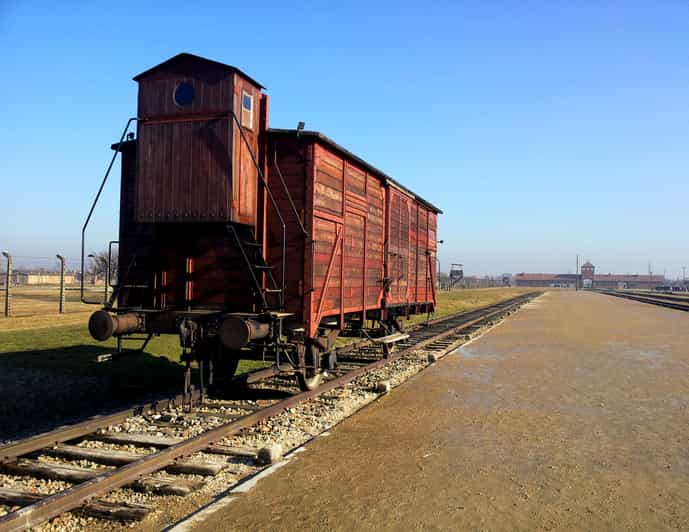
Auschwitz-Birkenau is a place where guiding has real value. The site contains buildings, ruins, photographs, and objects, but the meaning is not always obvious from a quick look.
A good guide gives you dates, function, and human context without turning the visit into a lecture disconnected from the place. The strongest praise attached to this activity focuses on the guide’s clear English and suitably solemn manner. That is exactly what you want here: accuracy, restraint, and enough explanation to understand the evidence in front of you.
The headsets help keep that explanation audible. You can remain with the group without pressing close to the guide, which is useful inside narrow rooms and crowded passageways.
There is still a limit. A guide cannot give you unlimited time at each object or answer every question at length. If you want a slow, private reading of each display, consider staying longer after the formal route if the day’s schedule and your transport allow it.
The museum, not the activity provider, decides the pace and duration of the memorial tour. That protects the site from chaotic movement, but it also means you must accept some loss of personal control.
Who should book this experience?
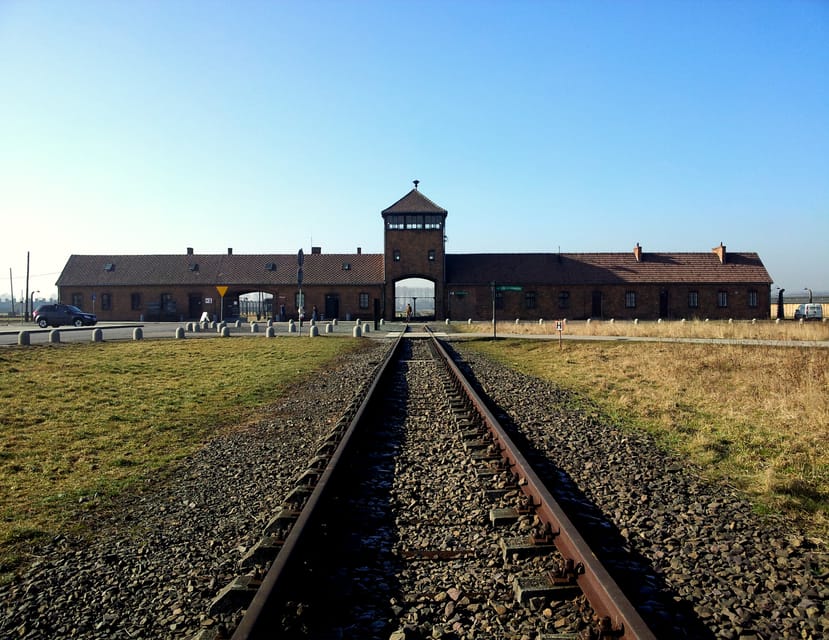
I would recommend it to a first-time visitor who wants both camps, a licensed English-speaking guide, and admission handled in advance. It is also a good fit if you value clear structure and would rather not work out the memorial route alone.
It suits adults and older children who can manage a serious, emotionally demanding visit. The material is not presented as entertainment, and the subject requires respect. Families should consider each child’s age and ability to cope with the content.
You may want another option if you are mainly interested in independent exploration. The one-hour Birkenau section is only an introduction to a very large site, and the organized pace may limit extra wandering.
I would also hesitate if your day is tightly scheduled. Museum-controlled times, security, meeting-point confusion, and transport arrangements create too many variables for a narrow itinerary.
Cancellation and booking flexibility
You can cancel up to 24 hours before the activity for a full refund. The reserve-now-and-pay-later option also lets you hold a place without paying immediately.
Those policies are useful, but they do not remove the timing risk. A change caused by museum availability is not treated as a reason for a refund, so keep your entire day open even if the booking shows a three-and-a-half-hour duration.
FAQ
How long does the Auschwitz-Birkenau visit last?
The advertised duration is 210 minutes, or three and a half hours. Auschwitz I takes about two hours, and Auschwitz II Birkenau takes about one hour, though the museum controls the final pace and duration.
Does the ticket include transportation?
No. Transportation is not included. You need to arrange your own travel to the museum and confirm how you will move between Auschwitz I and Birkenau.
What identification do I need?
You must bring a passport or identity card. The full names on the booking must match the names on the identification documents shown at the entrance.
Is the ticket skip-the-line?
Yes. The activity includes skip-the-ticket-line access. You must still arrive at the meeting point and pass airport-style security.
What language is the guided tour?
The listed tour language is English. A licensed guide and an English-speaking tour leader are included, along with headsets.
Can I cancel for a full refund?
Yes, you can cancel up to 24 hours in advance for a full refund. A museum schedule change does not qualify for a refund, so keep the whole day available.
Should you book the Auschwitz-Birkenau ticket?
Book it if you want a guided first visit with both Auschwitz I and Birkenau included, and if the $81 cost fits your budget. The strongest reasons are the licensed guide, headsets, booked admission, and clear route through a memorial that can be difficult to understand alone.
Before paying, plan the meeting point carefully, enter every participant’s name correctly, bring identification, and arrange transportation independently. If you want extra time at Birkenau, use your own transport where possible and do not rush away when the formal tour ends.
This is a serious, structured visit rather than a flexible sightseeing stop. With realistic timing and a respectful frame of mind, it offers a clear and well-supported way to encounter both former camps.
Just added in Kraków
- Auschwitz-Birkenau – Skip the Line Tickets★ 3.5 · 29 reviews
- Auschwitz-Birkenau: Fast-Track Ticket & Guided Tour No Transfers★ 3.5 · 17 reviews
- Zakopane & Sleigh Ride with Bonfire – Group Tour from Kraków★ 5.0 · 2 reviews
- Sleigh Ride & Bonfire in Zakopane with Funicular – Private Trip★ 5.0 · 48 reviews
- Thermal Baths & Zakopane – Private Trip from Krakow★ 5.0 · 1 review
- Zakopane & Gubalowka Funicular – Private Winter Tour from Krakow★ 5.0 · 10 reviews
- Divine Mercy Sanctuary – Private Tour from Krakow★ 5.0 · 4 reviews
- stag dog chase Krakow prank★ 5.0 · 4 reviews