
REVIEW · CRUISES & BOAT TOURS
Krakow: River Cruise & Guided Visit to Former Plaszow Camp
Krakow’s river tells one story; Plaszow tells another. I like the scenic Vistula cruise for its easy views of Wawel, Skałka, Bielany monasteries, and historic bridges, and I value the expert-led camp visit, where a guide gives meaning to a place with very few surviving buildings. The main caution is walking: this is not a gentle three-hour outing, especially at Plaszow.
The river section is comfortable, with an English audio guide, while the camp visit uses a live English-speaking guide. You’ll also pass through Ghetto Heroes Square and see its striking metal chairs, but you should arrive early, wear sturdy shoes, and expect uneven ground, rubble, nettles, and at least 2 kilometres of walking to the camp.
In This Review
- Key points to know before booking
- Why this Krakow combination works
- Starting beside the Vistula at Paulinska
- Wawel, Skałka, Bielany, and Krakow from the water
- Ghetto Heroes Square and the meaning of the metal chairs
- Walking toward former Plaszow Camp
- What remains at Plaszow today
- The Grey House and the vanished camp layout
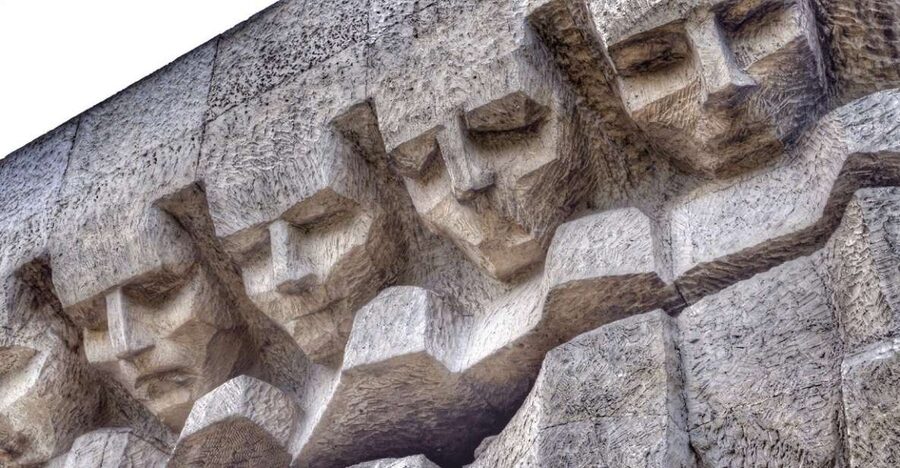
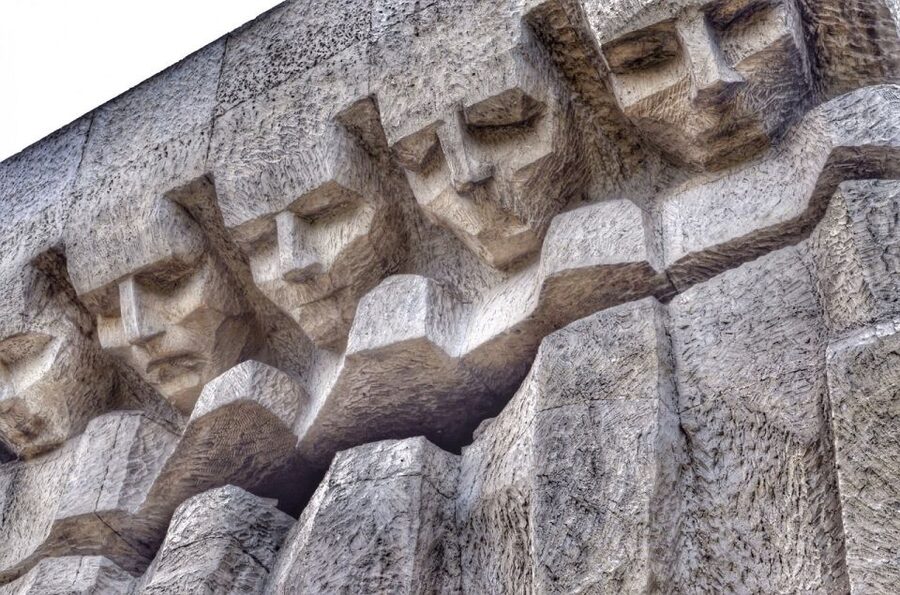
- The Monument of Torn-Out Hearts
- Oskar Schindler’s connection to Plaszow
- Is $56 a good price?
- Who should book this experience?
- Practical advice for a smoother visit
- Should you book the Krakow river cruise and Plaszow visit?
- FAQ
- How long does the experience last?
- Where does the tour begin?
- Is a guide included at Plaszow Camp?
- Is the boat ride guided?
- How much walking is involved?
- Is transportation back included after the tour?
Key points to know before booking
- Two very different experiences in three hours: A relaxed catamaran ride is followed by a serious historical walk through Podgórze and former Plaszow Camp.
- The guide matters greatly at Plaszow: Surviving buildings are scarce, so expert explanation brings the vanished camp layout and its stories into focus.
- Ghetto Heroes Square adds important context: The metal chairs represent forced departures, absence, and the people who never returned.
- The route is physically demanding: You may walk around 5 miles in total, including rough paths, rubble, and areas overgrown with nettles.
- The Monument of Torn-Out Hearts is a major stopping point: It gives the visit a quiet place for remembrance and reflection.
- The $56 price is fair for a combined tour: You receive the cruise, audio guide, live camp guide, and a tram ticket, but not transportation back at the end.
Why this Krakow combination works
At first glance, a river cruise and a former Nazi camp may seem like an odd pairing. In practice, the contrast can help you understand Krakow from two angles. The Vistula shows the city’s royal, religious, and architectural face. Plaszow forces you to consider what happened to the city’s Jewish population during the Second World War.
I like that the experience does not treat the river ride as a full-day sightseeing cruise. It is a short, one-way boat trip that gets you moving through the city before the more serious walking section. You get a change of pace, but the schedule remains compact at three hours.
This is not a tour for someone seeking only cheerful city views. The second half deals with forced labor, imprisonment, death, cemeteries, mass graves, and the destruction of a community. You should be ready for a respectful, emotionally difficult visit.
More Boat Trips in Kraków
- Kraków: Evening or Night River Cruise
★ 4.0 · 7,386 reviews - Krakow: Sightseeing Cruise by Vistula River
★ 4.1 · 1,897 reviews - Krakow: Evening Cruise with a Glass of Wine
★ 4.0 · 1,054 reviews
Starting beside the Vistula at Paulinska
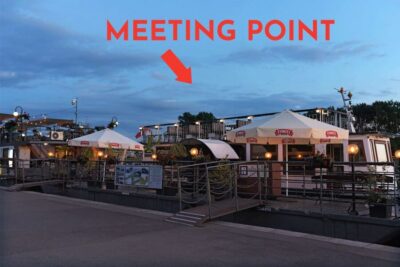
The meeting point is at Inflancki Boulevard beside the water tram stop called Paulinska. Look for the person holding a Cracow Boat sign. Arrive at least 10 minutes before departure. Once the group leaves, late arrivals cannot join, and the ticket cannot be refunded.
That early arrival matters here because the boat is a fixed departure, not a flexible hop-on service. I would allow extra time to reach the boulevard, especially if you are unfamiliar with Krakow’s riverfront.
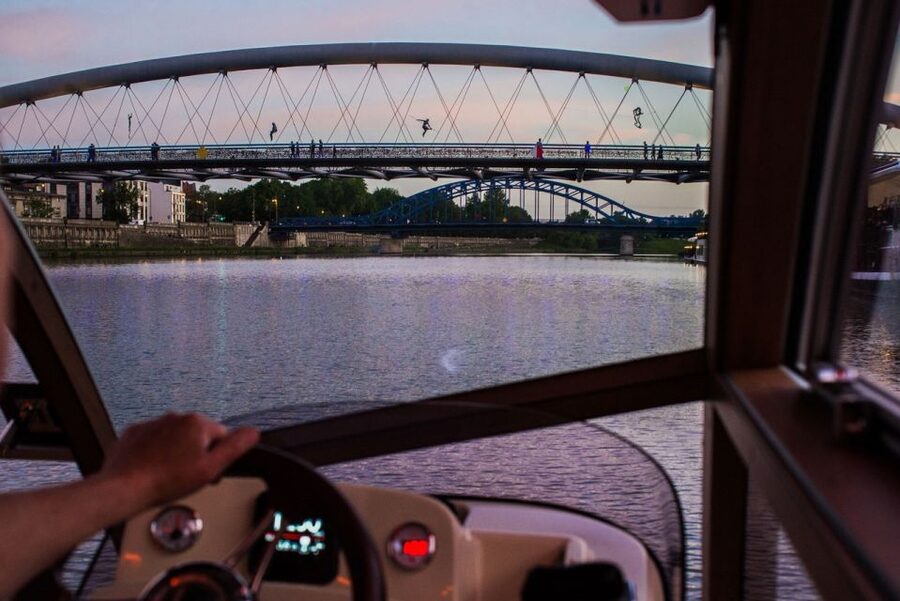
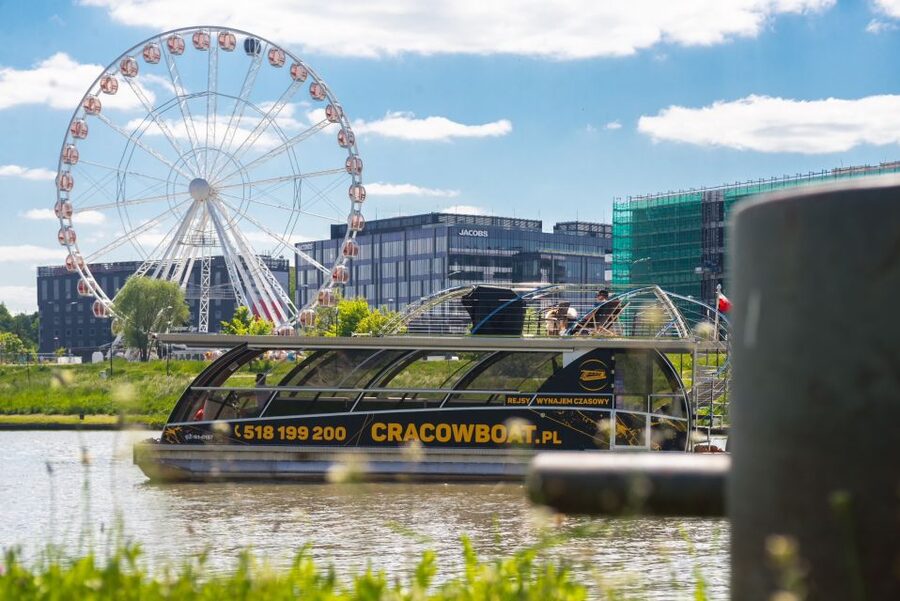
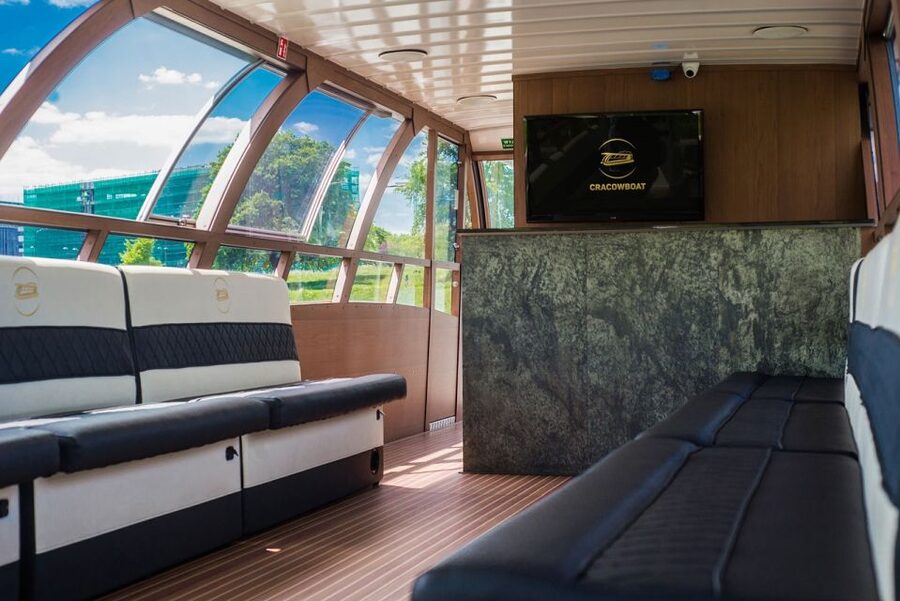
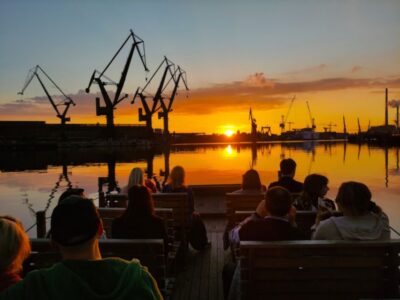
The included boat trip is one way and uses a catamaran. An English audio guide explains what you are seeing as the boat passes along the Vistula. This format gives you a little freedom: you can look out at the city, listen when a landmark comes into view, and enjoy a short break before the walking portion.
Do not expect a long narrated cruise with a full meal or a wide range of onboard services. The boat ride is best understood as a scenic transfer with sightseeing value.
Wawel, Skałka, Bielany, and Krakow from the water
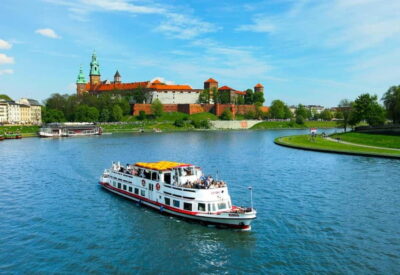
From the river, Krakow’s landmarks take on a different shape. Wawel’s royal past is part of the narration, and the view offers a useful introduction to the city’s long political and religious story.
You’ll also hear about Skałka and the monasteries of Bielany. The river creates distance from the streets, so bridges and waterfront buildings can be seen as links between different periods of Krakow’s development. The audio guide provides the historical framework, while the open-air views do the rest.
I like this section because it asks little of you physically. You sit, listen, and watch the city pass by. After that, the tour becomes far more active and solemn.
The boat section also makes the price easier to justify. If you visited Plaszow alone, you would still need to arrange your own transport and find a way to understand the site. Here, the cruise adds a pleasant city experience and the itinerary includes a tram ticket for part of the later route.
Ghetto Heroes Square and the meaning of the metal chairs
After the cruise, the experience moves through Krakow’s Podgórze district and passes Ghetto Heroes Square. This is an important stop before Plaszow because it connects the camp visit with the history of the Krakow Ghetto.
The square was once overlooked after the war. In 2005, it was transformed into a memorial space marked by large metal chairs. The chairs represent the forced removal of Jewish residents and the empty places left behind.
The installation is simple and unsettling. It does not rely on a long wall of names or a large building. Instead, the repeated chairs make absence visible. You can imagine belongings left behind, homes emptied, and people pushed out of their neighborhood.
Your guide’s explanation matters here. Without context, the chairs might look like an unusual piece of public art. With context, the square becomes a place to pause and consider the human cost behind the next part of the tour.
Something quite different:
- From Krakow: Auschwitz-Birkenau Guided Tour & Hotel Pickup
★ 4.5 · 33,358 reviews - From Krakow: Auschwitz-Birkenau Guided Tour & Hotel Pickup
★ 4.5 · 29,340 reviews - Krakow: Auschwitz Guided Tour with Optional Hotel Pickup
★ 4.5 · 15,280 reviews - Krakow–Zakopane: Cable Car, Chocholow Baths, Cheese & Vodka
★ 5.0 · 10,720 reviews
Walking toward former Plaszow Camp
This is where you need to be honest with yourself about fitness and footwear. The three-hour duration does not mean three easy hours. The route includes at least a 2-kilometre walk to the camp, and the total distance can reach roughly 5 miles.
The terrain at Plaszow may include unfinished paths, rubble, and nettles. Parts of the site are open and quiet rather than paved and carefully organized. Comfortable walking shoes are not a minor suggestion here. They are essential.
People with walking difficulties may find this outing tiring. The route is also a poor match for young children who need frequent entertainment or cannot manage a long walk over uneven ground. The subject matter is serious as well, so families should consider both the physical and emotional demands.
The tour operates in all weather. Bring clothing suitable for rain, wind, heat, or cold, depending on the forecast. Since the site is largely open, you should not assume that the weather will be easy to escape.
What remains at Plaszow today
Plaszow was established in 1942 on the grounds of Jewish cemeteries. It began as a forced-labor camp and later became a concentration camp. More than 35,000 people were imprisoned there, and thousands died.
Today, the lack of surviving structures can make the place difficult to understand on your own. This is why I consider the live guide the heart of the experience. The guide traces the former layout and explains what stood where, even when all you can see is open ground or a fragment of a building.
The route includes the Grey House, the roll-call area, remnants of important buildings, mass graves, and the Monument of Torn-Out Hearts. Each element requires explanation. A single remaining wall or a patch of ground does not speak clearly without historical framing.
At the roll-call area, the guide can help you picture the scale and routine of the camp. The site’s emptiness is part of its power, but it can also be confusing. You may find yourself asking where the barracks were, how prisoners moved through the camp, and which parts have disappeared. An expert guide turns those questions into a usable mental map.
The Grey House and the vanished camp layout
The Grey House is one of the surviving elements that helps anchor the visit. It gives you a physical reference point in a place where much was destroyed or removed.
The rest of the former camp must often be understood through traces and explanation. This can feel less immediately satisfying than visiting a museum filled with objects and photographs. You are not walking through preserved rooms with signs at every corner.
Still, that absence carries its own message. Plaszow is not presented as a complete historical exhibit. It is a damaged site, shaped by destruction, neglect, and the passing of time. The guide’s role is to make the missing structures visible in your mind without pretending they are still there.
I would not book this portion expecting dramatic architecture. Book it if you want careful interpretation of a difficult place and are willing to pay attention to the ground beneath your feet.
The Monument of Torn-Out Hearts
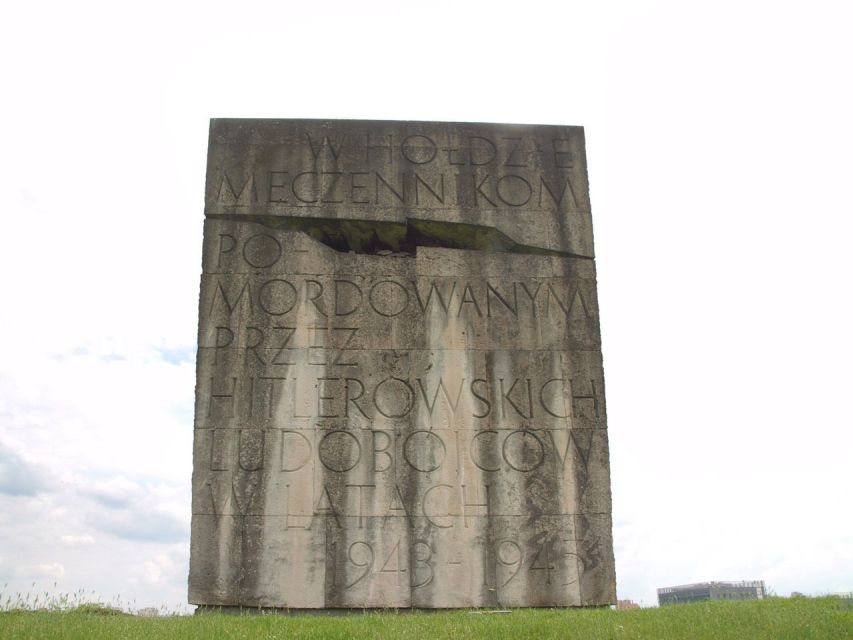
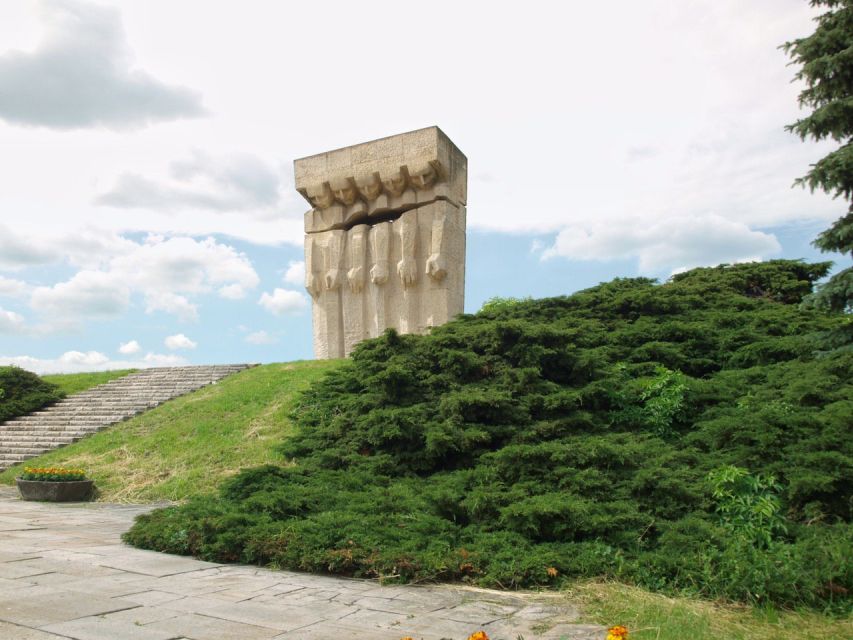
The Monument of Torn-Out Hearts is one of the most important pauses on the route. Its name alone signals the emotional weight of the site, but the guide’s explanation gives the monument its full meaning.
This is a good point to slow down. The visit is not simply a march from one historical marker to another. You will have time to look, listen, and reflect in a relatively quiet setting.
The silence at Plaszow can be striking. There are few structures competing for your attention, and the open space leaves room for thought. That calm should not be mistaken for a lack of significance. Much of the visit’s impact comes from standing in a place where so much happened and so little remains.
The tour handles this section as a memorial visit rather than a spectacle. That approach suits the site.
Oskar Schindler’s connection to Plaszow
Oskar Schindler is an important part of the story. Prisoners registered at Plaszow could be assigned work permits through Schindler’s factory. He later transferred more than 1,000 people to the factory, helping save their lives.
This connection is familiar to many people because of the film Schindler’s List, but the tour places it within the wider history of Plaszow. Schindler’s actions are not the whole story of the camp. They are one part of a much larger account involving forced labor, deportation, imprisonment, and mass death.
A good guide can help you keep that balance. The visit is not designed as a film-location tour, and you should not expect movie sets or a focus only on Schindler. Instead, his story helps show how individual decisions affected prisoners within the camp system.
This is another reason the live guide is so valuable. The site needs more than a famous name. It needs explanation, proportion, and care.
Is $56 a good price?
At $56 per person, the experience is reasonably priced if you want both a river cruise and a guided historical visit. The price includes the one-way catamaran trip, English audio commentary on the boat, an English-speaking live guide at Plaszow, and a single tram ticket.
The value depends on your priorities. If you only want a pleasant boat ride, you can probably find a simpler cruise. If you only want to visit Plaszow, arranging transport yourself may cost less, though you would lose the benefit of a live guide who understands the site.
For me, the strongest value comes from combining transport with interpretation. Plaszow is not an easy place to understand by wandering alone. The guide makes the surviving features useful and connects the camp to Ghetto Heroes Square and Schindler’s story.
The price does not include hotel pickup, hotel drop-off, or transportation back after the tour ends. That last point is important. You need to plan your return separately, and the experience does not finish with a ride back to your accommodation.
Who should book this experience?
I would recommend it to adults and older teenagers who want a serious look at Krakow’s wartime history, especially if they prefer a guide to explain a difficult outdoor site.
It suits you if you:
- Enjoy history explained on location
- Want a short Vistula cruise included in a wider outing
- Can manage several hours of walking
- Are comfortable with uneven paths and changing weather
- Want time for quiet reflection rather than a lighthearted attraction
I would think twice if you have mobility concerns, dislike rough ground, or are traveling with small children. The walking distance is the clearest practical drawback, and the subject matter demands patience and maturity.
The language arrangement is straightforward. Group tours operate in one language only, and this experience is offered in English with an English live guide and English boat audio.
Practical advice for a smoother visit
Arrive 10 minutes early at Paulinska water tram stop. Do not cut it close, since late arrivals cannot join once the group departs.
Wear shoes with good grip and support. Sandals, smooth city shoes, and thin soles are poor choices for rubble and unfinished paths.
Check the weather before leaving, then dress for an exposed outdoor visit. The tour runs in all weather, so rain protection and an extra layer may make a major difference.
Keep your schedule flexible after the tour. The included tram ticket covers part of the route, but return transportation is not included. You may need time to work out your next tram, walk, or other connection after the visit.
The experience has free cancellation up to 24 hours before departure, and you can reserve now and pay later. Those policies are useful if your Krakow plans are still shifting, but the no-refund rule for late arrival remains important.
Should you book the Krakow river cruise and Plaszow visit?
Book this experience if you want a thoughtful introduction to two very different sides of Krakow. The river cruise is comfortable and scenic, while the Plaszow visit is serious, quiet, and strongly dependent on the guide. The combination offers good value at $56, provided you are prepared for a long walk.
Do not book it for a leisurely afternoon or a family-friendly sightseeing loop. The route can involve around 5 miles of walking, rough ground, and emotionally heavy history.
For the right visitor, the Plaszow portion is the reason to go. The surviving site may look sparse at first, but a strong guide can bring its vanished structures, prisoners, and stories into view. Add the Vistula cruise, Ghetto Heroes Square, and the Monument of Torn-Out Hearts, and you have a compact experience that helps you understand Krakow beyond its postcard center.
FAQ
How long does the experience last?
The experience lasts three hours.
Where does the tour begin?
It begins at Inflancki Boulevard beside the Vistula, next to the Paulinska water tram stop. Look for the person with a Cracow Boat sign.
Is a guide included at Plaszow Camp?
Yes. An English-speaking live guide leads the Plaszow portion of the experience.
Is the boat ride guided?
Yes. The one-way catamaran cruise includes an English audio guide.
How much walking is involved?
The route includes at least a 2-kilometre walk to the camp, and the total distance may reach roughly 5 miles. You will also encounter unfinished paths, rubble, and nettles.
Is transportation back included after the tour?
No. A single tram ticket is included, but hotel pickup, hotel drop-off, and return transportation at the end are not included.
Just added in Krakow
- Auschwitz-Birkenau – Skip the Line Tickets★ 3.5 · 29 reviews
- Auschwitz-Birkenau: Fast-Track Ticket & Guided Tour No Transfers★ 3.5 · 17 reviews
- Zakopane & Sleigh Ride with Bonfire – Group Tour from Kraków★ 5.0 · 2 reviews
- Sleigh Ride & Bonfire in Zakopane with Funicular – Private Trip★ 5.0 · 48 reviews
- Thermal Baths & Zakopane – Private Trip from Krakow★ 5.0 · 1 review
- Zakopane & Gubalowka Funicular – Private Winter Tour from Krakow★ 5.0 · 10 reviews
- Divine Mercy Sanctuary – Private Tour from Krakow★ 5.0 · 4 reviews
- stag dog chase Krakow prank★ 5.0 · 4 reviews
Cruises & Boat Tours, compared.
Traditional Galar Cruise on The Vistula River
Read our review →
Vistula River Sightseeing Cruise with Audio Guide
Read our review →Browse the lists this tour appears in