
REVIEW · AUSCHWITZ-BIRKENAU MEMORIAL TOURS
Krakow: Plaszow Concentration Camp Walking Tour
The past is quiet here. This two-hour walking tour makes Krakow-Plaszow easier to understand, guiding you through a former forced labor and concentration camp where little remains but the ground, memorials, and stories. I like the way the tour connects the camp to Oskar Schindler and the filming of Schindler’s List. I also like that licensed guides such as Krzysztof, Phil, Anna, and Barbara have earned praise for clear, thoughtful explanations.
The main drawback is the site itself: it is outdoors, and many original buildings are gone. Without a guide, you could easily miss what you are looking at. You will also need a tram ticket to reach the meeting point, and the weather can shape the experience.
In This Review
- Key points to know before you go
- Why Plaszow is worth your time in Krakow
- Meeting the guide and reaching the former camp
- Understanding how Plaszow developed from 1940 to 1942
- Walking through a site where little remains
- Memorials that ask for more than a quick stop
- The quarry, forced labor, and military factories
- Oskar Schindler and the story behind the film
- What the two-hour format does well
- Weather, clothing, and the outdoor setting
- Who will get the most from this tour
- Is $23 a fair price?
- Should you book the Plaszow walking tour?
- FAQ
- How long does the Plaszow Concentration Camp walking tour last?
- What is the price of the tour?
- Is a tram ticket included?
- Where does the tour begin?
- Where does the tour end?
- Which languages are available?
- Is the tour wheelchair accessible?
- Does the tour include a guide?
- Can I cancel the booking for a refund?
Key points to know before you go
- The camp began as a forced labor camp in 1940 before becoming a concentration camp in 1941.
- The tour explains the deportation of Jews from the Krakow ghetto, which began in 1942.
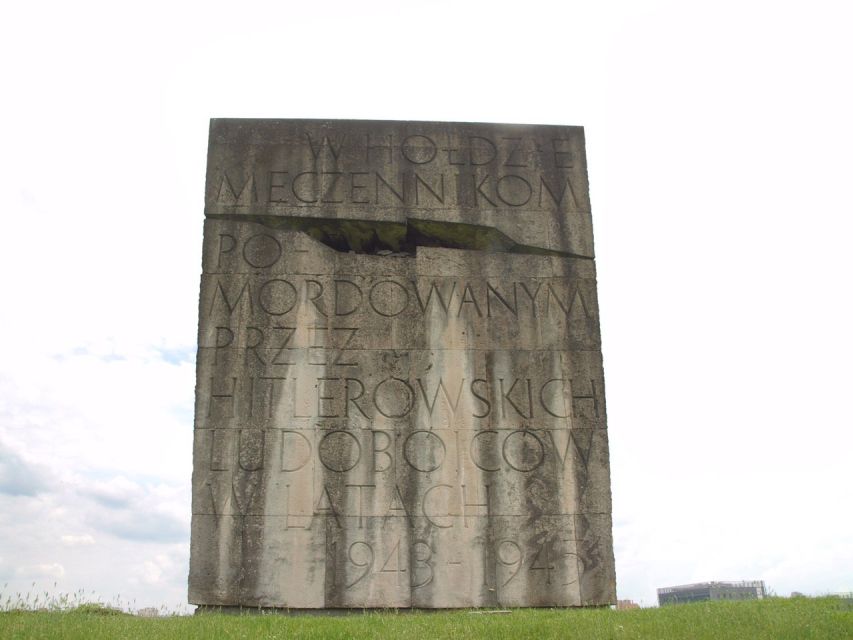
- Several memorials provide places for quiet reflection, not just quick photo stops.
- Oskar Schindler’s story is tied directly to the camp, along with filming locations from Schindler’s List.
- A replica camp set sits in the nearby Liban Quarry, roughly a hundred meters from the former camp.
- The two-hour walk costs $23 per person, with a guide included but public transport extra.
Why Plaszow is worth your time in Krakow
Auschwitz-Birkenau is the better-known site connected with Nazi persecution in Poland. Plaszow gives you a different kind of historical experience. It is tied closely to Krakow itself, the former Jewish ghetto, Oskar Schindler, and the forced removal of Jewish people from the city.
I find Plaszow valuable because it asks you to pay attention. The site does not present a long line of preserved barracks or rooms. Instead, you walk across an open area while the guide points out where important parts of the camp were located and explains what took place there.
That can feel less immediate than a museum visit. It can also feel more demanding. You need to listen, picture the camp as it once was, and give the memorials your full attention. A good guide makes the difference, and this tour is built around that human explanation.
The price is $23 per person, which I consider fair for a two-hour guided visit. You are not paying for entry to a large museum or a transport package. You are paying for a licensed guide who provides the context that the remaining site cannot provide on its own.
More Walking Tours in Kraków
- Old Town Krakow & Wawel Castle Walking Tour
★ 5.0 · 1,508 reviews - Creepy Krakow: 2-Hour City Walking Tour
★ 4.7 · 1,131 reviews - Krakow: The Old Town Walking Tour
★ 4.8 · 794 reviews
Meeting the guide and reaching the former camp
The tour begins at a meeting point where you should look for a guide carrying an excursions.city sign. The activity ends back at that same meeting point, which makes planning the rest of your day easier.
A tram ticket is not included, so you should allow for that separate cost. The supplied details do not specify the exact tram route or the meeting point address, so check the confirmed booking information before setting out. I would avoid arriving at the last second. A former camp site is not the sort of place where you want to begin the walk flustered and searching for a sign.
The tour lasts two hours. Starting times depend on availability, so choose a slot that gives you enough time to reach the meeting point. The guide can lead the tour in English, German, French, Russian, Italian, or Spanish.
The tour is listed as wheelchair accessible. Since the activity takes place outdoors, it is still sensible to confirm that the selected route and current ground conditions suit your needs.
Understanding how Plaszow developed from 1940 to 1942
The first major task is to understand the camp’s changing purpose. Krakow-Plaszow opened in 1940 as a forced labor camp. In 1941, it was converted into a concentration camp.
That change matters because it shows how Nazi control grew more severe over time. You do not simply hear that a camp existed. You learn how forced labor, imprisonment, deportation, and mass persecution became linked within the Krakow area.
The guide also explains the deportation of Jews from the Krakow ghetto, beginning in 1942. This local connection gives the tour a strong sense of place. You are not hearing about an isolated camp far from ordinary city life. You are learning how Nazi rule affected Krakow and the people who had lived there.
I appreciate this part of the tour because it creates a timeline. Without it, the site can seem like a collection of memorials spread across open ground. With it, the camp becomes part of a larger sequence of events that changed the city and destroyed the lives of many of its Jewish residents.
Walking through a site where little remains
Plaszow is not preserved in the same way as some major camp museums. Much of the former camp is open land, with memorials and traces that require explanation. One of the most useful comments from the tour feedback is that there is not much left of the former site, and without a guide it would be easy to feel lost.
That is not a criticism of the tour. It is a warning about the place. You should come prepared for a site where interpretation matters more than preserved interiors.
As you walk, the guide identifies different parts of the camp and explains what stood or happened there. The tour covers the labor carried out in the quarry and the work connected with military factories. These details help you understand that the camp was also a system of exploitation, built around exhausting labor under Nazi control.
I would not treat this as a casual stroll. The walk may be physically manageable, but the subject is heavy. Give yourself room to listen and reflect instead of trying to rush through for photographs.
More Auschwitz-Birkenau memorial tours:
- From Krakow: Auschwitz-Birkenau Guided Tour & Hotel Pickup
★ 4.5 · 33,358 reviews - From Krakow: Auschwitz-Birkenau Guided Tour & Hotel Pickup
★ 4.5 · 29,340 reviews - Krakow: Auschwitz Guided Tour with Optional Hotel Pickup
★ 4.5 · 15,280 reviews - Krakow: Auschwitz-Birkenau Guided Tour with Pickup & Lunch
★ 4.5 · 9,800 reviews
Memorials that ask for more than a quick stop
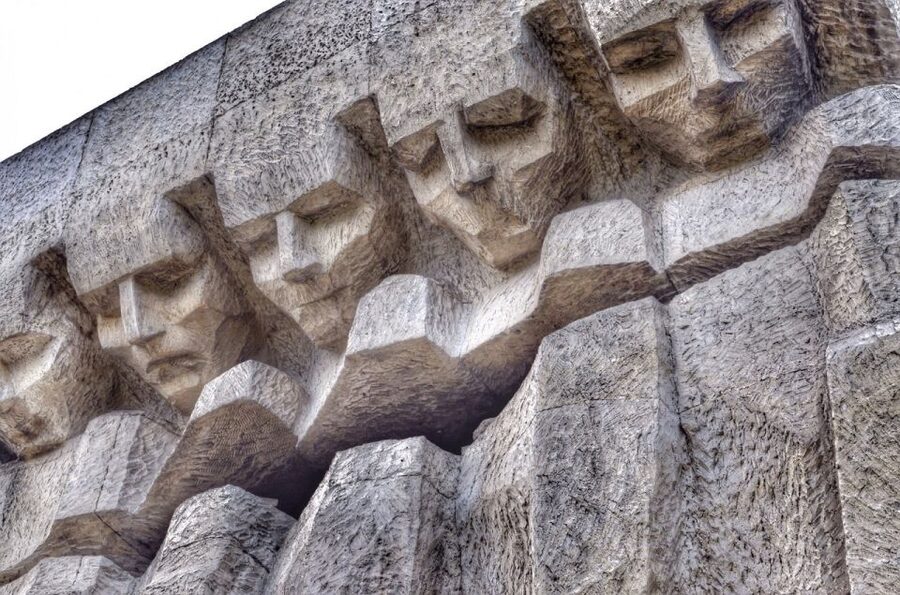
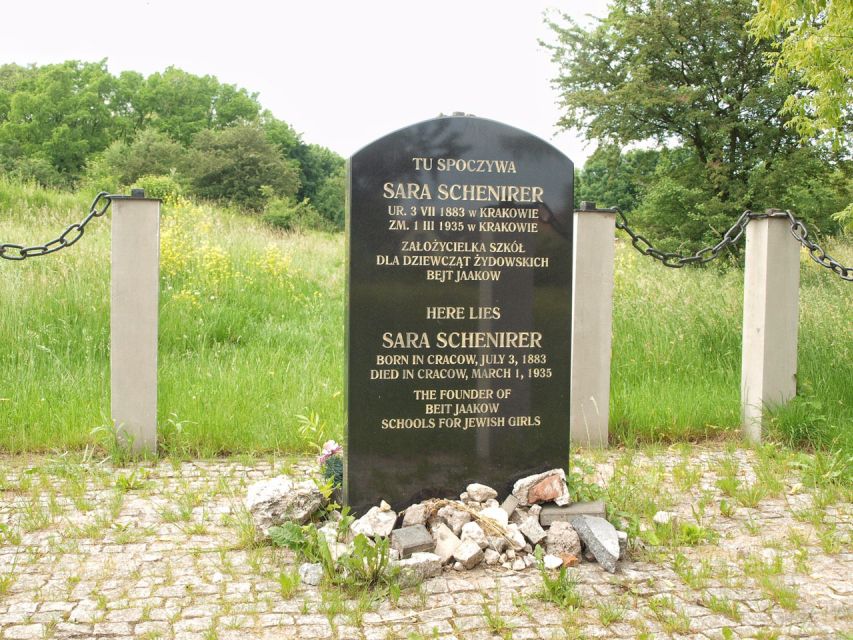
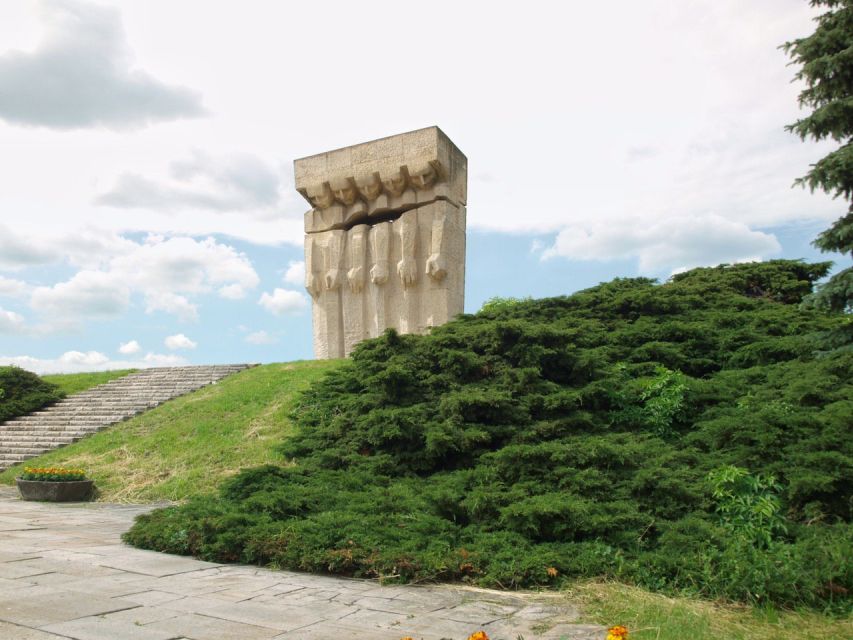
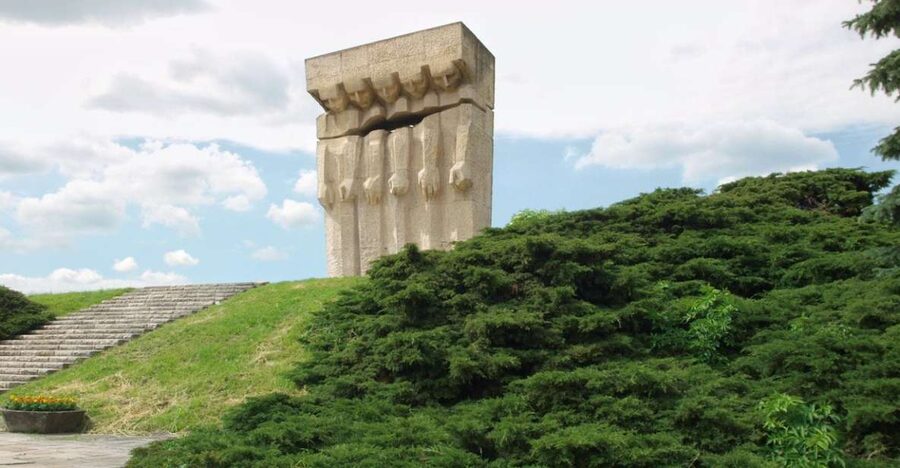
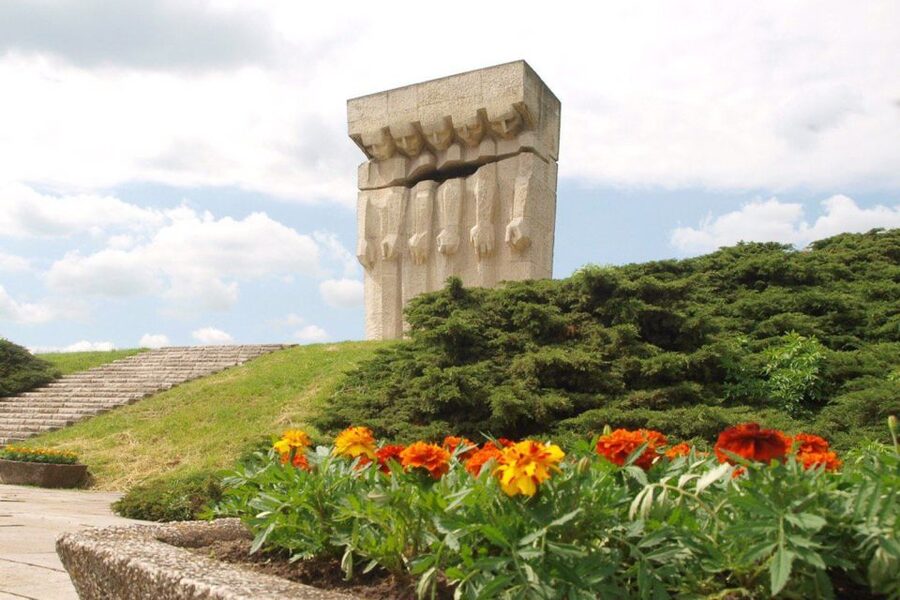
Several memorials are dedicated to the victims of Plaszow. They are important stops because they give the tour a physical focus. When original structures are gone, a memorial can become the place where you pause, remember, and consider the human cost behind the historical account.
Your guide explains the meaning of the memorials and places them within the story of the camp. That makes them more than isolated monuments. You can connect each stop to the people imprisoned there, the forced labor system, and the deportations from the Krakow ghetto.
Barbara, one of the guides praised for this tour, was especially effective at giving people time to take in the former camp and pay their respects. That is the right tone for Plaszow. You do not need dramatic presentation here. You need clarity, care, and enough quiet to process what you have heard.
The tour’s strongest guides appear to understand that balance. Anna is praised for relating other events to the camp, while Phil is described as friendly and clear in his explanations. Those qualities matter because the subject is difficult, and a guide who speaks plainly helps you stay focused without turning the visit into a lecture.
The quarry, forced labor, and military factories
The quarry is one of the key parts of the story. It helps explain the physical labor demanded from prisoners and the role of the camp within the Nazi war economy.
You will also hear about military factories connected with the camp. Together, the quarry and factories show how prisoners were treated as a labor supply. The camp was not only a place of detention. It was part of a system that extracted work under brutal conditions.
Because the original working areas are not presented as a functioning industrial site, you rely heavily on the guide’s account. This is where a small group can help. The tour feedback includes praise for a small group that was easy to hear and follow. That is useful in an open setting, where a large crowd could make explanations harder to catch.
You should also expect the guide to point out locations rather than lead you through intact factory rooms. Keep that distinction in mind when deciding between Plaszow and a museum-based visit. Plaszow gives you the place itself, but much of the detail arrives through spoken interpretation.
Oskar Schindler and the story behind the film
The tour also explores Oskar Schindler, whose story became widely known through Steven Spielberg’s 1993 film Schindler’s List. Schindler’s connection to Krakow gives this walking tour an extra layer for anyone who has seen the movie.
The guide explains how Plaszow appeared in the film and discusses the way the camp was portrayed. This can help you separate movie scenes from the historical site. Film is a useful doorway into the subject, but it cannot tell the whole story of the camp or its victims.
You will visit a replica of the camp built under Spielberg’s direction in the Liban Quarry, about a hundred meters from the former camp. This is an unusual part of the route. It shows how the film production recreated the setting, while the nearby original site reminds you that the events were not fiction.
I like this pairing, provided you keep the priorities clear. The movie connection may draw you to Plaszow, but the victims and the history should remain at the center. The replica is best understood as part of the site’s modern film story, not as a replacement for the historical location.
What the two-hour format does well
Two hours is enough time to cover the main camp areas, memorials, labor sites, Schindler connections, and the nearby film replica without turning the visit into an all-day commitment.
The format also works well as an addition to a Krakow itinerary. You can fit it into a day that includes other Jewish heritage or wartime sites, though you should avoid packing too many emotionally heavy stops back to back.
The guide-led format gives you a clear route and a steady historical thread. You will not need to guess which parts of the open site matter. Krzysztof, Phil, Anna, and Barbara are among the guides associated with especially positive feedback, with praise focused on friendliness, clear speaking, and the ability to connect the camp to wider events.
The tradeoff is that the tour cannot answer every possible question in two hours. If you want a long academic treatment of Nazi occupation, Krakow’s Jewish community, or the film production, you may need other museums or tours. Plaszow works best as a focused introduction to this particular place.
Weather, clothing, and the outdoor setting
The entire activity takes place outside. That makes the weather important, especially because you may spend two hours walking between memorials and former camp areas.
Wear shoes suited to walking and check the forecast before you go. Bring protection from rain or sun as needed. The supplied details do not give a precise surface description for every part of the route, so practical outdoor clothing is the safest choice.
Bad weather will not change the historical value of the site, but it can affect your concentration and comfort. If conditions are poor, you may find it harder to listen carefully or pause at the memorials. A dry, comfortable day will make the experience easier, though no weather can make the subject light.
Who will get the most from this tour
I recommend Plaszow for you if you want to understand Krakow beyond its handsome central streets and famous churches. It is particularly useful if you have an interest in Holocaust history, Nazi occupation, Jewish Krakow, Oskar Schindler, or the making of Schindler’s List.
It also suits you if you have already visited Auschwitz and want to add a Krakow-based site with a direct connection to the city. The two tours are not substitutes. Plaszow offers a more local focus and a less preserved setting.
You may want to skip it if you only want a short photo stop or a fully reconstructed museum environment. The open site requires patience, attention, and a willingness to listen. Without those, the visit may feel sparse.
The tour is also a good fit if you prefer a guide who can answer questions as you walk. The highest praise has gone to guides who were friendly, easy to understand, and careful with the subject. That personal element is a major part of the value.
Is $23 a fair price?
At $23 per person, I see this as a reasonable price for a two-hour guided history walk. The guide is included, and that is the key benefit. Entry tickets to a major museum often give you objects, rooms, and displays. Plaszow gives you a site that needs a human voice to explain it.
You will pay separately for the tram, so include that in your budget. Even with that extra cost, the tour remains modest compared with many private sightseeing activities in Krakow.
The value depends on what you want. If you are content to walk around the area alone, you can avoid the tour price, but you risk missing the significance of the different locations. If you want the former camp to make sense, the guide is the part worth paying for.
Free cancellation up to 24 hours before the start and the option to reserve now and pay later also make the booking less rigid. Those policies are helpful when your Krakow schedule is still changing.
Should you book the Plaszow walking tour?
Book it if you want a serious, local history experience and understand that Plaszow is an open former camp site rather than a preserved museum. The guide’s role is essential, and the best guides, including Krzysztof, Phil, Anna, and Barbara, have been praised for combining clear information with a respectful manner.
You should also book if the Schindler connection interests you, but give the historical site priority over the film replica. Allow two hours, budget for a tram ticket, wear practical outdoor clothing, and choose a day when you can listen without rushing.
Skip it if you want a light sightseeing stop or a fully intact camp complex. For the right visitor, though, Plaszow offers an important view of Krakow’s wartime past, and $23 is a fair price for the context that makes the quiet site understandable.
FAQ
How long does the Plaszow Concentration Camp walking tour last?
The tour lasts two hours.
What is the price of the tour?
The price is $23 per person.
Is a tram ticket included?
No. You need to purchase the tram ticket separately.
Where does the tour begin?
Meet the guide at the designated meeting point and look for the guide carrying an excursions.city sign.
Where does the tour end?
The activity ends back at the meeting point.
Which languages are available?
The live guide may conduct the tour in English, German, French, Russian, Italian, or Spanish.
Is the tour wheelchair accessible?
Yes, the activity is listed as wheelchair accessible.
Does the tour include a guide?
Yes. A licensed guide is included.
Can I cancel the booking for a refund?
Yes. You can cancel up to 24 hours in advance for a full refund. You can also reserve now and pay later.
Just added in Krakow
- Auschwitz-Birkenau – Skip the Line Tickets★ 3.5 · 29 reviews
- Auschwitz-Birkenau: Fast-Track Ticket & Guided Tour No Transfers★ 3.5 · 17 reviews
- Zakopane & Sleigh Ride with Bonfire – Group Tour from Kraków★ 5.0 · 2 reviews
- Thermal Baths & Zakopane – Private Trip from Krakow★ 5.0 · 1 review
- Zakopane & Gubalowka Funicular – Private Winter Tour from Krakow★ 5.0 · 10 reviews
- Sleigh Ride & Bonfire in Zakopane with Funicular – Private Trip★ 5.0 · 48 reviews
- Divine Mercy Sanctuary – Private Tour from Krakow★ 5.0 · 4 reviews
- stag dog chase Krakow prank★ 5.0 · 4 reviews