
REVIEW · AUSCHWITZ-BIRKENAU MEMORIAL TOURS
Krakow: Plaszow Concentration Camp Walking Tour
The ground remembers. Krakow’s Płaszów camp offers a serious, guided look at Nazi persecution, forced labor, and the lives destroyed here. I like the direct route from Bohaterów Getta Square and the chance to see both the actual camp site and the Liban Quarry replica used for Schindler’s List. I also like that a guide helps connect scattered memorials and work areas into one clear story.
The main drawback is the setting. This is an open, somber site with distressing subject matter, uneven walking conditions may be possible, and winter weather can be severe. One visitor completed the walk in minus 12 degrees Celsius, so warm clothes and sturdy shoes are not optional extras.
At $29 per person, the tour is fairly priced for a two-hour guided visit with a tram ticket included. You will not get a museum display or a polished visitor center. You will get context, remembrance, and a better understanding of a place that is easy to pass without realizing what happened there.
In This Review
- Key points about Krakow’s Płaszów walking tour
- Why Płaszów deserves a guided visit
- Meeting at Bohaterów Getta Square
- Following the camp’s development from 1940 to 1942
- The quarry and military factories
- Memorials and the act of remembering
- Oskar Schindler and the film connection
- Ending at the Liban Quarry replica
- Is $29 a fair price?
- Who should book this Płaszów tour?
- My verdict on the two-hour walk
- FAQ
- Where does the Płaszów tour meet?
- How long does the tour last?
- How much does the tour cost?
- Is public transportation included?
- Which languages are available?
- What does the tour cover?
- What should I bring?
- Can I cancel the booking?
- Is the tour suitable for people with mobility impairments?
Key points about Krakow’s Płaszów walking tour
- It begins at Bohaterów Getta Square: Meet at this important Krakow location before taking the tram toward Płaszów.
- The camp’s story begins in 1940: Learn how Płaszów opened as a forced labor camp before becoming a concentration camp in 1941.
- The quarry and factories explain daily life: The tour covers hard labor in the quarry and work connected with military production.
- Memorial stops create time for remembrance: Several monuments give the walk a quiet, reflective rhythm.
- Oskar Schindler’s story is part of the visit: Hear how his life connects to the camp and to the film Schindler’s List.
- The Liban Quarry replica ends the walk: See the camp set created under Steven Spielberg’s direction.
Why Płaszów deserves a guided visit
Płaszów is not the kind of place that explains itself at every turn. The site is spread across open ground, and its meaning can be missed if you only arrive, take a quick look, and leave. I find a guide especially useful here because the tour links geography with events: where the camp began, where prisoners worked, how the Nazi system changed the area, and how Krakow’s Jewish population was affected.
The camp opened in 1940 as a forced labor camp. In 1941, it became a concentration camp. That change matters because it shows how Nazi control grew from forced work and persecution into a wider system of imprisonment, violence, and murder.
The tour also covers the deportation of Jews from the Krakow Ghetto beginning in 1942. This gives the visit a local focus. You are not hearing only about distant events or abstract numbers. You are learning how Nazi rule reshaped Krakow and what happened to people from the city’s Jewish community.
The subject is painful, and the tour does not try to soften it. That is a strength for visitors who want a serious historical experience, but it also means you should choose your timing carefully. A sunny afternoon does not make the material lighter.
More Walking Tours in Kraków
- Old Town Krakow & Wawel Castle Walking Tour
★ 5.0 · 1,508 reviews - Creepy Krakow: 2-Hour City Walking Tour
★ 4.7 · 1,131 reviews - Krakow: The Old Town Walking Tour
★ 4.8 · 794 reviews
Meeting at Bohaterów Getta Square
Your meeting point is Bohaterów Getta Square, a symbolic place connected with Krakow’s Jewish population. Look for the guide carrying an excursions.city sign. The group then takes a tram for a few stops to reach the former camp.
I like this start because the tour does not treat Płaszów as an isolated site. The meeting point helps place the camp within the wider story of Krakow. The tram ride also keeps the outing practical. You do not need to arrange a separate taxi or figure out the route alone, and one tram ticket is included in the $29 price.
Still, plan for a walking tour rather than a sightseeing ride. The tram is only the link between the starting point and the camp. Most of the experience takes place outdoors on foot, with the guide leading you between the main areas and memorials.
The tour lasts two hours. That is enough time for an organized introduction and several stops, but not enough for every detail of Płaszów’s history. If you already have a strong interest in the subject, you may want to pair this visit with further reading or another Krakow museum.
Following the camp’s development from 1940 to 1942
Once at Płaszów, the guide lays out the camp’s development in stages. First came the forced labor camp in 1940. Then came its conversion into a concentration camp in 1941. The story moves from the camp’s creation to the wider impact of Nazi rule in the area.
This chronological approach is useful because it gives you a framework before the tour moves into specific work areas. You can follow how the camp expanded and how its purpose became part of the Nazi system of imprisonment and exploitation.
The 1942 deportations from the Krakow Ghetto form another major part of the explanation. The guide discusses what those deportations meant for Jewish residents and how Płaszów fitted into this process. I would pay close attention here, since this is the point where the site’s local connections become clearest.
The tour is not simply about buildings or boundaries. Much of what you see requires explanation. The guide’s role is to help you understand how the camp functioned and what prisoners faced each day under Nazi rule.
The quarry and military factories
Work was central to life at Płaszów, and the tour discusses the intense labor carried out in the quarry. It also covers military factories connected with the camp. These stops help explain the physical demands placed on prisoners and the way Nazi authorities used forced labor to support the war effort.
The quarry is especially important because it gives the site a physical sense of labor. You are not only hearing that prisoners worked under harsh conditions. You are seeing the area associated with that work while the guide explains its place in the camp.
The military factories add another layer. They show that Płaszów was not only a place of confinement. It was also part of an industrial system that extracted labor from prisoners. This is one reason I would not rush the walk. The value is in understanding how each part of the camp worked together.
The site may feel stark rather than visually dramatic. That is not a weakness, but it does affect expectations. You are coming for historical understanding and remembrance, not for grand buildings or a traditional attraction with many displays.
More Auschwitz-Birkenau memorial tours:
- From Krakow: Auschwitz-Birkenau Guided Tour & Hotel Pickup
★ 4.5 · 33,358 reviews - From Krakow: Auschwitz-Birkenau Guided Tour & Hotel Pickup
★ 4.5 · 29,340 reviews - Krakow: Auschwitz Guided Tour with Optional Hotel Pickup
★ 4.5 · 15,280 reviews - Krakow: Auschwitz-Birkenau Guided Tour with Pickup & Lunch
★ 4.5 · 9,800 reviews
Memorials and the act of remembering
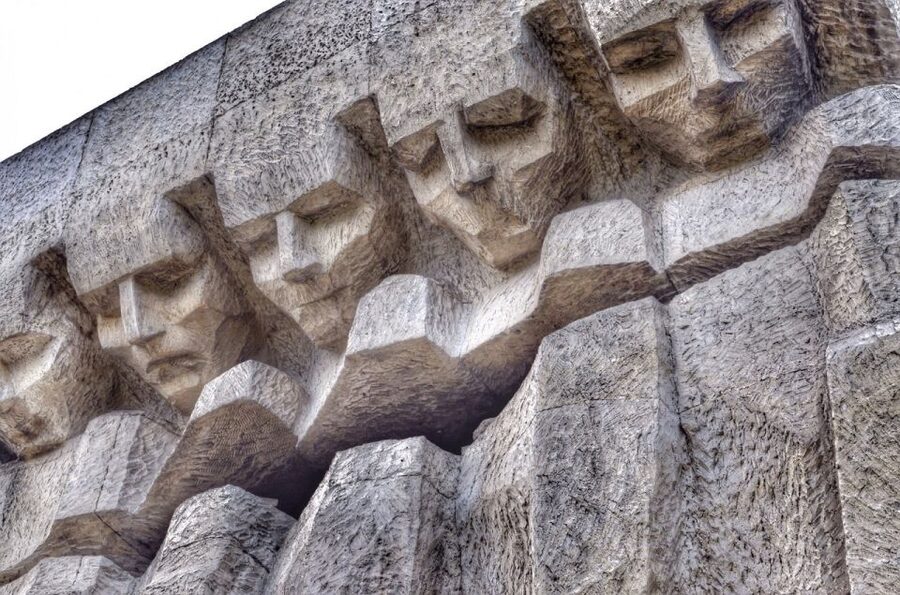
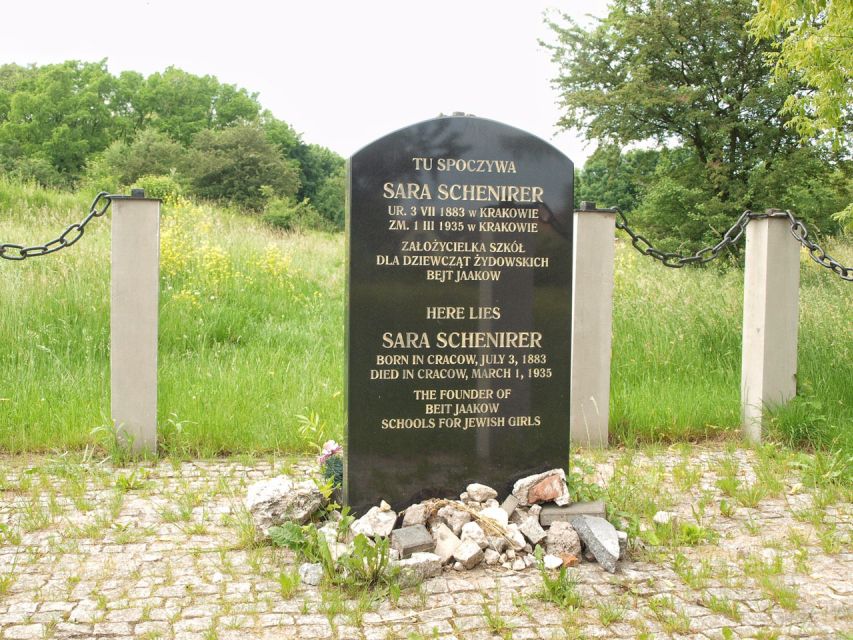
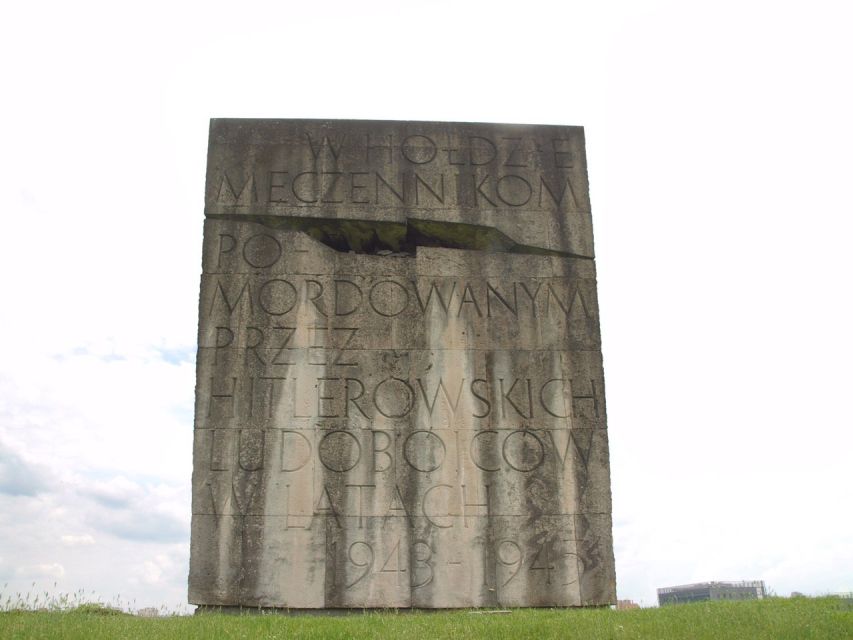
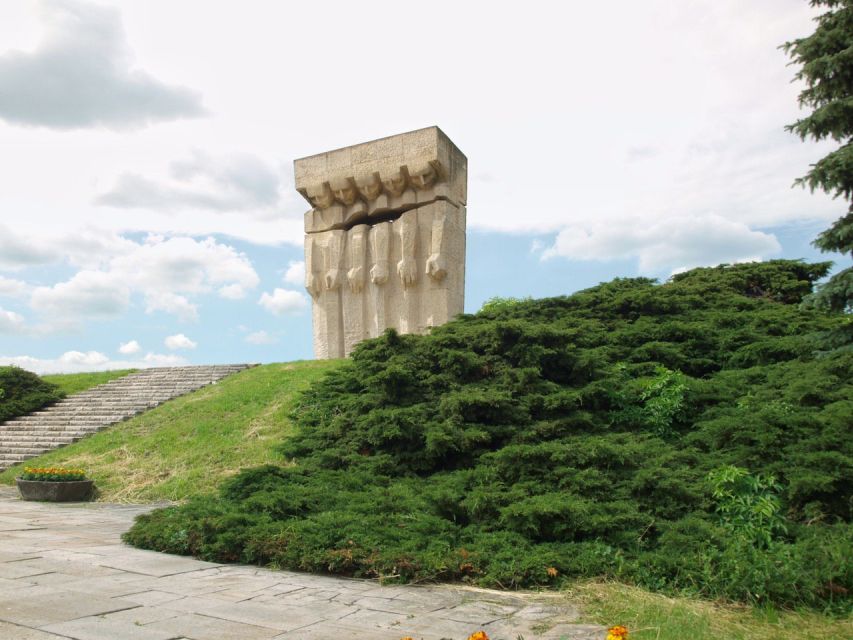
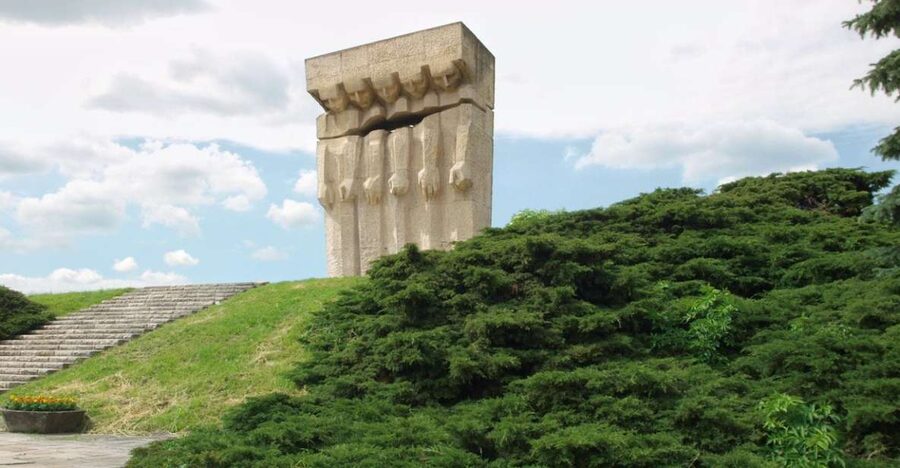
Several memorials appear during the walk. At each one, the guide pauses to commemorate the victims and explain the meaning of the place. These moments are important because they slow the tour down and keep the focus on the people who suffered here.
I like the balance between explanation and silence. A guided visit needs facts, but Płaszów also needs room for reflection. The memorial stops provide that pause.
Bring weather-appropriate clothing. The tour runs outdoors, and there is no indication of an indoor shelter or museum segment to break up the walk. Comfortable shoes matter too. Even a short two-hour outing can feel demanding if your footwear is poor or if the ground is wet, cold, or uneven.
The winter detail is worth taking seriously. A visitor completed the tour in minus 12 degrees Celsius and still praised the guide for keeping the walk going. That makes the guide’s role particularly important in difficult weather, but it also gives you a clear warning: check the forecast and dress for the conditions, not for the calendar.
Oskar Schindler and the film connection
The tour includes the life of Oskar Schindler and the connection between Płaszów and Schindler’s List. Schindler’s story is familiar to many visitors, but the tour places it beside the wider history of the camp rather than treating it as the whole story.
That distinction matters. Schindler’s actions are an important part of Krakow’s wartime history, yet Płaszów was experienced by thousands of prisoners whose stories go far beyond one individual. The guide helps you understand both the personal story and the larger system around it.
You will also hear how the camp was portrayed in the film. This adds a useful layer for anyone who has seen the movie, especially if you want to separate filmed scenes from the actual history of the place.
The film connection should not be the only reason to book. If you are mainly looking for movie locations, this tour may feel too serious and history-heavy. If you want to understand why the location mattered and how cinema recreated it, the connection adds real value.
Ending at the Liban Quarry replica
The walk finishes at the Liban Quarry, where you see a replica of the camp built under Steven Spielberg’s direction for Schindler’s List. This is not the original camp itself, so you should treat it as a film-related site rather than an untouched historical structure.
That distinction is useful. The replica helps show how the movie represented the camp, while the earlier parts of the tour focus on the actual historical site and its memorials. Seeing both gives you a clearer sense of the difference between historical evidence and cinematic reconstruction.
The Liban Quarry also gives the tour a natural ending. After learning about the camp’s creation, forced labor, prisoners, memorials, and Schindler, you finish with the place used to recreate parts of that story for a global audience.
At the end, the guide escorts you back to the tram stop. This is a small but helpful detail, particularly if you are unfamiliar with the area.
Is $29 a fair price?
At $29 per person, I consider this good value if you want a guided explanation rather than a quick independent walk. The price includes the guide, the Płaszów tour, and a single tram ticket. You are paying for the structure of the visit, the local transport connection, and the guide’s ability to explain a difficult site in two hours.
The value is less obvious if you prefer to walk alone, read at your own pace, or spend a long time at individual memorials. A two-hour group tour has a fixed rhythm. You may need to keep moving even when one location interests you more than another.
The available guide languages are English, French, Spanish, and Italian. That makes the tour accessible to a wide range of international visitors. The quality of the experience will depend heavily on how clearly the guide handles sensitive material, since much of the site’s meaning comes through spoken explanation.
You can reserve now and pay later, which helps if your Krakow schedule is still changing. Free cancellation is available up to 24 hours before the start time for a full refund.
Who should book this Płaszów tour?
I would recommend this walk to you if you want a serious look at Krakow during Nazi rule and prefer learning on location. It suits people interested in Holocaust history, forced labor, World War II, Oskar Schindler, or the making of Schindler’s List.
It is also useful for anyone living or working near Płaszów who wants to understand the history beneath the modern city. The nearby area includes ordinary present-day businesses and streets, which makes the contrast with the wartime past especially striking.
I would not choose it as a casual family outing or a light afternoon activity. The tour includes distressing historical facts, and the subject requires attention and respect. Children and younger visitors should be considered carefully, based on their ability to handle the material.
The accessibility information needs caution. The activity is described as wheelchair accessible, but it is also marked as not suitable for people with mobility impairments. Since the tour is a walking visit across an outdoor former camp site, contact the provider before booking if you have mobility concerns.
My verdict on the two-hour walk
I like this tour because it gives Płaszów a clear shape. You begin at Bohaterów Getta Square, take the tram, follow the camp’s development, learn about forced labor, pause at memorials, connect the site with Schindler, and finish at the Liban Quarry replica.
The best feature is the guide-led interpretation. Without it, the open site could be difficult to read. The main limitation is that two hours outdoors cannot cover every detail, and the conditions may be tough in bad weather.
Book it if you want a respectful, focused history walk and are ready for difficult material. Skip it if you are looking for a relaxed sightseeing stop, indoor exhibits, or a film-location tour without the full weight of the Holocaust story.
FAQ
Where does the Płaszów tour meet?
The tour meets at Bohaterów Getta Square in Krakow. Look for a guide with an excursions.city sign.
How long does the tour last?
The walking tour lasts two hours.
How much does the tour cost?
The listed price is $29 per person.
Is public transportation included?
Yes. The tour includes one tram ticket for the ride from the meeting point toward the former camp.
Which languages are available?
The live guide is available in English, French, Spanish, and Italian.
What does the tour cover?
It covers the history of Płaszów, its opening as a forced labor camp in 1940, its conversion into a concentration camp in 1941, the 1942 deportations from the Krakow Ghetto, prisoner labor, camp memorials, Oskar Schindler, and the Schindler’s List filming connection.
What should I bring?
Bring comfortable shoes and clothing suited to the weather.
Can I cancel the booking?
Yes. You can cancel up to 24 hours in advance for a full refund.
Is the tour suitable for people with mobility impairments?
The activity information describes the tour as wheelchair accessible but also says it is not suitable for people with mobility impairments. Contact the provider before booking if this affects you.
Just added in Krakow
- Auschwitz-Birkenau – Skip the Line Tickets★ 3.5 · 29 reviews
- Auschwitz-Birkenau: Fast-Track Ticket & Guided Tour No Transfers★ 3.5 · 17 reviews
- Zakopane & Sleigh Ride with Bonfire – Group Tour from Kraków★ 5.0 · 2 reviews
- Sleigh Ride & Bonfire in Zakopane with Funicular – Private Trip★ 5.0 · 48 reviews
- Thermal Baths & Zakopane – Private Trip from Krakow★ 5.0 · 1 review
- Zakopane & Gubalowka Funicular – Private Winter Tour from Krakow★ 5.0 · 10 reviews
- Divine Mercy Sanctuary – Private Tour from Krakow★ 5.0 · 4 reviews
- stag dog chase Krakow prank★ 5.0 · 4 reviews