
REVIEW · WAWEL CASTLE TOURS
Krakow: Guided Tour of Wawel Castle & Cathedral
Royal power begins on a hill. This roughly two-hour Krakow tour takes you through Wawel Royal Castle, a UNESCO World Heritage site, then into Wawel Cathedral, where Polish monarchs were crowned and buried. I like the mix of grand State Rooms and intimate royal chapels, and I like that admission is arranged in advance.
The guides are the real strength. Ania earned praise for her patient pacing, while Kuba was friendly and flexible, and other guides added humor to dense historical detail. One drawback is the tight schedule: with a group of up to 30, two hours can feel brisk, especially if you want every room, bell, and crypt to receive a long look.
In This Review
- Key points to know before booking
- Why Wawel Castle deserves your first morning in Krakow
- Inside the State Rooms and their Renaissance detail
- Wawel Cathedral, Poland’s royal church
- The guides bring Polish history to life
- What the $59 price buys you
- Meeting at plac Świętej Marii Magdaleny
- Who will get the most from this two-hour visit
- My practical advice for a smooth visit
- Should you book the Wawel Castle and Cathedral tour?
- FAQ
- How long does the Wawel Castle and Cathedral tour last?
- What is included in the tour price?
- Where does the tour begin?
- Where does the tour end?
- What should I wear?
- Can I cancel for a full refund?
Key points to know before booking
- The tour includes two major Wawel sights: The State Rooms in the Royal Castle and Wawel Cathedral are both part of the visit.
- The guides make the difference: Ania, Kuba, and other local guides have been praised for clear English, strong Polish history, humor, and useful details.
- One permanent castle exhibition is included: The exact exhibition can vary with availability, so do not assume every castle room is covered.
- The meeting point is away from Wawel Hill: You meet at plac Świętej Marii Magdaleny 31, not at the castle entrance.
- Dress rules matter: Shoulders and knees must be covered in places of worship and selected museums.
- A maximum of 30 people applies: Headsets are provided for groups of nine or more.
Why Wawel Castle deserves your first morning in Krakow
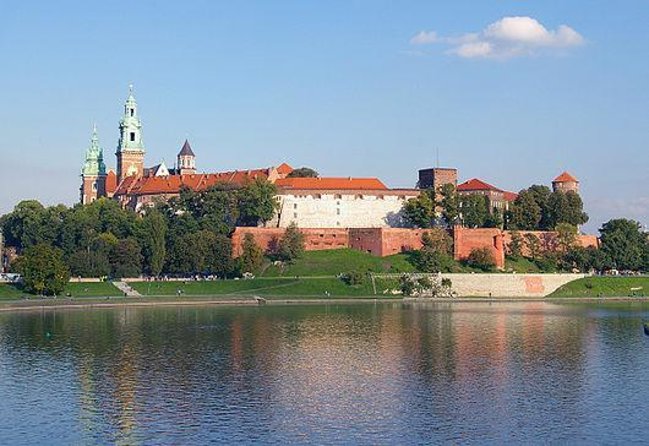
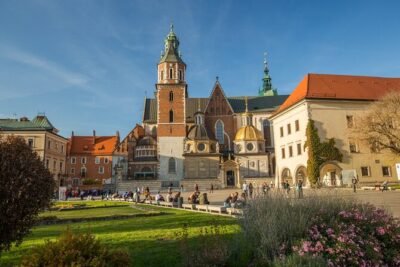
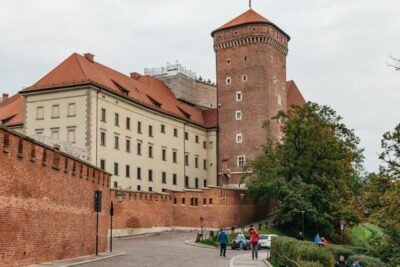
Wawel is more than a pretty castle above the Vistula. It is the former seat of Polish kings and a place where royal ceremony, religion, art, military power, and foreign trade meet in one compact complex.
I find that context especially useful in Krakow. Without a guide, you can admire painted ceilings, carved furniture, and old weapons, but you may miss why they are there. A good guide connects the objects to Poland’s royal past and explains how Wawel functioned as both a residence and a national symbol.
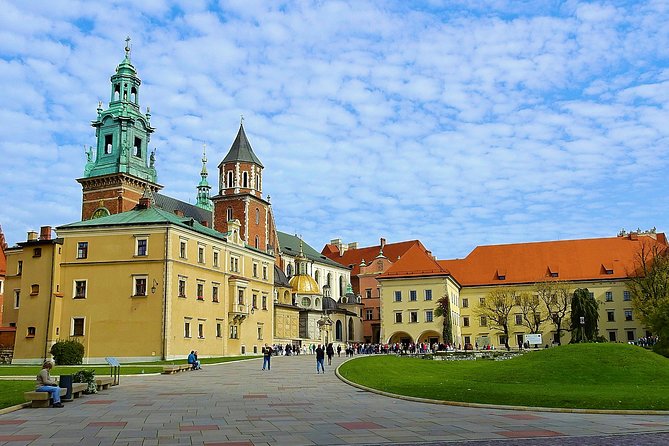
The visit begins with the castle’s State Rooms. These rooms now form part of a museum, and the focus is on interiors rather than an empty palace shell. You can expect Renaissance decoration, historic wall hangings, and carefully displayed works of art.
The castle collection also includes porcelain, arms, and objects from Eastern cultures. A particularly striking feature is the large collection of Ottoman tents, described as the biggest set in Europe. That detail gives the visit a broader frame. Wawel was not isolated from the rest of the continent. Poland’s royal court had contact with different cultures, armies, and artistic traditions.
More Wawel Castle tours:
- Krakow: Wawel Castle & Cathedral Guided Tour
★ 4.7 · 2,111 reviews - Old Town Krakow & Wawel Castle Walking Tour
★ 5.0 · 1,508 reviews - Krakow: Wawel Royal Hill with Optional Castle and Cathedral
★ 4.2 · 1,220 reviews
Inside the State Rooms and their Renaissance detail
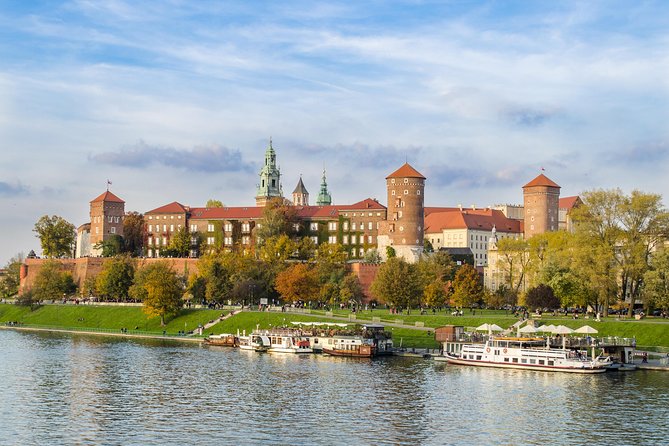
The State Rooms are the first major part of the tour, lasting about one hour. This is where a guide earns the fee. There are enough names, dates, rulers, and artistic references to turn an independent visit into a blur.
I like the way this section can give you a visual lesson in royal life. Look for the relationship between the rooms, the furnishings, and the decorations. Renaissance interiors were designed to communicate rank. Nothing was casual, and the setting helped visitors understand who held power.
The historic tapestries deserve time. They are not just colorful wall coverings. They helped warm large rooms, softened hard surfaces, and displayed scenes suited to a royal residence. Your guide can point out details that are easy to pass while moving with a crowd.
The Lanckoroński collection of Italian art adds another layer. The collection is known for Italian works, giving the State Rooms an artistic link beyond Poland. Along with the porcelain, arms, and Eastern objects, it helps show that Wawel was a meeting point of cultures.
One practical point matters here: the tour includes fast-track access to one permanent Wawel Castle exhibition, but the exact exhibition depends on availability. That means the castle portion is useful, but you should not book it expecting a complete tour of every permanent display in the entire complex.
The group limit is 30 people. That is not a tiny private group, yet it follows the museum’s stated regulations. If your group has nine or more people, headsets are provided. I would value those headsets in busy rooms, since a clear explanation is much better than trying to read a guide’s lips from several steps away.
Wawel Cathedral, Poland’s royal church
After the State Rooms, the tour continues to Wawel Cathedral for about an hour. The mood changes quickly. The castle presents royal life and objects, while the cathedral brings you into Poland’s religious and ceremonial center.
Generations of monarchs were crowned and buried here. That makes the cathedral important even if you are not especially interested in church architecture. You are walking through the setting for major national ceremonies, not simply visiting another old church.
Inside, expect ornate chapels, golden domes, and a mixture of architectural styles. The cathedral has developed over many centuries, and its chapels create a more varied experience than a single-period building would. I like this part because it feels more personal than the formal State Rooms. Royal history appears through tombs, chapels, memorials, and spaces built for worship.
The itinerary also includes the cathedral’s bell tower, where you can take in views across Krakow. You are told to touch the Sigismund Bell before visiting the royal crypts. These details give the cathedral visit a clear sequence, and they help keep the second hour from becoming a general walk around a large church.
The bell tower and crypts may be the most memorable part for many people. The tower offers a change of pace and a city view, while the crypts bring you physically closer to the rulers and national figures connected with Wawel.
Dress carefully. In the cathedral and selected museum areas, clothing must cover your shoulders and knees. Shorts and sleeveless tops are not permitted. This is easy to handle, but it is worth planning before you leave your hotel. A clothing problem can spoil an otherwise smooth visit.
The guides bring Polish history to life
The strongest feature of this experience is the guiding. The tour is conducted in one language, English, and the guide is a certified local expert in Krakow’s royal history.
The praise is specific rather than vague. Ania was singled out for an encyclopedia-like command of the subject, patient answers, and a pace that suited the group. Another guide was praised for adding humor to a large amount of detail, while Kuba was described as friendly, informative, and flexible.
That mix is important. Wawel can give you too much information at once. Dates and monarchs start to run together unless someone selects the useful points and adds a story or two. The best moments on this tour seem to come when the guide explains something you would have walked past without noticing.
The guides also appear comfortable with questions. That matters if you want more than a rehearsed speech. You can ask about Polish kings, a work of art, a chapel, or an object from the Eastern collections, then get an answer connected to the place in front of you.
I would still keep expectations sensible. A group tour with up to 30 people cannot offer the constant personal attention of a private guide. If you need to pause for every display or take long photographs, you may feel hurried. The advantage is that you receive a structured explanation and do not have to prepare the history yourself.
A few more in Krakow
- From Krakow: Auschwitz-Birkenau Guided Tour & Hotel Pickup
★ 4.5 · 33,358 reviews - From Krakow: Auschwitz-Birkenau Guided Tour & Hotel Pickup
★ 4.5 · 29,340 reviews - Krakow: Auschwitz Guided Tour with Optional Hotel Pickup
★ 4.5 · 15,280 reviews - Krakow–Zakopane: Cable Car, Chocholow Baths, Cheese & Vodka
★ 5.0 · 10,720 reviews
What the $59 price buys you
At $59 per person, this is not the cheapest way to see Wawel. The price needs to be judged against what is included: a certified English-speaking guide, admission to one permanent castle exhibition, entrance to Wawel Cathedral, and a planned route lasting about two hours.
I see the value in the prearranged access. Wawel is a major Krakow sight, and organizing tickets for separate areas can take time and attention. Here, you have one appointment and a guide who leads you through the main highlights.
The tour also saves research time. You do not need to work out which castle exhibition is open, how the cathedral fits into your day, or which royal details are worth your attention. That convenience is especially useful if you have only a short stay in Krakow.
Still, the price does not include transportation. You must reach the meeting point yourself, and you finish at Wawel Cathedral. That is not a serious burden because the start and end are both in central Krakow, and the meeting point is near public transportation, but it is part of the cost calculation.
The booking pattern also suggests that this tour often fills well ahead of time, with an average advance booking period of about 40 days. If Wawel is a priority for your trip, I would not leave it until the final day of your planning.
Meeting at plac Świętej Marii Magdaleny
The meeting point is plac Świętej Marii Magdaleny 31, 30-001 Krakow. It is important to note that this is not on Wawel Hill. The exact location is also printed on your voucher, so check it before setting out.
Arrive at least 10 minutes early. Once the group has entered, late arrivals cannot join, and the tickets are non-refundable. This is a firm rule, not a minor suggestion. Allow time to find the square, gather your voucher details, and walk with the group at the start.
The tour ends at Wawel Cathedral, at Wawel, 31-001 Krakow. Since transportation is not included, plan the rest of your day from there. You will already be at one of Krakow’s main historic sites, so the finish is convenient for continuing your sightseeing.
Free cancellation is available if you cancel at least 24 hours before the start time. Cancellations or changes made inside that window are not accepted for a refund. The cut-off uses local Krakow time.
Who will get the most from this two-hour visit
I would choose this tour if you want the main Wawel story without spending half a day building your own route. It suits first-time visitors, couples, families who want structure, and anyone who prefers historical sites explained in clear English.
It is also a good fit if you like art and architecture but want more than labels beside display cases. The State Rooms give you Renaissance interiors and court collections, while the cathedral adds royal ceremony, religious art, tombs, and city views.
You may want a different plan if you prefer to wander alone for hours. The two-hour format is focused, and the group can include as many as 30 people. You will see the core sights, but you will not have unlimited time for every room or object.
The tour may also feel too short for serious castle enthusiasts. Since only one permanent exhibition is included and availability varies, a separate return visit could be worthwhile if you want a much broader look at Wawel’s collections.
My practical advice for a smooth visit

Wear shoes suited to a two-hour walking tour. The experience moves through museum rooms, cathedral spaces, the bell tower, and the castle complex, so comfort will matter more than looking formal.
Dress for the cathedral before you leave. Cover your shoulders and knees, and skip shorts or sleeveless tops. This simple step protects your schedule.
Bring your attention, not just your camera. The guides are praised for pointing out things that are easy to miss, and the value of the tour depends on hearing those explanations. If you are in a larger group, use the headset when offered.
Keep the morning or afternoon around the tour reasonably open. The visit is approximately two hours, but you may want extra time afterward for the Wawel area. Since the end point is the cathedral, you can decide later if you want to continue exploring on your own.
The current score is 4.6 from 10 ratings, with 90 percent recommending the experience. That is a strong signal about guide quality, though the number of ratings is small. The most consistent praise goes to the guides’ command of Polish history, clear English, humor, patience, and ability to show details you might otherwise miss.
Should you book the Wawel Castle and Cathedral tour?
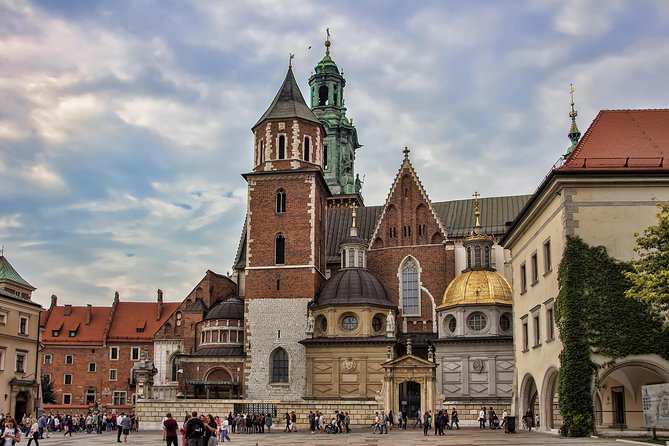
I would book it if you want an efficient, well-explained introduction to Krakow’s royal center. The combination of State Rooms, Wawel Cathedral, royal burial sites, the Sigismund Bell, and a local English-speaking guide gives you a solid two-hour visit.
The best reason to choose it is the guiding, not simply the ticket. Ania, Kuba, and the other praised guides appear to turn a large amount of Polish history into stories you can follow. The main compromises are the $59 price, the group size, the fixed pace, and the fact that only one permanent castle exhibition is included.
Book ahead if Wawel matters to you, arrive early at the off-hill meeting point, and dress for the cathedral. If those conditions suit your style, this is a practical and worthwhile way to understand one of Krakow’s most important sites.
FAQ
How long does the Wawel Castle and Cathedral tour last?
The tour lasts approximately two hours. About one hour is planned for Wawel Royal Castle and about one hour for Wawel Cathedral.
What is included in the tour price?
The price includes a guided tour with a certified local expert, fast-track access to one permanent Wawel Castle exhibition, admission to Wawel Cathedral, and the approximately two-hour walking tour. Headsets are provided for groups of nine or more.
Where does the tour begin?
The tour begins at plac Świętej Marii Magdaleny 31, 30-001 Krakow. The meeting point is not on Wawel Hill, so check the exact location on your voucher.
Where does the tour end?
The tour ends at Wawel Cathedral, Wawel, 31-001 Krakow, Poland.
What should I wear?
Clothing must cover your shoulders and knees in places of worship and selected museums. Shorts and sleeveless tops are not permitted.
Can I cancel for a full refund?
Yes. You can cancel for a full refund up to 24 hours before the experience start time. Cancellations or changes made less than 24 hours before the start are not accepted for a refund.
Just added in Krakow
- Auschwitz-Birkenau – Skip the Line Tickets★ 3.5 · 29 reviews
- Auschwitz-Birkenau: Fast-Track Ticket & Guided Tour No Transfers★ 3.5 · 17 reviews
- Zakopane & Sleigh Ride with Bonfire – Group Tour from Kraków★ 5.0 · 2 reviews
- Sleigh Ride & Bonfire in Zakopane with Funicular – Private Trip★ 5.0 · 48 reviews
- Thermal Baths & Zakopane – Private Trip from Krakow★ 5.0 · 1 review
- Zakopane & Gubalowka Funicular – Private Winter Tour from Krakow★ 5.0 · 10 reviews
- Divine Mercy Sanctuary – Private Tour from Krakow★ 5.0 · 4 reviews
- stag dog chase Krakow prank★ 5.0 · 4 reviews
Wawel Castle Tours, compared.
Wawel Royal Hill with Optional Castle and Cathedral
Read our review →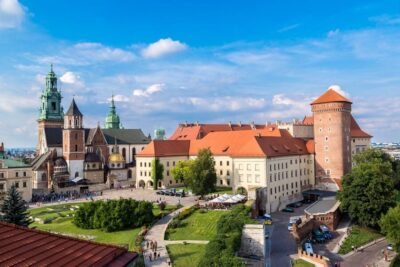
Old Town & Wawel Castle Walking Tour in English
Read our review →
Krakow’s Essential Tour of the Old Town and Wawel Castle
Read our review →Browse the lists this tour appears in