
REVIEW · AUSCHWITZ-BIRKENAU MEMORIAL TOURS
Krakow: Former Concentration Camp Plaszow Guided Tour
History is often hidden in plain sight. This two-hour walk takes you beyond Krakow’s postcard center to the former Płaszów concentration camp, where open ground, memorials, and a few surviving structures reveal how Nazi terror shaped the city. I like the careful focus on authentic camp sites, and I like that the guide explains Krakow’s Holocaust history rather than simply pointing at ruins. The main consideration is that Płaszów has few intact buildings, so you need to value reflection and context more than a large collection of exhibits.
I also appreciate the practical price of $29, which includes a professional guide and one tram ticket. Kinga, one guide praised for her careful and highly informed approach, also escorted the group to the train after the tour. That small detail suggests helpful attention beyond the basic walk, though the route is not suitable for children under 12, wheelchair users, or people with mobility or heart problems.
In This Review
- Key points to know before booking
- Why Płaszów matters in Krakow
- Meeting at Apteka Pod Orlem
- Rebuilding the camp through the Grey House
- Jewish cemeteries and roads paved with gravestones
- Mass graves and the Monument of Torn-Out Hearts
- The Oskar Schindler connection
- What the two-hour format gives you
- Is $29 a fair price?
- Who should book this walk?
- Final verdict: book it for meaning, not spectacle
- FAQ
- How long does the Płaszów guided tour last?
- What is the price of the tour?
- Where does the tour meet?
- Is a tram ticket included?
- Which languages are available?
- Can I join the tour if I arrive late?
- What should I bring?
- Are meals and drinks included?
- Is the tour suitable for children?
- Can wheelchair users join the tour?
Key points to know before booking
- Płaszów began on two Jewish cemeteries: Nazi Germany established the camp in October 1942 for forced labor after the Krakow ghetto was liquidated.
- The tour rebuilds a vanished camp: You visit the Grey House, former roll-call areas, mass grave fields, and memorials instead of touring a preserved prison complex.
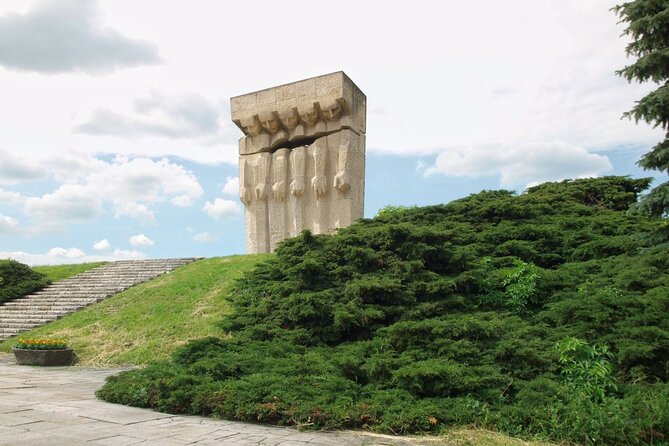
- The Monument of Torn-Out Hearts is a major stop: It gives the walk a clear place for remembrance and reflection.
- Oskar Schindler’s role is explained: The guide connects Płaszów prisoners, work permits, and the later transfer to Schindler’s plant in Brunnlitz.
- A tram ticket is included: You meet in front of Apteka Pod Orlem, then use the supplied ticket as part of the outing.
- Prepare for an outdoor memorial walk: Wear comfortable shoes and clothing suited to the weather.
Why Płaszów matters in Krakow
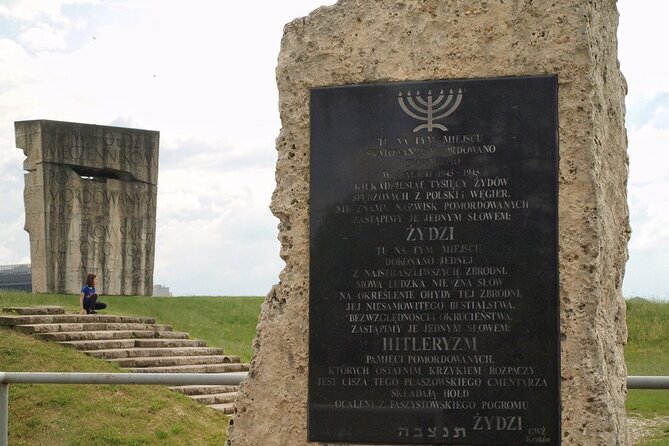
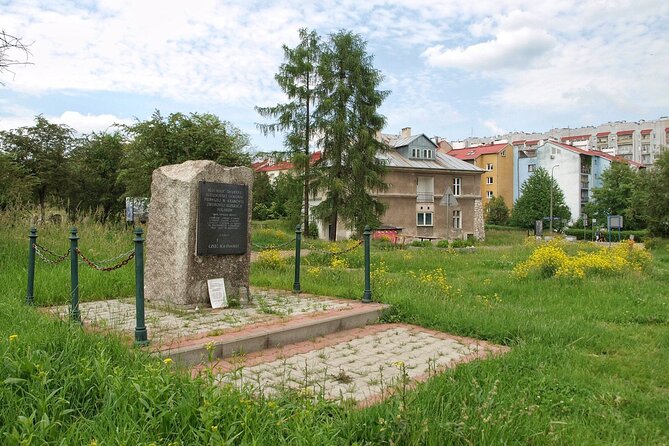
Płaszów can be easy to miss on a first visit to Krakow. It is not a grand museum complex with rows of preserved barracks. Much of the camp has disappeared, leaving open ground, scattered remains, marked burial areas, and memorials. That can feel underwhelming if you expect a conventional historic attraction.
Yet the absence of buildings is part of the story. Płaszów was established by Nazi Germany in October 1942 on the grounds of two Jewish cemeteries. It first served as a forced-labor camp for Jews from the liquidated Krakow ghetto. From July 1943, it also held Poles in a penal-labor section. In January 1944, the site was redesignated a concentration camp.
More than 35,000 people were imprisoned at Płaszów, and around 6,000 were murdered. Those figures are difficult to grasp from numbers alone. A guide gives them meaning by connecting the camp’s functions to the ground beneath your feet and to the history of Krakow around it.
The camp later served as a transit site for Hungarian Jews sent onward to Auschwitz. That detail makes Płaszów part of a wider network of Nazi persecution, not an isolated place. You are learning about Krakow, but also about how deportation, forced labor, imprisonment, and murder were organized across occupied Europe.
More Auschwitz-Birkenau memorial tours:
- From Krakow: Auschwitz-Birkenau Guided Tour & Hotel Pickup
★ 4.5 · 33,358 reviews - From Krakow: Auschwitz-Birkenau Guided Tour & Hotel Pickup
★ 4.5 · 29,340 reviews - Krakow: Auschwitz Guided Tour with Optional Hotel Pickup
★ 4.5 · 15,280 reviews
Meeting at Apteka Pod Orlem
The tour begins in front of Apteka Pod Orlem, the pharmacy associated with the former Krakow ghetto. Look for the guide holding an excursions.city sign. This starting point is meaningful because the pharmacy provides an immediate connection to the Jewish community that was forced into the ghetto and later sent to Płaszów.
You should arrive at least 10 minutes early. This is not just a polite suggestion. Once the group leaves, late arrivals cannot join, and a refund is not available. The tour is offered in English, French, Spanish, and Italian, but each group uses only one language, chosen when you book.
A single tram ticket is included. That keeps the transport side simple and adds value to the $29 price. You do not need to arrange a separate ticket for the included tram journey, though the important point is to follow the meeting instructions closely and stay with the group.
Rebuilding the camp through the Grey House
The first part of the walk helps you understand Płaszów as a functioning camp, not just a place marked by memorials. The Grey House is one of the key surviving structures. Its presence gives you something physical to study while the guide explains how the camp was organized and controlled.
You will also hear about former areas for living quarters, the hospital, administration, and industry. These were not separate attractions in the usual sense. They were parts of a system designed to confine people, exploit their labor, and maintain strict control over daily life.
The former roll-call square is another important stop. Roll calls were a basic tool of camp discipline, forcing prisoners to gather and be counted. Standing in an area once used for that purpose can make the routine cruelty of imprisonment easier to picture, even when the original buildings are gone.
The walk does not pretend that a few remains can recreate everything. Instead, the guide uses each point to supply missing information. This is where the quality of the explanation matters most. One highly praised guide, Kinga, was described as guiding the group with care and giving unusually clear information. For a place like Płaszów, that human approach is more useful than a hurried list of dates.
Jewish cemeteries and roads paved with gravestones
One of the hardest details on this tour is the use of fragments of Jewish gravestones to pave camp roads. The guide explains how these pieces were taken from the cemeteries on which Płaszów was built and placed underfoot.
This detail connects the physical site to the destruction of Jewish life in Krakow. The cemeteries were not simply nearby land. They were sacred places, and the treatment of their stones showed the contempt built into the Nazi system. When you learn why so little of the original camp remains, the site’s emptiness takes on another meaning.
The lack of intact structures is therefore both a limitation and a lesson. You cannot rely on preserved rooms to tell the story. You need to listen, look at the ground, and accept that the destruction of the site was part of the postwar story as well as the wartime one.
I would not choose this tour if your main goal is dramatic photography or a large indoor collection. I would choose it if you want to understand what happened here and are willing to give the place your attention.
A few more in Krakow
- Krakow–Zakopane: Cable Car, Chocholow Baths, Cheese & Vodka
★ 5.0 · 10,720 reviews - Krakow: Auschwitz-Birkenau Guided Tour with Pickup & Lunch
★ 4.5 · 9,800 reviews - From Krakow: Wieliczka Salt Mine Tour
★ 4.6 · 9,393 reviews - Krakow: Auschwitz-Birkenau Guided Tour Pickup/Lunch Options
★ 4.5 · 9,057 reviews
Mass graves and the Monument of Torn-Out Hearts
The tour pauses at marked fields of mass graves. These stops are quiet by design. There is no entertainment value here, and there should not be. The guide’s role is to explain what happened and give you room to think about the people who were killed.
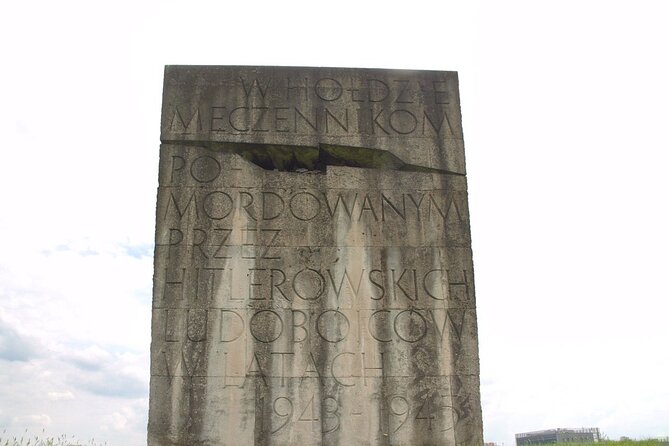
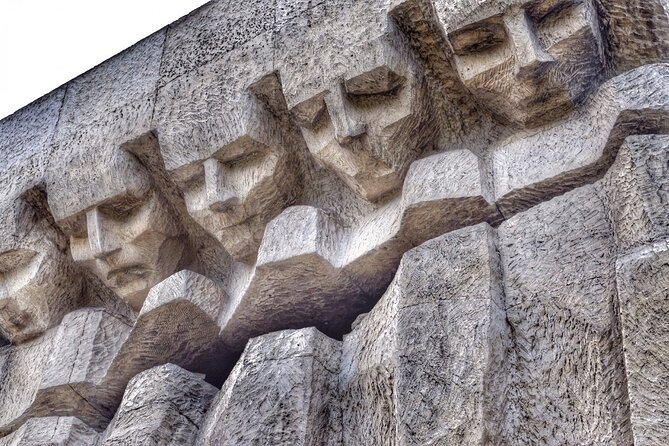
The Monument of Torn-Out Hearts is the best-known memorial included on the route. Its form is direct and difficult to forget. It gives the scattered site a central point of remembrance and helps you connect the many individual stories to the scale of the crime.
You may find that the open setting makes these stops feel more personal than a crowded museum room. You are not moving through a polished exhibit. You are standing outside, with the silence and weather forming part of the experience. Bring clothing suited to the forecast and shoes that can handle a two-hour walk.
That outdoor setting can also be demanding. Rain, cold, or heat will affect your concentration. There is no suggestion that the route is suitable for wheelchair users or people with mobility impairments, so check your own comfort level before booking. The tour is also not recommended for people with heart problems.
The Oskar Schindler connection
Płaszów is closely linked to Oskar Schindler, whose story became widely known through film and books. The guide explains the connection in practical terms rather than treating Schindler as the whole story of the camp.
Schindler secured work permits for prisoners registered through Płaszów. He later arranged for more than a thousand Jewish prisoners to be transferred to his wartime plant in Brunnlitz, where they survived the war. That history gives you a clear example of how paperwork, employment, and personal intervention could sometimes interrupt the machinery of Nazi persecution.
It is important to keep the scale in view. Schindler’s actions saved lives, but the tour is about Płaszów and all those imprisoned and murdered there, not only the people connected with one rescuer. The guide’s job is valuable when this story is placed beside the broader camp system, the prisoners’ forced labor, and the many people who had no way out.
For visitors who have already seen Krakow’s Schindler-related sites, this walk adds the missing physical context. You see where some of the people in that story were imprisoned before their transfer. For visitors who know little about the subject, the explanation provides a clear route into the history without reducing it to a single famous name.
What the two-hour format gives you
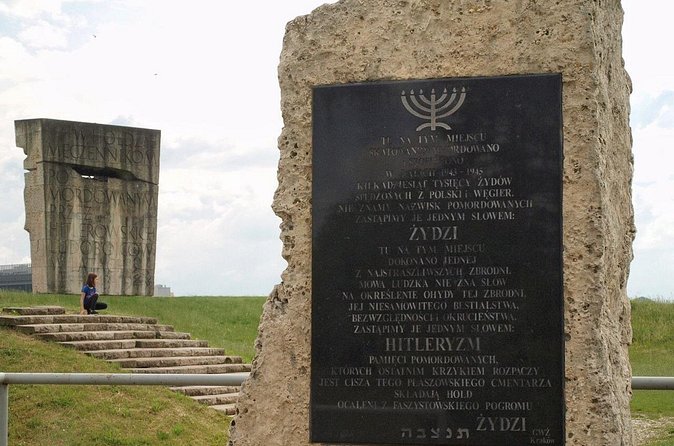
Two hours is a sensible length for Płaszów. It gives the guide enough time to explain the main sites, yet it does not turn the walk into an exhausting full-day history lesson. The route includes the Grey House, pre-burial hall ruins, the former roll-call square, camp work areas, mass grave fields, and major memorials.
The pace should allow for pauses, especially at the graves and the Monument of Torn-Out Hearts. Those pauses matter. A rushed tour could cover more ground but leave you with disconnected facts. Here, the value comes from stopping long enough to understand what each location meant.
The group format also has a practical advantage. You do not have to research the former camp’s layout before arriving. The guide supplies the thread that links the surviving points. Still, you should expect the experience to depend on the guide’s delivery. With such a sparse site, clear storytelling is not an extra. It is the main part of the tour.
The languages are English, French, Spanish, and Italian. Book the language that suits you best, since groups are conducted in one language only. If you are deciding between a self-guided visit and this walk, the guide is most useful for the parts you cannot easily see: the lost buildings, the camp’s changing role, and the connection between places that now look like open fields.
Is $29 a fair price?
At $29 per person, this is a fair buy if you want a guided introduction to Płaszów. The price includes the professional guide and one tram ticket, so you are paying for interpretation as well as transport. That matters here because the site does not explain itself through a large number of preserved structures.
You are not paying for meals or drinks, and none are included. Plan accordingly, especially if you need refreshments after the walk. The supplied information does not describe food stops, so you should not expect this to be a sightseeing outing built around cafés or restaurants.
The value is strongest for first-time visitors to Płaszów, people interested in Krakow during the Holocaust, and anyone who prefers a thoughtful walk to a large museum visit. If you already know the site well and prefer to read at your own pace, you may find the guided format less necessary.
Free cancellation is available up to 24 hours before the start time, and you can reserve now while paying later. Those terms help if your Krakow plans are still shifting. The no-late-entry rule remains important, so flexibility does not mean you can arrive whenever you like.
Who should book this walk?
I would recommend it to adults and older teenagers who can give two serious hours to a place of mourning. The minimum age is 12, and the subject matter is difficult. Parents should decide carefully if the history is appropriate for a child aged 12 or older.
This is also a good choice if you want to understand Krakow beyond its beautiful squares and churches. Płaszów shows a darker part of the city’s past, and the tour links the former camp to the ghetto, forced labor, deportations, and Schindler’s actions.
I would skip it if you need step-free access, have serious mobility limits, have heart problems, or dislike outdoor walking in uncertain weather. I would also skip it if you expect a preserved camp with many original buildings. Płaszów asks more from your imagination and attention than a conventional museum does.
Final verdict: book it for meaning, not spectacle
Book this tour if you want a careful guide to help you read a largely vanished camp. The Grey House, cemetery fragments, mass grave fields, roll-call square, and Monument of Torn-Out Hearts provide the anchors, but the explanation is what makes those places understandable.
At $29, the included guide and tram ticket make the outing good value. Kinga’s praised care and her extra help directing the group to the train show the kind of personal attention that can matter at a difficult site. Just arrive early, wear sensible shoes, choose your tour language carefully, and come ready for silence rather than spectacle.
FAQ
How long does the Płaszów guided tour last?
The tour lasts two hours.
What is the price of the tour?
The price is $29 per person.
Where does the tour meet?
Meet in front of the entrance of Apteka Pod Orlem. Look for the guide holding an excursions.city sign.
Is a tram ticket included?
Yes. One tram ticket is included with the tour.
Which languages are available?
The tour is available in English, French, Spanish, and Italian.
Can I join the tour if I arrive late?
No. You must arrive at least 10 minutes before the scheduled start. Once the group has left, late entry is not possible and a refund is not available.
What should I bring?
Bring comfortable shoes and clothing suited to the weather.
Are meals and drinks included?
No. Meals and drinks are not included.
Is the tour suitable for children?
The tour is not suitable for children under 12 years old.
Can wheelchair users join the tour?
No. The tour is not suitable for wheelchair users or people with mobility impairments. It is also not suitable for people with heart problems.
Just added in Krakow
- Auschwitz-Birkenau – Skip the Line Tickets★ 3.5 · 29 reviews
- Auschwitz-Birkenau: Fast-Track Ticket & Guided Tour No Transfers★ 3.5 · 17 reviews
- Zakopane & Sleigh Ride with Bonfire – Group Tour from Kraków★ 5.0 · 2 reviews
- Sleigh Ride & Bonfire in Zakopane with Funicular – Private Trip★ 5.0 · 48 reviews
- Thermal Baths & Zakopane – Private Trip from Krakow★ 5.0 · 1 review
- Zakopane & Gubalowka Funicular – Private Winter Tour from Krakow★ 5.0 · 10 reviews
- Divine Mercy Sanctuary – Private Tour from Krakow★ 5.0 · 4 reviews
- stag dog chase Krakow prank★ 5.0 · 4 reviews