
REVIEW · AUSCHWITZ-BIRKENAU MEMORIAL TOURS
Krakow: Former Concentration Camp Plaszow Guided Tour
Kraków’s wartime story reaches beyond Auschwitz. This two-hour walking tour links Ghetto Heroes Square, the former Płaszów concentration camp, and a surviving section of the Kraków Ghetto wall. It gives you a direct look at places many city visitors miss, including a broad, rough site that can be easy to overlook without context.
I like the route’s strong connection between memorial spaces and physical remains, and I like its small maximum size of 25 people. The main consideration is that Płaszów is uneven and largely undeveloped, so this is a serious walking visit rather than a polished museum experience.
The price is $30.25 per person, which is fair if you want a guide to connect the sites and explain what you are seeing. A past guest singled out Kinga for making the visit feel special, touching, and personal. That praise matters here, because the place itself offers few signs and little structure to guide you.
In This Review
- Key points to know before you book
- Why this short Kraków tour matters
- Starting at Ghetto Heroes Square
- The surviving wall of the Kraków Ghetto
- Walking through former Płaszów
- What makes the guide important
- Price, time, and physical effort
- Who should take this walk
- Practical advice for a respectful visit
- Should you book the Płaszów tour?
- FAQ
- Where does the tour begin?
- Where does the tour end?
- How long does the experience last?
- Is the tour offered in English?
- How much does the tour cost?
- Is admission to Płaszów included?
- How many people can join the tour?
- Is the tour close to public transportation?
- What level of fitness is needed?
- Can I cancel for a full refund?
Key points to know before you book
- Ghetto Heroes Square begins the story: Seventy metal chairs mark absence, departure, and the people forced from the Kraków Ghetto.
- Płaszów feels raw and open: The former camp area is now a wild, uneven stretch of land with limited visible evidence of its wartime use.
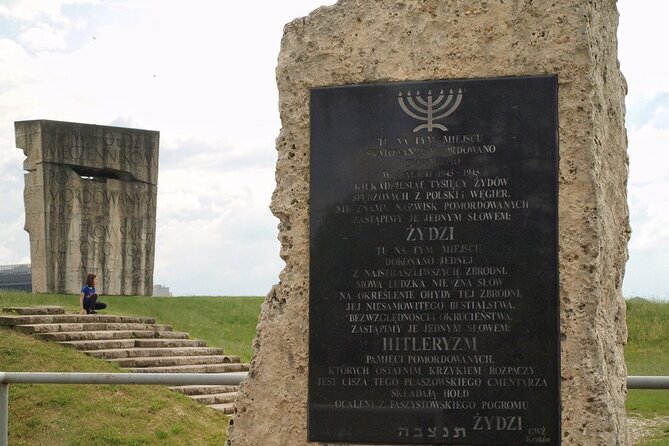
- The route includes a 12-meter ghetto wall fragment: A plaque in Hebrew and Polish recalls the suffering and deportation of the ghetto’s residents.
- An English-speaking guide gives the site its meaning: Kinga received especially warm praise for her humane and thoughtful approach.
- The walk lasts about two hours: You should have a moderate level of fitness and be ready for uneven ground.
- The tour ends on Henryka Kamieńskiego Street: It starts at Plac Bohaterów Getta 18 and finishes at Henryka Kamieńskiego 57.
Why this short Kraków tour matters
Kraków is often used as a base for Auschwitz, but the city has a major wartime site of its own. Płaszów sits in Podgórze, across the river from the historic center, close to Wielicka Street, the Bonarka shopping center, and Krakus Mound.
That setting can be unsettling. You may pass ordinary city traffic, commercial buildings, and modern development before reaching a place tied to imprisonment, forced labor, and mass death. The contrast is part of the experience. Płaszów is not separated from present-day Kraków by a distant forest or a formal entrance gate.
The tour helps you read these places as connected parts of one story. You begin at a former ghetto square, continue to the camp site, and encounter a remaining section of the ghetto wall. The route links the places where people were confined, removed, and sent onward.
I would not choose this tour if you want a large museum with a fixed display, a café, and clear visitor facilities. I would choose it if you want a guided walk through real locations and are prepared for a quiet, difficult subject.
More Auschwitz-Birkenau memorial tours:
- From Krakow: Auschwitz-Birkenau Guided Tour & Hotel Pickup
★ 4.5 · 33,358 reviews - From Krakow: Auschwitz-Birkenau Guided Tour & Hotel Pickup
★ 4.5 · 29,340 reviews - Krakow: Auschwitz Guided Tour with Optional Hotel Pickup
★ 4.5 · 15,280 reviews
Starting at Ghetto Heroes Square
The tour begins at Plac Bohaterów Getta, or Ghetto Heroes Square. The meeting point is Plac Bohaterów Getta 18, in Kraków’s Podgórze district.
The square was once called Plac Zgody. After the war, it was renamed and given a small memorial, but the site was neglected for decades. It was used as a public toilet and parking area before a major renovation in 2005.
That long neglect adds an uncomfortable layer to the visit. A place connected to the forced removal of Kraków’s Jewish population was not always treated as a place of remembrance. Its current design was controversial, but it is now one of Kraków’s most recognizable memorial spaces.
Seventy large metal chairs are spread across the square. They represent departure and absence. The design is spare rather than decorative, and the empty chairs create a strong visual sense of people who are no longer there.
You will want a guide at this point. Without explanation, the chairs could look like an unusual piece of public art. With context, they become a reminder of homes emptied and lives disrupted. The setting asks you to pause before the walk moves on.
This is also a practical meeting point because it is near public transportation. Still, I would arrive early and locate the exact address before the start time. A square with several entrances can make last-minute meeting arrangements less simple than expected.
The surviving wall of the Kraków Ghetto
The route also includes a 12-meter stretch of the original ghetto wall. It is one of Kraków’s clearest physical reminders of the ghetto itself.
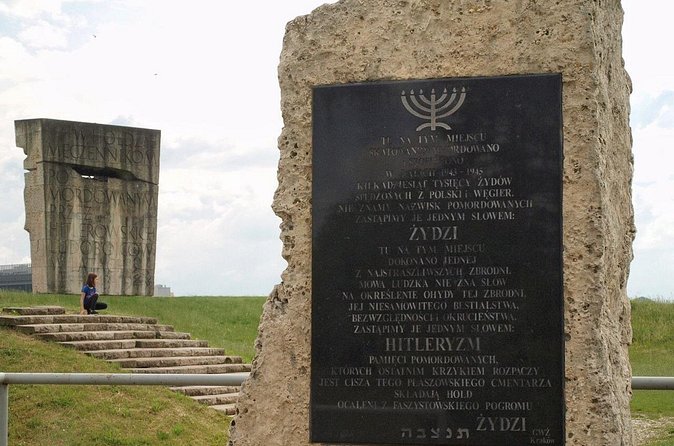
A commemorative plaque, written in Hebrew and Polish, recalls the people who lived and suffered there and the journey that began from this place toward the death camps. The wall is not large, but its size is not the point. Even a short surviving section makes the system of confinement easier to picture.
I find this stop valuable because it gives the story a concrete boundary. Ghetto Heroes Square shows absence through sculpture. The wall shows control through masonry. Together, they help you understand that this was not simply a neighborhood affected by war. It was an enclosed place shaped by Nazi persecution.
The wall stop may feel brief compared with Płaszów, but it is an important part of the route. You can see how the tour moves from a memorial to a surviving structure and then to the much wider former camp site.
Walking through former Płaszów
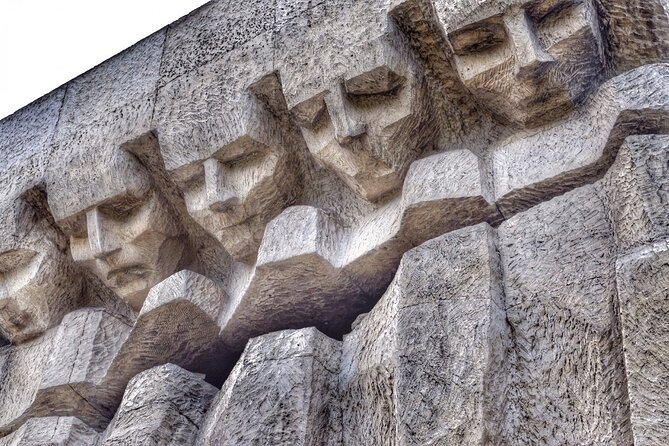
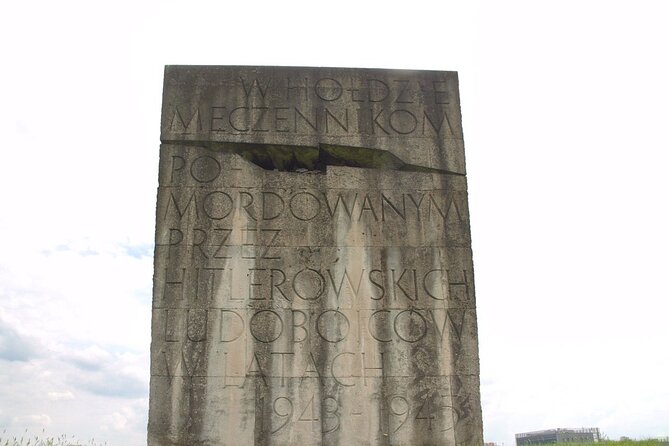
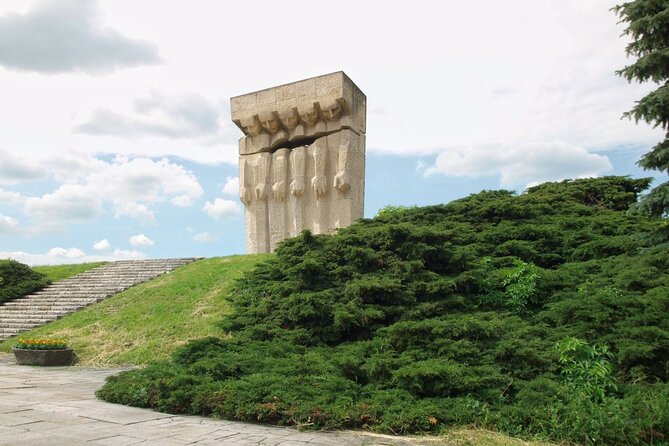
The main stop lasts about one hour, and admission is free. The former camp is now a broad, largely undeveloped area in Podgórze.
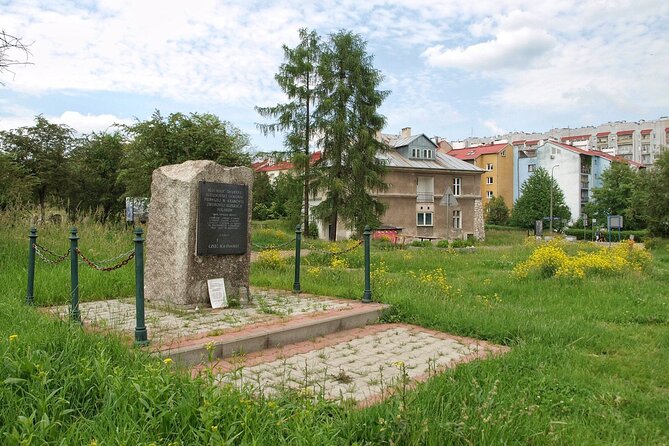
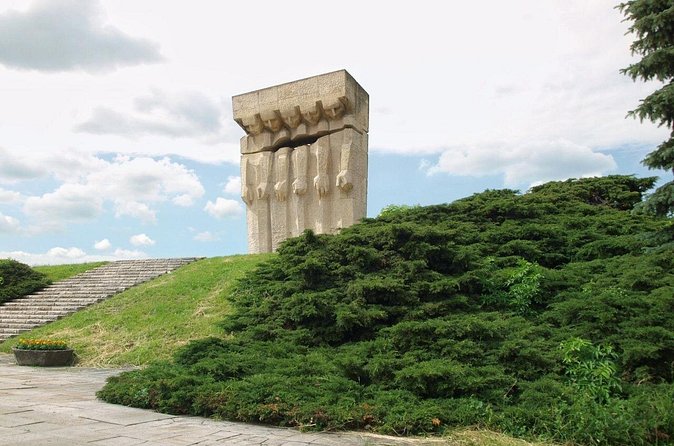
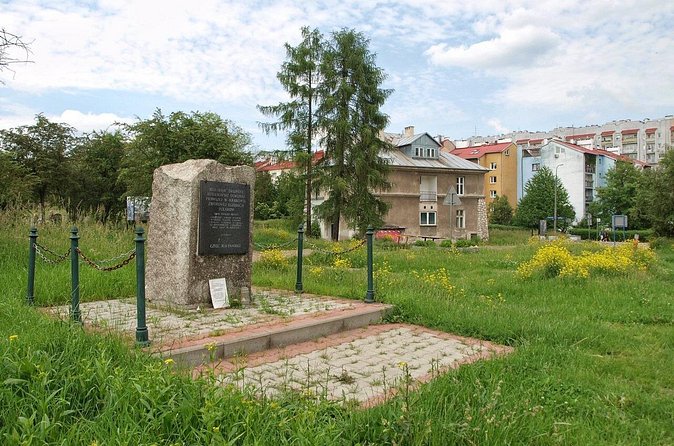
This is where the tour differs most from a standard city attraction. You should not expect a neatly marked compound or a sequence of preserved buildings. The site is described as wild and uneven, with little visible evidence until recently indicating its wartime past.
That lack of obvious structure is both the strength and the weakness of the visit. The open ground can make the place feel neglected, but it also prevents the past from becoming a tidy display. You are looking at a real area of Kraków that still carries its history even though much of the physical camp is gone.
A guide matters greatly here. Płaszów’s size and limited signs make it difficult to understand without someone explaining what the area represented. The tour’s value comes less from admission or objects on display and more from the guide’s ability to connect the ground beneath you with the camp’s history.
The site is close to the main communication artery of Wielicka Street and opposite the Bonarka shopping center. That modern setting can feel jarring. You may hear or see the normal movement of the city while standing in a place associated with imprisonment and Nazi terror.
Płaszów is also not a place for careless sightseeing. The subject is painful, and the open terrain may require steady footing. Wear sensible shoes, keep your attention on the ground, and allow yourself time to move at the guide’s pace.
The information provided does not specify a detailed list of individual camp remains, so you should not book this expecting a particular building or memorial to be guaranteed. The experience is the guided interpretation of the former site, not a conventional indoor exhibition.
A few more in Krakow
- Krakow–Zakopane: Cable Car, Chocholow Baths, Cheese & Vodka
★ 5.0 · 10,720 reviews - Krakow: Auschwitz-Birkenau Guided Tour with Pickup & Lunch
★ 4.5 · 9,800 reviews - From Krakow: Wieliczka Salt Mine Tour
★ 4.6 · 9,393 reviews - Krakow: Auschwitz-Birkenau Guided Tour Pickup/Lunch Options
★ 4.5 · 9,057 reviews
What makes the guide important
The tour is offered in English, and the group can include up to 25 people. That is a manageable size for a walking route, though it is not the same as a private tour. You may want to stay near the guide, especially at the open Płaszów site.
Kinga is the guide named in the available feedback, and her approach received especially strong praise. She was described as both a very nice person and a guide who turned a normal tour into a special one.
That distinction is important here. A guide can recite dates and locations, or can help you approach a difficult place with care. The praise for Kinga points to warmth and sensitivity, qualities that matter when the subject is persecution and death.
At the same time, you should treat one glowing experience as an encouraging sign, not a guarantee that every departure will feel identical. The provider is Thousand Miles Krakow, and the tour is designed around an English-speaking guide. The quality of the visit will naturally depend on the person leading your group.
I would ask questions during the walk if you need help placing a stop in the wider story. Płaszów’s open ground may leave you with more questions than answers, and a good guide should help you connect the sites rather than rush from one point to the next.
Price, time, and physical effort
At $30.25 per person, this is not an expensive tour by Kraków standards, especially because it lasts about two hours and includes a guide through several historically important locations. Admission to Płaszów is free, so you are paying mainly for interpretation, route planning, and the convenience of having the sites connected.
That value depends on what you want. If you are comfortable reading plaques and finding sites on your own, you could visit some of the locations independently. But Płaszów’s sparse signs and undeveloped condition make self-guided understanding harder.
The tour is often booked 39 days in advance on average. That suggests you should not assume you can leave it until the last morning, especially if your Kraków schedule is tight. The maximum group size is 25, so booking ahead also helps you secure a place.
You need a moderate level of physical fitness. The route is a walking experience, and the former camp area is uneven. The supplied details do not promise step-free access or a specific accessibility arrangement, so you should contact the provider before booking if uneven ground could be a concern.
The start and finish are at different addresses. You begin at Plac Bohaterów Getta 18 and end at Henryka Kamieńskiego 57. That is useful for planning because you will not return to the starting square automatically. The tour is near public transportation, but the information provided does not specify a particular bus or tram connection.
Who should take this walk
I would recommend it to you if you want to understand Kraków’s wartime history through actual places rather than only through museum displays. It suits visitors who are comfortable with a sober subject and who value a guide’s explanation more than entertainment.
It is also a good choice if Auschwitz is not part of your schedule. Płaszów cannot replace Auschwitz, and the tour does not claim to do so. But it offers an important Kraków-based view of Nazi persecution, the ghetto, and the city’s own connection to the camp system.
You may also appreciate it if you have already visited Auschwitz and want to see where part of Kraków’s local story unfolded. The shorter format makes it easier to fit into a city break, and the start near Ghetto Heroes Square gives the visit a clear focus.
I would be cautious about booking it for young children unless you know they can handle the subject and the walking conditions. The supplied details do not set a minimum age or describe family activities, so families should judge the visit based on maturity and physical ability.
This is not the best pick if you want a light break between sightseeing stops. The places are memorial sites, and the tone should be respectful. It is also not ideal for anyone seeking a polished attraction with extensive on-site information.
Practical advice for a respectful visit
Wear shoes suited to uneven ground. The Płaszów area is not described as paved or fully developed, and comfort will affect how well you can listen and reflect.
Plan to spend the full two hours. The timing is approximate, and rushing away from the final stop would make the walk less useful. Check the finishing address on Henryka Kamieńskiego Street before you begin so you know where the route takes you.
Arrive at Plac Bohaterów Getta 18 with enough time to find the group. Since the square is near public transportation, you can reach it without treating the meeting point as a major expedition, but exact street numbers still matter.
Keep the group size in mind. With up to 25 people, the guide may be speaking to a mixed group with different levels of prior knowledge. Stay close enough to hear, particularly when the group moves through the open former camp area.
The tour offers a mobile ticket and confirmation at booking. Free cancellation is available if you cancel at least 24 hours before the experience begins. Changes or cancellations made inside that period are not accepted, and the local start time controls the deadline.
Should you book the Płaszów tour?
Book this tour if you want a short, guided, and serious look at Kraków’s ghetto memorials, surviving wall, and former Płaszów camp site. The combination of a meaningful route, English guidance, a moderate price, and a group limit of 25 makes it a useful addition to a Kraków visit.
The strongest reason to book is the guide. Płaszów offers little obvious interpretation on its own, so a thoughtful leader can make the difference between walking across open ground and understanding why that ground matters. Kinga’s praised personal approach is a good sign.
Skip it if you need a fully preserved camp complex, indoor displays, or easy paved access. But if you can handle uneven terrain and a difficult subject, this tour gives you a direct connection to a part of Kraków’s past that many people pass without seeing.
FAQ
Where does the tour begin?
It begins at Plac Bohaterów Getta 18, 30-547 Kraków, Poland.
Where does the tour end?
It ends at Henryka Kamieńskiego 57, 30-644 Kraków, Poland.
How long does the experience last?
The tour lasts approximately two hours.
Is the tour offered in English?
Yes. English is the offered language.
How much does the tour cost?
The listed price is $30.25 per person.
Is admission to Płaszów included?
Admission to the Płaszów stop is free.
How many people can join the tour?
The activity has a maximum group size of 25 people.
Is the tour close to public transportation?
Yes. The additional information says the tour is near public transportation.
What level of fitness is needed?
A moderate level of physical fitness is recommended. The former Płaszów site is uneven.
Can I cancel for a full refund?
Yes, if you cancel at least 24 hours before the experience start time. Cancellations made less than 24 hours before the start are not refunded.
Just added in Krakow
- Auschwitz-Birkenau – Skip the Line Tickets★ 3.5 · 29 reviews
- Auschwitz-Birkenau: Fast-Track Ticket & Guided Tour No Transfers★ 3.5 · 17 reviews
- Zakopane & Sleigh Ride with Bonfire – Group Tour from Kraków★ 5.0 · 2 reviews
- Sleigh Ride & Bonfire in Zakopane with Funicular – Private Trip★ 5.0 · 48 reviews
- Thermal Baths & Zakopane – Private Trip from Krakow★ 5.0 · 1 review
- Zakopane & Gubalowka Funicular – Private Winter Tour from Krakow★ 5.0 · 10 reviews
- Divine Mercy Sanctuary – Private Tour from Krakow★ 5.0 · 4 reviews
- stag dog chase Krakow prank★ 5.0 · 4 reviews