
REVIEW · AUSCHWITZ-BIRKENAU MEMORIAL TOURS
Krakow: Former Concentration Camp Plaszow Guided Tour
The past is still visible here. This two-hour Plaszow tour brings Krakow’s former concentration camp into focus through its memorials, quarry, ruins, and stories of camp life. I like the small, focused format and the way a guide gives meaning to a site that can otherwise feel like an open public space. I also value the visit to the nearby Liban Quarry, where a replica camp was built for Schindler’s List. The main drawback is that Plaszow is not a finished museum, so you should expect open ground, scattered information boards, and building remains rather than preserved interiors.
You meet your English-speaking guide at the entrance of Apteka Pod Orlem, then walk through the former camp and return to the same point. The $23 price is fair for a two-hour guided visit, especially because the guide supplies the context that the site itself cannot always provide. You need to pay for tram tickets separately, and weather-appropriate clothing matters.
This is a serious outing, not a quick sightseeing stop. You will hear about forced labor, deportations from the Krakow ghetto, quarry work, military factories, Nazi rule, Oskar Schindler, and the making of the 1993 film. Set aside time afterward to think about what you have seen.
In This Review
- Key points to know before you go
- Why Plaszow needs a guided visit
- From forced labor camp to concentration camp
- Seeing the quarry and factory labor areas
- The memorials and the weight of the site
- Oskar Schindler beyond the movie
- What the two-hour route feels like
- Is $23 good value?
- Who should book this Plaszow tour?
- Practical advice for a respectful visit
- Should you book the Plaszow guided tour?
- FAQ
- How long does the Plaszow guided tour last?
- What language is the tour conducted in?
- Where does the tour begin?
- Where does the tour end?
- Are tram tickets included?
- What should I bring?
- Can I cancel the tour for a refund?
Key points to know before you go
- Plaszow began as a forced labor camp in 1940: It became a concentration camp in 1941, giving the site a longer and more complicated story than a single memorial visit suggests.
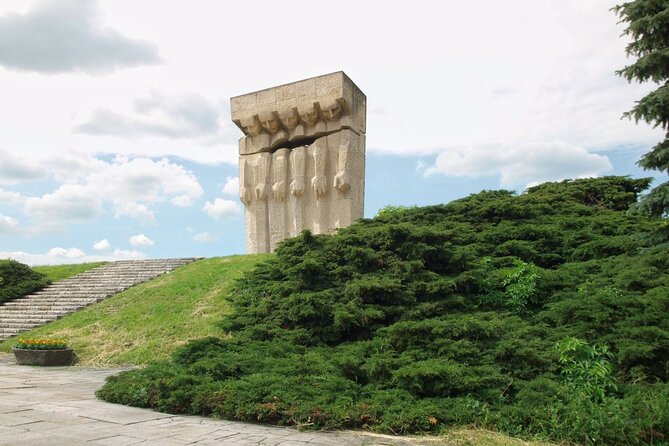
- The camp is now an open public space: You will see memorials, information boards, ruins, and broad outdoor areas rather than a traditional museum collection.
- The Liban Quarry adds a film connection: About a hundred meters away, you can see the replica camp built under Steven Spielberg’s direction for Schindler’s List.
- A guide is especially useful here: Without one, the scattered remains can be difficult to read. The tour connects places on the ground with the people and events tied to them.
- The tour lasts two hours: It is long enough for serious historical context, but short enough to fit into a busy Krakow itinerary.
- Olga has made a strong impression: On some tours, Olga has guided visitors through the site, shared family-related stories, and helped with the bus back toward Old Town.
Why Plaszow needs a guided visit
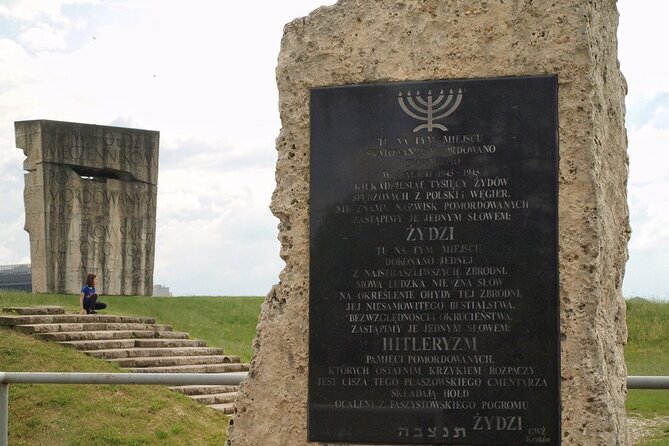
Plaszow does not present itself like Auschwitz, with rows of preserved barracks and a formal museum route. Today, the area is largely open ground with memorials, information boards, and remnants of former structures. That can make the place feel quiet and spacious, but it also means you may struggle to understand what you are seeing without help.
I find that this is where the tour earns its price. A licensed guide gives shape to the site. Instead of simply passing a ruin or standing before a memorial, you learn how each part fitted into the camp system and how Nazi policies changed life in Krakow.
The guide also helps you picture the scale of what has disappeared. The absence of intact buildings is part of the experience, but it can be frustrating if you expect a conventional museum. You are walking through a place where history must be explained rather than displayed in full.
More Auschwitz-Birkenau memorial tours:
- From Krakow: Auschwitz-Birkenau Guided Tour & Hotel Pickup
★ 4.5 · 33,358 reviews - From Krakow: Auschwitz-Birkenau Guided Tour & Hotel Pickup
★ 4.5 · 29,340 reviews - Krakow: Auschwitz Guided Tour with Optional Hotel Pickup
★ 4.5 · 15,280 reviews
From forced labor camp to concentration camp
The tour begins with the camp’s development. Plaszow opened in 1940 as a forced labor camp. In 1941, it was converted into a concentration camp, a change that reflects the wider tightening of Nazi control in occupied Poland.
That timeline matters. It shows that the camp did not appear as an isolated event. It formed part of a system that used forced labor, imprisonment, deportation, and mass violence. Your guide explains how Nazi rule affected Krakow and how the camp’s role changed over time.
From 1942, Jews from the Krakow ghetto began to be deported to Plaszow. Hearing about those deportations while walking across the site gives the history a local focus. This was not a distant camp disconnected from the city. It was tied directly to the destruction of Krakow’s Jewish community.
I appreciate that the tour links the camp to the surrounding city rather than treating Plaszow as a sealed-off place. The meeting point at Apteka Pod Orlem also connects the outing with Krakow’s wartime story before you even reach the camp.
Seeing the quarry and factory labor areas
Labor is a major part of the visit. Prisoners worked in the quarry and in military factories, under conditions that the tour describes as part of everyday camp life. These stops help you understand that the camp was not only a place of detention. It was also a site built around exploitation.
The quarry is especially important because it gives the tour a physical setting for the work. You can discuss how prisoners were used for intensive labor and how the camp’s economy served the Nazi war effort.
The military factories add another layer. They show how the camp was tied to production and the machinery of war. The guide’s role here is to explain the connection between the work areas, the prisoners, and the wider Nazi system.
You should not expect a preserved factory tour or a complete set of original structures. Much of the value comes from hearing what took place in these areas and using the remaining ground and ruins as reference points. If you prefer museums with many original objects, this visit may feel spare. If you want to understand a place through its setting and testimony, the format works well.
The memorials and the weight of the site
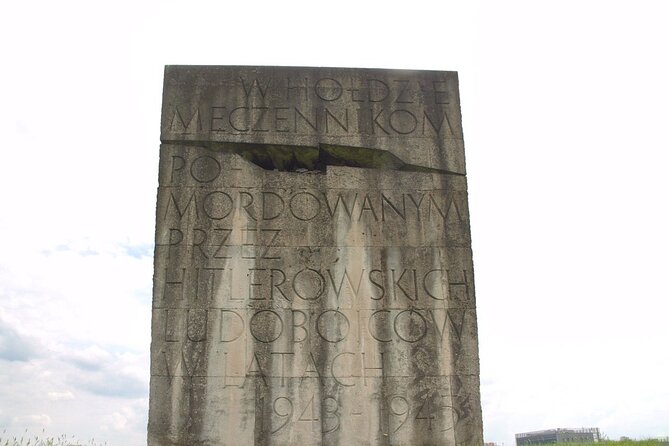
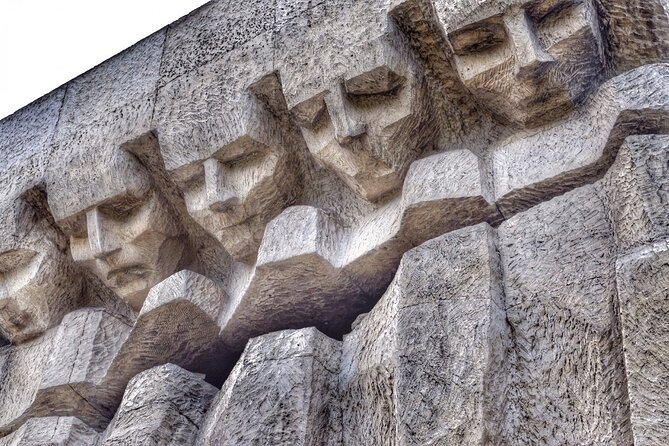
Several memorials mark the former camp and honor its victims. They give you places to stop, remember, and consider the human cost behind the historical facts.
The tour does not treat the memorials as quick photo stops. Their purpose is to help you pause. The broad outdoor setting can feel almost ordinary at first, which makes the contrast with the camp’s past even harder to ignore.
You may also find information boards that add basic orientation. They are useful, but they do not replace a guide. The boards cannot answer questions, connect every site to the larger story, or explain how the camp changed over time.
Bring suitable clothing for the weather. This is an outdoor visit, and the experience depends on walking between separate points. Comfortable clothing will make it easier to focus on the guide instead of the conditions.
A few more in Krakow
- Krakow–Zakopane: Cable Car, Chocholow Baths, Cheese & Vodka
★ 5.0 · 10,720 reviews - Krakow: Auschwitz-Birkenau Guided Tour with Pickup & Lunch
★ 4.5 · 9,800 reviews - From Krakow: Wieliczka Salt Mine Tour
★ 4.6 · 9,393 reviews - Krakow: Auschwitz-Birkenau Guided Tour Pickup/Lunch Options
★ 4.5 · 9,057 reviews
Oskar Schindler beyond the movie
Oskar Schindler is one of the tour’s central subjects, but the visit is not only a film-themed outing. You hear about his life and his connection to the people affected by the camp system.
The guide also explains how Plaszow appeared in Schindler’s List, the 1993 film directed by Steven Spielberg. That context is useful because the movie shaped many people’s first understanding of Schindler and Krakow during the war.
The film connection can draw you in, but it should not overshadow the victims or the actual site. A good part of this tour is the balance between popular memory and historical reality. You learn where scenes were filmed and how the camp was portrayed, then return to the facts of the camp itself.
The film set connection comes at the Liban Quarry, roughly a hundred meters from the former camp. Under Spielberg’s direction, a replica of the camp was built there for the movie. Seeing this nearby helps you separate a recreated film setting from the real location.
That distinction is worth keeping clear. The quarry replica is linked to cinema, while Plaszow is a place of remembrance. The two locations sit close together, but they serve very different purposes.
What the two-hour route feels like
The tour begins at the entrance of Apteka Pod Orlem. Look for the guide holding an excursions.city sign. From there, the group travels to the former camp, explores its key areas, discusses the memorials and labor sites, and visits the nearby quarry replica before returning to the meeting point.
The two-hour length gives the guide time to explain events instead of rushing through a list of dates. You can expect a steady mix of walking, stopping, listening, and looking closely at the remains and memorials.
You will likely get the most from the tour if you arrive ready for a quiet, serious experience. This is not a lively city walk with cafes and grand views between stops. The subject demands attention, and the open setting can make the guide’s words feel especially important.
Group size is not specified, so I would not book on the assumption that you will receive a private tour. Still, the format can sometimes feel personal. On one departure, Olga guided only two people, making the experience feel especially direct and welcoming.
Olga has also helped visitors find the correct bus back toward Old Town after the tour. That kind of practical help is valuable, particularly if you are unsure how to continue your day from the meeting point. Her tours have included family-related stories connected to the camp, adding a personal layer to the history. You should not assume Olga will lead every departure, but her presence has been a memorable feature when available.
Is $23 good value?
At $23 per person, this is a reasonably priced guided history visit. You are paying for a licensed English-speaking guide and two hours of interpretation at a site where the physical remains alone do not tell the full story.
The value is strongest for first-time visitors to Plaszow. You could walk through the public space without paying for a tour, but you might miss how the camp began, how it expanded, how deportations from the Krakow ghetto fit into the story, and how the quarry and factories were used.
There are a few costs to remember. Tram tickets are not included, so allow extra money for local transport. The meeting point and return point are the same, which simplifies the start and finish, but you still need to arrange your own transport during the outing.
Free cancellation up to 24 hours before the start and the option to reserve now and pay later make the booking less rigid. Those terms are useful if your Krakow plans are still changing, though the main reason to book should be the guide’s historical context, not the flexible payment arrangement.
Who should book this Plaszow tour?
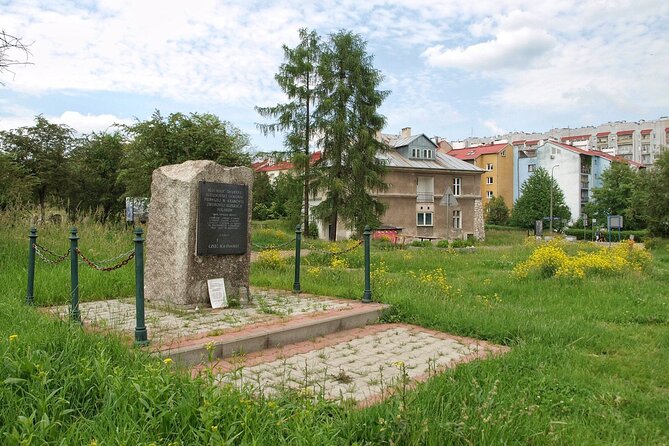
I would recommend it to anyone interested in World War II, the Holocaust, Krakow’s Jewish history, or the real places connected with Schindler’s List. It also suits you if you prefer a guided explanation to reading scattered signs on your own.
The tour is a good choice for first-time visitors because it gives you a clear introduction in two hours. It can also work for people who have already visited Schindler’s Factory museum and want to understand the actual camp site connected to that wider story.
Families with older children may find the visit meaningful, but the subject is severe. You should judge the tour according to the age and sensitivity of the people in your group. The experience is not presented as entertainment, and you need to be comfortable discussing Nazi persecution and the Holocaust.
Film fans will enjoy the Liban Quarry stop, but I would not choose this tour only for movie locations. The main purpose is remembrance and historical understanding. The film material adds context rather than replacing the history.
You may want to skip it if you need a fully preserved museum with indoor exhibits, extensive artifacts, or a sheltered route. Plaszow is exposed, open, and incomplete. Its power comes from the place itself, the memorials, and the guide’s ability to explain what is no longer visible.
Practical advice for a respectful visit
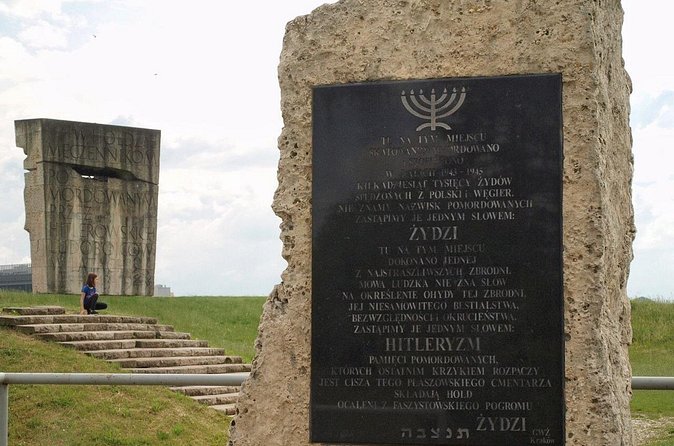
Wear clothing suited to the weather and shoes suitable for an outdoor walk. The tour takes place across a former camp area, not inside a polished museum complex.
Arrive at the entrance of Apteka Pod Orlem with enough time to find the guide holding the excursions.city sign. The tour is in English, and the guide is licensed.
Keep the tone of the visit in mind. There are memorials to victims and sites connected with mass suffering, so respectful behavior matters. Take photographs only when appropriate, and give yourself a few quiet minutes after the tour rather than rushing straight into your next activity.
If your tour is led by Olga, ask about the best way to continue toward Old Town at the end. She has helped people locate the correct bus, but tram tickets and other transport costs remain your responsibility.
Should you book the Plaszow guided tour?
Yes, if you want to understand Plaszow rather than simply pass through it. The site can look like an open public area with scattered signs and ruins, but a guide connects those fragments to the forced labor camp of 1940, the concentration camp created in 1941, the deportations from the Krakow ghetto, the quarry and factories, and the people who suffered there.
The $23 cost is sensible for two hours with a licensed English-speaking guide. Book it if you value clear explanation, memorials, and the real wartime setting behind Schindler’s List. Skip it only if you are looking for a traditional indoor museum or a light film-location walk.
FAQ
How long does the Plaszow guided tour last?
The tour lasts two hours. Starting times depend on availability when you book.
What language is the tour conducted in?
The tour is conducted in English with a live guide.
Where does the tour begin?
It begins at the entrance of Apteka Pod Orlem. Look for the guide holding an excursions.city sign.
Where does the tour end?
The activity ends back at the meeting point.
Are tram tickets included?
No. Tram tickets are not included in the tour price.
What should I bring?
Bring weather-appropriate clothing because the experience takes place outdoors.
Can I cancel the tour for a refund?
Yes. You can cancel up to 24 hours in advance for a full refund. You can also reserve now and pay later.
Just added in Krakow
- Auschwitz-Birkenau – Skip the Line Tickets★ 3.5 · 29 reviews
- Auschwitz-Birkenau: Fast-Track Ticket & Guided Tour No Transfers★ 3.5 · 17 reviews
- Zakopane & Sleigh Ride with Bonfire – Group Tour from Kraków★ 5.0 · 2 reviews
- Zakopane & Gubalowka Funicular – Private Winter Tour from Krakow★ 5.0 · 10 reviews
- Sleigh Ride & Bonfire in Zakopane with Funicular – Private Trip★ 5.0 · 48 reviews
- Thermal Baths & Zakopane – Private Trip from Krakow★ 5.0 · 1 review
- Divine Mercy Sanctuary – Private Tour from Krakow★ 5.0 · 4 reviews
- stag dog chase Krakow prank★ 5.0 · 4 reviews