
REVIEW · AUSCHWITZ-BIRKENAU MEMORIAL TOURS
Krakow: Cruise and Tour of Former Concentration Camp Płaszow
History feels different in open ground. This 150-minute Krakow experience combines a scenic Vistula River cruise with a guided visit to former Płaszow concentration camp, linking city views, wartime history, and places of remembrance. I especially like the river journey past Wawel Hill and the quiet, carefully paced walk through Płaszow. The main consideration is that the camp has few surviving buildings, so you need to be ready for a reflective visit rather than a conventional museum tour.
The tour begins in central Krakow on a modern catamaran, then continues by tram and on foot with an English-speaking guide. The cruise includes an English audio guide, while the Płaszow section is led in person. One verified booking from May 2025 gave the experience five out of five, praising the guide’s strong command of the subject.
In This Review
- Key points at a glance
- Starting on the Vistula beside Krakow’s old center
- Changing from river views to wartime history
- What Płaszow was, and why the site matters
- Grey House, cemetery traces, and the roll-call square
- Memorials that call for a slower pace
- Schindler’s story beyond the film
- How the 150-minute format works for your day
- Is $56 a fair price?
- Who should choose this Płaszow experience?
- Should you book it?
- FAQ
- How long does the Krakow Płaszow tour last?
- Where does the tour meet?
- How early should I arrive?
- Is the tour conducted in English?
- What transportation is included?
- Is hotel pickup included?
- Does the tour operate in bad weather?
- Can I cancel for a full refund?
Key points at a glance
- See Krakow from the Vistula: Sail past Wawel Hill and other city landmarks from the open platform or heated deck.
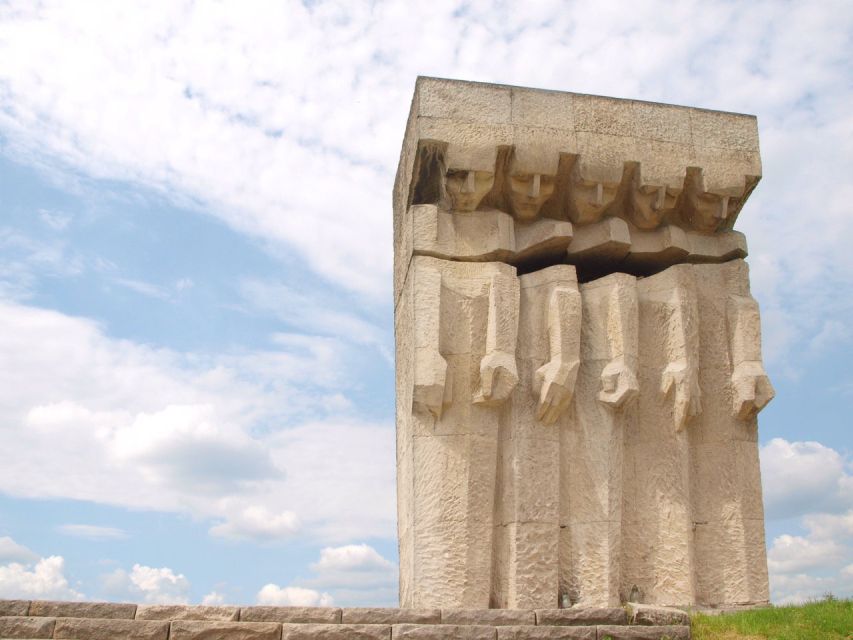
- Walk through a place of memory: Płaszow has few intact structures, but its memorials, cemetery traces, mass graves, and open spaces carry great weight.
- Connect the site to Schindler’s story: Learn how Oskar Schindler’s enamelware business helped protect Jewish prisoners linked to the camp.
- Visit important surviving traces: The route includes the Grey House, pre-burial hall ruins, the roll-call square, and fragments of cemetery gravestones.
- Travel in a compact format: The cruise, tram ride, and guided walk fit into 150 minutes, useful if your Krakow schedule is tight.
- Plan for the weather: The tour runs in all conditions, and comfortable walking shoes are strongly recommended.
Starting on the Vistula beside Krakow’s old center
Your meeting point is at Inflancki Boulevard beside the Paulinska water tram stop. Look for the person holding a Cracow Boat sign, and arrive at least 10 minutes early. Once the group leaves, late arrivals cannot join, and the ticket cannot be refunded.
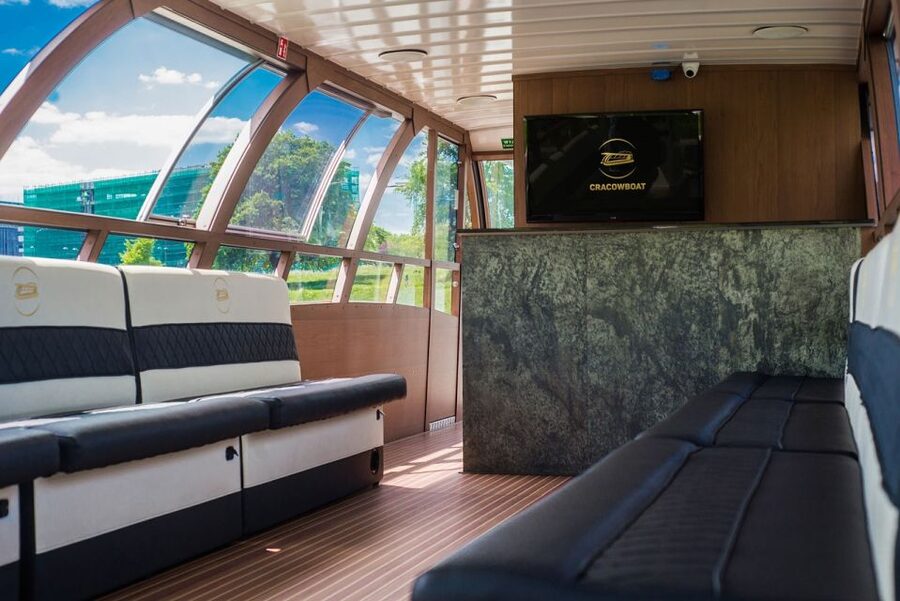
The first part is a one-way cruise on the Vistula River aboard a modern catamaran. You can sit on the open platform for fresh air and broad views, or settle indoors on leather sofas on the heated deck. That choice matters in Krakow, where a sunny morning can turn chilly quickly.
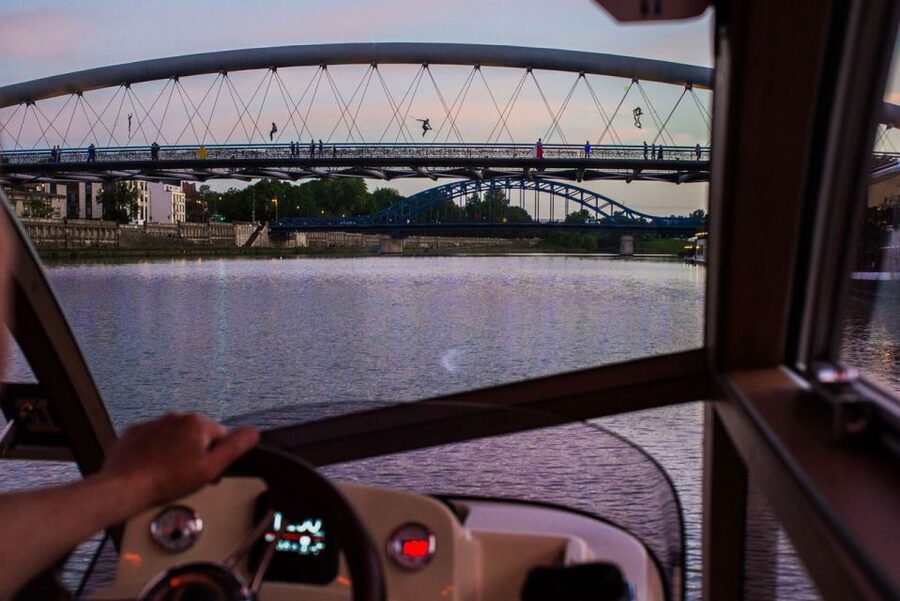
From the water, Wawel Hill takes on a different shape. Instead of approaching the castle through city streets, you see it as part of the riverfront, with Krakow’s historic buildings and bridges forming the wider view. The cruise is not simply transport. It gives you time to get oriented and see how the city sits around the Vistula.
An English audio guide provides background about Krakow as you sail. This portion is less personal than the walking tour because you listen through the recorded commentary, but it lets you take in the view at your own pace. I like this contrast: the boat gives you a calm visual introduction, while the camp visit demands closer attention.
The cruise is one way, not a round trip. That makes the experience practical, since you are moving toward the next part of the tour instead of returning to where you started. It also means you should not expect a long sightseeing cruise focused only on relaxation. The river ride is a short but worthwhile opening to the main historical visit.
More Boat Trips in Kraków
- Kraków: Evening or Night River Cruise
★ 4.0 · 7,386 reviews - Krakow: Sightseeing Cruise by Vistula River
★ 4.1 · 1,897 reviews - Krakow: Evening Cruise with a Glass of Wine
★ 4.0 · 1,054 reviews
Changing from river views to wartime history
After the cruise, a single tram ticket is included for the onward journey. The tour then shifts from Krakow’s grand public sights to a site that is quieter and far harder to read at first glance.
Płaszow does not greet you with a large intact camp complex. Much of what once existed has disappeared, and the remaining traces can be easy to miss without a guide. That is why the live English-speaking guide matters so much here. The guide helps you understand where buildings, sections, roads, and execution sites once stood.
This is also the point where the pace becomes important. The route is set up for reflection rather than a hurried checklist of stops. You will walk between memorials and surviving fragments, listening to explanations about how the camp was organized and what happened in each area.
Expect outdoor conditions throughout this part. The tour operates in all weather, so bring clothing suited to the forecast and wear comfortable shoes. There is no substitute for practical preparation here. Płaszow is a place for walking, standing, and paying attention, not for a quick indoor visit between cafés.
What Płaszow was, and why the site matters
The Nazi German occupiers created Płaszow in October 1942 on the grounds of two Jewish cemeteries in Krakow. It first served as a forced-labor camp for Jewish people from the liquidated Krakow ghetto.
From July 1943, a penal-labor section also held Polish prisoners. In January 1944, Płaszow became a concentration camp. Later that year, it also functioned as a transit camp for Hungarian Jews being sent onward to Auschwitz.
More than 35,000 people were imprisoned at Płaszow during its existence. Around 6,000 were murdered. Executions took place at several locations within the camp, and mass graves and memorials now mark parts of the site.
Those figures are important, but the walk adds the physical setting that numbers alone cannot provide. You begin to understand the camp not as one single building, but as a large system of living quarters, hospital facilities, administrative areas, industrial sections, roads, and execution sites.
The guide also explains how the former cemeteries were affected. Fragments of Jewish gravestones were used to pave roads, a detail that makes the destruction of the site feel painfully concrete. Seeing these remnants in context helps you understand that the camp erased people, buildings, and layers of Jewish life at the same time.
Grey House, cemetery traces, and the roll-call square
The route includes the Grey House, the ruins of the pre-burial hall, traces of the former Jewish cemeteries, and the roll-call square. Each stop gives you a different way to read the site.
The Grey House is among the recognizable surviving structures. The ruins of the pre-burial hall point to the camp’s connection with the cemeteries that occupied the ground before the war. Cemetery traces remind you that Płaszow was not built on empty land. It was imposed over an existing place of Jewish burial and memory.
The roll-call square helps explain the daily control of prisoners. Here, the guide can connect the open space to the camp’s routines and organization. Płaszow’s remaining features are not always dramatic at first sight, but their meaning grows when you know what they were used for.
The open setting can be both the tour’s strength and its challenge. You have room to think, and the quiet can make the memorials especially powerful. At the same time, anyone looking for preserved barracks, rooms, and displays may find the visit less immediately accessible than a museum.
I would not choose this tour expecting constant visual evidence. I would choose it because the guide helps you reconstruct what no longer remains. That approach asks more of you, but it also leaves space for personal reflection.
More Auschwitz-Birkenau memorial tours:
- From Krakow: Auschwitz-Birkenau Guided Tour & Hotel Pickup
★ 4.5 · 33,358 reviews - From Krakow: Auschwitz-Birkenau Guided Tour & Hotel Pickup
★ 4.5 · 29,340 reviews - Krakow: Auschwitz Guided Tour with Optional Hotel Pickup
★ 4.5 · 15,280 reviews - Krakow: Auschwitz-Birkenau Guided Tour with Pickup & Lunch
★ 4.5 · 9,800 reviews
Memorials that call for a slower pace
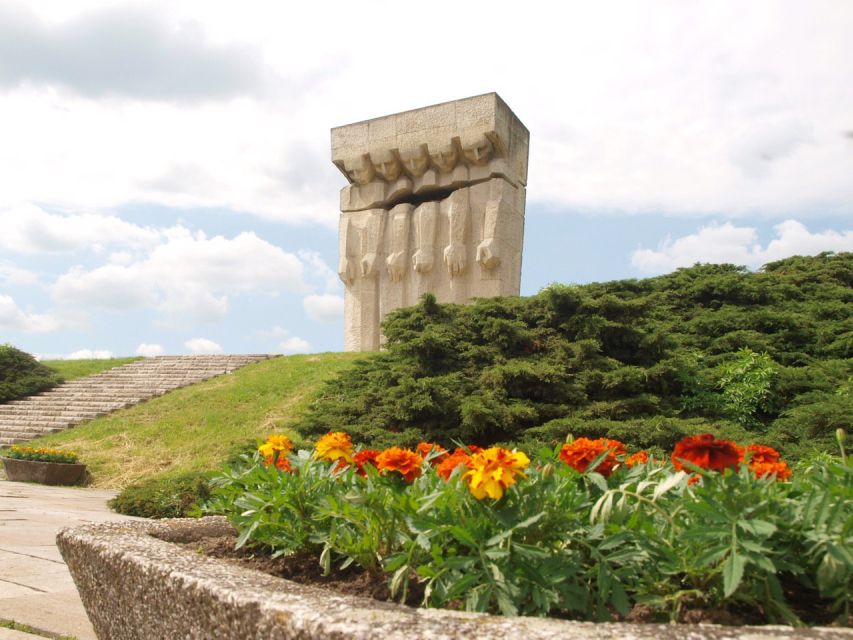
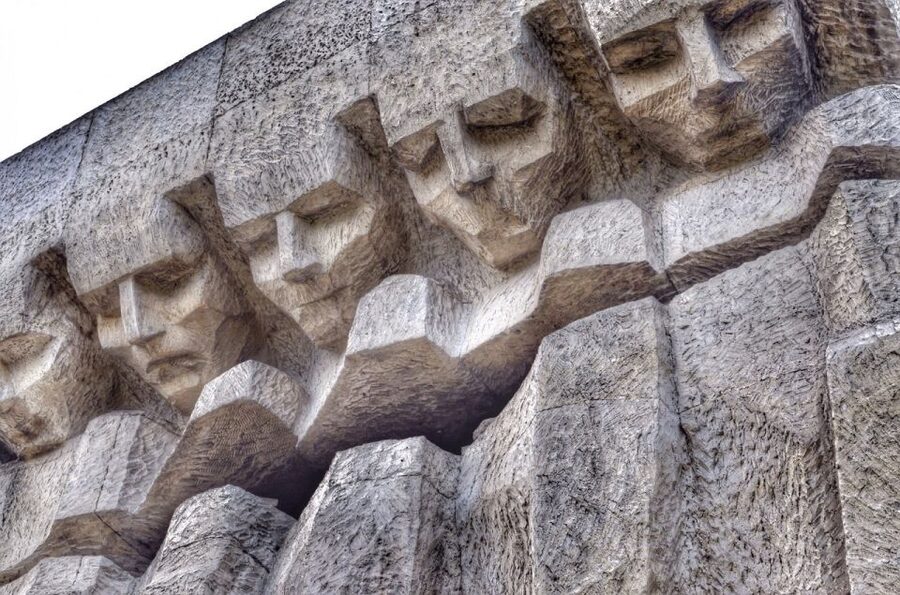
A major stop is the Monument of Torn-Out Hearts, one of the memorials where the tour pauses to remember those murdered at Płaszow. The design and setting encourage silence rather than a hurried photograph.
Memorials matter here because the camp itself has been altered and partially erased. They provide fixed points for remembrance when so many original structures are gone. The route gives you time to stop, listen, and consider the people behind the statistics.
This is not a light sightseeing stop, and the tour does not treat it that way. I appreciate that the experience makes room for grief and thought instead of trying to turn every moment into entertainment. The camp is presented as a place of memory, not as a backdrop.
You should also be aware that the emotional weight can vary from person to person. The open ground and lack of intact buildings may make the story harder to picture, while others may find that very absence deeply affecting. The guide’s explanations are essential for giving the memorials their full meaning.
Schindler’s story beyond the film
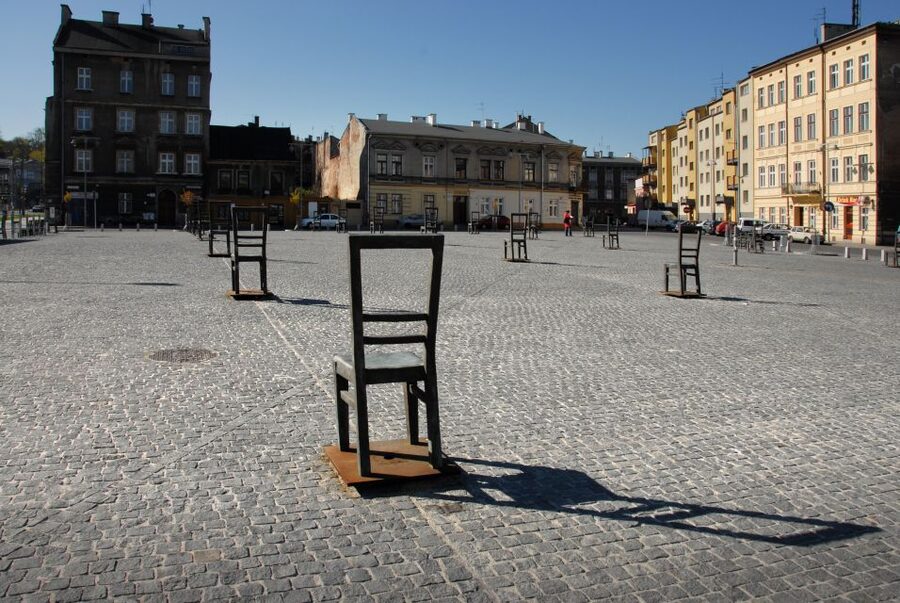
Płaszow is closely tied to Oskar Schindler, whose story is known worldwide through Schindler’s List. The film also used locations connected with Krakow and the former camp, making this visit useful if you want to understand the real places behind the movie.
Schindler operated an enamelware enterprise and sought work permits for Jewish prisoners registered through Płaszow. Those permits helped shield people from further transports. Later, he arranged their transfer to his wartime plant in Brunnlitz, where he saved more than 1,000 lives.
The tour places Schindler within the wider camp story rather than treating him as the entire subject. That balance is important. His actions form one part of Płaszow’s history, but the site belongs first to the many people imprisoned, murdered, and forced to work there.
If you have seen Schindler’s List, you may recognize the connection between the film’s story and the places discussed on the walk. If you have not seen it, the guide still provides enough background to make Schindler’s role understandable.
I like this part because it connects popular history with the actual site, but it does not reduce Płaszow to a movie location. You learn where filming took place while keeping the attention on the victims and the camp’s real function.
How the 150-minute format works for your day
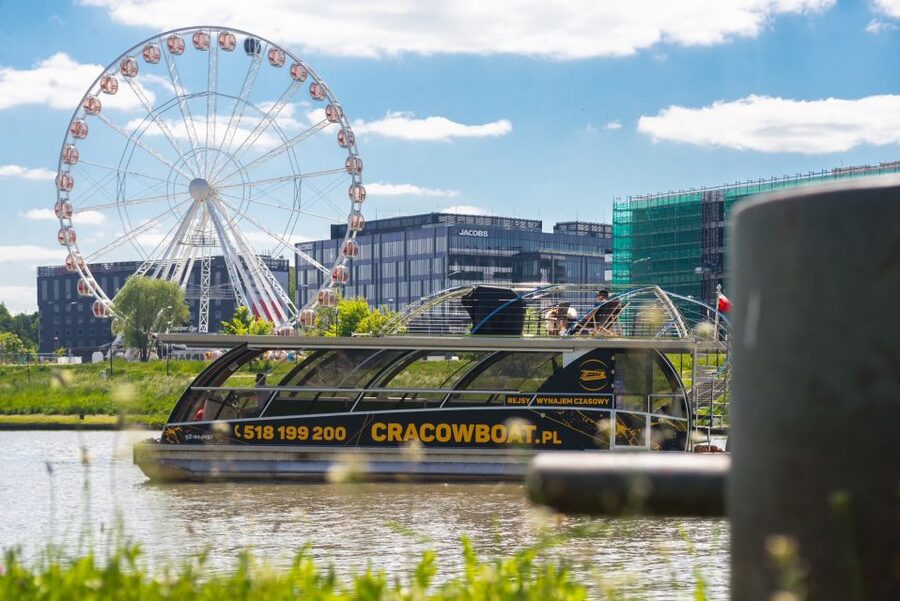
The total duration is 150 minutes, or two and a half hours. That is long enough to combine three distinct elements: the river cruise, the tram transfer, and the guided Płaszow walk.
The compact format suits you if you want a serious historical visit without giving an entire day to it. It also works well alongside other Krakow plans, provided you leave room around the fixed start time and do not schedule another activity too tightly afterward.
The pace is not designed for rushing from one point to another. The river portion gives you a change of mood, while the walking section needs pauses at the memorials and historical remains. You should think of the duration as an approximate block of time for a thoughtful visit, not as a race to collect sights.
The group tour is offered in one language only, with English listed for both the live and audio portions. Select English when booking. The live guide leads the Płaszow walk, and the boat section uses the audio guide, so the two parts have different styles.
The tour includes the one-way cruise and a single tram ticket. Hotel pickup and drop-off are not included, so you must reach the central meeting point yourself and make your own arrangements after the tour.
Is $56 a fair price?
At $56 per person, this is not the cheapest way to see Krakow, but the price covers more than a basic camp walk. You receive the catamaran cruise, the audio commentary, the tram ticket, and a live guided visit to Płaszow.
The strongest value comes from the historical guidance. With so few buildings left, visiting alone could leave you unsure about what you are seeing. The guide supplies the map, chronology, and human context needed to read the site properly.
The cruise adds sightseeing value, though you should not mistake it for a full-length scenic boat excursion. Its role is to connect the city center with the wider experience and offer a pleasant view of Krakow from the Vistula.
I consider the price reasonable if you want both Krakow sightseeing and a focused Holocaust history visit in one booking. It is less appealing if you only want a casual boat ride, or if you prefer to explore museums filled with preserved objects and indoor exhibits.
Free cancellation is available up to 24 hours before departure, and you can reserve now while paying later. Those terms help if your Krakow plans are still shifting, but the strict late-arrival rule remains important.
Who should choose this Płaszow experience?
I would recommend this tour to you if you want a guided introduction to Płaszow and value a respectful pace. It suits people interested in the Holocaust, Krakow’s wartime past, Jewish history, and the real locations connected with Schindler’s List.
It is also a good fit if you appreciate varied sightseeing. The river cruise gives you city views, while the camp walk offers a much quieter and more serious experience. The change from one to the other makes the day feel carefully shaped rather than repetitive.
You should think twice if you have difficulty walking outdoors or dislike visiting places with few physical remains. The tour includes walking and operates in all weather. Comfortable shoes and suitable clothing are not optional extras here.
The experience is available in English, with an audio guide on the boat and a live guide at Płaszow. One verified booking from the United Kingdom, dated May 6, 2025, awarded five out of five and singled out the guide’s command of the subject. That praise fits the tour’s central need: Płaszow makes far more sense when someone can explain what has vanished.
Should you book it?
Book this tour if you want a serious, well-paced visit to Płaszow and like the idea of reaching it by water before walking through the memorial site. The river views are a welcome opening, but the camp visit is the reason to go.
I would not book it for a purely scenic outing or a film-themed attraction. Go for the chance to remember the victims, understand the camp’s organization, and place Schindler’s story in its wider setting. At $56, the combination is worthwhile for people who want context, not just photographs.
FAQ
How long does the Krakow Płaszow tour last?
The experience lasts 150 minutes, including the Vistula River cruise, tram transfer, and guided walk at Płaszow.
Where does the tour meet?
The meeting point is at Inflancki Boulevard beside the Paulinska water tram stop. Look for the person holding a Cracow Boat sign.
How early should I arrive?
You should arrive 10 minutes before the scheduled start. Late arrivals cannot join after the group has departed, and tickets cannot be refunded.
Is the tour conducted in English?
Yes. The live guide and audio guide are offered in English. Group tours operate in one language, so select your preferred language when booking.
What transportation is included?
The booking includes a one-way catamaran cruise on the Vistula River and one tram ticket for the onward journey.
Is hotel pickup included?
No. Hotel pickup and drop-off are not included, so you must reach the meeting point yourself.
Does the tour operate in bad weather?
Yes. The tour operates in all weather conditions. Dress appropriately for the forecast and wear comfortable walking shoes.
Can I cancel for a full refund?
Yes. You can cancel up to 24 hours in advance for a full refund. You can also reserve now and pay later.
Just added in Krakow
- Auschwitz-Birkenau – Skip the Line Tickets★ 3.5 · 29 reviews
- Auschwitz-Birkenau: Fast-Track Ticket & Guided Tour No Transfers★ 3.5 · 17 reviews
- Zakopane & Sleigh Ride with Bonfire – Group Tour from Kraków★ 5.0 · 2 reviews
- Sleigh Ride & Bonfire in Zakopane with Funicular – Private Trip★ 5.0 · 48 reviews
- Thermal Baths & Zakopane – Private Trip from Krakow★ 5.0 · 1 review
- Zakopane & Gubalowka Funicular – Private Winter Tour from Krakow★ 5.0 · 10 reviews
- Divine Mercy Sanctuary – Private Tour from Krakow★ 5.0 · 4 reviews
- stag dog chase Krakow prank★ 5.0 · 4 reviews