
REVIEW · AUSCHWITZ-BIRKENAU MEMORIAL TOURS
Kraków: Auschwitz-Birkenau Private Tour & Transportation
History asks for your full attention. This private Auschwitz-Birkenau tour gives your group a quiet, direct ride from Kraków, plus a licensed guide assigned only to your party. I like the door-to-door pickup and the choice of six guide languages. I also like the clear split between Auschwitz I and Auschwitz II-Birkenau, which helps you understand how the two sites differ.
The main drawback is the price: $517 per person is a serious outlay, especially for a larger group where a shared tour may cost less. The start time is also not fully fixed. You choose a preference, but the provider may confirm a time anywhere from 5:30 AM to 1:30 PM the day before.
In This Review
- Key points to know before booking
- A private start from Kraków
- Why Auschwitz requires more than a quick stop
- Auschwitz I: prison blocks and personal evidence
- The ten-minute pause between difficult sections
- Auschwitz II-Birkenau: scale, railway platform, and remains
- What the private guide adds
- Is $517 per person good value?
- Timing, clothing, and what to carry
- Cancellation and possible changes
- Who should book this Auschwitz tour?
- Should you book it?
- FAQ
- How long does the Auschwitz-Birkenau tour last?
- How much time is spent inside the memorial?
- Is transportation from Kraków included?
- What type of vehicle will be used?
- Is the tour private?
- Which languages are available for the guide?
- Can I bring a large backpack into the museum?
- What documents should I bring?
- Is the tour suitable for children or wheelchair users?
Key points to know before booking
- Private pickup in Kraków: You travel by sedan, van, minibus, or bus, depending on your group size.
- Two separate camp visits: Auschwitz I takes about two hours, while Auschwitz II-Birkenau takes about 90 minutes.
- A guide for your group only: The private format lets you ask questions without keeping pace with a large mixed group.
- A short, unpredictable break: The memorial visitor service controls the pace and break time, not the driver or tour company.
- Strict entry rules: Bring a passport or ID card, and keep bags smaller than 20 by 30 centimeters.
- Best for older teenagers and adults: The experience is not suitable for children under 15 or wheelchair users.
A private start from Kraków
The day begins with pickup at your Kraków accommodation or another agreed location. That is a real convenience for a seven-hour outing. You do not need to find a meeting point, manage a train connection, or wonder where to leave your luggage.
Your vehicle depends on the size of your group. A small party may travel in a sedan or van, while a larger party may use a minibus or bus. The vehicle is air-conditioned, and a professional driver handles the road while you prepare for the visit.
The drive itself is not the main event, but the private setup makes the day easier. You can travel with your own family, friends, or colleagues rather than being combined with strangers. For a group of up to 30 people, that privacy is the central reason to consider this tour.
Still, do not treat the pickup time as a firm appointment until you receive the final confirmation. You can request a preferred starting hour, but the confirmed time may change. The exact departure is sent by email the day before, and that late notice can make it harder to plan breakfast, dinner, or another Kraków activity.
More Auschwitz-Birkenau memorial tours:
- From Krakow: Auschwitz-Birkenau Guided Tour & Hotel Pickup
★ 4.5 · 33,358 reviews - From Krakow: Auschwitz-Birkenau Guided Tour & Hotel Pickup
★ 4.5 · 29,340 reviews - Krakow: Auschwitz Guided Tour with Optional Hotel Pickup
★ 4.5 · 15,280 reviews
Why Auschwitz requires more than a quick stop
Auschwitz-Birkenau is not a light sightseeing stop. It is a memorial and museum devoted to the victims of the Nazi Holocaust, and the visit includes personal belongings, photographs, documents, former prison blocks, barracks, and camp remains.
The guide’s role matters here. A well-prepared explanation helps you connect the buildings and objects with the people who suffered there. The tour is described as educational and serious, with time to ask questions and clarify difficult parts of the site’s past.
One strong point is that the tour does not reduce Auschwitz to a single famous gate or photograph. You see Auschwitz I and Auschwitz II-Birkenau, which present different parts of the camp system. The contrast is important, and the tour’s 3.5 hours gives you time to take in both.
The subject matter can be disturbing. You should arrive prepared for a solemn visit, not a casual outing. Comfortable shoes and weather-appropriate clothing are practical choices, but mental preparation matters just as much.
Auschwitz I: prison blocks and personal evidence
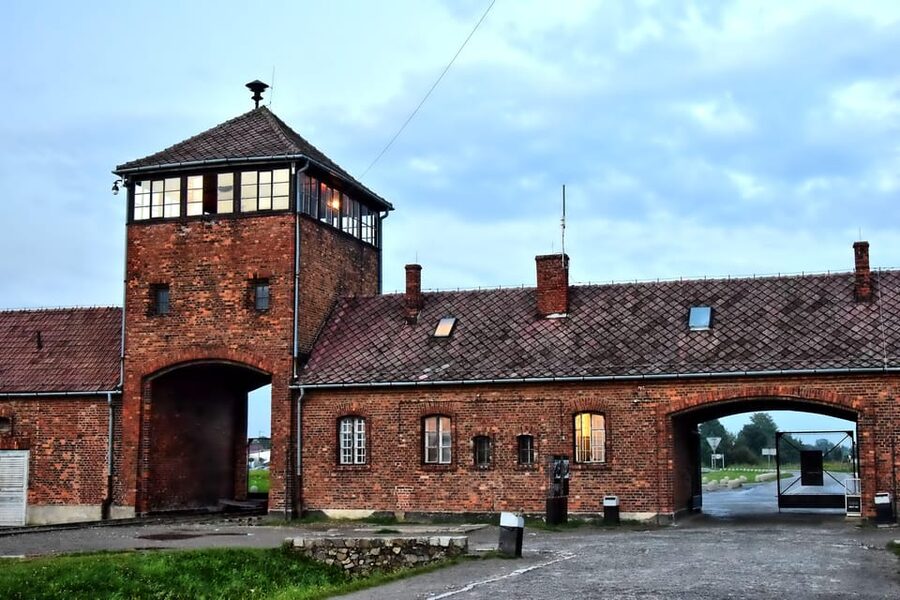
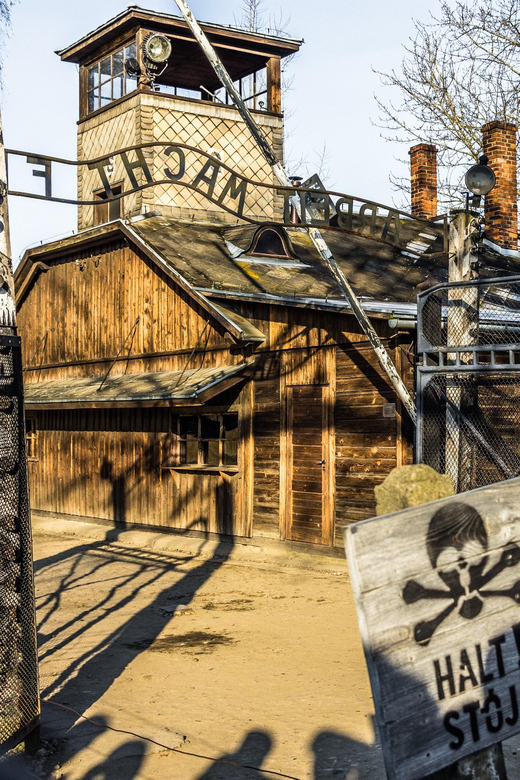
The first guided portion lasts about two hours at Auschwitz I. You enter through the famous gate bearing the inscription Arbeit Macht Frei, then continue through the original camp area.
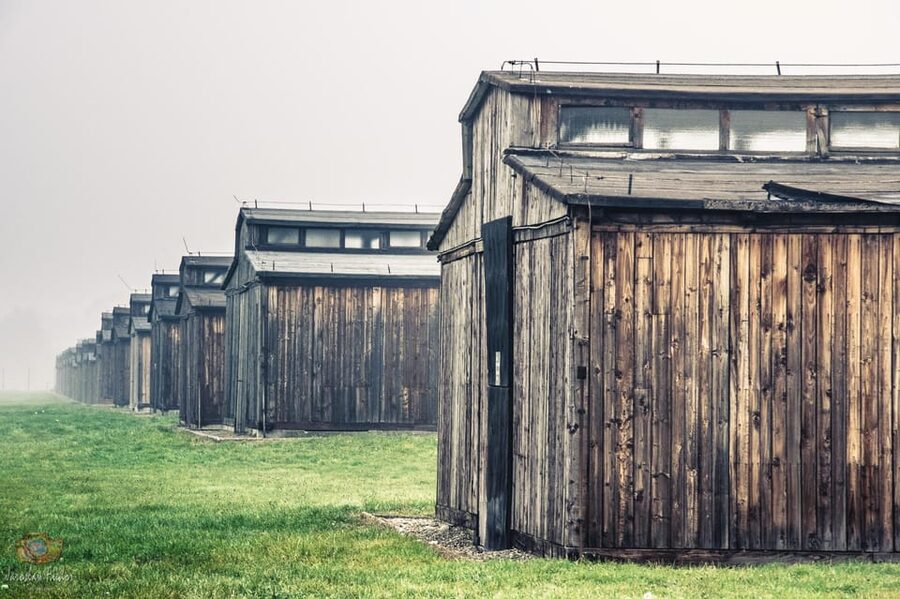
The former prison blocks now contain museum exhibits. Here, your guide explains the setting through photographs, documents, and the personal belongings of victims. These objects make the history painfully direct. They are not abstract statistics. They point to individual lives, families, and people who were stripped of their possessions and freedom.
This part of the tour is more enclosed and exhibit-focused than the later visit to Birkenau. You spend time inside buildings, moving through displays and listening to the guide’s explanation. The private format is useful in this setting because you can ask for clarification when a document or exhibit raises a question.
The guide assigned to your group speaks one of the available languages: English, Italian, French, German, Spanish, or Polish. If language is important to your group, choose carefully during booking. A clear explanation is especially valuable here, since the material can be difficult to process even when presented in your first language.
The two-hour timing is substantial. You are not simply walking through the gate, taking a quick look, and leaving. At the same time, the memorial controls the pace of the guided visit. Your private guide provides the commentary, but the site’s visitor service determines how the group moves through the museum.
The ten-minute pause between difficult sections
A short break of about ten minutes is scheduled after the Auschwitz I portion. Do not expect a long meal stop or a chance to fully reset. The available timing depends on the memorial’s visitor service, so the break may not be exactly what you imagined.
Bring a small lunch and drinks. You can also order a lunch box during the booking process. That is useful because the full outing lasts about seven hours, and the break is too short to rely on a relaxed restaurant meal.
Large bags and backpacks cannot enter the museum. The maximum permitted size is 20 by 30 centimeters, so pack lightly. A small bag, water, and any essential items are more practical than a daypack filled with extras.
The bag rule is easy to overlook. Kraków sightseeing often encourages carrying a larger camera bag or backpack, but that will not work here. Plan your day around the memorial’s restrictions before leaving your accommodation.
A few more in Krakow
- Krakow–Zakopane: Cable Car, Chocholow Baths, Cheese & Vodka
★ 5.0 · 10,720 reviews - Krakow: Auschwitz-Birkenau Guided Tour with Pickup & Lunch
★ 4.5 · 9,800 reviews - From Krakow: Wieliczka Salt Mine Tour
★ 4.6 · 9,393 reviews - Krakow: Auschwitz-Birkenau Guided Tour Pickup/Lunch Options
★ 4.5 · 9,057 reviews
Auschwitz II-Birkenau: scale, railway platform, and remains
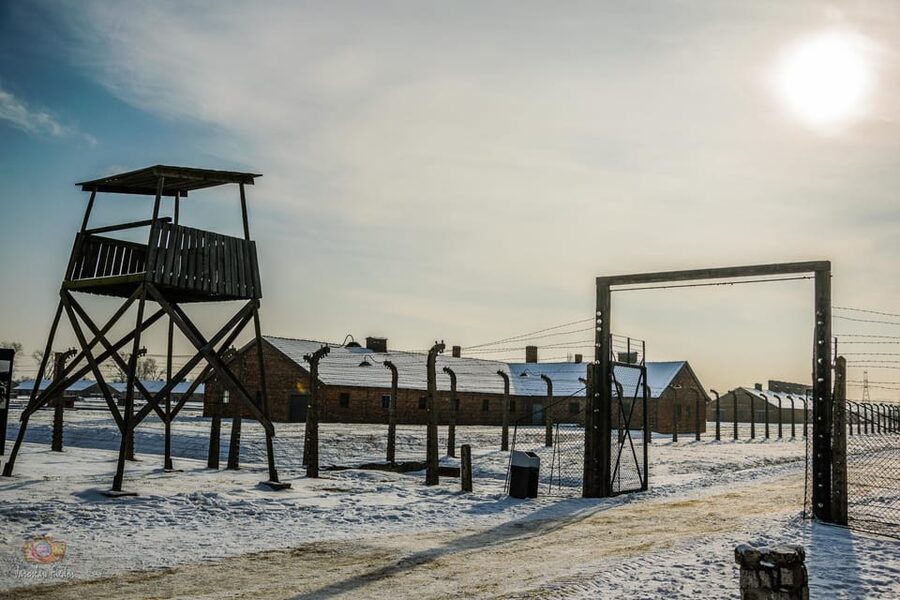
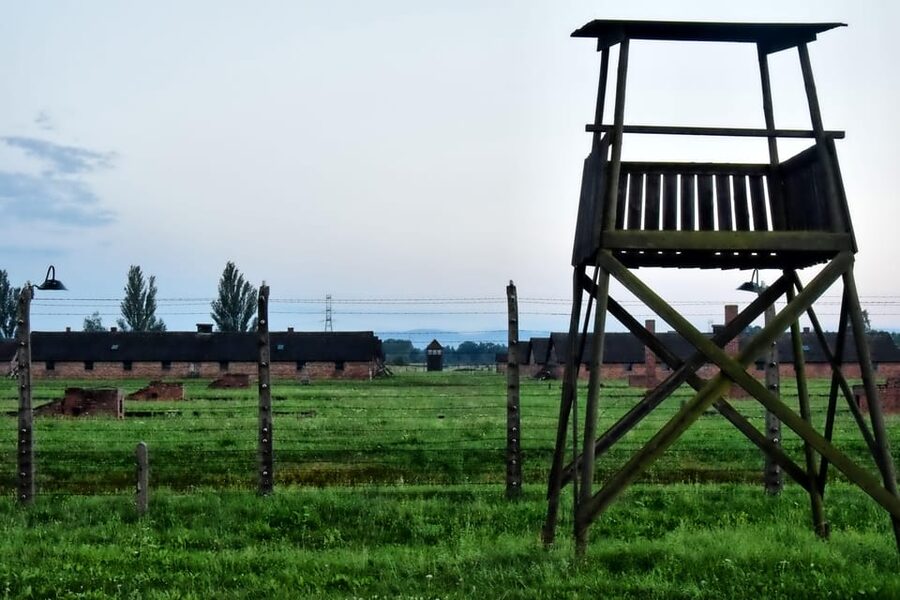
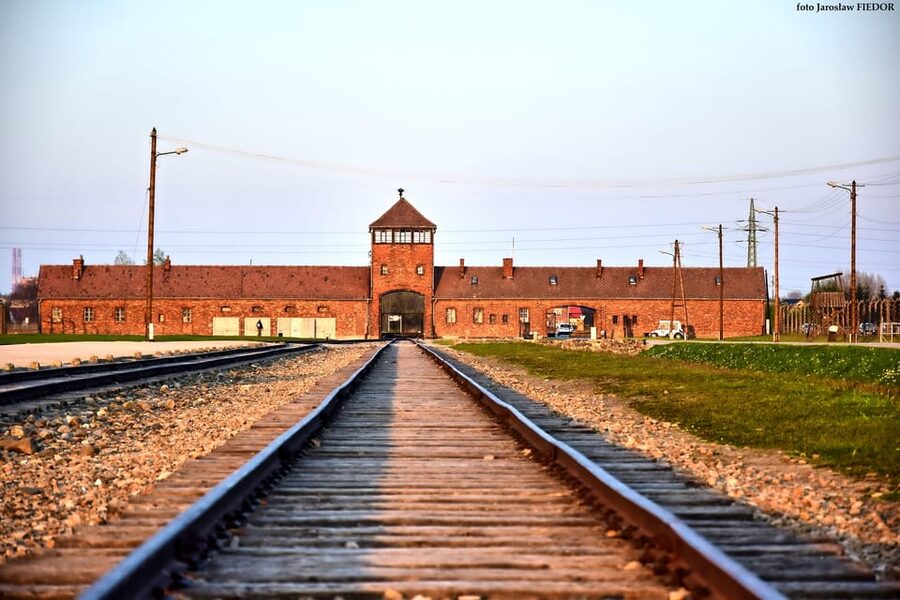
The second guided section lasts about 90 minutes at Auschwitz II-Birkenau. This was the largest of the camps in the complex, and the setting feels different from Auschwitz I.
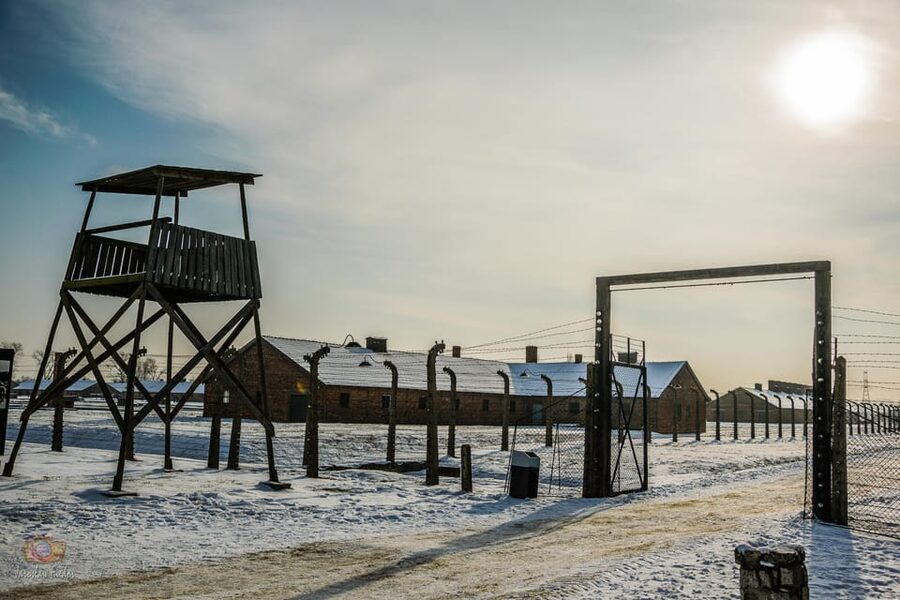
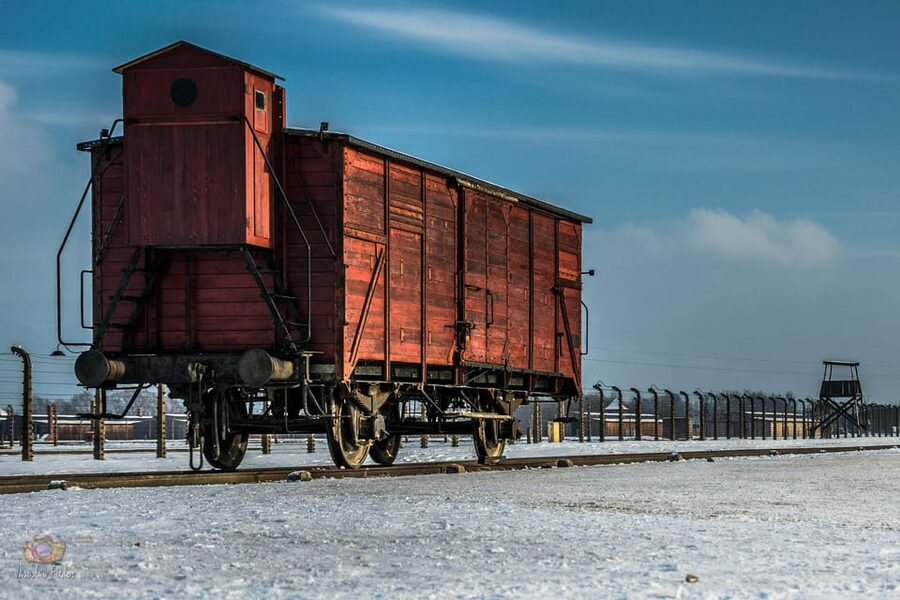
You see the remains of barracks, gas chambers, and crematoria. You also stand near the railway platform where prisoners were selected for forced labor or immediate death. The guide explains what happened at this site and how it relates to the wider camp system.
The open setting and surviving structures require careful attention. Rather than relying on a single museum display, you are looking at the physical layout of the camp and listening to the guide connect the railway, barracks, and ruins. The private group can make it easier to pause, ask a question, or stay together during this part.
The 90-minute visit is enough to cover the key points, but it is not unlimited. The memorial controls the pace and duration of the tour. If you hope to linger at every location, take extensive photographs, or spend long periods alone, this organized visit may feel structured.
That structure also has a benefit. Auschwitz-Birkenau is a large and emotionally demanding place. A guide helps keep the visit focused and prevents you from missing the main sections during the time available.
What the private guide adds
The guide is assigned only to your party of up to 30 people. That does not mean the guide can change every site rule or extend the visit whenever you wish. It does mean your questions stay within one group, and the commentary is not shared with a large mixed audience.
This was the most strongly praised part of the available feedback. One person described the guide as very well informed and said the explanations clarified how things were at the time. That is exactly where a guide earns the fee: not by adding entertainment, but by giving clear context to a disturbing and complex place.
The guide can explain the exhibits at Auschwitz I and the remains at Birkenau in your chosen language. If a subject is unclear, you can ask directly. That personal exchange is particularly useful for families or small groups with different levels of prior knowledge.
For a party of 20 to 30, private guiding may be especially helpful. In a large group, quiet voices and short questions can get lost. Here, the guide’s attention stays with your party, though the site’s own rules still determine the walking pace.
Is $517 per person good value?
At $517 per person, this is not a budget visit. You are paying for private round-trip transportation from Kraków, a private guide, a skip-the-ticket-line entrance arrangement, and the convenience of having the vehicle wait for your return.
For one or two people, the price is hard to defend on cost alone. A shared outing may offer a lower rate if you do not need a private vehicle or exclusive guide. This tour makes more financial sense when several people are splitting the vehicle and value privacy, direct pickup, and the ability to stay together.
The price also buys time and simplicity. You do not have to arrange separate transport to the memorial, find the entrance, or organize the return journey after an emotionally heavy day. Your driver takes you back to Kraków, giving your group a private space to process the visit.
The value depends on your priorities. If the main goal is the lowest possible price, this is probably the wrong choice. If you have a larger group, need a particular guide language, or want the day organized from door to door, the extra cost may be reasonable.
Timing, clothing, and what to carry
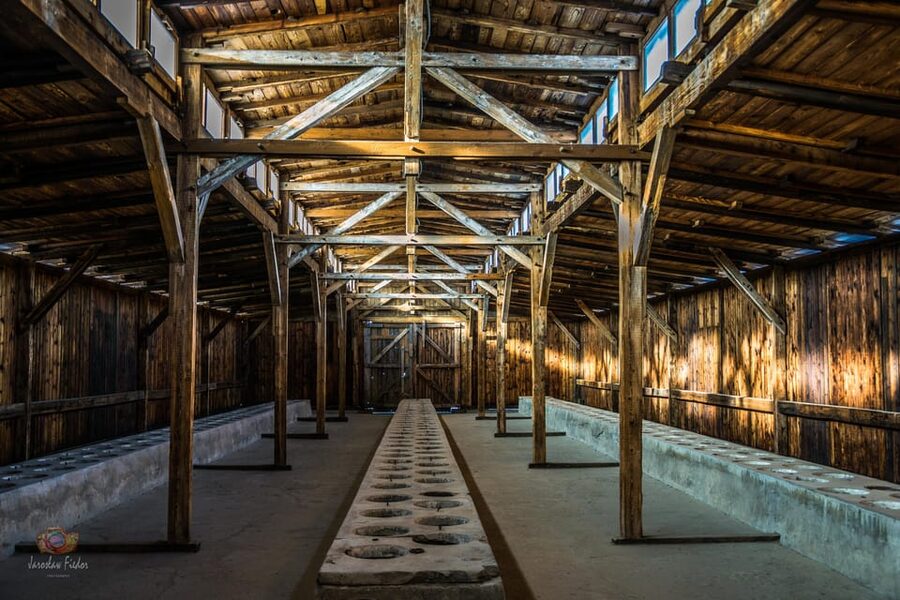
The advertised duration is seven hours. Within that time, the guided portions total about 3.5 hours: two hours at Auschwitz I, a short break, and 1.5 hours at Auschwitz II-Birkenau. The rest covers pickup, transport, entry arrangements, and the return to Kraków.
Starting times may range from 5:30 AM to 1:30 PM. An early departure can leave more of your evening free, while a later start may suit you if you do not want a pre-dawn pickup. Since the exact time is confirmed only the day before, keep your Kraków schedule flexible.
Wear comfortable shoes. You will be walking through former camp grounds and museum spaces, and the day is long enough for poor footwear to become a real nuisance. Dress for the weather, since the Birkenau portion includes time outdoors.
Bring your passport or ID card. All participants must provide their full name and contact details when booking, as required by the memorial. Do not bring a large backpack, alcohol, or food and drinks in the vehicle. Smoking in the vehicle is also prohibited.
Pets are not allowed, except for assistance dogs. The activity is not suitable for children under 15 or wheelchair users, so check your group carefully before paying.
Cancellation and possible changes
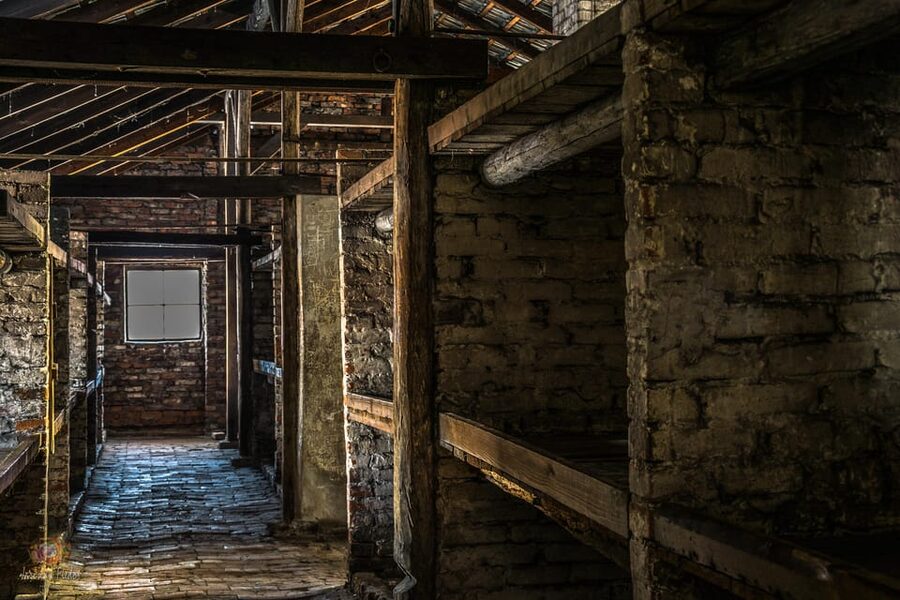
You can cancel up to 24 hours before the tour for a full refund. The reserve-now, pay-later option also gives you some flexibility while your Kraków plans are still taking shape.
The provider may cancel the outing for reasons beyond its control. If that happens, you receive a full refund. The more immediate issue is that the pickup time can change, so keep an eye on your email the day before.
The memorial’s visitor service controls the visit’s pace and break time. Your driver and guide cannot override those decisions. That is worth knowing in advance, especially if you prefer a very precise schedule.
Who should book this Auschwitz tour?
I would recommend this experience to adults and older teenagers who want a serious, guided visit without transport worries. It is particularly suited to groups that value privacy, want a guide in a specific language, or are traveling with up to 30 people.
It also suits you if you prefer a single organized day from Kraków. The pickup, transport, entrance arrangements, guiding, and return are handled as one package.
I would hesitate if you are traveling alone on a tight budget, need wheelchair access, or want complete control over the pace. The fixed memorial schedule and uncertain start confirmation may also frustrate anyone building a tightly timed itinerary.
Should you book it?
Book this tour if private transport and a private guide are worth paying for. The strongest feature is the guide’s clear explanation of a difficult subject, supported by a route that includes both Auschwitz I and Auschwitz II-Birkenau.
Before booking, compare the $517 per-person cost with your group size and ask yourself how much convenience matters. Bring a small bag, prepare for a solemn day, keep your schedule open for the confirmed pickup time, and pack lunch or arrange a lunch box. If those terms suit you, this is a respectful and well-organized way to visit Auschwitz from Kraków.
FAQ
How long does the Auschwitz-Birkenau tour last?
The full experience lasts about seven hours, including pickup from Kraków, transportation, the guided visit, and the return journey.
How much time is spent inside the memorial?
The guided visit lasts about 3.5 hours. Auschwitz I takes about two hours, followed by a short break, and Auschwitz II-Birkenau takes about 1.5 hours.
Is transportation from Kraków included?
Yes. Private round-trip transportation from your accommodation or another chosen pickup place in Kraków is included.
What type of vehicle will be used?
The vehicle depends on your group size. It may be a sedan, van, minibus, or bus.
Is the tour private?
Yes. The guide is assigned only to your group, which can include up to 30 people.
Which languages are available for the guide?
The available languages are English, Italian, French, German, Spanish, and Polish.
Can I bring a large backpack into the museum?
No. Large bags and backpacks are not permitted. The maximum allowed size is 20 by 30 centimeters.
What documents should I bring?
Bring a passport or ID card. All participants must also provide their full name and contact details when booking.
Is the tour suitable for children or wheelchair users?
The activity is not suitable for children under 15 or wheelchair users.
Just added in Krakow
- Auschwitz-Birkenau – Skip the Line Tickets★ 3.5 · 29 reviews
- Auschwitz-Birkenau: Fast-Track Ticket & Guided Tour No Transfers★ 3.5 · 17 reviews
- Zakopane & Sleigh Ride with Bonfire – Group Tour from Kraków★ 5.0 · 2 reviews
- Sleigh Ride & Bonfire in Zakopane with Funicular – Private Trip★ 5.0 · 48 reviews
- Thermal Baths & Zakopane – Private Trip from Krakow★ 5.0 · 1 review
- Zakopane & Gubalowka Funicular – Private Winter Tour from Krakow★ 5.0 · 10 reviews
- Divine Mercy Sanctuary – Private Tour from Krakow★ 5.0 · 4 reviews
- stag dog chase Krakow prank★ 5.0 · 4 reviews