REVIEW · KRAKóW TOURS
Jewish Krakow in German
Krakow’s Jewish story is written into its streets. I like that this German-language walking tour connects Kazimierz’s surviving synagogues with Podgórze, the former Jewish ghetto, instead of treating Jewish Krakow as a single museum visit. I also like the clear focus on meaning, not just monuments.
The tour costs $26 and lasts 150 minutes, a fair price for a guided introduction to two important districts. Guides such as Max have been praised for strong German and solid facts, while one small drawback is that the group may move on before you have had as much time as you want at certain places.
In This Review
- Key points at a glance
- Why Jewish Krakow deserves a full afternoon
- Starting at the Old Synagogue
- Kazimierz and its seven old synagogues
- The wartime story and the move to Podgórze
- A guide-led story in German
- How much the $26 price really buys
- What the 150-minute pace feels like
- The modern Jewish culture of Krakow
- Who will appreciate this walk most
- Practical advice before you go
- Should you book Jewish Krakow in German?
- FAQ
- What language is the tour conducted in?
- How long does Jewish Krakow in German last?
- How much does the tour cost?
- Where does the tour meet?
- Which parts of Krakow does the tour cover?
- Does the tour discuss the Holocaust?
- Is hotel pickup included?
- Can I cancel the booking?
Key points at a glance
- Seven surviving synagogues: Kazimierz’s old Jewish houses of worship help you understand the district’s former importance and artistic character.
- Kazimierz and Podgórze together: You see both the older Jewish quarter and the area used for the Jewish ghetto during World War II.
- A serious German-language tour: The guide covers Jewish culture, wartime destruction, and the present-day revival of Jewish life.
- A carefully shaped story: The route is designed to connect buildings and streets with the people and events behind them.
- Good value at $26: Your fee covers the reservation and the guide’s payment, with no separate tip expected under this arrangement.
Why Jewish Krakow deserves a full afternoon
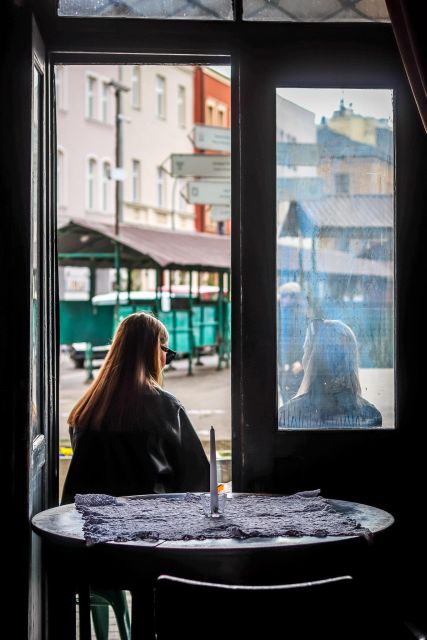
Krakow was once home to one of the largest Jewish communities in the world. Kazimierz was at the center of that community, and its streets still hold a remarkable concentration of synagogues, cemeteries, former community buildings, and reminders of everyday Jewish life.
You will not get the full story from architecture alone. A synagogue can look beautiful, but a guide helps explain its role in worship, education, community affairs, and memory. That context is the main reason I see value in taking this tour rather than simply walking through Kazimierz with a map.
The experience also avoids a common mistake: treating Jewish Krakow as only a story of destruction. The guide discusses the Holocaust and the wartime ghetto, but also the renewed Jewish culture of modern Krakow. Today’s Kazimierz is a cultural center, and a small but active Jewish community remains part of the city.
That balance matters. You will hear about loss, but you will also see that Jewish identity in Krakow did not become only a historical subject. The tour gives you a way to think about the past and the present in the same streets.
A few more in Krakow
- From Krakow: Auschwitz-Birkenau Guided Tour & Hotel Pickup
★ 4.5 · 33,358 reviews - From Krakow: Auschwitz-Birkenau Guided Tour & Hotel Pickup
★ 4.5 · 29,340 reviews - Krakow: Auschwitz Guided Tour with Optional Hotel Pickup
★ 4.5 · 15,280 reviews
Starting at the Old Synagogue
The meeting point is on the stairs in front of the Old Synagogue, on the main street of the Jewish district. Arrive 10 minutes early. This is not a vague street corner or a hotel lobby, but you should still allow time to identify the building and gather with the group.
The Old Synagogue is a fitting place to begin because it puts you directly inside the historic center of Kazimierz. From here, the guide can explain how the district developed as a Jewish community and why its religious buildings matter so much to Krakow’s story.
The opening section covers the historical setting of the local Jewish community. You can expect the guide to connect the streets and buildings around you with the community that once lived, worshipped, worked, and studied here.
This beginning should appeal to you if you want more than a list of dates. The main benefit is the structure: each place becomes part of a larger story rather than an isolated photo stop.
Kazimierz and its seven old synagogues
Kazimierz is the heart of the first part of the walk. Its seven old synagogues survived World War II and the Holocaust, making the district unusually important for anyone interested in Jewish art, architecture, and memory.
The tour does not simply present these buildings as pretty landmarks. Their survival raises harder questions about what was lost, what remained, and how a neighborhood can carry traces of a community that was almost destroyed.
You should expect to view and discuss historic religious buildings rather than move through a long list of interior exhibits. The exact amount of time spent at each place can vary, and one recent assessment found that some stops felt too short. If a particular synagogue or street interests you, make a mental note to return on your own after the walk.
I like this part of the route because it gives you a physical sense of concentration. Seven old synagogues in one historic Jewish quarter make the scale of former community life easier to grasp than a single monument could.
At the same time, you should keep your expectations realistic. This is a 150-minute walking tour with a broad subject. It aims to explain the district, not provide an architectural lecture on every synagogue or a long interior visit at each one.
The wartime story and the move to Podgórze
The emotional weight of the tour increases when the story turns to World War II and the Holocaust. The guide discusses the death and destruction suffered by Krakow’s Jewish community, then leads you toward Podgórze, the area of the former Jewish ghetto.
Podgórze adds an important second setting. Kazimierz shows the older life of the Jewish quarter, while Podgórze preserves the setting in which persecution and forced separation took place. The two districts help you see that the Holocaust was not an event floating somewhere outside the city. It changed specific streets, buildings, and neighborhoods.
The tour points out places connected with what happened in Krakow between 1941 and 1943. You will encounter the original buildings and urban spaces that still carry the memory of the ghetto period.
That part can be difficult, and it should be. The guide’s job here is not to make the subject comfortable. A good explanation helps you understand the human cost without reducing the story to a string of grim facts.
Because the tour covers both Kazimierz and Podgórze, the walking route has a clear historical purpose. You are not simply changing neighborhoods. You are moving from the setting of established Jewish community life to the places shaped by wartime persecution.
Something quite different:
- Krakow–Zakopane: Cable Car, Chocholow Baths, Cheese & Vodka
★ 5.0 · 10,720 reviews - Krakow: Auschwitz-Birkenau Guided Tour with Pickup & Lunch
★ 4.5 · 9,800 reviews - From Krakow: Wieliczka Salt Mine Tour
★ 4.6 · 9,393 reviews - Krakow: Auschwitz-Birkenau Guided Tour Pickup/Lunch Options
★ 4.5 · 9,057 reviews
A guide-led story in German
The language is German throughout, with a live local guide. This is especially useful if you understand German more easily than English and want to discuss a serious subject without struggling to follow every detail.
The strongest praise has focused on the guides’ language and presentation. Max has been singled out for his excellent German and strong command of facts. He was also praised for taking the group to various places and explaining the Kazimierz story with energy and clarity.
Another guide was praised for making the tour informative, varied, and interactive. That last point matters. A walking tour works better when the guide responds to the group rather than delivering a speech while everyone trails behind.
The style appears to be serious but not stiff. One assessment described the tour as both informative and amusing, which can be a strength when handled with care. Humor has a place in a long walking tour, but the Holocaust sections require respect and restraint.
You should also know that individual guide style can vary. The experience depends heavily on who leads your departure. The available feedback suggests a high standard, with an overall rating of 4.8 from 114 ratings, but no walking tour is identical from one guide or group to the next.
How much the $26 price really buys
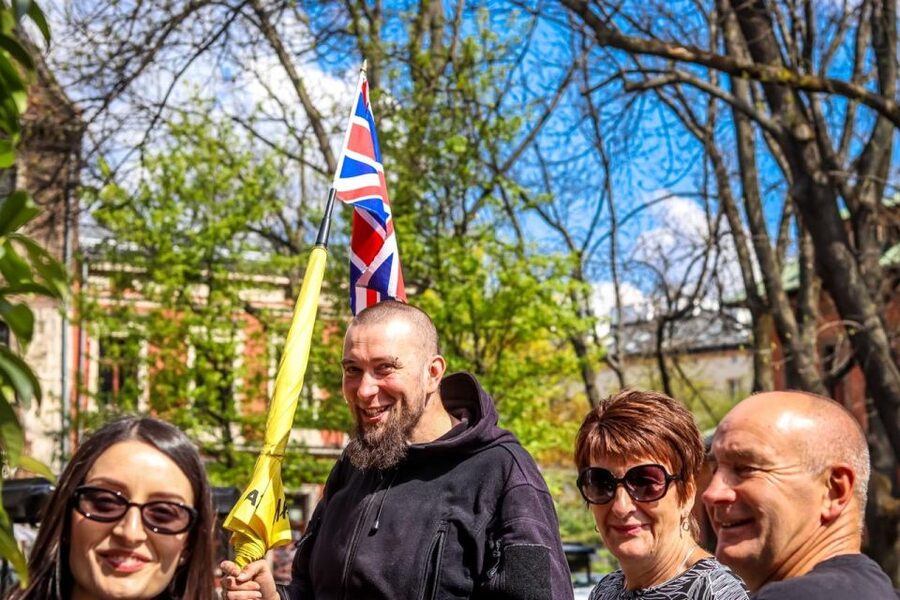
At $26 per person, this is reasonably priced for a 150-minute guided walk through two historically important areas. You are paying for a local guide and a structured account of Jewish Krakow, not transport, food, or entry to a separate attraction.
The unusual point is the payment arrangement. This is described as a general pay-as-you-wish tour, yet the $26 booking fee covers the reservation and the guide’s payment. You should not assume that you will need to add a separate tip simply because the format uses pay-as-you-wish language.
For me, the value rests on the route and the interpretation. You can walk Kazimierz for free, of course. What you cannot easily reproduce is the connection between the seven synagogues, the Jewish community that built and used them, the wartime destruction, Podgórze, and the present-day revival of Jewish culture.
The price is less attractive if you want long visits inside every building or a private tour with a custom pace. One and a half hours is enough for a thoughtful introduction, but not enough for every detail.
No hotel pickup or return transport is included. That is normal for a central walking tour, but you should plan your own way to the Old Synagogue and away from the final stop.
What the 150-minute pace feels like
Two and a half hours is a useful length for this subject. A shorter walk might leave the wartime story thin, while a much longer tour could become tiring, especially when the subject is emotionally heavy.
You should wear comfortable shoes and arrive ready to walk between Kazimierz and Podgórze. The information provided does not specify the exact walking distance, group size, interior access, or route conditions, so I would not plan this as a highly customized or fully seated experience.
The main pacing issue is time at individual sites. One person wanted longer at some locations, and that is easy to understand. Kazimierz contains enough architectural and historical detail to fill much more than 150 minutes.
My practical advice is to treat the tour as your orientation. Listen for the places you want to revisit, then return later if you want quiet time, photographs, or a closer look. That approach works particularly well for a district where the meaning of a building may take time to absorb.
The modern Jewish culture of Krakow
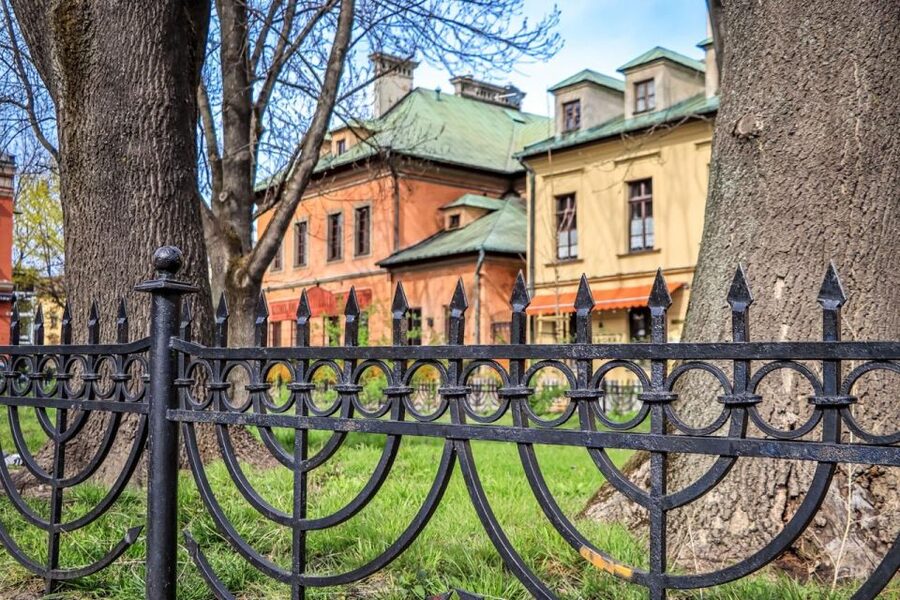
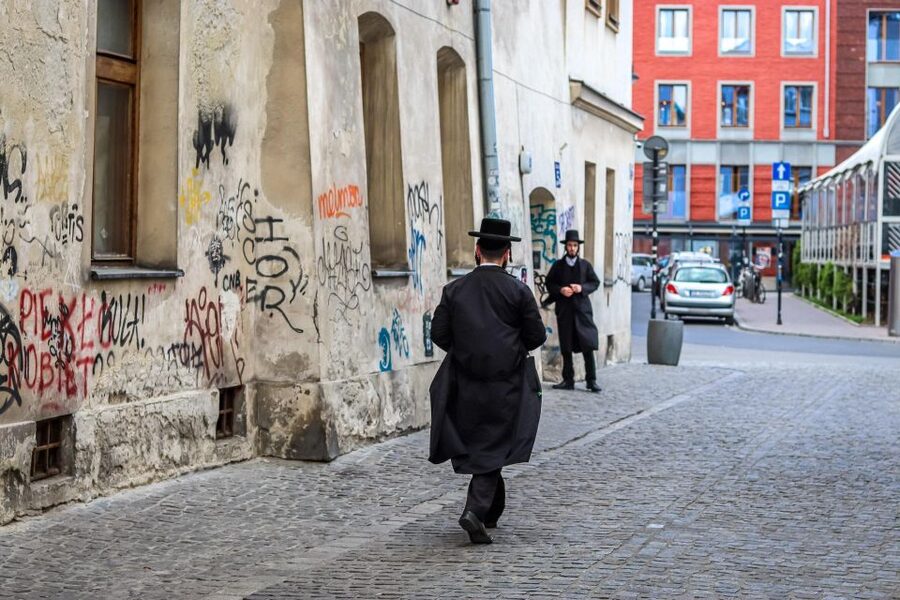
A useful feature of the tour is its attention to Jewish life today. Kazimierz is not presented only as a preserved quarter or a memorial zone. It is also a cultural center of modern Krakow, with a small but lively Jewish community.
That present-day focus gives the walk a needed sense of balance. You will learn about the community that existed before the war, the destruction that followed, and the ways Jewish culture has returned to public life.
The guide’s explanation is valuable here because modern Jewish Krakow can be easy to misunderstand. A visitor might see restaurants, cultural events, and restored buildings without knowing how they relate to the district’s past. The tour helps place contemporary life within that longer story.
I also appreciate that the experience does not suggest that revival erases loss. The new cultural life of Kazimierz exists alongside memorials, damaged histories, and places connected to the ghetto. You are encouraged to hold both realities at once.
Who will appreciate this walk most
I would recommend this tour to you if you want a serious introduction to Krakow’s Jewish heritage in German. It suits first-time visitors who want orientation, as well as returning visitors who have walked Kazimierz before but lacked the historical connections.
It is especially useful for:
- German-speaking adults and families who want a guide rather than a self-guided visit
- Anyone interested in Jewish art, architecture, community life, and memory
- Visitors who want to connect Kazimierz with Podgórze in one route
- People who prefer a broad historical story over a single museum
- Those comfortable spending part of an afternoon on a solemn subject
You may want something else if you prefer a private experience, long interior visits, or a very slow photography walk. You should also consider your energy and mood. The Holocaust material is central, not a brief footnote, and the tour may feel demanding even though the walking time is manageable.
Practical advice before you go
Book this only if German is comfortable for you. The tour depends on spoken explanation, and the subject is too important to follow only in fragments.
Arrive at the Old Synagogue stairs 10 minutes early. Since the meeting point is on the main street of Kazimierz, identifying the exact group before departure will make the start less rushed.
Allow the full 150 minutes. The route covers Kazimierz and Podgórze, and leaving early could mean missing the connection between community life and the former ghetto.
Do not plan a large meal or snack as part of the experience. Snacks are not included, so eat beforehand or arrange food afterward. Also remember that the price does not include hotel collection or return transport.
Free cancellation is available up to 24 hours before the activity, and you can reserve now and pay later. Those terms are useful if your Krakow schedule is still shifting.
Should you book Jewish Krakow in German?
Yes, if you want a thoughtful German-language walk that connects Jewish life before the war, the Holocaust, and modern Krakow. The combination of Kazimierz and Podgórze gives the experience a stronger shape than a tour limited to one district.
The best reason to book is the guide-led interpretation. Max and other guides have been praised for excellent German, strong factual explanations, interaction, and an engaging style. The 4.8 rating from 114 ratings also supports the idea that this is a dependable introduction.
The main caution is pace. You may wish for more time at certain places, and you should not expect an exhaustive visit to every synagogue or a private itinerary.
For $26, I consider it a good-value starting point. Book it early in your Krakow stay, use it to understand the city’s Jewish quarters, then return to the places that speak most strongly to you.
FAQ
What language is the tour conducted in?
The tour is conducted in German with a live guide.
How long does Jewish Krakow in German last?
The tour lasts 150 minutes, or two and a half hours.
How much does the tour cost?
The listed price is $26 per person.
Where does the tour meet?
The group meets on the stairs in front of the Old Synagogue on the main street of Krakow’s Jewish district.
Which parts of Krakow does the tour cover?
The tour covers Kazimierz, the historic Jewish quarter, and Podgórze, the area of the former Jewish ghetto during World War II.
Does the tour discuss the Holocaust?
Yes. The guide discusses the death and destruction of World War II and points out places in Krakow connected with the Holocaust and the former ghetto.
Is hotel pickup included?
No. Hotel collection and return transport are not included.
Can I cancel the booking?
Yes. You can cancel up to 24 hours before the activity for a full refund. You can also reserve now and pay later.
Just added in Krakow
- Auschwitz-Birkenau – Skip the Line Tickets★ 3.5 · 29 reviews
- Auschwitz-Birkenau: Fast-Track Ticket & Guided Tour No Transfers★ 3.5 · 17 reviews
- Zakopane & Sleigh Ride with Bonfire – Group Tour from Kraków★ 5.0 · 2 reviews
- Sleigh Ride & Bonfire in Zakopane with Funicular – Private Trip★ 5.0 · 48 reviews
- Thermal Baths & Zakopane – Private Trip from Krakow★ 5.0 · 1 review
- Zakopane & Gubalowka Funicular – Private Winter Tour from Krakow★ 5.0 · 10 reviews
- stag dog chase Krakow prank★ 5.0 · 4 reviews
- Divine Mercy Sanctuary – Private Tour from Krakow★ 5.0 · 4 reviews
Kraków Tours, compared.

Zakopane: Cable Car, Chocholow Baths, Cheese & Vodka
Read our review →
Wieliczka Salt Mine Guided Tour with Transport
Read our review →
Zakopane Tour with Chocholow Hot Baths and Cable Car
Read our review →
Wieliczka Salt Mine Fast-Track Ticket & Guided Tour
Read our review →
Zakopane, Thermal Springs, Cable Car, Local Tasting
Read our review →