
REVIEW · AUSCHWITZ-BIRKENAU MEMORIAL TOURS
Guided Tour of Plaszow Concentration Camp, Kraków
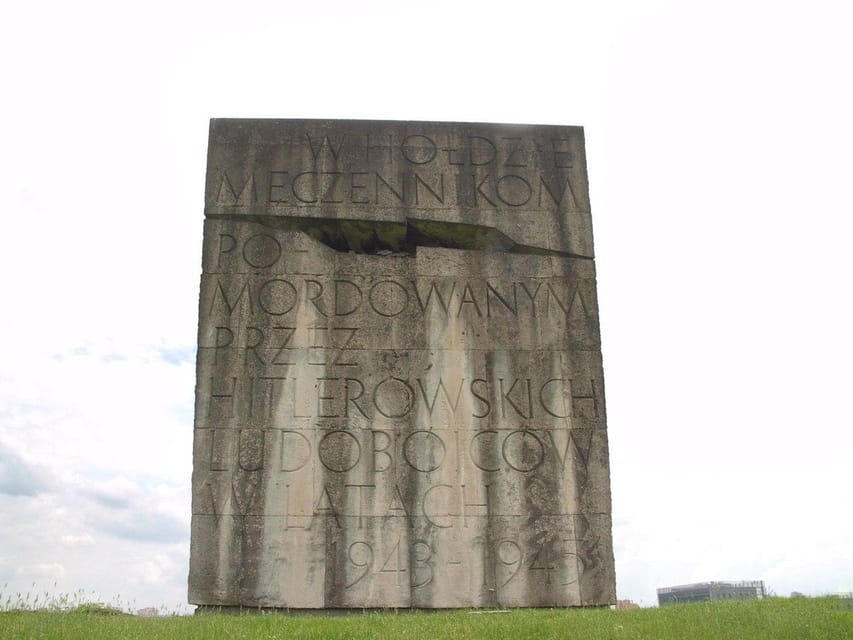
Memory lives in quiet places. Plaszow offers a serious, two-hour walk through the former Nazi German camp, where open ground, memorials, cemetery traces, and a skilled guide help you understand what happened here. The tour also explains the nearby filming locations connected with Schindler’s List.
I like the careful pace, which leaves room to stop, listen, and think. I also like the clear link between Plaszow, Oskar Schindler, and the Jewish prisoners whose work permits helped protect them from deportation. The main consideration is that very little of the original camp remains, so you need to be comfortable using explanation and imagination rather than viewing preserved barracks or rooms.
In This Review
- Key points to know before you book
- Why Plaszow requires a different kind of visit
- The camp’s origins beside Kraków’s Jewish cemeteries
- Entering the former camp through its surviving traces
- Memorials that give the walk its focus
- Oskar Schindler’s connection to Plaszow
- What the two-hour route feels like
- Price, transport, and practical value
- Who will get the most from this visit
- How the customer feedback matches the experience
- Should you book the Plaszow concentration camp tour?
- FAQ
- How long does the Plaszow concentration camp tour last?
- What language is the tour conducted in?
- What is included in the price?
- Where do I meet the guide?
- How early should I arrive?
- Can I cancel the booking?
Key points to know before you book
- This is a two-hour guided walk: The route is paced for reflection rather than a quick checklist of sights.
- The camp is mostly open ground today: You will see memorials, ruins, cemetery traces, and foundations rather than a fully preserved camp.
- Schindler’s story is closely tied to the tour: You will learn how his enamelware business employed Jewish prisoners registered through Plaszow.
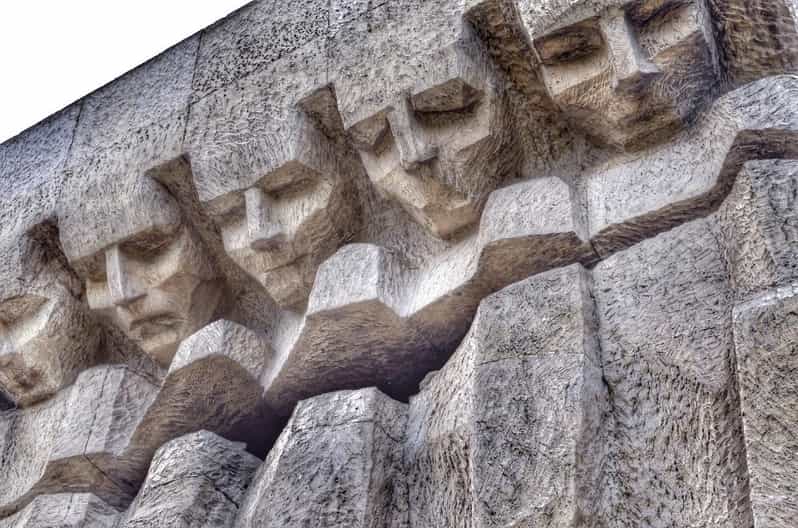
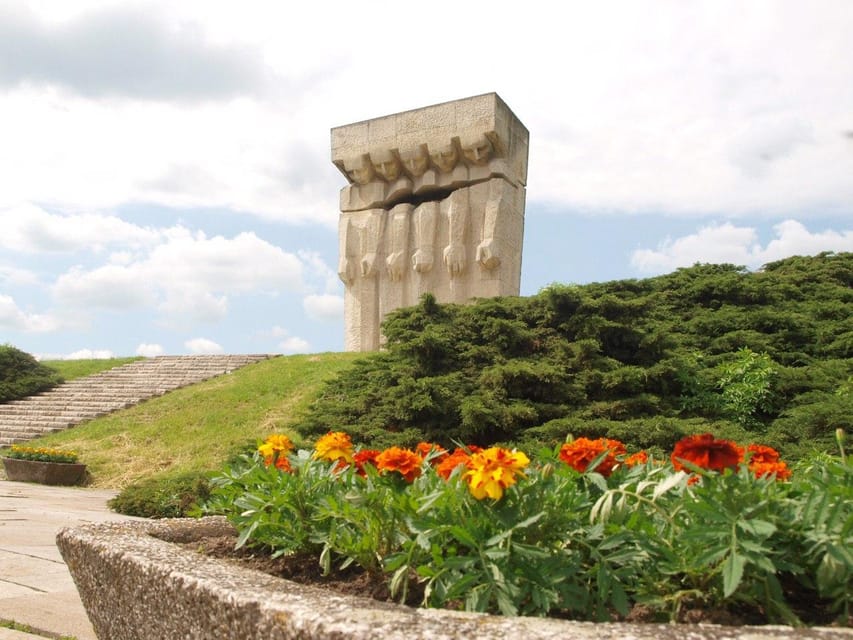
- The Monument of Torn-Out Hearts is a major stopping point: It provides one of the clearest moments for honoring those murdered here.
- A tram ticket is included: The price covers a licensed English-speaking guide and one tram ticket.
- Arrive 10 minutes early: Look for the guide holding an excursions.city sign. Late arrivals cannot join once the group has left.
Why Plaszow requires a different kind of visit
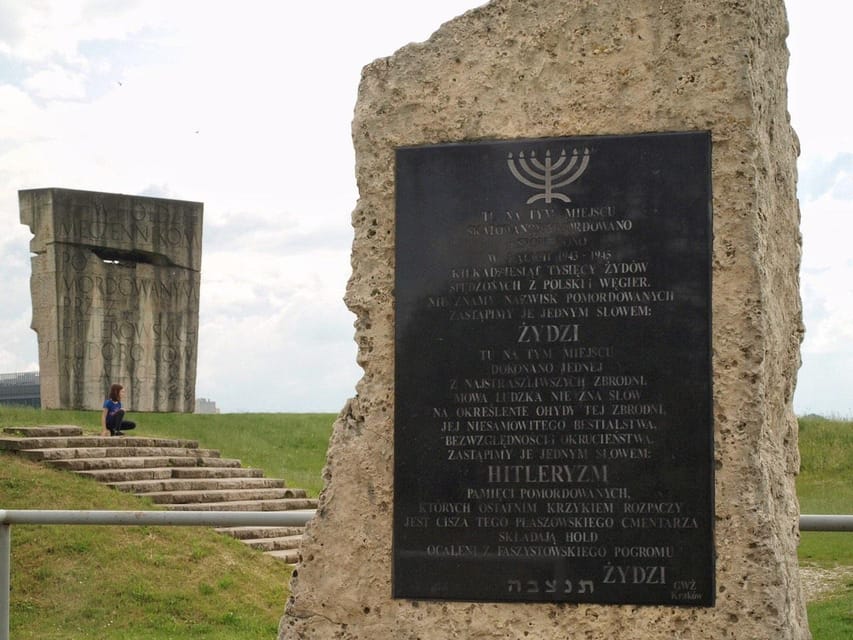
Plaszow does not offer the visual clarity of a museum with rooms, displays, and rows of surviving buildings. Its story is spread across open ground on the outskirts of Kraków, with only fragments of the former camp still visible.
That can make the place harder to understand on your own. A path may look like an ordinary track. A low ruin may seem easy to overlook. A patch of ground may carry the memory of executions or mass graves. The guide’s job is to connect these quiet clues to the camp that once occupied the area.
I find this approach valuable because it prevents the visit from becoming a simple walk among ruins. You are asked to picture how the camp was organized, where prisoners lived, and how the German authorities used the site for forced labor, punishment, imprisonment, and murder.
This is also a place for reflection rather than spectacle. The silence and lack of preserved structures can feel stark, but they keep the focus on the people who suffered here instead of on dramatic scenery.
More Auschwitz-Birkenau memorial tours:
- From Krakow: Auschwitz-Birkenau Guided Tour & Hotel Pickup
★ 4.5 · 33,358 reviews - From Krakow: Auschwitz-Birkenau Guided Tour & Hotel Pickup
★ 4.5 · 29,340 reviews - Krakow: Auschwitz Guided Tour with Optional Hotel Pickup
★ 4.5 · 15,280 reviews
The camp’s origins beside Kraków’s Jewish cemeteries
Plaszow was established in October 1942 by the Nazi German occupiers on the grounds of two Jewish cemeteries. It first served as a forced-labor camp for Jewish people from the Kraków Ghetto after the ghetto was liquidated.
That setting matters. The camp was not built on an empty patch of land with no connection to the city. It occupied a place already linked to Kraków’s Jewish community, and the destruction of the cemeteries became part of the camp’s physical story.
From July 1943, the site also included a penal-labor section for Polish prisoners. In January 1944, Plaszow was redesignated as a concentration camp. It later became a transit camp for Hungarian Jews being sent to Auschwitz.
More than 35,000 people were imprisoned at Plaszow during its existence. Around 6,000 were murdered. Executions took place at several places within the camp, and mass graves now form part of the memorial story you hear on the walk.
A guide helps you keep these changes in order. Without that explanation, it would be easy to treat Plaszow as one fixed institution. In reality, its role changed as Nazi policy grew more brutal and as prisoners were moved, exploited, punished, and killed.
Entering the former camp through its surviving traces
The route brings together the few physical remains that still help you picture Plaszow. The Grey House is one of the key structures. Its presence gives you a rare sense of the camp’s former built environment, even though Plaszow is now largely open ground.
You also visit the ruins of the pre-burial hall. This stop is especially sobering because it connects the former cemetery area to the camp’s later use and to the treatment of victims after execution.
Traces of the Jewish cemeteries remain important throughout the walk. Some paths were paved with fragments of gravestones, an act that turned Jewish memorial stones into building material for the camp. That detail says a great deal in very few words: the site was used not only to imprison people, but also to erase signs of the community that had lived and worshipped there.
The roll-call square helps explain camp routine. This was a place where prisoners were assembled and counted, part of the daily system of control. Your guide also explains how the camp was divided into living, hospital, administrative, and industrial areas.
You should not expect every section to be marked by a visible structure. The value comes from learning how the separate parts fitted together and how prisoners experienced the camp as a working system of confinement.
Memorials that give the walk its focus
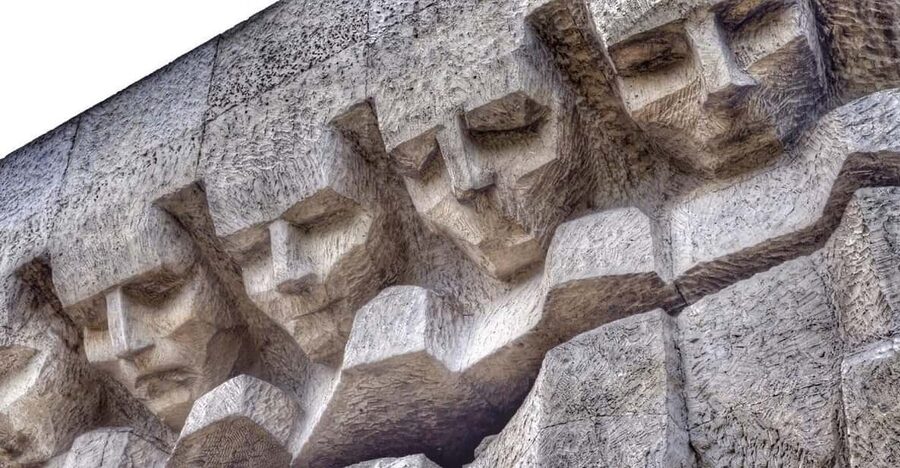
The tour pauses at major memorials instead of treating them as quick photo stops. The most striking is the Monument of Torn-Out Hearts, which honors the people murdered at Plaszow.
A memorial can never tell the whole story, but it gives the mind a fixed point. After hearing about forced labor, roll calls, executions, and transports, you have a place to pause and honor the victims directly.
The route also refers to mass graves and execution sites across the former camp. These are not presented as dramatic attractions. The tone is respectful, and the open setting gives you time to consider how much violence took place in a location that today may appear quiet.
I appreciate that the tour does not try to fill every pause with talk. Reviews of the experience repeatedly praise the guide’s explanations and willingness to answer questions. One French-speaking customer described the guide as passionate and said the detailed account helped make the camp understandable. That is exactly what you need here: clear facts, but also enough silence to process them.
A few more in Krakow
- Krakow–Zakopane: Cable Car, Chocholow Baths, Cheese & Vodka
★ 5.0 · 10,720 reviews - Krakow: Auschwitz-Birkenau Guided Tour with Pickup & Lunch
★ 4.5 · 9,800 reviews - From Krakow: Wieliczka Salt Mine Tour
★ 4.6 · 9,393 reviews - Krakow: Auschwitz-Birkenau Guided Tour Pickup/Lunch Options
★ 4.5 · 9,057 reviews
Oskar Schindler’s connection to Plaszow
Schindler’s story is often the best-known route into this part of Kraków’s wartime past, thanks to Steven Spielberg’s Schindler’s List. The tour explains the story without allowing the film to replace the history.
Oskar Schindler operated an enamelware business that employed Jewish prisoners registered through Plaszow. By obtaining work permits, he helped shield them from further transports. Later, he arranged for their transfer to his wartime plant in Brünnlitz, where more than a thousand lives were saved.
This connection helps explain why Plaszow appears in accounts of Schindler’s actions. His factory and the people he protected cannot be separated from the camp system that supplied labor and controlled Jewish prisoners.
You will also learn about filming locations associated with Schindler’s List. This is useful for film fans, but the tour keeps the real victims and the actual camp at the center. The movie can help you recognize places and raise questions, but it cannot show the full history of Plaszow.
I like that balance. You get the popular connection, then move beyond the film to the camp’s Polish prisoners, industrial sections, hospital area, cemetery traces, and execution sites.
What the two-hour route feels like
Two hours is a good length for this subject. A shorter visit could leave you with dates and names but little sense of how the camp functioned. A much longer walk might be difficult emotionally, especially because the material is so grim.
The pace is deliberately unhurried. You have time to listen at memorials, ask questions, and look at the ground rather than rushing from one marker to the next. That matters at Plaszow because the site does not announce its meaning at every turn.
The guide has to do several jobs at once:
- Explain the camp’s changing purpose from 1942 onward
- Identify the remaining structures and cemetery traces
- Describe the camp’s internal sections
- Place executions and mass graves within the site
- Explain Schindler’s role without simplifying the wider system
- Help you understand the film locations in their real setting
The strongest part of the experience is the guide’s role. Several customer ratings give the tour five stars, with particular praise for explanations, passion, accuracy, and patience with questions. A small group can make this especially useful because you may have more time to ask about details that are difficult to understand from a sign alone.
The group tour is conducted in one language only, and the available language for this experience is English. Choose carefully when booking, since you will not be placed into a mixed-language group.
Price, transport, and practical value
At $29 per person, this is a reasonable price for a licensed guide, a two-hour visit, and one tram ticket. The value depends on what you want from Plaszow.
If you only want to walk around the former camp and read a few memorials, you may prefer a self-guided visit. But you would miss the connections between the Grey House, cemetery remains, the roll-call square, the camp divisions, and the execution sites. You would also have to build the chronology yourself.
For me, the guide is the main reason the price makes sense. Plaszow is not a site where every important detail is obvious. You are paying for structure, historical explanation, and the chance to ask questions while standing in the place being discussed.
A single tram ticket is included, which removes one small transport cost and makes the meeting arrangements easier. The exact starting time varies, so check availability for the day you want. Arrive at least 10 minutes before departure and find the guide holding an excursions.city sign.
This rule is worth taking seriously. Once the group has left, latecomers cannot join and the ticket cannot be refunded. The experience is wheelchair accessible, another useful point for planning, though the tour takes place around an open former camp site rather than inside a modern museum.
You can cancel up to 24 hours in advance for a full refund. The reserve-now, pay-later option also helps if your Kraków plans are still moving around.
Who will get the most from this visit
This tour suits you if you want a guided account of Kraków during the Holocaust and are willing to spend two quiet hours with difficult material. It is a good choice for anyone who wants more context than a film or a brief memorial visit can provide.
It works particularly well for:
- Visitors interested in Jewish history and Kraków’s wartime past
- People who want to understand the real setting behind Schindler’s List
- First-time visitors to Plaszow who would find the open site confusing alone
- Those who value memorials, explanation, and time for thought
- Visitors who prefer a small-scale historical walk to a busy museum visit
This may not be the right choice if you want a large collection of artifacts, preserved rooms, or an indoor exhibition. Plaszow offers few intact buildings, and the experience depends on your willingness to listen and picture what is no longer there.
It is also serious material. I would not plan it as a light activity between lunch and shopping. Give yourself some quiet time afterward if possible, since the story includes mass murder, forced labor, cemetery destruction, and the deportation of prisoners to Auschwitz.
How the customer feedback matches the experience
The strongest praise centers on the guides. The five-star comments describe guides who were passionate, accurate, generous with explanations, and ready to answer questions. One person had a private-feeling experience because the group was very small, allowing the guide to respond to every question in detail.
That is a useful clue about what makes this tour succeed. The buildings cannot carry the visit on their own. The quality of the explanation matters greatly, and the available feedback gives that part a strong score of 4.8 from seven ratings.
The one four-star rating still describes the tour as very interesting, well explained, and moving. That feels like a fair picture: the experience is highly praised, but its emotional weight and lack of preserved buildings may not suit every visitor in the same way.
You should book for the guide’s interpretation, not for a long list of visible monuments. If you understand that before arriving, you are more likely to find the visit meaningful.
Should you book the Plaszow concentration camp tour?
I would book this tour if you want a thoughtful, well-explained introduction to Plaszow and do not need a traditional museum setting. The $29 price is fair for the licensed guide, included tram ticket, clear historical structure, and time to ask questions.
The tour is especially worthwhile if Schindler’s List brought you to Kraków but you want to understand the real people and events behind the film. It also suits you if memorial visits matter more than photographs or preserved architecture.
Skip it if you are looking for a quick sightseeing stop or a site filled with intact camp buildings. Plaszow asks you to slow down, listen closely, and use the remaining traces to understand what happened. For the right visitor, that quiet approach is the point.
FAQ
How long does the Plaszow concentration camp tour last?
The guided tour lasts two hours.
What language is the tour conducted in?
The live guided tour is conducted in English. Group tours are offered in one language, so select English when booking.
What is included in the price?
The experience includes a licensed guide and one tram ticket.
Where do I meet the guide?
Look for the guide holding an excursions.city sign at the designated meeting point.
How early should I arrive?
Arrive 10 minutes before the tour begins. Once the group has departed, latecomers cannot join and tickets cannot be refunded.
Can I cancel the booking?
Yes. You can cancel up to 24 hours in advance for a full refund. You can also reserve now and pay later.
Just added in Krakow
- Auschwitz-Birkenau – Skip the Line Tickets★ 3.5 · 29 reviews
- Auschwitz-Birkenau: Fast-Track Ticket & Guided Tour No Transfers★ 3.5 · 17 reviews
- Zakopane & Sleigh Ride with Bonfire – Group Tour from Kraków★ 5.0 · 2 reviews
- Thermal Baths & Zakopane – Private Trip from Krakow★ 5.0 · 1 review
- Zakopane & Gubalowka Funicular – Private Winter Tour from Krakow★ 5.0 · 10 reviews
- Sleigh Ride & Bonfire in Zakopane with Funicular – Private Trip★ 5.0 · 48 reviews
- Divine Mercy Sanctuary – Private Tour from Krakow★ 5.0 · 4 reviews
- stag dog chase Krakow prank★ 5.0 · 4 reviews