
REVIEW · AUSCHWITZ-BIRKENAU MEMORIAL TOURS
Guided Tour in Kraków-Płaszów Former Concentration Camp
Kraków’s darkest site sits in plain sight. This two-hour walk links Ghetto Heroes Square with the former Płaszów concentration camp and a surviving fragment of the Kraków Ghetto wall, giving you a clear picture of how the city’s wartime story unfolded. I like the thoughtful route and the chance to see a place many Kraków visitors miss.
I also like the small-group limit of 25 and the strong record of five-star feedback, including special praise for guide Olga, who helped a small group with tram tickets as well as the history. The main consideration is that Płaszów is an open, uneven area with few visible structures, so this tour depends heavily on your guide’s explanations rather than on preserved buildings.
In This Review
- Key points at a glance
- Why Płaszów deserves time in Kraków
- Starting at Ghetto Heroes Square
- Walking toward Płaszów
- Understanding the former Płaszów camp
- The surviving ghetto wall fragment
- What the $30.01 price buys you
- Timing, meeting point, and practical planning
- Who will get the most from this tour
- How to make the visit meaningful
- Should you book the Płaszów guided walk?
- FAQ
- How long does the guided Płaszów tour last?
- Where does the tour begin?
- Where does the tour end?
- Is the tour offered in English?
- How many people can join the tour?
- Can I cancel for a full refund?
Key points at a glance
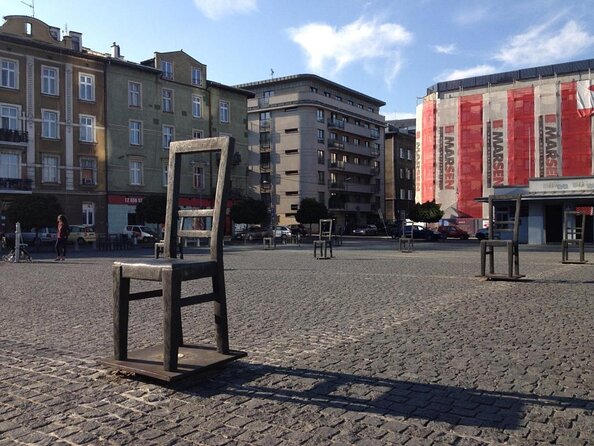
- The tour begins at Ghetto Heroes Square, where 70 metal chairs form a powerful memorial to the people forced from the Kraków Ghetto.
- Płaszów is close to central Kraków, yet its wartime role is easy to miss amid modern roads, shops, and housing.
- The two-hour route connects several sites, including the former camp and a 12-meter fragment of the original ghetto wall.
- Guide quality matters here, and Olga receives particular praise for her preparation, kindness, and practical help.
- The group can include up to 25 people, though a smaller group may offer a more personal experience.
- The price is $30.01 per person, with free cancellation available up to 24 hours before the start.
Why Płaszów deserves time in Kraków
Many people use Kraków as a base for Auschwitz, and that is understandable. But the city itself has important Holocaust sites, too. Płaszów was a German Nazi concentration camp in Kraków’s Podgórze district, close to places you might otherwise pass without a second thought.
That setting gives the tour much of its force. The camp area is not presented as a polished museum complex with rows of intact barracks. It is a broad, mostly undeveloped stretch of ground near Wielicka Street, opposite the Bonarka shopping center and not far from Krakus Mound. Modern Kraków presses in around it.
I find that contrast useful. It reminds you that historic places do not always announce themselves. You can be near a main road, public transport, and a major shopping center while standing on ground tied to some of the city’s most painful events.
The site can also be difficult to understand without guidance. Its open spaces and limited surviving structures do not explain themselves. A guide supplies the names, dates, connections, and human context that turn an otherwise quiet walk into a meaningful visit.
More Auschwitz-Birkenau memorial tours:
- From Krakow: Auschwitz-Birkenau Guided Tour & Hotel Pickup
★ 4.5 · 33,358 reviews - From Krakow: Auschwitz-Birkenau Guided Tour & Hotel Pickup
★ 4.5 · 29,340 reviews - Krakow: Auschwitz Guided Tour with Optional Hotel Pickup
★ 4.5 · 15,280 reviews
Starting at Ghetto Heroes Square
The tour starts at Apteka pod Orłem, at Plac Bohaterów Getta 18. This is a practical meeting point because the square is a major historical marker in Podgórze and is close to public transportation.
The square was once called Plac Zgody. After the war, its name changed to Ghetto Heroes Square, and a small memorial was added. For years, though, the space suffered neglect and was used as a public toilet and parking area. Its later renovation in 2005 sparked debate about the design.
Today, the square is marked by 70 large metal chairs, spaced across the open pavement. The chairs represent departure and absence. They are simple objects, but the empty seats make the place feel personal rather than abstract. You are not just looking at a plaque or statue. You are looking at a public space shaped around the idea of people leaving and not returning.
Your guide can explain how the square fits into the wider story of the Kraków Ghetto. That context matters because the memorial does not spell out every detail. Without explanation, you may notice the chairs but miss why they are arranged this way.
I suggest arriving with enough time to look around before the walk begins. The square is not a long stop, but it rewards a quiet pause. The nearby Apteka pod Orłem address also connects the meeting point to the city’s wartime story, making it a fitting place to begin.
Walking toward Płaszów
From Ghetto Heroes Square, the tour moves toward the former Płaszów camp. The route crosses from a defined urban memorial into a much less obvious site. That change is one of the most important parts of the experience.
Płaszów is in Podgórze, on the other side of the river from much of Kraków’s central sightseeing area. It is near Wielicka Street, opposite Bonarka shopping center, and within reach of Krakus Mound. The location may surprise you. This is not an isolated rural memorial far from daily life. It is part of the city.
The guide’s role becomes especially important during this section. You need help connecting the present-day surroundings with the wartime function of the area. The open ground does not offer a neat sequence of preserved rooms or exhibition panels. Instead, you walk through a place where the story must be reconstructed through explanation.
That can be both a strength and a limitation. If you prefer museums with extensive displays, documents, and indoor exhibits, this may feel spare. If you value standing in the actual setting and hearing the place explained as you go, the lack of heavy development can make the visit more direct.
The walking surface is described as uneven, so choose sensible footwear. The tour lasts about two hours, and the Płaszów portion takes roughly an hour. You should be ready for an outdoor visit rather than a comfortable indoor museum stop.
Understanding the former Płaszów camp
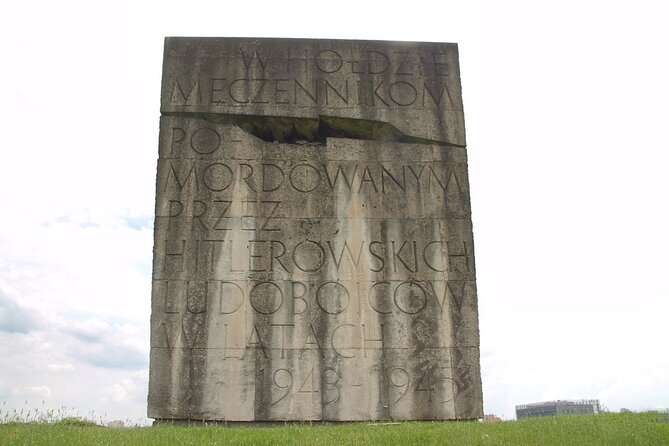
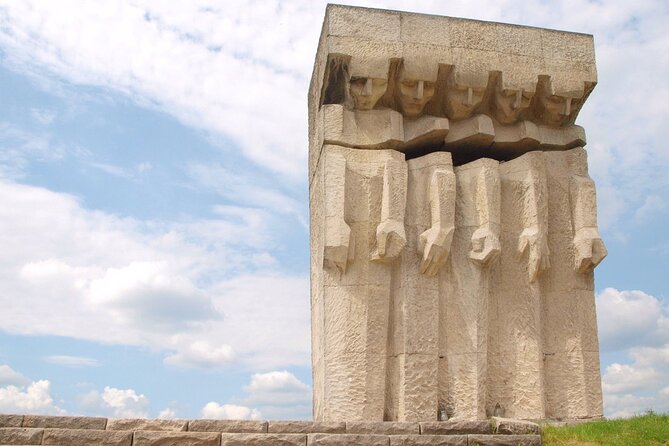
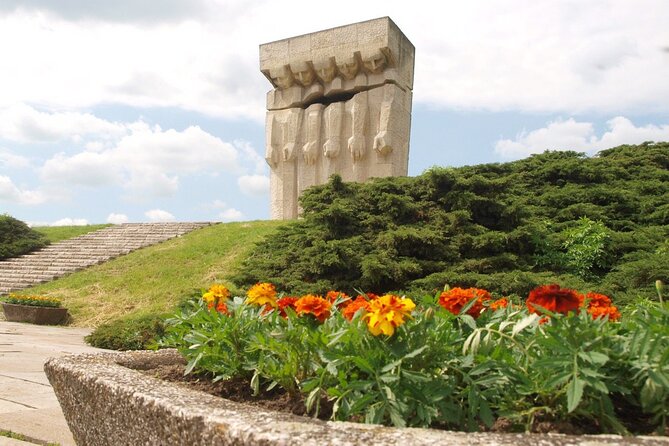
At the former camp, your guide provides the main historical framework. Płaszów was the site of the German Nazi concentration camp known as Konzentrationslager Plaszow bei Krakau. Today, much of the area appears wild and open, with little to indicate what happened there.
That lack of obvious remains is exactly why a guided visit helps. A guide can point out the significance of the area and explain how Kraków’s Jewish population was affected during the Holocaust. The value lies less in ticking off visible structures and more in learning how the camp fitted into the city’s wartime system.
I would approach this part with patience. The site may not deliver instant visual drama. You may see open ground rather than a building that tells you what you are looking at. The experience asks you to listen, picture the past, and allow the guide’s account to shape your understanding.
The supplied information does not identify every specific point within the camp area, so I would not expect a fixed set of preserved buildings or a large display. What you can expect is a guided walk through the former camp grounds, with historical events explained and placed in context.
That makes the guide a major part of the value. Olga is praised for being very well prepared and kind, and for helping with tram tickets when needed. A small group of three made that particular visit feel especially personal. The official group limit is 25, so the atmosphere may vary by date, but the cap still keeps the tour from becoming a very large crowd.
A few more in Krakow
- Krakow–Zakopane: Cable Car, Chocholow Baths, Cheese & Vodka
★ 5.0 · 10,720 reviews - Krakow: Auschwitz-Birkenau Guided Tour with Pickup & Lunch
★ 4.5 · 9,800 reviews - From Krakow: Wieliczka Salt Mine Tour
★ 4.6 · 9,393 reviews - Krakow: Auschwitz-Birkenau Guided Tour Pickup/Lunch Options
★ 4.5 · 9,057 reviews
The surviving ghetto wall fragment
After the camp visit, the route passes a 12-meter fragment of the original Kraków Ghetto wall. This is one of the clearest physical remains connected with the ghetto.
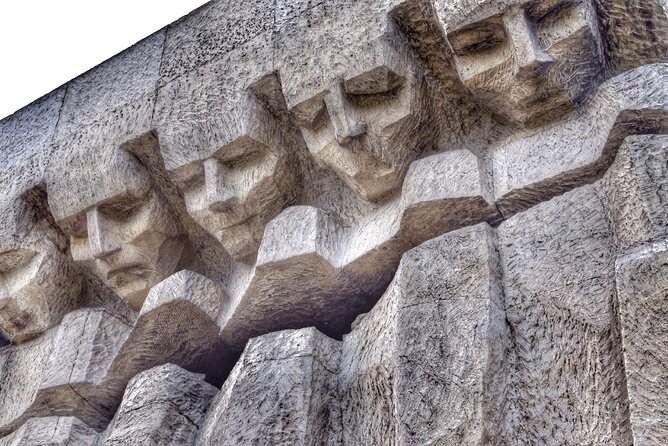
A commemorative plaque added in 1983 carries text in Hebrew and Polish. It records that people lived, suffered, and died there under German persecution, and that from this place they began their final journey to the death camps.
The wall fragment is modest in size, but that is part of its impact. You are not seeing an entire fortified district. You are seeing a surviving piece of a boundary that once controlled movement and separated people from the rest of the city.
This stop also gives the tour a useful visual anchor. Ghetto Heroes Square presents absence through empty chairs. The wall fragment presents confinement through stone and mortar. Together, the sites help you understand the Kraków Ghetto in two different ways.
The stated end point is on Henryka Kamieńskiego Street, at the bus stop at number 57. That means the tour does not return to its starting point. Keep the ending location in mind when planning your next stop. The end point is at or near public transportation, which makes it easier to continue around Kraków.
What the $30.01 price buys you
At $30.01 per person, this is not the cheapest way to see a memorial site, especially since admission to the former camp area is listed as free. But the price pays for more than access to open ground. It pays for a guide who explains connections that are easy to miss when walking alone.
That distinction matters at Płaszów. You can reach the area without paying for a formal entrance ticket, but you may struggle to identify what you are seeing or understand how the different sites fit together. A good guide saves you from relying on guesswork.
The price also covers a two-hour route linking three important locations: Ghetto Heroes Square, the former camp, and the ghetto wall fragment. You are getting a compact history walk rather than a single-site stop.
The value is strongest if you want context and structure. It is less compelling if you prefer to explore memorials independently, read at your own pace, or spend more time at each site. The group size can reach 25, so the most intimate experience is not guaranteed. Still, the current record of 5 out of 5 from 19 ratings, with 100 percent recommending the experience, points to consistent satisfaction.
Timing, meeting point, and practical planning
The tour is offered in English and uses a mobile ticket. Confirmation arrives at booking, so you should have the meeting details ready on your phone.
The starting point is Apteka pod Orłem, Plac Bohaterów Getta 18, in Kraków. The ending point is Henryka Kamieńskiego 57, at the bus stop on Kamienskiego Street. Since you finish somewhere different from where you begin, avoid leaving a bag or other item at the starting point.
The tour is near public transportation, and Olga’s help with tram tickets shows that transport questions can be handled during the visit. Still, I would check your route to the meeting point in advance so you are not rushed at the start.
Most people can take part, according to the supplied participation information. The uneven ground at Płaszów remains worth considering, particularly if you prefer smooth paved paths. The experience is outdoors, and the two-hour duration means you should dress for the weather and wear shoes suitable for walking.
The tour is usually booked 29 days ahead on average. That does not guarantee that every date sells out, but it suggests that advance planning is sensible, especially if your Kraków schedule is fixed.
Who will get the most from this tour
I would recommend this walk to you if you want to understand Kraków’s Holocaust history beyond the best-known destinations. It is especially useful if you plan to visit Auschwitz but also want to learn about the city where you are staying.
It suits visitors who appreciate historical explanation, quiet memorials, and real locations rather than elaborate attractions. The route is also a good fit if you want a short, focused experience that takes about two hours rather than a full-day excursion.
You may want to choose another format if you need extensive indoor exhibits, a fully preserved camp complex, or a highly visual presentation. Płaszów is a difficult place to read without assistance, and the tour’s success depends heavily on the guide’s ability to make the site understandable.
Families and younger visitors may need to decide carefully based on their interest and comfort with the subject. The experience deals with tragic events, and the setting is solemn. It is not a light sightseeing stop.
How to make the visit meaningful
Before you arrive, take a few minutes to learn the three names used along the route: Ghetto Heroes Square, Płaszów, and the Kraków Ghetto wall fragment. Knowing the basic sequence will help you follow the guide’s explanation.
At the square, look at the chairs as a group rather than as separate objects. The design is intentionally spare, and the empty spaces matter. At the wall, read the plaque slowly. Its short wording gives the site a direct human meaning.
At Płaszów, do not judge the stop by how many structures remain. The absence of visible buildings is part of the challenge. Listen for how the guide identifies the area and connects it with Kraków’s wartime experience.
I also suggest leaving room in your schedule afterward. The tour ends near Henryka Kamieńskiego 57, not back at the square. You may want a quiet pause before moving on, especially after a visit focused on persecution and mass death.
Should you book the Płaszów guided walk?
Book it if you want a well-organized introduction to Kraków’s Holocaust sites and prefer historical context over sightseeing alone. The route is compact, the price is reasonable for a two-hour guided experience, and the strong five-star record supports the value, especially when a skilled guide such as Olga leads the group.
Skip it if you want a large museum, extensive preserved buildings, or a self-guided visit with plenty of printed information. Płaszów is open, uneven, and visually understated.
For most visitors interested in Kraków’s wartime past, I think the guided format is the better choice. It helps you see why an apparently ordinary patch of ground, a row of empty chairs, and a short wall fragment belong together in the city’s story.
FAQ
How long does the guided Płaszów tour last?
The experience lasts approximately two hours. The visit to the former Płaszów concentration camp takes about one hour, with time also spent at Ghetto Heroes Square and the ghetto wall fragment.
Where does the tour begin?
The tour begins at Apteka pod Orłem, Plac Bohaterów Getta 18, 33-332 Kraków, Poland.
Where does the tour end?
The tour ends at Henryka Kamieńskiego 57, 30-644 Kraków, at the bus stop on Kamienskiego Street.
Is the tour offered in English?
Yes. The experience is offered in English and uses a mobile ticket.
How many people can join the tour?
The maximum group size is 25 people. A smaller group may be possible on some departures, but the stated limit is 25.
Can I cancel for a full refund?
Yes. You can cancel at least 24 hours before the experience start time for a full refund. Cancellations or changes made less than 24 hours before the start are not accepted for a refund.
Just added in Krakow
- Auschwitz-Birkenau – Skip the Line Tickets★ 3.5 · 29 reviews
- Auschwitz-Birkenau: Fast-Track Ticket & Guided Tour No Transfers★ 3.5 · 17 reviews
- Zakopane & Sleigh Ride with Bonfire – Group Tour from Kraków★ 5.0 · 2 reviews
- Sleigh Ride & Bonfire in Zakopane with Funicular – Private Trip★ 5.0 · 48 reviews
- Thermal Baths & Zakopane – Private Trip from Krakow★ 5.0 · 1 review
- Zakopane & Gubalowka Funicular – Private Winter Tour from Krakow★ 5.0 · 10 reviews
- Divine Mercy Sanctuary – Private Tour from Krakow★ 5.0 · 4 reviews
- stag dog chase Krakow prank★ 5.0 · 4 reviews