REVIEW · TOURS
From Krakow: Zalipie Village Day-Tour
Painted flowers turn a Polish village into an open-air gallery. From Krakow, LinkPoland takes you to Zalipie for a private six-hour tour built around hand-painted homes, local folk art, and the people who keep the tradition alive. I especially like the chance to see more than decorated exteriors, including the House of the Female Painters and Felicja Curyłowa Cottage, and I value the personal access guides can sometimes arrange with local artists. The main drawback is the price, $61 per person, which may feel high for a half-day outing if you are traveling alone or as a couple.
The ride in an air-conditioned car keeps the day easy, with hotel or apartment pickup in Krakow and an English-speaking guide who also drives. I also like the flexible, human side of the tour: guides such as Wojtek, Bart, Damian, Alex, and Mateusz have helped visitors meet artists, enter private homes, stop for coffee or ice cream, and adjust the pace for photographs. Food is not included, and Zalipie can have very few food options outside the busy season, so bring water and snacks.
In This Review
- What makes this Zalipie trip worth your time
- Leaving Krakow for the painted countryside
- Why Zalipie paints flowers on everyday buildings
- Three hours among painted houses and farm buildings
- House of the Female Painters and the work behind the flowers
- Felicja Curyłowa Cottage and a famous local name
- Church of St. Joseph and the meeting of faith and folk art
- What the private guide changes
- Is $61 per person a fair price?
- Who should book this half-day outing?
- Final verdict: a strong choice for local culture
- FAQ
- How long does the Zalipie tour from Krakow last?
- Is hotel pickup included?
- Is the tour private?
- What language is the tour conducted in?
- Are food and drinks included?
- What should I wear or bring?
What makes this Zalipie trip worth your time
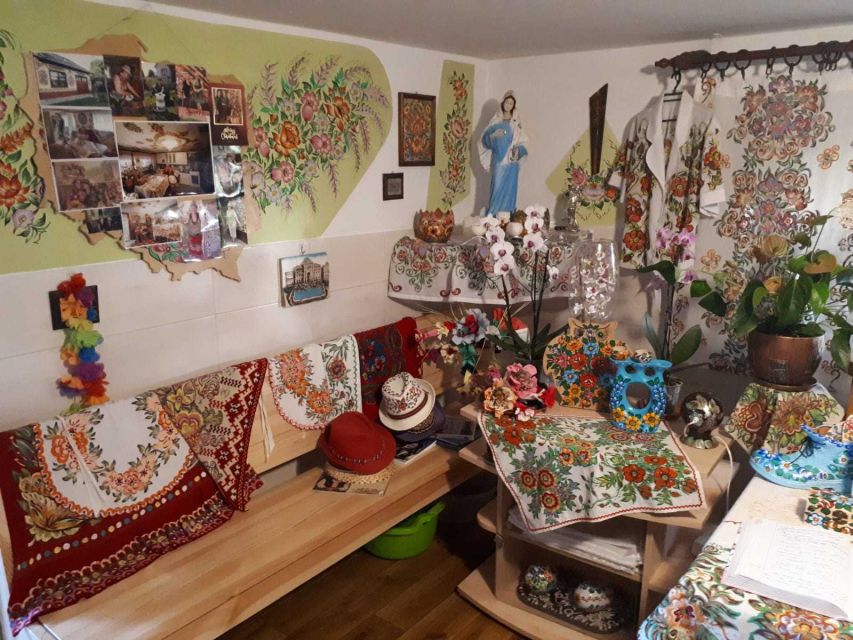
- A 100-year floral tradition: Zalipie’s painted flowers began in the late 19th century and appear on houses, fences, wells, stables, and small farm buildings.
- More than an exterior photo stop: You visit the House of the Female Painters, Felicja Curyłowa Cottage, and the Church of St. Joseph.
- Private transport from Krakow: Hotel pickup, an air-conditioned car, and an English-speaking driver remove the need to arrange rural connections.
- Real contact with local artists: Depending on the day and local availability, your guide may introduce you to people who paint and preserve the village style.
- A relaxed three-hour visit: The Zalipie portion gives you time for photographs, museums, conversations, and a look at ordinary village life.
- Best for folk-art fans: You get a quiet countryside outing with cultural value, not a packed list of major monuments.
Leaving Krakow for the painted countryside
The day begins with pickup in Krakow. Your driver finds you in the hotel lobby, or at the front of your apartment building, then takes you east toward Zalipie in Lesser Poland. The total trip lasts about six hours, with roughly three hours set aside for sightseeing in the village.
That timing works well after a few busy days in Krakow. You are not racing from one famous site to another. Instead, you get a change of pace, with a comfortable drive and a chance to ask your guide about Poland, the surrounding region, and rural life. Several guides have been praised for explaining the plan early, driving carefully, and answering questions throughout the journey.
The car matters here. Zalipie is a rural village, and this tour saves you from working out local transport or trying to locate scattered painted buildings on your own. The private-group format also gives you more control than a large coach tour. You can take photographs without feeling hurried, and your guide can adjust the route to suit your interests.
Do not expect a grand approach to a single central attraction. Zalipie is a living village, with painted buildings spread around the community. That is part of its charm, but it also means the quality of your visit depends on your guide’s local knowledge. A guide familiar with the artists and homes can show you far more than a quick walk past a few decorated facades.
A few more in Krakow
- From Krakow: Auschwitz-Birkenau Guided Tour & Hotel Pickup
★ 4.5 · 33,358 reviews - From Krakow: Auschwitz-Birkenau Guided Tour & Hotel Pickup
★ 4.5 · 29,340 reviews - Krakow: Auschwitz Guided Tour with Optional Hotel Pickup
★ 4.5 · 15,280 reviews
Why Zalipie paints flowers on everyday buildings
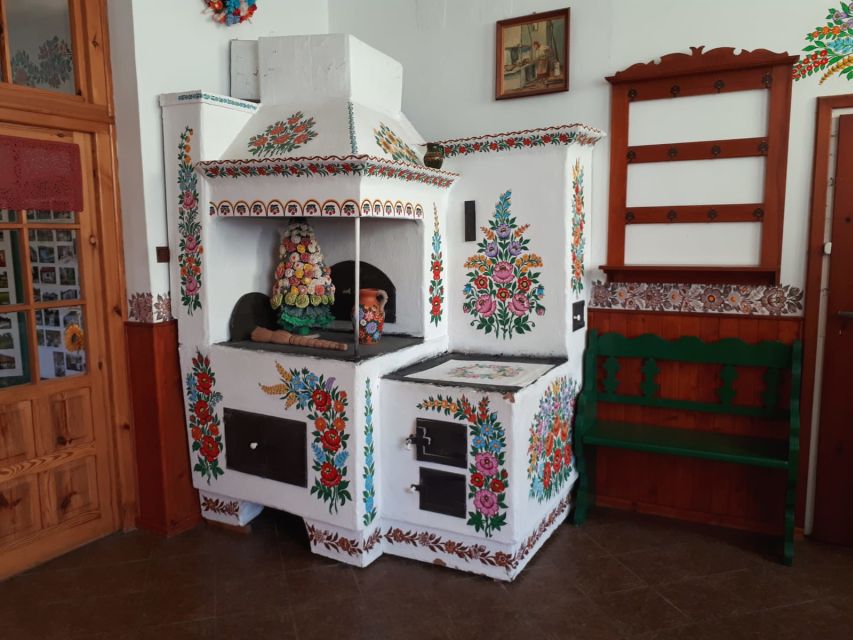
Zalipie’s floral painting tradition dates back more than a century, to the late 19th century. The decoration began as a local custom of painting flower patterns on homes, then spread to fences, wells, stables, chicken coops, and other practical structures.
The important point is that this is not just a village dressed up for sightseeing. The painting tradition reaches into everyday life. A modest farm building can carry the same care and imagination as a house front. You will see floral motifs used in places that, in another village, might receive no decoration at all.
Your guide helps you understand how the custom developed and how it became associated with Zalipie. Felicja Curyłowa played a major role in bringing wider attention to the art. Her work helped make the village known beyond Poland, while the House of the Female Painters continues efforts to preserve and present the tradition.
I find this cultural context more useful than simply collecting pretty photographs. Without it, you may see only colorful walls. With it, you begin to notice differences in patterns, placement, and painting styles. The decoration becomes a record of local creativity and pride.
Three hours among painted houses and farm buildings
The main village visit gives you time to see the painted houses and smaller structures at a sensible pace. This is the heart of the experience, and it is also where the private format earns its keep.
Your guide drives or walks you between several sites, depending on the day’s arrangement. The stops can include painted homes, fences, wells, stables, and other small buildings. Some are simple, while others carry more elaborate floral work. You will want your camera ready, since the details are often spread across corners, doors, window surrounds, and garden structures.
Photography is easy to enjoy here, but remember that this remains a real community. A painted house is not automatically a public museum. The strongest part of this tour is the respectful access arranged by the guide, not the idea that you can wander into every home.
That distinction matters. Guides have personal connections with some local families and artists, and visitors have sometimes been welcomed inside private houses. You may meet a local painter or see someone at work, but this should be treated as a possibility rather than a guaranteed performance. If an invitation comes, it can turn a pleasant photo stop into a meaningful conversation.
Damian, Wojtek, Bart, Alex, and Mateusz have all been singled out for creating this kind of personal experience. Their value is not only in reciting facts. It is in knowing where to go, translating when needed, waiting patiently while you take photographs, and introducing you to people connected to the tradition.
House of the Female Painters and the work behind the flowers
The House of the Female Painters, known in Polish as Dom Malarek, is a key stop because it shows the tradition as an active craft. This is not merely a display of finished buildings. The center is dedicated to keeping Zalipie’s floral painting alive.
You may see artists creating their work and explaining the stages involved. An English-speaking guide can translate information and conversations, which is especially useful because the meaning of the patterns and the methods of painting may not be obvious from the pictures alone.
This stop gives the village a human face. The painted walls are attractive, but the artists are what make the experience memorable. You get a better sense of the patience, skill, and local commitment behind the decoration.
The visit can vary by date and by who is present. Do not assume every artist will be working during your visit. Still, the center remains valuable even when the day is quieter, since it connects the visual style around the village with the people who preserve it.
If you enjoy folk art, this is likely to be one of the strongest parts of the tour. If you prefer major architecture or formal museums, the stop may feel small. Its appeal comes from local contact and craft, not from a large collection or a long indoor program.
Something quite different:
- Krakow–Zakopane: Cable Car, Chocholow Baths, Cheese & Vodka
★ 5.0 · 10,720 reviews - Krakow: Auschwitz-Birkenau Guided Tour with Pickup & Lunch
★ 4.5 · 9,800 reviews - From Krakow: Wieliczka Salt Mine Tour
★ 4.6 · 9,393 reviews - Krakow: Auschwitz-Birkenau Guided Tour Pickup/Lunch Options
★ 4.5 · 9,057 reviews
Felicja Curyłowa Cottage and a famous local name
The Felicja Curyłowa Cottage introduces you to the artist most closely linked with Zalipie’s wider reputation. Curyłowa helped popularize the village’s floral painting, and her home offers a more personal way to understand the tradition.
The cottage is important because it shows how the decoration belongs to a lived-in domestic setting. You are not viewing the flowers against a neutral museum wall. You are seeing how the art shaped the appearance of a home and became part of the village’s identity.
Your guide can add the story that a short visit alone cannot provide. The supplied tour details do not promise a fixed length at the cottage, so expect it to fit into the wider three-hour route rather than function as a separate long museum visit.
For me, the cottage works best when paired with the House of the Female Painters. One explains the continuing craft, while the other links it to the artist who helped carry Zalipie’s name beyond the local area.
Church of St. Joseph and the meeting of faith and folk art
The Church of St. Joseph the Betrothed adds a different note to the day. It is a small, charming church, and its interior includes floral motifs connected to Zalipie’s local style.
This stop shows that the tradition is not limited to private homes and farm structures. Floral decoration also has a place in a religious setting, where it sits alongside the village’s spiritual life. The result is quieter than the painted houses, but it helps explain how closely art, faith, and community are linked here.
The church is best approached as a short cultural stop, not as a grand architectural sight. Its value comes from the local decoration and its place within Zalipie, rather than size or monumental design. Your guide can point out what to look for so you do not treat it as just another pretty building.
As always with a working place of worship, follow your guide’s instructions and be considerate if services or local activity are taking place. The information provided does not specify service schedules or photography rules, so ask before taking interior photographs.
What the private guide changes
A private tour can feel very different from a standard group excursion. The guide is both your driver and your English-speaking host, and the small format allows questions to shape the day.
Wojtek has been praised for his clear explanations, kindness, and ability to answer questions about both Zalipie and Poland. Bart has been noted for his courteous driving and local introductions. Damian is often credited with knowing the best stops, translating at the museum, and connecting visitors with artists. Alex has been appreciated for patience during long photography sessions and for explaining each stage of the route.
Mateusz has also been praised for making the day feel personal, checking that visitors were comfortable, and helping conversations with local families. These details matter because Zalipie is not a place where a guidebook alone gives you the full experience.
You may also get small extras that improve the day: a bottle of water in the car, help taking photographs, a coffee or ice-cream stop, or restaurant suggestions for Krakow. These are not formal inclusions, so do not book expecting every extra. They show, though, how a good guide can make a rural visit feel easy and friendly.
One less positive point is that the experience can depend on the individual guide. A private guide who is strong on local stories and introductions adds considerable value. A guide who gives less historical explanation may leave you wishing for more context. One visitor specifically wanted more information about the area, so if history is your priority, tell your guide at the start.
Is $61 per person a fair price?
At $61 per person, this is not the cheapest way to see a Polish village. You are paying for private transport from Krakow, an air-conditioned car, hotel pickup and return, entrance tickets, a licensed English-speaking guide, and an English-speaking driver.
For a solo visitor, the price can be easier to justify because you receive private attention and do not need to solve rural transport alone. For two people, the cost is still reasonable if personal introductions, translation, and door-to-door service matter to you. One person felt the tour was somewhat expensive because the price includes a private driver, and suggested a shared minivan option might lower the cost.
That is the central value question. If you only want to photograph a few painted exteriors, $61 may feel steep. If you want the story, museum access, a church visit, possible entry into private homes, and a guide who knows local artists, the price makes more sense.
Food and drinks are not included. In August, some visitors enjoyed coffee, food, and ice cream in the village, but in early October there were no food options available. Bring water and a snack, especially outside the main season. Your guide may offer to stop at a rest area, but you should not depend on finding a full meal in Zalipie.
Who should book this half-day outing?
I would choose this tour if you have already seen Krakow’s main sights and want a quieter side of Poland. It suits anyone interested in folk art, local customs, photography, small communities, and personal guiding.
Families may appreciate the short format and the visual appeal of the painted buildings. Couples and solo visitors benefit from the private car and flexible pace. The tour also works well for people who do not speak Polish, since the guide can translate museum information and conversations with local artists.
You should think twice if your Krakow schedule is very tight. Zalipie is a six-hour commitment, and the village is a rural cultural visit rather than a must-see monument. It also may not suit you if you expect a busy center packed with shops, cafes, and attractions.
Wear comfortable shoes and comfortable clothes. The tour includes movement between village sites and time outdoors, even though the exact walking pattern can vary. Allow extra camera space, because the painted details invite more photos than you may expect.
Final verdict: a strong choice for local culture
I recommend booking the Zalipie day tour if you want something personal and different from Krakow’s city sights. The best reason to go is not simply that the houses are colorful. It is the chance to understand why the flowers were painted, meet people connected with the craft, and see how folk art fits into ordinary village life.
Choose this experience with realistic expectations. The food supply may be limited, the schedule can depend on local access, and the private format costs more than a shared excursion. But with a strong guide, you get far more than transport and photographs. You get a calm countryside day, thoughtful explanations, and a chance to see a Polish tradition in the place where it still belongs.
FAQ
How long does the Zalipie tour from Krakow last?
The tour lasts six hours in total, including pickup and return in Krakow. About three hours are set aside for sightseeing in Zalipie.
Is hotel pickup included?
Yes. Hotel pickup and drop-off in Krakow are included. The driver finds you in the hotel lobby, or at the front of your apartment building.
Is the tour private?
Yes. The tour is offered for a private group, with transport by air-conditioned car.
What language is the tour conducted in?
The live tour guide and driver speak English. Guides can also translate information and conversations during visits to museums or local homes.
Are food and drinks included?
No. Food and drinks are not included. Availability in Zalipie may be limited, especially outside the busy season, so bringing water and snacks is sensible.
What should I wear or bring?
Bring comfortable shoes and comfortable clothes. You should also consider bringing water and snacks, especially if you are visiting in the off season.
Just added in Krakow
- Auschwitz-Birkenau – Skip the Line Tickets★ 3.5 · 29 reviews
- Auschwitz-Birkenau: Fast-Track Ticket & Guided Tour No Transfers★ 3.5 · 17 reviews
- Zakopane & Sleigh Ride with Bonfire – Group Tour from Kraków★ 5.0 · 2 reviews
- Sleigh Ride & Bonfire in Zakopane with Funicular – Private Trip★ 5.0 · 48 reviews
- Thermal Baths & Zakopane – Private Trip from Krakow★ 5.0 · 1 review
- Zakopane & Gubalowka Funicular – Private Winter Tour from Krakow★ 5.0 · 10 reviews
- Divine Mercy Sanctuary – Private Tour from Krakow★ 5.0 · 4 reviews
- stag dog chase Krakow prank★ 5.0 · 4 reviews
Tours, compared.
Wieliczka Salt Mine Guided Tour with Transport
Read our review →
Zakopane Tour with Chocholow Hot Baths and Cable Car
Read our review →
Wieliczka Salt Mine Fast-Track Ticket & Guided Tour
Read our review →
Wieliczka Salt Mine Tour & Skip the Line Ticket
Read our review →
Krakow to Wieliczka: Salt Mine Guided Tour with Ticket & Transfer
Read our review →