
REVIEW · AUSCHWITZ-BIRKENAU MEMORIAL TOURS
from Kraków: Auschwitz excursion with guaranteed Dutch guide
Some places demand your full attention. This Auschwitz excursion does that through a guaranteed Dutch-speaking guide, a carefully paced visit to Auschwitz I and Birkenau, and the less commonly included Monowitz memorial. I especially like the personal storytelling reported from guides such as Wesley, Marijke, Roland, and Jeroen, and the fact that the day covers all three main sites rather than stopping after the usual museum visit. The main drawback is the long, serious day: you leave around 6:00 am, spend about six hours at the sites, and need moderate physical fitness.
At $102.14 per person, the price is reasonable if you want door-to-door transport, official admission, a guide system, and a full Dutch-language study tour without arranging the pieces yourself. The maximum group of 29 keeps it smaller than a large coach outing, though it is still a group tour and not a private visit.
In This Review
- Key points to know before booking
- Why this Auschwitz day trip is worth taking seriously
- The early Kraków departure and the ride to Oświęcim
- Auschwitz I: the former camp turned museum
- The break between Auschwitz I and Birkenau
- The Judenrampe: following the route of deportation
- Auschwitz II-Birkenau: scale, barracks, and destruction
- Monowitz and the Buna works
- How the $102.14 price compares with the experience
- Who will get the most from this tour
- Should you book the DutchPoint Auschwitz excursion?
- FAQ
- Where does the tour begin?
- What time does the excursion start?
- How long does the tour last?
- Which Auschwitz sites are included?
- Is transport from Kraków included?
- Is a Dutch-speaking guide guaranteed?
- Are admission tickets included?
- Is the tour suitable for children or people with mobility impairments?
Key points to know before booking
- Three Auschwitz sites in one day: You visit Auschwitz I, Auschwitz II-Birkenau, and the Monowitz memorial.
- Dutch guidance is guaranteed: Guides including Wesley, Marijke, Roland, and Jeroen have been praised for clear, respectful storytelling.
- Early start, late afternoon return: Meet at DutchPoint Kraków at 6:00 am and expect to return around 4:00 pm.
- The Judenrampe is included: You see the railway unloading and selection area between Auschwitz I and Birkenau.
- A serious walking day: The tour is not suitable for children under 14 or people with mobility impairments.
- Optional food is available: Breakfast and lunch boxes can be added, but they are not included in the base price.
Why this Auschwitz day trip is worth taking seriously
Auschwitz is not a casual sightseeing stop. You are visiting the largest former Nazi concentration and extermination camp complex, where more than 1.2 million people were killed, including about 60,000 Dutch and 24,000 Belgian people.
That context matters when choosing how to visit. A quick self-guided look can show you the buildings, but it may not give you the chronology or human detail needed to understand what happened there. This tour gives you a Dutch-speaking guide for the full six-hour visit, excluding the journeys between Kraków and the sites.
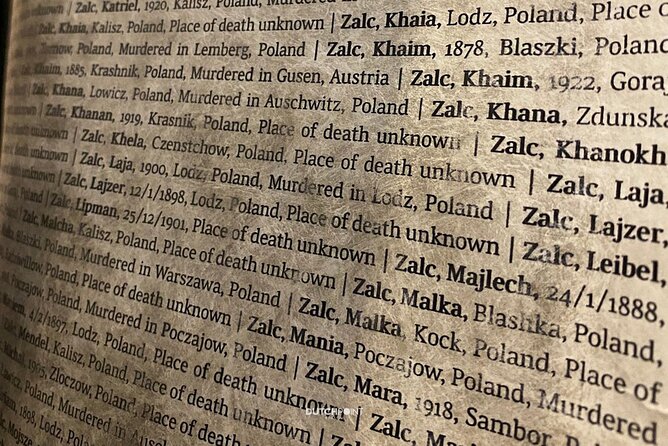
I like the structure. Auschwitz I introduces the system through preserved buildings, photographs, documents, and objects. Birkenau then shows the vast scale of deportation, imprisonment, forced labor, and mass murder. Monowitz adds a third layer by connecting the camp system to the industrial complex and forced labor at the Buna works.
The tone also matters. The strongest praise has gone to guides who tell the story calmly and respectfully, add personal details about people shown in photographs, and leave room for questions. Wesley is repeatedly singled out for asking questions that encourage you to think beyond dates and facts. Marijke is praised for her careful, emotional delivery, while Roland and Jeroen are noted for strong historical explanations and attentive guiding.
This is the sort of place where a good guide does not fill every silence. The subject needs room to sink in.
More Auschwitz-Birkenau memorial tours:
- From Krakow: Auschwitz-Birkenau Guided Tour & Hotel Pickup
★ 4.5 · 33,358 reviews - From Krakow: Auschwitz-Birkenau Guided Tour & Hotel Pickup
★ 4.5 · 29,340 reviews - Krakow: Auschwitz Guided Tour with Optional Hotel Pickup
★ 4.5 · 15,280 reviews
The early Kraków departure and the ride to Oświęcim
You meet at DutchPoint Kraków, at Karmelicka 3, for a 6:00 am departure. The drive to Oświęcim takes about 80 minutes. That early start is practical rather than glamorous, but it helps fit the three locations into one day.
The published schedule includes time for a restroom break and entry procedures before the first visit. The day includes five restroom stops in total, which is useful because much of the program takes place outdoors and the sites are spread out.
Transport is by minibus or bus. The maximum group size is 29 people. That is small enough to feel more manageable than a full-size sightseeing coach, but you should still expect to walk and move as part of a group. A tour guide system is included, so you can hear the explanation while moving through the museum and open areas.
A breakfast box and lunch box are optional extras. If you want food during the day, arrange one rather than assuming a meal is included. The schedule has a short break between the principal sites, not a leisurely restaurant lunch.
Auschwitz I: the former camp turned museum
The first major visit lasts about 150 minutes. Auschwitz I is the original camp complex, with brick barracks and a more contained layout than Birkenau. It now functions as the Auschwitz-Birkenau State Museum.
Here, the guide explains the story from the first deportations through liberation on January 27, 1945. The setting makes the chronology easier to follow. You move through original barracks while seeing photographs, documents, and displays that explain how the camp developed and how prisoners were treated.
The Dutch barrack is a particularly useful stop for Dutch-speaking visitors. It connects the enormous numbers to the experiences of people deported from the Netherlands. Belgian participants visit the Belgian barrack instead. This national focus does not replace the wider history, but it gives the visit a more direct connection for people from those countries.
You also pass through a gas chamber. That is one of the hardest parts of the day, and it is worth preparing yourself for a quiet, emotionally demanding visit rather than a standard museum tour. The material is direct. Some displays may be difficult to see, especially the accumulated belongings and personal traces of those who were murdered.
The guide’s role here is especially valuable. The site can feel overwhelming because there is so much to absorb. A clear explanation helps you understand what you are seeing without reducing the visit to a list of grim facts.
Auschwitz I is also where the tour’s walking requirements become clear. The group moves through buildings and between them, often standing while listening. You should wear comfortable shoes and expect a steady pace.
The break between Auschwitz I and Birkenau
After Auschwitz I, you have a short break before continuing to Birkenau. The transfer takes about 30 minutes according to the schedule.
This pause is useful. It gives you time to use the restroom, gather yourself, and process what you have just seen. Do not expect it to feel like a normal sightseeing break. The subject remains present, and the next part of the visit is physically more open but no less intense.
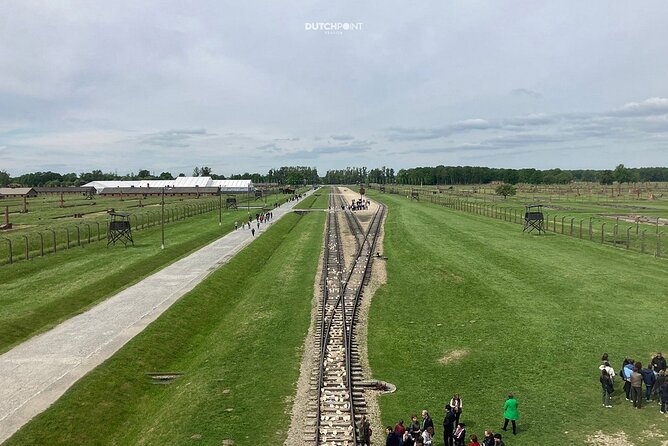
The tour continues by bus to the Judenrampe, the railway unloading point located between Auschwitz I and Birkenau. This is an important detail because many people know Birkenau mainly through its famous entrance gate and railway tracks. The Judenrampe helps explain how deportees arrived and where selection took place before the railway was extended into Birkenau.
A few more in Krakow
- Krakow–Zakopane: Cable Car, Chocholow Baths, Cheese & Vodka
★ 5.0 · 10,720 reviews - Krakow: Auschwitz-Birkenau Guided Tour with Pickup & Lunch
★ 4.5 · 9,800 reviews - From Krakow: Wieliczka Salt Mine Tour
★ 4.6 · 9,393 reviews - Krakow: Auschwitz-Birkenau Guided Tour Pickup/Lunch Options
★ 4.5 · 9,057 reviews
The Judenrampe: following the route of deportation
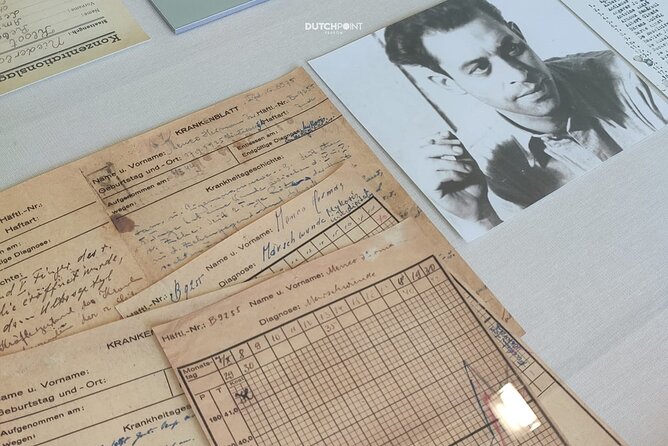
The visit to the Judenrampe takes about 30 minutes. From here, you walk along the route used by people brought to the camp complex by train.
This stop gives physical meaning to the process of arrival. Instead of only hearing about deportation and selection, you see the space where those events unfolded and walk toward Birkenau in the same general direction as those who were taken there.
The distance and openness of the area also help show how the camp network worked. Auschwitz was not one single building or one isolated location. It was a large system of sites connected by transport, administration, forced labor, and murder.
The Dutch monument is included later in the Birkenau visit. Together, these stops are valuable for Dutch-speaking participants because they connect the general history to the national stories of those deported from the Netherlands.
Auschwitz II-Birkenau: scale, barracks, and destruction
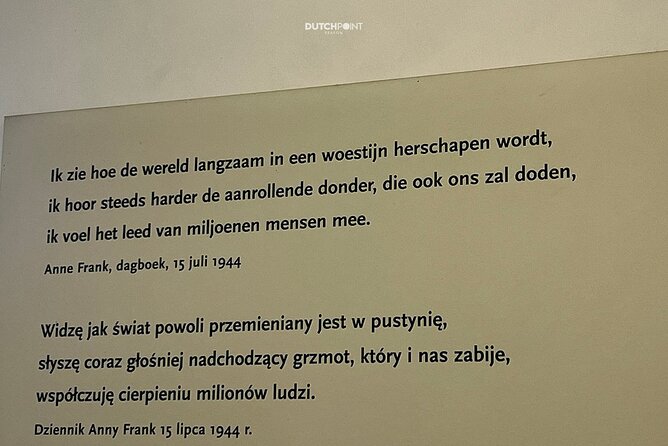
The Birkenau visit lasts about 90 minutes, followed by a stop at the bookstore. The site is much larger and more exposed than Auschwitz I. Its famous gate and railway line give you an immediate sense of scale, but the wooden barracks and long distances are just as important.
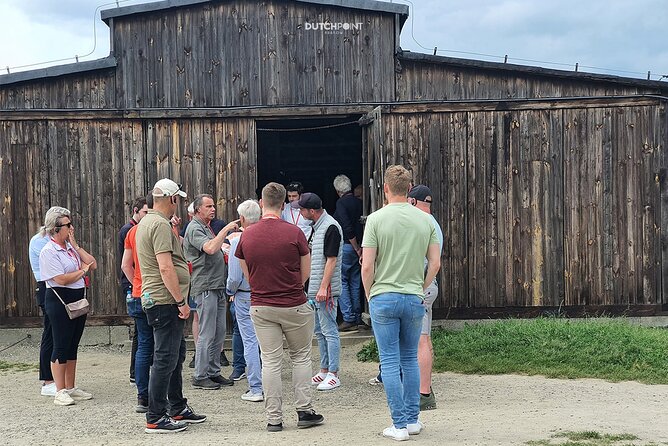
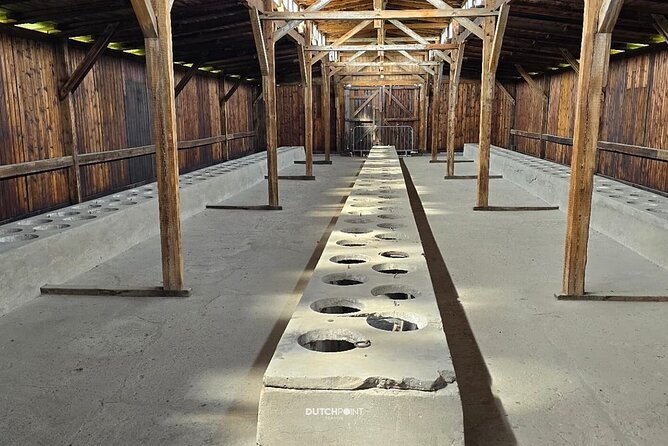
You visit wooden barracks that show the living conditions during the war years. These buildings make clear how little privacy, comfort, and protection prisoners had. The experience is less about polished museum displays and more about the physical conditions of the camp itself.
The guide takes you past the railway station toward the remains of gas chambers II and III. Their ruins are a painful reminder that the Nazi authorities destroyed evidence as the war turned against them. What remains does not make the crime easier to understand, but it shows the effort made to erase it.
You also visit the Dutch monument before returning toward the gate. A short bookstore stop follows. The bookstore can be useful if you want a serious historical book or a record of the visit, though it is not a major part of the day.
Birkenau requires more outdoor walking than Auschwitz I. Weather can affect the experience, and the itinerary does not suggest a long indoor recovery period. Bring clothing suitable for the conditions and shoes you can walk in for hours.
The 90-minute visit may feel short given the size of Birkenau. That is one limitation of covering Auschwitz I, Birkenau, and Monowitz in a single day. On the other hand, the guide selects key areas and keeps the whole program possible within an eight to nine-hour excursion.
Monowitz and the Buna works
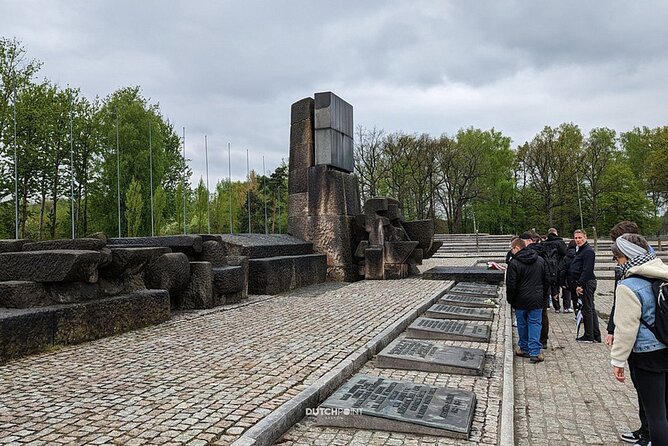
The final site is Auschwitz III, also called Monowitz. The transfer and visit take about 45 minutes.
Monowitz is different from the first two locations. The camp barracks are no longer visible, so do not expect another preserved museum complex. Instead, you see the factories connected with the Buna works and some remaining bunker fragments. The tour ends at the Monowitz monument.
This stop is valuable because it shows the forced-labor side of the Auschwitz system. Monowitz was located about 10 kilometers from Auschwitz I and was established beside a huge Nazi industrial complex. Prisoners were used under brutal conditions to support industrial production.
The absence of intact barracks can make Monowitz feel less immediately dramatic than Auschwitz I or Birkenau. That is also why a guide matters here. Without explanation, you might see factories and fragments without understanding their place in the camp system. With context, the site adds an important economic and industrial dimension to the day.
After Monowitz, the return journey to Kraków takes about 90 minutes. The published timing puts you back at the DutchPoint meeting point at roughly 4:00 pm, although a full day of transport and site visits can never be treated as exact to the minute.
How the $102.14 price compares with the experience
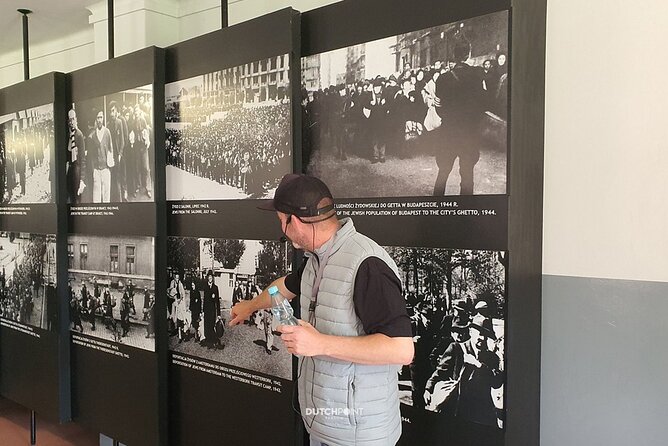
The $102.14 price includes official Auschwitz-Birkenau State Museum tickets, transport from Kraków, a Dutch-speaking guide, a tour guide system, and the six-hour visit program.
I see the value in that package, especially if you do not want to organize separate transport and admissions. The guide is the main reason to choose this option over simply finding your own way to Oświęcim. The tour covers three connected but different places, and the explanations help tie them together.
The price does not include breakfast, lunch, or a tip. Those omissions are normal for an excursion of this type, but they affect your budget. The optional food boxes may be practical because the schedule is tightly arranged, yet you should check exactly what is offered before adding them.
You are also paying for the guaranteed Dutch language. If you understand English well and are focused mainly on price, another tour could cost less. If you want the history explained in Dutch, that language promise is the central value of this experience.
The high recommendation rate and 4.9 rating indicate strong satisfaction, with particular praise for organization, punctual transport, and guides who handle the subject with respect. Still, this is not a light day out, and no rating can remove the emotional weight of the places themselves.
Who will get the most from this tour
I would choose this excursion if you want:
- A Dutch-speaking guide from beginning to end
- One organized day covering Auschwitz I, Birkenau, and Monowitz
- Transport from central Kraków
- Historical explanation rather than a quick photo stop
- A group small enough to be capped at 29 people
- A visit with room for questions and personal stories
It is best suited to adults and older teenagers. Children under 14 are not accepted. The tour also requires moderate physical fitness and is not suitable for people with mobility impairments.
You should allow yourself some quiet time after returning to Kraków. The day may finish around 4:00 pm, but the emotional effect can last longer than the bus ride.
The cancellation terms are strict: the experience is non-refundable and cannot be changed for any reason. Check your dates carefully before paying. Confirmation normally arrives at booking, although bookings made within nine days of departure may take up to 48 hours and remain subject to availability.
Should you book the DutchPoint Auschwitz excursion?
Book it if a Dutch-speaking guide is important to you and you want the fullest one-day route available, including the Judenrampe and Monowitz. The strongest feature is the guiding. Wesley, Marijke, Roland, and Jeroen are praised for calm delivery, personal detail, and the ability to answer questions without losing sight of the human cost.
Skip it if you want a short visit, have limited walking ability, or prefer to set your own pace. Six hours at the sites, plus roughly three hours of transport, makes this a demanding day.
For the right person, $102.14 buys more than a bus ride and an entry ticket. It buys structure, language access, and help making sense of three difficult places. Auschwitz should never be treated as ordinary sightseeing, and this tour appears to understand that.
FAQ
Where does the tour begin?
The tour begins at DutchPoint Kraków, Karmelicka 3, 31-133 Kraków, Poland.
What time does the excursion start?
The scheduled start time is 6:00 am.
How long does the tour last?
The full excursion lasts approximately eight to nine hours, including travel. The study tour at the sites takes about six hours, excluding travel time.
Which Auschwitz sites are included?
The tour includes Auschwitz I, Auschwitz II-Birkenau, and the Auschwitz III Monowitz memorial.
Is transport from Kraków included?
Yes. Transport by bus or minibus from Kraków is included, as is the return journey to the meeting point.
Is a Dutch-speaking guide guaranteed?
Yes. A Dutch-speaking guide is included and guaranteed.
Are admission tickets included?
Yes. Official tickets for the Auschwitz-Birkenau State Museum are included.
Is the tour suitable for children or people with mobility impairments?
The tour is not suitable for children under 14 or people with mobility impairments. Participants should have a moderate level of physical fitness.
Just added in Krakow
- Auschwitz-Birkenau – Skip the Line Tickets★ 3.5 · 29 reviews
- Auschwitz-Birkenau: Fast-Track Ticket & Guided Tour No Transfers★ 3.5 · 17 reviews
- Zakopane & Sleigh Ride with Bonfire – Group Tour from Kraków★ 5.0 · 2 reviews
- Sleigh Ride & Bonfire in Zakopane with Funicular – Private Trip★ 5.0 · 48 reviews
- Thermal Baths & Zakopane – Private Trip from Krakow★ 5.0 · 1 review
- Zakopane & Gubalowka Funicular – Private Winter Tour from Krakow★ 5.0 · 10 reviews
- Divine Mercy Sanctuary – Private Tour from Krakow★ 5.0 · 4 reviews
- stag dog chase Krakow prank★ 5.0 · 4 reviews