
REVIEW · AUSCHWITZ-BIRKENAU MEMORIAL TOURS
From Krakow: Auschwitz and Wieliczka Salt Mine Full-Day Trip
Two remarkable places, one very long day. This 11-hour tour joins Auschwitz-Birkenau, Poland’s most sobering historical site, with the astonishing Wieliczka Salt Mine. I like the way it handles two major sights in one booking, and I like the practical setup: transport, entrance tickets, an English-speaking tour leader, and specialist guides are included.
The main drawback is the pace. You may leave Krakow as early as 6:00 AM, walk for much of the day, and return tired. Auschwitz is emotionally heavy, while the mine involves 800 steps and several hours underground, so this is not a soft holiday outing.
In This Review
- Key points at a glance
- Why combine Auschwitz with Wieliczka?
- The early start and pickup from Krakow
- Auschwitz I: barracks, evidence, and a difficult history
- Birkenau: scale that photographs cannot explain
- The break between the camps and the salt mine
- Wieliczka Salt Mine: 800 steps below the surface
- Transport, guides, and how the day is run
- What the $30 price really gets you
- Who should book this full-day trip?
- FAQ
- How long is the Auschwitz and Wieliczka Salt Mine tour?
- Where is the meeting point?
- Can I be picked up from the Old Town?
- What time does the tour start?
- Is lunch included?
- Do I need identification?
- How many steps are there at Wieliczka Salt Mine?
- Is the tour suitable for people with claustrophobia or mobility impairments?
- Should you book it?
Key points at a glance
- Auschwitz and Birkenau come first: Expect barracks, exhibitions, photographs, gas chambers, chimneys, and a careful explanation of the Nazi occupation of Poland.
- Wieliczka changes the mood: After the grim morning, the salt mine offers underground chambers, lakes, galleries, a chapel, and a ballroom carved into salt.
- The day can begin very early: Departure may be scheduled anytime between 6:00 AM and 10:30 AM, so confirm your exact pickup time the day before.
- Transport is well managed: Pickup is available from central Krakow, with drop-off in the city center. Some groups switch from a large coach to a smaller minibus.
- Walking is the real cost: The mine alone has 800 steps, and some visitors report walking around 10 miles during the full day.
- The $30 price is strong value: With transport, entrance fees, and guides included, the package can cost less than arranging both attractions separately.
Why combine Auschwitz with Wieliczka?
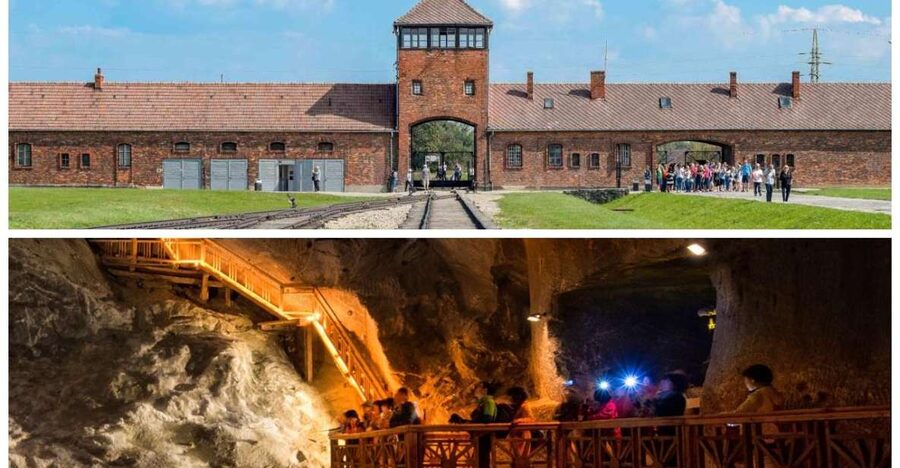
Krakow has two major out-of-town attractions that are easy to pair geographically, but they offer completely different experiences. Auschwitz-Birkenau asks you to look directly at the crimes of the Nazi regime. Wieliczka shows what generations of miners created underground through labor, skill, and patience.
That contrast matters. Auschwitz can leave you quiet and shaken. The salt mine does not erase the morning, but its unusual rooms and lighter subject matter give the day a different rhythm. Several people found the pairing useful for that reason, while others felt that visiting both in one day was physically too much.
I would choose this combined trip if your time in Krakow is short. If you have several days and prefer to give important places room to breathe, separate them across two days.
The price is another reason to combine them. At $30 per person, the tour includes transportation, admission tickets, a tour leader, and guides at both sites. That is a particularly good deal if you value having the route and entry arrangements handled for you.
The tradeoff is less freedom. You follow fixed entry times and group schedules rather than setting your own pace. At Auschwitz, that structure is usually helpful because timed admission and museum rules can make independent planning complicated.
More Auschwitz-Birkenau memorial tours:
- From Krakow: Auschwitz-Birkenau Guided Tour & Hotel Pickup
★ 4.5 · 33,358 reviews - From Krakow: Auschwitz-Birkenau Guided Tour & Hotel Pickup
★ 4.5 · 29,340 reviews - Krakow: Auschwitz Guided Tour with Optional Hotel Pickup
★ 4.5 · 15,280 reviews
The early start and pickup from Krakow
Do not treat the 11-hour duration as a precise door-to-door promise. Departure times can change, and some departures begin around 5:25 or 5:40 AM. Other groups have started closer to 9:00 AM, which made the day feel more manageable.
The operator confirms the pickup time in advance. Pickup is possible from a hotel or apartment in Krakow city center, but the Old Town has restricted traffic. If you are staying inside that zone, you may be directed to a nearby pickup point instead.
The stated meeting point is the Kiss & Ride point at 2 Wielopole Street. In practice, the tour leader identifies the meeting place and helps with the first steps of the morning. This is useful when Krakow is still quiet and you are not eager to solve transport puzzles before breakfast.
Bring your passport or ID card. Auschwitz requires the name on your booking to match the name on the identification document you show at entry. Supply your full name and contact details carefully when booking, since admission can be refused when the details do not match.
Large bags and luggage are not allowed. Pack lightly with water, snacks, medication, and a phone, but leave bulky items behind. Comfortable walking shoes are essential, not optional.
Auschwitz I: barracks, evidence, and a difficult history
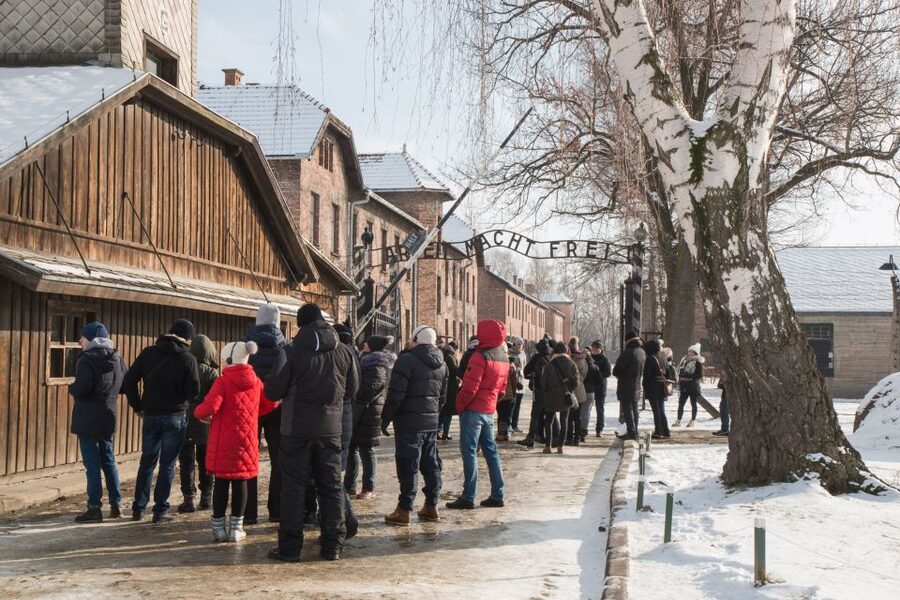
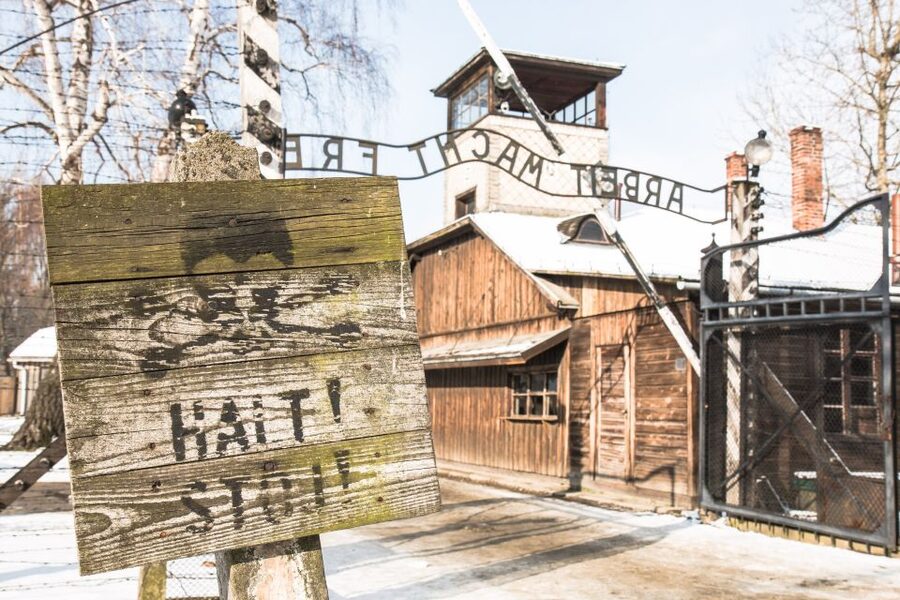
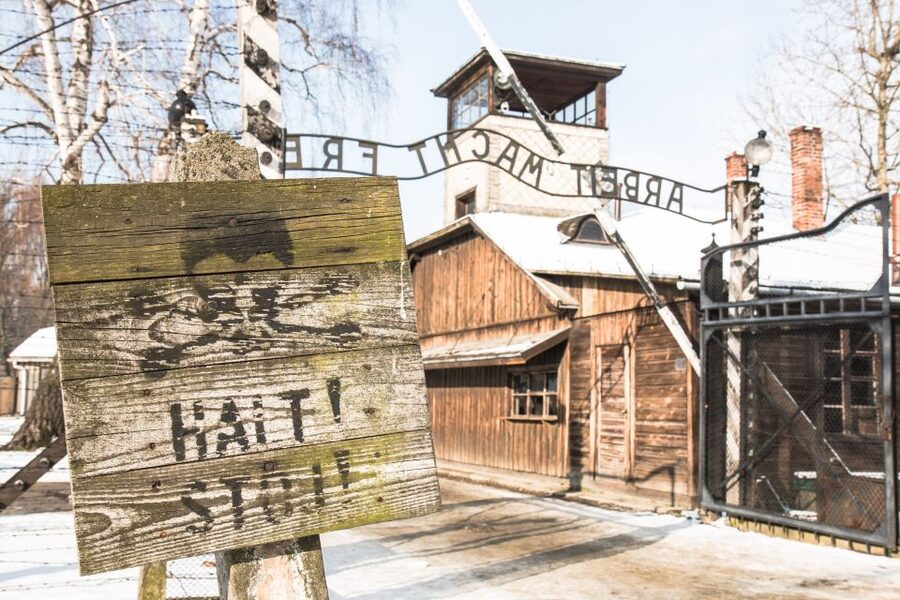
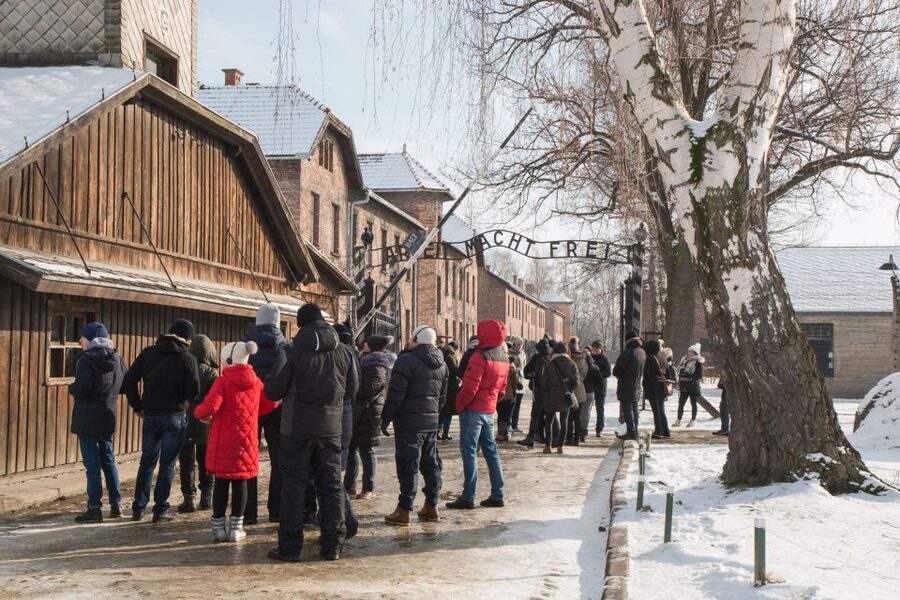
The first camp, Auschwitz I, is the more enclosed and museum-like part of the visit. You walk among former barracks and see exhibitions, photographs, gas chambers, and chimneys connected with the prisoners’ experience.
The displays are not simply a collection of old buildings. They explain how the camp system operated and show the scale of the suffering caused by Nazi Germany during World War II and the occupation of Poland. Expect the subject to be presented plainly and seriously.
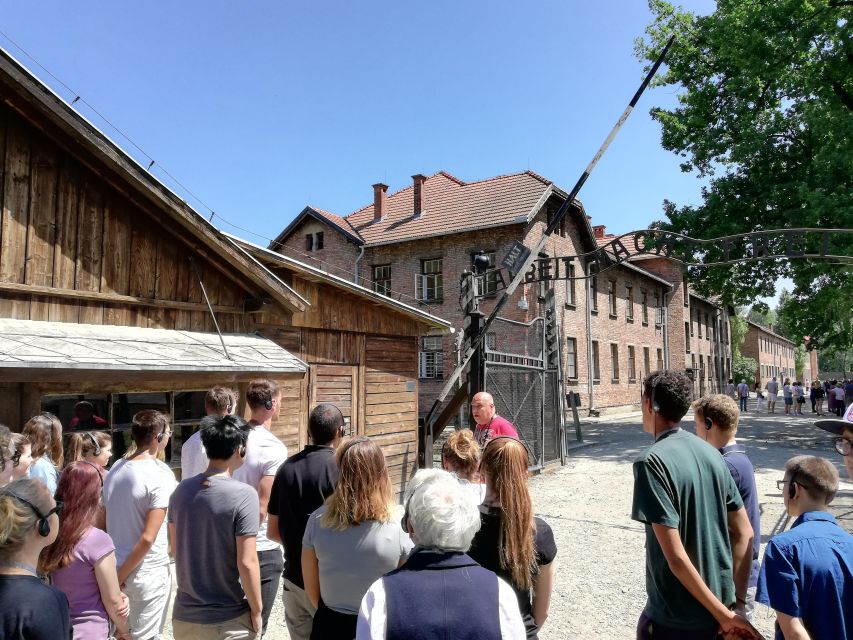
A live English-speaking guide leads the visit. Guides such as Kamil Gut and Sabina were praised for explaining the setting with care, answering questions, and keeping the right tone. That last point matters here. Auschwitz needs more than dates and facts. It requires a guide who can explain what you are seeing without turning the visit into a performance.
A headset is supplied in the first camp, which helps you follow the guide in a large group. Still, the sound is not always perfect. Some people found guides difficult to hear, especially when the group spread out or when the second camp did not use headsets.
Allow for a lot of walking and standing. You may be moving from building to building, listening in different rooms, and waiting with the group at entry points. The amount of time at Auschwitz and Birkenau can vary, but one reported schedule allowed roughly 1 hour and 50 minutes at Auschwitz I and about an hour at Birkenau.
That is enough for a guided overview, but not enough to inspect every display at leisure. I recommend listening closely to the guide rather than trying to read every panel. You will gain more from following the route and asking questions than from racing through every written detail.
Birkenau: scale that photographs cannot explain
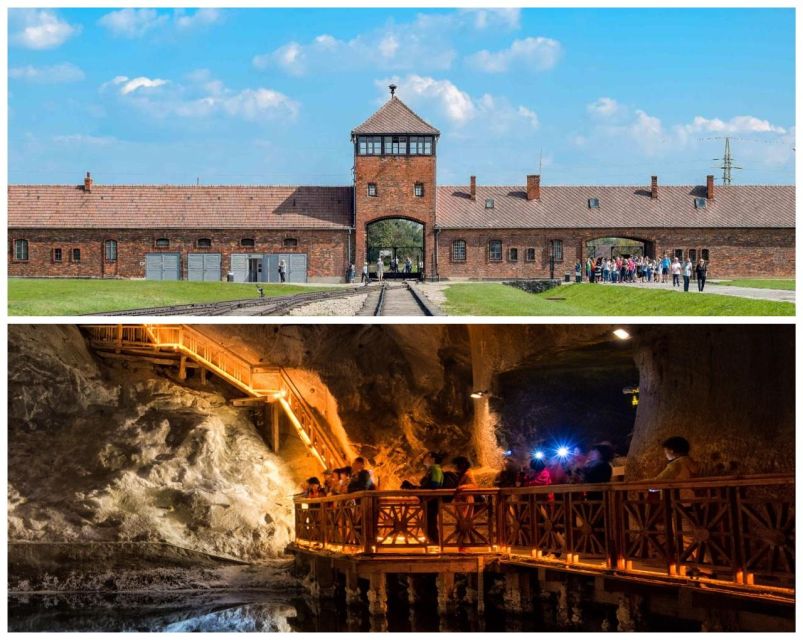
A short transfer takes you to Auschwitz-Birkenau, the much larger second camp. Here, the physical scale becomes difficult to grasp. Barracks, railway areas, chimneys, and open space make clear that this was not a single building or isolated prison, but a vast camp complex.
The guide continues the historical explanation at Birkenau. Stay near the group, especially if your guide is speaking softly or if there is no headset. A few people felt the second camp moved too quickly, so do not hesitate to ask the tour leader where to stand so you can hear.
This portion is outdoors and can feel exposed. Bring suitable clothing for the season, since the program runs in all weather conditions described by the day’s schedule. The site is also large enough that poor footwear quickly becomes a nuisance.
The emotional weight is unavoidable. I would not plan a busy evening immediately afterward. You may want a quiet meal and time to process what you have seen.
The tour’s structure can help here. Tickets are already arranged, your guide handles the route, and you do not have to make decisions at every turn. That leaves you free to pay attention to the place itself.
More Wieliczka Salt Mine tours:
- From Krakow: Wieliczka Salt Mine Tour
★ 4.6 · 9,393 reviews - Krakow: Auschwitz-Birkenau and Salt Mine Guided Tour
★ 4.7 · 9,020 reviews - Krakow: Wieliczka Salt Mine Guided Tour with Transport
★ 4.4 · 7,429 reviews - Krakow: Wieliczka Salt Mine Fast-Track Ticket & Guided Tour
★ 4.5 · 5,872 reviews
The break between the camps and the salt mine
Food planning deserves more attention than the basic itinerary suggests. A lunch option may be available, and some people found the packed meal useful. One reported lunch consisted of a roll, a chocolate wafer, and bottled water, which is adequate rather than generous.
You may also find restaurants and small vendors at the camps. Still, the schedule does not guarantee a relaxed restaurant meal, and there may be limited time to buy proper food. If you skip the lunch option, bring breakfast or a packed lunch.
Communication about breaks has not always been perfectly clear. At the salt mine, one group discovered that the bus had moved while their food and bags remained there, leaving them unsure about when and where to eat. Ask the tour leader directly before leaving the vehicle.
The transfer to Wieliczka may use a different vehicle. Large groups often travel by coach in the morning, while smaller groups continuing to the mine may switch to a minibus. This arrangement can work well, and one group of only eight people was moved directly to the mine despite a traffic accident in Krakow.
That flexibility is valuable, but it also means you should listen carefully to instructions after Auschwitz. Know the vehicle, the meeting time, and where your belongings are going.
Wieliczka Salt Mine: 800 steps below the surface
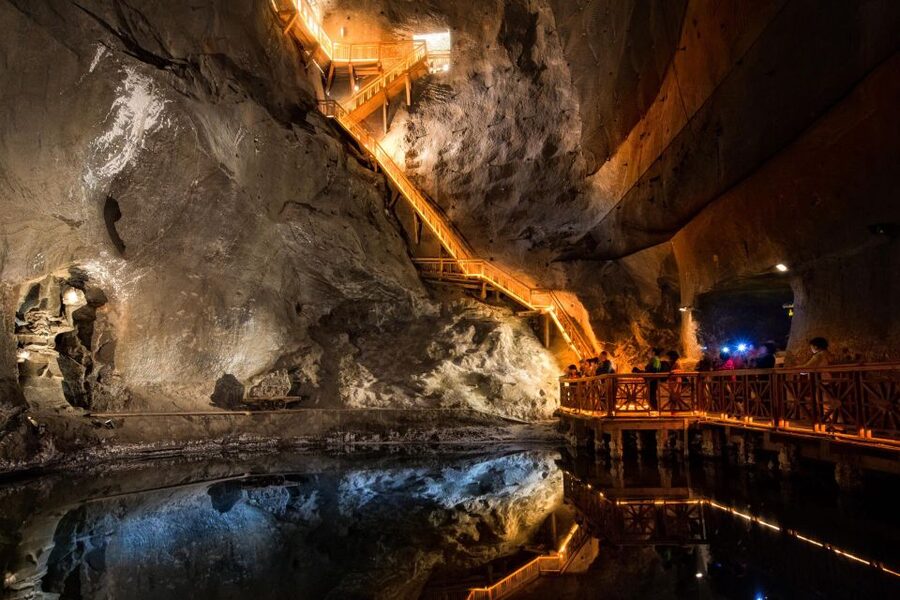
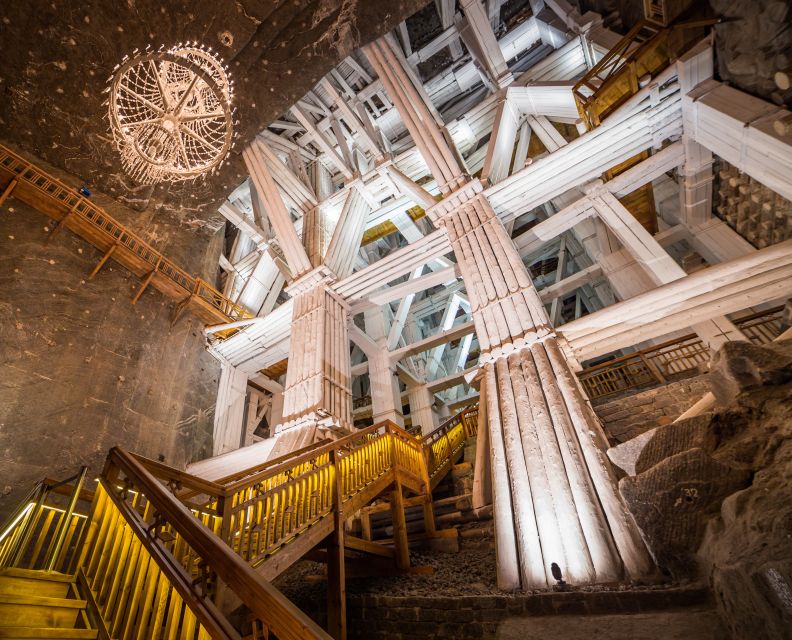
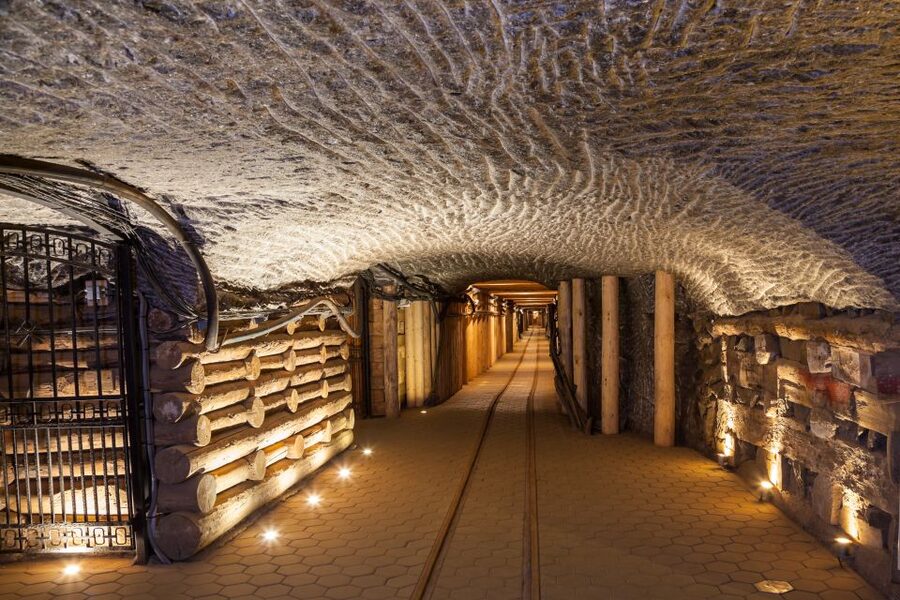
Wieliczka is a dramatic change from Auschwitz. You descend approximately 800 steps into Poland’s best-known salt mine, following a guided route through chambers, galleries, underground lakes, and carved interiors.
The first long stair section can be tiring. There are around 380 steps at the start of the mine route, with more steps later. The full visit is often around 2 to 2.5 hours of walking, although exact timing can vary.
The reward is visual. Salt has been shaped into chapels, decorative details, large rooms, and a ballroom-like space. The mine feels less like a standard museum and more like a complete underground world created by miners over many years.
The underground setting may worry anyone with claustrophobia. Some people who feared tight spaces found the route more open than expected, but this is still a long visit below ground. The tour is specifically not suitable for people with claustrophobia or significant mobility problems.
The salt mine guide sets the tone. Piotr was praised for combining clear information with humor, while Paulina was remembered for keeping the journey engaging and helping with practical details. A good guide makes the repeated stairs and corridors feel purposeful rather than tiring for its own sake.
Headset quality can vary here too. One person found the sound unclear in the mine. Stay close to the guide and ask for a repeat if you miss an explanation. You are there for more than photographs, and the details about the chambers and mining work give the place meaning.
You return to the surface by lift, so you do not climb all 800 steps back up. That is welcome after several hours on foot.
Transport, guides, and how the day is run
The strongest part of this experience is the organization. Transport is included, entry tickets are arranged, and an English-speaking tour leader keeps track of the group. Several guides were praised for being friendly, calm, respectful, and clear about what would happen next.
The driver also matters on a long day. Drivers named Radek, Myron, Ziggy, Stephen, and others were singled out for being helpful and accommodating. Stephen even assisted an older mother during the salt mine portion, which shows why a good driver is more than someone behind the wheel.
The transport itself may vary between a large coach and a smaller vehicle. Reports describe clean, comfortable coaches and, in some cases, private-feeling minibus transfers when only a few people continued to Wieliczka.
There can be delays or changes outside the operator’s control. In some cases, the salt mine portion was canceled because of guide availability or scheduling problems. The affected people received an appropriate refund and were contacted about the change.
That possibility is worth understanding before booking. The combined route is convenient, but it depends on two separate attractions, available guides, traffic, and fixed admission times.
What the $30 price really gets you
At $30, this is one of the better-value ways to see both sites, assuming both portions run as planned. You receive Krakow pickup or a central meeting arrangement, transport, admission tickets, an English-speaking tour leader, and guides at Auschwitz and the mine.
The value comes from saving time as much as money. You do not need to compare separate buses, find each entrance, arrange two ticket purchases, or work out the transfer between the sites.
Prices can differ by booking date and option, so check the total shown at purchase. Lunch may be an optional extra rather than part of the base price. A 10 zł photo permission fee at the mine is also not included.
The main question is not simply if the cost is low. It is whether you want convenience. Independent visits may give you more control, but this package removes much of the administration from a difficult day.
Who should book this full-day trip?
I would recommend it to you if:
- You have only a few days in Krakow.
- You want both major attractions without arranging separate transport.
- You value a guide at Auschwitz and Wieliczka.
- You are comfortable walking for hours.
- You can handle an early start and a late return.
- You prefer a fixed plan to managing timed tickets yourself.
I would hesitate if you have mobility limitations, dislike stairs, or feel uneasy in underground spaces. The mine is not a short stroll, and Auschwitz-Birkenau also involves considerable walking.
I would also think twice about squeezing both sites into one day if you have a full week in Krakow. Auschwitz deserves attention, and the mine is better when you are not watching the clock. Splitting the visits lets you recover between them and take longer at each site.
Wear closed, comfortable shoes and modest clothing. Sleeveless shirts are not allowed, and pets, smoking, luggage, and large bags are prohibited. Bring your ID and student card, and keep your belongings small.
FAQ
How long is the Auschwitz and Wieliczka Salt Mine tour?
The advertised duration is 11 hours, although the exact day can be longer or shorter depending on departure time, traffic, and the time spent at each attraction.
Where is the meeting point?
The meeting point is the Kiss & Ride point at 2 Wielopole Street in Krakow. Pickup may also be available from accommodation in Krakow city center.
Can I be picked up from the Old Town?
Pickup is possible from central accommodation, but the Old Town has restricted traffic. If your accommodation is inside the restricted area, the local partner will confirm the nearest suitable pickup point.
What time does the tour start?
The departure time may be anywhere between 6:00 AM and 10:30 AM. The exact time can change, and you should check the confirmed pickup details before the tour.
Is lunch included?
Lunch is not listed as a standard inclusion. A lunch option may be available, but you should check the selected option and consider bringing food because the day has limited meal breaks.
Do I need identification?
Yes. Bring a passport or ID card. The name on your booking must match the identification you show at Auschwitz entry.
How many steps are there at Wieliczka Salt Mine?
The route includes about 800 steps, with roughly 380 near the start and additional stairs along the way. You return to the surface by lift.
Is the tour suitable for people with claustrophobia or mobility impairments?
No. The experience is not suitable for people with mobility impairments or claustrophobia because it includes extensive walking, many steps, and a long underground visit.
Should you book it?
Book this tour if you want maximum sightseeing efficiency and can accept a demanding day. The guides, included admission, organized transport, and strong handling of transfers make the $30 price attractive.
I would choose an early departure if you want a better chance of moving through Auschwitz before it becomes busier, but I would choose a later start if sleep matters more. Either way, bring food, wear excellent shoes, keep your bag small, and prepare for a serious morning followed by a remarkable underground afternoon.
For a short Krakow visit, this is a practical and meaningful choice. For a slower trip, split the two sites across separate days.
Just added in Krakow
- Auschwitz-Birkenau – Skip the Line Tickets★ 3.5 · 29 reviews
- Auschwitz-Birkenau: Fast-Track Ticket & Guided Tour No Transfers★ 3.5 · 17 reviews
- Zakopane & Sleigh Ride with Bonfire – Group Tour from Kraków★ 5.0 · 2 reviews
- Sleigh Ride & Bonfire in Zakopane with Funicular – Private Trip★ 5.0 · 48 reviews
- Thermal Baths & Zakopane – Private Trip from Krakow★ 5.0 · 1 review
- Zakopane & Gubalowka Funicular – Private Winter Tour from Krakow★ 5.0 · 10 reviews
- stag dog chase Krakow prank★ 5.0 · 4 reviews
- Divine Mercy Sanctuary – Private Tour from Krakow★ 5.0 · 4 reviews