
REVIEW · AUSCHWITZ-BIRKENAU MEMORIAL TOURS
From Katowice: Auschwitz-Birkenau Skip-the-Line Guided Tour
This is a hard day, but an important one. The Auschwitz-Birkenau tour from Katowice combines a six-hour round trip with an English-speaking museum guide, making a visit to one of Europe’s most significant historic sites easier to arrange. I like the skip-the-line entrance and the friendly, reliable transport provided by Silesia Trip & Hotels. I also like that the museum guide supplies context instead of leaving you to face the site without explanation. The main drawback is timing: your start time can change at short notice because of museum capacity, so this tour is not ideal if you need a fixed schedule.
The visit is serious, factual, and emotionally demanding. You will see original buildings, objects, exhibitions, and the remains of the killing facilities at Auschwitz II-Birkenau. Guides such as Wanda, Magda, Sabina, Oskar, and Michal have been praised for clear, respectful presentations, while drivers including Kamil, Kamila, Bartek, and Bartok have helped make the journey from Katowice calm and straightforward.
In This Review
- Key points to know before booking
- Why Auschwitz requires more than a quick visit
- Leaving Katowice in a small vehicle
- The museum entrance and controlled access
- Auschwitz I, original buildings and permanent displays
- Birkenau and the scale of the killing center
- A guide who gives the site its meaning
- Timing changes are the biggest practical weakness
- What the $114 price really buys you
- Who should book this experience
- Practical tips for a respectful visit
- Should you book the Katowice Auschwitz tour?
- FAQ
- How long does the Auschwitz-Birkenau tour from Katowice last?
- How far is Auschwitz from Katowice?
- Is hotel pickup included?
- Can I be picked up from a hostel or Airbnb?
- What language is the tour conducted in?
- Does the tour include skip-the-line admission?
- Do I need to bring identification?
- What size bag can I bring?
- Is the tour suitable for children?
- Can the start time change after booking?
Key points to know before booking
- Auschwitz is about 25 kilometers from Katowice, and transport from a Katowice hotel can be included if you select that option.
- The museum guide leads the main visit, while the local host or driver handles transport, tickets, meeting arrangements, and practical details.
- Start times can move, sometimes from 9:00 to 10:30, 6:30, or another slot, because entrance capacity is controlled by the museum.
- You visit both the original Auschwitz camp buildings and Birkenau, including permanent displays and important original objects.
- Large bags are not allowed during the visit. Hand luggage must be no larger than 30 by 20 by 10 centimeters.
- The experience is intended for people aged 13 and older, though parents or guardians make the final decision.
Why Auschwitz requires more than a quick visit
Auschwitz was the largest concentration camp complex created by Nazi Germany. It was built in German-occupied southern Poland near the town of Oświęcim, whose German name gave the camp its familiar name.
The complex had three main sections. Auschwitz I served as the administrative center and is the part with the original brick buildings and permanent exhibition. Auschwitz II-Birkenau was the much larger extermination camp. Auschwitz III-Monowitz operated as a forced-labor camp.
At least 1.1 million people were killed within the Auschwitz complex, and about 90 percent were Jews deported from almost every part of Europe. The site also held Polish political prisoners, Roma and Sinti people, Soviet prisoners of war, and others persecuted by the Nazi regime.
Those numbers can feel abstract. The value of a guided visit is that the guide connects the statistics to actual buildings, objects, transport systems, and individual human stories. You are not simply walking through old ruins. You are being shown how the camp operated and how ordinary-looking structures were used in a system of mass murder.
More Auschwitz-Birkenau memorial tours:
- From Krakow: Auschwitz-Birkenau Guided Tour & Hotel Pickup
★ 4.5 · 33,358 reviews - From Krakow: Auschwitz-Birkenau Guided Tour & Hotel Pickup
★ 4.5 · 29,340 reviews - Krakow: Auschwitz Guided Tour with Optional Hotel Pickup
★ 4.5 · 15,280 reviews
Leaving Katowice in a small vehicle
The tour lasts six hours, including transport and the visit. If you choose hotel pickup, the driver collects you from a hotel in Katowice and returns you there afterward. Pickup does not cover hostels, Airbnbs, or private homes, so you must use the city-center meeting point if you are staying in one of those places.
Transport has been one of the strongest parts of this experience. The vehicle may be a clean car or a modern minivan, depending on the group. Several visitors have described drivers as punctual, polite, friendly, and helpful in English. Some drivers, including Kamil and Kamila, also offered useful information during the journey and helped passengers understand where to meet after the museum visit.
Small groups are possible. One booking had private transport because only one person had reserved, while other groups shared a car with a few additional passengers. A larger museum group can follow once you arrive, so do not assume that a small vehicle means a private guided tour inside Auschwitz.
The meeting point deserves careful attention. It is at the local partner’s office in central Katowice, but the exact setting may not look like a traditional tour office. One pickup point has been described as being near a café or bar, and another was outside an empty shop beside the Best Western hotel. Read your confirmation carefully, arrive early, and use the supplied contact information if the location seems unclear.
The museum entrance and controlled access
The skip-the-line element is valuable here. Auschwitz is a heavily visited memorial and museum, and entrance is managed through timed admissions and security checks. A driver or local host typically gives you the tickets and explains where to go before the museum guide takes over.
This does not mean you walk into every area without any pause. Security and entrance procedures still apply, and one account mentions a short delay. The practical benefit is that you avoid standing in the main public queue without knowing how long it will take.
You should arrive at your pickup point or meeting point about 15 minutes early. The office instructions also ask you to arrive 10 minutes before the activity, but using the longer 15-minute buffer is the safer choice.
Bring a passport or ID card. Also bring comfortable shoes. The visit includes outdoor paths and substantial walking between buildings, so this is not a good day for delicate footwear or a heavy bag.
Auschwitz I, original buildings and permanent displays
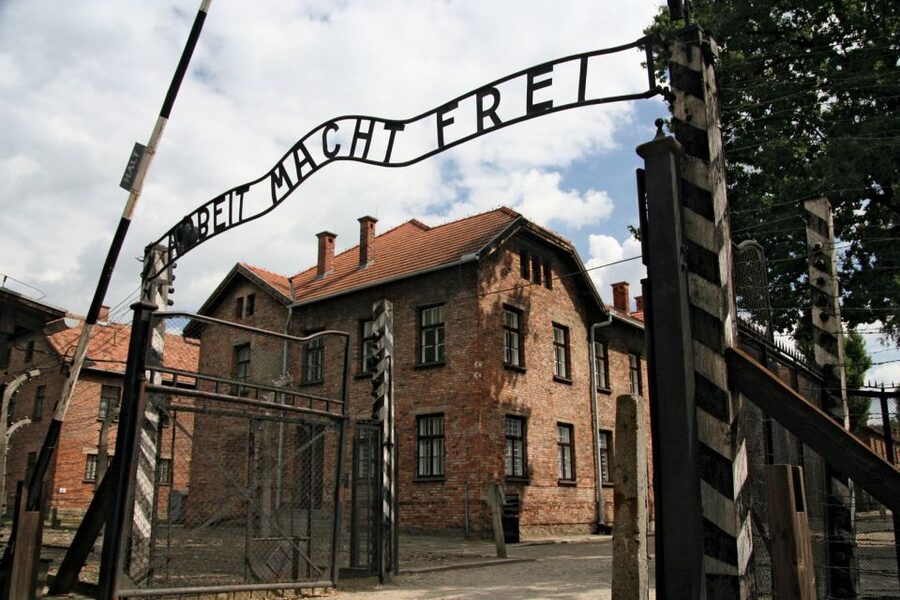
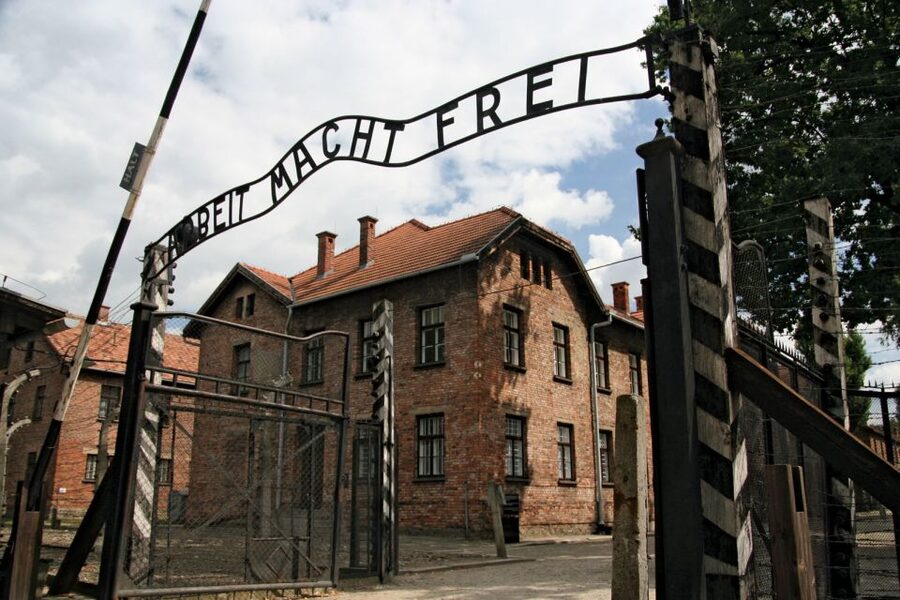
The first main part of the visit takes place at Auschwitz I. This is the older camp, with rows of brick buildings that once held prisoners and administrative functions.
The setting is orderly and deceptively calm. That contrast is part of what makes the visit so difficult. The buildings look solid and institutional, but the guide explains the forced labor, imprisonment, punishment, medical abuse, and mass killing carried out within and around them.
The permanent exhibition uses the original buildings and objects to show how prisoners were registered, transported, stripped of belongings, and held under brutal conditions. The most important objects are not presented as curiosities. They help explain the industrial scale and personal cost of the crime.
Your museum guide uses an audio system, with equipment included in the price. This matters because groups can spread out across rooms and courtyards. The guide can speak at a normal volume, and you can hear the explanation without crowding directly around them.
The guides named in the feedback are praised for different strengths. Sabina was described as fluent and exceptionally well informed. Wanda was praised for filling in historical gaps while maintaining a respectful tone. Magda was noted for clear information, and Michal was credited with combining facts and reverence.
There is some variation in guiding style. One visitor felt that a guide moved too quickly and did not always wait for all 29 people to regroup. If you have trouble keeping up, stay near the guide and use the audio equipment carefully. The scale of a group can affect how much time you have to pause in each room.
A few more in Poland
- Pub Crawl 1hr Unlimited Beer + Vodka then Clubs in Katowice
★ 4.2 · 22 reviews - Katowice Old Town Highlights Private Walking Tour
★ 4.9 · 14 reviews - From Krakow: “The Witcher” Ogrodzieniec Castle Private Trip
★ 5.0 · 7 reviews - Auschwitz-Birkenau Tour from Katowice with Private Transfers
★ 4.3 · 7 reviews
Birkenau and the scale of the killing center
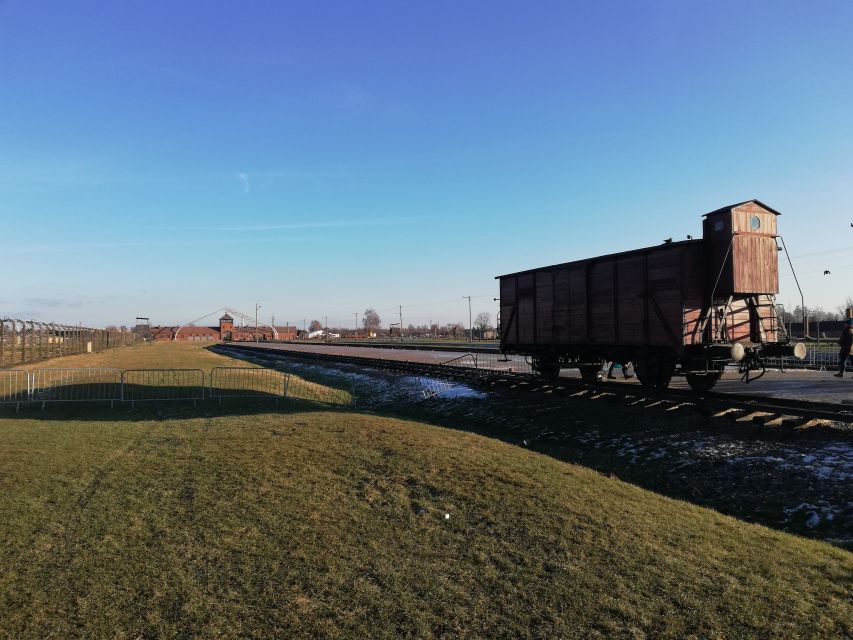
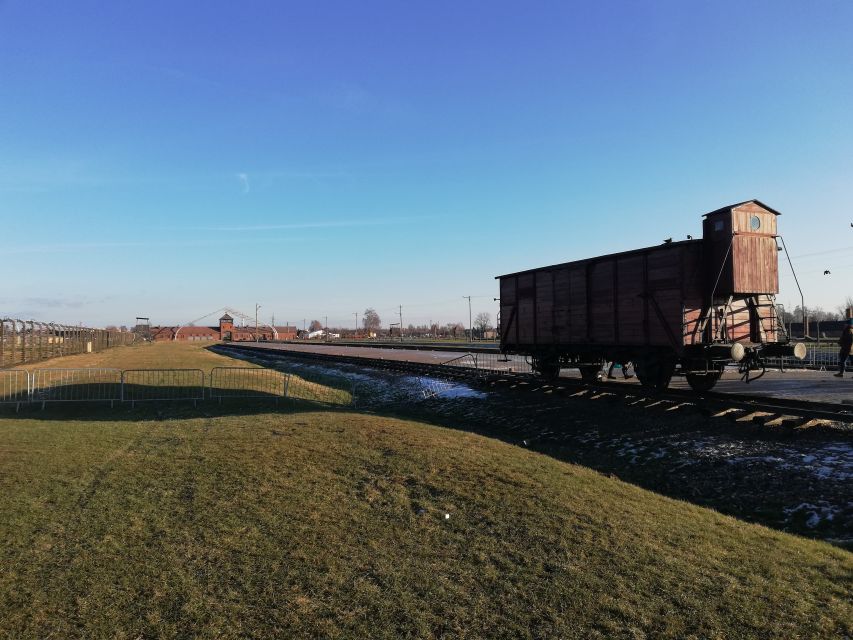
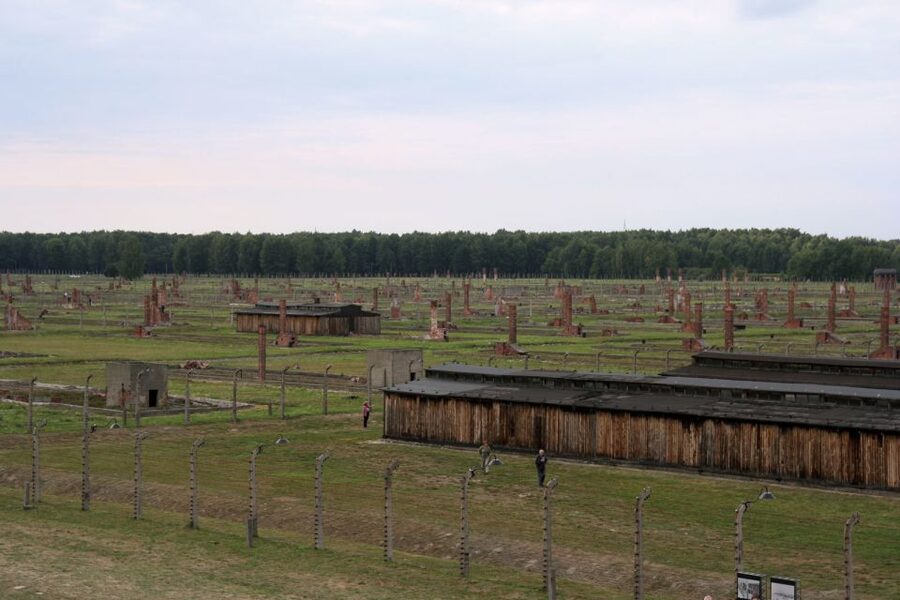
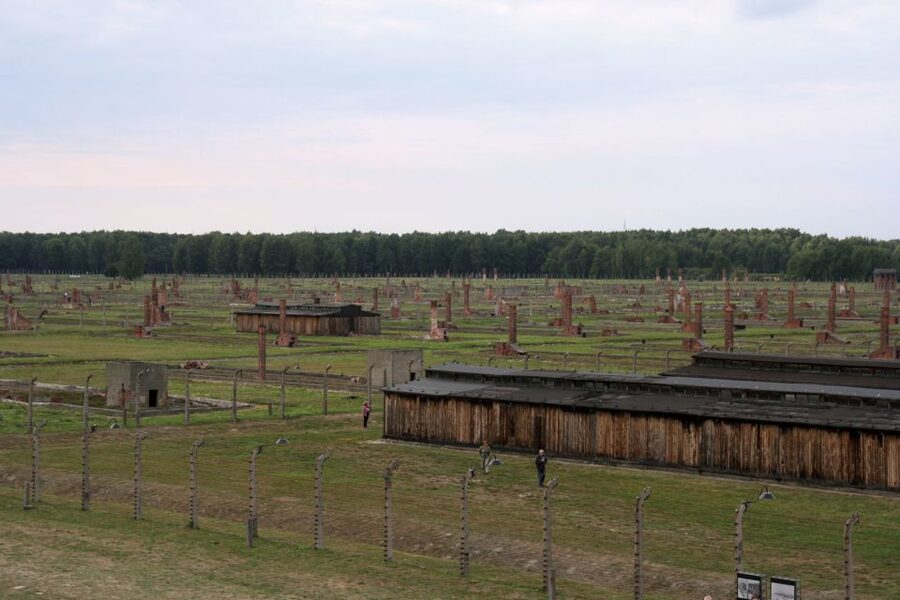
Auschwitz II-Birkenau is the part most people picture when they hear the name Auschwitz. It is much larger and more open than Auschwitz I, with the famous railway entrance, long rows of barracks, watchtowers, fences, and the remains of crematoria and gas chambers.
The guide explains how deportation trains arrived and how people were selected upon arrival. Most were sent directly to their deaths. Zyklon B was used in the gas chambers, and the vast majority of those murdered at Auschwitz were killed there.
You will see the original sites and surviving objects connected with Birkenau. Some buildings remain, while others exist only as ruins or foundations. The destroyed gas chambers are especially powerful because the remains show the attempt to erase evidence of the crime, while also leaving enough behind to reveal how the system worked.
The open size of Birkenau is important. At Auschwitz I, rooms and objects bring the story close to you. At Birkenau, the long distances and repeated barracks show the scale of the camp. You can better understand that this was not a single building or isolated prison. It was a vast system designed to process and kill people.
Expect weather to shape the visit. Rain, wind, heat, and cold can make Birkenau physically uncomfortable because much of the tour takes place outdoors. One group completed the visit in heavy rain but still found the experience worthwhile. Bring suitable clothing and water, since food and drinks are not included.
This is also where you need to slow down emotionally. The tour is guided, but no guide can make the place easy. Leave room in your day afterward rather than scheduling a lively attraction immediately after returning to Katowice.
A guide who gives the site its meaning
The museum guide is the heart of the experience. Transport can be punctual, tickets can be ready, and the route can be efficient, but the visit depends on how the history is explained.
The best guides use a measured tone. They do not dramatize the suffering or turn the memorial into entertainment. Instead, they explain the political system, the camp structure, prisoner treatment, deportations, and killing process in direct language.
That approach helps you understand the difference between a concentration camp and an extermination camp. Auschwitz I and Birkenau were parts of a wider Nazi system, but they did not serve exactly the same purpose. The guide’s job is to show how detention, forced labor, selection, and mass murder operated together.
The English-language guiding has received very strong praise. Guides have answered follow-up questions, explained difficult subjects clearly, and handled the emotional weight with care. This is especially useful if you know the broad outline of the Holocaust but want to understand what you are seeing in front of you.
There are limits. Museum groups may be large, and the guide may need to keep a strict schedule. You should not expect a private conversation at every stop. If you want to ask something, note it mentally and ask during a pause rather than interrupting a sensitive explanation.
Timing changes are the biggest practical weakness
The listed duration is six hours, but the exact departure time is not always firm. Museum overbooking and entrance limits can lead to changes even after you have reserved.
A planned 9:00 start has been moved to 10:30 for some people. Others have received an early 6:30 pickup, and some bookings have shifted by only 30 minutes. The operator normally communicates changes by email, so check your inbox the day before and again on the morning of the tour.
This matters more than it may first appear. A late change can affect breakfast, train connections, other tours, or a planned evening activity. I recommend keeping the entire day open and avoiding nonrefundable plans around the original departure time.
The upside is that these changes come from strict museum capacity rules rather than poor sightseeing design. Auschwitz cannot simply admit unlimited numbers at once. The tour operator must work with the available entry slot.
If a fixed departure time is essential, you may prefer an independently arranged visit with a confirmed museum time, though transport and ticket planning then become your responsibility. If flexibility matters more, this tour offers a practical way to secure entry from Katowice.
What the $114 price really buys you
At $114 per person, this is not the cheapest way to reach Oświęcim. You are paying for more than a ride, though.
The price includes the skip-the-line entrance ticket, an English-speaking tour leader, the English-speaking museum guide, required sightseeing equipment, and hotel transport when that option is selected. Food and drinks are not included.
The main value is reduced hassle. You do not need to work out the route from Katowice, coordinate local transport at Auschwitz, find the entrance process on your own, or worry about whether tickets are still available. Your host gets you to the site, provides the ticket, and explains where to meet for the return journey.
That convenience is especially useful for a last-minute visit. One booking was made shortly before the trip after other ticket options had sold out. Another visitor described the skip-the-line access as worth the cost because hundreds of people were waiting outside.
The value is weaker if you already have confirmed museum tickets and comfortable transport arranged. In that case, you are mainly paying for the organized transfer and guide coordination. For most people staying in Katowice, however, the package is reasonable because Auschwitz is not a casual stop you want to mishandle.
Free cancellation up to 24 hours before departure and the reserve-now-pay-later option also reduce booking risk. Still, the time-change issue means you should not reserve it alongside tightly fixed plans.
Who should book this experience
I would recommend this tour to first-time visitors who want a clear, organized introduction to Auschwitz-Birkenau from Katowice.
It suits you particularly well if:
- You are staying in a Katowice hotel and want door-to-door transport.
- You are visiting at short notice and need help securing admission.
- You prefer an English-speaking guide rather than reading the site alone.
- You want the original Auschwitz buildings and Birkenau included in one half-day trip.
- You would rather avoid public transport and complicated local arrangements.
It is less suitable for children under 13, since the subject matter is severe and the visit is not designed as a family attraction. Parents or guardians decide, but you should think carefully about a child’s age and ability to process the material.
It is also not suited to anyone seeking a light or entertaining outing. The experience is educational and meaningful, but it is painful by design. That is not a fault. It is the reality of the place.
The tour is listed as wheelchair accessible, though the visit includes outdoor areas and original historic structures. If you have specific mobility needs, confirm the details before booking.
Practical tips for a respectful visit
Read every message from the operator, especially the day before departure. Timing changes are the single issue most likely to surprise you.
Keep your bag small. The maximum hand-luggage size is 30 by 20 by 10 centimeters. Larger luggage must remain on the bus, so do not arrive with a suitcase you need during the visit.
Wear comfortable shoes and dress for the weather. Birkenau is exposed, and rain can continue for hours. Carry water, since food and drinks are not included.
Bring your passport or ID card. Even if you do not expect to need it, it is specifically required information for the visit.
Treat the memorial as a place for quiet attention. Photography rules and museum instructions apply, and your guide will direct you. Allow yourself a little silence after the tour. You may find that the facts continue to settle in long after you leave the grounds.
Should you book the Katowice Auschwitz tour?
Yes, if you want the simplest reliable route from Katowice and can accept a flexible departure time. The transport is repeatedly praised for being punctual and comfortable, the English-language museum guides are generally strong, and the included ticket coordination removes a great deal of stress.
I would book it for a first visit, especially if tickets elsewhere appear unavailable. I would not book it on a day when you have a train, flight, or important appointment tied to the original start time.
The strongest reason to choose this experience is not luxury. It is practical access to a difficult place, with a guide who can provide the facts and respect the setting deserves. At $114, it offers good value for visitors who want transport, admission, and expert interpretation handled together.
FAQ
How long does the Auschwitz-Birkenau tour from Katowice last?
The stated duration is six hours, including transport and the visit.
How far is Auschwitz from Katowice?
Auschwitz is located near Oświęcim, about 25 kilometers, or 15.5 miles, from Katowice.
Is hotel pickup included?
Hotel pickup and drop-off in Katowice are included if you select that option.
Can I be picked up from a hostel or Airbnb?
No. Pickup and drop-off are available only at hotels in Katowice. If you stay in a hostel, Airbnb, or private residence, use the city-center meeting point.
What language is the tour conducted in?
The live tour guide and audio guide are in English.
Does the tour include skip-the-line admission?
Yes. A skip-the-line entrance ticket is included.
Do I need to bring identification?
Yes. You should bring a passport or ID card.
What size bag can I bring?
Hand luggage must be no larger than 30 by 20 by 10 centimeters. Larger luggage must stay on the bus during the visit.
Is the tour suitable for children?
The tour is not recommended for children under 13 because of the subject matter. Parents or guardians make the final decision.
Can the start time change after booking?
Yes. Start times can change because of museum entrance capacity. Check your email before the tour and keep your schedule flexible.
Just added in Poland
- Historical Walking Tour of Jewish Warsaw★ 5.0 · 68 reviews
- Deluxe Polish Food Tour Experience in Warsaw★ 5.0 · 19 reviews
- CO2-Offset Arrival Transfer from Warsaw Airport to Warsaw City★ 5.0 · 1 review
- Amazing photo walk through the Old town of Warsaw★ 5.0 · 32 reviews
- 8-day tour around Poland by private car★ 5.0 · 2 reviews
- 2 Hour Super Segway City Tour of Warsaw★ 5.0 · 5 reviews
- Electric Scooter Tour: Full Tour – 3-Hours of Magic!★ 5.0 · 3 reviews
- 2h Rental of Motorboat for 10 in Warsaw no License Needed★ 5.0 · 1 review