
REVIEW · AUSCHWITZ-BIRKENAU MEMORIAL TOURS
Auschwitz-Birkenau – Skip the Line Tickets
Memory demands time. This four-hour Auschwitz-Birkenau tour gives you guided access to both sites, with a headset so you can follow the official guide clearly. I like the historical context and the chance to see more than I would on my own, and I also like the skip-the-line entry, especially during busy periods.
The main concern is organization. Some bookings have faced missed meeting arrangements or unwanted time changes, while a few guided groups felt rushed. At $48.15 per person, this can be good value when everything works, but you should check the meeting instructions and schedule carefully.
In This Review
- Key points to know before booking
- What this Auschwitz-Birkenau tour is really for
- Meeting at Brzezinka and finding the right entrance
- Auschwitz I: buildings, exhibits, and a careful first impression
- The transfer to Birkenau and the value of the second site
- Why the headset matters in a group of 30
- A moving experience, but not an easy one
- Is $48.15 a fair price?
- Who will get the most from this four-hour visit?
- Booking advice for a solemn day
- Should you book Auschwitz-Birkenau Skip the Line Tickets?
- FAQ
- How long does the Auschwitz-Birkenau tour last?
- Are admission tickets included?
- Is transportation included?
- Where does the tour start?
- How large is the group?
- Is a guide and headset provided?
- Can I cancel for a full refund?
Key points to know before booking
- Two separate sites in one visit: You spend about 1.5 to 2 hours at Auschwitz I and 60 to 75 minutes at Auschwitz II-Birkenau.
- A guide adds essential context: The official guide explains the buildings, exhibits, and human stories that are easy to miss alone.
- Headsets help in a large group: Groups can reach 30 people, so the audio system matters.
- Transportation is not included: You must reach the meeting point in Brzezinka yourself.
- The pace can be demanding: Expect several hours on foot and limited flexibility once the group is moving.
- Book early and verify everything: This experience is often reserved about 23 days ahead, but some scheduling and meeting problems have occurred.
What this Auschwitz-Birkenau tour is really for
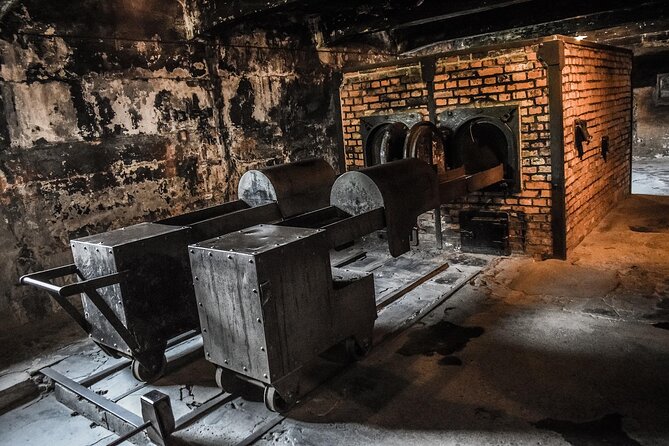
A visit to Auschwitz-Birkenau is not a normal sightseeing stop. The setting is quiet, serious, and emotionally difficult. You are not simply looking at old buildings. You are moving through a place connected to the murder, imprisonment, and suffering of millions of people during the Second World War.
That is why I see a guided visit as more than a convenience. You can read about the camps before arriving, but a good guide helps connect the displays, buildings, and distances into a clear story. The guide also points out details you could easily walk past without understanding their meaning.
This tour is aimed at independent visitors who do not want a full package with transportation from Krakow or another city. You arrange your own way to the meeting point, then join a local host and an authorized museum guide. That arrangement keeps the tour focused on the memorial itself, but it also means you must plan the journey carefully.
The advertised price is $48.15 per person. For a guided visit lasting around four hours, with admission and a licensed guide included, that is a reasonable price if you value structure and interpretation. It is less attractive if you prefer to move slowly, read every display, or avoid a group of up to 30 people.
More Auschwitz-Birkenau memorial tours:
- From Krakow: Auschwitz-Birkenau Guided Tour & Hotel Pickup
★ 4.5 · 33,358 reviews - From Krakow: Auschwitz-Birkenau Guided Tour & Hotel Pickup
★ 4.5 · 29,340 reviews - Krakow: Auschwitz Guided Tour with Optional Hotel Pickup
★ 4.5 · 15,280 reviews
Meeting at Brzezinka and finding the right entrance
The listed starting point is Męczeństwa Narodów 14, 32-600 Brzezinka, Poland. The ticket redemption point is listed separately at the Memorial and Museum Auschwitz-Birkenau, Więźniów Oświęcimia 55, 32-600 Oświęcim.
That difference matters. Do not assume that the first address is simply the same place as the main museum entrance. Read your confirmation closely and make sure you know which point applies to your chosen time. The local host is supposed to meet you, accompany you to the official guide, and offer advice on planning the visit.
This is the part of the experience where I would allow extra time. A missed meeting point can ruin the whole day, and the serious nature of the visit does not make last-minute confusion any easier. Several poor experiences involved a host not appearing, an unanswered phone, or a booking that the local operator could not locate.
The practical rule is simple: save the meeting details offline, arrive early, and keep your booking confirmation available. Bring your passport or identity card, as this has been specifically advised for entry. The site is near public transportation, but transportation itself is not part of the price.
Auschwitz I: buildings, exhibits, and a careful first impression
The first part at Auschwitz lasts about 1.5 to 2 hours. This is usually the more structured and museum-focused portion of the visit, with preserved buildings and indoor exhibits.
Your guide leads the group through the grounds and explains what you are seeing. The value here is not speed. It is the connection between the physical place and the evidence displayed inside it. Personal belongings, photographs, documents, and captions make the scale of the crimes more difficult to keep at a distance.
A guide can also explain why certain buildings matter, how the site was organized, and how Auschwitz functioned within the Nazi camp system. Without that framework, you might recognize famous images but miss how the parts fit together.
The official guide is licensed by the memorial, which is important. Some of the strongest experiences have come from guides who explained the subject with care, answered questions, and told individual stories without turning the visit into a dry lecture. Halina received particular praise for clear German explanations and thoughtful answers. Magdalene was also remembered for keeping the group engaged from beginning to end.
Language quality can vary, however. One English-language group found the guide difficult to understand because of a strong accent and static in the headset. That does not mean every guide or headset will have the same problem, but it is a fair warning. If you cannot hear, tell the guide or host promptly rather than quietly losing half the explanation.
The group size can reach 30. That is not enormous by ordinary tour standards, but it is large for a place that calls for silence and personal reflection. You may need to stay close to the guide, and you will not always be able to pause where you wish.
The transfer to Birkenau and the value of the second site
The tour then continues to Auschwitz II-Birkenau, with about 60 to 75 minutes allocated there. The two sites are different in character, and seeing both is essential to understanding the full scale of the complex.
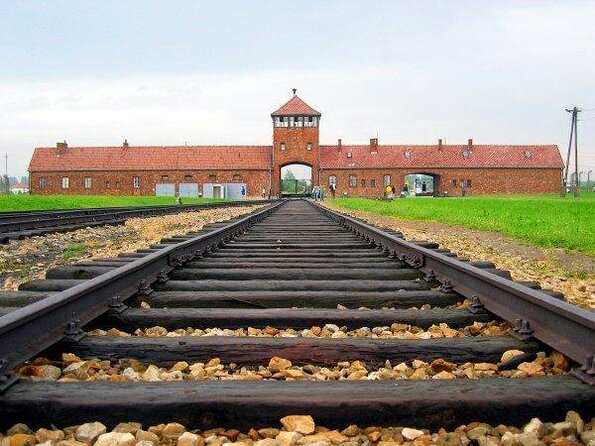
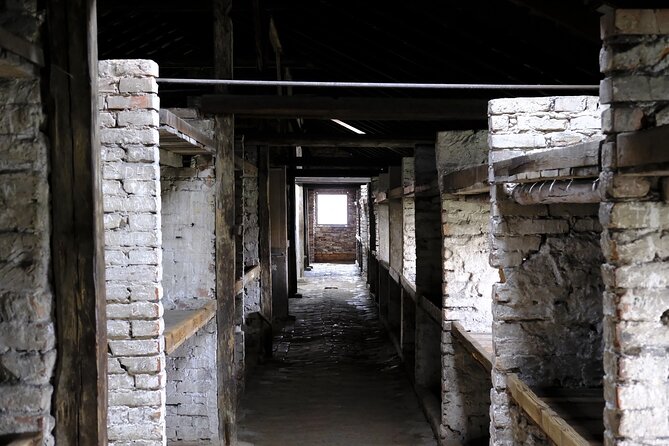
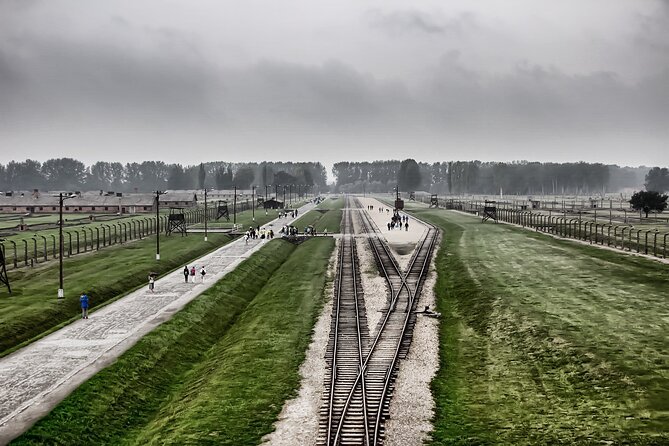
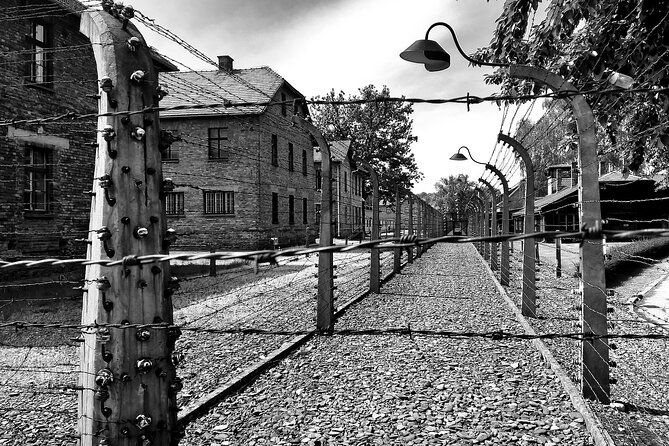
Birkenau is much more open and spread out. The distances help you grasp the size of the operation in a way that photographs cannot. The railway area, barracks, and remaining structures create a stark setting, but the guide’s explanation gives those spaces meaning.
The transfer between the sites is not described as included transportation. The supplied information says transportation is not included, so confirm how your particular departure handles the movement between Auschwitz and Birkenau. Some groups have had help with the shuttle between the sites, while another account notes that museum rules did not allow the group to use the museum shuttle bus.
This is also where timing becomes important. A 60 to 75 minute visit sounds substantial, but Birkenau covers a large area. You are likely to feel that the schedule is tight, especially if you want to stop and read signs or take a quiet moment. One person who wanted to enter every bunker was advised to book a full-day tour instead.
I would choose this four-hour option if you want the main story of both sites. I would not choose it if your purpose is a slow, research-heavy visit with time inside every accessible structure. The itinerary gives you a serious introduction, not unlimited time.
A few more in Kraków
- Krakow–Zakopane: Cable Car, Chocholow Baths, Cheese & Vodka
★ 5.0 · 10,720 reviews - Krakow: Auschwitz-Birkenau Guided Tour with Pickup & Lunch
★ 4.5 · 9,800 reviews - From Krakow: Wieliczka Salt Mine Tour
★ 4.6 · 9,393 reviews - Krakow: Auschwitz-Birkenau Guided Tour Pickup/Lunch Options
★ 4.5 · 9,057 reviews
Why the headset matters in a group of 30
The headset is a small feature with a big effect. At Auschwitz, silence and distance can make it hard to hear a guide without one. With a headset, you can stand slightly apart from the main cluster and still follow the explanation.
That said, equipment only helps when it works properly. Static was a problem for at least one group, and a guide who speaks too quickly can still be difficult to follow. The headset is a useful safeguard, not a guarantee of perfect communication.
Ask for help immediately if the sound is poor. You should not spend the most important parts of the visit trying to guess what is being said. The group may not be able to wait for long, so speak up early.
The headset also encourages the guide to keep talking while the group walks. That can be useful, but it contributes to the feeling of constant movement. Some people appreciated the steady flow of information. Others felt they were being hurried past captions and displays.
A moving experience, but not an easy one
The strongest reason to book this tour is the quality of the explanation. Several people found the visit informative, thoughtful, and far more meaningful with a guide than it would have been alone. The best guides placed individual lives at the center of the story, which helped prevent the visit from becoming only a series of dates and statistics.
Expect the material to be upsetting. One useful piece of advice is to do some basic reading before you arrive, so you know what kind of visit you are about to undertake. Preparation will not make the place easy, but it can help you understand what you are seeing and give you space to process it afterward.
The pace is a genuine concern for anyone with limited mobility or low stamina. The tour requires a moderate level of physical fitness, and the guide may need to keep to a fixed schedule. One French-language visit was shortened for a person who could not keep up, despite repeated requests to slow down. That is a serious weakness for anyone who needs frequent rests.
People with service animals are allowed, according to the tour information. Still, the walking demands and group pace should be considered before you reserve. If someone in your party has difficulty walking for several hours, contact the provider before booking and ask what assistance is possible.
Hot weather creates another practical issue. A paid lunch package was not delivered on one booking, leaving the group without the expected food or drink during a visit in very warm conditions. Food is not included in the stated tour package, so bring what you are permitted to bring and do not assume extras listed in a separate booking will arrive unless they are confirmed.
Is $48.15 a fair price?
At $48.15, you are paying for admission, an authorized guide, the headset, and the convenience of a reserved entry. The strongest value comes from the explanation. If you know little about Auschwitz, the guide can save you hours of preparation and help you understand details that would otherwise remain disconnected.
Skip-the-line access is also useful, but it should not be the only reason you book. The memorial is a controlled site with scheduled entry, and the real benefit is having your visit arranged at a particular time. The phrase skip the line does not remove the need to arrive at the correct meeting point or follow museum security and entry rules.
The price becomes less convincing when the operator changes your chosen time, fails to meet you, or provides a guide who is hard to understand. There have been cases where a confirmed booking was not recognized by the local operator, leaving no alternative tour available that day. Those are not minor annoyances when you have built an entire visit around Auschwitz.
Free cancellation is available up to 24 hours before the start time. That gives you some protection if your plans change, but cancellations or changes made inside the final 24 hours are not refunded. The cut-off follows local time.
Who will get the most from this four-hour visit?
I would recommend this option to you if:
- You want both Auschwitz I and Birkenau in one morning or afternoon.
- You prefer an expert explanation rather than reading everything alone.
- You are comfortable walking with a group and keeping to its pace.
- You can arrange your own transportation to the Brzezinka meeting point.
- You want a focused visit without paying for a broader city-to-city excursion.
I would look for a longer or more flexible option if you want to examine every caption, pause often, or enter more of the remaining structures. A full-day tour is the better fit for anyone hoping to see every bunker or spend extended time at both sites.
Language is another point to check. Guides have led tours in English, German, French, Danish, and other languages, but the quality of delivery can vary. The names Halina and Magdalene were associated with especially positive German and Danish-language experiences, while one French-language group had a poor experience with pace and patience.
Booking advice for a solemn day
Reserve ahead if your schedule is fixed. This activity is booked about 23 days in advance on average, suggesting that popular time slots can disappear well before the date.
After booking, verify the exact start time and meeting address. If the operator asks to move you to another day or offers a much earlier slot, decide carefully. A schedule change may be workable, but it should not be treated as a normal part of the deal.
Arrive with your identification, wear practical shoes, and plan for several hours of walking. Keep the day afterward as open as possible if you can. This is not a stop you rush away from and immediately replace with a noisy attraction.
Should you book Auschwitz-Birkenau Skip the Line Tickets?
I would book it if you want a guided introduction to both Auschwitz and Birkenau and can accept a fixed pace. The guide, headset, and reserved admission offer real value, and the best guides turn a difficult visit into a clear, human account rather than a confusing walk through buildings.
I would not book without first confirming the meeting point, local host, language, and exact time. The mixed record on communication and schedule changes is the main risk. For a careful, independent visitor who prepares properly, this can be a meaningful and efficient way to see both memorial sites. For someone needing a slow pace, extra time, or guaranteed transport, choose a different format.
FAQ
How long does the Auschwitz-Birkenau tour last?
The experience lasts about four hours. The guided portion is around 3.5 hours, with roughly 1.5 to 2 hours at Auschwitz I and 60 to 75 minutes at Auschwitz II-Birkenau.
Are admission tickets included?
Yes. Admission to the Memorial and Museum Auschwitz-Birkenau is included.
Is transportation included?
No. Transportation is not included in the stated package. You must arrange your own transportation to the meeting point, and you should confirm how the transfer between the two sites is handled for your departure.
Where does the tour start?
The listed starting point is Męczeństwa Narodów 14, 32-600 Brzezinka, Poland. The ticket redemption point is listed at Więźniów Oświęcimia 55, 32-600 Oświęcim, Poland, so check your confirmation for the exact instructions.
How large is the group?
The group can have a maximum of 30 people.
Is a guide and headset provided?
Yes. A licensed local guide leads the visit, and a headset is provided so you can hear the commentary.
Can I cancel for a full refund?
Yes, if you cancel at least 24 hours before the experience start time. Cancellations or changes made less than 24 hours before the start time are not refunded or accepted.
Just added in Kraków
- Auschwitz-Birkenau: Fast-Track Ticket & Guided Tour No Transfers★ 3.5 · 17 reviews
- Zakopane & Sleigh Ride with Bonfire – Group Tour from Kraków★ 5.0 · 2 reviews
- Sleigh Ride & Bonfire in Zakopane with Funicular – Private Trip★ 5.0 · 48 reviews
- Thermal Baths & Zakopane – Private Trip from Krakow★ 5.0 · 1 review
- Zakopane & Gubalowka Funicular – Private Winter Tour from Krakow★ 5.0 · 10 reviews
- Divine Mercy Sanctuary – Private Tour from Krakow★ 5.0 · 4 reviews
- stag dog chase Krakow prank★ 5.0 · 4 reviews
- Zalipie Private Tour from Krakow The Painted Village★ 5.0 · 4 reviews