
REVIEW · AUSCHWITZ-BIRKENAU MEMORIAL TOURS
Auschwitz-Birkenau: Guided Tour with Fast Track Ticket
History demands your attention. This Auschwitz-Birkenau tour makes a difficult visit easier to manage with pre-booked fast-track entry and guides at both camps. I like the chance to see Auschwitz I and Auschwitz II-Birkenau in one visit, and I like that the tour is offered in English, Polish, German, Spanish, French, and Italian. The main drawback is that meeting points and start times can shift, so you need to keep your whole day free.
This is not a light sightseeing outing. You will see prison blocks, gas chamber and crematoria remains, and the railway ramp at Birkenau, all while hearing the history from a certified local guide. The $69 price can be good value if you select transport from Krakow, but visitors driving themselves should budget for parking and arrange their own transfer between the two sites.
In This Review
- Key points to know before you go
- Why visiting both Auschwitz sites matters
- The meeting point requires careful attention
- Auschwitz I: a focused introduction to the camp system
- Birkenau: scale, silence, and the railway ramp
- What the fast-track ticket really gives you
- Choosing transport from Krakow or driving yourself
- Timing can change, so protect the entire day
- The emotional weight of the visit
- Is $69 a fair price?
- What to bring and what to leave behind
- Who should book this experience?
- FAQ
- How long does the Auschwitz-Birkenau tour take?
- Does the tour visit both Auschwitz I and Auschwitz II-Birkenau?
- Is transportation from Krakow included?
- Can I bring a large bag or suitcase?
- What languages are available for the guided tour?
- Can the tour start time change?
- Should you book it?
Key points to know before you go
- Two camps, one serious visit: Auschwitz I and Birkenau show different parts of the Nazi camp system, and both are needed for a fuller understanding of the site.
- Fast-track does not mean instant entry: Pre-booked admission helps, but waits of up to 15 minutes can still occur.
- The guide makes the difference: A local guide leads the visit at each camp, with English and five other languages available.
- Transport changes the value: The Krakow option includes transportation, while self-drive visitors pay parking and must arrange the trip between camps.
- Allow the whole day: The stated duration ranges from three to seven hours, and the museum can change the start time the day before.
- Pack light and dress plainly: Bags larger than 30 by 20 by 10 centimeters are not allowed, and weather-appropriate clothing is essential.
Why visiting both Auschwitz sites matters
Auschwitz is not one compact museum. It is a large memorial complex made up of Auschwitz I and Auschwitz II-Birkenau, located a short drive apart. Seeing only one site leaves you with an incomplete picture, so I consider the two-part itinerary the most important feature of this experience.
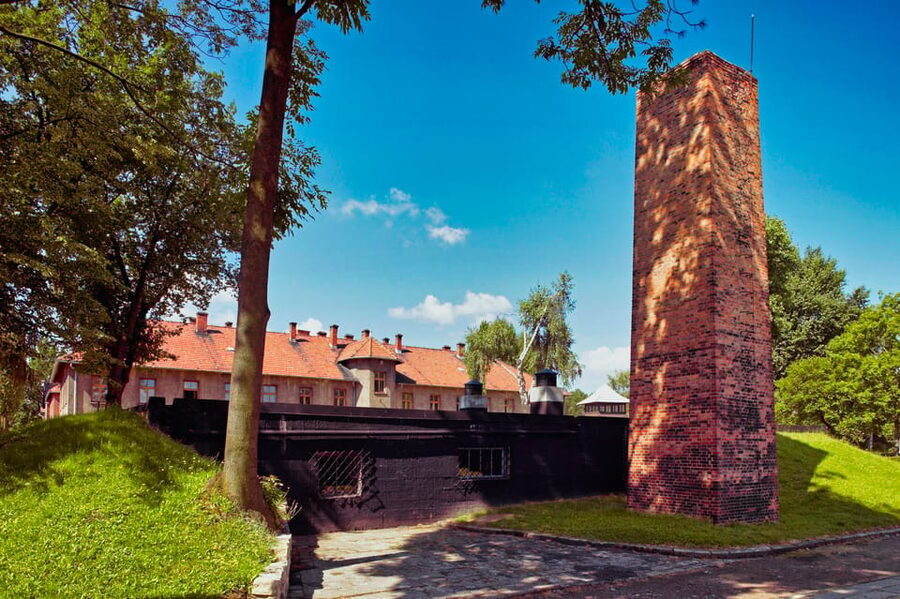
Auschwitz I is the older camp and includes remaining prison blocks and museum displays. The buildings give the visit a close, enclosed feeling. You move through spaces that show the machinery of imprisonment, persecution, and mass murder in a way that books and films cannot fully convey.
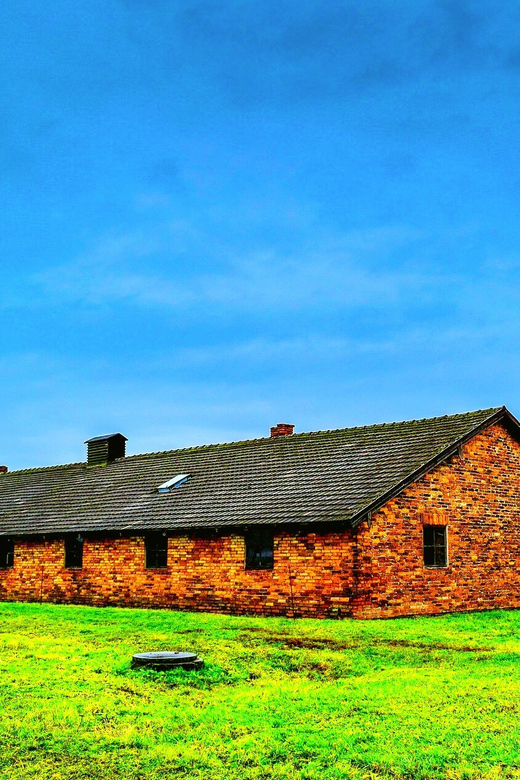
Birkenau is far more open and physically expansive. Its railway ramp, barracks, ruins, gas chamber and crematoria remains, and long lines of fence help you understand the scale of the camp. The first site can feel concentrated and museum-like; the second gives you a stark sense of distance and size.
The contrast between the two camps is valuable. Auschwitz I helps explain how the camp operated through preserved buildings and exhibits. Birkenau shows the scale of deportation and mass murder, with the railway line providing a direct link to the arrival of prisoners.
More Auschwitz-Birkenau memorial tours:
- From Krakow: Auschwitz-Birkenau Guided Tour & Hotel Pickup
★ 4.5 · 33,358 reviews - From Krakow: Auschwitz-Birkenau Guided Tour & Hotel Pickup
★ 4.5 · 29,340 reviews - Krakow: Auschwitz Guided Tour with Optional Hotel Pickup
★ 4.5 · 15,280 reviews
The meeting point requires careful attention
The tour begins with an English-speaking host who provides your tickets before you enter the museum. The exact meeting point depends on the option you book, and this is one area where you should take extra care.
At busy times, several groups and shuttle buses may gather in the same area. Some buses may carry the GetYourGuide logo, while the guide may wear identification connected to the local operator, Poland Tours. Give yourself extra time to locate the correct person rather than arriving at the last possible minute.
The parking area can also cause confusion. There are at least three parking sites around the complex, and the meeting point may not be beside the lot where you leave your car. If you cannot find your host, use the contact details in your booking confirmation. In one reported case, the guide eventually called from a private number after the main contact number did not answer.
This is a small but important point: meeting instructions matter here. Read the confirmation carefully, check the operator name, and avoid assuming that the most obvious bus or guide is yours.
Auschwitz I: a focused introduction to the camp system
Once inside Auschwitz I, you join a museum guide in your selected language. The guide explains the site, the camp system, and the persecution of Jews, Poles, Roma, and other groups targeted by the Nazi regime.
The remaining prison blocks contain the most concentrated part of the visit. You will encounter displays and preserved spaces connected with the lives and deaths of prisoners. These exhibits can be extremely distressing, so you should expect an emotional experience rather than a standard sightseeing tour.
A good guide helps you understand what you are seeing without turning the visit into a rushed list of dates. Several guides have been praised for clear explanations, strong command of the subject, and the ability to answer questions. Martin, in particular, received warm praise for combining detailed historical explanations with a human approach during the long day.
The guide’s job is especially important because the memorial has many layers. You need context for the buildings, the prisoner blocks, and the preserved evidence. Without that context, you might see objects and rooms but miss how they fit into the wider system of Nazi crimes.
The pace is not fully controlled by the booking company. The memorial’s visitor service sets the tour speed and duration, so the group may move more quickly or slowly than you expect. A short break of about 10 minutes is included, but this is still a demanding visit.
Birkenau: scale, silence, and the railway ramp
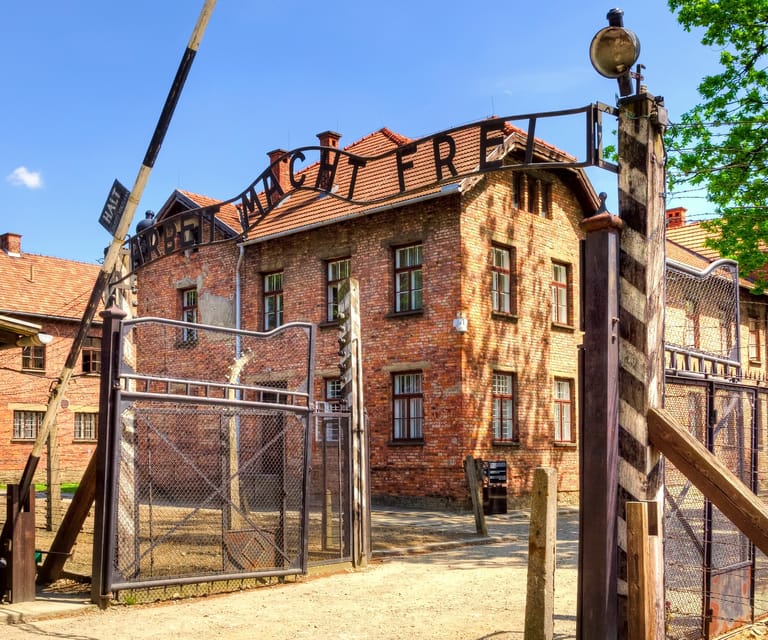
After Auschwitz I, the itinerary continues to Auschwitz II-Birkenau. If you book the Krakow transport option, the transfer is included. If you arrive by car, transport between the two camps is not included, so you must plan for that separately.
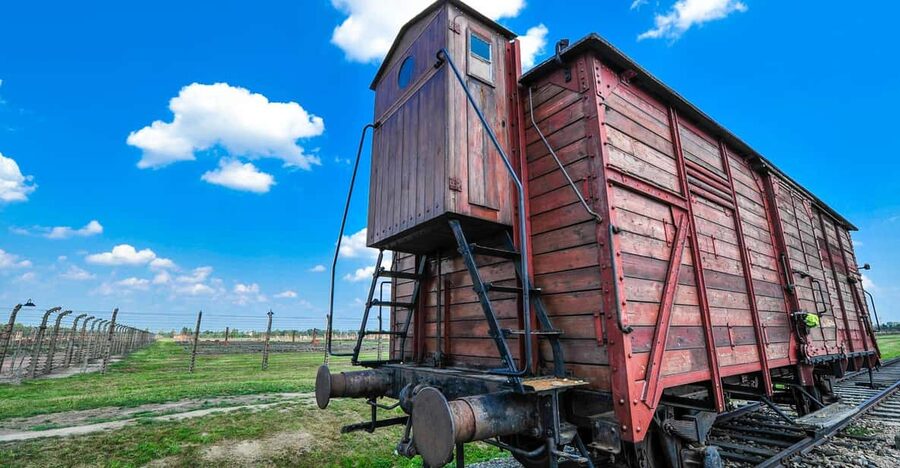
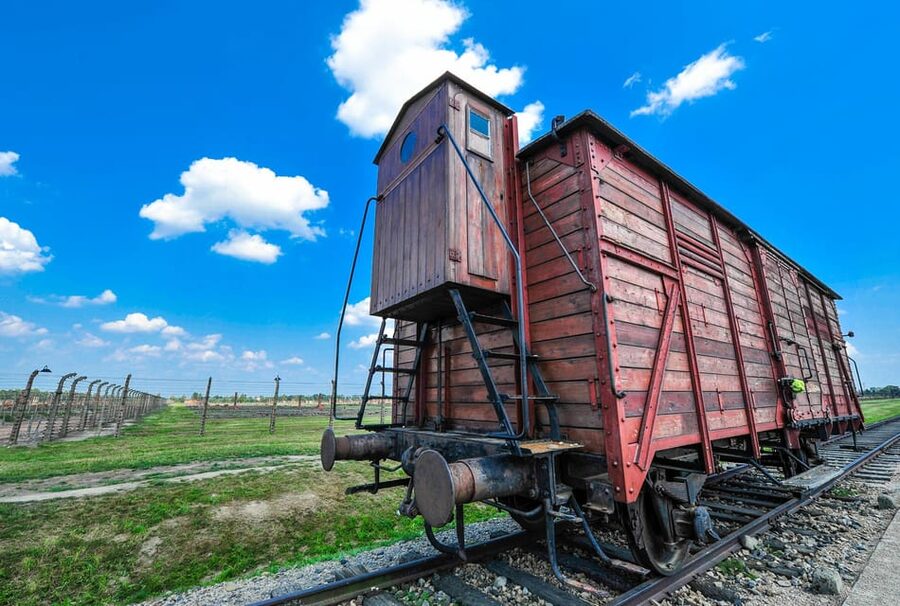
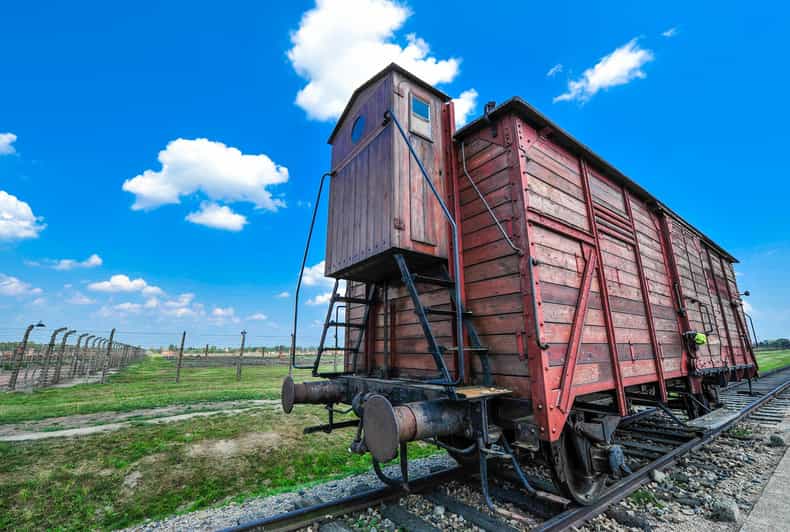
Birkenau is where the physical scale becomes difficult to ignore. The railway ramp is a central feature because it marks the point where prisoners were transported into the camp. From there, many were selected for forced labor or sent directly to their deaths.
The remaining barracks, fences, ruins, and open ground create a different kind of experience from Auschwitz I. There are fewer enclosed museum rooms and more space to take in. That openness can make the site feel even more severe, because you can see how far the camp extended.
The gas chamber and crematoria remains at Birkenau are presented as memorial evidence. You should not expect a polished museum setting. The power of the visit comes from the preserved ruins and the explanation of what happened there.
Wear shoes and clothing suited to the weather. The tour takes place outdoors as well as indoors, and the instructions specifically require appropriate clothing. Rain, cold, wind, or heat can change how tiring the visit feels.
A few more in Kraków
- Krakow–Zakopane: Cable Car, Chocholow Baths, Cheese & Vodka
★ 5.0 · 10,720 reviews - Krakow: Auschwitz-Birkenau Guided Tour with Pickup & Lunch
★ 4.5 · 9,800 reviews - From Krakow: Wieliczka Salt Mine Tour
★ 4.6 · 9,393 reviews - Krakow: Auschwitz-Birkenau Guided Tour Pickup/Lunch Options
★ 4.5 · 9,057 reviews
What the fast-track ticket really gives you
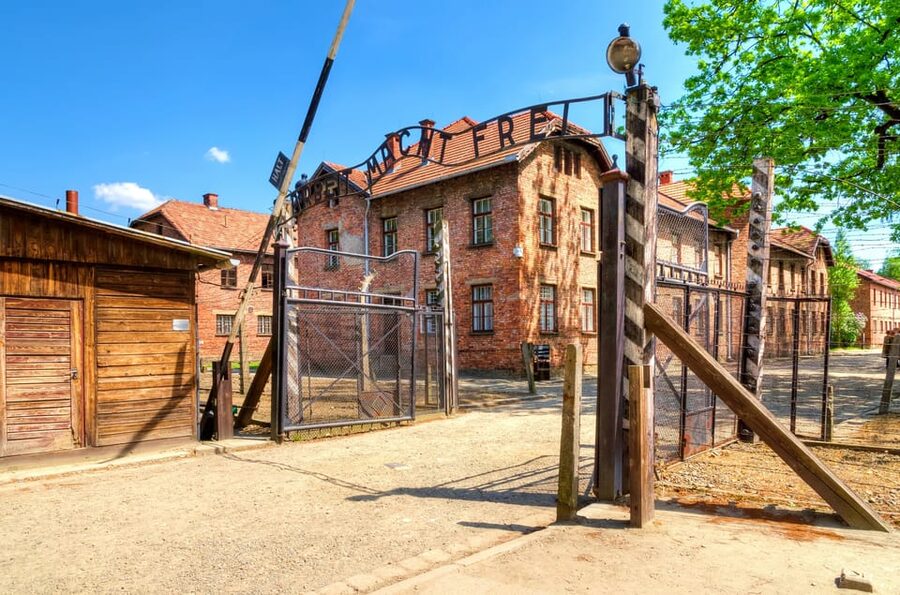
The fast-track ticket is useful, but it is not a magic pass. You skip the standard ticket line, yet waits of up to 15 minutes are still possible because every visitor must pass through the museum’s entry procedures.
The biggest benefit is certainty. Auschwitz tickets can be limited, and a pre-booked place removes some of the stress of trying to arrange admission at the last moment. The ticket also links you to the scheduled guided visit, which is important at a memorial where entry times and group movement are controlled.
You must provide your full name and contact details when booking. Bring the passport or identification document used for the booking, because entry can be refused if the name on the ticket does not match the name on your ID.
Students should also bring a student card if they have one. The information provided for this activity specifically lists it among the items to bring, though the exact effect on the price is not stated here.
Choosing transport from Krakow or driving yourself
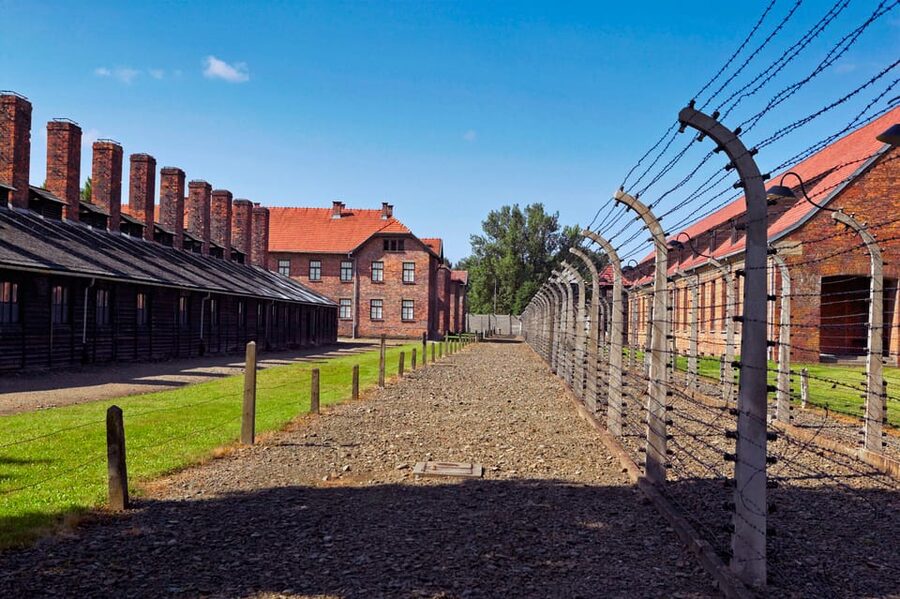
The transport option from Krakow is the simpler choice for most people. It includes the journey to the memorial and reduces the risk of getting lost among the separate parking areas and camp entrances. Several strong assessments of the experience praised the drivers and the organization, although one person found a driver’s one-handed driving unprofessional and unsafe.
If you drive yourself, the tour can still work well, but you take on more responsibility. Parking is not included. One visitor reported paying 20 Polish złoty at Auschwitz I and 40 złoty at Birkenau, so you should be prepared for separate parking charges.
You must also arrange transport between the two camps. This detail is easy to overlook because the two sites are often described as one destination. They are not one walkable museum area, and failing to plan the transfer could mean missing the second half of the tour.
The self-drive option may suit you if you already have a car and want control over your arrival. The Krakow transport option is better if you value a simpler day and want the operator to handle the main connections.
Timing can change, so protect the entire day
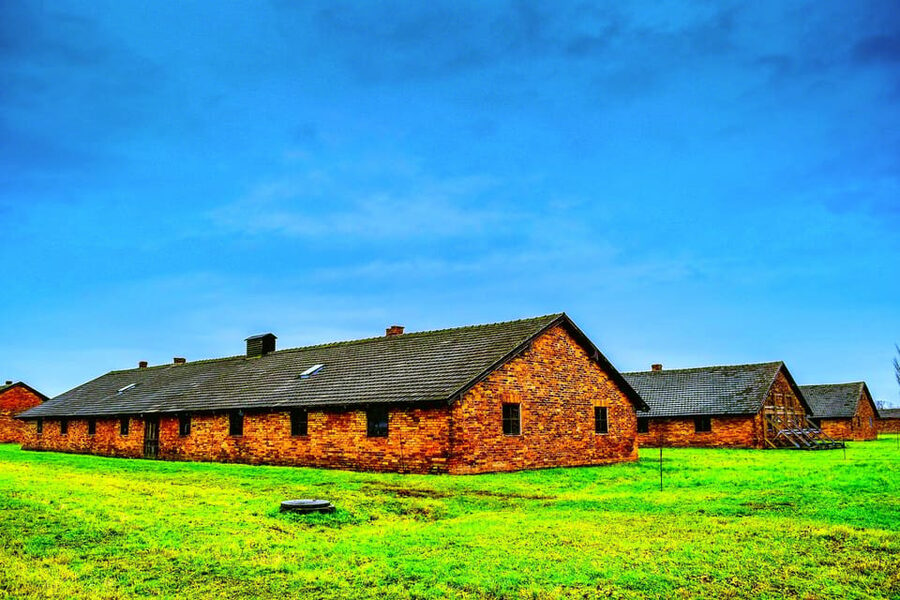
The advertised duration ranges from three to seven hours. A guided visit often takes about three hours inside the memorial, but transport, entry procedures, and scheduling can make the full outing much longer.
The museum may change the start time the day before the tour, depending on guide availability. You receive confirmation by email, so check your inbox and keep your schedule open. Do not book a tight evening train, flight, or restaurant reservation immediately afterward.
This flexibility is not ideal if you want a fixed timetable, but it reflects how the memorial manages its visitor service. The operator cannot fully control the pace, duration, or guide allocation once the visit is under way.
Language availability is another timing factor. Tours are offered in English, German, Spanish, French, Polish, and Italian. If too few people book a particular language, the tour may be given in English instead. If language is important to you, read the final confirmation closely.
The emotional weight of the visit
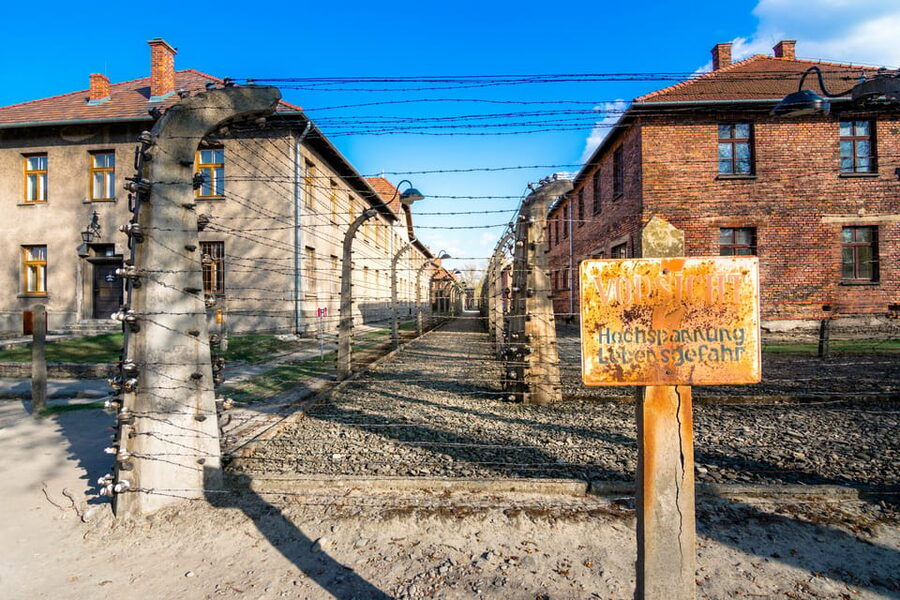
You should approach Auschwitz with patience and respect. The site is a memorial to people murdered by the Nazi regime, including Jews, Poles, Roma, and other persecuted groups. The visit is intended to educate, but it can also bring strong emotions.
A guide can help you place the evidence in context and explain the meaning of the buildings and remains. The strongest descriptions of the experience repeatedly point to the guides’ ability to make the visit informative, serious, and human rather than dull or mechanical.
That does not mean the tour is comfortable. You will see evidence of terrible crimes, and some displays may be difficult to face. I would not schedule this as a casual stop between cheerful attractions. Give yourself time afterward to process what you have seen.
Children under 13 are not considered suitable for this activity. People with mobility impairments and wheelchair users are also advised not to book it. The combination of walking, outdoor ground, museum rules, and the emotional subject makes this a better choice for older teenagers and adults who are prepared for the setting.
Is $69 a fair price?
At $69 per person, the price is reasonable if you choose transport from Krakow and want an organized guided visit. You are paying for reserved admission, a guide at each camp, and, with the relevant option, transportation. For a major memorial with controlled entry and limited tickets, that convenience has real value.
The price is less attractive if you drive yourself. You still receive the guided tour and fast-track admission, but parking costs extra and transport between Auschwitz I and Birkenau is not included. Add those costs before comparing the options.
The overall rating is 3.9 from 433 reviews, which suggests a generally positive but not flawless experience. The most consistent strengths are the historical guidance, smooth organization once the tour begins, and helpful drivers or hosts. The main weaknesses are unclear meeting points, occasional delays or late guides, transport confusion for self-drive visitors, and the possibility that the final language or start time changes.
Because the activity is non-refundable, book only after checking your date, names, meeting instructions, and transport choice. Museum tickets are also non-refundable, so a last-minute change of plan can be costly.
What to bring and what to leave behind
Bring your passport or ID card, your student card if relevant, and clothing suited to the weather. You will spend time both inside buildings and outside at Birkenau, so a coat, rain protection, or sun protection may matter depending on the forecast.
Large luggage is not permitted. The maximum stated bag size is 30 by 20 by 10 centimeters, so leave suitcases and oversized daypacks elsewhere. Do not arrive assuming that a large backpack will be stored inside the museum.
I would pack only essentials: identification, booking information, water if permitted under current museum rules, and weather protection. The less you carry, the easier it is to pass through entry and move with the group.
Who should book this experience?
I would recommend this tour if you are staying in Krakow, want a guide, and prefer not to handle museum tickets and transport on your own. It is also a sound choice if you want to visit both camps in one carefully arranged day.
The tour suits adults and children over 13 who can manage several hours of serious historical material and walking. It is not a good match for anyone seeking a relaxed excursion, a flexible arrival time, or an accessible route for wheelchair use.
If you are driving, read the instructions twice and plan the transfer between camps before leaving. If you need a specific language, be ready for the possibility of an English tour if the minimum number is not reached.
FAQ
How long does the Auschwitz-Birkenau tour take?
The activity lasts between three and seven hours. The final duration depends on the memorial’s visitor service, transportation, entry procedures, and the scheduled guide program. You should keep the entire day free.
Does the tour visit both Auschwitz I and Auschwitz II-Birkenau?
Yes. The itinerary includes both Auschwitz I and Auschwitz II-Birkenau, including prison blocks, gas chamber and crematoria remains, and the railway ramp at Birkenau.
Is transportation from Krakow included?
Transportation from Krakow is included only if you select that option when booking. The option without transport does not include parking or transportation between the two camps.
Can I bring a large bag or suitcase?
No. Luggage larger than 30 by 20 by 10 centimeters is not permitted inside the museum. Bring only a small bag that meets the stated size limit.
What languages are available for the guided tour?
Guided tours are available in English, German, Spanish, French, Polish, and Italian. If the minimum number for a selected language is not reached, the tour may be provided in English.
Can the tour start time change?
Yes. The start time may change the day before the visit based on the availability of museum guides. Check your email confirmation and avoid making fixed plans immediately afterward.
Should you book it?
Book this tour if you want the practical help of reserved entry, a guide at both camps, and optional Krakow transport. The strongest reason to choose it is not speed alone. It is the structure, context, and reassurance of having someone guide you through a place that can be difficult to understand on your own.
If you drive yourself, check parking and the camp-to-camp transfer before booking. If you need total schedule certainty or a fully accessible visit, choose a different arrangement. For most adults visiting from Krakow, though, this is a sensible way to see both Auschwitz sites with the seriousness and preparation they require.
Just added in Kraków
- Auschwitz-Birkenau – Skip the Line Tickets★ 3.5 · 29 reviews
- Auschwitz-Birkenau: Fast-Track Ticket & Guided Tour No Transfers★ 3.5 · 17 reviews
- Zakopane & Sleigh Ride with Bonfire – Group Tour from Kraków★ 5.0 · 2 reviews
- Sleigh Ride & Bonfire in Zakopane with Funicular – Private Trip★ 5.0 · 48 reviews
- Thermal Baths & Zakopane – Private Trip from Krakow★ 5.0 · 1 review
- Zakopane & Gubalowka Funicular – Private Winter Tour from Krakow★ 5.0 · 10 reviews
- stag dog chase Krakow prank★ 5.0 · 4 reviews
- Divine Mercy Sanctuary – Private Tour from Krakow★ 5.0 · 4 reviews