
REVIEW · AUSCHWITZ-BIRKENAU MEMORIAL TOURS
Auschwitz Birkenau Guided Tour Small Group with Hotel Pick up
Some places ask you to slow down and listen. This Auschwitz-Birkenau tour makes that possible with a licensed museum guide, included entry, and headphones that keep every explanation clear. I especially like the door-to-door pickup from Krakow and the smooth transfer between both camps. The main caution is pace: the walking is substantial, and parts of the visit can feel rushed.
At about $30.23 per person, this is a strong-value way to reach Auschwitz-Birkenau without arranging a bus, buying admission separately, or finding your way between the two sites. I also like the steady communication from the drivers, who confirm pickup details the day before and return you to your accommodation or another place in Krakow.
This is a serious, emotional visit, not a light sightseeing stop. You should allow roughly seven hours, wear good shoes, carry only a small bag, and bring your passport or ID. The tour is well suited to most visitors who want structure and historical context, but it may not suit anyone who needs a slow pace or finds uneven ground difficult.
In This Review
- Key things to know before you book
- Why this visit matters
- Leaving Krakow in a shared minivan
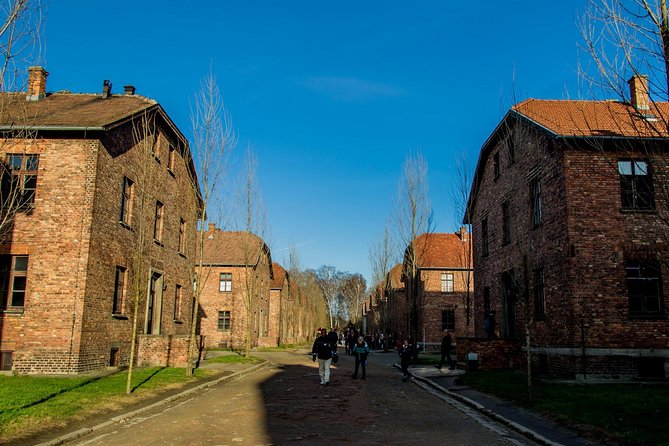
- Auschwitz I: buildings, evidence, and close listening
- The transfer to Birkenau
- A moving visit with a brisk pace
- Walking and mobility: be realistic
- What the $30.23 price really covers
- What to bring and what to leave behind
- Who should book this Krakow Auschwitz tour?
- Final decision: is it worth booking?
- FAQ
- How long does the Auschwitz-Birkenau tour take?
- What time does pickup begin?
- Is hotel pickup and drop-off included?
- Are admission and the museum guide included?
- What size bag can I bring?
- Do I need to bring identification?
Key things to know before you book
- Pickup normally begins between 7:30 and 9:30am: Your exact time is confirmed the day before, and the driver collects people from hotels, apartments, hostels, or agreed meeting points.
- Both camps are included: You visit Auschwitz I and Birkenau, with transport between them and about three and a half hours inside the museum and memorial.
- Headphones make the guide easy to follow: You can look at buildings, photographs, and objects while hearing the commentary without crowding around the guide.
- The group can reach 25 people: This is smaller than a large coach excursion, but it is still a shared tour with a fixed pace.
- Pack very lightly: Bags larger than 30 by 20 by 10 centimeters are not permitted inside the Auschwitz Museum and Memorial.
- Plan food ahead: Food and drinks are not included, although a lunch box may be available for an extra fee.
Why this visit matters
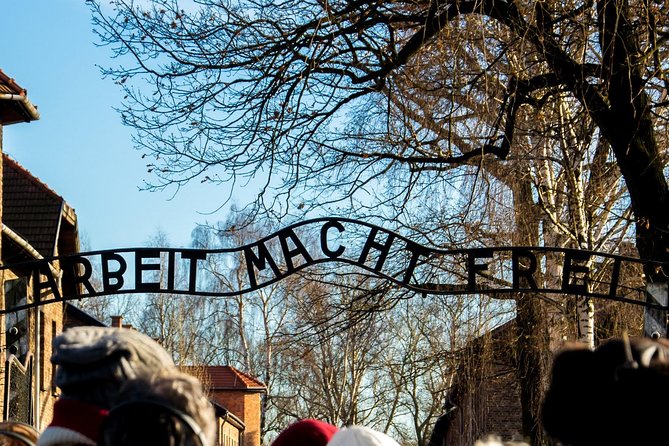
Auschwitz-Birkenau is not simply another museum outside Krakow. It is the preserved site of Nazi concentration and extermination camps, and the visit asks you to face an organized system of imprisonment, forced labor, and mass murder. The buildings, personal belongings, photographs, and open spaces at Birkenau make the subject painfully concrete.
I would not try to squeeze this tour into a busy day filled with cheerful attractions. Give yourself time afterward. The experience can be upsetting and quieting, and that is part of its purpose.
A guide adds useful structure because the site is large and the subject is difficult. You are not left to guess what you are seeing or how the separate buildings fit into the wider story. The guides praised in connection with this tour, including Barbara and Anna, were described as calm, respectful, passionate, and clear in English. That tone matters here. The best guide does not turn the visit into a performance. The guide helps you understand, then gives the place room to speak for itself.
More Auschwitz-Birkenau memorial tours:
- From Krakow: Auschwitz-Birkenau Guided Tour & Hotel Pickup
★ 4.5 · 33,358 reviews - From Krakow: Auschwitz-Birkenau Guided Tour & Hotel Pickup
★ 4.5 · 29,340 reviews - Krakow: Auschwitz Guided Tour with Optional Hotel Pickup
★ 4.5 · 15,280 reviews
Leaving Krakow in a shared minivan
The day begins with pickup at your hotel, apartment, hostel, or a nearby meeting point. The published starting window is broad, from around 7:30 to 9:30am, because the operator collects people from several addresses. Your actual time is sent the day before, so keep your phone available and check your messages.
This is one of the tour’s practical strengths. You do not need to locate a distant bus station before sunrise, and you do not have to work out the route to Oświęcim on your own. The shared vehicle is described as an air-conditioned minivan or coach, with a maximum group size of 25.
The drive from Krakow takes about one hour and 15 minutes, though the full pickup process can make the morning longer. One account describes waiting while another person was collected, adding about 40 minutes before the vehicle finally left the city. That is normal shared-tour arithmetic, but it is worth knowing if you dislike waiting.
Drivers are generally described as punctual, friendly, and helpful. Several names appear in the praise for the service, including Artur, Lucas, Peter, and Thomas. Do not assume you will have a particular driver, but the repeated pattern is useful: communication and hotel pickup are major parts of what you are paying for.
Some vehicles show a documentary about Auschwitz during the journey, subject to availability. This can help prepare you for the visit, though you may prefer to spend the ride quietly. A lunch box may also be available for an additional charge. Since food and drinks are not included, ask about this option if you would rather not organize your own meal.
Auschwitz I: buildings, evidence, and close listening
The first camp is Auschwitz I, where the visit begins with security and entry procedures before you meet the museum guide. Bring the same passport or ID used for the booking. Guards may request it, and entry can be refused without it.
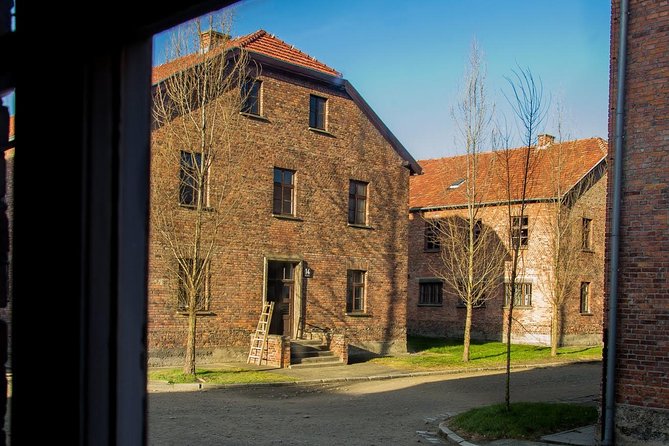
Inside, the guide leads the group through the museum displays and preserved camp buildings. Headphones are included, so you can hear the commentary while looking at photographs, documents, objects, and rooms. This arrangement is especially useful when the site is busy. You do not need to stand shoulder to shoulder with the guide, and you can keep your attention on what is in front of you.
The first section usually takes around one hour and 15 minutes according to one detailed account, though the complete guided visit across both camps is listed at about three and a half hours. The exact timing can change with the day’s schedule, group movement, and museum conditions.
A fixed guided route gives you a clear introduction, but it also limits private time. One visitor felt there was not enough time to enter every building open to the public or pause over the English displays. That is the central tradeoff here. You receive an efficient, guided account of the main areas, but you may not be able to read every panel or explore every room at your own speed.
If you want to study the museum in detail, a longer or private visit may suit you better. If you want a well-organized first visit with context and direction, the group tour is more practical.
The transfer to Birkenau
After Auschwitz I, the vehicle takes you to Birkenau. This short transfer is included, so you do not have to find a second entrance or arrange another ride. The change in setting is important. Auschwitz I is made up of preserved buildings and museum interiors, while Birkenau opens out across a much larger area.
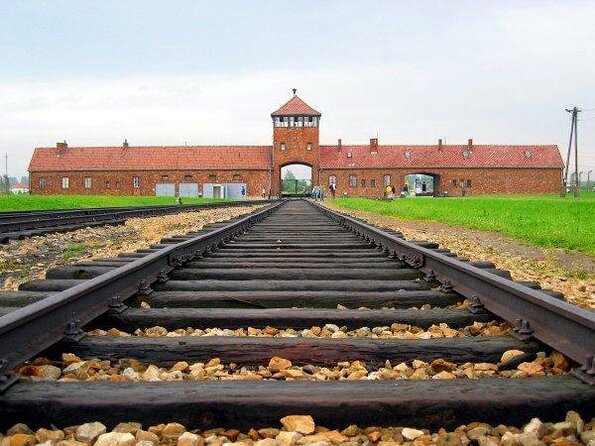
The scale of Birkenau can be difficult to absorb. The long lines of barracks, railway area, open ground, and remaining structures make the size of the camp visible in a way that indoor exhibits cannot. One account describes Birkenau as a visual shock because of its sheer extent.
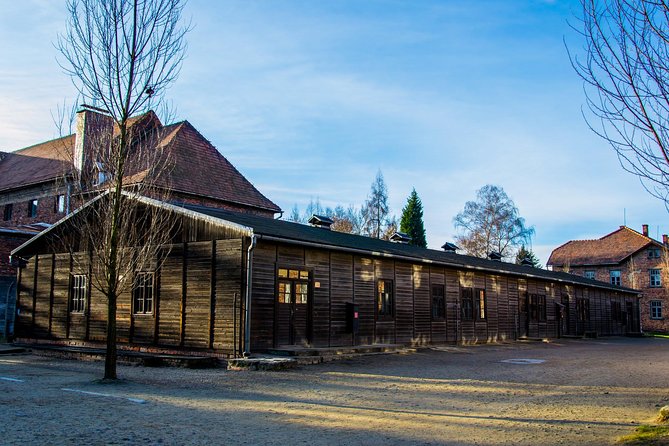
Your guide continues the explanation at the second camp, where the group walks through the main areas. The visit here often takes around an hour, although the overall timetable may allow more or less time. Some visitors wished for an extra hour to reach more of the wooden huts and to pause without feeling hurried.
That criticism is worth taking seriously. Birkenau covers a large area, and the ground can be uneven. You may walk on paths, gravel, or surfaces that are not easy for everyone. There are also steps and changes in level at parts of the visit. Comfortable shoes are not a minor suggestion here. They can make the difference between concentrating on the place and concentrating on your feet.
A few more in Krakow
- Krakow–Zakopane: Cable Car, Chocholow Baths, Cheese & Vodka
★ 5.0 · 10,720 reviews - Krakow: Auschwitz-Birkenau Guided Tour with Pickup & Lunch
★ 4.5 · 9,800 reviews - From Krakow: Wieliczka Salt Mine Tour
★ 4.6 · 9,393 reviews - Krakow: Auschwitz-Birkenau Guided Tour Pickup/Lunch Options
★ 4.5 · 9,057 reviews
A moving visit with a brisk pace
The emotional weight of Auschwitz-Birkenau is unavoidable. Several descriptions call the experience humbling, harrowing, haunting, or deeply upsetting. Those words fit, but they should not be used to turn the visit into drama. The point is to learn about the victims and the system that destroyed their lives, while remembering the human scale behind the numbers.
The guides appear to be the strongest part of the experience inside the memorial. Good commentary can explain what you are seeing without flattening it into a list of dates. A guide described as humble and passionate, for example, encouraged the group to learn from the past and not repeat it. Another was praised for answering questions carefully and treating the victims with respect.
The headphones help, but they do not solve every problem. A group of up to 25 people must stay together, and the guide may set a brisk walking speed. Two separate accounts warn that it can be hard to keep up, particularly across long distances or when moving between buildings.
I would not choose this tour if you need frequent stops, extended reading time, or a very relaxed schedule. I would choose it if you value clear direction and want to make sure you see both Auschwitz I and Birkenau in one day.
Walking and mobility: be realistic
The memorial is not fully easy to navigate. One person using a mobility aid struggled with the ground and uneven steps. Another description calls the site not very mobility friendly. That does not mean a visit is impossible for everyone with limited mobility, but it does mean you should assess your own walking ability honestly.
The tour requires walking at the group’s pace, with long distances and some steps. A private tour may be a better option if you need more time, regular breaks, or a route adapted to your needs. The shared format gives you less control.
For most people who can walk comfortably for several hours, the visit is manageable with sensible preparation. Wear supportive footwear, avoid a heavy backpack, and dress for changing outdoor conditions. The tour information does not provide a detailed accessibility plan, so contact the operator before booking if you have a specific concern.
What the $30.23 price really covers
The price is attractive because it combines several expenses and decisions in one booking. You receive round-trip transport from Krakow, admission, an English-speaking museum guide, headphones, and transportation between the two camps.
At $30.23 per person, the value is strongest for a first-time visitor who wants convenience. You avoid arranging public transport, finding the correct entry point, and working out the transfer between Auschwitz I and Birkenau. The driver also returns you to your accommodation or another destination within Krakow.
The price does not include food or drinks. A lunch box may be offered for an extra fee, but you should not treat that as part of the standard package. The documentary shown in the vehicle is also subject to availability.
The rating is listed at 4.7 from 448 reviews, with 95 percent recommending the experience. Those numbers suggest a reliable service overall, but they should not hide the few practical weaknesses: shared pickups can take time, the pace may feel fast, and the site itself is physically demanding.
This tour is booked about 71 days ahead on average. That tells you to plan early, especially if your Krakow schedule is fixed. Auschwitz admission is controlled, and a popular morning can fill well before your arrival date.
What to bring and what to leave behind
You need an ID or passport for entry. The names supplied for the booking must match the identification documents, so check spelling carefully when making the reservation.
The bag rule is strict: backpacks or handbags may not exceed 30 by 20 by 10 centimeters. A small day bag is the sensible choice. Do not arrive with a large backpack and expect to carry it through the museum.
Bring:
- Passport or ID
- Small bag within the stated limits
- Comfortable walking shoes
- Water and any food you need, unless you arrange a lunch box
- A phone for receiving the final pickup time
The memorial deserves quiet, respectful behavior. You may find the emotional content difficult, particularly in the museum displays. Prepare yourself before the day by reading a short introduction or watching a documentary if that helps you understand the setting. One visitor found that prior films and documentaries made the visit more meaningful.
Who should book this Krakow Auschwitz tour?
I would recommend it to a first-time visitor who wants a simple door-to-door plan, an English guide, and both camps included in one day. It also suits families with older children and teenagers who can walk for several hours and handle difficult historical material. One family with children aged 13, 16, and 19 found the guide engaging enough to hold everyone’s attention.
It is also a good choice if you are uneasy about arranging transport in a foreign country. The drivers help with the arrival process, and several accounts praise their clear communication and friendly manner.
I would hesitate to recommend it to anyone who wants extensive free time inside the museum. I would also suggest a private option for someone with limited mobility, a strong need for breaks, or a serious interest in reading every display.
Final decision: is it worth booking?
Yes, for most able-bodied visitors staying in Krakow, this is a practical and fairly priced way to visit Auschwitz-Birkenau. The strongest features are the included entry, licensed museum guide, headphones, reliable pickup, and transport between both camps.
Book it knowing that the day is structured and physically demanding. You may wait during shared pickups, and you may wish for more time at certain buildings. Still, the convenience is considerable, and the guides can give the visit the care and context it deserves.
Choose this tour if you want a respectful introduction without transport worries. Choose a private or longer arrangement if you want a slower pace, more reading time, or greater control over the route.
FAQ
How long does the Auschwitz-Birkenau tour take?
The full experience takes about seven hours, including pickup from Krakow, the journey to Auschwitz, the visit to both camps, and the return trip.
What time does pickup begin?
Pickup is generally scheduled between 7:30 and 9:30am. The exact pickup time is confirmed to each person the day before the tour.
Is hotel pickup and drop-off included?
Yes. Pickup and return transport are offered from hotels, apartments, hostels, and agreed meeting points. You can also be returned to another destination within Krakow.
Are admission and the museum guide included?
Yes. The price includes entry to Auschwitz-Birkenau, an English guided tour led by a licensed museum guide, and headphone rental.
What size bag can I bring?
Bags brought into the Auschwitz Museum and Memorial may not exceed 30 by 20 by 10 centimeters. A small bag is the safest choice.
Do I need to bring identification?
Yes. Bring your passport or ID, and make sure the name used for the booking matches your document. Museum security may request identification before entry.
Just added in Krakow
- Auschwitz-Birkenau – Skip the Line Tickets★ 3.5 · 29 reviews
- Auschwitz-Birkenau: Fast-Track Ticket & Guided Tour No Transfers★ 3.5 · 17 reviews
- Zakopane & Sleigh Ride with Bonfire – Group Tour from Kraków★ 5.0 · 2 reviews
- Sleigh Ride & Bonfire in Zakopane with Funicular – Private Trip★ 5.0 · 48 reviews
- Thermal Baths & Zakopane – Private Trip from Krakow★ 5.0 · 1 review
- Zakopane & Gubalowka Funicular – Private Winter Tour from Krakow★ 5.0 · 10 reviews
- stag dog chase Krakow prank★ 5.0 · 4 reviews
- Divine Mercy Sanctuary – Private Tour from Krakow★ 5.0 · 4 reviews